
Mazda CX-8 vs Kia Sorento: Which Family SUV Makes More Sense?

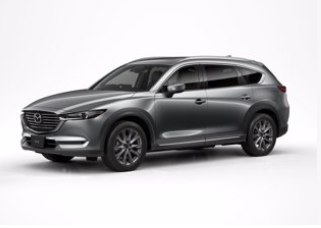
Choosing between the Mazda CX-8 vs Kia Sorento is a little like deciding between two very different restaurants that somehow serve the same meal. Both are three-row family SUVs. Both can carry seven people. Both offer comfortable road manners, useful diesel options in certain markets, and plenty of equipment. Yet the experience behind the wheel feels noticeably different.
The Mazda CX-8 takes the quieter, more traditional approach. It feels elegant, relatively compact from the driver's seat, and surprisingly polished for a practical seven-seater. The Kia Sorento attacks the same problem with more technology, more powertrain variety, a boxier cabin and, in newer versions, a distinctly modern personality.
There is also an important timing issue. In Australia, Mazda ended CX-8 production for the market after 2023, with remaining vehicles continuing into early 2024, while the Sorento remains part of Kia's current range. That means many shoppers today are realistically comparing a late-model used CX-8 with a newer or brand-new Sorento rather than two showroom-fresh rivals.
So which SUV suits us better? Let's dig beneath the badges.
Content in this publication
- Mazda CX-8 vs Kia Sorento at a Glance
- Exterior Design: Elegant Mazda or Bold Kia?
- Interior Quality: Where the CX-8 Still Impresses
- Infotainment and Connectivity
- Passenger Space and Family Practicality
- Boot Space: Mazda CX-8 vs Kia Sorento
- Engine Comparison
- Mazda CX-8 Petrol vs Kia Sorento Petrol
- Mazda CX-8 Diesel vs Kia Sorento Diesel
- Hybrid Advantage: The Sorento Has Another Card to Play
- Fuel Economy
- Driving Dynamics
- Ride Comfort and Noise
- Safety Technology
- Towing Capacity
- Reliability and Long-Term Ownership
- Value for Money
- Mazda CX-8 vs Kia Sorento for Families
- Mazda CX-8 vs Kia Sorento for Long Trips
- Mazda CX-8 vs Kia Sorento for City Driving
- Which SUV Feels More Premium?
- The Biggest Weaknesses of Each SUV
- Mazda CX-8 vs Kia Sorento: Which One Fits Different Buyers?
- Final Thoughts on Mazda CX-8 vs Kia Sorento
- Frequently Asked Questions
Mazda CX-8 vs Kia Sorento at a Glance
Using late Australian CX-8 specifications and current Australian Sorento figures as a useful reference point, the differences become clear fairly quickly. Specifications vary by country, trim and model year, so buyers should always verify the exact vehicle they are considering.
| Category | Mazda CX-8 | Kia Sorento |
|---|---|---|
| Seating | Six or seven depending on trim | Seven in mainstream Australian versions |
| Petrol option | 2.5L four-cylinder in late Australian models | 3.5L V6 in current non-hybrid range |
| Diesel option | 2.2L twin-turbo diesel | 2.2L turbo-diesel |
| Hybrid availability | No conventional hybrid in late CX-8 range | Hybrid and plug-in hybrid available |
| Transmission | 6-speed automatic | 8-speed automatic/DCT or 6-speed auto in hybrids |
| Drive layout | FWD petrol; AWD available with diesel | FWD petrol; AWD diesel; FWD/AWD hybrid availability |
| Character | Refined, elegant, car-like | Spacious, tech-heavy, versatile |
| Best suited to | Used buyers valuing comfort and refinement | Families wanting newer tech and broader powertrain choice |
Late Australian CX-8 models offered a 140 kW 2.5-litre petrol engine producing 252 Nm and a 140 kW 2.2-litre diesel producing 450 Nm, both paired with a six-speed automatic. Current Australian Sorento specifications list a 200 kW 3.5-litre petrol V6 producing 332 Nm and a 148 kW 2.2-litre diesel producing 440 Nm.
Those numbers only tell part of the story, though. A family SUV is judged as much by what happens at school pickup as what happens at full throttle.
Exterior Design: Elegant Mazda or Bold Kia?
Park these SUVs beside one another and they almost seem to speak different design languages.
The CX-8 follows Mazda's familiar minimalist approach. Its bodywork is smooth rather than aggressively sculpted. The grille is prominent without looking oversized, while the long bonnet and relatively narrow proportions give the vehicle an almost wagon-like elegance.
It doesn't scream, "Look at me, I'm a giant family SUV."
That can be refreshing.
The Sorento is more architectural. Newer models feature sharper lighting signatures, straighter body lines and a more upright visual stance. It looks broader and tougher even though its actual dimensions remain manageable for a three-row SUV.
Which Design Ages Better?
This comes down to taste, but the CX-8's restrained styling may appeal to buyers who dislike dramatic design trends.
The Sorento, meanwhile, feels noticeably newer. If we want our driveway to look contemporary, Kia has the advantage simply because the current generation integrates the company's latest styling language.
Urban Parking Matters More Than We Think
A glamorous SUV becomes considerably less glamorous when we're circling a crowded underground car park.
Interestingly, the late CX-8 measured roughly 4.9 metres long, while the current Australian Sorento is listed at 4,815 mm. In other words, the Mazda can actually be longer despite appearing visually slimmer.
The Kia's more squared-off shape can make its corners easier to judge, especially when combined with higher-grade parking cameras and driver-assistance technology.
Interior Quality: Where the CX-8 Still Impresses
Open the CX-8's door and we immediately understand why Mazda built such a loyal audience.
The cabin is calm.
Controls generally sit where we expect them. Materials feel thoughtfully chosen. Higher trims can have a genuinely premium atmosphere without covering every surface with flashing screens.
Mazda has traditionally focused on creating interiors that feel more expensive than the badge might suggest. Even years after launch, a well-kept CX-8 cabin can still feel classy.
The Sorento goes in another direction.
Its newer interior is more digital, more feature-rich and visually busier. Current high-grade Sorento models can combine a 12.3-inch digital instrument display with a 12.3-inch infotainment touchscreen, along with features such as a head-up display, surround-view monitoring and a digital centre mirror.
Mazda Simplicity vs Kia Technology
Do we prefer physical familiarity or digital sophistication?
That's really the question.
The CX-8 feels like a beautifully designed analogue watch. The Sorento feels like a smartwatch.
Neither philosophy is automatically better. Some drivers genuinely prefer Mazda's more restrained dashboard. Others will sit in the Kia and wonder why every family SUV doesn't offer this much technology.
Infotainment and Connectivity
Late-model CX-8 versions improved significantly compared with earlier examples. Mazda's Australian 2023-era range included a 10.25-inch Mazda Connect display, wireless Apple CarPlay and Android Auto across the range.
That's still perfectly usable.
But Kia has moved the goalposts.
Current Sorento models offer a 12.3-inch infotainment screen, while higher trims add the full panoramic twin-screen arrangement. Kia Connect services and over-the-air updates add another layer of convenience.
For buyers who treat their vehicle like another connected device, the Sorento's newer architecture is the more sophisticated environment.
Does More Technology Mean Better Usability?
Not always.
Big screens look brilliant in brochures, but familiar buttons and uncomplicated menus can be easier while driving. Mazda's interface rewards owners who appreciate simplicity.
The Sorento rewards people who enjoy features.
Think about which camp we're actually in before assuming the largest display automatically wins.
Passenger Space and Family Practicality
This is where things get serious.
A seven-seat SUV has to perform when everybody brings something with them: school bags, sports equipment, groceries, laptops, jackets, water bottles and whatever mysterious collection of toys suddenly appears on the floor.
The CX-8 offers genuine three-row capability, but its narrower body and flowing shape give it a slightly more intimate cabin.
The Sorento feels broader and more upright. That pays dividends in perceived roominess and general practicality.
Second-Row Comfort
Both vehicles work well in the second row.
Adults can travel comfortably, while families will appreciate the ability to adjust seating arrangements to balance second- and third-row legroom.
Some high-grade CX-8 versions were even available in six-seat configurations with second-row captain's chairs, creating a more luxurious layout.
The Sorento takes a more conventional family-focused approach, with easy third-row access and useful comfort equipment. Kia specifically highlights one-touch second-row movement for access to the rear seats on current models.
Third-Row Space
No medium-to-large crossover magically turns its third row into a limousine.
Both vehicles are best viewed as five-seaters with two extra seats available when required, particularly when adults are involved.
Children should be happy in either.
For regular adult use, however, the Sorento's boxier packaging feels more accommodating. Its shape simply makes better use of vertical and lateral space.
The Real Test: Can Grandma Sit Back There?
That's the kind of question that matters more than brochure language.
If we're regularly carrying six or seven adults, physically testing the third row before buying is essential. Seat comfort is personal, and a centimetre on paper can matter less than cushion height, foot room and ease of entry.
Boot Space: Mazda CX-8 vs Kia Sorento
Cargo capacity can change dramatically depending on how many seats we're using.
Mazda previously quoted around 209 litres behind the third row and 742 litres with that row folded for the CX-8 in Australia.
Current Australian Sorento specifications list 179 litres with seven seats in use, 608 litres with five seats in use and 1,996 litres in a two-seat cargo configuration under the applicable measurement method.
Numbers from different manufacturers and measurement configurations are not always perfectly comparable, so real-world usability matters more.
The Mazda's cargo area works nicely for everyday family life.
The Sorento's squarer rear body, however, makes it especially useful when loading bulky objects.
Which Is Better for Prams, Suitcases and Shopping?
If we normally travel with five occupants, both SUVs provide sensible luggage flexibility.
If we frequently use all seven seats, space becomes tight in both.
That's simply the reality of three-row crossovers. Once the third row rises, the boot shrinks quickly. Families travelling with seven people and seven large suitcases may eventually discover that physics has a sense of humour.
Engine Comparison
The powertrain conversation is one of the biggest differences between the Mazda CX-8 vs Kia Sorento.
Mazda kept things relatively straightforward in late Australian CX-8 models.
Buyers could choose a naturally aspirated 2.5-litre petrol engine or a muscular 2.2-litre twin-turbo diesel. The diesel was particularly well matched to the vehicle because its 450 Nm of torque arrived low in the rev range.
The Sorento now offers a far broader spectrum.
You may be interested in reading Mazda CX-8 vs CX-9: Which Three-Row Mazda Makes More Sense?
Depending on version and market, buyers can find petrol, diesel, hybrid and plug-in hybrid configurations. In Australia, Kia currently offers a 3.5-litre petrol V6 and 2.2-litre diesel in the mainstream range, alongside separate hybrid and PHEV variants.
Mazda CX-8 Petrol vs Kia Sorento Petrol
The CX-8 petrol is the simpler proposition.
Its 2.5-litre four-cylinder doesn't try to turn the Mazda into a sports SUV. Instead, it provides predictable power delivery and avoids some of the complexity associated with turbocharging.
The downside is obvious when the vehicle is fully loaded.
With seven occupants aboard, hills and overtaking manoeuvres can expose the fact that we're asking a naturally aspirated four-cylinder to move a substantial SUV.
The current Australian Sorento's 3.5-litre V6 is considerably more powerful on paper at 200 kW and 332 Nm.
It should feel stronger when acceleration is required, though that extra performance also comes with greater official fuel consumption than the diesel alternative.
Mazda CX-8 Diesel vs Kia Sorento Diesel
Now we have a much closer contest.
The Mazda's 2.2-litre diesel produces 140 kW and 450 Nm, while Kia's current 2.2-litre diesel is listed at 148 kW and 440 Nm.
Forget the tiny difference in peak torque.
In normal driving, both provide the kind of low-down shove we want in a loaded family SUV.
The Mazda uses a six-speed automatic. The current Australian Sorento diesel uses an eight-speed wet dual-clutch transmission.
How They Feel on the Road
Mazda's diesel powertrain has a muscular, traditional character. There are fewer ratios, but the engine's torque suits relaxed highway driving.
The Kia's additional gears help keep the engine operating efficiently, and its transmission contributes to the Sorento's more modern mechanical feel.
Buyers considering a used diesel should focus less on internet arguments and more on service history, operating conditions and maintenance. A beautifully maintained example is often preferable to the theoretically superior engine that has spent years surviving neglected servicing and constant short trips.
Hybrid Advantage: The Sorento Has Another Card to Play
This is one area where the Kia creates real separation.
Current Australian Sorento Hybrid models combine a 1.6-litre turbo-petrol engine with an electric motor. Kia lists hybrid variants in both front-wheel-drive and all-wheel-drive forms, while plug-in hybrid versions use AWD.
Kia quotes combined consumption of 5.4 L/100 km for the FWD hybrid under the applicable Australian test cycle.
The CX-8 never offered an equivalent conventional hybrid in its late Australian range.
Who Benefits Most From the Hybrid?
Urban families.
Hybrid systems shine when we're constantly slowing, stopping and accelerating. That's exactly what happens during school runs, grocery trips and crowded commutes.
Long-distance drivers may still find diesel attractive.
That's why the answer depends on how we actually drive, not what powertrain happens to be fashionable.
Fuel Economy
Late Australian CX-8 official figures listed 8.1 L/100 km combined for the 2.5-litre petrol and 6.0 L/100 km for the diesel.
Current Australian Sorento figures list 9.8 L/100 km for the 3.5-litre petrol and 6.0 L/100 km for the diesel. The Sorento FWD hybrid is officially rated at 5.4 L/100 km combined.
Official figures are comparison tools rather than promises. Real consumption varies with traffic, temperature, payload, driving style and terrain.
Still, one pattern emerges clearly.
For frequent long-distance driving, the diesels make considerable sense. For predominantly urban driving, the Sorento Hybrid deserves serious attention.
Driving Dynamics
Mazda has spent years making ordinary family cars feel unusually natural from behind the wheel.
The CX-8 reflects that philosophy.
Steering feels measured rather than artificially light, body movements are controlled, and the vehicle often seems smaller from the driver's seat than its external dimensions suggest.
It's not a sports car disguised as an SUV. Let's not get carried away.
But there is a coherence to the way it responds.
How Does the Sorento Drive?
The Sorento focuses more strongly on all-round comfort and capability.
Kia Australia says the model received local suspension and handling tuning for Australian conditions.
That matters because a family SUV spends its life encountering imperfect roads, expansion joints, potholes and rough suburban surfaces.
The Sorento feels stable and substantial.
The Mazda feels slightly more delicate and car-like.
Which One Would We Rather Drive Alone?
Probably the CX-8 if steering feel and road connection are high priorities.
But once the vehicle fills with children, luggage and devices requiring chargers, the Sorento's practical advantages become increasingly persuasive.
That's the theme of this comparison: Mazda charms the driver, while Kia increasingly optimises the whole family experience.
Ride Comfort and Noise
The CX-8's cabin refinement is one of its strongest qualities.
Mazda clearly wanted the vehicle to feel closer to an upmarket crossover than a utilitarian people mover. Road and engine noise are generally well controlled, particularly at cruising speeds.
The Sorento is similarly comfortable, but wheel size matters.
Large wheels look fantastic. They can also transmit more road texture.
When comparing trims, we shouldn't automatically assume the most expensive version delivers the softest ride.
A lower-grade model on smaller wheels can sometimes be the better long-distance family companion.
Safety Technology
Both SUVs can provide a strong selection of driver-assistance features, although the Kia benefits from being a newer design.
Late CX-8 standard equipment in Australia included blind-spot monitoring, lane-departure warning, lane-keep assistance, radar cruise control, rear cross-traffic alert, reversing camera technology and autonomous braking-related systems.
Current Sorento models add a newer generation of systems, with features such as autonomous emergency braking, blind-spot collision avoidance, rear cross-traffic collision avoidance and advanced smart cruise control. Higher trims add technologies including a blind-spot view monitor and surround-view camera.
Driver Assistance Is Assistance, Not Autopilot
This point matters.
Technology can reduce workload, but no collection of cameras and radar sensors replaces an attentive driver.
When buying used, we should also verify that every sensor and camera works correctly. Windscreen replacements, collision repairs and poor calibration can affect advanced driver-assistance systems.
Towing Capacity
Families who tow need to examine the actual powertrain rather than simply comparing badges.
Late Australian CX-8 specifications rated petrol versions to tow up to 1,800 kg braked and diesel versions up to 2,000 kg braked when appropriately equipped.
Current Australian petrol and diesel Sorento specifications list a 2,000 kg braked towing capacity.
That gives the Sorento an advantage over the petrol CX-8 on paper, while diesel versions are closely matched.
Don't Forget Payload
Maximum trailer weight isn't the whole calculation.
Passengers, luggage, accessories and tow-ball mass all affect the vehicle's legal and practical loading limits.
If we're planning regular caravan towing, we should calculate the complete combination rather than shopping only by the biggest number printed in a brochure.
Reliability and Long-Term Ownership
There is no responsible way to declare every CX-8 more reliable than every Sorento or vice versa.
Condition matters enormously.
A used CX-8 with complete service documentation, sensible ownership and a clean inspection history could be a much smarter purchase than a newer Sorento that has been abused.
You may be interested in readingMazda CX-8 vs CX-9: Which Three-Row Mazda Makes More Sense?You may be interested in reading
 Mitsubishi Pajero Sport Models: Generations, Trims, Engines, and Differences Explained
The reverse is equally true.
Buying a Used CX-8
Because the CX-8 is now primarily a used-car proposition in places such as Australia, inspection quality becomes critical.
Before purchasing, we'd want to check:
- Complete service history and evidence of correct maintenance.
- Diesel operation and emissions-system history on diesel examples.
- Transmission behaviour during cold and warm driving.
- Tyre wear across all four wheels.
- Operation of cameras, sensors and driver-assistance systems.
- Air-conditioning performance across all three rows.
- Evidence of towing, accident repairs or underbody damage.
- Electrical accessories, infotainment and power-seat functions where fitted.
A pre-purchase inspection is money well spent.
Buying a Newer Sorento
A newer Sorento gives us a different ownership proposition: more modern technology, newer safety systems, potentially greater remaining manufacturer warranty coverage depending on country and registration history, and access to electrified drivetrains.
The trade-off is purchase price.
That's where the CX-8 can suddenly look very attractive.
Value for Money
Used vehicles don't depreciate in tidy straight lines.
Local demand, mileage, engine choice, trim, service history and overall condition all matter.
However, the CX-8's discontinued status can create an interesting opportunity. We're effectively buying a premium-feeling seven-seat SUV without paying for the newest generation of screens, hybrid systems and electronic features.
The Sorento costs more when comparing a new example with a used CX-8, but we're also getting a newer vehicle.
So instead of asking, "Which one is cheaper?" we should ask:
What do we receive for the money we're actually spending?
Mazda CX-8 vs Kia Sorento for Families
For families, the Sorento is difficult to ignore.
Its cabin is highly practical, the technology is newer, its powertrain range is broader, and the squarer design works brilliantly for the daily chaos of family transport.
But the CX-8 has a different charm.
It feels less like a machine designed by a committee studying family spreadsheets and more like a Mazda that happened to grow a third row.
Choose the Mazda CX-8 If We Value Refinement
The CX-8 makes particular sense when we want an elegant used seven-seater with mature road manners, a quality cabin and strong diesel performance.
It may also appeal to drivers who prefer traditional controls over an increasingly screen-dominated dashboard.
Choose the Kia Sorento If We Value Versatility
The Sorento makes more sense when our priorities include newer technology, broader powertrain choice, hybrid availability and a more contemporary family cabin.
Its design is simply more aligned with what modern large-SUV buyers expect.
Mazda CX-8 vs Kia Sorento for Long Trips
This is one of the closest battles.
The diesel versions of both SUVs suit highway travel particularly well. They deliver strong torque, relaxed cruising and official combined fuel figures that can be significantly better than their petrol counterparts.
Mazda adds a slightly more intimate, refined driving experience.
Kia gives us more modern electronics, spaciousness and convenience features.
If we're driving 1,000 kilometres with the family, the winner may come down to something as simple as which seats fit our bodies better.
That is why test driving matters.
Mazda CX-8 vs Kia Sorento for City Driving
In the city, priorities change.
Fuel consumption, visibility, parking technology and stop-start smoothness become more important than maximum towing capacity.
Here, the Sorento Hybrid creates a compelling argument because electrification is particularly useful in urban traffic.
A petrol CX-8 remains simple and pleasant, but it cannot recover braking energy or spend portions of low-speed driving using electric assistance.
For high-mileage city families, that difference can add up.
The answer depends on what "premium" means to us.
If premium means soft materials, calm design and an understated atmosphere, the CX-8 makes a strong case.
If premium means digital displays, cameras, connected services, ambient lighting and high-tech convenience features, a higher-spec Sorento feels more advanced.
Mazda whispers.
Kia demonstrates.
Both approaches can feel expensive, but they communicate luxury differently.
The Biggest Weaknesses of Each SUV
The CX-8's biggest limitation is age.
Even the youngest examples belong to a model conceived before the current wave of expansive digital displays, sophisticated hybrid systems and connected-car services.
Its third row and cabin width also aren't class-leading.
The Sorento's weakness is complexity.
More screens, more sensors, more electronic systems and electrified drivetrain options bring benefits, but they also create more systems to understand and potentially maintain over a long ownership period.
Neither SUV escapes compromise.
No vehicle does.
Mazda CX-8 vs Kia Sorento: Which One Fits Different Buyers?
A late-model CX-8 makes a compelling case for buyers shopping the used market who care about cabin quality, road manners and value more than having the newest interface.
The diesel is especially attractive for regular highway work or heavier family duties.
The Sorento makes more sense for buyers wanting a current-generation ownership experience. We gain newer cabin technology, a broader selection of engines and electrification, strong family packaging and contemporary driver-assistance equipment.
For some households, that will justify spending considerably more.
For others, the value available in a carefully chosen CX-8 will be impossible to ignore.
Final Thoughts on Mazda CX-8 vs Kia Sorento
The Mazda CX-8 vs Kia Sorento battle doesn't produce one universal answer because these SUVs now occupy slightly different positions in the market.
The CX-8 has evolved into an appealing used-family-SUV choice in markets where it has been discontinued. It remains refined, handsome and impressively practical, particularly with the strong 2.2-litre diesel.
The Sorento represents the newer way of doing things.
Its technology is more advanced. Its cabin packaging is highly family-friendly. Its powertrain lineup extends beyond conventional petrol and diesel to hybrid and plug-in hybrid alternatives in applicable markets.
If we want sophisticated simplicity and strong used value, the CX-8 deserves a close look.
If we want newer technology, greater powertrain flexibility and a more modern family experience, the Sorento presents a very different proposition.
The smartest move isn't choosing the badge we like most.
It's deciding how many people we normally carry, where we drive, how often we use the third row, whether we tow, how much technology we actually want and how long we intend to keep the vehicle.
Answer those questions first.
Suddenly, the right SUV becomes much easier to see.
Frequently Asked Questions
1. Is the Mazda CX-8 bigger than the Kia Sorento?
The late Australian CX-8 measured about 4,900 mm long, while the current Australian Sorento is listed at 4,815 mm. However, exterior length doesn't tell the whole story. The Sorento's squarer body can create a stronger impression of interior space and practicality.
2. Which is more fuel-efficient, Mazda CX-8 or Kia Sorento?
It depends on the engine. Late Australian CX-8 diesel models carried an official 6.0 L/100 km combined figure, matching the current Australian Sorento diesel figure. The Sorento FWD Hybrid is officially rated at 5.4 L/100 km combined under the applicable Australian test cycle.
3. Is the Mazda CX-8 still available new?
Availability depends on country. In Australia, Mazda announced that CX-8 production for the market would cease at the end of 2023, with remaining stock continuing into the first quarter of 2024. The model is therefore primarily a used-car proposition there today.
You may be interested in readingMazda CX-8 vs CX-9: Which Three-Row Mazda Makes More Sense?You may be interested in reading
Mitsubishi Pajero Sport Models: Generations, Trims, Engines, and Differences ExplainedYou may be interested in reading
 Test Drive Review: The Fiat 500 Abarth 0-60 Acceleration
4. Which is better for towing, Mazda CX-8 or Kia Sorento?
Late Australian CX-8 diesel models were rated up to 2,000 kg braked, while petrol versions were rated up to 1,800 kg when appropriately equipped. Current Australian petrol and diesel Sorento specifications list up to 2,000 kg braked. Always check the exact model, tow-ball limits, payload and local regulations before towing.
5. Is the Kia Sorento a good alternative to the Mazda CX-8?
Yes, particularly for buyers seeking a newer three-row SUV. The Sorento provides seven-seat practicality, contemporary driver-assistance technology and, depending on market and variant, petrol, diesel, hybrid and plug-in hybrid powertrains. The CX-8 remains appealing where used examples offer a strong combination of comfort, refinement and value.
If you want to know other articles similar to Mazda CX-8 vs Kia Sorento: Which Family SUV Makes More Sense? you can visit the category Models.
Mitsubishi Pajero Sport Models: Generations, Trims, Engines, and Differences Explained
Mazda CX-8 vs CX-9: Which Three-Row Mazda Makes More Sense?
Mazda CX 8 vs CX 80: Which Three-Row Mazda Makes More Sense?
Peugeot RCZ Models: Complete Guide to Versions, Trims and Engines
Toyota Hilux Like Cars: The Best Alternatives Worth Considering
Toyota Hilux and Fortuner Same Engine: Are They Really Identical?
Leave a Reply
More content of your interest