
Mitsubishi Pajero Sport Models: Generations, Trims, Engines, and Differences Explained

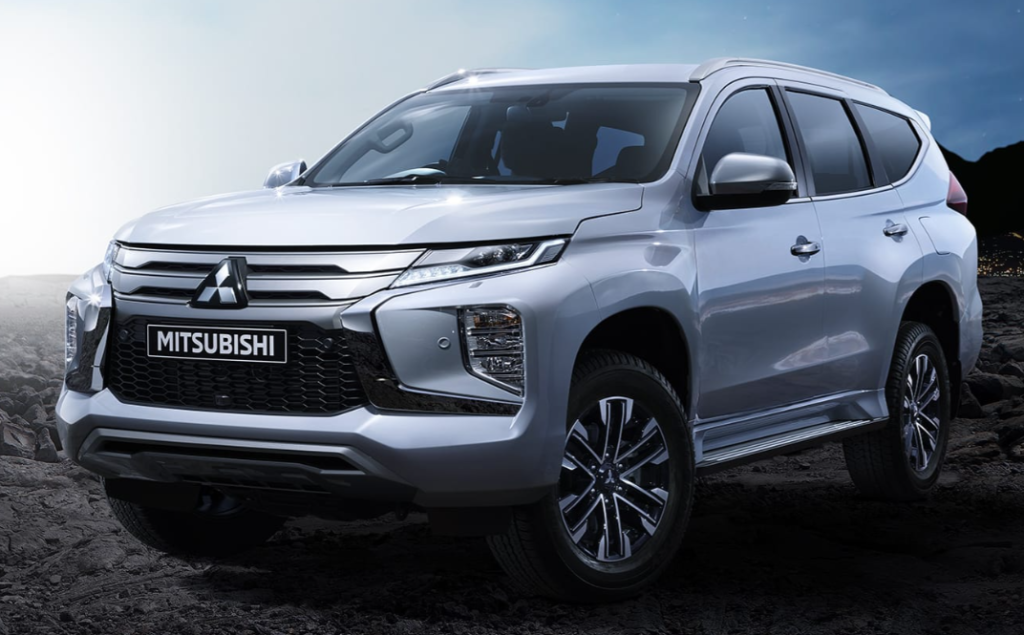
The Mitsubishi Pajero Sport models have always occupied an interesting corner of the SUV world. They are rugged without feeling like agricultural machinery, practical enough for family duty, and capable enough to leave the pavement behind when the weekend gets adventurous. Think of the Pajero Sport as the hiking boot of seven-seat SUVs: comfortable enough for everyday use but clearly designed with rougher terrain in mind.
There is one complication, though. Mitsubishi has sold the Pajero Sport across many countries, and the names attached to different versions can change dramatically depending on where we shop. One market may offer GLX, GLS, Exceed, and GSR, while another talks about Dakar, Ultimate, Prime, GT, or Elite Edition.
To make matters even more confusing, Pajero and Pajero Sport are not the same vehicle. Mitsubishi unveiled an entirely new Pajero flagship in September 2026, while Pajero Sport continues as its own SUV line in several international markets.
So, rather than throwing trim names around like alphabet soup, we're going to untangle the complete Pajero Sport family. We'll cover its generations, engines, 2WD and 4WD configurations, popular regional variants, equipment differences, and what each version generally brings to the table.
Content in this publication
- What Is the Mitsubishi Pajero Sport?
- Mitsubishi Pajero Sport, Challenger, and Montero Sport Names Explained
- How Many Mitsubishi Pajero Sport Generations Are There?
- First-Generation Mitsubishi Pajero Sport Models
- Second-Generation Mitsubishi Pajero Sport Models
- Third-Generation Mitsubishi Pajero Sport Models
- 2019 Pajero Sport Facelift
- 2024-and-Later Pajero Sport Updates
- Current Mitsubishi Pajero Sport Models in Thailand
- Mitsubishi Pajero Sport Models in Indonesia
- Australian Pajero Sport Models
- 2WD vs 4WD Pajero Sport Models
- Which Pajero Sport Model Has Seven Seats?
- How Pajero Sport Trim Levels Usually Progress
- Pajero Sport Engines Compared
- Pajero Sport Transmission Options
- Mitsubishi Pajero Sport Safety Technology
- Which Mitsubishi Pajero Sport Model Is Best for Off-Road Driving?
- Which Pajero Sport Model Makes Sense for Everyday Driving?
- What to Check When Buying a Used Pajero Sport
- Pajero Sport vs Pajero: They Are Not the Same SUV
- Why Pajero Sport Model Names Differ Between Countries
- Which Mitsubishi Pajero Sport Model Should We Choose?
- The Pajero Sport's Place in Mitsubishi History
- Conclusion: Understanding Mitsubishi Pajero Sport Models
- Frequently Asked Questions
What Is the Mitsubishi Pajero Sport?
The Mitsubishi Pajero Sport is a mid-size SUV developed around Mitsubishi's experience with rugged four-wheel-drive vehicles. Unlike many modern crossovers that use passenger-car platforms, the Pajero Sport traditionally follows the tougher body-on-frame philosophy associated with pickup-based SUVs.
That's an important distinction.
A crossover might be designed primarily for school runs, shopping centers, and occasional gravel roads. The Pajero Sport was created with towing, rough surfaces, long-distance touring, and genuine four-wheel-drive use much closer to the center of its personality.
Its ancestry can be traced to the Mitsubishi Challenger introduced in 1996. Mitsubishi states that the Challenger shared its chassis with the second-generation Pajero and was sold as the Montero Sport in North America. Early versions offered 2.5-liter and 2.8-liter turbo-diesel engines alongside a 3.0-liter V6 petrol engine.
That original recipe eventually developed into the Pajero Sport we know today.
Mitsubishi Pajero Sport, Challenger, and Montero Sport Names Explained
Here's where buyers often become confused.
Depending on the country and generation, essentially related vehicles have appeared under names such as Mitsubishi Challenger, Pajero Sport, and Montero Sport.
The Challenger name was particularly important early in the vehicle's history. Mitsubishi introduced the original Challenger in July 1996, while North American versions used the Montero Sport badge.
Later generations became much more widely recognized as Pajero Sport.
Mitsubishi has also continued using Montero Sport in selected markets rather than Pajero Sport. Mitsubishi's own global materials specifically note that Pajero Sport is sold as Montero Sport in some regions.
The badge may change, but the basic concept remains familiar: a rugged mid-size Mitsubishi SUV positioned below or alongside the company's larger traditional off-road models.
How Many Mitsubishi Pajero Sport Generations Are There?
The Pajero Sport story can broadly be divided into three generations.
| Generation | Approximate introduction | Key identity |
|---|---|---|
| First generation | 1996 | Challenger/Montero Sport origins |
| Second generation | 2008 | More modern Triton-related SUV |
| Third generation | 2015 | Dynamic Shield styling and modern 2.4 diesel era |
The dates can vary slightly depending on country because Mitsubishi did not introduce every version simultaneously worldwide.
That matters when shopping for a used vehicle. A 2016 Pajero Sport sold in one country may belong to a different specification from a seemingly identical vehicle sold elsewhere.
Why Generations Matter More Than Model Year Alone
Looking only at the registration year can be misleading.
Manufacturers frequently continue selling an outgoing model alongside a replacement, particularly in international markets. Local assembly, inventory, homologation regulations, and launch schedules can all shift the calendar.
We therefore prefer identifying a Pajero Sport by three things together: generation, engine, and trim level.
Those tell us far more than the year stamped on the registration document.
First-Generation Mitsubishi Pajero Sport Models
The first generation established the formula.
Mitsubishi introduced the Challenger in 1996 as a sporty recreational SUV with genuine four-wheel-drive credentials. It shared its underlying chassis architecture with the second-generation Pajero while adopting a different body and more urban appearance.
This generation appeared under different names around the world, most notably Challenger and Montero Sport.
First-Generation Engine Choices
Engine availability depended heavily on market.
Mitsubishi's historical record identifies early 2.5-liter diesel, 2.8-liter intercooled turbo-diesel, and 3.0-liter V6 options.
That variety tells us something important about the Pajero Sport philosophy from the beginning. Mitsubishi wasn't building a one-size-fits-all vehicle.
Diesel versions catered to buyers wanting torque and long-distance capability. Petrol V6 variants appealed to markets where gasoline was more common or where smoother power delivery mattered more than diesel economy.
The First Generation's Character
Compared with today's Pajero Sport, the original feels wonderfully mechanical.
There's less electronic insulation between driver and machine. Controls are simpler, cabins are more utilitarian, and the driving experience has the sturdy feel associated with 1990s four-wheel drives.
For some enthusiasts, that's precisely the appeal.
For families expecting modern active safety systems, smartphone connectivity, and sophisticated cabin technology, however, later generations make considerably more sense.
Second-Generation Mitsubishi Pajero Sport Models
A new Pajero Sport arrived in 2008, marking a major modernization of Mitsubishi's mid-size SUV formula. Mitsubishi's corporate records confirm that the new Pajero Sport was launched in August 2008.
This generation became especially prominent throughout Southeast Asia, Australia, Russia, Latin America, the Middle East, and other markets where rugged pickup-based SUVs remained popular.
The styling became larger and more contemporary, while interior comfort moved closer to conventional family SUVs.
Second-Generation Diesel Engines
Diesel power played an important role.
Mitsubishi documentation from this period identifies both 2.5-liter and 3.2-liter diesel engines associated with the Pajero Sport.
Specifications changed throughout the generation and differed by destination market, so used buyers should never assume that two visually identical Pajero Sports share the same drivetrain.
This generation also helps explain why online specifications sometimes appear contradictory. One website may describe a 2.5-liter vehicle from Thailand while another is discussing a different-market 3.2-liter version.
Both can be correct.
Why the Second Generation Still Appeals to Used Buyers
There's something appealingly straightforward about it.
We get the elevated driving position, durable chassis, diesel torque, usable cabin, and real 4WD hardware without quite as many electronic systems as newer versions.
That simplicity can make older examples attractive for remote travel and long-term ownership, although condition matters enormously.
A meticulously maintained higher-mileage Pajero Sport may be a much better purchase than a low-mileage example that has spent its life towing heavy trailers, crossing muddy tracks, or skipping scheduled servicing.
Third-Generation Mitsubishi Pajero Sport Models
The third generation is where the Pajero Sport became noticeably more sophisticated.
Mitsubishi globally debuted the completely renewed model in August 2015. The company described it as a new-generation mid-size SUV combining off-road ability with improved refinement, comfort, environmental performance, and safety.
Visually, this generation introduced the dramatic Dynamic Shield front-end treatment.
Love it or hate it, nobody could accuse it of disappearing into the supermarket parking lot.
The 2.4-Liter Turbo-Diesel Era
A 2.4-liter turbo-diesel became central to many third-generation Pajero Sport models.
For example, Australia's 2024 specification used the 2.4-liter 4N15 MIVEC turbo-diesel producing 133 kW and 430 Nm, paired with an eight-speed automatic transmission.
Other countries received different combinations.
Indonesia, for example, has continued offering both the 2.4-liter 4N15 in higher specifications and the older 2.5-liter 4D56 in selected GLX and Exceed versions. Mitsubishi Indonesia's 2026 model information identifies GLX, Exceed, Dakar, and Ultimate as the principal trim families.
That's exactly why searching simply for "Pajero Sport engine" isn't enough. We always need to know the market and variant.
2019 Pajero Sport Facelift
Mitsubishi refreshed the third generation in 2019.
Rather than replacing the vehicle completely, the company sharpened its styling, upgraded the cabin, and introduced additional convenience technology.
Mitsubishi's official global announcement highlighted a redesigned exterior, an eight-inch color LCD instrument display, and an electric tailgate that could be operated using a smartphone. The refreshed model first appeared in Thailand before expanding to additional countries.
In other words, a post-2019 third-generation Pajero Sport can feel meaningfully newer than an early 2015-2018 example even though both belong to the same basic generation.
What Changed in the Facelift?
The differences weren't merely cosmetic.
Technology became a larger part of the Pajero Sport experience. Higher versions gained increasingly sophisticated driver-assistance equipment, digital instrumentation, connectivity features, upgraded interiors, and convenience features that made the SUV feel less like a pickup with a roof and more like a proper family touring vehicle.
You may be interested in reading Test Drive Review: The Fiat 500 Abarth 0-60 Acceleration
That transformation matters for second-hand buyers.
Someone prioritizing rugged simplicity may prefer the earlier configuration. Someone driving every day in heavy traffic may appreciate the extra technology of the updated versions.
2024-and-Later Pajero Sport Updates
The third generation continued evolving rather than standing still.
Thailand's updated Pajero Sport introduced a newer 2.4-liter Hyper Power diesel engine producing 184 PS and 430 Nm. Mitsubishi paired the 4WD Elite Edition with Super Select 4WD-II and terrain modes for Gravel, Mud/Snow, Sand, and Rock.
This illustrates something we repeatedly see throughout the Pajero Sport range: the same generation can contain noticeably different mechanical specifications depending on production year and country.
The badge on the tailgate tells only half the story.
Current Mitsubishi Pajero Sport Models in Thailand
Thailand remains one of the clearest examples of how the modern Pajero Sport lineup works.
Mitsubishi Thailand currently lists GT, Prime, Elite Edition 2WD, and Elite Edition 4WD versions.
| Thai model | General positioning | Drive configuration |
|---|---|---|
| GT | Value-focused entry model | 2WD |
| Prime | Higher equipment level | 2WD |
| Elite Edition | Premium specification | 2WD |
| Elite Edition | Flagship off-road configuration | 4WD |
The newest Thai-market models use Mitsubishi's 184 PS 2.4-liter Hyper Power diesel engine, while higher specifications introduce more sophisticated comfort, safety, and drivetrain equipment.
Pajero Sport GT
The GT is aimed at buyers who want the fundamental Pajero Sport experience without jumping straight into the premium end of the range.
That means we still get the commanding seating position, diesel engine, SUV practicality, and rugged appearance, but without every luxury or off-road feature Mitsubishi can fit into the vehicle.
For predominantly urban driving, that's not necessarily a compromise.
Why pay for advanced four-wheel-drive hardware if the toughest obstacle we encounter every morning is a badly designed speed bump?
Pajero Sport Prime
Prime moves further toward comfort and premium equipment.
This is the sort of specification that makes sense for buyers using the Pajero Sport mainly as a family SUV but wanting something more polished than the entry version.
It bridges the gap between practicality and luxury rather nicely.
Pajero Sport Elite Edition
The Elite Edition sits toward the top of the Thai hierarchy.
Mitsubishi currently offers both 2WD and 4WD versions, while the 4WD model incorporates Super Select 4WD-II.
The Elite Edition also leans heavily into visual differentiation, using black exterior detailing, black wheels, a contrasting roof on selected colors, and an upgraded interior.
It's the Pajero Sport wearing its nicer jacket—but there's still mud on the boots underneath.
Mitsubishi Pajero Sport Models in Indonesia
Indonesia follows a different naming strategy.
Mitsubishi's current Indonesian lineup includes six main variants spread across four trim families: GLX, Exceed, Dakar, and Dakar Ultimate.
| Indonesian variant | Drivetrain | Transmission |
|---|---|---|
| GLX | 4x4 | Manual |
| Exceed | 4x2 | Manual |
| Exceed | 4x2 | Automatic |
| Dakar | 4x2 | Automatic |
| Dakar Ultimate | 4x2 | Automatic |
| Dakar Ultimate | 4x4 | Automatic |
This lineup demonstrates how cleverly Mitsubishi stretches one basic SUV across very different buyers.
GLX Models
GLX traditionally occupies the more functional end of the range.
In Indonesia, the GLX 4x4 manual is particularly interesting because it combines four-wheel-drive capability with relatively straightforward equipment and a manual transmission.
That's almost the opposite philosophy of the luxury-focused flagship.
One is a workhorse. The other is a touring SUV.
Both still wear Pajero Sport badges.
Exceed Models
Exceed typically adds equipment while remaining below the more powerful Dakar family.
Current Indonesian specifications retain the 2.5-liter 4D56 engine for GLX and Exceed, with manual and automatic configurations depending on version.
For buyers who don't need the highest-output engine or every electronic feature, Exceed can represent a comfortable middle ground.
Dakar Models
Dakar sits above Exceed and brings the more modern 2.4-liter 4N15 diesel and eight-speed automatic transmission in the Indonesian range.
The name obviously taps into Mitsubishi's powerful rally heritage, but in showroom terms it primarily identifies a better-equipped and more powerful Pajero Sport specification.
It's particularly well suited to drivers wanting stronger performance without necessarily moving all the way to the top trim.
Dakar Ultimate Models
Dakar Ultimate does exactly what its name suggests: it pushes the Pajero Sport toward the premium end of the ladder.
Mitsubishi offers both 4x2 and 4x4 configurations in Indonesia, with the flagship specification incorporating broader driver-assistance and comfort technology.
For long-distance family touring, that combination is appealing. We retain the toughness underneath while gaining features that make eight hours on the road substantially less tiring.
Australian Pajero Sport Models
Australia provides another useful example of regional differences.
The 2024 Australian range included GLX, GLS, Exceed, and GSR, with GLX configured as a five-seater and the others offering seven seats. All used the 2.4-liter turbo-diesel and eight-speed automatic transmission.
That lineup shouldn't automatically be applied to another country's Pajero Sport.
A GSR in Australian discussions, for example, doesn't mean buyers in Indonesia or Thailand can necessarily walk into a dealer and order the same specification.
This regional variation is one of the biggest sources of confusion in Pajero Sport research.
2WD vs 4WD Pajero Sport Models
Choosing between 2WD and 4WD fundamentally changes the personality of the vehicle.
A rear-wheel-drive Pajero Sport still gives us the high seating position, diesel torque, cabin space, towing-friendly architecture, and SUV styling. It's often perfectly adequate for paved-road use.
A 4WD model adds another layer.
Mitsubishi's Super Select 4WD-II system allows suitable models to move between different drivetrain settings for varying conditions. Current Thai specifications describe 2H, full-time-capable 4H, locked-center 4HLc, and low-range 4LLc operation.
For drivers dealing with slippery roads, sand, steep trails, rocky surfaces, or genuinely remote travel, that's far more than a badge.
It's hardware we can actually use.
Which Pajero Sport Model Has Seven Seats?
Most modern Pajero Sport variants are closely associated with seven-seat family use, but seat count isn't universal.
Australia's 2024 brochure, for example, listed the GLX as a five-seat vehicle while GLS, Exceed, and GSR versions were seven-seaters.
Elsewhere, configurations differ.
Therefore, when we're shopping used, we shouldn't assume every Pajero Sport has the same cabin layout just because exterior photographs look identical.
Check the actual vehicle specification.
That sounds obvious, yet used-car listings have a remarkable talent for turning assumptions into expensive surprises.
How Pajero Sport Trim Levels Usually Progress
Trim names vary, but the basic hierarchy tends to follow a recognizable pattern.
Entry models emphasize durability and value. Mid-range versions introduce larger wheels, upgraded interior materials, additional convenience equipment, and more technology. High-specification versions usually combine premium cabin features with advanced driver assistance, digital displays, exterior styling upgrades, and—in selected variants—the most sophisticated four-wheel-drive hardware.
This is why the cheapest trim isn't automatically the weakest choice.
A straightforward model can actually be preferable for fleet use, rural ownership, or buyers who value mechanical simplicity.
Likewise, a flagship version isn't merely cosmetic if we're going to use its safety, touring, and drivetrain technology regularly.
Pajero Sport Engines Compared
Across its history, Pajero Sport has used an unusually broad selection of engines.
You may be interested in readingTest Drive Review: The Fiat 500 Abarth 0-60 AccelerationYou may be interested in reading
 Customizing Your Ride: A Comprehensive Guide to the Fiat 500 Body Kit
Early Challenger-era vehicles included diesel and V6 petrol options. The second generation commonly relied on diesel power, including 2.5- and 3.2-liter units in different markets. Modern versions have increasingly centered around 2.4-liter turbo-diesel engines.
The latest Thai-market 2.4-liter Hyper Power engine produces 184 PS and 430 Nm, while earlier 4N15 versions in markets such as Australia produced 133 kW and 430 Nm.
So when somebody asks, "How powerful is a Pajero Sport?" our answer has to be another question:
Which one?
Pajero Sport Transmission Options
Transmission choice has evolved considerably.
Older vehicles could be found with traditional manual or automatic gearboxes. Even today, certain markets retain manual versions at the utilitarian end of the lineup.
Indonesia provides a fascinating example. Current GLX and selected Exceed models retain five-speed manual configurations, while Dakar and Dakar Ultimate use an eight-speed automatic.
Modern automatic Pajero Sport versions generally suit family and touring use beautifully.
An eight-speed gearbox can keep the diesel engine in a more useful part of its torque band while providing relaxed cruising.
Manual versions, meanwhile, retain an old-school appeal that some off-road and commercial users still appreciate.
Mitsubishi Pajero Sport Safety Technology
Safety equipment is another area where trim level matters.
Higher specifications in various markets have offered systems such as Forward Collision Mitigation, Adaptive Cruise Control, Blind Spot Warning, Lane Change Assist, and Rear Cross Traffic Alert.
For example, Mitsubishi Indonesia has previously specified those technologies on Dakar Ultimate models.
We should never assume every Pajero Sport from the same generation includes them.
When comparing used examples, check equipment vehicle by vehicle rather than relying on generic model descriptions.
Which Mitsubishi Pajero Sport Model Is Best for Off-Road Driving?
Rather than focusing on the fanciest badge, look at the drivetrain.
For serious off-road use, we'd prioritize a version with genuine 4WD, low-range capability, appropriate terrain modes where available, sensible tires, and enough ground clearance for the intended environment.
Current Thai Elite Edition 4WD models demonstrate the formula nicely with Super Select 4WD-II plus Gravel, Mud/Snow, Sand, and Rock modes.
Luxury features are pleasant.
A locking or low-range-capable drivetrain is what gets us home.
Which Pajero Sport Model Makes Sense for Everyday Driving?
For commuting and regular family driving, the answer can be almost the opposite.
A well-equipped 2WD model may provide everything we actually use while avoiding unnecessary drivetrain complexity.
If our typical week consists of city streets, highways, school runs, and shopping centers, buying the most aggressive 4WD version because we might cross a muddy field in three years is a bit like wearing mountaineering boots to the office.
Possible? Absolutely.
Necessary? Not always.
Mid-level automatic trims are often especially appealing because they balance comfort, equipment, and purchase price.
What to Check When Buying a Used Pajero Sport
The trim badge matters, but mechanical condition matters more. Before committing to a used Pajero Sport, we should verify the precise engine and drivetrain specification, service history, timing-system maintenance requirements where applicable, transmission servicing, 4WD operation, underbody condition, suspension wear, towing history, warning lights, tire condition, accident repairs, and whether all electronic driver-assistance systems operate correctly.
For heavily modified examples, inspect even more carefully.
A beautifully equipped expedition vehicle may have lived a wonderful life—or an extremely hard one.
The difference isn't visible in an Instagram photo.
Pajero Sport vs Pajero: They Are Not the Same SUV
This distinction has become especially important in 2026.
The traditional Pajero ended its previous global production run in 2021, but Mitsubishi unveiled an all-new Pajero on September 2, 2026. The company positions it as a new-generation flagship cross-country SUV, with a 2.4-liter clean diesel, newly developed eight-speed automatic transmission, ladder-frame construction, Super Select 4WD-II-based technology, and S-AWC.
That vehicle should not be confused with the Pajero Sport.
The Pajero Sport remains its own mid-size SUV family, and Mitsubishi continues listing it in markets including Thailand and Indonesia.
In simple terms, the family resemblance is real, but they aren't twins.
Why Pajero Sport Model Names Differ Between Countries
Regional model planning explains most of the confusion.
Fuel regulations differ. Taxes differ. Customer expectations differ. Safety standards differ. Even whether buyers prefer manuals or automatics can change dramatically from one market to another.
Mitsubishi therefore tailors the Pajero Sport lineup to local demand.
That's why Thailand can have GT, Prime, and Elite Edition while Indonesia uses GLX, Exceed, Dakar, and Ultimate.
Neither naming system is more "correct."
They're simply different branches growing from the same tree.
Which Mitsubishi Pajero Sport Model Should We Choose?
The right Pajero Sport depends less on the badge and more on how we'll actually use it.
A basic 4WD manual can make tremendous sense for rural work and demanding terrain. A mid-range automatic may be ideal for commuting and family touring. A top-spec 4WD combines serious capability with the comfort and driver-assistance technology expected from a modern SUV.
We should therefore choose by use case first and trim level second.
That simple approach prevents us from paying for features we'll never use—or discovering too late that the cheaper version lacks something genuinely important.
The Pajero Sport's Place in Mitsubishi History
The Pajero Sport has never simply been a smaller Pajero.
It developed from Mitsubishi's Challenger concept into a global SUV family with its own character, following a path shaped by pickups, diesel engines, family practicality, and serious four-wheel-drive technology.
Its third generation alone became a major global product. Mitsubishi reported that cumulative third-generation sales had reached approximately 348,000 vehicles by January 2021.
That popularity makes sense.
The Pajero Sport sits in a useful middle ground where adventure vehicle, family SUV, tow vehicle, and everyday transport overlap.
Few vehicles manage that balancing act without leaning too heavily in one direction.
Conclusion: Understanding Mitsubishi Pajero Sport Models
Understanding Mitsubishi Pajero Sport models becomes much easier once we stop treating Pajero Sport as one identical vehicle sold everywhere.
There are three broad generations, numerous regional trim hierarchies, multiple diesel and petrol engines across its history, manual and automatic transmissions, 2WD and 4WD layouts, and dramatically different equipment levels.
The earliest Challenger and Montero Sport versions laid the foundations in 1996. The second generation modernized the concept from 2008. The third generation transformed it again in 2015, followed by significant updates in 2019 and further market-specific improvements such as Thailand's newer 184 PS Hyper Power diesel.
Today's naming can still feel messy. Thailand talks about GT, Prime, and Elite Edition. Indonesia offers GLX, Exceed, Dakar, and Dakar Ultimate. Australia previously used GLX, GLS, Exceed, and GSR.
Yet underneath all those badges sits the same basic idea: create an SUV tough enough for real adventures without making everyday family life feel like an expedition.
And that, more than any trim badge, explains why the Pajero Sport has remained relevant for so long.
Frequently Asked Questions
What are the different Mitsubishi Pajero Sport models?
Model names depend on the country. Current examples include GT, Prime, and Elite Edition in Thailand, while Indonesia uses GLX, Exceed, Dakar, and Dakar Ultimate. Earlier Australian ranges included GLX, GLS, Exceed, and GSR. Buyers should always check specifications for their local market rather than assuming trim names are universal.
How many generations of Mitsubishi Pajero Sport are there?
There are three broad generations. The original Challenger/Montero Sport appeared in 1996, the second-generation Pajero Sport arrived in 2008, and the third generation made its global debut in 2015. The third generation has received several substantial updates since its introduction.
What is the difference between Pajero Sport 2WD and 4WD?
A 2WD Pajero Sport is mainly suited to normal road use and retains the SUV's cabin space and diesel performance without the full four-wheel-drive system. Selected 4WD versions add Mitsubishi's Super Select 4WD-II technology, including modes designed for paved, slippery, and challenging off-road conditions.
You may be interested in readingTest Drive Review: The Fiat 500 Abarth 0-60 AccelerationYou may be interested in reading
Customizing Your Ride: A Comprehensive Guide to the Fiat 500 Body KitYou may be interested in reading
 A Trip Down Memory Lane: The 1977 Fiat 124 Spider
Is the Mitsubishi Pajero Sport the same as the Mitsubishi Pajero?
No. They are separate vehicles. Pajero Sport is a mid-size SUV line derived historically from the Challenger/Montero Sport family. Mitsubishi unveiled an all-new standalone Pajero flagship on September 2, 2026, while Pajero Sport continues in several markets as a distinct model.
Which Mitsubishi Pajero Sport model is the top specification?
It depends on the market. In Indonesia, Dakar Ultimate occupies the top of the regular Pajero Sport hierarchy, while Thailand offers Elite Edition versions, including a 4WD flagship. Equipment and model availability change over time, so local Mitsubishi specifications should always be checked before purchasing.
If you want to know other articles similar to Mitsubishi Pajero Sport Models: Generations, Trims, Engines, and Differences Explained you can visit the category Models.
Mazda CX-8 vs CX-9: Which Three-Row Mazda Makes More Sense?
Mazda CX-8 vs Kia Sorento: Which Family SUV Makes More Sense?
Mazda CX 8 vs CX 80: Which Three-Row Mazda Makes More Sense?
Peugeot RCZ Models: Complete Guide to Versions, Trims and Engines
Toyota Hilux Like Cars: The Best Alternatives Worth Considering
Toyota Hilux and Fortuner Same Engine: Are They Really Identical?
Leave a Reply
More content of your interest