

Mitsubishi Pajero Sport Fuel Consumption: What Should We Really Expect?

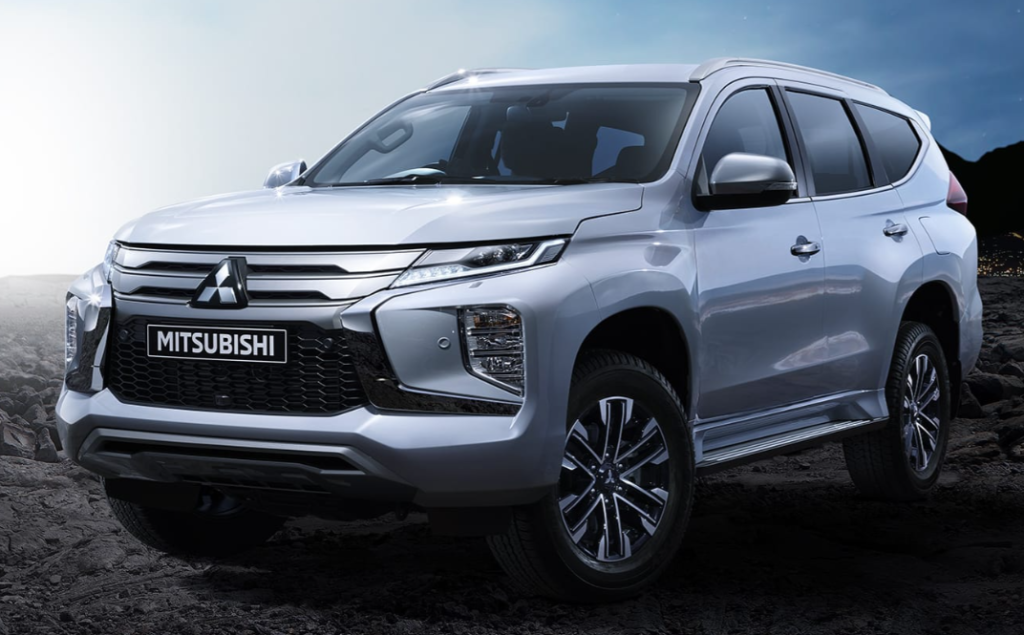
The Mitsubishi Pajero Sport fuel consumption figures look surprisingly respectable for a large, diesel-powered SUV built to carry seven people, tow serious loads, and tackle terrain where ordinary crossovers would rather turn around.
But there is a catch.
Fuel economy numbers for the Pajero Sport vary considerably depending on the market, model year, drivetrain, test procedure, traffic conditions, and even how much enthusiasm we put into the accelerator pedal.
In Australia, Mitsubishi currently lists the Pajero Sport at approximately 8.0 L/100 km for fuel efficiency. Meanwhile, Mitsubishi Thailand advertises certain current 2WD versions with laboratory-tested fuel efficiency of 15.2 km/L, equivalent to roughly 6.6 L/100 km, under the UN R101 testing standard.
Those figures sound excellent for a substantial body-on-frame SUV.
Still, official numbers are only part of the story.
Once we throw city traffic, hills, passengers, luggage, air conditioning, towing, oversized tyres, short journeys, or off-road adventures into the equation, the fuel needle begins behaving very differently.
So how economical is the Pajero Sport in everyday life?
Let's dig into the numbers, understand what makes them move, and work out how we can squeeze more kilometres from every litre of diesel.
Content in this publication
- Mitsubishi Pajero Sport Fuel Consumption at a Glance
- What Is Good Fuel Consumption for a Pajero Sport?
- Understanding L/100 km and km/L
- Mitsubishi Pajero Sport Diesel Fuel Consumption
- Pajero Sport City Fuel Consumption
- Pajero Sport Highway Fuel Consumption
- 2WD vs 4WD Pajero Sport Fuel Consumption
- Mitsubishi Pajero Sport Fuel Consumption When Towing
- How Vehicle Weight Affects Pajero Sport Economy
- Roof Racks and Accessories Can Increase Fuel Use
- Tyre Pressure and Fuel Consumption
- The Eight-Speed Automatic and Fuel Economy
- Air Conditioning and Mitsubishi Pajero Sport Fuel Consumption
- How Much Fuel Does the Pajero Sport Tank Hold?
- How to Calculate Your Actual Pajero Sport Fuel Consumption
- What Causes High Mitsubishi Pajero Sport Fuel Consumption?
- Diesel Particulate Filter Regeneration and Fuel Use
- How Driving Style Changes Pajero Sport Fuel Economy
- Can Eco-Driving Make a Pajero Sport Economical?
- Old vs New Pajero Sport Fuel Consumption
- Does the Pajero Sport Use Too Much Fuel?
- How the Pajero Sport Compares With Smaller SUVs
- Best Ways to Reduce Mitsubishi Pajero Sport Fuel Consumption
- Is Mitsubishi's Official Fuel Consumption Realistic?
- What Fuel Consumption Should You Expect Before Buying?
- Final Thoughts on Mitsubishi Pajero Sport Fuel Consumption
- Frequently Asked Questions
- 1. What is the Mitsubishi Pajero Sport fuel consumption per 100 km?
- 2. How many kilometres per litre does a Mitsubishi Pajero Sport get?
- 3. Why is my Pajero Sport using more diesel than expected?
- 4. Does 4WD increase Pajero Sport fuel consumption?
- 5. How can I improve Mitsubishi Pajero Sport fuel economy?
Mitsubishi Pajero Sport Fuel Consumption at a Glance
Before diving into the details, we need to understand one important point: there isn't one universal Pajero Sport fuel-consumption figure.
Specifications vary between countries.
For example:
| Version/Test Example | Published Fuel Consumption |
|---|---|
| Australian Pajero Sport range | Around 8.0 L/100 km |
| Thai 2.4 Elite Edition 2WD | Up to 15.2 km/L |
| 15.2 km/L converted | About 6.6 L/100 km |
| Thai 2024 Elite Edition 4WD | Around 14.3 km/L |
| 14.3 km/L converted | About 7.0 L/100 km |
Mitsubishi Thailand specifically states that its 15.2 km/L figure for the 2WD Elite Edition comes from UN R101 laboratory testing, so we shouldn't treat it as a promise of what every driver will achieve on every journey.
Similarly, Mitsubishi reported approximately 14.3 km/L for a 2024 Elite Edition 4WD in Thailand.
Different testing standards alone can create noticeable differences between advertised figures.
That's why comparing two figures from different countries without context is a little like comparing marathon times when one runner had a tailwind and the other was running uphill.
What Is Good Fuel Consumption for a Pajero Sport?
We should judge the Pajero Sport for what it actually is.
This isn't a lightweight hatchback.
It is a large SUV engineered around capability, passenger space, diesel torque, towing, ground clearance, and—in many versions—a proper four-wheel-drive system.
Against that background, an official figure around 8 L/100 km is reasonably economical.
A better way of evaluating your own Pajero Sport is to establish a personal baseline.
Record consumption across several full tanks rather than relying on one commute.
Fuel usage can temporarily rise because of:
- Heavy urban congestion
- Frequent cold starts
- Short trips
- Steep terrain
- Strong headwinds
- Roof racks
- Towing
- Low tyre pressures
- Regeneration of the diesel particulate filter
- Heavy loads
- Aggressive acceleration
One tank tells us surprisingly little.
Five or ten tanks tell a much more interesting story.
Understanding L/100 km and km/L
Fuel economy becomes unnecessarily confusing because different countries describe the same thing differently.
Australia commonly uses litres per 100 kilometres (L/100 km).
In this system, lower is better.
If our Pajero Sport consumes:
- 7 L/100 km, it uses seven litres to travel 100 kilometres.
- 8 L/100 km, it uses eight litres.
- 10 L/100 km, it uses ten litres.
Other countries commonly use kilometres per litre (km/L).
Here, higher is better.
For example, Mitsubishi Thailand's quoted 15.2 km/L laboratory result converts to approximately:
100 ÷ 15.2 = 6.58 L/100 km
So when we see apparently very different numbers online, they may simply be using different measurement systems.
How to Convert km/L Into L/100 km
Use this simple formula:
100 ÷ km/L = L/100 km
For example:
100 ÷ 12.5 km/L = 8.0 L/100 km
How to Convert L/100 km Into km/L
Reverse the formula:
100 ÷ L/100 km = km/L
So:
100 ÷ 8 = 12.5 km/L
Once we know that trick, comparing consumption data becomes much easier.
Mitsubishi Pajero Sport Diesel Fuel Consumption
Diesel power is central to the Pajero Sport's identity in many markets.
Recent versions offered internationally use a 2.4-litre turbo-diesel engine, although specifications differ by model year and country.
The Philippine-market Montero Sport—the regional name used for the closely related Pajero Sport—has also been offered with Mitsubishi's 4N15 2.4-litre turbocharged direct-injection diesel engine with MIVEC.
Current Thai versions use a newer 2.4-litre Hyper Power diesel configuration producing 184 PS, with Mitsubishi advertising 15.2 km/L for applicable versions.
Diesel suits this type of vehicle rather well.
Why?
Because diesel engines typically provide substantial torque at relatively low engine speeds, allowing a heavy SUV to maintain momentum without constantly chasing high revs.
That's especially useful when:
- Climbing hills
- Carrying passengers
- Cruising on highways
- Towing trailers
- Driving off-road
But diesel doesn't perform magic.
Put a Pajero Sport into endless stop-start traffic and its consumption will still climb.
Pajero Sport City Fuel Consumption
Cities are where large SUVs usually drink the most.
Picture the routine.
Accelerate.
Brake.
Idle.
Accelerate again.
Stop at another traffic light.
Move 50 metres.
Brake.
Repeat.
Every acceleration asks the engine to move a significant mass from a standstill. The energy spent getting the vehicle moving is then partly wasted when we brake moments later.
That's why urban fuel consumption can be noticeably higher than official combined figures.
Why Short Trips Hurt Economy
Short journeys make things even worse.
The engine, transmission, tyres, and lubricants may not reach their ideal operating temperatures before the trip ends.
A five-minute supermarket run can therefore produce surprisingly ugly numbers on the trip computer.
If we drive only a few kilometres and see fuel consumption spike, there is no need to panic immediately.
Look at the longer-term average.
That figure matters much more.
Traffic Makes a Bigger Difference Than Distance
Twenty kilometres on a flowing suburban road can require less fuel than eight kilometres crawling through gridlocked traffic.
Fuel economy isn't simply about how far we travel.
It's about how efficiently we cover that distance.
Pajero Sport Highway Fuel Consumption
Highway driving is generally where the Pajero Sport feels most comfortable from a fuel-efficiency perspective.
Once we're cruising steadily in a high gear, acceleration demands decrease and the diesel engine can operate efficiently.
That doesn't mean faster is always better, though.
Aerodynamic drag rises sharply with speed.
A Pajero Sport isn't shaped like a teardrop. It's tall, broad, and built with SUV practicality in mind.
Push it through the air faster and the engine has to work harder.
The Sweet Spot Matters
A relaxed cruise usually rewards us more than repeatedly accelerating between slower vehicles.
Smoothness matters.
Maintaining momentum is often more valuable than searching for some magical exact speed.
Cruise control can help on relatively flat roads because it prevents unnecessary fluctuations in accelerator position.
On steep, rolling terrain, however, a human driver who anticipates hills may sometimes maintain momentum more naturally.
2WD vs 4WD Pajero Sport Fuel Consumption
The drivetrain deserves attention when discussing Mitsubishi Pajero Sport fuel economy.
A 2WD version generally carries less driveline complexity than a four-wheel-drive model.
That can contribute to better efficiency.
We can see this reflected in Mitsubishi's own Thai-market figures. The current 2WD Elite Edition is quoted at up to 15.2 km/L under UN R101 laboratory testing, while Mitsubishi previously quoted approximately 14.3 km/L for a 2024 Elite Edition 4WD.
We shouldn't interpret that difference as a universal rule across every model year, because specification and testing changes matter.
Still, it illustrates the basic principle.
Extra drivetrain components and vehicle weight can carry an efficiency penalty.
Does Driving in 4WD Increase Fuel Consumption?
Potentially, yes.
Engaging additional drivetrain components can create extra mechanical losses, while difficult terrain itself dramatically increases energy demand.
Mud, sand, steep tracks, loose gravel, and low-range driving are hardly laboratory-test conditions.
If we spend the weekend crawling through dunes, expecting highway fuel economy would be optimistic.
Very optimistic.
Mitsubishi Pajero Sport Fuel Consumption When Towing
Towing changes everything.
A caravan, boat, horse trailer, or loaded utility trailer adds weight and aerodynamic resistance.
The engine has to work harder during:
- Acceleration
- Hill climbing
- Overtaking
- Maintaining speed into headwinds
Aerodynamics can matter even more than weight at motorway speeds.
A tall caravan acts like a wall being dragged through the air.
Consequently, towing fuel consumption can climb dramatically compared with solo highway driving.
Trailer Weight Isn't the Only Factor
Two trailers weighing exactly the same can produce different consumption.
Consider:
- Height
- Width
- Shape
- Tyre pressure
- Bearing condition
- Load distribution
- Driving speed
- Wind direction
A lower streamlined trailer might demand less fuel than a tall, boxy caravan of similar weight.
Slow and Steady Usually Wins
When towing, small reductions in cruising speed can sometimes produce meaningful improvements in fuel use.
Smooth acceleration helps too.
Think locomotive, not drag racer.
How Vehicle Weight Affects Pajero Sport Economy
Weight is the quiet enemy of efficiency.
Add seven passengers, camping equipment, water containers, recovery gear, food, luggage, and accessories, and the engine suddenly has considerably more mass to move.
Extra weight makes its biggest impact during acceleration and hill climbing.
Once we're cruising steadily on level terrain, aerodynamics take a larger role.
That distinction explains why heavily loaded urban driving can punish consumption much more than we might expect.
Roof Racks and Accessories Can Increase Fuel Use
Some modifications look harmless but have measurable consequences.
Roof racks are a classic example.
Even an empty rack disturbs airflow.
Add a rooftop tent, awning, spare tyre, storage box, kayak, or recovery boards and the Pajero Sport starts punching an even larger hole through the air.
At low speeds, we might barely notice.
At highway speeds, the difference can become much more significant.
Bull bars, raised suspension, wider tyres, and other modifications may also affect fuel efficiency through changes in weight, aerodynamics, or rolling resistance.
None of this means we shouldn't modify the SUV.
A Pajero Sport is built for adventure.
We simply shouldn't be surprised when an adventure-ready setup uses more diesel than the showroom-standard vehicle that produced the official test number.
Tyre Pressure and Fuel Consumption
Tyres are easy to ignore.
Yet they are one of the simplest places to recover lost efficiency.
Underinflated tyres create extra rolling resistance.
Imagine riding a bicycle with soft tyres. Suddenly every pedal stroke feels heavier.
The same principle applies here.
We should check pressures regularly and follow the recommended specification for the vehicle's tyres and load.
Remember that pressures may need adjusting when carrying heavy loads or towing, according to the manufacturer's guidance.
Bigger Tyres Can Change the Equation
Drivers who use their Pajero Sport off-road sometimes fit larger or more aggressive tyres.
That can improve capability, but fuel economy may suffer because of:
- Additional tyre weight
- Higher rolling resistance
- More aggressive tread
- Changed effective gearing
- Increased aerodynamic drag
A chunky all-terrain tyre has different priorities from a low-resistance highway tyre.
And that's perfectly fine—as long as we know the trade-off.
The Eight-Speed Automatic and Fuel Economy
Many Pajero Sport versions have used an eight-speed automatic transmission.
Mitsubishi's Philippine documentation for earlier Montero Sport variants described the eight-speed automatic as being designed to help maximise engine performance and fuel efficiency.
Multiple ratios allow the transmission to keep the diesel engine closer to an efficient operating range.
Lower gears provide leverage when accelerating.
Higher gears allow relaxed cruising.
On the highway, that tall gearing helps prevent the engine from spinning unnecessarily quickly.
Should We Manually Shift to Save Fuel?
Usually, the automatic transmission does a perfectly respectable job by itself.
Manual control is more useful when we want greater control on steep descents, when towing, or in particular terrain.
Constantly overriding the gearbox in pursuit of tiny efficiency gains can easily become counterproductive.
Smooth driving makes a bigger difference.
Air Conditioning and Mitsubishi Pajero Sport Fuel Consumption
Yes, air conditioning requires energy.
But turning it off isn't always the clever fuel-saving trick people imagine.
At low speeds, opening windows may be perfectly reasonable.
At highway speeds, fully open windows increase aerodynamic drag.
Meanwhile, modern climate-control systems don't necessarily operate at maximum compressor load continuously.
Comfort matters too.
Nobody earns a medal for arriving at a destination sweaty just to save a fraction of a litre.
Instead, use climate control sensibly.
Avoid extreme settings when unnecessary, park in shade where possible, and ventilate a baking-hot cabin before asking the system to cool it.
How Much Fuel Does the Pajero Sport Tank Hold?
Fuel-tank capacity can vary according to generation and market, so owners should check their specific handbook.
Mitsubishi documentation for Pajero Sport models sold in Thailand lists a 68-litre fuel tank.
That allows us to perform some interesting theoretical calculations.
At exactly 8.0 L/100 km:
68 ÷ 8 × 100 = 850 km
So mathematically, 68 litres at 8 L/100 km equals about 850 kilometres.
But don't read that as a guaranteed driving range.
Real usable range is affected by:
- Fuel reserve
- Traffic
- Terrain
- Weather
- Driving style
- Vehicle load
- Towing
- Idling
- Tyres
- Trip length
We certainly shouldn't plan a remote journey on the assumption that every last drop in the tank is usable.
How to Calculate Your Actual Pajero Sport Fuel Consumption
The dashboard computer is convenient.
But if we really want to know what our vehicle is consuming, the full-tank method is better.
Step-by-Step Fuel Economy Calculation
- Fill the fuel tank completely.
- Reset the trip meter.
- Drive normally.
- At the next fill, fill the tank again to a comparable level.
- Record the litres added.
- Record the kilometres travelled.
- Divide litres by kilometres.
- Multiply by 100.
Suppose we drove 720 km and refilled with 59 litres.
The calculation becomes:
59 ÷ 720 × 100 = 8.19 L/100 km
That's our calculated consumption for that tank.
Why Multiple Tanks Are Better
One refill may be distorted by pump shut-off differences, driving conditions, or unusual journeys.
Tracking five or ten tanks gives us a much better average.
It also helps spot mechanical problems.
If our long-term consumption suddenly jumps without an obvious change in driving conditions, something deserves investigation.
What Causes High Mitsubishi Pajero Sport Fuel Consumption?
A gradual increase can be normal.
A sudden increase deserves attention.
Common possibilities include:
- Low tyre pressures
- Dirty air filter
- Incorrect wheel alignment
- Heavy accessories
- Roof racks
- Aggressive driving
- Extensive idling
- Frequent short trips
- Towing
- Poor-quality fuel
- Mechanical problems
- Sensor faults
- Brake drag
No single symptom automatically identifies the cause.
Think of fuel consumption like a fever. It tells us something changed, but it doesn't diagnose the problem by itself.
When Should We Be Concerned?
If consumption rises dramatically and stays high despite unchanged driving conditions, check the basics first.
Tyres.
Load.
Driving route.
Maintenance.
Then consider professional diagnosis, especially if increased fuel use appears alongside warning lights, smoke, rough running, reduced performance, or difficult starting.
Diesel Particulate Filter Regeneration and Fuel Use
Modern diesel vehicles may periodically perform diesel particulate filter regeneration.
During regeneration, operating conditions change to raise exhaust temperatures and burn accumulated particulate matter.
That process can temporarily influence fuel consumption.
Therefore, one unusually thirsty journey doesn't necessarily indicate a fault.
Repeated abnormal consumption, however, shouldn't simply be dismissed as regeneration.
The long-term trend is what matters.
How Driving Style Changes Pajero Sport Fuel Economy
This is the part we control most easily.
A heavy right foot makes diesel disappear.
Hard acceleration injects more fuel to create more power. Frequent braking then throws away much of the kinetic energy we just paid to produce.
Smooth drivers preserve momentum.
Accelerate Progressively
We don't need to crawl away from every traffic light.
Simply avoid unnecessary bursts of acceleration followed immediately by braking.
Look Further Down the Road
If traffic ahead is stopping, lift off earlier.
If a hill is approaching, carry sensible momentum into it rather than demanding sudden acceleration halfway up.
Anticipation is free fuel economy.
Avoid Excessive Idling
An idling engine is consuming fuel while travelling exactly zero kilometres.
That makes its effective fuel economy rather easy to calculate:
terrible.
Maintain a Consistent Speed
Constant speed generally beats continual acceleration and deceleration.
This is one reason open-road driving often produces such satisfying fuel figures.
Can Eco-Driving Make a Pajero Sport Economical?
Relatively speaking, absolutely.
We're not going to transform a rugged SUV into a tiny hybrid hatchback.
That misses the point.
Efficiency means getting the most from the machine we chose.
For the Pajero Sport, sensible eco-driving includes:
- Keeping tyres properly inflated
- Removing unnecessary weight
- Taking unused roof accessories off
- Accelerating progressively
- Maintaining steady highway speeds
- Combining short journeys when practical
- Keeping maintenance up to date
- Avoiding needless idling
- Planning routes around severe congestion
- Monitoring long-term consumption
None of these techniques is revolutionary.
That's precisely why they work.
Fuel economy usually improves through dozens of small sensible decisions rather than one miracle hack.
Old vs New Pajero Sport Fuel Consumption
Comparing model years can get messy.
Engine calibration, emissions equipment, gearbox programming, vehicle weight, tyres, testing standards, and drivetrain configurations can all change.
Current Thai-market models, for example, use Mitsubishi's 2.4-litre Hyper Power diesel engine, with some versions rated at 184 PS and advertised at 15.2 km/L.
Earlier Pajero Sport versions in other markets used different calibrations and specifications.
Therefore, searching simply for "Pajero Sport fuel consumption" without adding the model year can produce misleading comparisons.
When shopping for a used Pajero Sport, search specifically by:
year + engine + transmission + drivetrain + market
That combination gives us far more meaningful information.
Does the Pajero Sport Use Too Much Fuel?
That depends entirely on what we're comparing it with.
Compared with a compact hybrid?
Of course.
Compared with another large, diesel-powered, body-on-frame SUV designed for towing and off-road driving?
The conversation becomes much more interesting.
Fuel consumption should never be judged in isolation.
We also need to consider what the vehicle provides:
- Seven-seat practicality on applicable variants
- Diesel torque
- Long-distance touring ability
- Four-wheel-drive capability
- Towing capability
- Ground clearance
- Cargo capacity
- Robust construction
Buying a Pajero Sport and complaining that it doesn't consume fuel like a city hatchback is a little like buying hiking boots and complaining they're heavier than slippers.
Different tools.
Different jobs.
How the Pajero Sport Compares With Smaller SUVs
Smaller crossovers frequently achieve lower fuel consumption because they are lighter, lower, and often more aerodynamic.
Many also use petrol-electric hybrid systems specifically designed to recover energy in stop-start traffic.
The Pajero Sport prioritises different things.
Its strengths become clearer when roads disappear, loads become heavy, or journeys grow long.
So buyers should ask themselves a better question than:
"Is this SUV economical?"
Ask:
"Is its fuel consumption reasonable for what I need it to do?"
That's the comparison that actually matters.
Best Ways to Reduce Mitsubishi Pajero Sport Fuel Consumption
If we want better economy without changing vehicles, concentrate on the factors with the greatest practical impact.
Our Fuel-Saving Checklist
- Check tyre pressures regularly.
- Remove unused roof racks or heavy accessories.
- Keep servicing up to date.
- Avoid rapid acceleration.
- Anticipate traffic instead of braking late.
- Reduce unnecessary idling.
- Use sensible highway speeds.
- Combine several short trips into one longer journey.
- Keep unnecessary cargo out of the vehicle.
- Check wheel alignment if the vehicle pulls or tyres wear unevenly.
- Measure consumption manually across several tanks.
- Investigate sudden unexplained increases.
Don't Chase Tiny Gains While Ignoring Big Ones
Driving 10 km/h slower on a high-speed journey can matter more than obsessing over whether the air conditioning is running.
Removing a large rooftop tent can matter more than changing the stereo volume.
Smooth acceleration can matter more than constantly staring at the instant-consumption display.
Focus on the elephants before chasing the mice.
Is Mitsubishi's Official Fuel Consumption Realistic?
Official figures are useful.
They allow vehicles tested under a defined procedure to be compared.
But they are not promises.
Mitsubishi explicitly identifies the Thai 15.2 km/L figure as laboratory performance data for the 2WD Elite Edition under the UN R101 standard.
Real roads introduce variables laboratories can't replicate perfectly.
Temperature changes.
People accelerate differently.
Traffic appears.
Roads climb.
Winds blow.
Tyres wear.
Cars carry luggage.
That's why two people owning apparently identical Pajero Sports can report meaningfully different averages.
Neither driver is necessarily wrong.
What Fuel Consumption Should You Expect Before Buying?
Start with the official figure for the exact model available in your country.
Then build a margin around it based on your usage.
Mostly highway?
You may come relatively close to favourable published figures under suitable conditions.
Heavy city traffic?
Expect higher consumption.
Regular towing?
Higher again.
Modified 4WD with all-terrain tyres, bull bar, rooftop tent, drawers, recovery equipment, and camping gear?
That published showroom number is becoming less relevant with every accessory.
This isn't necessarily bad.
It simply reflects the laws of physics collecting their bill.
Final Thoughts on Mitsubishi Pajero Sport Fuel Consumption
The Mitsubishi Pajero Sport fuel consumption story cannot be reduced to one magical number.
Mitsubishi Australia currently quotes fuel efficiency of around 8.0 L/100 km for the Pajero Sport range, while current Mitsubishi Thailand information quotes up to 15.2 km/L—approximately 6.6 L/100 km—for applicable 2WD versions under its specified laboratory testing procedure.
Different markets, drivetrains, model years, and testing procedures explain why the internet sometimes appears to give contradictory answers.
More importantly, real consumption depends on how we actually use the vehicle.
Urban congestion pushes it upward. Highway cruising usually helps. Towing, roof accessories, heavy loads, soft tyres, aggressive acceleration, and difficult terrain all demand additional fuel.
The Pajero Sport isn't trying to be an economy car.
It's trying to combine family practicality with diesel torque, touring ability, towing capacity, and genuine off-road usefulness without turning every fuel stop into a financial crisis.
And viewed through that lens, its fuel economy makes considerably more sense.
Track several tanks, learn your vehicle's normal average, drive smoothly, keep the mechanical basics healthy, and judge consumption against the work you're asking the Pajero Sport to perform.
That's where the meaningful number lives—not merely on the brochure.
Frequently Asked Questions
1. What is the Mitsubishi Pajero Sport fuel consumption per 100 km?
It depends on the market and specification. Mitsubishi Australia currently lists approximately 8.0 L/100 km for the Pajero Sport range. Other markets publish different figures because drivetrains and testing procedures vary.
2. How many kilometres per litre does a Mitsubishi Pajero Sport get?
A consumption figure of 8.0 L/100 km equals approximately 12.5 km/L. Mitsubishi Thailand currently advertises up to 15.2 km/L for certain 2WD Pajero Sport versions under UN R101 laboratory testing.
3. Why is my Pajero Sport using more diesel than expected?
Higher consumption can result from city traffic, short trips, low tyre pressure, roof accessories, heavy loads, towing, aggressive driving, maintenance issues, or difficult terrain. Compare several tanks before concluding that something is mechanically wrong.
4. Does 4WD increase Pajero Sport fuel consumption?
Four-wheel-drive models may consume somewhat more fuel because of additional drivetrain weight and mechanical losses. Terrain requiring 4WD can increase consumption further because sand, mud, slopes, and low-speed off-road driving demand considerably more energy.
5. How can I improve Mitsubishi Pajero Sport fuel economy?
Keep tyre pressures correct, maintain steady speeds, accelerate progressively, remove unnecessary weight and roof accessories, reduce needless idling, keep servicing current, and track fuel use across several complete tanks. Small improvements can add up substantially over thousands of kilometres.
If you want to know other articles similar to Mitsubishi Pajero Sport Fuel Consumption: What Should We Really Expect? you can visit the category Driving.
Can Nissan Rogue Pull a Boat? Complete Towing Guide
Can Nissan Rogue Be Flat Towed? Complete Towing Guide
Are Nissan Rogue Good on Gas? MPG, Fuel Economy, and Real-World Costs
Can Nissan Rogue Drive in Snow? Complete Winter Driving Guide

Kia Sorento Diesel Fuel Consumption: MPG, Efficiency and Real-World Range
Haval Jolion Hybrid Fuel Consumption: How Efficient Is It Really?
Leave a Reply
More content of your interest