

Honda Passport Competitors: The Midsize SUVs Worth Cross-Shopping

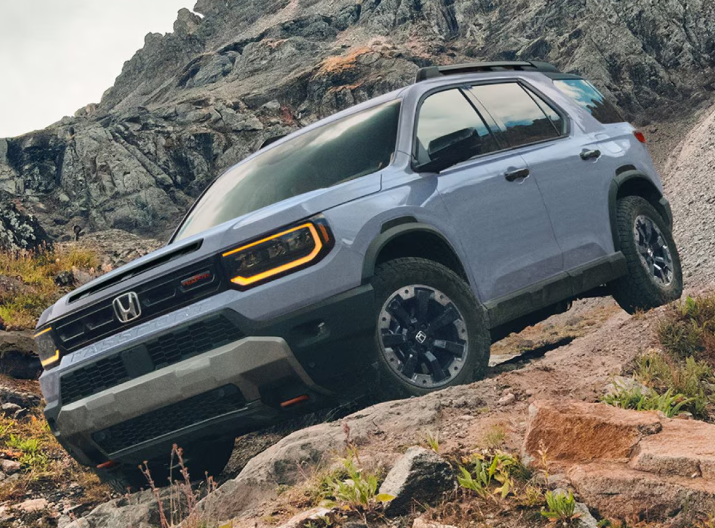
The Honda Passport has carved out an interesting corner of the midsize SUV market. It is not a soft little crossover pretending to enjoy dirt roads, yet it is not a hardcore rock crawler that makes us sacrifice comfort just to survive Monday morning traffic. The redesigned 2026 Passport sits somewhere in the sweet spot: rugged, roomy, powerful, and refreshingly practical.
That positioning also makes choosing one surprisingly complicated.
There are plenty of Honda Passport competitors, but they approach the same problem from very different directions. The Toyota 4Runner leans harder into traditional off-road ability. The Ford Bronco turns adventure into a lifestyle. The Jeep Grand Cherokee blends ruggedness with refinement. Meanwhile, the Subaru Outback, Hyundai Santa Fe, Kia Telluride, Nissan Pathfinder, and Chevrolet Blazer attack the Passport with comfort, efficiency, passenger space, or value.
So which alternatives deserve a place on our shopping list?
We are going to compare the most relevant Passport rivals according to what actually matters: power, all-weather capability, towing, cargo room, passenger comfort, technology, and day-to-day usability. Rather than declaring one SUV universally superior, we will identify where each vehicle differs so we can match the machine to the way we actually drive.
Content in this publication
- Why the Honda Passport Attracts So Many Different Buyers
- Honda Passport Competitors at a Glance
- 1. Toyota 4Runner: The Passport's Rugged Traditional Rival
- 2. Jeep Grand Cherokee: A More Refined Passport Alternative
- 3. Ford Bronco: The Wildest Honda Passport Competitor
- 4. Subaru Outback: The Sensible AWD Alternative
- 5. Hyundai Santa Fe: A Family-Focused Passport Competitor
- 6. Kia Telluride: More Seats and More Family Space
- 7. Nissan Pathfinder: The Towing and Family Utility Rival
- 8. Chevrolet Blazer: The Road-Oriented Alternative
- 9. Chevrolet Traverse: When Cargo Space Changes Everything
- Which Honda Passport Competitor Has the Best Off-Road Hardware?
- Which Passport Alternatives Tow More?
- Which Competitors Have a Third Row?
- Naturally Aspirated V6 vs Turbocharged Rivals
- Passport vs Competitors for Cargo-Oriented Buyers
- What About the Honda Pilot?
- How to Choose Between the Honda Passport and Its Competitors
- Honda Passport Competitors: The Bottom Line
- Frequently Asked Questions
- 1. What SUVs are the main Honda Passport competitors?
- 2. Is the Toyota 4Runner better off road than the Honda Passport?
- 3. What competes with the Honda Passport but has three rows?
- 4. Can Honda Passport competitors tow more than 5,000 pounds?
- 5. What is the closest alternative to a Honda Passport TrailSport?
Why the Honda Passport Attracts So Many Different Buyers
Before looking at the competition, we need to understand what makes the Passport unusual.
The 2026 Honda Passport uses a naturally aspirated 3.5-liter V6 producing 285 horsepower and 262 lb-ft of torque, paired with a 10-speed automatic transmission. Honda's second-generation i-VTM4 all-wheel-drive system is standard, and properly equipped versions can tow up to 5,000 pounds.
Those numbers tell only half the story.
The Passport remains a two-row SUV. Rather than squeezing a cramped third row into the back, Honda dedicates its cabin to five occupants and their gear. Rear passengers receive generous space, and clever cargo storage makes the interior feel almost like a rolling equipment locker.
The TrailSport versions push the adventure theme considerably further with all-terrain tires, an off-road-tuned suspension, recovery hooks, skid plates, and an integrated Class III hitch.
That means buyers looking at a Passport may also consider everything from a Subaru Outback to a Toyota 4Runner. Few vehicles have such a broad collection of natural rivals.
Honda Passport Competitors at a Glance
Here is the easiest way to understand the field.
| SUV | Basic Character | Power Highlight | Max Towing | Seating |
|---|---|---|---|---|
| Honda Passport | Rugged two-row crossover | 285 hp | 5,000 lb | 5 |
| Toyota 4Runner | Traditional adventure SUV | Up to 326 hp | 6,000 lb | Up to 7 |
| Jeep Grand Cherokee | Refined capability | Up to 324 hp gas | 6,200 lb | 5 |
| Ford Bronco | Serious off-road SUV | Up to 418 hp | Up to 4,500 lb | 5 |
| Subaru Outback | Efficient AWD adventure wagon/SUV | Up to 260 hp | Up to 3,500 lb | 5 |
| Hyundai Santa Fe | Practical family SUV | Multiple powertrains | Up to 4,500 lb | 6–7 |
| Nissan Pathfinder | Family/towing specialist | Up to 295 hp | Up to 6,000 lb | 7–8 |
| Kia Telluride | Spacious premium-feeling SUV | 274 hp gas for 2027 | 5,000 lb | Up to 8 |
| Chevrolet Blazer | Road-focused sporty SUV | Up to 308 hp | 4,500 lb | 5 |
Specifications vary by model, trim, equipment, and model year. Toyota rates the 2026 4Runner at up to 6,000 pounds of towing; Ford lists most 2026 Broncos at 3,500 pounds and the Bronco Raptor at 4,500; Jeep lists a maximum of 6,200 pounds for the 2026 Grand Cherokee.
Now let us dig beneath the spreadsheet.
1. Toyota 4Runner: The Passport's Rugged Traditional Rival
The Toyota 4Runner may be the most obvious Passport alternative for shoppers who regularly imagine their SUV covered in mud.
The latest-generation 4Runner offers two powertrain directions. Toyota's standard i-FORCE engine produces 278 horsepower and 317 lb-ft of torque, while the available i-FORCE MAX hybrid reaches 326 horsepower and 465 lb-ft. Toyota offers rear-wheel drive, part-time four-wheel drive, and full-time four-wheel-drive configurations depending on trim.
Toyota rates maximum towing capacity at 6,000 pounds.
Honda Passport vs Toyota 4Runner Off Road
This is where their personalities separate.
The Passport feels like a crossover that attended survival school. The 4Runner feels like an off-roader that learned table manners.
Certain 4Runner trims provide a low-range transfer case, electronic locking rear differential, Multi-Terrain Select, and CRAWL Control.
The Passport instead relies on sophisticated AWD torque distribution, Trail Torque Logic, terrain modes, and relatively approachable unibody road manners.
For rocky trails and genuine low-speed four-wheel-driving situations, the Toyota's mechanical hardware gives it a distinctly different toolset. For rough forest roads, snow, gravel, campsites, and daily highway use, the Passport offers substantial capability without feeling quite as truck-like.
Who Should Compare the 4Runner With the Passport?
Put both on the test-drive list if weekend trails matter almost as much as weekday commuting.
If we primarily need pavement comfort with occasional serious dirt-road exploration, the Passport's balance is appealing. If our adventures involve steep terrain, low-range crawling, or regular overlanding, the 4Runner's architecture deserves close attention.
2. Jeep Grand Cherokee: A More Refined Passport Alternative
Where the Toyota 4Runner plays the rugged card, the Jeep Grand Cherokee adds another ingredient: luxury.
The Grand Cherokee can look completely at home pulling into an upscale hotel, yet Jeep still offers genuine capability underneath the polished sheet metal.
For 2026, Jeep lists a new 2.0-liter Hurricane turbo engine with 324 horsepower and 332 lb-ft of torque on applicable trims, while the 3.6-liter Pentastar V6 remains available on Laredo models with 293 horsepower. Maximum towing capacity reaches 6,200 pounds.
Grand Cherokee vs Passport for Everyday Driving
The Grand Cherokee tends to attract shoppers who want greater luxury differentiation between trims.
A Passport cabin is functional, durable, and modern. The Jeep can climb considerably farther up the premium ladder.
That flexibility cuts both ways. The Passport lineup is relatively straightforward. The Grand Cherokee range can become a maze of trims, engines, equipment groups, and prices.
Still, shoppers who view their SUV as both an adventure vehicle and an upscale daily driver should compare the two closely.
Towing: Jeep Takes a Different Approach
Honda rates the Passport at 5,000 pounds when properly equipped. Jeep lists 6,200 pounds for appropriately configured 2026 Grand Cherokee models.
That 1,200-pound difference can matter significantly if our weekends involve larger boats or trailers.
For a pair of mountain bikes, camping equipment, or a lightweight trailer, however, capability is only one part of the equation. Ride quality, cargo access, purchase price, and ownership priorities can matter just as much.
3. Ford Bronco: The Wildest Honda Passport Competitor
Few SUVs communicate their purpose as loudly as the Ford Bronco.
Removable doors? Available removable roof? Locking differentials? Giant tires? Manual transmission availability?
The Bronco is basically wearing hiking boots before breakfast.
For 2026, Ford lists a 300-horsepower 2.3-liter EcoBoost four-cylinder and an available 330-horsepower 2.7-liter EcoBoost V6 on numerous versions. The extreme Bronco Raptor jumps to 418 horsepower.
Passport vs Bronco: Comfort or Character?
These SUVs solve completely different problems.
The Passport's unibody architecture, independent suspension, conventional enclosed body, and road-oriented fundamentals make it easier to live with as a family vehicle.
The Bronco prioritizes off-road geometry and modularity.
Ground clearance on Bronco variants can rise dramatically with packages such as Sasquatch, and Ford lists water-fording capability reaching 33.5 inches on some mainstream configurations.
The Honda does not attempt to imitate that level of trail specialization.
But the Passport Has a Practical Advantage
Most of us spend far more time on asphalt than crawling across boulders.
That sounds obvious, yet it should shape our decision.
If the vehicle must carry children, groceries, luggage, dogs, office gear, and camping equipment every week, the Passport's more conventional design can make everyday ownership simpler.
If we genuinely want doors-off adventure and dedicated trail hardware, nothing about the Passport is intended to reproduce the Bronco experience.
4. Subaru Outback: The Sensible AWD Alternative
The Subaru Outback approaches the same adventure-oriented customer from the opposite direction.
It is lower, more efficient in many configurations, and traditionally car-like to drive. Yet Subaru includes Symmetrical All-Wheel Drive across the lineup.
The 2026 Outback offers a 180-horsepower naturally aspirated 2.5-liter engine or a 260-horsepower turbocharged 2.4-liter engine on higher-performance variants. Maximum cargo capacity reaches 80.5 cubic feet, and towing can reach 3,500 pounds depending on trim.
You may be interested in reading Honda Passport RTL vs TrailSport: Which 2026 Passport Is Right for You?
Outback vs Passport for Snow and Bad Weather
Both are compelling all-weather choices, but their strengths differ.
The Passport provides more horsepower, a traditional automatic transmission, a muscular V6, and a higher maximum tow rating.
The Outback counters with its standard AWD philosophy, lower-load cargo access, and better fuel-economy potential. Subaru advertises up to 31 MPG on applicable 2026 Outback configurations.
Think of the Outback as hiking shoes.
The Passport is closer to a pair of sturdy boots.
Both may get us to the cabin, but they feel very different along the way.
5. Hyundai Santa Fe: A Family-Focused Passport Competitor
Not every Passport shopper needs hardcore capability.
Some simply want a roomy SUV that looks adventurous, handles vacations gracefully, and remains pleasant during the other 350 days of the year.
Enter the Hyundai Santa Fe.
The 2026 Santa Fe provides three rows rather than the Passport's two and offers 40.5 cubic feet of cargo volume behind its second row and 79.6 cubic feet behind the front seats.
Where the Santa Fe Challenges the Passport
Passenger flexibility.
A third row might sit folded most of the time, but it can be priceless when grandparents visit or another child needs a ride.
Hyundai also offers different powertrain configurations, including electrified options, giving shoppers routes toward better fuel efficiency that the gasoline-only Passport currently does not provide.
Towing capability varies substantially by Santa Fe configuration. Hyundai lists figures ranging from 2,000 pounds to as much as 4,500 pounds depending on version and equipment.
The Passport's 5,000-pound rating therefore remains attractive for heavier recreational towing.
6. Kia Telluride: More Seats and More Family Space
The Kia Telluride has become difficult to ignore whenever midsize SUVs are discussed.
By late 2026, Kia is marketing the redesigned 2027 Telluride, so shoppers comparing new inventory should pay attention to the model year rather than assuming every Telluride on a comparison site has the same specifications.
The 2027 gas Telluride uses a turbocharged 2.5-liter four-cylinder producing 274 horsepower and 311 lb-ft of torque, while Kia lists up to 5,000 pounds of towing capacity.
Telluride vs Passport Cargo and Passenger Space
This is a particularly interesting comparison because the Kia is fundamentally more passenger-oriented.
The 2027 Telluride offers up to eight seats and lists 89.3 cubic feet of cargo space behind the first row, 48.7 behind the second, and 22.3 behind the third.
The Passport trades third-row versatility for a simpler two-row cabin.
Neither philosophy is automatically better.
Families regularly transporting six or seven people have an easy reason to investigate the Telluride. Couples, smaller families, dog owners, campers, and outdoor enthusiasts who would rather convert vehicle length into second-row and cargo utility may appreciate the Passport's layout.
What About the Telluride Hybrid?
The redesigned Telluride introduces an even more important difference.
Kia offers a 2027 Telluride Hybrid producing a claimed 329 horsepower, with EPA-estimated fuel economy reaching 35 MPG combined in its most efficient configuration.
That creates a choice the Passport currently cannot answer directly: a large family SUV with hybrid efficiency.
7. Nissan Pathfinder: The Towing and Family Utility Rival
The Nissan Pathfinder does not receive the same adventure-lifestyle attention as the Bronco or 4Runner, yet it is one of the Passport's most practical competitors.
Why?
Because it combines available AWD, a V6 engine, three-row seating, and strong towing capability.
The 2026 Pathfinder uses a 3.5-liter V6. Most versions produce 284 horsepower, while Rock Creek reaches 295 horsepower. Depending on trim and equipment, maximum towing rises to 6,000 pounds.
Passport vs Pathfinder for Families
The Pathfinder can seat up to eight people, while the Passport stops at five.
That difference can completely determine our decision.
But there is another side to the equation. Nissan lists only 16.6 cubic feet behind the Pathfinder's third row.
Three-row SUVs often perform a little magic trick: we gain seats, but when every chair is occupied, luggage space suddenly becomes precious.
The Passport avoids that compromise because there is no third row consuming the rear cargo area.
Choose Based on People, Not Spec Sheets
Regularly carry six people?
Pathfinder.
Regularly carry four people plus tents, coolers, suitcases, bikes, or a giant dog?
The Passport's two-row formula starts making a lot of sense.
8. Chevrolet Blazer: The Road-Oriented Alternative
The Chevrolet Blazer is another two-row midsize SUV, but it has a different personality from the Passport.
Rather than emphasizing trail credibility, the Blazer leans toward sporty styling and paved-road use.
For 2026, Chevrolet lists a standard 228-horsepower 2.0-liter turbocharged engine and an available 3.6-liter V6 producing 308 horsepower. Maximum towing reaches 4,500 pounds when properly equipped with the V6 and available Trailering Package. Cargo volume reaches 64.2 cubic feet with the rear seats folded.
Blazer vs Passport
The Chevy may suit buyers who primarily care about design, highway performance, and familiar crossover behavior.
The Passport makes more sense to investigate when AWD capability, camping, rough-road durability, or 5,000-pound towing enters the conversation.
Both seat five, so unlike Telluride or Pathfinder comparisons, we do not need to make the third-row decision first.
9. Chevrolet Traverse: When Cargo Space Changes Everything
The Traverse sits slightly outside the Passport's exact formula because it is a larger three-row SUV.
But cargo-hungry shoppers should still look at it.
Chevrolet lists 98 cubic feet of maximum cargo capacity for the 2026 Traverse, including 56.6 cubic feet behind the second row and 22.9 behind the third. Its turbocharged 2.5-liter engine produces 328 horsepower and 326 lb-ft of torque, and Chevrolet rates towing at up to 5,000 pounds with the relevant equipment.
This is the SUV to investigate when our definition of "adventure equipment" looks suspiciously like half the contents of our garage.
The Passport is more focused and easier to conceptualize as a five-person adventure machine. The Traverse simply plays the size card.
You may be interested in readingHonda Passport RTL vs TrailSport: Which 2026 Passport Is Right for You?You may be interested in reading
Honda Passport Best Years: Which Model Years Are Worth Buying?Which Honda Passport Competitor Has the Best Off-Road Hardware?
Rather than trying to crown a universal champion, it helps to divide off-road capability by type.
For Technical Trails
The Ford Bronco and properly equipped Toyota 4Runner provide hardware designed for serious low-speed off-road driving, including features such as low-range gearing and available locking differentials.
For Moderate Trails Without Giving Up Daily Comfort
The Honda Passport TrailSport occupies an appealing middle ground with all-terrain tires, skid plates, recovery hardware, an off-road-tuned suspension, and sophisticated torque-vectoring AWD.
For Snow, Dirt Roads, and Outdoor Trips
The Subaru Outback presents another compelling formula, particularly for drivers who value all-weather traction and fuel economy more than towing or extreme trail capability.
Which Passport Alternatives Tow More?
The Passport's 5,000-pound rating is competitive, but several rivals can exceed it.
The 2026 Jeep Grand Cherokee reaches 6,200 pounds, the Toyota 4Runner reaches 6,000 pounds, and properly configured 2026 Nissan Pathfinders can also tow up to 6,000 pounds.
The Passport nevertheless occupies a useful middle ground.
Its maximum rating exceeds the Subaru Outback's 3,500 pounds and the mainstream Ford Bronco's typical 3,500-pound maximum.
For anyone purchasing around a specific trailer, we should always calculate loaded trailer weight, tongue weight, passengers, cargo, and equipment rather than shopping from the headline tow number alone.
Which Competitors Have a Third Row?
This may be the fastest way to narrow the search.
The Honda Passport has two rows and seating for five.
If we genuinely need a third row, the Kia Telluride, Nissan Pathfinder, Hyundai Santa Fe, Chevrolet Traverse, and certain Toyota 4Runner configurations deserve consideration.
If we do not need one, the absence of a third row can actually become an advantage.
Why carry extra seats we never use?
Two-row SUVs can devote more packaging effort to rear-passenger space, cargo usability, underfloor storage, and simpler access. That is exactly the niche where the Passport feels deliberate rather than incomplete.
Naturally Aspirated V6 vs Turbocharged Rivals
One increasingly rare Passport characteristic is hiding under the hood.
Honda still uses a naturally aspirated V6.
Many rivals have moved toward turbocharged four-cylinder engines and hybrid systems.
Why Some Buyers May Prefer the Passport V6
The V6 delivers its power in a familiar, linear way. There is no need for turbo boost to build, and some drivers simply enjoy the smoother character and sound of a six-cylinder engine.
Why Turbo Engines Have Become Popular
Turbocharged competitors can produce large amounts of torque from relatively small displacement.
The new 2027 Telluride's 2.5-liter turbo, for example, generates 311 lb-ft despite having four cylinders, while the Grand Cherokee's available Hurricane turbo produces 332 lb-ft.
Hybrid alternatives can push efficiency considerably further.
There is no universal answer here. This is increasingly a question of driving character versus powertrain strategy.
Passport vs Competitors for Cargo-Oriented Buyers
A surprising number of SUV comparisons focus on horsepower while ignoring the reason many of us buy an SUV in the first place.
Stuff.
Camping chairs. Suitcases. Dog crates. Strollers. Coolers. Sports equipment. Home-improvement supplies. That mysterious box we have been driving around for three weeks.
For cargo-focused shoppers, seat configuration matters just as much as maximum volume.
A three-row SUV can post a huge maximum number when every rear seat is folded, but the number behind an occupied third row may be much smaller.
The Passport's two-row design makes its cargo area consistently useful without requiring us to choose between passengers and luggage.
What About the Honda Pilot?
The Honda Pilot is not technically a competing brand, but we should mention it because Passport shoppers frequently encounter the same question:
Why not simply buy the Pilot?
The answer comes down to priorities.
The Pilot is Honda's more family-oriented three-row SUV. The Passport is the more adventure-focused two-row choice.
If we require extra seats, the Pilot belongs on the shortlist. If we would rather have a five-passenger cabin, rugged styling, adventure-focused equipment, and no unused third row occupying space, the Passport's mission is clearer.
How to Choose Between the Honda Passport and Its Competitors
Instead of asking which SUV is "best," we can make the decision much easier by asking what job the vehicle must perform.
Consider the Passport When We Want:
- Standard AWD and a strong V6
- Five-passenger seating without a cramped third row
- Up to 5,000 pounds of towing
- Genuine rough-road capability without hardcore off-road compromises
- A roomy cargo area
- Straightforward everyday drivability
- TrailSport hardware for outdoor use
Look More Closely at a Rival When We Need:
- Low-range four-wheel drive and locking differentials: 4Runner or Bronco
- More than 5,000 pounds of towing: Grand Cherokee, 4Runner, or Pathfinder
- Six to eight seats: Telluride, Pathfinder, Santa Fe, Traverse, or selected 4Runner configurations
- Hybrid fuel economy: Telluride Hybrid or another electrified alternative
- Lower, car-like AWD behavior: Subaru Outback
- Maximum three-row cargo utility: Chevrolet Traverse
That approach turns an enormous SUV market into a much more manageable shopping list.
Honda Passport Competitors: The Bottom Line
The Honda Passport occupies one of the most useful spaces in today's midsize SUV market.
It is rugged without becoming theatrical. Spacious without stretching into a giant three-row family hauler. Powerful without depending on a turbocharger. Capable enough to tow 5,000 pounds and explore rough roads, yet civilized enough for grocery runs, commuting, and long highway trips.
Its competitors reveal exactly why the Passport exists.
The Toyota 4Runner pushes farther toward traditional off-roading. The Ford Bronco turns trail capability into the centerpiece of the entire vehicle. The Jeep Grand Cherokee mixes capability with more luxury and greater maximum towing. The Subaru Outback brings efficiency and standard AWD. The Hyundai Santa Fe, Kia Telluride, Nissan Pathfinder, and Chevrolet Traverse trade some of the Passport's two-row focus for greater passenger flexibility.
And that brings us to the real question.
Do we need our SUV to behave like a truck, a family bus, an efficient crossover, or an adventure-ready daily driver?
Once we answer that, choosing among the Honda Passport competitors becomes much easier.
The Passport does not dominate every specification, nor does it need to. Its appeal comes from the way it combines attributes that normally live in separate vehicles: V6 power, useful towing, legitimate trail hardware, roomy five-seat packaging, and everyday comfort.
Sometimes the most satisfying SUV is not the one sitting at the extreme end of a category.
It is the one standing right in the middle, holding the doors open to several different worlds.
Frequently Asked Questions
1. What SUVs are the main Honda Passport competitors?
The most relevant Honda Passport competitors include the Toyota 4Runner, Jeep Grand Cherokee, Ford Bronco, Subaru Outback, Hyundai Santa Fe, Kia Telluride, Nissan Pathfinder, and Chevrolet Blazer. The ideal comparison depends on whether we prioritize off-road ability, towing, fuel economy, passenger capacity, or cargo space.
2. Is the Toyota 4Runner better off road than the Honda Passport?
The 4Runner offers more traditional off-road hardware on certain trims, including low-range four-wheel drive, available locking differentials, Multi-Terrain Select, and CRAWL Control. The Passport takes a different approach, combining torque-vectoring AWD and TrailSport equipment with more crossover-like everyday behavior.
3. What competes with the Honda Passport but has three rows?
Shoppers requiring three rows can consider vehicles such as the Kia Telluride, Nissan Pathfinder, Hyundai Santa Fe, Chevrolet Traverse, Honda Pilot, and certain Toyota 4Runner configurations. These models trade some of the Passport's dedicated two-row packaging for additional passenger capacity.
4. Can Honda Passport competitors tow more than 5,000 pounds?
Yes. Honda rates the 2026 Passport at up to 5,000 pounds. The 2026 Jeep Grand Cherokee can reach 6,200 pounds, while the Toyota 4Runner and properly configured Nissan Pathfinder can reach 6,000 pounds.
You may be interested in readingHonda Passport RTL vs TrailSport: Which 2026 Passport Is Right for You?You may be interested in reading
Honda Passport Best Years: Which Model Years Are Worth Buying?You may be interested in reading
 Test Drive Review: The Fiat 500 Abarth 0-60 Acceleration
5. What is the closest alternative to a Honda Passport TrailSport?
The answer depends on the type of adventure we have in mind. The Toyota 4Runner offers more traditional off-road hardware, the Subaru Outback Wilderness takes a lighter and more efficiency-oriented approach, and the Ford Bronco provides much more specialized trail equipment. The Passport TrailSport sits between those extremes, emphasizing rough-road capability without abandoning everyday crossover comfort.
If you want to know other articles similar to Honda Passport Competitors: The Midsize SUVs Worth Cross-Shopping you can visit the category Models.
Honda Passport Best Years: Which Model Years Are Worth Buying?
Honda Passport RTL vs TrailSport: Which 2026 Passport Is Right for You?
Honda Passport Years to Avoid: A Used Buyer’s Complete Guide
Honda Passport Trims: Complete 2026 Guide to Every Model

Nissan Rogue Generations: Complete Guide to Every Model Era
Nissan Rogue Trim Levels: Complete Guide to S, SV, Dark Armor, Rock Creek, and Platinum
Leave a Reply
More content of your interest