

Honda Passport RTL vs TrailSport: Which 2026 Passport Is Right for You?

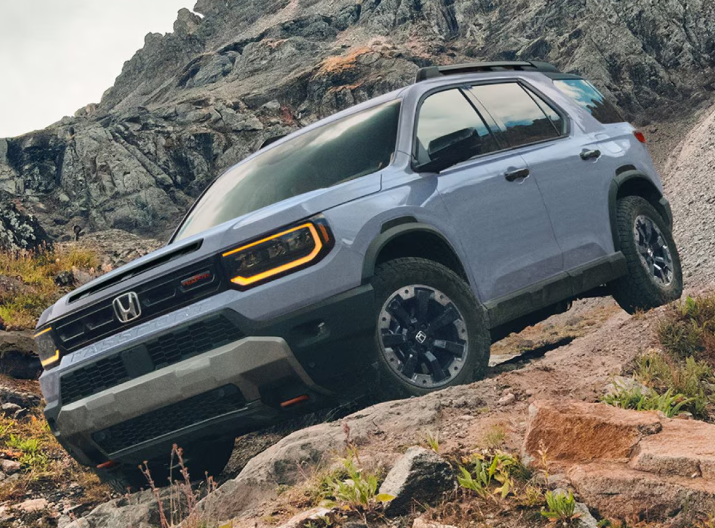
Choosing between the Honda Passport RTL vs TrailSport looks simple until we start digging into what Honda actually changed between the two trims. At first glance, they share the same rugged new body, muscular V6 engine, standard all-wheel drive, roomy two-row cabin, and most of the technology we would want in a modern midsize SUV.
So, why spend thousands more on the TrailSport?
That is where this comparison becomes interesting.
The 2026 Honda Passport RTL is not a stripped-down base model waiting for us to tick expensive option boxes. It already brings heated front seats, Google built-in, a large touchscreen, tri-zone climate control, power front seats, parking sensors, a power tailgate, and Honda's torque-vectoring all-wheel-drive system.
The TrailSport takes that solid foundation and puts hiking boots on it.
Instead of chasing additional horsepower or luxury gadgets, Honda spends most of the TrailSport's premium on hardware: all-terrain tires, an off-road-tuned suspension, underbody protection, recovery hooks, a factory trailer hitch, and other adventure-oriented upgrades.
Let's break down where those differences actually matter.
Content in this publication
- Honda Passport RTL vs TrailSport at a Glance
- The Same V6 Lives Under Both Hoods
- Standard AWD Makes the RTL More Capable Than It Looks
- TrailSport Gets Real Off-Road Upgrades
- RTL vs TrailSport Suspension: The Difference Beneath the Body
- Skid Plates and Recovery Hooks Change the Adventure Equation
- Honda Passport RTL vs TrailSport for Towing
- Fuel Economy: RTL Wins the Numbers Game
- Interior Comfort Is Surprisingly Similar
- Seats: RTL Goes Traditional, TrailSport Goes Rugged
- TrailSport Adds a Panoramic Moonroof
- Cargo Space Is Essentially a Tie
- Technology: No Need to Upgrade Just for the Screen
- Don't Confuse TrailSport With TrailSport Elite
- Exterior Styling: Similar Shape, Different Attitude
- Honda Passport RTL vs TrailSport on the Highway
- Which Passport Is Better for Snow?
- Which Is Better for Camping and Outdoor Adventures?
- Is the TrailSport Worth the Extra ,700?
- What About the RTL Towing Model?
- Long-Term Ownership Considerations
- The Biggest Similarities Matter More Than We Think
- Closing Thoughts: Honda Passport RTL vs TrailSport
- Frequently Asked Questions
- 1. What is the main difference between the Honda Passport RTL and TrailSport?
- 2. Is the Honda Passport TrailSport faster than the RTL?
- 3. Does the 2026 Passport TrailSport have TrailWatch?
- 4. Which gets better gas mileage, Passport RTL or TrailSport?
- 5. Is the Honda Passport TrailSport worth it over the RTL?
Honda Passport RTL vs TrailSport at a Glance
For 2026, Honda lists the Passport RTL at a starting MSRP of $44,950, while the Passport TrailSport begins at $48,650. That creates a $3,700 gap before destination charges, accessories, taxes, and dealer-specific costs.
Here is the basic comparison:
| Feature | Passport RTL | Passport TrailSport |
|---|---|---|
| Starting MSRP | $44,950 | $48,650 |
| Engine | 3.5L V6 | 3.5L V6 |
| Horsepower | 285 hp | 285 hp |
| Transmission | 10-speed automatic | 10-speed automatic |
| Drivetrain | i-VTM4 AWD | i-VTM4 AWD |
| EPA MPG | 19/25/21 | 18/23/20 |
| Wheels | 18-inch alloys | 18-inch TrailSport alloys |
| Tires | Road-oriented | 275/60R18 all-terrain |
| Off-road suspension | No | Yes |
| Skid plates | No | Yes |
| Recovery hooks | No | Front and rear |
| Integrated Class III hitch | Not on base RTL | Standard |
| Panoramic moonroof | No | Standard |
| 115V outlets | No | Two |
| Heated front seats | Standard | Standard |
| 12.3-inch touchscreen | Standard | Standard |
| TrailWatch | No | No — TrailSport Elite only |
Honda rates both versions for up to 5,000 pounds of towing, while EPA estimates favor the RTL at 19 mpg city, 25 highway, and 21 combined versus 18/23/20 for the TrailSport.
That table already tells us something important: TrailSport is not the faster Passport. It is the better-equipped Passport for leaving pavement.
The Same V6 Lives Under Both Hoods
285 Horsepower Either Way
Anyone expecting the TrailSport badge to unlock a hotter engine will be disappointed—or perhaps relieved.
Both models use Honda's naturally aspirated 3.5-liter V6 producing 285 horsepower, paired with a 10-speed automatic transmission and paddle shifters. Both also receive Honda's i-VTM4 all-wheel-drive system with Trail Torque Logic.
There is no secret TrailSport ECU tune. No turbocharger suddenly wakes up. No extra cylinder appears from behind the firewall.
And that is arguably good news.
The RTL gives us essentially the same straight-line muscle as the TrailSport, which makes it an attractive choice for buyers who mainly want Passport capability without paying for equipment they may rarely use.
Honda's 10-Speed Automatic Keeps Things Familiar
The 10-speed automatic serves both trims. With so many ratios available, the transmission can keep the V6 relaxed during highway cruising while still dropping into a lower gear when we bury the accelerator.
Again, neither trim has a major mechanical advantage here.
Think of the RTL and TrailSport as two people wearing different shoes but having the same legs.
Standard AWD Makes the RTL More Capable Than It Looks
The RTL may sit below the TrailSport in the hierarchy, but it is far from a pavement-only crossover.
Honda equips it with i-VTM4 AWD with Trail Torque Logic, the same core all-wheel-drive technology found in the TrailSport. Both models also offer Normal, Econ, Sport, Snow, Tow, Trail, and Sand drive modes.
That matters.
If our adventures mostly involve snowy roads, wet highways, gravel parking areas, forest access roads, or the occasional mild trail, the RTL already carries a substantial toolbox.
When Does TrailSport AWD Become Better?
Strictly speaking, the AWD system itself isn't the big separator.
What changes is everything surrounding it.
The TrailSport's tires, suspension tuning, skid plates, and recovery equipment allow the AWD system to operate in situations where the RTL's more road-oriented setup becomes the limiting factor.
That distinction is easy to miss.
TrailSport Gets Real Off-Road Upgrades
Here is where the Honda Passport RTL vs TrailSport comparison stops being cosmetic.
Honda equips the TrailSport with an off-road-tuned suspension, P275/60R18 all-terrain tires, engine and fuel-tank skid plates, and front and rear recovery hooks.
Those aren't stickers.
They are functional components.
All-Terrain Tires Make a Bigger Difference Than Horsepower
Tires are our SUV's handshake with the ground. Give a sophisticated AWD system the wrong rubber and it is like wearing polished dress shoes on a muddy hiking trail.
The TrailSport wears 275/60R18 all-terrain tires from the factory.
That chunkier tread gives it an advantage on gravel, loose dirt, rocks, mud, and other low-traction surfaces. Honda has specifically developed the 2026 TrailSport around greater off-road capability rather than simply creating a visual appearance package.
The compromise?
All-terrain rubber normally creates more rolling resistance and can contribute to additional road noise and lower fuel economy. Honda's own EPA numbers illustrate part of that trade-off: the TrailSport loses one combined mpg compared with the RTL.
RTL vs TrailSport Suspension: The Difference Beneath the Body
RTL Is Tuned More Toward Everyday Roads
Most Passport owners will spend the overwhelming majority of their miles on pavement.
That is where the RTL makes its strongest case.
Its suspension doesn't need to accommodate the same degree of rough-terrain articulation and impact absorption demanded of the TrailSport. For commuting, highway travel, errands, and family road trips, that road-oriented setup makes perfect sense.
The RTL is basically saying, "I can explore, but I don't need to prove it every Saturday."
TrailSport Receives Dedicated Off-Road Tuning
Honda specifically identifies an off-road-tuned suspension as a TrailSport upgrade. It also uses different stabilizer-bar specifications from the RTL.
On broken trails, washboard roads, ruts, and uneven surfaces, that matters far more than another 10 or 20 hypothetical horsepower would.
The TrailSport is designed to absorb rough terrain with greater composure and keep its tires working effectively over uneven surfaces.
That does not transform the Passport into a rock-crawling body-on-frame truck. It remains a unibody midsize SUV.
But within that category, Honda has given the TrailSport meaningful tools rather than costume jewelry.
Skid Plates and Recovery Hooks Change the Adventure Equation
If we never leave pavement, skid plates sound almost comically unnecessary.
Once a rocky trail puts a sharp object beneath the vehicle, our opinion changes quickly.
TrailSport underbody protection covers vulnerable areas including the engine and fuel tank, while recovery hooks at the front and rear provide dedicated recovery points.
That is valuable because genuine off-road driving occasionally involves getting things wrong.
A wheel drops into soft sand. Mud gets deeper than expected. A steep shelf suddenly looks much larger through the windshield.
Recovery equipment is like carrying an umbrella: we hope we don't need it, but we're glad it is there when the sky opens.
Honda Passport RTL vs TrailSport for Towing
Both versions carry a maximum 5,000-pound tow rating when properly equipped.
But equipment is where the story changes.
TrailSport Includes the Hitch
The TrailSport receives an integrated Class III trailer hitch and seven-pin connector from the factory.
That makes it more convenient for anyone regularly pulling a small camper, utility trailer, personal watercraft, or similar equipment.
You may be interested in reading Honda Passport Best Years: Which Model Years Are Worth Buying?
RTL Buyers Have Another Option
Honda separately offers the RTL Towing configuration, which adds the integrated Class III hitch. For 2026, Honda lists that version from $45,650—only $700 above the regular RTL's starting MSRP.
That creates an interesting middle ground.
If we want towing hardware but have little interest in skid plates, recovery hooks, or all-terrain tires, the RTL Towing may be the smarter configuration.
Fuel Economy: RTL Wins the Numbers Game
Neither Passport is trying to be a hyper-efficient hybrid.
We are dealing with a naturally aspirated V6, standard AWD, substantial dimensions, and the aerodynamics of something that looks ready to carry camping equipment into the wilderness.
Still, there is a measurable difference.
The EPA estimates published by Honda are:
RTL: 19 city / 25 highway / 21 combined mpg
TrailSport: 18 city / 23 highway / 20 combined mpg
One combined mpg is hardly an earthquake, but frequent highway drivers may notice the TrailSport's two-mpg highway disadvantage over thousands of miles.
Why Is the TrailSport Less Efficient?
Its all-terrain tires and adventure-oriented equipment naturally work against maximum efficiency.
Nothing dramatic is happening. Physics is simply collecting its bill.
For buyers putting 15,000 or 20,000 mostly paved miles on their Passport every year, the RTL's advantage becomes easier to appreciate.
Interior Comfort Is Surprisingly Similar
This is an area where Honda could have stripped equipment from the RTL and pushed buyers upward.
It didn't.
Both trims include heated front seats, power front seats with driver's-seat memory, tri-zone automatic climate control, hidden cargo storage, and a one-touch folding 60/40 rear seat. Both also use a nine-speaker, 225-watt audio system with a subwoofer.
In daily use, therefore, the TrailSport doesn't feel like an entirely different luxury grade.
That is important.
We should buy the TrailSport because we value its specific additions—not because the RTL cabin feels unfinished.
Seats: RTL Goes Traditional, TrailSport Goes Rugged
The RTL uses a combination of leather and cloth upholstery.
TrailSport replaces that with durable synthetic leather and cloth seating accented by orange stitching and TrailSport logos. Orange stitching also appears on the steering wheel, while orange ambient lighting reinforces the adventure theme.
Which is better?
That is less about quality and more about personality.
The RTL feels understated. TrailSport wants us to notice that we bought TrailSport.
Neither approach is wrong.
TrailSport Adds a Panoramic Moonroof
One particularly meaningful comfort upgrade is the TrailSport's one-touch power panoramic moonroof. Honda lists it among the features added over the RTL.
This feature has nothing to do with crawling across rocks, of course.
But it makes the TrailSport cabin feel more open and helps justify some of the price difference for buyers who care about everyday amenities as much as trail capability.
Interestingly, Honda lists EPA passenger volume at 119.1 cubic feet for RTL and 115.4 cubic feet for TrailSport, while both provide the same 44.0 cubic feet of cargo volume behind the second row.
Cargo Space Is Essentially a Tie
If cargo room sits near the top of our shopping list, there is little reason to pick one trim over the other.
Honda lists 44.0 cubic feet behind the second-row seats in both models and up to 104.6 cubic feet of maximum cargo volume under its measurement methodology for RTL and TrailSport.
That is a tremendous amount of usable space for a two-row SUV.
Bicycles, luggage, camping equipment, sports gear, dog crates—the Passport's boxy proportions are not merely for show.
Technology: No Need to Upgrade Just for the Screen
Both Get a 12.3-Inch Touchscreen
Honda gives both trims a 12.3-inch color touchscreen along with wireless Apple CarPlay, wireless Android Auto, Google built-in, and a wireless phone charger.
That is another win for RTL buyers.
There is no tiny "base model" screen sitting in the dashboard reminding us that we saved money.
Google built-in also integrates familiar Google services directly into the vehicle, reducing the need to rely entirely on smartphone projection.
TrailSport Adds 115-Volt Outlets
TrailSport receives two 115-volt AC outlets—one serving the second-row area and another in the cargo area.
For campers, photographers, outdoor workers, or anyone carrying electronics on the road, these are more useful than they may initially sound.
Plugging in a laptop, portable cooler, or other compatible device becomes considerably easier.
Don't Confuse TrailSport With TrailSport Elite
This deserves its own section because trim comparisons online frequently mix the two together.
The regular 2026 Passport TrailSport does not get TrailWatch.
Honda reserves the Multi-View Camera System with TrailWatch for the TrailSport Elite. That higher trim also adds ventilated front seats, heated outboard rear seats, a Bose premium audio system, additional acoustic glass, rear sunshades, and other luxury equipment.
So if a comparison tells us the standard TrailSport automatically includes TrailWatch, it is blending TrailSport and TrailSport Elite equipment.
For buyers wanting the camera technology specifically for navigating obstacles, the standard TrailSport will not satisfy that requirement.
Exterior Styling: Similar Shape, Different Attitude
Both trims share the Passport's upright, squared-off architecture.
TrailSport layers on more visual theater.
Its all-terrain tires fill the wheel wells differently, TrailSport-specific 18-inch wheels create a more purposeful stance, and amber daytime running lights distinguish it from the RTL's standard lighting treatment. The visible recovery hooks further reinforce the off-road appearance.
The RTL looks cleaner.
The TrailSport looks like it has already packed a tent.
Does TrailSport Look Better?
That depends entirely on our taste.
Some buyers love orange accents, chunky tires, dark exterior pieces, and overt adventure cues.
Others prefer a vehicle that doesn't shout about what it can do.
The important point is that the TrailSport's aggressive look is backed by genuine mechanical changes.
Honda Passport RTL vs TrailSport on the Highway
For buyers spending nearly all their time on asphalt, the RTL has a quietly compelling argument.
It has the same 285 horsepower, the same 10-speed transmission, the same sophisticated AWD system, and virtually the same core cabin technology.
You may be interested in readingHonda Passport Best Years: Which Model Years Are Worth Buying?You may be interested in reading
 Test Drive Review: The Fiat 500 Abarth 0-60 Acceleration
Meanwhile, its road-oriented tire setup helps deliver better EPA highway fuel economy.
The TrailSport remains perfectly usable as a highway vehicle, but we are carrying around equipment optimized for situations we may rarely encounter.
That is like commuting to an office every day wearing hiking boots. They work. They're comfortable enough. But loafers might make more sense.
Which Passport Is Better for Snow?
This question is more nuanced than simply shouting "TrailSport!"
Both have standard i-VTM4 AWD and a dedicated Snow mode, so the RTL already has a strong mechanical foundation for winter driving.
TrailSport brings all-terrain tires and a heated windshield-wiper zone, which can be useful in harsher environments.
However, serious winter driving ultimately depends heavily on tire compound. A dedicated set of quality winter tires can matter more on ice and packed snow than choosing one trim badge over another.
For normal winter roads, RTL is hardly underprepared.
For rough, snowy backroads and more adventure-oriented winter use, TrailSport makes more sense.
Which Is Better for Camping and Outdoor Adventures?
This is where the TrailSport package starts to feel cohesive rather than merely expensive.
Its factory hitch, skid plates, recovery hooks, all-terrain tires, panoramic moonroof, off-road suspension, heated wiper zone, and two 115-volt outlets collectively make outdoor travel easier.
One feature alone might not justify $3,700.
Combined, they paint a clearer picture.
If weekends regularly involve campsites reached by dirt roads, trailers, mountain trails, beach access, or exploring beyond maintained pavement, TrailSport's upgrades can save us from adding equivalent accessories later.
Is the TrailSport Worth the Extra $3,700?
This is the core Honda Passport RTL vs TrailSport question.
For some drivers, absolutely.
For others, not even close.
The $3,700 premium represents roughly an 8% increase over the RTL's base MSRP. In exchange, we're buying much more than appearance: specialized tires, dedicated suspension tuning, underbody armor, front and rear recovery hardware, a trailer hitch, panoramic roof, 115-volt outlets, heated wiper area, upgraded mirrors, fog lights, and TrailSport-specific interior and exterior detailing.
Bought separately, comparable equipment can become expensive quickly.
But value only exists when we actually use what we pay for.
Choose the Passport RTL If…
The RTL makes the most sense when our driving is overwhelmingly pavement-based and we mainly want a roomy, powerful, AWD two-row SUV.
It already provides the engine, technology, comfort features, and cargo capacity that define the Passport.
It also delivers slightly better fuel economy and costs $3,700 less before options.
Choose the Passport TrailSport If…
TrailSport becomes compelling when unpaved travel is an actual part of our lifestyle rather than something we imagine doing someday.
Regular camping, towing, dirt-road travel, rough access roads, sand, moderate trails, and outdoor recreation all make its hardware easier to justify.
The TrailSport isn't merely selling an image. Its equipment list backs up the badge.
What About the RTL Towing Model?
Perhaps the most overlooked Passport configuration sits between these two.
The RTL Towing starts at $45,650 and includes the integrated Class III trailer hitch while retaining the RTL's otherwise road-focused configuration.
For someone saying, "I need to tow, but I don't need to go rock hunting," it may be the sweet spot.
We keep most of the RTL's lower price and better EPA fuel-economy ratings while gaining factory towing hardware.
That option makes the buying decision more interesting than a simple RTL-versus-TrailSport battle.
Long-Term Ownership Considerations
TrailSport's additional hardware introduces a few practical factors worth remembering.
Aggressive all-terrain tires can cost more to replace than ordinary road-focused tires. Their tread pattern may generate additional noise, and replacement choices should preserve the capability buyers paid for in the first place.
Off-road use can also expose the vehicle to impacts, mud, water, and debris that pavement-only vehicles rarely encounter.
RTL owners are less likely to face those concerns simply because the vehicle invites a different kind of use.
Yet TrailSport's skid plates exist precisely because Honda expects owners to explore.
Neither approach is inherently cheaper or better. It comes down to matching the machine with the mission.
The Biggest Similarities Matter More Than We Think
After focusing so intensely on differences, it is worth remembering how much these Passport trims share.
Both give us a 285-hp V6, 10-speed automatic, torque-vectoring AWD, seven drive modes, heated front seats, a large infotainment display, wireless smartphone integration, Google built-in, parking sensors, a power tailgate, generous cargo space, and Honda's suite of driver-assistance features.
In other words, choosing the RTL does not mean settling for "half a Passport."
The TrailSport builds on an already well-equipped foundation.
Closing Thoughts: Honda Passport RTL vs TrailSport
The Honda Passport RTL vs TrailSport decision becomes straightforward once we stop thinking of TrailSport as simply the "better" trim.
The RTL is the rational road-going Passport. It delivers the same engine output, AWD architecture, core technology, towing capability when properly equipped, huge cargo area, and most of the comfort features buyers will interact with every day. It costs less and returns slightly better EPA fuel economy.
TrailSport trades some of that efficiency and affordability for physical capability.
Its all-terrain tires, off-road suspension, skid plates, recovery hooks, integrated hitch, heated wiper zone, power outlets, panoramic moonroof, and adventure-themed interior aren't meaningless extras. They form a coherent package for people who actually intend to explore.
So we can reduce the decision to one question:
Where will our Passport spend its weekends?
If the answer is highways, suburbs, road trips, ski resorts, and the occasional gravel road, the RTL already offers an impressive package.
If the answer includes campsites, rocky tracks, forest roads, trailers, sand, or places where the pavement simply ends, the TrailSport's $3,700 premium starts looking less like an indulgence and more like preparation.
Either way, we get the same muscular heart underneath.
The TrailSport simply arrives wearing tougher boots.
Frequently Asked Questions
1. What is the main difference between the Honda Passport RTL and TrailSport?
The biggest difference is off-road equipment. Both use the same 285-hp 3.5-liter V6, 10-speed automatic, and i-VTM4 AWD system, but the TrailSport adds all-terrain tires, off-road-tuned suspension, skid plates, recovery hooks, a factory Class III hitch, and other adventure-oriented hardware.
2. Is the Honda Passport TrailSport faster than the RTL?
No meaningful engine-performance advantage exists. Both trims use the same 285-horsepower V6 and 10-speed automatic transmission. TrailSport's upgrades focus on off-road capability rather than increasing horsepower.
3. Does the 2026 Passport TrailSport have TrailWatch?
The standard 2026 TrailSport does not include TrailWatch. Honda lists the Multi-View Camera System with TrailWatch as an upgrade on the TrailSport Elite.
4. Which gets better gas mileage, Passport RTL or TrailSport?
The RTL is more efficient according to Honda's published EPA estimates. It is rated at 19 city, 25 highway, and 21 combined mpg, compared with 18 city, 23 highway, and 20 combined mpg for the TrailSport.
You may be interested in readingHonda Passport Best Years: Which Model Years Are Worth Buying?You may be interested in reading
Test Drive Review: The Fiat 500 Abarth 0-60 AccelerationYou may be interested in reading
 Customizing Your Ride: A Comprehensive Guide to the Fiat 500 Body Kit
5. Is the Honda Passport TrailSport worth it over the RTL?
It depends on how we plan to use the vehicle. For mostly highway and city driving, the RTL provides nearly all the core Passport features for less money. For regular camping, towing, dirt roads, rough terrain, or outdoor recreation, the TrailSport's tires, suspension, skid plates, recovery equipment, hitch, and power outlets make its higher price easier to justify.
If you want to know other articles similar to Honda Passport RTL vs TrailSport: Which 2026 Passport Is Right for You? you can visit the category Models.
Honda Passport Best Years: Which Model Years Are Worth Buying?
Honda Passport Competitors: The Midsize SUVs Worth Cross-Shopping
Honda Passport Years to Avoid: A Used Buyer’s Complete Guide
Honda Passport Trims: Complete 2026 Guide to Every Model

Nissan Rogue Generations: Complete Guide to Every Model Era
Nissan Rogue Trim Levels: Complete Guide to S, SV, Dark Armor, Rock Creek, and Platinum
Leave a Reply
More content of your interest