
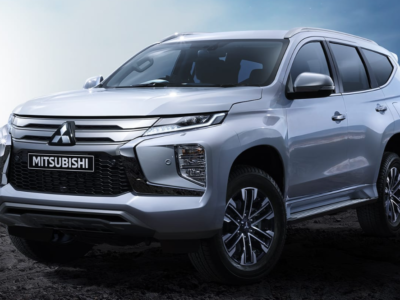
Mitsubishi Pajero Sport vs Outlander: Which SUV Is Right for You?

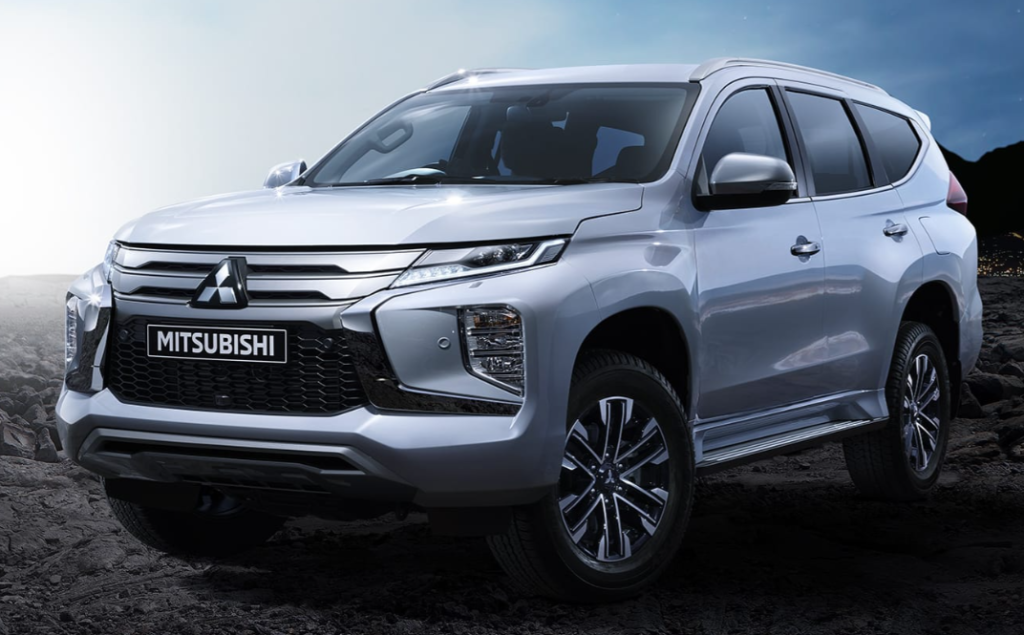
Choosing between the Mitsubishi Pajero Sport vs Outlander is not as straightforward as comparing two SUVs wearing the same badge. They may share a manufacturer, offer family-friendly cabins, and provide all-wheel-drive capability, but underneath the surface they are designed for rather different jobs.
The Mitsubishi Pajero Sport is the tougher, more traditional option. It combines a turbo-diesel engine, a proper four-wheel-drive system, substantial towing capacity, and strong off-road hardware. The Outlander takes a different path. It is more road-focused, easier to live with around town, more efficient in petrol form, and also available with plug-in hybrid technology in some markets.
For concrete figures throughout this comparison, we will primarily use current Australian-market specifications because Mitsubishi currently sells both vehicles side by side there. Specifications, engines, trims, seating layouts, and availability can differ between countries.
So, should we choose the rugged Pajero Sport or the more refined Outlander? Let’s compare them where the differences actually matter.
Content in this publication
- Mitsubishi Pajero Sport vs Outlander at a Glance
- What Is the Main Difference Between the Pajero Sport and Outlander?
- Mitsubishi Pajero Sport vs Outlander Engine
- Pajero Sport vs Outlander Performance
- Mitsubishi Pajero Sport vs Outlander Fuel Economy
- Mitsubishi Pajero Sport vs Outlander Towing Capacity
- Pajero Sport vs Outlander Off-Road Capability
- Ground Clearance and Rough-Road Ability
- Mitsubishi Pajero Sport vs Outlander Size
- Pajero Sport vs Outlander Interior Space
- Cargo Space Comparison
- Pajero Sport vs Outlander Comfort
- Mitsubishi Pajero Sport vs Outlander Technology
- Outlander PHEV Changes the Comparison
- Pajero Sport vs Outlander for Families
- Pajero Sport vs Outlander for Camping
- Pajero Sport vs Outlander for Towing a Caravan
- Pajero Sport vs Outlander Reliability and Maintenance
- Pajero Sport vs Outlander Running Costs
- Mitsubishi Pajero Sport vs Outlander: Pros and Cons
- Who Should Choose the Mitsubishi Pajero Sport?
- Who Should Choose the Mitsubishi Outlander?
- Is the Outlander a Smaller Alternative to the Pajero Sport?
- Mitsubishi Pajero Sport vs Outlander: Which Is Better for Everyday Driving?
- Mitsubishi Pajero Sport vs Outlander: Final Comparison
- Frequently Asked Questions
Mitsubishi Pajero Sport vs Outlander at a Glance
The simplest way to understand these two vehicles is to look at what they were designed to do.
| Feature | Mitsubishi Pajero Sport | Mitsubishi Outlander |
|---|---|---|
| Main character | Rugged 4WD SUV | Family-focused crossover SUV |
| Engine | 2.4L turbo-diesel | 2.5L petrol |
| Maximum power | 133 kW | 135 kW |
| Maximum torque | 430 Nm | 244 Nm |
| Transmission | 8-speed automatic | CVT automatic |
| Drive | 4WD | 2WD or AWD depending on grade |
| Maximum seating | 7 | Up to 7 depending on version |
| Braked towing capacity | 3,100 kg | 1,600 kg |
| Fuel consumption | Around 8.0 L/100 km | Around 7.5–8.1 L/100 km |
| Best suited to | Towing, off-road use, touring | Family driving, commuting, road trips |
Current Australian specifications list the Pajero Sport with a 2.4-litre turbo-diesel producing 133 kW and 430 Nm, an eight-speed automatic transmission, Super Select 4WD-II and a 3,100 kg braked towing rating. The petrol Outlander uses a 2.5-litre four-cylinder producing 135 kW and 244 Nm, paired with a CVT, while its braked towing rating is 1,600 kg.
Those figures already reveal something important: horsepower is surprisingly close, but torque, towing ability, drivetrain design and overall character are not.
What Is the Main Difference Between the Pajero Sport and Outlander?
The biggest difference is architecture and purpose.
The Pajero Sport is built like a serious four-wheel-drive touring vehicle. Its diesel torque, low-range transfer gearing, selectable off-road modes and rear differential lock give it hardware intended for situations where the road may disappear entirely.
The Outlander is primarily a road-focused family SUV. It prioritises comfort, easier urban driving, passenger space, technology and efficiency. AWD versions can deal confidently with wet roads, gravel and moderate loose surfaces, but they are not simply smaller versions of the Pajero Sport.
That distinction should guide almost every buying decision.
Think of Them as Two Different Types of Tools
The Outlander is like a high-quality multitool. It handles commuting, school runs, shopping, highways and family holidays without making daily life difficult.
The Pajero Sport is closer to a heavy-duty toolbox. It still performs normal family duties, but its real strengths appear when we attach a caravan, head onto difficult trails or travel deep into the countryside.
Mitsubishi Pajero Sport vs Outlander Engine
Engine specifications tell us plenty about their personalities.
Pajero Sport 2.4-Litre Turbo-Diesel
The current Australian Pajero Sport uses Mitsubishi's 2.4-litre MIVEC turbo-diesel engine, producing approximately 133 kW and 430 Nm. It is paired with an eight-speed automatic transmission.
That 430 Nm torque figure matters more than the headline power output.
High torque is useful when:
- towing heavy trailers;
- climbing steep gradients;
- travelling slowly over difficult terrain;
- accelerating with a heavily loaded vehicle;
- driving long distances with camping equipment.
The Pajero Sport therefore feels designed around pulling strength rather than sporty acceleration.
Outlander 2.5-Litre Petrol Engine
The current petrol Outlander uses a 2.5-litre direct-injection four-cylinder engine producing around 135 kW and 244 Nm. Mitsubishi pairs it with a continuously variable transmission.
Curiously, the Outlander produces slightly more peak power than the Pajero Sport on paper.
But power alone never tells the full story.
The diesel Pajero Sport produces dramatically more torque, which is exactly what we want when hauling a large trailer or crawling through rough terrain.
The Outlander's petrol engine is instead tuned around smooth everyday driving, reasonable efficiency and predictable response.
Pajero Sport vs Outlander Performance
Around town, many drivers may actually find the Outlander more pleasant.
The Outlander is lighter, lower and more crossover-like. Its petrol engine and CVT are designed for urban and suburban conditions where smooth acceleration matters more than maximum pulling strength.
The Pajero Sport feels heavier and more substantial. We are driving something built with tougher work in mind, and that character remains noticeable even on perfectly smooth asphalt.
Which Feels Better on the Highway?
Both can handle long highway journeys comfortably, but their strengths differ.
The Pajero Sport makes sense if our highway trip includes:
- a caravan;
- boat trailer;
- steep mountain roads;
- camping equipment;
- unsealed roads at the destination.
The Outlander makes more sense when the journey consists mostly of paved roads and we want easier handling, better refinement and lower everyday running demands.
Mitsubishi Pajero Sport vs Outlander Fuel Economy
Fuel economy is surprisingly close in official petrol-versus-diesel testing.
Australian specifications quote approximately 8.0 L/100 km for the Pajero Sport diesel. Petrol Outlander versions are rated at roughly 7.5 to 8.1 L/100 km, depending on drivetrain and grade.
However, comparing these numbers directly can be misleading.
Real-World Fuel Consumption Depends on How We Use Them
The Pajero Sport may use more fuel in stop-start urban environments because it is a heavier, more rugged vehicle.
On longer journeys, especially while towing, its diesel torque becomes valuable.
Meanwhile, an Outlander driven mainly in the city without heavy loads is much closer to its natural habitat.
Drivers focused heavily on fuel savings should also consider the Outlander Plug-in Hybrid EV, where available. Mitsubishi's current Australian model combines a petrol engine with front and rear electric motors and a 22.7 kWh battery, with Mitsubishi advertising up to 103 km of electric range under its applicable test standard.
That gives the Outlander family an efficiency option the Pajero Sport simply does not offer.
Mitsubishi Pajero Sport vs Outlander Towing Capacity
Here we find one of the largest differences.
Pajero Sport Towing Capacity
The Pajero Sport is rated to tow up to 3,100 kg braked in current Australian specifications.
That opens the door to significantly larger:
- caravans;
- boats;
- camper trailers;
- equipment trailers;
- recreational loads.
For owners who tow regularly, the Pajero Sport is clearly engineered with heavier work in mind.
Outlander Towing Capacity
The petrol Outlander is rated at 1,600 kg braked in current Australian specifications.
That is still useful.
It can handle smaller campers, trailers, recreational equipment and appropriately sized boats, but it occupies a completely different towing category from the Pajero Sport.
Remember That Maximum Towing Capacity Is Not the Whole Story
We must also consider payload, towball load, Gross Vehicle Mass and Gross Combination Mass.
A vehicle's headline towing figure does not automatically mean we can load the cabin to maximum capacity and simultaneously tow the heaviest permissible trailer. Mitsubishi itself advises owners to account for passengers, payload, trailer weight and towball load when calculating safe towing limits.
Pajero Sport vs Outlander Off-Road Capability
This category strongly separates the two SUVs.
Pajero Sport: Genuine 4WD Hardware
The Pajero Sport includes Mitsubishi's Super Select 4WD-II system, selectable off-road modes, low-range gearing and a rear differential lock on current Australian specifications.
Its selectable off-road settings include conditions such as:
- Gravel;
- Mud/Snow;
- Sand;
- Rock.
This gives the Pajero Sport genuine ability beyond maintained gravel roads.
You may be interested in reading Mitsubishi Pajero Sport vs Pajero: What’s the Difference and Which One Suits You?
It is the vehicle we would naturally choose for remote touring, rough tracks, difficult campsites or repeated off-road use.
Outlander: AWD Rather Than Hardcore 4WD
The Outlander can be equipped with AWD and multiple drive modes. Mitsubishi lists modes including Normal, Eco, Tarmac, Gravel, Snow and, on relevant configurations, Mud.
That is useful technology, but the Outlander lacks the Pajero Sport's heavy-duty low-range 4WD hardware.
Think slippery roads and light trails rather than serious rock crawling.
Ground Clearance and Rough-Road Ability
Current specifications show another interesting distinction.
Depending on version, the petrol Outlander offers approximately 205–210 mm of ground clearance, while the previous-current Pajero Sport specification sits around the low-200-mm range and pairs that clearance with much stronger approach geometry, low-range gearing and dedicated 4WD hardware.
Ground clearance alone therefore should never determine which vehicle is better off road.
A crossover with respectable clearance is still very different from a vehicle equipped with a locking rear differential and proper low range.
Mitsubishi Pajero Sport vs Outlander Size
The Pajero Sport is the longer and taller-looking vehicle, while the Outlander is wider and lower in profile.
Current Australian Outlander specifications list an overall length of 4,720 mm, width of 1,862 mm and wheelbase of 2,706 mm.
The Pajero Sport sits at roughly 4.8 metres long with a 2,800 mm wheelbase in recent Australian specifications.
What Does That Mean in Daily Driving?
The Outlander's proportions generally make it feel more naturally suited to:
- shopping-centre car parks;
- school drop-offs;
- narrow suburban streets;
- underground parking;
- frequent city commuting.
The Pajero Sport feels larger and more upright.
That size is valuable on long-distance adventures, but we notice it more when manoeuvring through tight urban spaces.
Pajero Sport vs Outlander Interior Space
Both can serve families, but they approach interior packaging differently.
The Pajero Sport is available as a seven-seat vehicle in current Australian GLS and Exceed specifications.
The petrol Outlander range includes both five-seat and 5+2-seat configurations depending on grade.
Which Has the Better Third Row?
Neither should automatically be treated like a full-size people mover.
Third-row seating in SUVs of this class is usually best regarded as occasional accommodation, especially for adults.
However, the Pajero Sport's larger overall dimensions and touring focus make it more naturally suited to buyers who frequently carry passengers and equipment together.
The Outlander's 5+2 configuration is particularly useful for families who only occasionally need those extra seats.
Cargo Space Comparison
Cargo capacity changes significantly depending on seating configuration.
Recent Australian Pajero Sport seven-seat specifications quote roughly 502 litres behind the second row, dropping substantially when all three seating rows are in use. With rear seats folded, maximum cargo capacity approaches 1,500 litres in relevant specifications.
Outlander cargo figures depend strongly on trim and seating arrangement. Current versions can provide more than 1,400 litres with rear seating folded, depending on configuration.
Which Is Better for Family Luggage?
It depends on how we use the third row.
For five occupants plus luggage, both can work well.
For seven passengers plus significant luggage, neither performs miracles. Adding a roof platform, cargo box or trailer may become necessary on long family trips, particularly when every seat is occupied.
Pajero Sport vs Outlander Comfort
Here the Outlander begins to fight back strongly.
Because it is designed as a modern crossover, it tends to deliver the more car-like driving experience.
Its independent suspension layout, lower body and road-oriented platform make it naturally suited to daily commuting.
The Pajero Sport carries a more rugged character. That does not mean it is uncomfortable, but its priorities include durability, towing and off-road performance rather than simply isolating occupants from every bump.
City Driving
For daily commuting, we would expect most drivers to find the Outlander easier to manage.
Steering, ride behaviour and general manoeuvrability feel closer to a conventional passenger vehicle.
Long-Distance Touring
The equation changes once we leave the city.
When our road trip involves hundreds of kilometres, heavy cargo, poor surfaces or towing, the Pajero Sport starts making much more sense.
Comfort is not only about soft suspension. Confidence matters too.
Mitsubishi Pajero Sport vs Outlander Technology
The Outlander represents Mitsubishi's newer, more road-oriented technology direction.
Current models offer features such as smartphone integration, modern driver-assistance systems, digital displays and increasingly sophisticated infotainment.
The Pajero Sport still offers many important convenience and safety technologies, including features such as adaptive cruise control, available surround-view monitoring, blind-spot warning and rear cross-traffic alert on relevant grades.
However, if interior technology and contemporary cabin presentation sit near the top of our priorities, the Outlander tends to feel like the newer-generation product.
Outlander PHEV Changes the Comparison
The Outlander Plug-in Hybrid EV deserves its own section because it adds something the Pajero Sport cannot match: meaningful electric driving capability.
Current Australian specifications combine a petrol engine with twin electric motors, AWD and a larger battery pack. Mitsubishi currently quotes a 22.7 kWh battery and up to 103 km of electric driving range under its stated test conditions.
For an owner who can charge regularly, many short weekday journeys may therefore be completed with little or no petrol consumption.
But the PHEV Does Not Replace a Pajero Sport
The Outlander PHEV may be technically advanced, but electrification does not suddenly turn it into a heavy-duty 4WD.
Current Australian PHEV specifications retain a 1,600 kg braked towing capacity, considerably below the Pajero Sport's 3,100 kg figure.
So the choice remains purpose-driven.
Pajero Sport vs Outlander for Families
For a family spending most of its time in suburbs and cities, the Outlander has obvious attractions.
It offers:
- easier everyday driving;
- five- or seven-seat flexibility depending on variant;
- efficient petrol options;
- available plug-in hybrid technology;
- modern cabin technology;
- AWD availability;
- useful cargo space.
The Pajero Sport makes more sense for an adventurous family whose weekends look very different from weekdays.
Its strengths include:
You may be interested in readingMitsubishi Pajero Sport vs Pajero: What’s the Difference and Which One Suits You?You may be interested in reading
Mitsubishi Pajero Sport vs Toyota Fortuner: Which 7-Seat SUV Is Better?- stronger towing;
- diesel torque;
- low-range 4WD;
- rear differential lock;
- better suitability for difficult terrain;
- seven-seat capability;
- remote touring potential.
Pajero Sport vs Outlander for Camping
What does camping mean to us?
If camping means driving to an established campground on sealed roads, loading some tents into the boot and spending a weekend outdoors, the Outlander should handle the job comfortably.
If camping means travelling down rough tracks, crossing deeply rutted terrain, towing a substantial camper trailer and carrying recovery equipment, the Pajero Sport is in another league.
That distinction matters more than almost any specification number.
Pajero Sport vs Outlander for Towing a Caravan
For caravan owners, the Pajero Sport's advantage is substantial.
Its 3.1-tonne maximum braked towing rating is almost double the Outlander's 1.6-tonne figure.
The diesel engine's 430 Nm of torque also suits loaded touring considerably better than the naturally aspirated petrol Outlander's 244 Nm.
For lightweight campers, however, the Outlander may still provide enough capacity while being easier and more economical to use during the rest of the year.
Pajero Sport vs Outlander Reliability and Maintenance
Both vehicles come from the same manufacturer, but ownership demands are not identical.
The Pajero Sport's diesel engine, 4WD transfer system and off-road hardware add mechanical complexity that requires appropriate servicing, particularly if we frequently tow or drive in severe conditions.
The petrol Outlander has a simpler use case for many owners, although AWD systems and PHEV versions introduce their own maintenance requirements.
In Australia, Mitsubishi currently advertises scheduled servicing intervals of 12 months or 15,000 km, whichever comes first, within its applicable capped-price servicing program.
Used Vehicles Need Individual Inspection
Reliability comparisons become much more complicated when shopping second-hand.
A meticulously maintained Pajero Sport that has spent its life cruising highways may be a safer purchase than an Outlander with neglected maintenance.
Likewise, a Pajero Sport used heavily for towing, beach driving or off-road touring deserves careful inspection underneath.
Service history matters more than stereotypes.
Pajero Sport vs Outlander Running Costs
The Outlander is likely to make more financial sense for many everyday drivers.
Why?
Because most owners do not need a 3.1-tonne towing capacity or low-range four-wheel drive every morning on the way to work.
A petrol Outlander potentially reduces the compromises associated with carrying heavy-duty 4WD hardware everywhere.
An Outlander PHEV may reduce petrol use substantially when charging conditions suit the owner's routine.
The Pajero Sport becomes easier to justify financially when we actually use its abilities.
If we regularly tow, explore remote areas or need genuine off-road performance, those capabilities have real value.
Paying for them while never using them is another story.
Mitsubishi Pajero Sport vs Outlander: Pros and Cons
Mitsubishi Pajero Sport Advantages
- Powerful 430 Nm turbo-diesel torque.
- 3,100 kg braked towing capacity.
- Proper low-range 4WD system.
- Rear differential lock.
- Dedicated off-road modes.
- Seven-seat practicality.
- Strong long-distance touring ability.
- Better suited to caravans and remote travel.
Mitsubishi Pajero Sport Disadvantages
- Larger and heavier for urban use.
- More cumbersome in tight parking spaces.
- More rugged driving character.
- No plug-in hybrid alternative in the current lineup.
- Heavy-duty capability may be unnecessary for ordinary commuters.
Mitsubishi Outlander Advantages
- Easier to drive around town.
- More car-like road behaviour.
- Efficient petrol drivetrain.
- 2WD and AWD choices depending on market and grade.
- Available plug-in hybrid powertrain.
- Five- and seven-seat configurations.
- Modern interior and technology.
- Suitable for the majority of family driving.
Mitsubishi Outlander Disadvantages
- Much lower towing capacity.
- Less torque than the Pajero Sport diesel.
- No proper low-range transfer case.
- Not designed for repeated serious off-road use.
- Third-row space remains occasional rather than minivan-like.
Who Should Choose the Mitsubishi Pajero Sport?
The Pajero Sport makes the most sense when genuine capability is part of our normal lifestyle rather than an imagined once-a-year adventure.
It is especially suitable for drivers who regularly:
- tow large caravans;
- tow boats;
- travel through remote regions;
- drive on difficult tracks;
- camp away from maintained roads;
- carry substantial equipment;
- want proper 4WD hardware.
For these buyers, the Pajero Sport's extra weight and tougher road manners are reasonable compromises.
Who Should Choose the Mitsubishi Outlander?
The Outlander suits drivers whose SUV spends most of its life on sealed roads.
It is particularly appealing when our priorities include:
- commuting;
- family transport;
- school runs;
- lower fuel use;
- comfortable highway travel;
- occasional light towing;
- easier parking;
- modern technology;
- plug-in hybrid availability.
For many households, those abilities will be used every day, whereas extreme off-road performance would rarely be needed.
Is the Outlander a Smaller Alternative to the Pajero Sport?
Yes and no.
They overlap as family SUVs, but treating the Outlander simply as a slightly smaller Pajero Sport misses the point.
The Outlander belongs to the crossover side of the SUV world.
The Pajero Sport belongs much closer to traditional off-road vehicles.
That difference influences everything from towing ability to transmission design.
If we only compare seating capacity or exterior length, we miss what makes each vehicle distinct.
Mitsubishi Pajero Sport vs Outlander: Which Is Better for Everyday Driving?
For ordinary paved-road driving, the Outlander is generally the more natural fit because its platform, drivetrain and suspension are designed around this environment.
That does not make it universally superior.
It simply means we are using it for the task it was built to perform.
For owners who combine everyday driving with towing and serious outdoor travel, the Pajero Sport offers capabilities the Outlander cannot replicate.
Mitsubishi Pajero Sport vs Outlander: Final Comparison
The Mitsubishi Pajero Sport and Mitsubishi Outlander may stand near one another in the showroom, but they solve different problems.
The Pajero Sport focuses on strength. Its 430 Nm turbo-diesel engine, eight-speed automatic transmission, low-range four-wheel drive, rear differential lock and 3.1-tonne braked towing capacity make it an adventure and towing vehicle first.
The Outlander focuses on versatility. Its petrol drivetrain, available AWD, family-friendly cabin and available plug-in hybrid system make it better aligned with everyday suburban and highway use. Current petrol models provide 135 kW and 244 Nm, while braked towing capacity is rated at 1,600 kg in Australian specifications.
The deciding question is therefore not simply, “Which Mitsubishi SUV is better?”
A more useful question is: what do we expect our SUV to do most often?
For heavy towing and demanding off-road adventures, the Pajero Sport has the specialist hardware.
For commuting, family duties, comfortable road trips and potentially electrified everyday driving, the Outlander takes a very different—and highly practical—approach.
Frequently Asked Questions
Is the Mitsubishi Pajero Sport bigger than the Outlander?
The Pajero Sport is generally longer and taller, while the current Outlander is wider. Australian specifications place the Outlander at 4,720 mm long and 1,862 mm wide, while recent Pajero Sport specifications place it at roughly 4.8 metres long.
Is the Pajero Sport better than the Outlander for off-road driving?
The Pajero Sport is substantially better equipped for demanding off-road use because it offers Super Select 4WD-II, low-range gearing, selectable off-road modes and a rear differential lock. The Outlander AWD system is better suited to mixed road conditions and lighter off-road use.
Which can tow more, Pajero Sport or Outlander?
The Pajero Sport has the clear advantage. Current Australian ratings are up to 3,100 kg braked for the Pajero Sport versus 1,600 kg for the Outlander.
You may be interested in readingMitsubishi Pajero Sport vs Pajero: What’s the Difference and Which One Suits You?You may be interested in reading
Mitsubishi Pajero Sport vs Toyota Fortuner: Which 7-Seat SUV Is Better?You may be interested in reading
Mitsubishi Pajero Sport vs Isuzu MU-X: Which 7-Seat 4WD Is Better?Does the Mitsubishi Outlander have seven seats?
Some Outlander variants use a 5+2 seating arrangement, while others have five seats. Exact seating availability depends on trim level and market.
Which is more fuel-efficient, Mitsubishi Pajero Sport or Outlander?
Official Australian combined-cycle figures put the Pajero Sport diesel at around 8.0 L/100 km and petrol Outlander versions at roughly 7.5–8.1 L/100 km depending on configuration. The Outlander PHEV provides an additional electrified option for owners able to charge regularly.
If you want to know other articles similar to Mitsubishi Pajero Sport vs Outlander: Which SUV Is Right for You? you can visit the category Models.
Mitsubishi Pajero Sport vs Ford Everest: Which 4WD SUV Makes More Sense?
Mitsubishi Pajero Sport vs SsangYong Rexton: Which 4WD SUV Is Right for You?
Mitsubishi Pajero Sport vs Isuzu MU-X: Which 7-Seat 4WD Is Better?
Mitsubishi Pajero Sport vs Toyota Fortuner: Which 7-Seat SUV Is Better?
Mitsubishi Pajero Sport vs Pajero: What’s the Difference and Which One Suits You?

Honda Passport Best Years: Which Model Years Are Worth Buying?
Leave a Reply
More content of your interest