

Mitsubishi Pajero Sport vs Isuzu MU-X: Which 7-Seat 4WD Is Better?

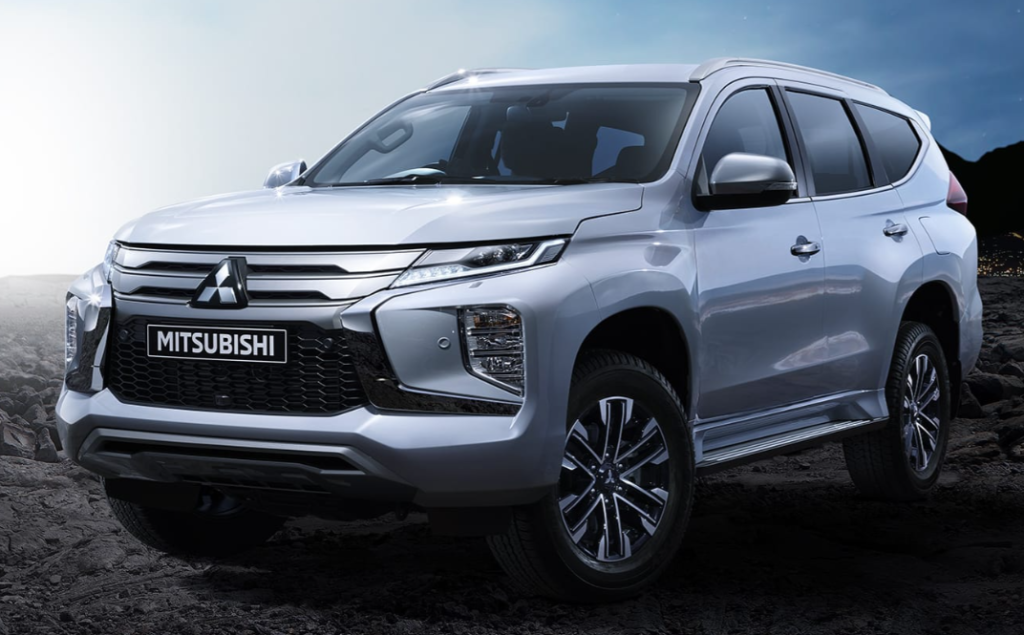
Choosing between the Mitsubishi Pajero Sport vs Isuzu MU-X is not as straightforward as comparing two specification sheets. Both are rugged, diesel-powered, seven-seat SUVs built around serious four-wheel-drive hardware, and both are aimed squarely at families who want something tougher than the average crossover.
At first glance, they seem remarkably similar. They offer diesel engines, low-range gearing, proper off-road ability, large cabins and enough towing capacity for caravans, boats and trailers. Spend a little more time with them, however, and their personalities begin to separate.
The Mitsubishi Pajero Sport tends to appeal to buyers who value its versatile Super Select II four-wheel-drive system, eight-speed automatic transmission and strong value proposition.
The Isuzu MU-X, meanwhile, has evolved into a more modern-feeling family 4WD, particularly in its latest iterations, while offering impressive towing credentials and the option of Isuzu's muscular 3.0-litre turbo-diesel.
So, which one makes more sense? Let's compare the Pajero Sport and MU-X in detail.
Content in this publication
- Mitsubishi Pajero Sport vs Isuzu MU-X at a Glance
- Engine and Performance
- Mitsubishi Pajero Sport vs Isuzu MU-X Performance
- Towing Capacity
- Four-Wheel-Drive Systems
- Off-Road Capability
- Pajero Sport Off-Road
- Ride Comfort and Road Manners
- Interior and Practicality
- Cargo Space and Family Use
- Fuel Economy
- Safety Technology
- Reliability and Durability
- Mitsubishi Pajero Sport vs Isuzu MU-X for Touring
- Mitsubishi Pajero Sport vs Isuzu MU-X for Families
- Pajero Sport vs MU-X for Heavy Towing
- Pajero Sport vs MU-X for Off-Road Adventures
- Pros and Cons of the Mitsubishi Pajero Sport
- Pros and Cons of the Isuzu MU-X
- Mitsubishi Pajero Sport vs Isuzu MU-X: Key Differences
- Which One Makes More Sense Used?
- Final Thoughts on Mitsubishi Pajero Sport vs Isuzu MU-X
- Frequently Asked Questions
Mitsubishi Pajero Sport vs Isuzu MU-X at a Glance
The exact specifications depend on model year, variant and country, so buyers should always check their local specifications. Using Australian-market vehicles as a useful reference, the main differences look like this:
| Specification | Mitsubishi Pajero Sport | Isuzu MU-X 3.0L |
|---|---|---|
| Engine | 2.4L turbo-diesel | 3.0L turbo-diesel |
| Power | 133 kW | 140 kW |
| Torque | 430 Nm | 450 Nm |
| Transmission | 8-speed automatic | 6-speed automatic |
| Seats | Up to 7 | 7 |
| Braked towing capacity | Up to 3,100 kg | Up to 3,500 kg |
| 4WD system | Super Select II on applicable variants | Part-time dual-range 4WD |
| Rear differential lock | Available | Standard on relevant 4x4 variants |
| Fuel type | Diesel | Diesel |
Mitsubishi lists its Pajero Sport's 2.4-litre turbo-diesel at 133 kW and 430 Nm, paired with an eight-speed automatic, while its Australian braked towing limit reaches 3,100 kg on 4WD models.
Current Australian MU-X models can be equipped with Isuzu's 3.0-litre turbo-diesel producing 140 kW and 450 Nm, with a six-speed automatic and maximum braked towing capacity of 3,500 kg. Isuzu also now offers a 2.2-litre turbo-diesel producing 400 Nm in Australia.
Those numbers already hint at the major difference: the MU-X has an advantage for maximum towing, while the Pajero Sport counters with an eight-speed gearbox and an unusually flexible four-wheel-drive system.
Engine and Performance
Pajero Sport 2.4-Litre Turbo-Diesel
Under the bonnet of the Pajero Sport sits Mitsubishi's familiar 2.4-litre four-cylinder MIVEC turbo-diesel.
It produces:
- 133 kW of power
- 430 Nm of torque
- Eight-speed automatic transmission
On paper, those figures remain respectable even though the engine has been around for some time.
The 430 Nm torque output is particularly useful at typical touring speeds. It gives the Pajero Sport enough low- and mid-range muscle for steep climbs, dirt tracks and loaded highway journeys.
The eight-speed automatic is another advantage. With more ratios to work with, it can keep the diesel closer to its useful torque band while allowing relaxed engine speeds during motorway cruising.
That doesn't turn the Pajero Sport into a performance SUV. Far from it. Acceleration is adequate rather than exciting.
Think of it as a workhorse in hiking boots rather than a sprinter wearing racing spikes.
Isuzu MU-X 3.0-Litre Turbo-Diesel
The 3.0-litre MU-X uses Isuzu's well-known 4JJ3-TCX turbo-diesel.
Current Australian specifications quote:
- 140 kW
- 450 Nm
- Six-speed automatic
The 450 Nm is available from approximately 1,600 to 2,600 rpm, giving the MU-X a broad low-rev torque band that is particularly valuable when towing or carrying substantial loads.
Although the difference between 430 Nm and 450 Nm may seem minor, the larger Isuzu engine generally feels well suited to heavy-duty work.
Its strength is not dramatic acceleration. Instead, it delivers the kind of steady shove we want when pulling a caravan uphill or accelerating onto a highway with passengers and luggage aboard.
What About the Newer 2.2-Litre MU-X?
Depending on the market, the comparison is becoming more complicated.
In Australia, Isuzu now offers a newer 2.2-litre turbo-diesel alongside the 3.0-litre.
It develops:
- 120 kW
- 400 Nm
- Eight-speed automatic
The 2.2-litre version can still tow up to 3,500 kg under Australian specifications, although anyone regularly towing heavy trailers may naturally gravitate toward the additional torque of the 3.0-litre.
Mitsubishi Pajero Sport vs Isuzu MU-X Performance
If we compare the Pajero Sport directly with the 3.0-litre MU-X, the Isuzu has slightly more outright power and torque.
However, those numbers don't tell the whole story.
The Pajero Sport's eight-speed automatic gives the transmission more opportunities to select an appropriate ratio.
The MU-X uses the larger-displacement diesel and feels engineered around low-speed torque and load carrying.
For normal commuting, either has more than enough performance.
With a heavy caravan behind us, though, the MU-X's larger engine and higher towing rating become increasingly important.
Towing Capacity
This is arguably the biggest separation between them.
Isuzu MU-X Towing Capacity
The current Australian MU-X can tow up to 3,500 kg braked, whether equipped with the applicable 3.0-litre or newer 2.2-litre drivetrain.
That 3.5-tonne figure puts it directly in the territory many caravan owners look for.
Of course, towing capacity alone should never determine whether a particular caravan is suitable.
We also need to consider:
- Payload
- Tow-ball download
- Gross Vehicle Mass
- Gross Combination Mass
- Passenger weight
- Accessories
- Luggage
- Local towing regulations
A vehicle rated to tow 3,500 kg does not automatically mean every 3,500 kg trailer combination will remain legal once everything else is loaded.
Pajero Sport Towing Capacity
Mitsubishi rates the Australian Pajero Sport at up to 3,100 kg braked on applicable 4WD versions.
That is still substantial.
A 3,100 kg limit accommodates many boats, camper trailers and caravans.
However, buyers looking specifically at heavy caravans close to the 3.5-tonne mark will notice the MU-X's extra 400 kg of rated towing capacity.
Which Is Better for Towing?
For light and medium towing, either SUV can work very well.
As trailer weight increases, the MU-X's specifications become more compelling because it combines:
- 3,500 kg maximum braked towing capacity
- 450 Nm from the 3.0-litre engine
- Large 80-litre fuel tank in current Australian models
- Trailer-oriented safety equipment
Isuzu has clearly positioned the MU-X heavily around towing and touring.
Four-Wheel-Drive Systems
This is where the Mitsubishi fights back strongly.
Pajero Sport Super Select II 4WD
Higher-specification four-wheel-drive Pajero Sport models use Mitsubishi's Super Select II system.
Unlike a traditional part-time 4WD system, Super Select II gives drivers considerably more flexibility.
Depending on version, its selectable modes typically include configurations for:
- Rear-wheel drive
- Full-time four-wheel-drive operation
- Locked centre differential
- Low-range four-wheel drive
The major attraction is the ability to use four-wheel drive on sealed roads in an appropriate full-time setting.
That can be useful during:
- Heavy rain
- Slippery mountain roads
- Mixed road conditions
- Long touring journeys
It's one of the Pajero Sport's signature features.
MU-X 4WD System
The MU-X uses a more conventional part-time 4WD configuration.
Australian 4x4 variants provide:
- 2H
- 4H
- 4L
- Rear differential lock
- Rough Terrain Mode
It's a straightforward and capable arrangement.
You may be interested in reading Mitsubishi Pajero Sport vs SsangYong Rexton: Which 4WD SUV Is Right for You?
For serious low-speed off-road driving, there is little wrong with this approach.
The difference is that a traditional part-time system generally isn't intended to operate in locked four-wheel-drive mode continuously on high-grip sealed surfaces.
Which 4WD System Is Better?
It depends on what we value.
For sheer versatility across changing sealed and unsealed surfaces, Super Select II is one of the Pajero Sport's strongest arguments.
For traditional off-road operation, the MU-X's dual-range system, rear differential lock and Rough Terrain Mode make it a formidable package of its own.
Off-Road Capability
Both vehicles share something increasingly uncommon among modern SUVs: genuine off-road hardware.
These aren't simply crossovers wearing plastic wheel-arch extensions.
Both are closely related to pickup-based platforms and have been engineered for considerably more punishment than the typical urban SUV.
Pajero Sport Off-Road
The Mitsubishi's strengths include:
- Low-range gearing
- Super Select II
- Available rear differential lock
- Hill Descent Control
- Strong ground clearance
- Off-road drive modes on applicable variants
The Pajero Sport feels at home on gravel roads, rutted trails and technical terrain.
Its relatively narrow body compared with some larger 4WD wagons can also be useful on tight forest tracks.
MU-X Off-Road
Current Australian 4x4 MU-X models combine low-range gearing with a locking rear differential and Isuzu's Rough Terrain Mode.
Isuzu quotes up to 235 mm of ground clearance on applicable versions, together with a 29.2-degree approach angle and 26.4-degree departure angle on the flagship configuration detailed by the manufacturer.
It is a genuinely capable vehicle away from sealed roads.
Pajero Sport vs MU-X Off-Road
Neither is merely pretending to be an off-roader.
We would happily consider either for:
- Camping
- Beach driving where permitted
- Fire trails
- Rural properties
- Long-distance touring
- Moderate technical off-roading
Tyres, driver experience, vehicle load and modifications will often matter as much as small specification differences.
Ride Comfort and Road Manners
Neither vehicle drives like a car-based SUV such as a Toyota RAV4 or Mazda CX-5.
We can feel their rugged construction.
But refinement matters because most owners will probably spend considerably more time on tarmac than crawling over rocks.
Pajero Sport Driving Experience
The Pajero Sport generally has a firm, purposeful character.
The eight-speed gearbox helps keep the engine relaxed at speed, while the steering and relatively manageable dimensions make it easier to live with than its rugged appearance might suggest.
One criticism frequently directed at the Pajero Sport is that its basic architecture now feels older alongside newer rivals.
CarsGuide describes it as a capable 4WD and satisfactory daily driver, while noting its firm ride and ageing feel.
MU-X Driving Experience
The current MU-X feels like the newer-generation product.
It still behaves like a ladder-frame 4WD, but Isuzu has put considerable effort into making it suitable for everyday family duty.
Independent testing has characterised the MU-X as relatively refined on-road for this type of 4WD while retaining substantial off-road ability.
For buyers moving from a regular passenger SUV, the MU-X may therefore require slightly less adjustment.
Interior and Practicality
Both are designed as family adventure vehicles, which means practicality matters almost as much as engine torque.
Seating Capacity
Both can accommodate up to seven occupants depending on specification.
That makes either suitable for:
- Larger families
- School runs
- Family road trips
- Camping weekends
- Occasional extra passengers
As with most seven-seat SUVs in this segment, third-row comfort is better suited to children or occasional adult use than seven adults on an all-day drive.
MU-X Interior
One of the MU-X's advantages is that its current cabin feels relatively contemporary.
Depending on trim, available equipment includes modern infotainment, smartphone integration, multi-zone ventilation and an extensive driver-assistance package.
Isuzu has also steadily upgraded higher specifications with features such as surround-view cameras and premium interior treatments.
Pajero Sport Interior
The Pajero Sport cabin is practical and functional.
Its age is easier to notice here than underneath the vehicle.
That doesn't necessarily make it bad.
Some buyers actually prefer physical controls and straightforward layouts rather than touchscreens controlling everything.
Still, shoppers prioritising cabin freshness and modern technology may find the MU-X more attractive.
Cargo Space and Family Use
Buying a seven-seat SUV usually creates a familiar problem: where does everyone's luggage go when all seven seats are occupied?
Both vehicles offer flexible folding rear seats, but available luggage space naturally shrinks when the third row is raised.
If we regularly carry seven people plus large amounts of luggage, we'd strongly consider:
- A roof platform
- Roof box
- Trailer
- Careful payload calculations
The Pajero Sport and MU-X become far more practical when the third row is folded.
For families using five seats most of the time and seven occasionally, both configurations make considerably more sense.
Fuel Economy
Fuel economy depends heavily on engine choice, tyres, roof accessories, driving environment and towing.
The Pajero Sport's Australian combined-cycle figure has historically sat around the 8.0 L/100 km mark for relevant variants, while the latest Australian MU-X has changed significantly with the introduction of its newer engines.
For the current MU-X, the newer 2.2-litre can return an official combined figure of about 6.7 L/100 km in certain 4x4 variants, while the revised 3.0-litre is quoted around 7.6 L/100 km in comparable Australian specifications.
Real-world consumption will often be higher, particularly with:
- Bull bars
- Roof racks
- All-terrain tyres
- Heavy loads
- Stop-start traffic
- Off-road driving
- Caravans
A large caravan can transform fuel economy far more dramatically than the small difference between official laboratory figures.
Safety Technology
The MU-X has become particularly competitive here.
Current versions incorporate Isuzu's Intelligent Driver Assistance System, with equipment depending on trim and market.
Australian specifications have included technologies such as:
- Autonomous emergency braking
- Adaptive cruise control
- Lane-departure warning
- Lane-keeping assistance
- Blind-spot monitoring
- Rear cross-traffic alert
- Traffic-sign recognition
- Trailer sway control
- Multiple airbags
The Pajero Sport also offers a selection of active safety technologies, but its older underlying generation means the MU-X has a fresher overall technology package in current-market comparisons.
You may be interested in readingMitsubishi Pajero Sport vs SsangYong Rexton: Which 4WD SUV Is Right for You?You may be interested in reading
Mitsubishi Pajero Sport vs Ford Everest: Which 4WD SUV Makes More Sense?Anyone shopping second-hand should compare the exact model year rather than assuming every Pajero Sport or MU-X has identical safety equipment.
Reliability and Durability
This question comes up constantly in searches for Isuzu MU-X vs Mitsubishi Pajero Sport reliability.
Both manufacturers have long histories with diesel-powered commercial and off-road vehicles.
The MU-X shares much of its engineering philosophy with Isuzu's D-Max ute, while the Pajero Sport is closely connected to Mitsubishi's Triton platform.
That makes both fundamentally different from lightly built urban SUVs.
But reliability isn't determined by the badge alone.
A well-maintained Pajero Sport with documented servicing may be a far safer used purchase than a neglected MU-X, and vice versa.
When buying used, we'd inspect:
- Complete service history
- Diesel particulate filter operation
- Cooling system
- Transmission behaviour
- Suspension wear
- Evidence of heavy towing
- Underbody damage
- Differential and transfer-case servicing
- Aftermarket modifications
- Signs of beach or deep-water use
For heavily modified 4WDs, condition becomes even more important.
Mitsubishi Pajero Sport vs Isuzu MU-X for Touring
For remote touring, both make strong cases.
The Pajero Sport offers:
- Flexible Super Select II system
- Eight-speed automatic
- Strong diesel torque
- Proven 4WD hardware
The MU-X responds with:
- 3.5-tonne towing rating
- 450 Nm from the 3.0L diesel
- Large fuel tank
- Strong off-road equipment
- Modern driver-assistance technology
If our touring involves a particularly heavy caravan, the MU-X specifications are difficult to ignore.
If our journeys involve constantly changing between dry roads, wet roads, gravel and off-road tracks, Super Select II gives the Mitsubishi a genuinely useful advantage.
Mitsubishi Pajero Sport vs Isuzu MU-X for Families
For everyday family use, the MU-X feels like the more recent interpretation of what a seven-seat 4WD should be.
Its technology package, cabin design and safety systems are strong selling points.
The Pajero Sport remains appealing because it provides a lot of genuine 4WD capability without abandoning everyday usability.
Budget can also change the equation dramatically.
A competitively priced Pajero Sport may provide considerably more off-road hardware for the money than many newer SUVs.
Pajero Sport vs MU-X for Heavy Towing
If towing is the primary purpose of the vehicle, the numbers deserve special attention.
The MU-X's 3,500 kg braked towing capacity exceeds the Pajero Sport's 3,100 kg Australian rating.
That 400 kg difference can be decisive.
Someone towing a 2,000 kg camper trailer may never care.
Someone buying a 3,300 kg caravan certainly will.
Remember, however, that advertised towing capacity is only one component of a safe and legal towing combination.
Pajero Sport vs MU-X for Off-Road Adventures
The decision becomes closer off-road.
The MU-X has excellent conventional 4x4 hardware.
But Mitsubishi's Super Select II system gives the Pajero Sport an unusual ace up its sleeve.
It bridges the gap between traditional part-time 4WD and full-time all-wheel-drive operation more effectively than many rivals.
For drivers who regularly encounter mixed surfaces, that's valuable.
The MU-X nevertheless has everything most recreational off-roaders need, including low range, a rear differential lock and Rough Terrain Mode on current Australian 4x4 variants.
Pros and Cons of the Mitsubishi Pajero Sport
Pajero Sport Pros
- Excellent Super Select II 4WD system
- Strong off-road capability
- 430 Nm diesel torque
- Smooth eight-speed automatic
- Seven-seat practicality
- Proven touring credentials
- Often strong value for money
Pajero Sport Cons
- Older overall design
- Maximum towing capacity below the MU-X
- Cabin technology can feel dated
- Firm ride characteristics
- Performance is adequate rather than powerful
Pros and Cons of the Isuzu MU-X
MU-X Pros
- Up to 3,500 kg braked towing capacity
- Strong 3.0-litre diesel option
- 450 Nm of torque
- Modern safety technology
- Genuine low-range 4WD system
- Rear differential lock
- Spacious seven-seat layout
- Strong touring focus
MU-X Cons
- Conventional part-time 4WD lacks the on-road flexibility of Super Select II
- 3.0-litre still uses a six-speed automatic
- Heavy-duty character remains noticeable around town
- Higher trims can become expensive
- Third-row luggage compromises remain
Mitsubishi Pajero Sport vs Isuzu MU-X: Key Differences
Ultimately, the comparison can be simplified into a few major distinctions.
Choose the Pajero Sport's approach if you value:
- Super Select II
- Eight-speed transmission
- Mixed-surface versatility
- Genuine off-road ability
- Potential value for money
The MU-X stands out for buyers prioritising:
- 3.5-tonne towing
- Greater maximum engine torque
- Newer safety technology
- Modern family practicality
- Heavy touring capability
Neither philosophy is inherently superior. They simply suit different use cases.
Which One Makes More Sense Used?
The used market changes the calculation substantially.
Price, mileage and history become more important than which SUV originally had the better brochure.
A clean Pajero Sport with full servicing could represent excellent value.
Likewise, a well-maintained MU-X can be an attractive long-term touring SUV.
Before buying either used, we'd strongly recommend a professional pre-purchase inspection—particularly if the vehicle has previously been used for towing or serious off-road driving.
Look underneath.
A shiny dashboard tells us very little about how a 4WD has lived.
Scratched bash plates, damaged chassis components, corrosion or poorly installed modifications can reveal much more.
Final Thoughts on Mitsubishi Pajero Sport vs Isuzu MU-X
The Mitsubishi Pajero Sport vs Isuzu MU-X comparison is so interesting because these SUVs reach similar destinations through slightly different routes.
The Pajero Sport remains a remarkably capable 4WD thanks largely to its 2.4-litre diesel, eight-speed automatic and flexible Super Select II system. Its 3,100 kg towing capacity will be more than sufficient for many owners, and its ability to deal with changing road surfaces is a genuine strength.
The MU-X counters with up to 450 Nm from its 3.0-litre engine and 3,500 kg braked towing capacity, while newer versions bring an increasingly sophisticated collection of safety and convenience technologies.
For people comparing these SUVs, the most useful question isn't simply “Which one is better?”
Instead, ask:
What will the vehicle spend most of its life doing?
Heavy caravan towing pushes the specifications toward the MU-X. Mixed-surface touring highlights the cleverness of the Pajero Sport's four-wheel-drive system. Family buyers may appreciate the newer MU-X cabin and safety package, while value-focused adventurers may continue to find plenty to like about Mitsubishi's rugged seven-seater.
Either way, both remain genuine 4WDs in a market increasingly filled with SUVs that merely look like them.
Frequently Asked Questions
1. Is the Mitsubishi Pajero Sport better than the Isuzu MU-X?
They excel in different areas. The Pajero Sport's Super Select II four-wheel-drive system and eight-speed automatic are major strengths, while the MU-X offers stronger maximum towing specifications and a more modern technology package in current versions.
2. Which is better for towing, Pajero Sport or MU-X?
Using current Australian specifications as a reference, the Isuzu MU-X has the higher maximum braked towing capacity at 3,500 kg, compared with up to 3,100 kg for the Mitsubishi Pajero Sport.
3. Which has more power, Isuzu MU-X or Mitsubishi Pajero Sport?
The Australian-spec 3.0-litre MU-X produces 140 kW and 450 Nm, while the Pajero Sport's 2.4-litre diesel produces 133 kW and 430 Nm.
You may be interested in readingMitsubishi Pajero Sport vs SsangYong Rexton: Which 4WD SUV Is Right for You?You may be interested in reading
Mitsubishi Pajero Sport vs Ford Everest: Which 4WD SUV Makes More Sense?You may be interested in reading
 Nissan Rogue Competitors: Best Alternatives to the Rogue
4. Is the Pajero Sport or MU-X better off-road?
Both are serious off-road vehicles. The MU-X offers low-range gearing, a rear differential lock and Rough Terrain Mode, while the Pajero Sport's Super Select II system is especially useful because of its versatility across sealed, loose and low-traction surfaces.
5. Is the Isuzu MU-X bigger than the Mitsubishi Pajero Sport?
The MU-X generally has a substantial body and spacious seven-seat layout, while the Pajero Sport is also a full-sized family-oriented seven-seat 4WD. Exact dimensions vary with model year and market, so buyers comparing garage fit or cargo requirements should check the specifications for the particular versions they are considering.
If you want to know other articles similar to Mitsubishi Pajero Sport vs Isuzu MU-X: Which 7-Seat 4WD Is Better? you can visit the category Models.
Honda Passport vs Toyota 4Runner: Which SUV Is Better?
Honda Passport vs Ford Bronco: Which SUV Is Better?
Honda Passport vs Ford Explorer: Which SUV Is Better?
Honda Passport or Pilot: Which SUV Is Better?
Honda Passport vs Jeep Grand Cherokee: Which SUV Is Better?
Honda Passport vs Nissan Pathfinder: Which SUV Is Better?
Leave a Reply
More content of your interest