
Mitsubishi Pajero Sport vs Ford Everest: Which 4WD SUV Makes More Sense?

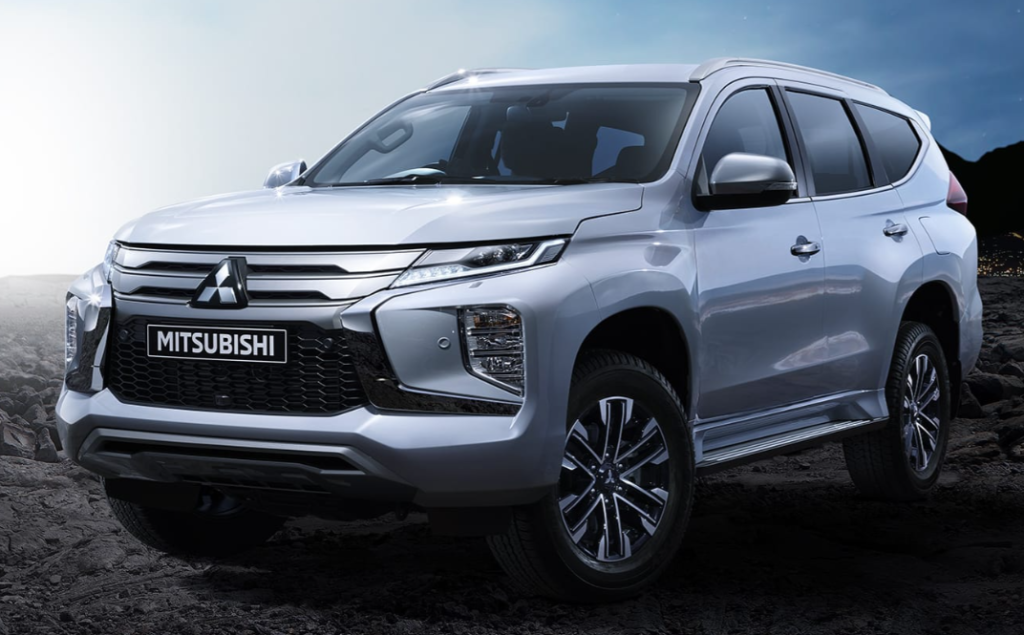
The Mitsubishi Pajero Sport vs Ford Everest comparison is one of the more interesting battles in the body-on-frame SUV market. Both are genuine 4WDs, both can seat seven people, both are designed to tow serious loads, and both are closely related to popular dual-cab utes.
Yet they approach the job differently.
The Mitsubishi Pajero Sport sticks to a relatively simple formula: a 2.4-litre turbo-diesel engine, an eight-speed automatic gearbox, Mitsubishi's proven Super Select 4WD-II system and competitive running costs.
The Ford Everest, meanwhile, feels like the more modern interpretation of the same recipe. It offers more powerful diesel engines, a 10-speed automatic transmission, up to 3.5 tonnes of towing capacity and considerably more contemporary cabin technology.
So, which one suits your needs better?
In this guide, we'll compare the Ford Everest vs Mitsubishi Pajero Sport in terms of engines, performance, towing, fuel economy, off-road ability, interior space, technology, family practicality and ownership.
Content in this publication
- Mitsubishi Pajero Sport vs Ford Everest: Quick Comparison
- Ford Everest vs Mitsubishi Pajero Sport Engine Performance
- Mitsubishi Pajero Sport vs Ford Everest Towing Capacity
- Mitsubishi Pajero Sport vs Ford Everest Off-Road
- Pajero Sport Super Select 4WD-II
- Pajero Sport vs Everest Fuel Economy
- Ford Everest vs Mitsubishi Pajero Sport Interior
- Mitsubishi Pajero Sport vs Ford Everest Space
- Ford Everest vs Pajero Sport Technology
- Mitsubishi Pajero Sport vs Ford Everest Reliability
- Pajero Sport vs Everest Servicing
- Mitsubishi Pajero Sport vs Ford Everest for Daily Driving
- Ford Everest vs Pajero Sport for Families
- Mitsubishi Pajero Sport vs Ford Everest for Towing
- Mitsubishi Pajero Sport vs Everest for Long-Distance Touring
- Pajero Sport vs Everest Dimensions
- Which Has the Better 4WD System?
- Mitsubishi Pajero Sport vs Ford Everest: Pros and Cons
- Mitsubishi Pajero Sport vs Ford Everest Price and Value
- Pajero Sport or Everest for Used-Car Buyers?
- Who Should Consider the Mitsubishi Pajero Sport?
- Who Should Consider the Ford Everest?
- Mitsubishi Pajero Sport vs Ford Everest: Final Thoughts
- FAQs About Mitsubishi Pajero Sport vs Ford Everest
Mitsubishi Pajero Sport vs Ford Everest: Quick Comparison
Here is the basic picture before we dig deeper.
| Feature | Mitsubishi Pajero Sport | Ford Everest |
|---|---|---|
| Engine | 2.4L turbo-diesel | 2.0L turbo-diesel / 3.0L V6 turbo-diesel |
| Transmission | 8-speed automatic | 10-speed automatic |
| Pajero Sport output | 133 kW / 430 Nm | — |
| Everest 2.0 output | — | around 154 kW / 500 Nm* |
| Everest V6 output | — | around 184 kW / 600 Nm* |
| Seating | Up to 7 | Up to 7 |
| Braked towing capacity | 3,100 kg | Up to 3,500 kg |
| Pajero Sport ground clearance | 218 mm | Variant dependent |
| Pajero Sport wading depth | 700 mm | Variant dependent |
| Pajero Sport fuel consumption | around 8.0 L/100 km | Powertrain dependent |
| 4WD system | Super Select 4WD-II | Part-time or full-time 4WD depending on version |
Mitsubishi currently lists the Pajero Sport's 2.4-litre diesel at 133 kW and 430 Nm, paired with an eight-speed automatic, while its Australian specification provides a 3,100 kg braked towing capacity.
Ford's current Everest range offers a 2.0-litre turbo-diesel or 3.0-litre V6 turbo-diesel, both paired with a 10-speed automatic. Depending on the model, Ford offers either part-time 4x4 or full-time 4WD.
*Outputs can vary by market and model year, so always check the specification sheet for the vehicle sold in your country.
Ford Everest vs Mitsubishi Pajero Sport Engine Performance
This is one of the biggest differences between the two SUVs.
Mitsubishi Pajero Sport Engine
The Pajero Sport uses Mitsubishi's familiar 2.4-litre MIVEC turbo-diesel.
It produces:
- 133 kW of power
- 430 Nm of torque
- Eight-speed automatic transmission
Those figures are perfectly respectable for everyday driving, highway touring and moderate towing.
The engine's personality is more about steady low- and mid-range torque than outright acceleration. Around town, it generally feels relaxed rather than urgent.
When fully loaded or towing a large caravan, however, the difference between 430 Nm and the Everest's stronger engines becomes much more noticeable.
Ford Everest Engine Options
The Everest offers considerably more choice.
For 2026, Ford continues to offer the Everest with a 2.0-litre turbo-diesel and 3.0-litre V6 turbo-diesel, both using a 10-speed automatic transmission.
The V6 is particularly appealing to drivers regularly towing heavy trailers.
With substantially more torque available than the Pajero Sport, the Everest V6 tends to feel less stressed when climbing long hills or accelerating with a caravan attached.
Which Feels Faster?
The Everest, particularly with the V6.
Think of the Pajero Sport as a dependable hiking boot. It gets you where you need to go without drama.
The Everest V6 is more like the same hiking boot fitted with a small rocket booster.
For normal suburban use, that extra performance isn't essential. But when towing, overtaking or climbing steep roads, it becomes much easier to appreciate.
Mitsubishi Pajero Sport vs Ford Everest Towing Capacity
Anyone comparing these SUVs for caravanning should pay close attention here.
Pajero Sport Towing Capacity
The Mitsubishi Pajero Sport has a maximum braked towing capacity of:
3,100 kg
Mitsubishi also lists a maximum towball load of 310 kg.
That's enough for plenty of:
- Boats
- Camper trailers
- Horse floats
- Medium-sized caravans
- Work trailers
Ford Everest Towing Capacity
The Ford Everest can tow up to:
3,500 kg braked
when correctly equipped with the appropriate Ford tow package. Ford also lists a maximum towball load of up to 350 kg in its towing documentation.
That's a 400 kg advantage over the Pajero Sport.
Everest vs Pajero Sport for Caravans
For a caravan weighing around 2,000-2,500 kg, either SUV can potentially do the job comfortably when weights and payloads are correctly managed.
Once you start approaching 3,000 kg, however, the Everest's higher towing ceiling provides more breathing room.
Remember that towing capacity alone doesn't tell the whole story. You must also consider:
- GVM
- GCM
- Payload
- Towball mass
- Passengers
- Accessories
- Luggage
A 3,500 kg tow rating doesn't necessarily mean you can load seven passengers, hundreds of kilograms of equipment and a 3.5-tonne caravan simultaneously.
Ford itself notes that occupant or luggage loads may need to be reduced to remain within GVM and GCM limits.
Mitsubishi Pajero Sport vs Ford Everest Off-Road
This comparison becomes much closer once the bitumen disappears.
Both vehicles use proper body-on-frame construction and are designed to handle genuine off-road driving.
Pajero Sport Super Select 4WD-II
One of the Pajero Sport's strongest attributes is Mitsubishi's Super Select 4WD-II system.
Mitsubishi provides selectable off-road modes including:
- Gravel
- Mud/Snow
- Sand
- Rock
One especially useful characteristic of Super Select is the flexibility it gives drivers across different surfaces.
The Pajero Sport also offers solid basic off-road dimensions.
Mitsubishi lists:
- 218 mm ground clearance
- 30-degree approach angle
- 24.2-degree departure angle
- 23.1-degree breakover angle
- 700 mm wading depth
Those numbers make it a genuinely capable touring vehicle rather than an SUV that merely looks rugged.
Everest Off-Road Capability
The Everest also brings serious 4WD hardware.
Depending on version, it can feature:
- Part-time 4WD
- Full-time 4WD
- Multiple drive modes
- Low-range gearing
- Off-road camera assistance
- Hill descent systems
Ford has also expanded equipment such as the 360-degree camera to more Everest variants in its updated 2026 range.
Which Is Better Off-Road?
The answer partly depends on trim level, tyre choice and terrain.
The Pajero Sport deserves considerable credit because its basic mechanical package is relatively straightforward and extremely well suited to touring.
The Everest counters with more power and newer electronic systems.
For technical crawling, tyres and driver skill will often make a bigger difference than the badge on the grille.
Pajero Sport vs Everest Fuel Economy
Fuel consumption matters enormously if you're planning long-distance touring.
Pajero Sport Fuel Consumption
Mitsubishi lists the Pajero Sport at approximately:
8.0 L/100 km combined
for the Australian market.
That's respectable for a large diesel seven-seat 4WD.
Of course, real-world consumption depends on:
- Traffic
- Tyre type
- Roof racks
- Vehicle load
- Speed
- Terrain
- Towing weight
Put a large caravan behind either vehicle and consumption can rise dramatically.
Everest Fuel Economy
The Everest's consumption depends heavily on engine choice.
You may be interested in reading Toyota Corolla AE86 Engine Swap – The Ultimate Guide
The smaller diesel is naturally the more economy-focused option, while the 3.0-litre V6 prioritises stronger performance and towing capability.
That creates an interesting decision.
Someone driving 25,000 kilometres annually without towing may appreciate the smaller engine.
Someone doing regular long-distance caravan trips may happily sacrifice some fuel economy for the V6's additional torque.
Ford Everest vs Mitsubishi Pajero Sport Interior
This is arguably where the age difference between their basic designs becomes most obvious.
Pajero Sport Interior
The Pajero Sport cabin is functional, comfortable and relatively easy to understand.
Current models offer features such as:
- 8-inch touchscreen
- Apple CarPlay
- Android Auto
- Digital instrument display
- Dual-zone climate control
- Available heated front seats
- Available leather-appointed upholstery
- Power tailgate
Nothing feels unnecessarily complicated.
However, placed beside a newer Everest, the Pajero Sport dashboard can feel one generation older.
Ford Everest Interior
The Everest provides a considerably more technology-focused cabin.
For example, the current Everest Sport includes a 12-inch portrait touchscreen with SYNC 4A, smartphone connectivity and modern digital features.
The overall presentation also feels closer to a modern premium family SUV.
That's important because these vehicles increasingly serve two jobs.
Monday to Friday they might be:
- School-run vehicles
- Shopping cars
- Commuters
Then on Saturday they become:
- Caravan tow vehicles
- Camping machines
- Trail explorers
The Everest arguably disguises its ute-based origins better.
Mitsubishi Pajero Sport vs Ford Everest Space
Both are available as seven-seaters, but anyone regularly carrying adults in all three rows should inspect them carefully before buying.
Pajero Sport Seating
Mitsubishi's specifications list:
- Second-row legroom: 880 mm
- Third-row legroom: 695 mm
- Third-row headroom: 917 mm
The third row is useful for children and occasional passengers, although adults may find it less ideal for long journeys.
Pajero Sport Boot Space
With all three rows operating, Mitsubishi lists approximately:
131 litres
of cargo capacity behind the third row.
With the third row folded, capacity increases substantially, while maximum capacity with the seats folded reaches around 1,488 litres.
That 131-litre figure illustrates a common seven-seat SUV problem: carrying seven humans and seven people's luggage simultaneously can require careful packing.
Everest Practicality
The Everest's larger and more modern packaging generally makes it feel particularly well suited to family touring.
Storage areas, seating layout and cabin usability are major parts of its appeal.
If you intend to carry seven passengers frequently rather than occasionally, spend time physically testing both third rows.
Measurements on a spreadsheet can't tell you whether your teenagers will complain after three hours.
They almost certainly will anyway, but we may as well reduce the odds.
Ford Everest vs Pajero Sport Technology
Technology strongly favours the newer Ford architecture.
Pajero Sport Technology
The Mitsubishi provides most of the essentials:
- Smartphone connectivity
- Adaptive cruise control
- Digital driver information
- Navigation on selected variants
- Multi Around Monitor on selected versions
- Blind-spot monitoring
- Rear cross-traffic alert
The interface is comparatively straightforward.
Some buyers actually prefer that.
Not everyone wants their 4WD to resemble a rolling tablet computer.
Everest Technology
The Everest offers larger displays and more sophisticated towing and driver-assistance technology.
Depending on specification, features can include:
- 12-inch portrait display
- 360-degree camera
- Connected services
- Tyre-pressure monitoring
- Pro Trailer Backup Assist
- Advanced towing assistance
Ford notes that Pro Trailer Backup Assist is available on selected Everest versions as part of optional packages.
If technology matters heavily to you, the Ford clearly presents the more contemporary environment.
Mitsubishi Pajero Sport vs Ford Everest Reliability
Reliability comparisons require some caution because long-term outcomes depend on maintenance, driving conditions and individual vehicle history.
The Pajero Sport benefits from relatively mature mechanical hardware.
Its 2.4-litre diesel and eight-speed automatic combination has been around long enough that owners and workshops are familiar with it.
That can be reassuring if you intend to keep the vehicle for many years or travel far away from major cities.
The Everest's current generation uses more sophisticated technology and offers considerably stronger engines.
Sophistication isn't automatically bad for reliability, but it does mean there are more systems to consider when buying second-hand.
For either model, we would place more importance on a complete service history than internet anecdotes.
Pajero Sport vs Everest Servicing
Mitsubishi's ownership package is a major selling point.
In Australia, Mitsubishi currently promotes:
- Up to 10-year warranty under qualifying conditions
- 10 years of capped-price servicing
- Up to 10 years of roadside assistance under the program
The Pajero Sport's scheduled servicing interval is generally 12 months or 15,000 km, whichever comes first.
For buyers planning long-term ownership, predictable servicing costs can be attractive.
Mitsubishi Pajero Sport vs Ford Everest for Daily Driving
Neither SUV can completely hide the fact that it shares DNA with a rugged ute.
They're tall, heavy and built for capability.
However, the Everest has made significant progress in making a ladder-frame SUV feel polished on normal roads.
The Ford generally provides:
- Stronger acceleration
- More sophisticated technology
- Modern cabin design
- Comfortable long-distance cruising
The Pajero Sport feels simpler and slightly more old-school.
That description isn't necessarily criticism.
Some buyers specifically want a dependable 4WD without layers upon layers of electronics.
Ford Everest vs Pajero Sport for Families
Families frequently judge vehicles differently from 4WD enthusiasts.
An off-road enthusiast may ask:
"What's the approach angle?"
A parent may ask:
"Can I fit backpacks, football boots, groceries and a stroller behind the third row?"
You may be interested in readingToyota Corolla AE86 Engine Swap – The Ultimate GuideYou may be interested in reading
 Does the Toyota Camry Have CVT Transmission?
Both questions matter.
The Everest's family-friendly technology and cabin design make it particularly appealing for people using their 4WD as an everyday SUV.
The Pajero Sport still performs the role well, particularly if the third row isn't needed every day.
Mitsubishi Pajero Sport vs Ford Everest for Towing
If towing is your primary priority, the numbers deserve another look.
The Pajero Sport offers:
3,100 kg braked
The Everest offers:
up to 3,500 kg braked
Combine the Ford's higher towing ceiling with the available V6 diesel and the Everest becomes particularly attractive for large caravans.
For lighter camper trailers or boats, the Mitsubishi's capability is already more than sufficient for many users.
There is little benefit in paying for towing capability you'll never actually use.
Mitsubishi Pajero Sport vs Everest for Long-Distance Touring
Long-distance touring introduces another set of priorities:
- Fuel range
- Ride comfort
- Reliability
- Cargo space
- Spare-wheel accessibility
- Payload
- Towing stability
- Dealer availability
The Pajero Sport's simpler mechanical layout and Super Select 4WD system give it strong touring credentials.
The Everest responds with more power, greater towing capacity and a more modern interior.
For someone travelling thousands of kilometres at a time, the Ford's additional refinement can make a noticeable difference.
On the other hand, remote-area travellers may appreciate the Mitsubishi's more familiar and established mechanical package.
Pajero Sport vs Everest Dimensions
The Pajero Sport is approximately:
- 4,840 mm long
- 1,815 mm wide
- 1,835 mm tall
- 2,800 mm wheelbase
according to Mitsubishi's current brochure.
Its relatively manageable width can actually be useful on narrow tracks and crowded urban streets.
The Everest feels noticeably substantial.
That's beneficial for cabin space, but you may notice the extra bulk when entering underground car parks or squeezing through tight trails.
Which Has the Better 4WD System?
Both have serious hardware, but they approach four-wheel drive slightly differently.
Why We Like Super Select 4WD-II
Mitsubishi's system has long been one of the Pajero Sport's strongest attributes.
It allows the vehicle to adapt well to changing surfaces, and the selectable terrain modes provide additional assistance off-road.
Everest 4WD System
The Everest offers either part-time 4x4 or full-time 4WD depending on the engine and specification.
The V6/full-time 4WD combination is particularly attractive for people regularly moving between sealed roads, gravel and off-road conditions.
Mitsubishi Pajero Sport vs Ford Everest: Pros and Cons
Mitsubishi Pajero Sport Advantages
The Pajero Sport's main strengths include:
- Proven 2.4-litre diesel
- Excellent Super Select 4WD-II system
- 3.1-tonne towing capacity
- Competitive fuel consumption
- Strong off-road ability
- Relatively compact dimensions
- Attractive long-term ownership program
- Straightforward controls
Mitsubishi Pajero Sport Disadvantages
Potential compromises include:
- Less power than the Everest
- Lower towing capacity
- Older-feeling cabin design
- Smaller infotainment screen
- Limited luggage space with seven seats occupied
Ford Everest Advantages
The Everest offers:
- Stronger engines
- Available V6 turbo-diesel
- Up to 3.5-tonne towing capacity
- More contemporary cabin
- Advanced towing technology
- Larger infotainment displays
- Strong family practicality
- Excellent long-distance refinement
Ford Everest Disadvantages
Consider:
- Higher-spec versions can become expensive
- More complex electronics
- Large physical footprint
- V6 fuel consumption may be higher
- Accessories and towing packages can increase the total purchase price
Mitsubishi Pajero Sport vs Ford Everest Price and Value
This is where the comparison becomes particularly interesting.
The Everest offers more technology and considerably stronger performance, but you normally pay for those advantages.
Ford currently lists the 2026 Everest Sport 2.0 in Australia from around AUD $70,000 drive-away under the advertised offer, although final pricing varies with location, options and offers.
The Pajero Sport's appeal has traditionally been value.
Instead of chasing the newest screens and maximum horsepower, Mitsubishi provides the fundamentals:
a diesel engine, low-range 4WD, seven seats, respectable towing and genuine off-road capability.
For value-focused buyers, that formula remains compelling.
Pajero Sport or Everest for Used-Car Buyers?
The equation changes significantly when buying used.
A two- or three-year-old Pajero Sport may provide enormous capability for the money.
When shopping used, inspect:
- Full service history
- DPF condition
- Underbody damage
- Suspension modifications
- Towbar wear
- Trailer brake controller installation
- Tyres
- Differential servicing
- Signs of water crossings
- Aftermarket electrical modifications
The same applies to the Everest.
A pristine road-driven vehicle is usually preferable to a heavily modified 4WD that has spent every weekend bouncing over rocks, regardless of how impressive the bull bar looks.
Who Should Consider the Mitsubishi Pajero Sport?
The Pajero Sport makes plenty of sense if your priorities include:
- Genuine 4WD capability
- Simpler mechanical package
- Long-term ownership
- Moderate-to-heavy towing below 3.1 tonnes
- Competitive running costs
- Occasional seven-seat use
- Remote touring
- Good value for money
It's an especially interesting choice for buyers who don't care whether their centre screen is the size of a television.
Who Should Consider the Ford Everest?
The Everest should be high on the shortlist if you value:
- Strong diesel performance
- 3.5-tonne towing
- Modern technology
- Frequent family use
- Regular seven-seat driving
- Large caravans
- Refined highway touring
- More sophisticated cabin design
The V6 is particularly appealing when towing is a major part of ownership.
Mitsubishi Pajero Sport vs Ford Everest: Final Thoughts
The Mitsubishi Pajero Sport vs Ford Everest comparison demonstrates how two vehicles built around similar principles can end up feeling remarkably different.
The Pajero Sport remains a traditional, capable diesel 4WD. Its 133 kW/430 Nm 2.4-litre diesel, eight-speed automatic, Super Select 4WD-II system and 3,100 kg towing capacity create a strong package for touring, off-road use and family duties.
The Everest takes that formula further toward premium family-SUV territory. It offers more powerful engines, a 10-speed automatic, sophisticated technology and up to 3,500 kg of braked towing capacity.
For many buyers, the real choice comes down to philosophy.
Do we want a straightforward, proven 4WD with strong value?
The Pajero Sport makes a convincing argument.
Do we want more performance, towing capability and modern technology?
That's where the Everest becomes especially compelling.
Neither makes the other irrelevant. They simply prioritise different things.
And in a market increasingly filled with SUVs that look adventurous but aren't particularly interested in leaving the pavement, it's refreshing that both the Pajero Sport and Everest can still get their tyres properly dirty.
FAQs About Mitsubishi Pajero Sport vs Ford Everest
1. Is the Ford Everest bigger than the Mitsubishi Pajero Sport?
The Ford Everest generally feels larger and roomier, particularly in terms of overall cabin packaging. The Pajero Sport measures approximately 4,840 mm long, 1,815 mm wide and 1,835 mm tall in current Australian specification.
2. Which can tow more, Pajero Sport or Ford Everest?
The Ford Everest can tow more based strictly on manufacturer-rated maximum braked towing capacity. Ford lists up to 3,500 kg, while Mitsubishi lists 3,100 kg for the Pajero Sport. Actual legal towing ability also depends on GVM, GCM, payload and vehicle configuration.
3. Is the Mitsubishi Pajero Sport good off-road?
Yes. The Pajero Sport is a genuine body-on-frame 4WD equipped with Mitsubishi's Super Select 4WD-II system and selectable off-road modes. Mitsubishi also lists 218 mm of ground clearance and a 700 mm wading depth for current Australian models.
4. Does the Ford Everest have a V6 engine?
Yes. Ford currently offers the Everest with an available 3.0-litre V6 turbo-diesel, paired with a 10-speed automatic and full-time 4WD in relevant variants.
5. Is the Pajero Sport more fuel-efficient than the Everest?
Mitsubishi lists approximately 8.0 L/100 km combined for the Pajero Sport in Australia. Everest fuel consumption varies depending on engine and variant, particularly between the smaller diesel and the more powerful V6. Real-world economy for both vehicles can change significantly when towing or carrying heavy loads.
You may be interested in readingToyota Corolla AE86 Engine Swap – The Ultimate GuideYou may be interested in reading
Does the Toyota Camry Have CVT Transmission?You may be interested in reading
 Toyota Camry Trim Levels 2014: A Detailed Guide to Choosing the Best
If you want to know other articles similar to Mitsubishi Pajero Sport vs Ford Everest: Which 4WD SUV Makes More Sense? you can visit the category Models.
Mitsubishi Pajero Sport vs SsangYong Rexton: Which 4WD SUV Is Right for You?
Mitsubishi Pajero Sport vs Isuzu MU-X: Which 7-Seat 4WD Is Better?
Mitsubishi Pajero Sport vs Toyota Fortuner: Which 7-Seat SUV Is Better?
Mitsubishi Pajero Sport vs Pajero: What’s the Difference and Which One Suits You?
Mitsubishi Pajero Sport vs Outlander: Which SUV Is Right for You?

Honda Passport Best Years: Which Model Years Are Worth Buying?
Leave a Reply
More content of your interest