

Mitsubishi Pajero Sport vs SsangYong Rexton: Which 4WD SUV Is Right for You?

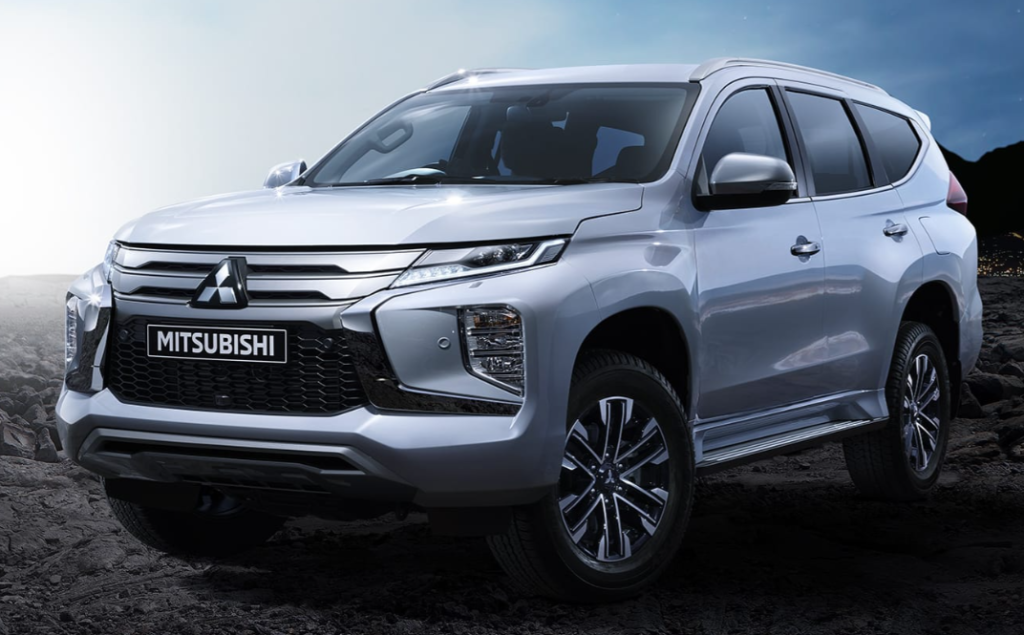
Choosing between the Mitsubishi Pajero Sport vs SsangYong Rexton—now known as the KGM Rexton in many markets—is more complicated than simply comparing horsepower, towing capacity, and price.
Both are proper body-on-frame SUVs. Both can seat up to seven people depending on specification. Both use turbo-diesel engines in key markets, offer low-range four-wheel drive, and have enough towing capability to pull a serious trailer or caravan.
Yet they have noticeably different personalities.
The Mitsubishi Pajero Sport feels like the more traditional adventure-focused 4WD. Its Super Select II four-wheel-drive system, proven mechanical package, and touring-oriented character make it attractive to buyers who regularly travel away from sealed roads.
The SsangYong/KGM Rexton takes another approach. It mixes traditional 4WD hardware with an interior and driving experience aimed more heavily at comfort, equipment, towing, and family use.
So, which one makes more sense?
Let’s put the Pajero Sport and Rexton head-to-head across performance, towing, fuel consumption, interior space, technology, off-road ability, comfort, reliability considerations, and everyday usability.
Content in this publication
- Mitsubishi Pajero Sport vs SsangYong Rexton Specs
- Engine and Performance
- Transmission Comparison
- Pajero Sport vs Rexton 4WD Systems
- Mitsubishi Pajero Sport vs SsangYong Rexton Off Road
- Towing Capacity: Pajero Sport vs Rexton
- Fuel Economy
- Rexton vs Pajero Sport Interior
- Seven-Seat Practicality
- Pajero Sport vs Rexton Comfort
- Technology and Equipment
- Safety Considerations
- Reliability: Mitsubishi Pajero Sport vs SsangYong Rexton
- Ownership Costs and Warranty
- Pajero Sport vs Rexton Size
- Mitsubishi Pajero Sport Advantages
- SsangYong Rexton Advantages
- Mitsubishi Pajero Sport vs SsangYong Rexton for Towing
- Mitsubishi Pajero Sport vs Rexton for Off-Road Touring
- Which Is Better as a Daily Driver?
- Pajero Sport vs Rexton: Key Differences at a Glance
- Who Should Consider the Mitsubishi Pajero Sport?
- Who Should Consider the SsangYong/KGM Rexton?
- Conclusion: Mitsubishi Pajero Sport vs SsangYong Rexton
- Frequently Asked Questions
Mitsubishi Pajero Sport vs SsangYong Rexton Specs
One of the easiest ways to understand these SUVs is to look at the mechanical numbers first.
Using current Australian-market specifications as a useful reference point, the Pajero Sport continues with its familiar 2.4-litre turbo-diesel four-cylinder engine, while the current KGM Rexton uses a 2.2-litre turbo-diesel four-cylinder.
| Specification | Mitsubishi Pajero Sport | SsangYong/KGM Rexton |
|---|---|---|
| Engine | 2.4L turbo-diesel 4-cylinder | 2.2L turbo-diesel 4-cylinder |
| Power | 133 kW | Around 148–149 kW |
| Torque | 430 Nm | 441 Nm |
| Transmission | 8-speed automatic | 8-speed automatic |
| Drive system | Super Select II 4WD | Part-time 4WD |
| Low range | Yes | Yes |
| Braked towing capacity | 3,100 kg | 3,500 kg |
| Claimed fuel consumption | Around 8.0 L/100 km | Around 8.7 L/100 km |
| Seating | Up to 7 | 7 |
Current Rexton specifications list a 2.2-litre diesel, eight-speed automatic, 441 Nm, selectable 4H and 4L, and a 3.5-tonne braked towing capacity. The Pajero Sport's familiar Australian specification uses a 2.4-litre diesel producing 133 kW and 430 Nm with an eight-speed automatic.
Straight away, we can see the central difference.
The Rexton offers more power, slightly more torque, and greater maximum towing capacity.
The Pajero Sport counters with lower official fuel consumption and a more flexible four-wheel-drive system.
Engine and Performance
Mitsubishi Pajero Sport Engine
The Pajero Sport's 2.4-litre turbo-diesel engine produces 133 kW and 430 Nm in the Australian-market model.
On paper, those figures no longer look particularly dramatic among modern large diesel SUVs.
But outright speed has never really been the Pajero Sport's mission.
Instead, Mitsubishi tunes the drivetrain around predictable low- and mid-range torque. Around town, it has enough strength to move the vehicle comfortably, while the eight-speed automatic helps keep the engine within its useful torque range.
Loaded with passengers, luggage, or towing equipment, however, you may notice that the Pajero Sport needs to work harder than some newer rivals.
Independent testing has also found the Mitsubishi slower in acceleration than the Rexton.
SsangYong Rexton Engine
The current Rexton uses a 2.2-litre turbo-diesel engine producing roughly 148–149 kW and 441 Nm, depending on how the market specification rounds the output figure.
Those numbers give the Rexton a modest but useful advantage.
It does not suddenly transform into a sports SUV—the Rexton is still a heavy ladder-frame 4WD—but there is a little more urgency available when overtaking, climbing hills, or carrying a full load.
The 441 Nm torque output arrives relatively low in the rev range, which suits towing and relaxed highway driving particularly well.
Which Feels Faster?
The Rexton generally feels stronger.
Its advantage is not enormous, but when we combine its extra power with the refinement of its eight-speed automatic, it tends to feel less strained during everyday acceleration.
If we regularly travel fully loaded or tow a substantial caravan, that additional output becomes more noticeable.
Transmission Comparison
Both SUVs use eight-speed automatic transmissions, but the overall drivetrain experience is different.
The Pajero Sport's gearbox is generally smooth and works well with its diesel engine. Mitsubishi also equips some versions with steering-wheel paddle shifters, which can be handy when controlling engine braking on steep roads.
The Rexton's eight-speed automatic similarly prioritises smoothness rather than aggressive shifts.
On the highway, the additional ratios allow both SUVs to settle into relatively relaxed cruising.
Neither transmission should determine the purchase on its own.
The more important difference lies behind the transmission: the type of four-wheel-drive system each vehicle uses.
Pajero Sport vs Rexton 4WD Systems
Here the comparison gets genuinely interesting.
Mitsubishi Super Select II 4WD
One of the Pajero Sport's biggest attractions is Mitsubishi's Super Select II four-wheel-drive system.
Depending on operating conditions, the driver can access modes designed for different surfaces, including a four-wheel-drive mode suitable for use on sealed roads.
That is an important distinction.
Traditional part-time 4WD systems generally require drivers to return to two-wheel drive on high-grip sealed surfaces.
The Mitsubishi system provides more flexibility.
We can think of it like having an extra tool in the toolbox: we may not need it every day, but when conditions suddenly change from dry asphalt to rain, gravel or loose surfaces, that versatility is useful.
SsangYong Rexton 4WD System
The current KGM Rexton uses a part-time four-wheel-drive system with selectable 4H and 4L plus an automatically locking rear differential.
It is conventional but effective hardware.
For normal road driving, the Rexton operates using its road-oriented configuration, while four-wheel drive can be engaged when surfaces become slippery or when venturing off-road.
Low range gives it genuine capability beyond what we would find in a typical crossover SUV.
Which 4WD System Is More Versatile?
For drivers regularly switching between sealed roads, gravel, wet surfaces and off-road tracks, the Pajero Sport's drivetrain configuration has an important advantage.
The Rexton's system remains capable, but it is more traditional.
Mitsubishi Pajero Sport vs SsangYong Rexton Off Road
If weekend adventures are important, this category deserves extra attention.
Both vehicles have body-on-frame construction, low-range gearing and legitimate 4WD hardware. These are not simply front-wheel-drive crossovers dressed in hiking boots.
However, their strengths are different.
Pajero Sport Off-Road Ability
The Pajero Sport has earned a strong reputation as a touring-oriented 4WD.
Super Select II is a major reason why.
Depending on trim, the Pajero Sport also incorporates terrain-oriented driving settings and supporting hardware designed for loose or difficult surfaces.
Its dimensions are relatively manageable for a seven-seat 4WD too, which can make narrow tracks slightly less intimidating.
For owners planning:
- Remote-road touring
- Beach driving
- Gravel roads
- Muddy tracks
- Camping trips
- Moderate four-wheel-driving
- Steep descents
the Pajero Sport's drivetrain makes a compelling case.
Rexton Off-Road Ability
The Rexton should not be dismissed off-road.
It offers low-range gearing, four-wheel drive and an automatically locking rear differential in its current Australian specification.
That gives it substantially more capability than an ordinary road-focused SUV.
Its personality, however, tends to lean more toward family touring, towing and sealed-road comfort.
Independent Australian reviews have generally described it as capable of light-to-moderate off-road work while noting limitations compared with more off-road-oriented rivals.
For Frequent Off-Road Driving
If our lifestyle involves regular off-road travel rather than the occasional gravel road or campsite, the Mitsubishi's drivetrain flexibility deserves serious consideration.
Towing Capacity: Pajero Sport vs Rexton
This is one area where the difference is immediately obvious.
The Mitsubishi Pajero Sport has a braked towing capacity of approximately 3,100 kg, while the Rexton is rated to tow up to 3,500 kg braked in the current Australian specification.
That is a 400 kg difference.
You may be interested in reading Mitsubishi Pajero Sport vs Ford Everest: Which 4WD SUV Makes More Sense?
And 400 kg can matter enormously when we are dealing with caravans.
Rexton's 3.5-Tonne Advantage
A 3,500 kg rating puts the Rexton into the towing range many buyers specifically search for.
That makes it interesting for:
- Large caravans
- Heavy camper trailers
- Horse floats
- Boats
- Work trailers
We still need to calculate payload, tow-ball mass, gross vehicle mass and gross combination mass rather than treating the maximum towing figure as the whole story.
A vehicle being rated to tow 3.5 tonnes does not automatically mean every configuration can carry a family, luggage, accessories and maximum tow-ball weight simultaneously.
Nevertheless, the Rexton gives us considerably more theoretical towing headroom.
Is the Pajero Sport Good for Towing?
Absolutely—3,100 kg is still substantial.
For owners towing a camper, boat or moderate caravan under that threshold, the Mitsubishi may provide more capacity than they actually need.
The question is not simply which SUV tows more?
It is how much do we genuinely intend to tow?
If our caravan weighs around 2,200 kg loaded, the Rexton's additional 400 kg maximum rating may provide little practical benefit.
If we're approaching 3 tonnes or more, however, that difference becomes much more meaningful.
Fuel Economy
The Pajero Sport carries an official combined fuel-consumption figure of around 8.0 L/100 km in Australia.
The Rexton's official figure is around 8.7 L/100 km.
Therefore, on paper, the Mitsubishi uses approximately 0.7 litres less diesel per 100 km.
Over 20,000 km, the theoretical difference is about 140 litres of fuel.
Real-world consumption will naturally depend on:
- Traffic
- Tyre pressure
- Roof racks
- Driving style
- Vehicle load
- Off-road use
- Towing
- Terrain
Once a large caravan is attached, neither SUV will come remotely close to its laboratory combined-cycle figure.
Still, for drivers covering large annual distances without towing, the Pajero Sport's lower official consumption is worth noting.
Rexton vs Pajero Sport Interior
Now the Rexton begins to reveal its alternative personality.
The Mitsubishi feels like a rugged 4WD that has been made comfortable enough for family life.
The Rexton often feels more like a comfortable family SUV that happens to have a traditional 4WD chassis underneath it.
Rexton Cabin
Current Rexton models place considerable emphasis on cabin equipment.
For example, MY26 Australian versions feature a 12.3-inch digital instrument display and 12.3-inch infotainment touchscreen, with Apple CarPlay and Android Auto included.
Higher trims add progressively more premium appointments.
The design looks modern and relatively upmarket considering the Rexton's position in the market.
For families that spend most of their time commuting, travelling between cities and taking long highway trips, this softer personality has appeal.
Pajero Sport Cabin
The Pajero Sport interior is functional and generally straightforward.
Its controls are relatively easy to understand, visibility is decent, and the driving position gives us that elevated traditional-4WD feeling.
However, the fundamental vehicle is older than some newer competitors, and that becomes noticeable in areas such as multimedia presentation and cabin design.
The interior works.
It simply does not always feel as contemporary as the Rexton.
Seven-Seat Practicality
Both vehicles can work as family seven-seaters, but we should not confuse them with full-size people movers.
Third-row seating in ladder-frame 4WDs is generally best suited to children, teenagers or occasional adult use rather than seven adults undertaking a cross-country expedition.
Access also requires a degree of climbing.
With the third row folded, both become significantly more useful for luggage.
Which Is Better for a Family?
For buyers prioritising cabin presentation, technology and comfortable road trips, the Rexton's strengths become obvious.
For families whose weekends regularly involve dirt tracks, campsites and touring equipment, the Pajero Sport's rugged character may fit the lifestyle more naturally.
Pajero Sport vs Rexton Comfort
Driving these vehicles back-to-back reveals something specifications cannot fully describe.
The Rexton generally aims for a more refined road experience.
Independent comparison testing has found the Rexton quieter and more polished on bitumen, while the Pajero Sport can feel more agricultural and transmit more movement through its body over imperfect roads.
That does not mean the Mitsubishi is uncomfortable.
It means its priorities are different.
Around Town
In city driving, the Rexton's refinement makes sense.
A quieter diesel, comfortable cabin and modern technology help disguise the fact that we are driving a large ladder-frame 4WD.
The Pajero Sport feels more obviously like a traditional four-wheel drive.
On the Highway
Both settle comfortably into long-distance cruising.
The Rexton's slightly stronger engine can make overtaking feel easier, while the Pajero Sport's drivetrain provides excellent flexibility when conditions deteriorate.
Technology and Equipment
The Rexton has become increasingly competitive here.
For MY26 in Australia, KGM added adaptive cruise control and lane-keeping assistance as standard across the Rexton range, together with electric power steering and revised lighting.
Its available equipment includes features such as:
- 12.3-inch infotainment display
- 12.3-inch digital instruments
- Apple CarPlay
- Android Auto
- Adaptive cruise control
- Lane Keeping Assist
- Autonomous emergency braking
- Blind-spot warning
- Rear cross-traffic warning
- Front and rear parking sensors
- Trailer Sway Assist
Equipment varies between trim levels and markets, so buyers should check the precise specification offered locally.
The Pajero Sport provides many familiar convenience and safety systems too, but its older basic architecture can make the Rexton feel newer when we compare dashboard technology directly.
Safety Considerations
Safety should never be reduced to the number of icons listed in a brochure.
Crash-test standards evolve, ratings expire, and equipment can vary substantially across markets and trim levels.
What we can say is that the latest Rexton specification includes a broad package of active driver-assistance systems such as AEB, adaptive cruise control, lane keeping, blind-spot warning and rear cross-traffic warning.
When comparing a specific Pajero Sport and Rexton, we would check:
- Autonomous emergency braking
- Adaptive cruise control
- Blind-spot monitoring
- Rear cross-traffic alert
- Lane assistance
- Airbag coverage
- Parking sensors
- 360-degree cameras
- Child-seat mounting points
Specifications should be checked for the exact model year because safety packages can change.
Reliability: Mitsubishi Pajero Sport vs SsangYong Rexton
Reliability is one of the most commonly searched questions in this comparison—and one of the hardest to answer with a single number.
The Pajero Sport benefits from a long-established powertrain and a substantial history of use in demanding markets.
That familiarity matters.
Mechanics know the platform, aftermarket support is broad in many countries, and the vehicle has been used extensively for towing and touring.
The Rexton has also used diesel power and ladder-frame construction for generations, but KGM/SsangYong has a smaller market presence in many regions.
You may be interested in readingMitsubishi Pajero Sport vs Ford Everest: Which 4WD SUV Makes More Sense?You may be interested in reading
 Nissan Rogue Competitors: Best Alternatives to the Rogue
What Matters More Than the Badge?
For a used example, service history is critical.
We would rather buy a carefully maintained Rexton with complete records than a neglected Pajero Sport simply because Mitsubishi has a stronger historical reputation.
Before purchasing either vehicle used, check:
- Complete service history
- Transmission behaviour
- Diesel particulate filter operation
- Suspension condition
- Underbody damage
- Four-wheel-drive engagement
- Differential operation
- Cooling system condition
- Evidence of heavy towing
- Previous modifications
Maintenance history tells us far more about an individual used vehicle than a logo on the grille.
Ownership Costs and Warranty
Ownership costs vary dramatically by country, dealer network and model year.
Fuel is one factor, but servicing, tyres, insurance, depreciation and parts availability may matter even more over five or ten years.
In Australia, KGM currently uses a strong warranty proposition, while Mitsubishi also offers extended warranty coverage subject to its applicable conditions and servicing requirements.
The important lesson is simple: read the fine print.
A headline warranty period does not tell us everything.
Check kilometre limits, servicing conditions, roadside assistance and whether coverage changes if servicing takes place outside the manufacturer's network.
Pajero Sport vs Rexton Size
These are substantial SUVs, although neither is gigantic by modern large-4WD standards.
Current comparison data puts the Pajero Sport at roughly 4.84 metres long with a 2.80-metre wheelbase, while the Rexton measures roughly 4.85 metres long with a longer 2.865-metre wheelbase.
The exterior footprints are therefore surprisingly similar.
The longer Rexton wheelbase contributes to its spacious cabin feel, whereas the Pajero Sport packages its mechanical components and passenger compartment differently.
For city parking, neither feels like a compact SUV.
If our garage is tight, measure it before buying rather than trusting our eyes at the dealership.
A few centimetres can suddenly feel like a kilometre when we're squeezing past a concrete pillar.
Mitsubishi Pajero Sport Advantages
The Pajero Sport makes a strong argument when our priorities include traditional 4WD capability and adventure touring.
Its notable strengths include:
- Flexible Super Select II 4WD system
- Low-range gearing
- Proven diesel drivetrain
- Strong touring credentials
- Approximately 3,100 kg braked towing capacity
- Lower claimed combined fuel consumption
- Extensive familiarity in many 4WD markets
- Up to seven seats depending on model
It is particularly appealing when we want one vehicle for commuting during the week and remote touring at weekends.
SsangYong Rexton Advantages
The Rexton counters with a very different collection of strengths:
- More power than the Pajero Sport
- 441 Nm of torque
- 3,500 kg braked towing capacity
- Comfortable road manners
- Seven-seat practicality
- Modern infotainment
- Strong standard equipment
- Low-range 4WD
- Automatically locking rear differential
- Competitive value positioning
It makes considerable sense for buyers who want traditional 4WD construction without sacrificing as much of the comfort expected from a modern family SUV.
Mitsubishi Pajero Sport vs SsangYong Rexton for Towing
If towing is our primary consideration, the numbers clearly favour the Rexton's maximum rating.
The Rexton offers up to 3,500 kg braked, versus approximately 3,100 kg for the Pajero Sport.
But maximum capacity is not the only calculation.
Before choosing either one, calculate:
- Actual loaded trailer mass
- Tow-ball weight
- Vehicle payload
- Gross vehicle mass
- Gross combination mass
- Weight of passengers
- Accessories and luggage
A bull bar, second battery, roof rack, camping equipment and four adult passengers can consume payload surprisingly quickly.
For a relatively light camper trailer, either SUV has ample capacity.
For a large caravan approaching 3.5 tonnes, the Rexton's higher rating becomes far more relevant.
Mitsubishi Pajero Sport vs Rexton for Off-Road Touring
This scenario reverses the emphasis.
If we repeatedly travel through changing conditions—highway, rain, gravel, corrugations, mud and low-speed technical tracks—the Mitsubishi's Super Select II system provides a level of drivetrain flexibility that is difficult to ignore.
The Rexton still has legitimate 4WD hardware and low range.
It can absolutely leave the asphalt.
But the Pajero Sport feels more naturally positioned as a dedicated touring 4WD.
For serious remote travel, aftermarket support also deserves investigation in the country where we live.
Things such as:
- Bull bars
- Snorkels
- Suspension upgrades
- Long-range tanks
- Underbody protection
- Roof platforms
- Recovery equipment
can become nearly as important as the original vehicle specification.
Which Is Better as a Daily Driver?
Turn the equation around again and the Rexton becomes particularly appealing.
For school runs, commuting, shopping trips and highway travel, its refinement, cabin technology and extra engine output create a more contemporary experience.
The Pajero Sport is perfectly usable every day, but its rugged roots remain visible.
That can be charming if we like traditional 4WDs.
If we are coming from a modern crossover or premium SUV, however, the Rexton may feel like the easier transition.
Pajero Sport vs Rexton: Key Differences at a Glance
Rather than declaring one universally superior, we can match each characteristic to the buyer who values it most.
| Priority | Vehicle with the stronger specification/characteristic |
|---|---|
| Maximum towing rating | Rexton |
| Engine power | Rexton |
| Torque | Rexton |
| Claimed fuel economy | Pajero Sport |
| Full-time-capable 4WD flexibility | Pajero Sport |
| Traditional off-road touring focus | Pajero Sport |
| Interior technology | Rexton |
| Road refinement | Rexton |
| Low-range gearing | Both |
| Seven-seat availability | Both |
| 3.5-tonne towing requirement | Rexton |
The important phrase here is stronger characteristic, not automatically “better vehicle.”
A 3.5-tonne tow rating is irrelevant to someone who never attaches a trailer. Likewise, sophisticated 4WD flexibility is less important to someone whose vehicle spends 99% of its life on suburban roads.
Who Should Consider the Mitsubishi Pajero Sport?
The Pajero Sport is particularly well suited to buyers who:
- Regularly drive on unsealed roads
- Want Super Select II 4WD
- Go camping frequently
- Plan remote touring
- Need seven seats occasionally
- Tow below approximately 3.1 tonnes
- Prefer proven mechanical simplicity over flashy technology
- Value lower official fuel consumption
Think of the Pajero Sport as the hiking boot of this comparison.
It may not look as polished in the hotel lobby, but it makes a lot of sense once the pavement disappears.
Who Should Consider the SsangYong/KGM Rexton?
The Rexton deserves attention if we:
- Tow a heavier caravan
- Want a 3,500 kg braked tow rating
- Prefer stronger engine output
- Spend most of our time on sealed roads
- Want a modern dashboard
- Regularly carry family passengers
- Value comfort and equipment
- Still need genuine low-range 4WD
The Rexton is more like a comfortable pair of touring shoes with hiking soles underneath.
It wants to make the long drive pleasant without completely surrendering the ability to explore once we arrive.
Conclusion: Mitsubishi Pajero Sport vs SsangYong Rexton
The Mitsubishi Pajero Sport vs SsangYong Rexton comparison demonstrates why specifications only tell half the story.
Mechanically, the Rexton has several obvious advantages. Its 2.2-litre diesel produces around 148–149 kW and 441 Nm, compared with 133 kW and 430 Nm from the Pajero Sport. More importantly for many Australian-style touring buyers, it offers a 3,500 kg braked towing capacity, approximately 400 kg more than the Mitsubishi.
The Rexton also places greater emphasis on cabin technology and sealed-road refinement. Current MY26 models add modern equipment such as dual 12.3-inch displays, adaptive cruise control and lane-keeping assistance.
The Pajero Sport answers with characteristics that are harder to express through simple numbers.
Its Super Select II four-wheel-drive system gives drivers considerable flexibility, and its established reputation as a touring 4WD remains one of its biggest attractions. Claimed fuel consumption is also lower at around 8.0 L/100 km versus approximately 8.7 L/100 km for the Rexton in comparable Australian specifications.
So the decision depends heavily on how the SUV will actually be used.
For frequent off-road touring, mixed-surface travel and buyers who place drivetrain versatility high on the priority list, the Pajero Sport has a compelling set of attributes.
For heavy towing, family highway travel, stronger performance and a more contemporary cabin experience, the Rexton brings a different—and equally relevant—set of advantages.
Before purchasing either, compare the exact trim levels sold in your market. Equipment, towing limits, prices, warranties and even model availability can differ considerably between countries.
Frequently Asked Questions
Is the SsangYong Rexton bigger than the Mitsubishi Pajero Sport?
They are surprisingly close in overall length. Current comparison data lists the Pajero Sport at roughly 4,840 mm long and the Rexton at about 4,850 mm, although the Rexton has a longer wheelbase of approximately 2,865 mm versus 2,800 mm for the Mitsubishi. Exact dimensions can vary slightly by specification.
Which can tow more, the Pajero Sport or Rexton?
In current Australian specifications, the Rexton can tow up to 3,500 kg braked, while the Pajero Sport is rated to approximately 3,100 kg braked. That gives the Rexton roughly 400 kg more maximum rated capacity.
Is the Rexton good off road?
Yes. The current Rexton has part-time four-wheel drive, selectable 4H and 4L modes and an automatically locking rear differential, giving it genuine off-road capability. Its strengths, however, also lean heavily toward towing, comfort and family touring.
You may be interested in readingMitsubishi Pajero Sport vs Ford Everest: Which 4WD SUV Makes More Sense?You may be interested in reading
Nissan Rogue Competitors: Best Alternatives to the RogueYou may be interested in reading
Nissan Rogue S vs SV: Which Trim Should You Buy?Which uses less fuel, Pajero Sport or Rexton?
Using Australian combined-cycle figures, the Pajero Sport is rated at around 8.0 L/100 km, while the Rexton is approximately 8.7 L/100 km. Real-world consumption will vary significantly depending on driving conditions and towing.
Is SsangYong Rexton now called KGM Rexton?
Yes. SsangYong has transitioned to the KGM brand name in markets including Australia, so current versions are marketed as the KGM Rexton. People still commonly search for “SsangYong Rexton,” which is why both names remain relevant when researching the vehicle.
If you want to know other articles similar to Mitsubishi Pajero Sport vs SsangYong Rexton: Which 4WD SUV Is Right for You? you can visit the category Models.
Honda Passport vs Toyota 4Runner: Which SUV Is Better?
Honda Passport vs Ford Bronco: Which SUV Is Better?
Honda Passport vs Ford Explorer: Which SUV Is Better?
Honda Passport or Pilot: Which SUV Is Better?
Honda Passport vs Jeep Grand Cherokee: Which SUV Is Better?
Honda Passport vs Nissan Pathfinder: Which SUV Is Better?
Leave a Reply
More content of your interest