
BMW i7 Tire Size: Complete Wheel and Tire Guide

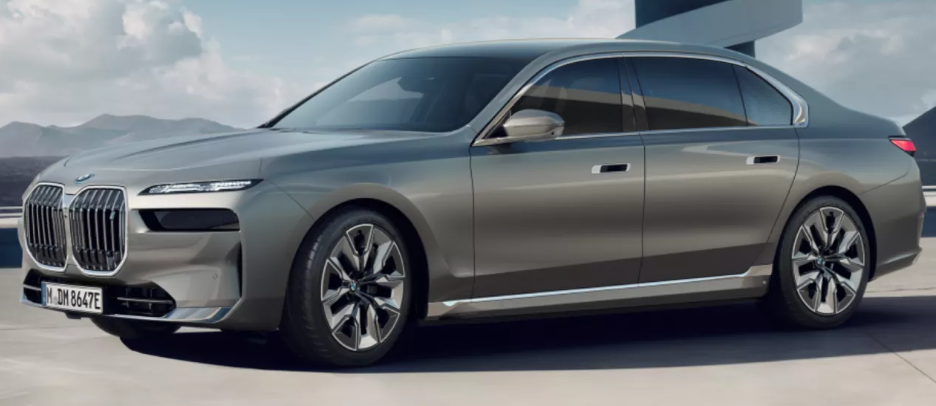
Choosing the right BMW i7 tire size sounds simple until we start looking at the actual options. The i7 is not a lightweight electric commuter wearing one universal tire package. It is a large, powerful luxury EV, and BMW has offered it with multiple wheel diameters, different front and rear tire widths, and fitments that vary by model year, trim, market, and equipment package.
That means one BMW i7 may leave the factory on relatively efficiency-focused 19-inch tires, while another sits on muscular 21-inch staggered rubber. Newer versions can even wear dramatic 22-inch wheels.
So, what tire size does a BMW i7 actually use?
Earlier G70-generation configurations included 245/50 R19 tires, while optional packages commonly used 255/45 R20 front and 285/40 R20 rear tires, or 255/40 R21 front and 285/35 R21 rear tires. BMW's April 2026 update for the newest 7 Series/i7 lineup moved the entry point to at least 20-inch wheels and added factory 22-inch options.
Before ordering tires, however, we should always verify the specification fitted to the individual car. The driver's-door tire placard, existing tire sidewall, VIN-specific BMW information, and owner's documentation take priority over a generic online chart.
Let's break everything down.
Content in this publication
- BMW i7 Tire Size at a Glance
- What Is the Standard BMW i7 Tire Size?
- BMW i7 19-Inch Tire Size
- BMW i7 20-Inch Tire Size
- BMW i7 21-Inch Tire Size
- BMW i7 22-Inch Tire Size
- How to Read a BMW i7 Tire Size
- Why Load Rating Matters So Much on the BMW i7
- What Does HL Mean on Some EV Tires?
- Square vs Staggered BMW i7 Tires
- BMW i7 Tire Size and Electric Range
- BMW i7 Tire Size and Ride Comfort
- BMW i7 Tires and Road Noise
- Can We Fit Different Tire Sizes on a BMW i7?
- Can BMW i7 Wheels Be Changed From 19 to 21 Inches?
- What Are the Best Tires for a BMW i7?
- BMW i7 Winter Tire Size Considerations
- How Often Should BMW i7 Tires Be Replaced?
- BMW i7 Tire Pressure
- How to Find the Exact Tire Size for Your BMW i7
- BMW i7 19 vs 20 vs 21 vs 22-Inch Tires
- Common BMW i7 Tire Size Mistakes
- Closing Thoughts: Choosing the Right BMW i7 Tire Size
- Frequently Asked Questions About BMW i7 Tire Size
BMW i7 Tire Size at a Glance
The following table covers the principal sizes associated with the current G70-generation BMW i7. Availability depends on model year, version, wheel package, and country.
| Wheel Diameter | Front Tire | Rear Tire | Typical Layout |
|---|---|---|---|
| 19 inch | 245/50 R19 | 245/50 R19 | Square |
| 20 inch | 255/45 R20 | 285/40 R20 | Staggered |
| 21 inch | 255/40 R21 | 285/35 R21 | Staggered |
| 22 inch | 255/35 R22 | 285/30 R22 or 295/30 R22 | Staggered |
BMW documentation for earlier i7 versions confirms the 245/50 R19 configuration, including a specification of 245/50 R19 105 W XL in one market. BMW's 2026 technical update lists 255/45 R20 front with 285/40 R20 rear, 255/40 R21 front with 285/35 R21 rear, and 255/35 R22 front with either 285/30 R22 or 295/30 R22 rear tires for the newest range.
Those differences are important because an i7 running 19-inch wheels behaves quite differently from one sitting on 22s. We are not simply changing appearance. Tire choice influences range, ride comfort, steering response, road noise, replacement cost, and resistance to pothole damage.
What Is the Standard BMW i7 Tire Size?
There isn't a single answer covering every i7 ever sold.
Earlier versions of the G70 i7 were available with 245/50 R19 tires on all four wheels. BMW's 2023 German pricing documentation, for example, lists 19-inch aerodynamic wheels with 245/50 R19 tires for the i7 xDrive60 and other configurations.
That setup is straightforward. All four tires share the same nominal width, aspect ratio, and wheel diameter.
BMW subsequently changed the situation.
For the updated range announced in April 2026, BMW stated that the 7 Series now starts with wheels of at least 20 inches. The new entry-level arrangement uses wider tires and a staggered configuration: 255/45 R20 at the front and 285/40 R20 at the rear. BMW also specifically notes range-focused summer tires for i7 variants.
So when someone asks, "What tires does a BMW i7 take?" our first question should really be: which model year and wheel package?
BMW i7 19-Inch Tire Size
One of the most efficiency-friendly configurations found on earlier i7 models is:
245/50 R19 105 XL
Depending on model and market, the exact speed rating may vary.
BMW documentation confirms the 245/50 R19 specification on earlier i7 configurations.
Why 19-Inch Tires Make Sense on an i7
At first glance, a 19-inch wheel can look almost modest beneath a car as imposing as the i7. Yet technically, the setup has several advantages.
A 50-series sidewall provides more tire between the wheel and the road. Think of that extra rubber as another thin layer of suspension. Sharp road imperfections have more material through which to dissipate their energy before reaching the cabin.
That matters on an electric luxury sedan where silence and smoothness are part of the experience.
The smaller wheel can also provide advantages in aerodynamic efficiency and rolling resistance, depending on tire design. On an EV, tiny efficiency improvements matter because they influence how much electrical energy is required to maintain speed.
Who Should Consider 19-Inch Wheels?
For owners of compatible earlier i7 models, 19-inch tires make sense when comfort, range, and everyday practicality matter more than aggressive styling.
They can be particularly attractive if we regularly drive over imperfect roads. More sidewall generally provides better protection against pothole impacts than an ultra-low-profile alternative.
The catch? They do not fill the i7's enormous wheel arches with quite the same visual drama as 21- or 22-inch wheels.
BMW i7 20-Inch Tire Size
The important 20-inch staggered setup is:
Front: 255/45 R20
Rear: 285/40 R20
BMW lists this configuration for the newest 7 Series/i7 range, and similar 20-inch staggered packages were also available on earlier versions.
This may be the sweet spot for many drivers.
We get a substantial wheel that looks proportionate beneath the i7's huge body, while still retaining enough tire sidewall to prevent every expansion joint from feeling like a personal insult.
Why Are the Rear BMW i7 Tires Wider?
Notice the numbers: 255 mm at the front and 285 mm at the rear.
That's a staggered tire setup.
Wider rear tires can support traction, stability, and the i7's substantial power delivery. On high-output versions, there is plenty of torque available almost instantly. A wider footprint at the rear also complements the chassis tuning and visual stance.
But staggered tires create one important maintenance limitation: we generally cannot perform a conventional front-to-rear tire rotation.
More on that shortly.
BMW i7 21-Inch Tire Size
One of the most common large-wheel combinations associated with the i7 is:
Front: 255/40 R21
Rear: 285/35 R21
BMW documentation confirms this staggered combination, and an independently tested i7 xDrive60 wearing 21-inch Pirelli P Zero tires used 255/40 R21 102Y front and 285/35 R21 105Y rear tires.
Visually, this setup suits the car beautifully.
The i7 is more than 5 metres long, so small wheels can disappear beneath its body. Twenty-one-inch wheels give the sedan the sort of planted stance we expect from a flagship BMW without reducing the tire sidewall to almost nothing.
How 21-Inch Tires Change the Driving Experience
Compared with a smaller wheel package, 21-inch tires tend to bring sharper steering reactions and a slightly more connected feel.
The trade-off is equally predictable.
Less sidewall means less cushioning when the wheel strikes a pothole, broken edge, or sharp road seam. Replacement tires can also become more expensive, especially because the front and rear sizes differ.
For many owners, though, 21 inches represents an appealing middle ground between elegance and extravagance.
Are 21-Inch BMW i7 Tires Good for Daily Driving?
Yes, assuming our roads are reasonably good and tire costs are not a major concern.
BMW designed the car to accommodate these wheels. The sophisticated suspension helps isolate occupants from road imperfections, so the i7 can remain remarkably comfortable even with substantial wheels.
Still, physics never disappears completely. A deeper pothole does not care how sophisticated our air suspension is. The lower-profile tire simply has less rubber available to absorb the blow.
BMW i7 22-Inch Tire Size
The updated i7 family takes things another step with factory-fitted 22-inch wheels.
BMW lists:
Front: 255/35 R22
Rear: 285/30 R22 or 295/30 R22
The exact rear specification depends on the particular wheel and vehicle configuration. BMW announced the availability of factory 22-inch wheels with its April 2026 update.
These are serious tires.
The 30-series rear sidewall is extremely low relative to the tire width. From the side, the wheel dominates visually while the rubber resembles a narrow black ribbon around it.
Advantages of 22-Inch BMW i7 Wheels
There is no mystery about the primary attraction: appearance.
Twenty-two-inch wheels give the i7 an imposing stance. They complement the car's scale and make the design look even more dramatic.
Steering response can also feel immediate because the shorter sidewall flexes less.
Yet this is not a free upgrade. Larger wheels normally bring compromises in weight, tire price, impact harshness, pothole vulnerability, and potentially energy consumption.
Should We Upgrade a BMW i7 to 22-Inch Wheels?
Only after considering how and where the car is driven.
For smooth highways and well-maintained urban roads, 22-inch wheels can work beautifully. If our daily route resembles a lunar landscape, however, a 20-inch setup is likely to produce fewer nervous glances every time we approach a pothole.
A flagship luxury sedan should make us relax, not scan the asphalt like an airport radar operator.
How to Read a BMW i7 Tire Size
Suppose our tire says:
255/40 R21 102Y XL
It looks complicated, but each part tells us something useful.
The 255 means the tire's nominal section width is 255 millimetres.
The 40 is the aspect ratio. The sidewall height equals approximately 40% of the nominal tire width.
The R tells us it uses radial construction.
The 21 means the tire fits a 21-inch wheel.
The 102 is the load index.
The Y is the speed rating.
And XL means Extra Load, indicating a tire engineered to carry higher loads at specified pressures than a comparable standard-load tire.
This last point deserves special attention on the i7.
Why Load Rating Matters So Much on the BMW i7
The BMW i7 is heavy.
Large battery packs, electric motors, luxury seats, extensive sound insulation, displays, air suspension hardware, and all the technology expected in a flagship sedan add considerable mass.
That means we cannot treat tire replacement like shopping for sneakers based purely on size.
A tire can physically fit the wheel yet still be inappropriate if its load capacity is insufficient.
Never Match Tire Size Alone
When buying replacement tires, we should check:
- Exact front and rear dimensions
- Load index or BMW-approved equivalent
- Speed rating
- XL or HL requirements where specified
- Seasonal classification
- BMW homologation or approval where applicable
- Whether the vehicle uses staggered or square fitment
- Correct wheel diameter and width
- Recommended cold inflation pressure
The safest reference remains the placard on the car itself and the specifications associated with its VIN.
Using an unsuitable load rating on a heavy EV is not an intelligent place to save money.
What Does HL Mean on Some EV Tires?
As EVs have become heavier and more powerful, tire manufacturers have developed HL — High Load — tires for applications requiring greater load capacity within a given tire size.
Not every BMW i7 configuration necessarily uses an HL-marked tire, so we should never assume that seeing "EV" in a product description makes the tire correct.
The principle is simple: match or exceed the approved specification without casually substituting load or speed characteristics.
If our existing sidewall includes an unusual marking we do not recognize, checking it before ordering four expensive tires can prevent an even more expensive mistake.
Square vs Staggered BMW i7 Tires
Understanding this distinction makes tire shopping much easier.
Square Tire Setup
A square setup uses the same tire size at all four corners.
The earlier 245/50 R19 i7 configuration is an example.
This offers practical benefits because, where permitted by BMW's rotation instructions and tire characteristics, equal-size tires provide greater flexibility in managing wear.
Staggered Tire Setup
A staggered layout uses different front and rear dimensions.
Examples include:
| Wheel | Front | Rear |
|---|---|---|
| 20 inch | 255/45 R20 | 285/40 R20 |
| 21 inch | 255/40 R21 | 285/35 R21 |
| 22 inch | 255/35 R22 | 285/30 R22 or 295/30 R22 |
The wider rear tires give the car a muscular stance and support the performance-oriented chassis configuration.
Can We Rotate Staggered BMW i7 Tires?
Usually not in the traditional front-to-rear pattern because the front and rear tires are different sizes.
If the tires are non-directional and wheel/tire specifications permit, some configurations may allow limited left-to-right movement, but that should not be assumed.
Follow BMW's guidance and the tire manufacturer's instructions for the specific vehicle.
BMW i7 Tire Size and Electric Range
Here's where wheel choice becomes particularly interesting.
Electric vehicles are unusually sensitive to efficiency. The battery contains a finite amount of energy, and every force resisting forward motion consumes a little of it.
Tires affect range through several mechanisms: rolling resistance, width, mass, aerodynamic drag, compound, construction, and inflation pressure.
Do Bigger Wheels Reduce BMW i7 Range?
Potentially, yes.
The effect is not simply caused by the wheel diameter itself. Larger packages often use wider tires, different compounds, greater rotating mass, and less aerodynamically efficient designs.
That is why comparing range based only on "19 versus 21 inches" oversimplifies the engineering.
BMW explicitly says the updated i7 variants use special range-extending summer tires, demonstrating how much attention manufacturers now give tire efficiency on EVs.
If maximizing distance between charging stops matters more than making the car resemble a concept vehicle, the more efficiency-oriented factory wheel package deserves serious consideration.
BMW i7 Tire Size and Ride Comfort
Picture two running shoes.
One has a thick cushioned sole. The other has a thin, firm sole built for responsiveness.
That is roughly the difference between a higher-profile and very low-profile tire.
A 245/50 R19 gives us considerably more sidewall than a 255/35 R22. More sidewall can absorb and soften impacts before they reach the wheel and suspension.
Of course, the i7 has sophisticated suspension engineering working in its favour. But tires remain the car's only physical contact with the road.
Which BMW i7 Tire Size Gives the Smoothest Ride?
As a general principle, among equivalent compatible factory configurations, smaller wheels with taller sidewalls tend to favour comfort.
So an earlier i7 on 19-inch tires or a current compatible version on 20-inch tires will normally have a comfort advantage over a similar car wearing 22-inch low-profile rubber, all else being equal.
But tire model matters enormously too.
A comfort-focused premium 21-inch tire may behave better than a harsh 20-inch tire of completely different construction.
Size tells us part of the story, not the whole story.
BMW i7 Tires and Road Noise
Electric cars make tire noise easier to notice.
A combustion engine masks a surprising amount of road sound. Remove that background soundtrack and suddenly the faint roar from the contact patches becomes more obvious.
BMW therefore pays particular attention to acoustics.
For the updated i7, BMW states that range-extending summer tires are used and that the front tires include sound-absorbing foam in their cavities to enhance acoustic comfort.
This is exactly why buying purely by dimensions can be shortsighted.
Two tires marked 255/40 R21 can behave differently in terms of noise, efficiency, wet grip, steering response, and comfort.
Can We Fit Different Tire Sizes on a BMW i7?
Technically possible does not necessarily mean advisable.
Changing tire dimensions affects overall rolling diameter, wheel clearance, speed calculations, stability systems, handling balance, load capacity, and potentially vehicle approval or insurance requirements depending on the country.
On a sophisticated EV such as the i7, we would remain with BMW-approved dimensions unless a qualified specialist has verified the alternative configuration.
Why Overall Diameter Matters
Imagine replacing a tire with one that is significantly taller.
Every wheel revolution now covers more ground. The vehicle's systems may interpret wheel speed differently, and clearance can change.
Go significantly smaller and we introduce the opposite problem.
BMW's engineers selected tire dimensions as part of an integrated chassis, braking, steering, and stability-control package. Tire sizing is therefore not the ideal area for experimentation.
Can BMW i7 Wheels Be Changed From 19 to 21 Inches?
On a vehicle for which both sizes are approved, moving between factory-compatible wheel packages may be possible.
But we need the complete package—not simply a larger wheel with any tire that happens to fit.
Wheel width, offset, brake clearance, front/rear pairing, tire load rating, overall diameter, pressure specification, and electronic monitoring all matter.
An original-equipment-style conversion is far safer than guessing based on appearance.
The same principle applies when downsizing from large summer wheels to a winter package.
What Are the Best Tires for a BMW i7?
There is no universal winner because "best" depends on climate and driving priorities.
The ideal BMW i7 tire should combine high load capability, low rolling resistance, predictable wet grip, low cabin noise, strong braking performance, and sufficient durability for a heavy, powerful EV.
A driver prioritizing maximum summer performance may choose differently from someone who spends winter in freezing conditions.
Likewise, a driver covering long motorway distances may value quietness and efficiency above razor-sharp steering.
BMW-Approved Tires vs Generic Replacements
BMW-approved or homologated tires can be attractive because they have been developed or validated around particular BMW requirements.
That does not mean every other premium tire is automatically poor. It does mean we should compare specifications carefully instead of assuming all tires carrying the same dimensions are interchangeable in every respect.
With an i7, cheap tires are a strange economy.
We are asking four relatively small patches of rubber to control a heavy, extremely powerful luxury vehicle during acceleration, cornering, rain, emergency braking, and motorway travel.
That's a serious job description.
BMW i7 Winter Tire Size Considerations
Winter changes the equation.
A giant performance-oriented summer tire may look spectacular, but cold temperatures, snow, slush, and ice demand different priorities.
BMW says 20- and 21-inch winter wheel packages are available for the updated 7 Series range.
The exact appropriate winter size still depends on the specific i7 configuration and market.
Why Downsizing Can Help in Winter
Where manufacturer-approved, downsizing from a very large summer wheel to a smaller winter package can provide practical advantages.
A taller sidewall helps protect against winter potholes. The package may also be less costly than fitting winter tires to enormous 22-inch wheels.
We should not simply copy summer dimensions, however. BMW's approved winter package for the exact vehicle is the better reference.
How Often Should BMW i7 Tires Be Replaced?
Mileage alone cannot tell us.
EV tire life is influenced by driving style, alignment, inflation pressure, tire compound, climate, road quality, wheel size, and how aggressively we enjoy the car's instant torque.
A gently driven i7 may treat its tires surprisingly well. An enthusiastic driver repeatedly using full acceleration can reach the opposite result.
Heavy EVs also make proper inflation and alignment particularly important.
Signs Your BMW i7 Tires Need Attention
Look beyond tread depth alone. Uneven shoulder wear, cracking, bubbles, repeated pressure loss, vibration, impact damage, exposed cords, or a change in road noise all justify inspection.
With low-profile 21- and 22-inch tires, we should pay special attention after a severe pothole strike. Sometimes the wheel or tire can sustain damage even when everything initially appears normal.
BMW i7 Tire Pressure
The correct tire pressure cannot responsibly be reduced to one universal number.
Pressure depends on tire size, load, model configuration, operating conditions, and market specifications.
Use the vehicle's tire-pressure information, typically accessible through the driver's-door area and BMW's vehicle systems, rather than copying a PSI figure from another owner's car.
This becomes particularly important if we change between summer and winter wheel packages.
Should BMW i7 Tire Pressure Be Checked Cold?
For conventional manual checks, tire pressures are normally evaluated when the tires are cold according to the manufacturer's instructions.
Pressure naturally increases as tires heat during driving.
The i7's tire-pressure monitoring system is useful, but technology does not eliminate the value of periodically inspecting the tires ourselves.
How to Find the Exact Tire Size for Your BMW i7
If uncertainty remains, we can resolve it without guessing.
Start by reading the sidewall of the tire currently fitted. Then compare it with the tire information placard and BMW documentation for the vehicle.
If the car was purchased used, the current tires should not automatically be treated as proof of the original specification. A previous owner may have changed the wheels.
VIN-specific confirmation from BMW or a qualified tire specialist can be valuable in that situation.
For newer cars, remember that specifications may differ from older examples found online. The i7 illustrates this perfectly: 19-inch fitments existed in earlier configurations, while BMW's April 2026 update introduced a minimum 20-inch wheel diameter for the refreshed range.
BMW i7 19 vs 20 vs 21 vs 22-Inch Tires
So which size makes the most sense?
| Size | Comfort | Styling | Pothole Protection | Efficiency Potential | Tire Cost |
|---|---|---|---|---|---|
| 19 inch | Excellent | Subtle | Excellent | Strong | Lower |
| 20 inch | Excellent/Very Good | Balanced | Very Good | Strong | Moderate |
| 21 inch | Very Good | Sporty | Moderate | Moderate | Higher |
| 22 inch | Firmer | Dramatic | Lower | Lower potential | Highest |
These are general characteristics rather than promises. Tire construction and compound can change the result considerably.
The Practical Sweet Spot
For many drivers, the 20-inch setup makes a compelling case.
It gives the enormous i7 enough wheel presence without pushing sidewall height to the extreme. The staggered 255/45 R20 front and 285/40 R20 rear configuration also reflects BMW's latest standard approach to the car.
The Style Sweet Spot
Twenty-one-inch wheels arguably strike the strongest visual balance.
The 255/40 R21 and 285/35 R21 pairing fills the wheel arches beautifully while leaving more sidewall than the latest 22-inch package.
The Maximum-Impact Choice
Twenty-two inches.
No ambiguity there.
If visual drama is the priority and road conditions are friendly, those wheels transform the car's stance. Just remember that the asphalt gets a stronger vote in this decision than Instagram does.
Common BMW i7 Tire Size Mistakes
The most expensive tire mistake is often the simplest one: buying based solely on wheel diameter.
A 21-inch tire is not automatically the correct 21-inch tire.
Width, aspect ratio, load index, speed rating, front/rear fitment, and approved construction matter too.
Another mistake is ordering four identical tires for a staggered setup. If our i7 uses 255/40 R21 fronts and 285/35 R21 rears, four 255s are not the original configuration.
We should also avoid assuming that every i7 found online has the same specification. Different countries and model years can have substantially different standard equipment.
Finally, don't ignore load capacity. The i7 is exactly the sort of vehicle where correct load specification matters.
Closing Thoughts: Choosing the Right BMW i7 Tire Size
The BMW i7 proves that tires are much more than black circles wrapped around expensive wheels.
They influence how quietly the car travels, how comfortably it absorbs rough pavement, how sharply it responds to steering, how efficiently it uses battery energy, and how confidently it puts tremendous electric power onto the road.
Earlier BMW i7 models may use 245/50 R19 tires, while familiar staggered alternatives include 255/45 R20 front with 285/40 R20 rear and 255/40 R21 front with 285/35 R21 rear. BMW's newest update also introduces 255/35 R22 front tires paired with 285/30 R22 or 295/30 R22 rear tires.
For everyday comfort and practicality, smaller compatible wheel packages have a lot going for them. Twenty-one-inch wheels create a sportier compromise, while 22s deliver maximum visual presence.
But the most important rule is wonderfully boring: check your actual car before buying anything.
Model year, variant, wheel package, and market matter. Confirm the tire placard and VIN-specific specification, then match the required size, load index, speed rating, and construction.
Do that, and the i7 can glide down the road exactly as BMW intended—quietly, confidently, and with the sort of effortless composure that makes a huge electric luxury sedan feel as if it's floating a few centimetres above the asphalt.
Frequently Asked Questions About BMW i7 Tire Size
1. What size tires does a BMW i7 have?
BMW i7 tire sizes vary by model year and wheel package. Common factory configurations include 245/50 R19, 255/45 R20 front with 285/40 R20 rear, and 255/40 R21 front with 285/35 R21 rear. Newer models can also use 22-inch staggered tires.
2. What is the BMW i7 21-inch tire size?
A commonly specified 21-inch BMW i7 setup uses 255/40 R21 tires at the front and 285/35 R21 tires at the rear. BMW documentation confirms this staggered configuration.
3. Does the BMW i7 use different front and rear tire sizes?
Many versions do. The 20-, 21-, and 22-inch packages can use staggered tires, meaning wider tires are fitted at the rear. Earlier 19-inch configurations were also available with the same 245/50 R19 size at all four corners.
4. Can I put 22-inch tires on my BMW i7?
Factory 22-inch wheels are available on the newest i7 range, but that does not mean every older i7 can automatically accept them. Confirm wheel compatibility, tire dimensions, load requirements, offset, brake clearance, and BMW approval for your specific vehicle before converting.
5. Which BMW i7 tire size is best for range?
Efficiency depends on more than diameter, but smaller, aerodynamic factory wheel packages with efficiency-focused tires generally have advantages over very large, wide performance setups. BMW also uses specially designed range-extending tires on newer i7 variants.
If you want to know other articles similar to BMW i7 Tire Size: Complete Wheel and Tire Guide you can visit the category Service and Parts.
Volvo S90 Engine Oil: Type, Capacity & Change Guide
Volvo S90 Boot Space: Size, Capacity and Practicality
SEO Title: Volvo S90 Oil Capacity: Complete Guide by Engine

Kia Sorento Oil Type: Complete Guide by Year & Engine
Kia Sorento Engine Capacity: Complete Guide by Year
Peugeot 308 Clutch Replacement Cost: Complete UK Guide for 2026
Leave a Reply
More content of your interest