
BMW i7 Trunk Space: How Much Cargo Room Do You Really Get?

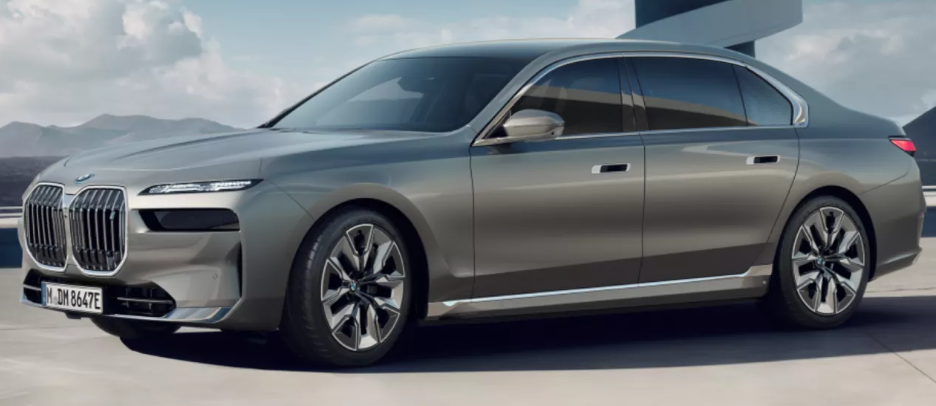
The BMW i7 trunk space is one of those specifications that looks simple on paper but deserves a closer look. After all, the i7 is a huge luxury sedan. It stretches more than five metres from nose to tail, pampers rear passengers like a private jet lounge, and carries a large battery beneath the floor. So, naturally, we might expect a trunk the size of a small storage unit.
The reality is slightly more nuanced.
BMW lists the i7 with 17.7 cubic feet of cargo capacity in the United States, while BMW's European specifications quote 500 litres of luggage capacity. Those figures are essentially two ways of describing the same amount of space.
That's a respectable trunk for a full-size luxury sedan. More importantly, the space is genuinely usable. Independent testing has shown that the i7 can accommodate six carry-on suitcases, while reviewers have also found enough room for several pieces of luggage or golf clubs.
Still, there are a few catches.
Unlike some purpose-built electric cars, the BMW i7 doesn't give us a useful front trunk, or "frunk." Its cargo flexibility also cannot match an electric hatchback or SUV. So while the raw volume sounds generous, we need to look at the shape, accessibility, passenger-focused design and everyday practicality before deciding whether the BMW i7 has enough trunk space for us.
Let's open the trunk and take a proper look.
Content in this publication
- BMW i7 Trunk Space at a Glance
- How Big Is the BMW i7 Trunk?
- What Can Fit in the BMW i7 Trunk?
- Is the BMW i7 Trunk Good for Airport Runs?
- Does the BMW i7 Have a Frunk?
- Is There Storage Under the BMW i7 Trunk Floor?
- Do the BMW i7 Rear Seats Fold Down?
- BMW i7 Trunk Opening and Accessibility
- BMW i7 Trunk Space for Families
- BMW i7 Trunk Space for Road Trips
- BMW i7 Trunk Space vs BMW 7 Series
- How Does the BMW i7 Trunk Compare With Other EVs?
- Why the BMW i7's 17.7 Cubic Feet Feel Usable
- BMW i7 Trunk Space Across Different Models
- The Biggest BMW i7 Cargo Limitations
- How to Maximize BMW i7 Trunk Space
- Who Will Find the BMW i7 Trunk Big Enough?
- Who Might Need More Cargo Space?
- Is BMW i7 Trunk Space Actually Good?
- Closing Thoughts: Luxury First, Practicality Second
- Frequently Asked Questions
BMW i7 Trunk Space at a Glance
If we're simply looking for the numbers, here's the quick answer:
- BMW i7 trunk capacity: 17.7 cubic feet
- European luggage capacity: 500 litres
- Body style: Four-door luxury sedan
- Front trunk: No substantial frunk
- Real-world luggage test: Around six carry-on suitcases
- Long-item capability: Through-loading provision is available
- Best suited for: Suitcases, groceries, golf equipment and everyday luggage
BMW currently quotes the same 500-litre luggage capacity across multiple i7 variants in its U.K. technical data, including i7 xDrive50, xDrive60 and M70 configurations.
That means buyers generally don't need to choose between performance and luggage room. Moving into the mighty i7 M70 doesn't suddenly turn the trunk into a battery closet.
How Big Is the BMW i7 Trunk?
At 17.7 cubic feet, the BMW i7 trunk sits right where we'd expect a large traditional luxury sedan to sit.
BMW's U.S. specifications currently list the figure at 17.7 cubic feet, and the European 500-litre measurement converts to roughly the same volume.
The important word here, though, is traditional.
The i7 may be fully electric, but BMW developed it alongside the combustion-powered 7 Series rather than creating an entirely separate skateboard-style EV body.
That gives the car a familiar luxury-sedan shape: long bonnet, formal roofline and conventional trunk opening.
It looks elegant.
It also means the BMW i7 doesn't exploit its electric architecture for cargo space quite as aggressively as some EV competitors.
BMW i7 Trunk Space in Litres
For markets using metric measurements, BMW officially lists:
500 litres
That's enough space for a luxury sedan carrying two adults on a long holiday, a family handling regular airport runs, or a golfer taking equipment to the course.
Five hundred litres may sound abstract, though.
Imagine filling the trunk with a combination of:
- two medium checked suitcases,
- two cabin bags,
- several smaller backpacks,
- shopping bags,
- or a mixture of soft luggage.
How much actually fits depends heavily on the shape of the bags.
A 500-litre trunk filled with soft duffel bags can feel enormous. Fill the same trunk with rigid square suitcases and suddenly every wheel, handle and curved panel matters.
BMW i7 Trunk Space in Cubic Feet
In the U.S., BMW lists:
17.7 cubic feet
Car and Driver rounds this to approximately 18 cubic feet and has reported fitting six carry-on suitcases inside the i7's trunk.
That's arguably more useful than the official volume measurement.
Why?
Because nobody loads a trunk with 17.7 cubic feet of water.
We load objects.
And objects rarely cooperate.
Suitcases have wheels. Golf bags are long. Strollers fold into awkward shapes. Grocery bags fall over precisely when we've bought eggs.
Real-world luggage testing therefore tells us much more about how useful a trunk actually feels.
What Can Fit in the BMW i7 Trunk?
For everyday use, the i7 is considerably more practical than its limousine-like personality might suggest.
This isn't a car where we need to choose between bringing our suitcase and bringing our shoes.
Six Carry-On Suitcases Are Possible
Car and Driver's testing found room for six carry-on suitcases in the i7's trunk.
For perspective, that's plenty for an airport transfer carrying several passengers with sensibly sized luggage.
Naturally, six cabin cases represent an optimized test rather than every possible travel scenario. Throw in bulky backpacks, winter coats, shopping bags and irregularly shaped cases, and usable capacity falls.
Even so, it's an encouraging result.
Can Golf Clubs Fit in a BMW i7?
Golfers should find the i7 reasonably accommodating.
Edmunds describes the trunk as large enough for luggage or golf clubs despite being slightly smaller than the cargo area of the combustion-powered 7 Series.
Long equipment is where width becomes just as important as raw capacity.
Long Items Require Smarter Packing
We wouldn't assume that every oversized golf bag will drop straight into the trunk without repositioning.
Drivers carrying particularly long items may need to:
- place equipment diagonally,
- remove larger club heads,
- use the center through-loading area,
- or reorganize other luggage around the bag.
BMW's i7 documentation describes a through-loading system designed to accommodate long objects such as skis, giving the sedan additional flexibility beyond the basic trunk compartment.
Is the BMW i7 Trunk Good for Airport Runs?
This is arguably where the i7 trunk makes the most sense.
The car itself almost feels designed for airport transportation.
Huge rear seats? Check.
Excellent refinement? Check.
Executive-car presence? Definitely.
Enough trunk space for multiple cabin bags? Yes.
If we're collecting two people from the airport, the i7 should cope comfortably with normal luggage.
Three or four passengers carrying large checked suitcases becomes more complicated.
That's where a luxury SUV such as a BMW iX or X7 makes more sense.
The i7 can carry people brilliantly and luggage well, but it isn't secretly a cargo van wearing a tuxedo.
Does the BMW i7 Have a Frunk?
Here's one of the i7's biggest practicality disappointments.
There is no meaningful front trunk comparable with the frunks offered by some dedicated EVs.
Edmunds specifically notes the absence of both a useful front trunk and substantial extra EV-style storage beneath the main cargo floor.
That's unfortunate because frunks are perfect for the small items we'd rather keep separate from luggage.
Think:
- charging cables,
- wet cleaning equipment,
- emergency supplies,
- shoes,
- takeaway food,
- or smaller travel bags.
Why Doesn't the BMW i7 Have a Front Trunk?
The answer largely comes back to architecture.
BMW designed the current-generation 7 Series to accommodate different powertrains rather than building the i7 around a completely EV-exclusive platform.
That approach has advantages. The i7 still looks and feels unmistakably like BMW's flagship sedan.
But packaging isn't as radical as we'd find in an EV engineered from day one around maximum storage efficiency.
The space beneath that gigantic bonnet therefore doesn't transform into a second luggage compartment.
The Missing Frunk Matters More Than It Sounds
Suppose another EV offers roughly similar rear luggage volume but adds a useful compartment up front.
That vehicle can suddenly separate charging gear from clean luggage or provide somewhere secure for smaller bags.
The i7 cannot play that trick.
Everything ultimately competes for space in the rear.
Is There Storage Under the BMW i7 Trunk Floor?
There is some provision beneath the cargo floor depending on configuration, but we shouldn't expect a huge secondary compartment.
BMW's documentation references a storage compartment beneath the cargo floor, while independent reviewers describe the amount of additional underfloor space as limited rather than a major cargo feature.
In other words, think small-item organization, not secret basement.
Charging equipment and accessories are better kept compact and organized so they don't consume valuable luggage space.
Do the BMW i7 Rear Seats Fold Down?
This question gets slightly more complicated because seating configurations and market specifications can vary.
The i7 offers a center pass-through/through-loading arrangement that can accommodate longer items such as skis. Current specifications also reference a folding pass-through center armrest.
That helps considerably when carrying long, narrow objects.
However, buyers expecting the gigantic flat cargo floor of an SUV or liftback shouldn't approach the i7 with the same expectations.
Luxury Rear Seating Changes the Priorities
Remember what the back of an i7 is designed to do.
It's meant to recline.
Massage passengers.
Provide heating and ventilation.
Turn into a miniature cinema when equipped with BMW's available Theater Screen.
Cargo versatility simply isn't the main event.
This is the automotive equivalent of asking a five-star hotel suite why it doesn't have bunk beds.
Could bunk beds hold more people?
Absolutely.
But that's missing the point.
BMW i7 Trunk Opening and Accessibility
Cargo capacity means very little if the opening itself makes loading difficult.
The i7 uses a conventional sedan trunk rather than a large hatchback-style opening.
That brings one inherent limitation.
We can fit plenty inside the compartment, but large square objects may struggle to get through the opening even if their total volume is technically smaller than the trunk's maximum capacity.
Hands-Free Trunk Operation Helps
BMW supports contactless cargo-area operation on compatible configurations.
With the key present, sensors can detect a deliberate foot movement beneath the rear bumper and open or close the trunk. BMW's current guidance describes the movement as a forward kick near the center of the rear bumper followed by pulling the foot back.
That's genuinely useful when we're approaching the car carrying two suitcases or an armful of shopping.
Luxury features aren't always practical.
This one is.
BMW i7 Trunk Space for Families
A BMW i7 probably isn't the first car that comes to mind when we hear "family car," but it can handle normal family life surprisingly well.
Will a Stroller Fit?
Most normal folding strollers should fit comfortably.
Large travel systems are more challenging because stroller manufacturers have apparently agreed that folding mechanisms should resemble modern sculpture.
A bulky stroller can consume a substantial portion of the i7's usable cargo floor.
If we regularly carry:
- a stroller,
- diaper bags,
- children's luggage,
- groceries,
- sports equipment,
- and four occupants,
an SUV remains the more flexible choice.
What About Weekly Groceries?
Easy.
The 500-litre trunk should swallow a normal supermarket run without trouble.
In fact, everyday shopping exposes a different problem: preventing bags from sliding around inside such a broad luxury-car trunk.
Keeping a foldable organizer or cargo net in the car can be far more valuable than another theoretical 50 litres of capacity.
Family Holiday Luggage
Four people with soft luggage?
Reasonable.
Four people with four enormous hard-shell suitcases?
That's where things become tight.
The key is packing vertically and using smaller bags to fill the spaces around large cases.
BMW i7 Trunk Space for Road Trips
The i7 itself is almost absurdly well suited to long-distance driving.
Quiet cabin.
Huge seats.
Air suspension.
Plenty of technology.
Electric power delivered like an invisible wave.
The trunk generally keeps up.
For two people, 17.7 cubic feet is more than enough for an extended road trip unless we've decided to transport half the house.
For four adults, luggage management becomes much more important.
We'd favour:
- medium rather than oversized suitcases;
- soft bags for irregular gaps;
- separate compact bags for charging equipment;
- flat items placed beneath larger luggage;
- frequently used belongings loaded last.
Packing the i7 intelligently transforms the trunk from merely decent to genuinely useful.
BMW i7 Trunk Space vs BMW 7 Series
Because the electric i7 and combustion-powered 7 Series share their basic body architecture, their cargo areas are fairly similar.
The electric model sacrifices a modest amount of luggage capacity compared with its combustion sibling according to independent reviews, but the difference is unlikely to transform the ownership experience.
If we're choosing between an i7 and another 7 Series primarily based on trunk space, cargo capacity probably shouldn't decide the argument.
Powertrain, range, charging, running costs and driving characteristics matter much more.
How Does the BMW i7 Trunk Compare With Other EVs?
This is where context becomes important.
Against another conventional premium sedan, the i7's approximately 18-cubic-foot trunk looks strong.
Car and Driver, for example, lists the Porsche Taycan sedan with less rear luggage volume in its comparison of the two cars.
But compare the i7 with a luxury EV using a liftback or SUV body and the picture changes quickly.
A hatch can give us:
- a taller opening,
- easier loading,
- better access for bulky objects,
- more flexible seats,
- and potentially much greater maximum cargo volume.
So the i7 may have impressive sedan trunk space, but it isn't the ultimate cargo-carrying electric car.
Those are two very different claims.
Why the BMW i7's 17.7 Cubic Feet Feel Usable
Numbers alone can be misleading.
A tall but narrow cargo compartment may have an impressive volume measurement yet be frustrating to load.
A lower, broader trunk can occasionally prove more useful.
The i7 benefits from being an enormous automobile.
BMW's U.S. specifications list the current car at around 212.6 inches long with a 126.6-inch wheelbase, illustrating just how substantial the flagship sedan really is.
A large portion of that length goes toward creating spectacular passenger accommodation, but the rear compartment still has enough depth to make the published 17.7 cubic feet genuinely useful.
BMW i7 Trunk Space Across Different Models
One reassuring detail is that moving between mainstream i7 derivatives doesn't fundamentally change the cargo story.
BMW's current U.K. technical specifications list 500 litres of luggage capacity for its displayed i7 xDrive50, xDrive60 and M70 configurations.
So we don't need to sacrifice our luggage because we wanted the quicker model.
BMW i7 xDrive50 Trunk Space
Approximately:
500 litres / 17.7 cubic feet
BMW i7 xDrive60 Trunk Space
Approximately:
500 litres / 17.7 cubic feet
BMW i7 M70 Trunk Space
BMW's current European technical data likewise lists:
500 litres
Of course, specifications can vary by model year and country, so anyone buying a specific used or new configuration should check that vehicle's local specification sheet.
The Biggest BMW i7 Cargo Limitations
The i7 trunk is good.
It isn't flawless.
The biggest disadvantages are fairly easy to identify:
- No substantial front trunk
- Sedan opening rather than large hatch
- Less flexible than an SUV
- Limited EV-style underfloor storage
- Passenger-focused rear-seat design
- Bulky luggage can consume usable capacity quickly
None of those weaknesses make the i7 impractical.
They simply remind us what kind of vehicle we're dealing with.
The i7 is a luxury limousine that happens to run entirely on electricity.
It isn't trying to be an electric moving van.
How to Maximize BMW i7 Trunk Space
A little packing strategy goes a surprisingly long way.
Use Soft Luggage Where Possible
Hard suitcases waste space around their corners.
Duffel bags compress.
For road trips, mixing one or two structured suitcases with soft bags usually uses the i7's trunk more efficiently.
Keep Charging Equipment Together
Put cables, adapters and EV accessories into one dedicated bag.
Otherwise they migrate around the trunk like rebellious spaghetti.
A compact cable organizer makes the cargo area cleaner and prevents dirty charging cables from touching luggage.
Use the Through-Loading Area for Long Objects
Skis and other narrow equipment don't necessarily need to dominate the entire trunk.
BMW's through-loading arrangement allows us to extend suitable items into the passenger compartment rather than sacrificing most of the luggage area.
Load Large Suitcases First
It sounds obvious, yet it makes an enormous difference.
Start with large rigid cases.
Then fill empty spaces with:
- backpacks,
- jackets,
- shoes,
- toiletry bags,
- laptop cases,
- and smaller soft luggage.
Think of it like three-dimensional Tetris, except the prize is not having to leave someone's suitcase at home.
Who Will Find the BMW i7 Trunk Big Enough?
The BMW i7 trunk should be more than adequate if we mainly carry:
- business luggage,
- groceries,
- golf equipment,
- two-person holiday luggage,
- airport bags,
- children's equipment,
- or normal everyday belongings.
It's particularly well suited to owners who want limousine-level passenger comfort without completely sacrificing practicality.
Who Might Need More Cargo Space?
We'd probably look toward an SUV, estate/wagon or hatchback if we regularly transport:
- several huge suitcases,
- large dogs,
- bicycles,
- camping equipment,
- bulky furniture,
- multiple large strollers,
- or oversized sporting equipment.
The limiting factor isn't necessarily the i7's 500-litre volume.
It's the sedan body.
Big objects don't care what the specification sheet says if they cannot physically pass through the opening.
Is BMW i7 Trunk Space Actually Good?
Yes—within the context of a flagship luxury sedan.
BMW gives us 17.7 cubic feet or 500 litres, and independent testing has demonstrated enough real-world capacity for around six carry-on suitcases.
That's a solid result.
The bigger criticism isn't the rear trunk itself.
It's that the i7 doesn't supplement it with the generous front and underfloor cargo spaces we've learned to expect from some electric vehicles.
Once we accept that, the i7 becomes much easier to understand.
Closing Thoughts: Luxury First, Practicality Second
The BMW i7 is a fascinating contradiction.
It's enormous yet not cavernous.
It's electric yet doesn't have a proper frunk.
It's built like a limousine but can still swallow half a dozen carry-on bags.
And maybe that's exactly the point.
The BMW i7 trunk space of 17.7 cubic feet, or roughly 500 litres, gives us enough practicality for normal luxury-car duties without compromising the passenger experience that defines BMW's electric flagship.
For airport runs, weekend trips, golf days, shopping and two-person holidays, the trunk should feel perfectly adequate.
For families regularly carrying huge amounts of equipment, we'd want something with a hatch.
The i7's cargo compartment doesn't rewrite the EV practicality rulebook. Instead, it behaves like the rest of the car: polished, traditional and quietly capable.
Think of it as a very expensive suitcase wearing a tailored suit.
It holds more than we might expect—but it still refuses to dress like an SUV.
Frequently Asked Questions
1. How much trunk space does the BMW i7 have?
The BMW i7 offers 17.7 cubic feet of cargo capacity in U.S. specifications, equivalent to approximately 500 litres in BMW's European technical data.
2. How many suitcases fit in a BMW i7?
Car and Driver reported fitting six carry-on suitcases into the i7's trunk during testing. Larger checked luggage will reduce the number considerably because suitcase shape and dimensions matter as much as total volume.
3. Does the BMW i7 have a front trunk?
No substantial frunk is provided. Independent evaluations note that the i7 lacks the useful front cargo compartment available in some dedicated electric vehicles.
4. Can golf clubs fit in the BMW i7 trunk?
Yes. Review testing indicates that the trunk can accommodate golf equipment, although particularly long bags may need to be positioned diagonally or use the car's through-loading provision.
5. Is the BMW i7 trunk big enough for a family?
For everyday shopping, a stroller, weekend luggage and normal family use, the 500-litre cargo area should generally be sufficient. Families regularly carrying several large suitcases, multiple strollers or bulky recreational equipment may find an SUV such as the BMW iX or X7 more convenient because of its taller cargo opening and greater flexibility.
If you want to know other articles similar to BMW i7 Trunk Space: How Much Cargo Room Do You Really Get? you can visit the category Service and Parts.
Volvo S90 Engine Oil: Type, Capacity & Change Guide
Volvo S90 Boot Space: Size, Capacity and Practicality
SEO Title: Volvo S90 Oil Capacity: Complete Guide by Engine

Kia Sorento Oil Type: Complete Guide by Year & Engine
Kia Sorento Engine Capacity: Complete Guide by Year
Peugeot 308 Clutch Replacement Cost: Complete UK Guide for 2026
Leave a Reply
More content of your interest