

BMW M4 Engine Specs: Complete S55 and S58 Guide

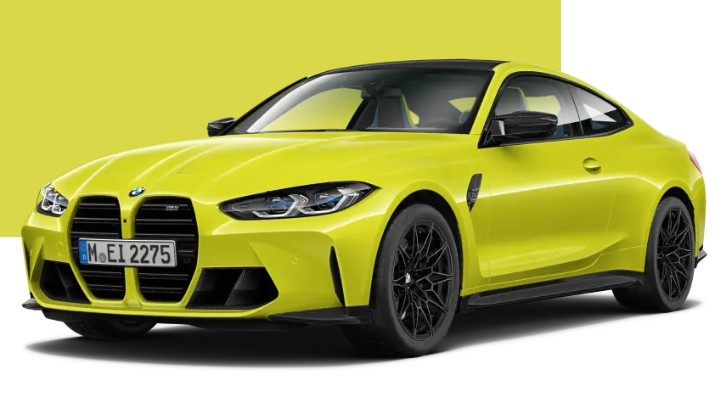
The BMW M4 engine specs tell a bigger story than horsepower alone. Since the M4 nameplate arrived, BMW M has used two very different interpretations of the turbocharged straight-six formula. The first-generation F82 M4 introduced the S55, an aggressive 3.0-liter twin-turbo engine that transformed the character of BMW's compact M coupe. The current G82 generation stepped things up with the S58, an even stronger, more sophisticated engine capable of producing well over 500 horsepower in factory form.
That sounds straightforward until we start comparing model years. An early M4, an M4 Competition, an M4 CS, and a current M4 Competition xDrive can all carry different horsepower figures despite sharing roughly the same 3.0-liter displacement. Markets matter too. BMW quotes power in horsepower, metric horsepower, and kilowatts depending on region, which can make two apparently different specifications describe essentially the same engine.
So, rather than throwing numbers at the wall, we're going to unpack what those figures actually mean. We'll look at displacement, turbocharging, torque, engine codes, transmissions, redlines, performance, reliability considerations, and the differences between the S55 and S58.
Content in this publication
- BMW M4 Engine Specs at a Glance
- What Engine Is in the BMW M4?
- BMW M4 S55 Engine Specs
- BMW M4 S58 Engine Specs
- BMW M4 Torque Specs and Why Torque Matters
- S55 vs S58: Which BMW M4 Engine Is Better?
- BMW M4 Transmission and Engine Pairings
- BMW M4 Engine Performance
- How the BMW M4 Engine Makes So Much Power
- The 2026 BMW M4 M Ignite Update
- BMW M4 Engine Reliability
- BMW M4 Tuning Potential
- What Makes the M4 Engine Different From a Regular BMW Six-Cylinder?
- BMW M4 Engine Sound and Character
- Which BMW M4 Engine Should We Choose?
- Final Thoughts on BMW M4 Engine Specs
- Frequently Asked Questions
BMW M4 Engine Specs at a Glance
Every road-going production BMW M4 so far has revolved around a turbocharged 3.0-liter inline-six gasoline engine. The architecture has remained familiar, but virtually everything around it has evolved.
The original F82 M4 used BMW M's S55 engine. BMW identifies that powerplant as the S55B30 and describes the original version as producing 431 metric horsepower and 550 Nm of torque. It was also significant historically because the F80 M3 and F82 M4 generation marked BMW M's transition to turbocharging for this model family.
Today's G82 M4 family uses the newer S58 six-cylinder. Current output depends heavily on specification and market. In the United States, BMW presently lists the M4 Competition Coupe at 503 hp, while the M4 Competition xDrive Coupe reaches 523 hp.
| Specification | F82 M4 | G82 M4 family |
|---|---|---|
| Engine family | S55 | S58 |
| Layout | Inline-six | Inline-six |
| Displacement | Approx. 3.0 liters | 2,993 cc |
| Induction | Twin turbo | Twin turbo |
| Fuel | Gasoline | Gasoline |
| Base-era output | Around 425–431 hp, depending on rating standard | Varies by version and market |
| Competition versions | Higher-output S55 tune | Up to 523 hp in current U.S. xDrive form |
| Character | Raw, immediate, aggressive | Stronger, broader, more polished |
Those numbers already reveal the core philosophy: BMW did not abandon the straight-six when it redesigned the M4. Instead, it kept sharpening the same basic recipe.
What Engine Is in the BMW M4?
If someone asks, "What engine does a BMW M4 have?" the technically correct response depends on the generation.
The 2015–2020 F82 BMW M4 uses the S55B30, while the G82 M4 introduced for the 2021 model year uses the S58 family.
Both are turbocharged straight-six engines of approximately three liters, but calling the S58 simply an updated S55 undersells the difference. The S58 belongs to a newer BMW engine generation and was engineered around significantly greater performance potential.
BMW M notes that the S58 uses two mono-scroll turbochargers along with a forged crankshaft and specialized oil-supply and cooling concepts designed for demanding high-performance operation. The engine debuted before being adapted for the G80 M3 and G82 M4.
Why BMW Keeps the Inline-Six
There's something wonderfully stubborn about BMW's attachment to the straight-six.
An inline-six naturally lends itself to smooth operation because of the way its reciprocating forces balance. Yet smoothness is only part of the attraction. The configuration also fits BMW M's identity.
Instead of chasing cylinder count, BMW has concentrated on airflow, turbo response, cooling, combustion, engine management, and structural strength.
The result is an engine that can behave surprisingly politely on a commute and then pull like somebody opened a trapdoor beneath the accelerator when we bury the throttle.
BMW M4 S55 Engine Specs
The original F82 M4 arrived with a dramatic change beneath the hood.
Its predecessor, the E92 M3, had used a naturally aspirated V8. BMW replaced that high-revving eight-cylinder with the S55 3.0-liter twin-turbo straight-six.
On paper, dropping two cylinders might have looked like a retreat.
On the road, it was anything but.
BMW states that the original S55 application generated 431 metric horsepower, revved as high as 7,600 rpm, and delivered 550 Nm of torque from only 1,850 rpm.
That last figure completely changed the personality of the car.
Instead of waiting for an engine to climb toward the top of the tachometer before delivering its hardest punch, the turbocharged M4 produced a thick slab of torque much earlier.
S55 Displacement and Configuration
The S55 is a roughly 3.0-liter inline-six equipped with two turbochargers.
It was engineered as a genuine BMW M powerplant rather than simply dropping an ordinary BMW six-cylinder into an aggressive-looking coupe.
Among the important ingredients were high-performance turbocharging, sophisticated cooling, direct fuel injection, variable valve timing, and BMW's Valvetronic variable valve-lift technology.
Its relatively small displacement is one reason the engine remains interesting today. Three liters does not sound enormous in a world filled with large V8 performance cars, yet the S55 extracts serious performance from every cubic centimeter.
BMW M4 S55 Horsepower
Factory output changed throughout the F82 generation.
Early standard cars sit around the 425-hp U.S. / 431-PS European neighborhood, depending on the measurement convention being quoted. Later Competition and limited-production versions pushed the S55 considerably further.
BMW itself summarizes output across the F80 M3/F82 M4 family as ranging from 317 kW (431 hp) to 368 kW (500 hp).
That's why we should never describe every F82 by one horsepower number. Year, specification, market, and special edition all matter.
Why HP and PS Figures Sometimes Differ
This causes endless confusion in online specifications.
European manufacturers frequently use metric horsepower, usually written as PS, while U.S. specifications normally use mechanical horsepower.
One PS is slightly smaller than one mechanical horsepower. Consequently, 431 PS converts to roughly 425 hp.
Nothing mysterious happened to the engine when the car crossed the Atlantic. We're simply looking at two measuring sticks.
BMW M4 S58 Engine Specs
Then came the G82 generation and its S58.
If the S55 feels like BMW M discovering what turbocharging could do, the S58 feels like the engineers arriving with years of notes and a sharper pencil.
It is again a 3.0-liter straight-six with two turbochargers, but its construction, cooling capability, power potential, and overall sophistication moved forward significantly.
BMW lists displacement at 2,993 cc on current M4 technical specifications.
S58 Twin-Turbo System
The S58 uses two mono-scroll turbochargers.
Why two?
Dividing the exhaust flow allows the turbo system to respond quickly while supporting the enormous airflow demanded at higher engine speeds and loads.
BMW combines that system with direct High Precision Injection, fully variable valve lift, and variable camshaft timing. BMW M specifically highlights these elements when describing the present M4 powerplant.
Think of the system less like one gigantic hammer and more like a tightly coordinated orchestra. Turbochargers, valves, injection, ignition, cooling, and engine management all have to arrive at the same note at exactly the right moment.
BMW M4 Competition Engine Horsepower
For the current U.S.-market lineup, BMW lists the M4 Competition Coupe at 503 hp and the M4 Competition xDrive Coupe at 523 hp.
BMW's U.S. technical data also specifies 523 hp at 6,250 rpm and 479 lb-ft of torque from 2,750 to 5,730 rpm for the current M4 Competition xDrive Convertible.
Global specifications can look slightly different because of market configurations and the PS-versus-hp distinction. BMW M, for example, quotes 530 hp for the M4 Competition Coupe with M xDrive on its international site.
That is why comparing BMW M4 engine specs without identifying the market can lead us down a rabbit hole surprisingly quickly.
BMW M4 Torque Specs and Why Torque Matters
Horsepower grabs the headline. Torque is what we often feel first.
The original S55 already delivered an enormous step forward in accessible torque compared with BMW's naturally aspirated M engines. Its 550 Nm output arrived from just 1,850 rpm in original specification.
The modern S58 takes the concept further.
Current U.S.-market technical information lists 479 lb-ft for the 523-hp Competition xDrive configuration.
That broad torque curve explains why the current M4 can feel so violently effective even without chasing the redline.
Press the throttle while already moving and there isn't much theatrical hesitation. The car simply gathers speed.
Fast.
Horsepower Versus Torque in Everyday Driving
Imagine torque as the shove and horsepower as how effectively the engine can keep delivering work as speed rises.
That isn't a perfect engineering definition, but it captures what drivers experience.
Strong low- and midrange torque gives the M4 its effortless passing ability. High power allows it to continue accelerating ferociously after many ordinary cars have started running out of breath.
Together, they create the M4's signature character.
S55 vs S58: Which BMW M4 Engine Is Better?
Now we get to the fun argument.
The S58 is objectively the more capable engine architecture in most measurable areas. It supports greater factory output, has a broad performance envelope, and benefits from another generation of BMW engineering.
But "better" is not identical to "more powerful."
The S55 has a personality some enthusiasts adore. It can feel more mechanical and slightly more unruly. The F82 surrounding it is also lighter and more old-school in character than the increasingly sophisticated G82.
The S58, meanwhile, feels like someone tightened every bolt in the formula. Its strength is remarkable, its response is polished, and its power delivery seems almost absurd for a six-cylinder street engine.
If the S55 is a sharp kitchen knife, the S58 is the same idea forged from stronger steel and sharpened with laboratory precision.
The Biggest Mechanical Differences
Rather than obsessing over one peak number, we can summarize the evolution this way:
- S55: 3.0-liter twin-turbo inline-six used in the F82 generation, famous for an energetic top end, immediate torque and substantial tuning potential.
- S58: newer 2,993-cc twin-turbo inline-six used in the G82, engineered for higher outputs, severe track loads and a broader performance envelope.
- Output: early S55 M4s produced roughly 425 hp in U.S. specification, while today's Competition xDrive can reach 523 hp in U.S. specification.
- Transmission pairing: F82 models were associated with manual or seven-speed dual-clutch configurations, while modern Competition versions use BMW's eight-speed M Steptronic automatic.
- Delivery: the S55 feels rawer; the S58 generally feels deeper, stronger and more sophisticated.
The important point is that the transition wasn't merely about adding horsepower. BMW changed how effectively the entire powertrain could deploy it.
BMW M4 Transmission and Engine Pairings
An engine never performs in isolation.
Transmission gearing, shift speed, traction, differential calibration, and drivetrain configuration determine how much of its output actually becomes forward motion.
The F82 famously offered BMW's seven-speed M dual-clutch transmission alongside a manual gearbox. The DCT could fire through shifts with a hard-edged mechanical character that suited the car.
The G82 generation took another direction.
Current Competition variants use an eight-speed M Steptronic Sport automatic transmission, and BMW offers Competition versions with rear-wheel drive or M xDrive depending on configuration and market.
Why the Current M4 Uses an Eight-Speed Automatic
Some enthusiasts initially viewed the departure from the dual-clutch gearbox suspiciously.
Yet the eight-speed transmission gives BMW an enormous calibration window. It can shift smoothly around town, hold gears aggressively during performance driving, and manage the S58's substantial torque.
Pair that with M xDrive and the result is devastating acceleration.
BMW currently lists the U.S.-market M4 Competition xDrive Coupe at 3.4 seconds from 0–60 mph.
That's supercar territory produced by a car that can still handle rush-hour traffic without throwing a tantrum.
BMW M4 Engine Performance
Numbers become meaningful only when translated into speed.
BMW quotes the current international M4 Competition Coupe with M xDrive at 3.5 seconds from 0–100 km/h and 11.8 seconds from 0–200 km/h.
The latter figure tells us much more than the initial launch.
Getting to 100 km/h quickly requires power, but traction plays an enormous role. Continuing from 100 to 200 km/h exposes the engine's ability to fight aerodynamic drag.
And drag rises viciously with speed.
That's where the S58's sustained high-rpm output becomes clear.
Does xDrive Increase Engine Power?
Not inherently.
All-wheel drive does not magically manufacture horsepower. It helps the car use the horsepower it already has.
However, BMW also pairs M xDrive with particularly powerful Competition configurations, so specification sheets can make drivetrain and horsepower increases appear inseparable.
The real advantage of xDrive during acceleration is traction. Four driven wheels can distribute torque more effectively than two, especially during a hard launch.
How the BMW M4 Engine Makes So Much Power
Three liters producing more than 500 factory horsepower would once have sounded like heavily modified race-car territory.
Today, BMW offers that sort of output with climate control, emissions equipment, a warranty, heated seats, and civilized everyday manners.
How?
There isn't one secret ingredient.
BMW combines substantial boost pressure and airflow with sophisticated combustion control, direct injection, precise valve timing, variable valve lift, strong internal components, serious cooling, and extraordinarily fast electronic engine management.
The S58's forged crankshaft and motorsport-oriented oil and cooling concepts also underline how seriously BMW designed the engine for sustained high loads.
Cooling Is an Unsung Hero
Making power is one challenge.
Making power repeatedly is another.
An engine can produce spectacular numbers on a single dyno run yet struggle once heat begins saturating the oil, coolant, intake system, turbochargers, transmission, and surrounding hardware.
Performance engines therefore need thermal management almost as desperately as they need fuel.
BMW M's engineering emphasis on cooling and oil supply is especially relevant for an M4 because the car is intended to survive repeated hard acceleration and circuit use, not simply deliver an impressive showroom specification.
The 2026 BMW M4 M Ignite Update
There's an especially interesting development for 2026.
BMW M announced M Ignite, a pre-chamber ignition technology for S58 engines designed to improve efficiency under demanding operation. According to BMW M, M Ignite entered series production for all M3 and M4 variants from July 2026 in markets subject to EU7 emissions regulations.
The clever part is what did not change.
BMW says displacement and rated output remain unchanged from the corresponding previous engine versions. Instead, the technology targets more efficient combustion, particularly under high engine loads, while preparing affected models for Euro 7 requirements.
What Is Pre-Chamber Ignition?
Traditional spark ignition starts combustion around the spark plug inside the main combustion chamber.
A pre-chamber system adds another layer. Combustion begins within a small chamber, producing energetic jets that ignite the main air-fuel mixture at multiple points.
The objective is faster, more controlled combustion.
In BMW M's application, the technology is particularly intriguing because efficiency improvements aren't being pursued through electrification. BMW describes the updated S58 as remaining a non-hybrid combustion engine.
For enthusiasts who assumed increasingly strict emissions standards would automatically force the M4 toward immediate hybridization, that's a noteworthy engineering development.
BMW M4 Engine Reliability
Can an engine producing this much power be reliable?
Potentially, yes—but context matters.
Both S55 and S58 engines operate at considerably higher specific outputs than an ordinary naturally aspirated family-car engine. They depend on sophisticated turbocharging, cooling, lubrication, fuel delivery, electronics, and emissions systems.
Maintenance therefore matters enormously.
A properly serviced factory car living a sensible road-going life is one thing. A heavily tuned car running increased boost, repeated launch-control starts, track sessions, questionable software, and stretched maintenance intervals is something entirely different.
Maintenance Matters More Than Internet Reputation
When evaluating a used M4, we'd rather see a documented maintenance history than hear that a particular engine is "bulletproof."
No engine is bulletproof.
Service history, operating conditions, modifications, warm-up habits, oil quality, cooling-system condition, and previous ownership can matter more than broad forum reputation.
This becomes especially important with modified M4s because both engines attract tuners like magnets attract paper clips.
Is the S58 More Reliable Than the S55?
It is difficult to make an absolute generation-wide claim because S58-powered M4s are younger, while S55 cars have accumulated far more years and mileage.
The S58 certainly benefits from newer engineering and was designed from the outset for tremendous output. But greater technical capability doesn't eliminate maintenance requirements.
For used-car shoppers, condition should beat mythology every time.
BMW M4 Tuning Potential
Few modern BMW engines attract tuning discussions faster than the S55 and S58.
There's a simple reason: turbocharged engines provide tuners with several pathways for extracting additional performance through boost control, ignition, fueling, airflow, exhaust changes, and calibration.
But factory headroom should never be mistaken for unlimited headroom.
Once we increase power, we increase loads elsewhere. More combustion pressure means additional thermal and mechanical stress. Greater torque asks more from the transmission, driveshafts, axles, cooling system, tires, and drivetrain.
The fastest modification is not always the smartest one.
For a road car, usable power with proper thermal management is generally more valuable than chasing a dyno figure that looks heroic on social media.
What Makes the M4 Engine Different From a Regular BMW Six-Cylinder?
An M4 is not merely a standard 4 Series with the boost turned up.
BMW M develops its high-performance engines and supporting systems around a more demanding operating envelope. The S58 incorporates specialized internal construction, turbocharging, oil control, cooling, and calibration suitable for repeated high-load use.
That distinction is fundamental.
An ordinary engine may need to deliver full output occasionally. An M engine has to assume somebody might spend Saturday repeatedly braking from triple-digit speeds, charging out of corners, and running toward redline again and again.
That changes the engineering priorities considerably.
BMW M4 Engine Sound and Character
This section can't be reduced to a specification sheet.
Sound is subjective, and the M4's turbocharged six-cylinder character is very different from the naturally aspirated engines that preceded it.
Turbochargers absorb some exhaust energy, which changes both volume and tone. Modern emissions equipment influences the soundtrack further.
Yet the inline-six architecture still gives the M4 a distinctive voice, particularly as revs climb.
BMW even says the newer M Ignite combustion system can make the engine sound throatier at higher revs, despite its primary purpose being improved combustion efficiency.
Whether that sound beats the screaming V8 of the old E92 M3 is the kind of argument capable of consuming an entire evening among BMW enthusiasts.
Which BMW M4 Engine Should We Choose?
For maximum modern performance, the S58-powered G82 is the obvious answer.
It delivers more power, tremendous torque, stronger acceleration, sophisticated drivetrain technology, and enormous performance potential.
For drivers interested in a slightly more analog-feeling modern M car, however, the F82 deserves serious consideration.
Its S55 remains extremely fast. More importantly, the whole vehicle represents a fascinating middle ground between old-school M cars and today's enormously capable digital performance machines.
The choice therefore isn't merely S55 versus S58.
It's character versus capability—or perhaps two different blends of both.
Final Thoughts on BMW M4 Engine Specs
The story behind BMW M4 engine specs is really the story of how BMW M learned to master turbocharging.
The F82's S55 marked the revolution. It abandoned the naturally aspirated philosophy of the previous M3 and introduced huge midrange torque without giving up the straight-six layout that enthusiasts associated with BMW.
The G82's S58 refined that revolution.
With 2,993 cc of displacement, twin turbochargers, sophisticated valve and injection systems, reinforced internal components, serious cooling, and outputs exceeding 500 horsepower in current configurations, the S58 demonstrates just how far the modern six-cylinder performance engine has come.
The current U.S.-market M4 Competition xDrive produces 523 hp, while BMW's international specification expresses the equivalent top M4 Competition xDrive output as 530 PS. Those aren't merely impressive numbers; they're supercar-like figures extracted from an engine smaller than many ordinary pickup-truck powerplants.
And the development isn't standing still. The introduction of M Ignite technology to certain 2026 S58 engines shows BMW pursuing cleaner, more efficient combustion without sacrificing the established output of the engine.
So which M4 engine wins?
If we're chasing outright performance, the S58 takes the crown.
If we're chasing a rawer chapter of modern BMW M history, the S55 remains enormously appealing.
Either way, the formula at the center hasn't changed much: six cylinders in a straight line, two turbochargers forcing in air, rear-biased performance, and considerably more power than most of us could ever reasonably need.
And, naturally, that's precisely why we want it.
Frequently Asked Questions
1. What engine does the BMW M4 have?
The answer depends on generation. The F82 BMW M4 uses the S55 3.0-liter twin-turbo inline-six, while the newer G82 M4 uses BMW M's S58 3.0-liter twin-turbo inline-six. The current engine has 2,993 cc of displacement.
2. How much horsepower does a BMW M4 have?
Horsepower varies by year, market, and model. Early F82 models produced roughly 425 mechanical horsepower in U.S. terms, corresponding to BMW's 431-PS specification. Current U.S.-market M4 Competition models produce 503 hp, while the M4 Competition xDrive Coupe produces 523 hp.
3. Is the BMW M4 a V6 or inline-six?
The M4 uses an inline-six, sometimes called a straight-six, not a V6. All six cylinders are arranged in one straight row. Both the S55 and S58 follow this layout.
4. Is the BMW M4 twin-turbo?
Yes. Both major BMW M4 engine families use two turbochargers. The current S58 employs two mono-scroll turbochargers as part of BMW M TwinPower Turbo technology.
5. Is the S58 better than the S55?
From a pure performance standpoint, the S58 has the advantage. It supports substantially greater factory power and belongs to a newer generation of BMW M engineering. The S55 remains attractive for enthusiasts who prefer the F82 M4's lighter, rawer character, however, so the "better" choice depends on whether we prioritize outright capability or driving personality.
If you want to know other articles similar to BMW M4 Engine Specs: Complete S55 and S58 Guide you can visit the category Service and Parts.
Vauxhall Mokka Tyre Pressure Reset: Complete Guide
How to Reset the Tire Pressure System on Your Hyundai Tucson
Hyundai Kona Tire Pressure: Complete PSI Guide
Vauxhall Corsa Timing Belt Replacement Cost UK 2026
Mazda CX-5 Tire Size Chart: 2013–2026 Guide
How to Reset a Honda Civic: Complete Step-by-Step Guide
Leave a Reply
More content of your interest