
BMW M4 Tire Size: Complete Fitment and Sizing Guide

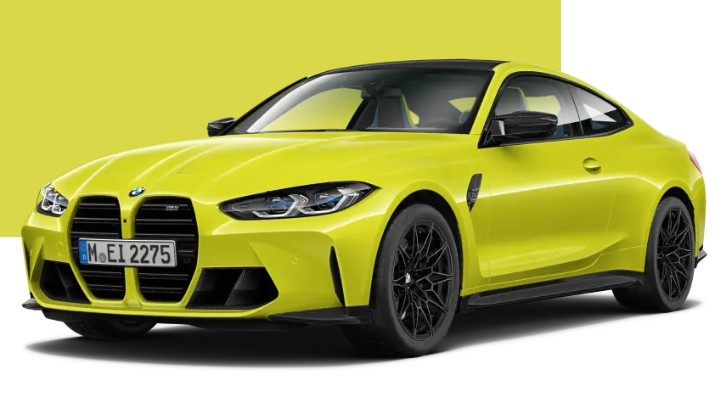
The BMW M4 tire size question sounds simple until we start looking at different generations, trim levels, wheel packages, and special editions. An F82 M4 does not necessarily wear the same rubber as a modern G82 M4 Competition, while even two G82 models can leave the factory with different wheel diameters depending on specification.
That matters because the M4 is not an ordinary coupe where we can casually choose a tire that “looks about right.” Its staggered wheel setup, powerful rear axle, sophisticated stability electronics, and performance-focused suspension mean tire dimensions are an important part of how the car accelerates, steers, brakes, and rides.
So, rather than throwing a single tire size at you, we are going to unpack the subject properly. We will cover common factory sizes, explain what the numbers mean, look at F82 versus G82 fitment, explore 18-, 19-, and 20-inch configurations, and discuss what happens when we want wider tires.
Content in this publication
- BMW M4 Tire Size at a Glance
- Why Does the BMW M4 Have Different Front and Rear Tire Sizes?
- Understanding BMW M4 Tire Size Numbers
- F82 BMW M4 Tire Size
- G82 BMW M4 Tire Size
- G82 BMW M4 18/19-Inch Tire Size
- G82 BMW M4 19/20-Inch Tire Size
- BMW M4 Competition Tire Size
- BMW M4 xDrive Tire Size
- BMW M4 CS Tire Size
- BMW M4 CSL Tire Size
- Can We Put Wider Tires on a BMW M4?
- Can a BMW M4 Use Square Tires?
- 18-Inch vs 19-Inch vs 20-Inch M4 Tires
- Does Tire Size Affect BMW M4 Ride Quality?
- Does BMW M4 Tire Size Affect Acceleration?
- Does Tire Size Change the Speedometer Reading?
- What Tire Type Is Best for the BMW M4?
- Are BMW M4 Tires Run-Flat?
- Why Matching Tire Models Matters on an M4
- When Should BMW M4 Tires Be Replaced?
- BMW M4 Alignment and Tire Wear
- Can We Replace Only Two BMW M4 Tires?
- How to Find the Correct Tire Size for Your BMW M4
- OEM Size vs Aftermarket Size: Which Should We Choose?
- BMW M4 Tire Size and Wheel Offset
- BMW M4 Tire Pressure vs Tire Size
- What Is the Best BMW M4 Tire Size for Daily Driving?
- Common BMW M4 Tire Size Mistakes
- Which BMW M4 Tire Size Is Right for You?
- Conclusion: Getting BMW M4 Tire Size Right
- Frequently Asked Questions
BMW M4 Tire Size at a Glance
One of the most common modern BMW M4 configurations uses 275/35 ZR19 tires at the front and 285/30 ZR20 tires at the rear. BMW lists that staggered 19-inch front/20-inch rear combination for several G82-generation configurations, including newer M4 Competition models.
However, that is not the universal BMW M4 tire size.
The current-generation car has also been offered with 275/40 ZR18 front and 285/35 ZR19 rear tires, particularly with the smaller staggered wheel package. BMW's original G82 technical specifications documented the 18-inch front and 19-inch rear arrangement as standard on applicable versions while listing 19-inch front and 20-inch rear tires as an alternative configuration.
The previous F82 generation used still other dimensions.
Here is a practical overview:
| BMW M4 configuration | Front tire size | Rear tire size |
|---|---|---|
| Early F82 M4, 18-inch setup | 255/40 ZR18 | 275/40 ZR18 |
| F82, common 19-inch setup | 255/35 ZR19 | 275/35 ZR19 |
| Later/performance F82 setups | 265/35 ZR19 or 265/30 ZR20 | 285/30 ZR20 |
| G82, 18/19-inch setup | 275/40 ZR18 | 285/35 ZR19 |
| G82, 19/20-inch setup | 275/35 ZR19 | 285/30 ZR20 |
| G82 M4 CS | 275/35 ZR19 | 285/30 ZR20 |
BMW officially specified 255/40 ZR18 front and 275/40 ZR18 rear tires for the original F82 M4's standard 18-inch wheels.
Because equipment varies by production year and market, we should always treat a tire-size chart as a starting point rather than a substitute for checking the tire-information label, wheel specification, and original build equipment on the individual car.
Why Does the BMW M4 Have Different Front and Rear Tire Sizes?
Look at an M4 from behind and its intentions become pretty obvious. This is a rear-biased performance machine with serious power and a chassis engineered to put that power onto the road.
That is why most M4s use what we call a staggered tire setup.
The front tires are narrower than the rear tires. Wider rear rubber gives the driven axle a larger contact patch and helps the car deal with acceleration, cornering load, and traction.
Think of it like a sprinter wearing shoes designed specifically for the job. We could give every corner identical dimensions, but BMW's engineers have balanced steering response, traction, weight distribution, suspension geometry, and chassis behavior around staggered fitment.
The downside?
We generally cannot perform a traditional front-to-rear tire rotation when wheel and tire dimensions differ.
Understanding BMW M4 Tire Size Numbers
A designation such as:
275/35 ZR19 100Y XL
looks like alphabet soup until we break it apart.
What Does 275 Mean?
The first number represents nominal tread-section width in millimeters.
A 275 tire is approximately 275 mm wide at its specified measuring rim width.
Wider does not automatically mean better. Going too wide can cause clearance problems, alter steering characteristics, make the tire sit incorrectly on the wheel, and even reduce performance if the wheel is too narrow for it.
What Does 35 Mean?
The second number is the aspect ratio.
With a 275/35 tire, the sidewall height is approximately 35% of the tire's section width.
That gives us a sidewall around 96 mm tall.
A lower percentage usually creates a shorter, stiffer sidewall. Steering can feel sharper, but there is less rubber cushioning the wheel from potholes.
What Does ZR Mean?
ZR indicates a tire intended for high-speed performance.
That designation makes perfect sense on an M4. The car's performance capability demands tires with suitable speed and load ratings rather than merely the correct physical dimensions.
What Does 19 Mean?
This is the wheel diameter in inches.
Therefore:
275/35 ZR19
fits a 19-inch wheel.
A 19-inch tire cannot be fitted to a 20-inch wheel, even if the remaining numbers look similar.
What Are Y and XL?
The letter at the end relates to the tire's speed rating, while XL means Extra Load.
Performance vehicles commonly use reinforced tires capable of supporting higher loads at specified inflation pressures.
We should never downgrade the required load or speed capability simply because a cheaper tire happens to fit the wheel.
F82 BMW M4 Tire Size
The F82 M4 arrived for the 2015 model year and immediately established the blueprint for modern turbocharged M cars.
Factory tire dimensions depended heavily on the wheel package.
Standard F82 M4 18-Inch Tire Size
BMW documented the original F82 M4 with:
Front: 255/40 ZR18 95Y
Rear: 275/40 ZR18 99Y
Those tires were mounted on 9.0J x 18 front and 10.0J x 18 rear wheels.
For drivers concerned about ride quality, this setup has a certain charm. The taller sidewalls provide more cushioning than ultra-low-profile 20-inch rubber.
The wheels may look less dramatic, but they also have more tire between the rim and the road.
On broken pavement, that can feel like the difference between running in sneakers and running barefoot.
F82 BMW M4 19-Inch Tire Size
Many F82 owners will recognize the classic staggered combination:
255/35 ZR19 front
275/35 ZR19 rear
BMW technical documentation for later F82 configurations also shows this setup among factory variants.
It offers a nice middle ground: enough sidewall to preserve some everyday usability while giving the M4 the muscular wheel-to-body proportions buyers expect.
F82 BMW M4 20-Inch Tire Size
Certain later F82 versions and wheel packages moved into larger territory.
BMW documentation shows configurations including:
265/30 ZR20 front
285/30 ZR20 rear
with 20-inch wheels.
Now we are firmly in low-profile territory.
The visual effect is fantastic. The steering can feel immediate. Yet potholes suddenly look less like harmless imperfections and more like expensive negotiations with your wheel-repair shop.
G82 BMW M4 Tire Size
The G82 generation dramatically changed both the appearance and mechanical character of the M4.
It also introduced a more unusual staggered-wheel concept where the rear wheel is commonly one inch larger in diameter than the front.
That arrangement is more than styling theater.
BMW uses it to balance steering precision at the front with traction and lateral capability at the rear.
G82 BMW M4 18/19-Inch Tire Size
The smaller factory G82 package uses:
275/40 ZR18 front
285/35 ZR19 rear
BMW's technical information for the 2021 M4 listed 9.5 x 18-inch front wheels and 10.5 x 19-inch rear wheels with those tire dimensions.
Notice something interesting?
The front tire on the newer M4 is substantially wider than the original F82's standard front tire.
That broader front footprint contributes to the G82's considerable front-end grip.
The rear remains slightly wider at 285 mm.
G82 BMW M4 19/20-Inch Tire Size
Move to the larger wheel package and we commonly find:
275/35 ZR19 front
285/30 ZR20 rear
This combination appears throughout BMW's technical specifications for higher-specification G82 variants.
The front wheel is normally 9.5 inches wide, while the rear measures 10.5 inches in these applications.
The overall look is aggressive without turning the tires into rubber bands.
And because BMW engineered the car around different wheel diameters front and rear, seeing a 19-inch front paired with a 20-inch rear should not alarm us. On this generation, that mismatch is deliberate.
BMW M4 Competition Tire Size
The answer depends on drivetrain, production year, and wheel package, but a highly common BMW M4 Competition tire size is:
275/35 ZR19 front
285/30 ZR20 rear
For example, BMW specifies this size on newer M4 Competition configurations using the 19/20-inch staggered package.
The M4 Competition Convertible with M xDrive has likewise been documented by BMW with forged 19-inch front and 20-inch rear wheels wearing 275/35ZR19 and 285/30ZR20 tires.
These are non-run-flat performance tires in that application.
That last detail matters.
When replacing M4 tires, we should not assume every BMW came with run-flat tires merely because run-flats are common elsewhere in the manufacturer's range.
M cars play by slightly different rules.
BMW M4 xDrive Tire Size
M xDrive adds another reason to be careful with replacement tires.
The commonly encountered G82 M4 Competition xDrive configuration again uses:
275/35 ZR19 front
285/30 ZR20 rear
BMW specifically introduced the xDrive-equipped Competition models with forged 19-inch front and 20-inch rear wheels in those dimensions.
Because an all-wheel-drive system connects both axles dynamically, maintaining the intended rolling circumference becomes especially important.
This does not mean front and rear tires must have identical dimensions—they obviously do not from the factory.
It means we should maintain the engineered relationship between them rather than randomly increasing one axle's outside diameter.
BMW M4 CS Tire Size
The M4 CS turns the performance dial another notch, but its nominal tire dimensions may look familiar.
BMW specifies:
275/35 ZR19 front
285/30 ZR20 rear
for the 2025 M4 CS. The car uses exclusive forged 19-inch front and 20-inch rear wheels, with high-performance tires fitted as standard. BMW also offered more track-focused tire choices for the model.
The sizes may match those seen elsewhere in the G82 range, but that does not mean every tire in those dimensions behaves the same way.
Compound construction changes everything.
A track-focused tire can make an ordinary summer performance tire feel like a completely different species despite identical numbers on the sidewall.
BMW M4 CSL Tire Size
The extreme M4 CSL also uses the familiar G82 performance dimensions:
275/35 ZR19 front
285/30 ZR20 rear
BMW paired them with 9.5J x 19 front and 10.5J x 20 rear forged wheels.
Once again, this tells us an important story about tire shopping.
Size is only chapter one.
Compound, construction, load rating, temperature behavior, tread design, and intended use can completely change how an M4 behaves.
Can We Put Wider Tires on a BMW M4?
Yes, within reason.
The M4 attracts modification almost magnetically, so plenty of owners consider wider tires.
A wider setup can potentially provide greater traction and fill the wheel arches more aggressively. But we should resist the temptation to assume that adding 10 or 20 millimeters automatically unlocks better performance.
Wheel width has to support the tire correctly.
Suspension clearance matters.
Fender clearance matters.
Wheel offset matters.
Front steering clearance matters.
Overall tire diameter matters.
And on xDrive models, front-to-rear rolling circumference deserves particular attention.
A badly selected setup may rub under compression, create vague steering, throw off electronic systems, or simply make an expensive performance car feel worse.
Is 295 Worth Considering on the Rear?
Depending on wheel width and setup, a 295-section rear tire can be a viable aftermarket direction for some M4 owners.
But compatibility should be evaluated as an entire package, not as a standalone number.
Going from 285 to 295 sounds tiny—it is nominally only 10 mm—but a tire's actual measured width varies by manufacturer and wheel width.
Two tires both marked 295 can have surprisingly different physical profiles.
Can a BMW M4 Use Square Tires?
A square setup means identical tire dimensions at all four corners.
Track enthusiasts sometimes favor square configurations because they can change handling balance and make tire rotation easier.
But converting an M4 from its original staggered configuration requires much more consideration than buying four identical tires.
Wheel widths and offsets may need to change as well.
On a street-driven car, keeping the factory staggered philosophy is usually the simplest route because the chassis, steering, traction systems, and clearances were designed around it.
For track use, however, experienced owners may deliberately deviate from factory sizing to achieve a specific handling objective.
That is a different conversation from simply replacing worn street tires.
18-Inch vs 19-Inch vs 20-Inch M4 Tires
Wheel diameter influences much more than appearance.
18-Inch Wheels
More sidewall generally means better bump absorption and greater protection from harsh pavement.
An 18-inch setup can also offer lighter wheel-and-tire combinations depending on wheel construction.
For drivers regularly encountering poor roads, there is something refreshing about not flinching at every pothole.
Where 18-Inch Tires Make Sense
They can be particularly appealing for comfort, track-focused setups with sufficient brake clearance, or regions where road surfaces are rough.
However, brake clearance and approved wheel fitment must always be confirmed.
19-Inch Wheels
A 19-inch wheel is often the sweet spot.
We retain a reasonably substantial tire sidewall while gaining the sharper visual appearance people associate with an M car.
The F82 in particular looks naturally at home on 19s.
20-Inch Wheels
Twenty-inch wheels bring maximum visual drama.
They fill the arches beautifully and can deliver exceptionally crisp response when paired with proper performance tires.
But the trade-off is obvious: less sidewall means less protection.
Hit a deep pothole at speed and the tire has far less material available to absorb the impact before the wheel joins the conversation.
Does Tire Size Affect BMW M4 Ride Quality?
Absolutely.
When we decrease sidewall height, the tire becomes less capable of absorbing small impacts before they reach the suspension.
A 40-profile tire normally provides noticeably more compliance than a 30-profile tire of otherwise comparable construction.
That is why moving from 18-inch wheels to 20-inch wheels can make an M4 feel more alert yet also more nervous on bad pavement.
Suspension settings matter too, of course.
So do tire construction and inflation pressure.
But wheel-and-tire size remains one of the biggest variables we can physically feel from behind the steering wheel.
Does BMW M4 Tire Size Affect Acceleration?
Potentially.
The relationship is more complicated than “bigger tire equals slower car.”
A larger overall diameter effectively alters gearing. Heavier wheels and tires add rotational mass. Wider rubber can increase rolling resistance, but it can also improve traction.
That means a carefully engineered wider setup might help the car launch more effectively, while a poorly selected oversized setup could add weight without giving us useful grip.
BMW's original tire dimensions represent a balance rather than an accident.
The engineers are juggling traction, speed capability, ABS behavior, steering feel, comfort, fuel consumption, noise, and stability simultaneously.
Does Tire Size Change the Speedometer Reading?
Changing wheel diameter alone does not necessarily alter the speedometer significantly because a larger wheel normally uses a lower-profile tire.
The critical measurement is the tire's overall rolling diameter.
Imagine replacing a small wheel wearing a tall tire with a bigger wheel wearing a thinner tire. If the completed assemblies remain almost the same diameter, the distance traveled per revolution remains similar.
Increase overall diameter too much and the car travels farther per wheel revolution.
Decrease it substantially and the opposite happens.
This is why proper plus-sizing attempts to preserve overall circumference.
What Tire Type Is Best for the BMW M4?
The answer depends on how we drive and where we live.
A powerful M4 used enthusiastically in warm weather deserves a serious ultra-high-performance summer tire. The chassis has so much capability that installing bargain rubber is like putting hiking boots on a ballet dancer.
They technically fit.
That does not mean they belong there.
Drivers facing genuine winters should consider a dedicated winter setup rather than expecting extreme summer tires to cope with freezing temperatures.
For mixed climates, an ultra-high-performance all-season tire may provide greater flexibility, although we give up some ultimate warm-weather grip.
The basic priorities are simple:
- Match the correct tire dimensions, wheel diameter, load capacity, and appropriate speed rating; use high-quality summer tires for maximum warm-weather performance, winter tires for true cold-weather conditions, and performance all-seasons when year-round versatility matters more than absolute grip.
Are BMW M4 Tires Run-Flat?
Not necessarily.
This is one of those BMW assumptions that can get us into trouble.
While numerous mainstream BMW models have been delivered with run-flat tires, M4 applications commonly use conventional non-run-flat high-performance tires.
For example, BMW explicitly described the M4 Competition Convertible xDrive's 275/35ZR19 front and 285/30ZR20 rear performance tires as non-run-flat.
F82 technical data similarly identifies documented configurations as non-run-flat.
Always inspect what is currently installed and verify the original specification instead of relying on brand assumptions.
Why Matching Tire Models Matters on an M4
Would we wear a running shoe on one foot and a hiking boot on the other?
Probably not.
Yet mixing dramatically different tire models across a performance car can create the automotive equivalent.
Even when sizes match, different tires can have different compounds, tread stiffness, wet grip, breakaway characteristics, and actual dimensions.
On a car as responsive as the M4, mismatched behavior between axles can become obvious.
Ideally, we want compatible performance characteristics front and rear, preferably using the same tire family when the manufacturer offers the required staggered dimensions.
When Should BMW M4 Tires Be Replaced?
Legal tread-depth limits are only one part of the picture.
Performance tires often lose some of their magic before reaching the absolute legal minimum.
Heat cycles harden compounds. Alignment issues can destroy inner shoulders while the outer tread still appears healthy. Age can deteriorate rubber even when a low-mileage M4 spends most of its life parked.
The rear tires deserve special attention for reasons that should surprise nobody who has pressed the accelerator in an M4.
Torque is entertaining.
It is also extremely good at converting expensive rear tires into considerably less expensive tire dust.
Inspect tread across the entire width, not just the visible outside shoulder.
BMW M4 Alignment and Tire Wear
If your M4 keeps devouring the inner edge of its tires, buying another set without investigating alignment is treating the symptom rather than the problem.
Performance-oriented suspension geometry can naturally create uneven wear patterns compared with an ordinary commuter vehicle.
Add lowering springs, coilovers, aggressive camber settings, incorrect toe, or enthusiastic driving and wear can accelerate considerably.
We should therefore view tire replacement as an opportunity to examine alignment.
A perfect new tire fitted to a poor alignment setup is basically a countdown timer.
Can We Replace Only Two BMW M4 Tires?
Sometimes, but we need to be thoughtful.
On a rear-wheel-drive M4, owners commonly replace rear tires more frequently because the driven axle wears them faster.
Provided the remaining front tires are healthy, compatible, and appropriately matched, replacing the rear pair can be reasonable.
With M xDrive, tire circumference differences deserve greater caution.
A large tread-depth discrepancy changes effective rolling circumference, even when the sidewall says the same nominal size.
When uncertainty exists, checking the allowable difference against BMW guidance or having an experienced BMW/M specialist evaluate the setup is worthwhile.
How to Find the Correct Tire Size for Your BMW M4
Online charts are useful, including this one, but the individual car should always have the final say.
Check the existing tires, but remember that a previous owner may already have modified the vehicle.
Next, inspect the factory tire-information label.
Then confirm wheel diameter and width.
If the car has aftermarket wheels, identify their exact size and offset before ordering anything.
This becomes especially important when purchasing a used M4. Owners modify these cars constantly, and a wheel that looks factory can occasionally be an aftermarket replica with completely different dimensions.
OEM Size vs Aftermarket Size: Which Should We Choose?
For most road-going M4 owners, the OEM tire size is the safest recommendation.
It preserves the geometry and rolling diameter BMW designed around. Replacement is straightforward, and compatibility questions become far easier.
Aftermarket sizing makes sense when we have a clear objective.
Maybe we want more front grip.
Perhaps we are building a track setup.
Maybe the car has wider aftermarket wheels.
Or perhaps we want more sidewall for rough roads.
In those situations, changing size can be smart.
What we should avoid is changing dimensions simply because a forum photograph looked cool.
A good fitment is engineering.
A bad fitment is expensive decoration.
BMW M4 Tire Size and Wheel Offset
Tire width alone cannot tell us whether a setup fits.
Wheel offset determines where the wheel sits relative to the suspension and fender.
Imagine sliding the entire wheel assembly inward or outward on the axle. That is effectively why offset matters so much.
Two identical 285 tires mounted on wheels with dramatically different offsets can have completely different clearance behavior.
One may sit perfectly flush.
The other may rub suspension components or protrude past the bodywork.
This is why serious aftermarket fitment should always consider wheel diameter, wheel width, offset, tire width, tire profile, and overall diameter together.
BMW M4 Tire Pressure vs Tire Size
Tire size and tire pressure are related, but they are not interchangeable specifications.
Do not look at the maximum pressure molded onto the tire sidewall and assume that is the recommended inflation pressure.
That figure relates to the tire's rated capability.
The vehicle manufacturer provides recommended cold inflation pressures based on vehicle configuration and load.
We should consult the M4's tire-pressure label or the relevant owner's information for the exact vehicle.
Pressure may also differ depending on load and driving conditions.
What Is the Best BMW M4 Tire Size for Daily Driving?
For a completely stock M4, our answer is refreshingly boring:
Use the factory size designed for your exact wheel package.
Boring is good here.
BMW has already done thousands of hours of engineering work.
On a G82 using the 19/20-inch setup, 275/35 ZR19 front and 285/30 ZR20 rear offers the intended combination of grip, steering response, and appearance.
Drivers prioritizing ride comfort may prefer factory-compatible smaller-diameter wheel packages where available because the taller sidewalls can better absorb road imperfections.
Meanwhile, dedicated track drivers have completely different priorities and may intentionally choose non-standard setups.
Common BMW M4 Tire Size Mistakes
The most expensive mistakes are often surprisingly simple.
Owners sometimes order four identical tires even though their wheels are staggered.
Others confuse wheel diameter with overall tire diameter.
Some increase rear tire width while ignoring clearance or front-to-rear circumference.
Another common mistake is buying the correct numerical size with an unsuitable load or performance specification.
And perhaps the easiest mistake of all is searching “BMW M4 tire size,” seeing one answer in a search result, and assuming it applies to every M4 ever built.
It does not.
The F82 and G82 alone illustrate how much the specification has evolved.
Which BMW M4 Tire Size Is Right for You?
For a stock car, identify the generation and wheel package first.
An original F82 on standard 18-inch wheels was specified with 255/40 ZR18 front and 275/40 ZR18 rear tires.
Certain F82 19-inch configurations use 255/35 ZR19 front and 275/35 ZR19 rear, while later performance setups can move wider.
A G82 with the smaller staggered package can use 275/40 ZR18 front and 285/35 ZR19 rear.
Many G82 Competition, xDrive, CS, and other 19/20-inch applications use 275/35 ZR19 front and 285/30 ZR20 rear.
Those four figures will answer most searches, but the VIN-specific equipment and tire placard remain the most reliable reference for an individual vehicle.
Conclusion: Getting BMW M4 Tire Size Right
The BMW M4 tire size is not one universal measurement.
That is the key takeaway.
The F82 generation can use configurations ranging from 18-inch staggered wheels through larger 19- and 20-inch setups. The G82 moved the platform toward much wider front rubber and frequently combines different wheel diameters front and rear.
If we own a modern G82 M4, one of the most familiar configurations is 275/35 ZR19 at the front with 285/30 ZR20 at the rear.
If we own an early F82, we may instead find 255/40 ZR18 front and 275/40 ZR18 rear on the original standard setup.
The numbers matter, but they are only part of the equation. Load rating, speed rating, wheel width, offset, tire construction, weather conditions, drivetrain, and intended driving style are equally important.
Treat tires as part of the M4's chassis rather than disposable accessories.
After all, hundreds of horsepower, sophisticated suspension engineering, enormous brakes, and clever electronics ultimately have to communicate with the road through four patches of rubber roughly the size of our hands.
Choose those four patches carefully.
Frequently Asked Questions
1. What is the standard BMW M4 tire size?
It varies by generation and configuration. A common G82 M4 setup uses 275/35 ZR19 front tires and 285/30 ZR20 rear tires. BMW also offered G82 configurations with 275/40 ZR18 front and 285/35 ZR19 rear tires.
2. What tire size does an F82 BMW M4 use?
The original standard F82 18-inch setup uses 255/40 ZR18 at the front and 275/40 ZR18 at the rear. Other factory wheel options used different dimensions, including 19- and 20-inch tires.
3. Why does the BMW M4 have 19-inch front and 20-inch rear wheels?
On applicable G82 configurations, BMW deliberately uses larger rear wheels as part of the M4's staggered performance setup. The arrangement works alongside different tire profiles to provide steering response, rear-axle traction, and the required overall tire dimensions.
4. Can I install wider tires on my BMW M4?
Potentially, yes, but tire width should be matched to wheel width, offset, suspension clearance, fender clearance, and appropriate rolling diameter. Wider is not automatically better. M xDrive models deserve particular care when changing front-to-rear dimensions.
5. Are BMW M4 tires run-flat?
Many are not. BMW has explicitly specified non-run-flat performance tires on M4 applications including the M4 Competition Convertible with M xDrive, while F82 technical specifications also document non-run-flat configurations.
If you want to know other articles similar to BMW M4 Tire Size: Complete Fitment and Sizing Guide you can visit the category Service and Parts.
Vauxhall Mokka Tyre Pressure Reset: Complete Guide
How to Reset the Tire Pressure System on Your Hyundai Tucson

Hyundai Kona Tire Pressure: Complete PSI Guide
Vauxhall Corsa Timing Belt Replacement Cost UK 2026
Mazda CX-5 Tire Size Chart: 2013–2026 Guide
How to Reset a Honda Civic: Complete Step-by-Step Guide
Leave a Reply
More content of your interest