

Common Problems With Nissan Serena: A Complete Owner’s Guide

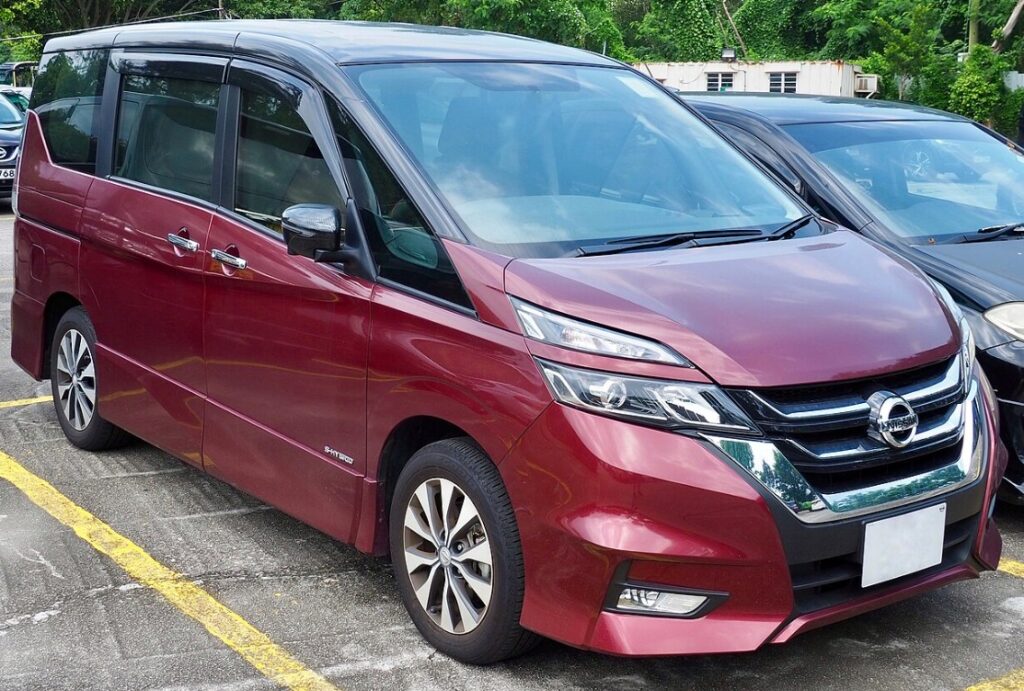
The Nissan Serena has built a loyal following for one obvious reason: it makes family travel remarkably easy. Its tall cabin, flexible seating, large windows, sliding doors, and fuel-efficient powertrains turn school runs and long road trips into less of a logistical puzzle.
However, no used vehicle is flawless.
The Serena has been produced across several generations, including the C23, C24, C25, C26, C27, and newer C28. Depending on the year and market, it may use a conventional petrol engine, a continuously variable transmission, Nissan’s S-Hybrid mild-hybrid system, or the more advanced e-POWER electric-drive system.
That variety matters. A problem commonly associated with a high-mileage C25 may have little relevance to a newer Serena e-POWER. We therefore need to look beyond dramatic online comments and identify which faults genuinely deserve attention.
The most frequently discussed Nissan Serena problems involve the CVT transmission, power sliding doors, 12-volt battery, suspension components, engine mounts, cooling system, sensors, electrical accessories, and hybrid-system warnings. Most are manageable when diagnosed early, but some can become expensive if warning signs are ignored.
Let’s examine the common problems with Nissan Serena models, their symptoms, likely causes, and the checks we should perform before buying one.
Content in this publication
- Is the Nissan Serena Generally Reliable?
- 1. CVT Transmission Shuddering and Hesitation
- 2. Power Sliding Doors That Stop Working
- 3. Weak or Repeatedly Flat 12-Volt Battery
- 4. S-Hybrid ECO Motor and Belt Problems
- 5. Nissan Serena e-POWER System Warnings
- 6. Engine Mount Vibration
- 7. Suspension Knocks and Premature Wear
- 8. Steering Noise or Heavy Steering
- 9. Cooling-System Leaks and Overheating
- 10. Air-Conditioning Problems
- 11. Dashboard Warning Lights and Sensor Faults
- 12. Intelligent Key and Starting Problems
- 13. Infotainment and Japanese-Import Compatibility Issues
- 14. Automatic Emergency Braking and Camera Warnings
- 15. Brake Wear and Electronic Brake Warnings
- 16. Exhaust, Catalytic Converter, and Oxygen-Sensor Faults
- 17. Oil Leaks and Excessive Oil Consumption
- 18. Wheel-Bearing Noise
- 19. Water Leaks and Interior Dampness
- 20. Recall-Related Wiring and Lighting Concerns
- Which Nissan Serena Generation Has the Most Problems?
- Nissan Serena Problems by Generation
- How to Inspect a Used Nissan Serena
- How to Prevent Common Nissan Serena Problems
- Is the Nissan Serena Expensive to Repair?
- Should We Buy a Used Nissan Serena?
- Conclusion: Understanding Common Problems With Nissan Serena Models
- Frequently Asked Questions
Is the Nissan Serena Generally Reliable?
Yes, a well-maintained Nissan Serena can be a dependable people carrier. Many examples cover substantial mileage while continuing to serve families, taxi operators, and commercial users.
Reliability, though, depends heavily on maintenance history.
The Serena is a large, relatively heavy vehicle filled with electronic conveniences. Its transmission, doors, suspension, air-conditioning system, and electrical components work harder than those in a basic compact car. Skipped fluid changes and bargain-basement repairs can therefore create a chain reaction of problems.
A properly serviced Serena often feels calm and cooperative. A neglected one can behave like a tired orchestra in which every instrument has started playing a different song.
Before judging the model as a whole, we should consider:
- The Serena generation
- Engine and transmission type
- Petrol, S-Hybrid, or e-POWER configuration
- Mileage and driving environment
- Previous use as a taxi or shuttle
- Maintenance documentation
- Availability of knowledgeable local technicians
- Parts availability in the owner’s country
Japanese-import vehicles may also require extra research. Their dashboard menus, service records, navigation systems, and replacement parts may differ from locally delivered models.
1. CVT Transmission Shuddering and Hesitation
Which Serena Models Use a CVT?
Many petrol and S-Hybrid Nissan Serena models use an Xtronic continuously variable transmission. Unlike a conventional automatic transmission with fixed gears, a CVT continuously adjusts its operating ratio.
When healthy, it should deliver smooth acceleration without noticeable gear changes. When unhealthy, it may hesitate, shudder, whine, or feel as though an invisible elastic band is stretching between the engine and the wheels.
CVT complaints are among the most widely discussed Serena concerns, although they do not affect every vehicle.
Common CVT Warning Signs
Drivers may notice:
- Shuddering when pulling away
- Hesitation on hills
- Engine revs rising without matching acceleration
- Whining or humming noises
- Jerking at low speed
- Delayed engagement of Drive or Reverse
- Transmission overheating warnings
- Limp-mode operation
- Metallic particles in old transmission fluid
A weak CVT can initially feel normal during gentle driving. The problem may only appear after the transmission becomes warm or when the vehicle carries several passengers.
What Causes Serena CVT Problems?
Possible causes include deteriorated CVT fluid, overheating, worn bearings, internal belt or pulley wear, valve-body faults, pressure-control problems, sensor failures, and outdated control software.
Some early C26 S-Hybrid vehicles in certain markets were included in a campaign involving CVT control-unit reprogramming. That does not mean every C26 has a defective gearbox, but it shows why checking the chassis number and recall history is important.
Incorrect fluid is another major concern. A CVT is surprisingly sensitive. Filling it with generic automatic-transmission fluid is rather like replacing cooking oil with syrup because both happen to be liquids.
Always use the specification required for the exact model.
How to Check the CVT Before Buying
Test the vehicle from cold and again after at least 20 to 30 minutes of driving. Accelerate gently, climb an incline, reverse uphill if safe, and observe whether Drive engages promptly.
A healthy CVT should feel smooth and predictable. Any strong shudder, persistent whining, slipping sensation, or delayed response deserves professional diagnosis.
2. Power Sliding Doors That Stop Working
Electric sliding doors are one of the Serena’s best features. They are also one of its most complicated convenience systems.
A door may refuse to open, stop halfway, reverse unexpectedly, close slowly, or work manually but not electrically. Sometimes the fault appears only when the vehicle is parked on a slope.
Why Serena Sliding Doors Fail
Common causes include:
- Dirt inside the lower track
- Dry or damaged rollers
- Weak door motor
- Stretched or worn cable
- Faulty latch mechanism
- Misaligned door position
- Obstructed safety sensor
- Damaged wiring near the door hinge
- Weak 12-volt battery
- Disabled power-door switch
- Faulty handle or control button
The system is designed to stop or reverse when it detects resistance. A dirty track can therefore imitate a trapped object.
Simple Checks Before Visiting a Workshop
First, confirm that the main power-door switch has not been turned off. Next, inspect the tracks for stones, sticky residue, children’s toys, and accumulated dirt.
Clean the track carefully, but avoid smothering it in heavy grease. Excess lubricant attracts dust and can turn the mechanism into a gritty paste.
Listen to the door while operating it. A motor that runs while the door stays still may indicate a cable or mechanical problem. Complete silence may point toward a switch, fuse, wiring, control-module, or battery issue.
Specialist used-car guides also identify jammed sliding mechanisms as one of the maintenance items worth checking on the C26.
3. Weak or Repeatedly Flat 12-Volt Battery
Why a Small Battery Can Create Big Problems
The Serena’s 12-volt battery powers control modules, locks, lights, relays, and the electronic systems needed to start or activate the vehicle.
Even an e-POWER Serena needs a healthy 12-volt battery. The high-voltage battery may provide propulsion, but the smaller battery must wake the system and allow its computers to communicate.
When voltage drops, the Serena may behave as though several unrelated components have failed simultaneously.
Symptoms may include:
- Vehicle will not enter Ready mode
- Multiple warning lights
- Power doors operating slowly
- Keyless entry failure
- Stop-start system unavailable
- Hybrid or e-POWER warning messages
- Infotainment rebooting
- Clicking without starting
- Battery repeatedly going flat
A low-voltage battery can sometimes trigger hybrid-system protection even when the expensive traction battery is healthy.
What Drains the Battery?
Possible causes include an aging battery, interior lights left on, dash cameras wired permanently, faulty door switches, parasitic electrical drain, charging-system faults, and long periods without driving.
Frequent short trips can also be unhelpful. Starting and powering the electronics consumes energy, while a brief journey may not restore the charge fully.
Before replacing expensive control units, test the 12-volt battery under load and measure charging performance.
4. S-Hybrid ECO Motor and Belt Problems
The Serena S-Hybrid is often misunderstood. It is not a full hybrid in the same sense as a Toyota Prius, nor does it normally drive long distances using electric power alone.
Its small electric motor assists functions such as energy recovery and stop-start operation.
Common S-Hybrid Symptoms
Owners may experience:
- Stop-start no longer working
- S-Hybrid or ECO warning light
- Squealing from the belt area
- Rough engine restart
- Charging-related warning
- Rattling pulley
- Reduced fuel economy
The drive belt, pulley, ECO motor, battery condition, and related sensors should be inspected when these symptoms appear. Some C26 maintenance reports specifically mention belt and pulley wear within the ECO motor system.
A disabled stop-start function does not automatically mean the hybrid system has collapsed. The computer may suspend it because of low battery charge, extreme cabin-temperature demand, engine temperature, or another operating condition.
5. Nissan Serena e-POWER System Warnings
How Serena e-POWER Works
The e-POWER version operates differently from both a normal petrol Serena and the S-Hybrid.
In Nissan’s e-POWER layout, an electric motor drives the wheels. The petrol engine primarily acts as a generator, producing electricity for the battery and motor rather than mechanically driving the wheels in the conventional way.
This design removes the traditional CVT driving experience. It provides immediate electric-motor response while preserving the convenience of filling the vehicle with petrol.
However, it introduces additional high-voltage components.
Possible e-POWER Problems
Warnings may be associated with:
- Weak 12-volt battery
- High-voltage battery fault
- Inverter malfunction
- Generator problem
- Cooling-system issue
- Damaged high-voltage wiring
- Communication fault between control modules
- Isolation or insulation fault
- Sensor failure
- Software error
An e-POWER warning should not be diagnosed through guesswork. The vehicle needs a compatible scan tool capable of reading Nissan hybrid and electric-drive trouble codes.
Never Experiment With High-Voltage Components
Orange cables and high-voltage connectors should only be handled by a qualified technician. Electricity does not care how confident we feel after watching three repair videos.
A persistent red warning, burning smell, severe power loss, or instruction to stop safely should be treated seriously. Park in a safe location and arrange professional assistance.
6. Engine Mount Vibration
Serena engine mounts absorb vibration between the powertrain and the body. As the rubber deteriorates, passengers may feel excessive shaking at idle or when Drive is selected.
Common signs include:
- Vibration through the steering wheel
- Dashboard or seat shaking
- Clunk when shifting into Drive
- Thump during acceleration
- Increased vibration with air conditioning on
- Engine visibly moving excessively
Because the Serena has a large cabin, vibration can echo through the interior like sound inside an empty drum.
Not every vibration comes from a mount. Rough ignition, dirty throttle components, incorrect idle speed, worn pulleys, or transmission problems can produce similar symptoms. The mounts should therefore be inspected rather than replaced blindly.
7. Suspension Knocks and Premature Wear
The Serena carries families, luggage, and sometimes eight occupants. That weight places considerable stress on suspension components.
On rough roads, speed bumps, and pothole-filled urban routes, wear may appear in:
- Stabilizer links
- Control-arm bushes
- Ball joints
- Shock absorbers
- Strut mounts
- Wheel bearings
- Tie-rod ends
- Rear suspension bushes
What Suspension Wear Feels Like
Drivers may hear knocking over small bumps, feel the vehicle wander, notice uneven tire wear, or experience a floating sensation at highway speed.
A dull knock is often dismissed because the vehicle still drives. Yet loose suspension parts rarely heal through positive thinking.
Inspecting the suspension early can prevent uneven tire wear and protect related components.
8. Steering Noise or Heavy Steering
Some Serenas develop clicking, groaning, or knocking while turning. Others may feel unusually heavy or inconsistent.
Possible causes include:
- Worn strut-top bearings
- Steering-rack wear
- Tie-rod damage
- Electric power-steering fault
- Weak 12-volt battery
- Poor wheel alignment
- Incorrect tire pressure
- Damaged steering column joint
Electronic steering warnings should be scanned promptly. If steering suddenly becomes heavy while driving, reduce speed carefully and stop in a safe place.
9. Cooling-System Leaks and Overheating
An overheating engine can turn a moderate repair into a financial crater.
Possible Serena cooling-system trouble spots include aging radiator hoses, leaking radiator tanks, thermostat faults, weak radiator caps, water-pump wear, cooling-fan issues, and neglected coolant.
Warning Signs of Cooling Trouble
Look for:
- Temperature warning light
- Coolant smell
- Steam near the bonnet
- Coolant level repeatedly dropping
- Heater becoming cold while the engine is hot
- Cooling fan running constantly
- Wet marks around the radiator
- White residue near hose connections
- Bubbling inside the expansion tank
Never open a hot cooling system. Pressurized coolant can cause serious burns.
Older imported Serenas deserve particular attention because their coolant history may be unclear. Mixing incompatible coolant types can reduce corrosion protection and create deposits.
10. Air-Conditioning Problems
A large MPV needs a strong climate-control system. When the Serena’s air conditioning weakens, the rear passengers usually notice first.
Common complaints include:
- Air is cold at the front but warm at the rear
- Cooling fades while idling
- Compressor clicks repeatedly
- Fan works only on certain speeds
- Musty smell from vents
- Water leaking into the cabin
- Blower motor becomes noisy
- Air conditioning stops after warming up
Possible causes include low refrigerant, a leaking condenser, weak compressor, faulty pressure sensor, dirty evaporator, blocked drain, blower resistor failure, or rear-system issues.
Simply refilling refrigerant without finding the leak is rarely a lasting solution. Refrigerant is not consumed like petrol; if it is low, it has usually escaped somewhere.
11. Dashboard Warning Lights and Sensor Faults
Modern Serenas rely on a network of sensors. One weak signal can illuminate several warning lights because the braking, stability, transmission, and hybrid systems share information.
Common warnings may involve:
- Check-engine light
- ABS warning
- Vehicle Dynamic Control light
- Stop-start warning
- S-Hybrid warning
- e-POWER warning
- Intelligent-key warning
- Tire-pressure warning
- Forward-collision or camera warning
A dirty wheel-speed sensor may affect ABS and stability control simultaneously. A weak battery may produce a dashboard resembling a Christmas tree. The number of illuminated symbols does not necessarily equal the number of failed parts.
Retrieve the diagnostic codes before clearing them. Codes are clues, not automatic instructions to replace whatever component appears in their description.
12. Intelligent Key and Starting Problems
A Serena may fail to recognize its key even though the remote appears intact.
Possible causes include:
- Flat key-fob battery
- Weak vehicle battery
- Faulty brake-pedal switch
- Interference from electronic devices
- Damaged key
- Faulty start button
- Key antenna problem
- Immobilizer communication error
Start with the inexpensive possibilities. Replace the key battery with the correct type, try the spare key, and check whether the brake lights illuminate when the pedal is pressed.
If the brake switch fails, the vehicle may not recognize that we are attempting a safe start.
13. Infotainment and Japanese-Import Compatibility Issues
Imported Serenas often retain their original Japanese navigation and audio systems. This can create frustration rather than a mechanical breakdown.
Typical issues include:
- Menus available only in Japanese
- Navigation maps that do not cover the new country
- Radio frequencies that do not match local stations
- Bluetooth pairing difficulties
- Reversing-camera display faults
- Touchscreen freezing
- Missing steering-wheel controls after radio replacement
Before purchasing, confirm what can realistically be converted. A cheap aftermarket head unit may solve language and connectivity problems, but poor installation can interfere with cameras, buttons, microphones, or vehicle wiring.
14. Automatic Emergency Braking and Camera Warnings
C27 and newer Serenas may use cameras or sensors for driver-assistance features. These systems can display warnings when visibility or calibration is compromised.
Causes may include:
- Dirty windscreen
- Heavy rain or fog
- Camera obstruction
- Incorrect replacement windscreen
- Camera misalignment
- Front-end collision damage
- Low battery voltage
- Faulty radar or camera unit
Clean the relevant area first. If a warning remains, professional calibration may be required, particularly after windscreen replacement or accident repair.
Driver-assistance technology is helpful, but it should never replace attention. A camera can support our eyes; it cannot lend us common sense.
15. Brake Wear and Electronic Brake Warnings
Because the Serena is heavy, brake condition matters. Worn pads, warped discs, old brake fluid, sticking calipers, or wheel-speed sensor faults can affect stopping performance.
Watch for:
- Steering-wheel vibration while braking
- Grinding noises
- Vehicle pulling to one side
- Soft brake pedal
- Brake warning light
- ABS activation at very low speed
- Burning smell near one wheel
- Excessive brake dust
e-POWER versions use regenerative braking, which may reduce friction-brake use in some conditions. However, lower use can sometimes allow corrosion to form on discs, particularly in damp climates.
Regular inspection remains necessary even when the pads appear to last a long time.
16. Exhaust, Catalytic Converter, and Oxygen-Sensor Faults
Older petrol Serenas can develop check-engine lights related to oxygen sensors, exhaust leaks, ignition problems, or catalytic-converter efficiency.
Possible symptoms include:
- Increased fuel consumption
- Sulfur-like smell
- Poor acceleration
- Rattling beneath the vehicle
- Rough idle
- Failed emissions test
- Illuminated engine light
A catalytic-converter code does not always mean the converter itself is dead. Exhaust leaks, misfires, fuel-mixture faults, and sensor problems can imitate converter failure.
Diagnose the cause before purchasing an expensive replacement.
17. Oil Leaks and Excessive Oil Consumption
As mileage rises, seals and gaskets may harden. Oil can seep from the valve-cover area, timing-cover joints, oil pan, or other engine seals.
Small leaks may first appear as a burnt-oil smell rather than a puddle.
Check for:
- Oil around the upper engine
- Wet underbody panels
- Blue exhaust smoke
- Oil level falling between services
- Burning smell after driving
- Oil warning light
- Heavy sludge beneath the filler cap
The Serena should be parked on level ground and checked using the procedure specified for its engine. Low oil can damage the engine, while overfilling can also create problems.
18. Wheel-Bearing Noise
A worn wheel bearing often produces a humming or droning sound that grows louder with road speed. The noise may change when the vehicle turns gently.
Because Serena cabins are spacious, road noise can be difficult to locate. Tires with uneven wear can sound remarkably similar.
A technician should raise the vehicle safely and inspect the bearing, tire tread, and suspension. Ignoring bearing play can affect handling and wheel-speed sensor readings.
19. Water Leaks and Interior Dampness
Sliding doors, tailgates, roof accessories, and drainage channels create several possible routes for water intrusion.
Inspect for:
- Damp carpets
- Musty odor
- Condensation inside windows
- Water near the spare-wheel area
- Stains around the roof lining
- Wet sliding-door step
- Corroded electrical connectors
Water and electronics make terrible roommates. Even a small leak can eventually damage wiring beneath the carpet.
Check the vehicle after rain or wash it during the inspection. A perfectly dry Serena on a sunny dealer forecourt tells us very little about its seals.
Recall coverage varies by production date, chassis number, and country. In 2023, reports concerning a large Nissan recall included certain Serena vehicles affected by wiring-harness and right-headlamp concerns.
Earlier campaigns in some markets also addressed specific CVT control-unit software.
These campaigns do not prove that every Serena is unsafe. They reinforce one simple rule: check the vehicle identification number with Nissan or the relevant national recall database.
Recall repairs are tied to particular vehicles, not to internet assumptions based solely on model year.
Which Nissan Serena Generation Has the Most Problems?
There is no universally worst generation because condition matters more than reputation. However, older C24 and C25 vehicles naturally face age-related wear, while some C26 buyers pay particular attention to CVT condition, S-Hybrid components, and sliding-door operation.
C27 buyers should distinguish between S-Hybrid and e-POWER versions because their drivetrains differ significantly. The newer C28 has not accumulated the same long-term, high-mileage history as earlier generations.
A neglected newer vehicle can be a worse purchase than an older Serena maintained by an obsessive owner with a folder full of receipts.
Nissan Serena Problems by Generation
C24 Serena
Common age-related inspection areas include the transmission, cooling system, engine mounts, suspension, electrical accessories, and body corrosion in harsh climates.
C25 Serena
Pay attention to CVT behavior, steering and suspension noises, power doors, wheel bearings, cooling-system condition, and electrical warnings.
C26 Serena and S-Hybrid
Inspect CVT operation, ECO motor belts and pulleys, 12-volt battery health, stop-start operation, sliding doors, suspension bushes, and recall completion.
C27 Serena S-Hybrid
Check CVT smoothness, driver-assistance warnings, electrical accessories, batteries, power doors, camera systems, and documented servicing.
C27 Serena e-POWER
Focus on the 12-volt battery, e-POWER warning history, high-voltage system diagnostics, cooling performance, charging-generator operation, and specialist service access.
C28 Serena
Verify software updates, recall status, camera and sensor operation, charging behavior on e-POWER models, and complete warranty history.
How to Inspect a Used Nissan Serena
Before Starting the Engine
Inspect the body, tire wear, fluid levels, sliding-door tracks, interior condition, seat mechanisms, and signs of water leaks.
Turn the ignition on and confirm that warning lights illuminate during the self-check. A missing warning light may be more suspicious than an illuminated one.
During the Test Drive
Test:
- Cold starting
- Low-speed acceleration
- Hill performance
- Braking from different speeds
- Steering at full lock
- Suspension over uneven roads
- CVT behavior after warming up
- Air conditioning in every seating row
- Sliding doors on level and inclined ground
- Every camera, switch, window, and seat mechanism
After the Test Drive
Leave the engine or system running and inspect for cooling-fan operation, unusual smells, fluid leaks, belt noises, warning lights, and excessive vibration.
Then turn the vehicle off and restart it. Some faults only reappear after a complete power cycle.
Arrange a Diagnostic Scan
A pre-purchase scan can reveal stored, pending, or recently cleared faults. It is especially valuable for S-Hybrid and e-POWER vehicles.
A clean dashboard alone proves very little. Warning lights can be erased minutes before a buyer arrives.
How to Prevent Common Nissan Serena Problems
Good maintenance cannot prevent every failure, but it can dramatically improve the odds.
Follow these habits:
- Use the correct engine oil
- Use only the specified CVT fluid
- Do not ignore transmission shudder
- Replace weak batteries promptly
- Keep sliding-door tracks clean
- Service the cooling system on schedule
- Repair oil and coolant leaks early
- Inspect suspension after repeated rough-road use
- Scan warning lights before clearing them
- Keep hybrid cooling inlets unobstructed
- Check recall status using the chassis number
- Use technicians familiar with Nissan systems
- Keep invoices and service records
Heavy loads, extreme heat, steep terrain, and stop-and-go traffic may justify more frequent inspections.
Is the Nissan Serena Expensive to Repair?
Routine servicing is generally manageable, particularly where the Serena is common. Costs rise when the vehicle needs a CVT, sliding-door motor, specialized electronic module, high-voltage component, or imported body part.
The greatest financial risk is not always the price of a single component. It is poor diagnosis.
Replacing three healthy parts while searching for one broken wire is an expensive way to learn patience. A knowledgeable technician with proper diagnostic equipment may charge more initially but save far more overall.
Should We Buy a Used Nissan Serena?
A used Serena can be an excellent choice when we need maximum cabin flexibility without driving a full-size commercial van.
The strongest candidates have:
- Consistent maintenance records
- Smooth transmission or e-POWER operation
- Quiet suspension
- Fully functioning sliding doors
- No unexplained warning lights
- Healthy batteries
- Clean fluids
- No overheating history
- Completed recall work
- A successful independent inspection
Walk away from vehicles with severe CVT shudder, repeated overheating, unexplained e-POWER shutdowns, extensive water damage, multiple electrical faults, or suspiciously incomplete history.
There will always be another Serena. We do not need to adopt someone else’s mechanical crisis simply because the seats fold cleverly.
Conclusion: Understanding Common Problems With Nissan Serena Models
The Nissan Serena is practical, spacious, and often impressively economical for its size. Its common faults are not reasons to reject the model automatically. They are reasons to buy carefully.
CVT hesitation, electric sliding-door faults, weak 12-volt batteries, S-Hybrid belt wear, suspension knocks, cooling leaks, sensor warnings, and air-conditioning problems represent the main areas worth checking. e-POWER models add high-voltage batteries, inverters, generators, cooling circuits, and control modules that require specialist diagnosis.
The most important lesson is that generation, drivetrain, and service history matter more than online stereotypes. A carefully maintained Serena can remain a comfortable family workhorse for years. A neglected example can swallow money with the enthusiasm of eight hungry passengers at a motorway restaurant.
Inspect the vehicle from cold, drive it until fully warm, test every electronic feature, scan its control modules, verify recall completion, and arrange an independent inspection. That process may not feel exciting, but neither does receiving a transmission quotation two weeks after purchase.
Frequently Asked Questions
1. What is the most common problem with the Nissan Serena?
CVT hesitation or shudder is one of the most commonly discussed problems on petrol and S-Hybrid models equipped with a continuously variable transmission. Power sliding-door faults and weak 12-volt batteries are also frequently reported. The e-POWER Serena does not use the same conventional CVT drivetrain, so its potential faults are different.
2. How long does a Nissan Serena CVT last?
There is no guaranteed lifespan. A CVT can last for substantial mileage when it receives the correct fluid, avoids repeated overheating, and is driven sensibly. Poor maintenance, incorrect fluid, heavy loads, and ignored shuddering can shorten its life considerably. Service history and test-drive behavior are more useful than mileage alone.
3. Is the Nissan Serena e-POWER reliable?
The e-POWER system can be reliable, but buyers should confirm 12-volt and high-voltage battery health, scan for stored system faults, inspect the cooling system, and verify access to qualified technicians. Because the electric motor drives the wheels, the e-POWER model avoids the conventional CVT arrangement used in many other Serenas.
4. Why will my Nissan Serena sliding door not open?
The power-door switch may be off, the track may be dirty, the 12-volt battery may be weak, or the door may have a faulty roller, cable, motor, latch, sensor, handle, or wiring connection. Start with the switch, battery, and track before replacing major components.
5. Is a high-mileage Nissan Serena worth buying?
It can be, provided it has documented maintenance, a smooth drivetrain, functioning doors and air conditioning, no overheating history, and no serious warning lights. A well-maintained high-mileage Serena may be safer than a lower-mileage vehicle with missing records and years of neglected servicing.
If you want to know other articles similar to Common Problems With Nissan Serena: A Complete Owner’s Guide you can visit the category Common Problems.
Volvo S90 Common Problems: Reliability & Repair Guide
Volvo S90 No Sound: Causes, Fixes and Solutions

Nissan Rogue Smells Like Gas: Causes and Fixes
Vauxhall Agila Problems: Common Faults & Fixes

Kia Sorento Jerking When Accelerating: Causes & Fixes

Jaguar F-Pace Low Battery: Causes, Warning Signs, and How to Fix It
Leave a Reply
More content of your interest