

Ford Ka Yellow Triangle Warning Light: Meaning, Causes, and What to Do

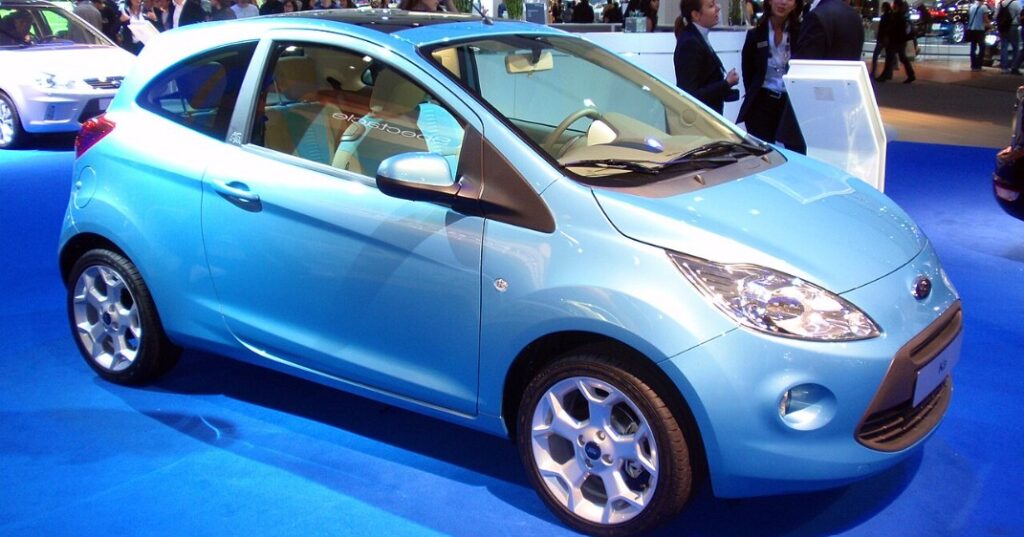
Seeing the Ford Ka yellow triangle warning light appear on the dashboard can be unsettling, particularly because the symbol does not point to one obvious component. An oil-can symbol tells us to think about lubrication. A battery symbol points toward the charging system. A yellow triangle with an exclamation mark? That is more like the car tapping us on the shoulder and saying, “Something needs your attention.”
On many Ford Ka models—particularly the second-generation Ford Ka sold from around 2008 to 2016—the amber or yellow triangle containing an exclamation mark is officially used as a generic failure indication. In other words, the triangle itself is not the diagnosis. It is an umbrella warning that may accompany several different faults.
Ford's handbook for this generation specifically identifies the triangle as an amber generic-failure warning and explains that warning messages or audible alerts may accompany dashboard lights. Ford also notes that the warning can remain illuminated until the underlying fault is corrected.
That distinction matters. Replacing random components simply because the triangle is illuminated is like changing every light bulb in a house because one circuit breaker tripped. We need to find out what triggered the warning first.
In this guide, we'll explain what the Ford Ka yellow triangle means, the faults most commonly associated with it, whether the car is safe to drive, how to diagnose it, and what changes between different generations of the Ka.
Content in this publication
- What Does the Ford Ka Yellow Triangle Warning Light Mean?
- Which Ford Ka Models Use the Yellow Triangle?
- Most Common Ford Ka Yellow Triangle Causes
- 2. Parking Sensor Failure
- 3. Fuel Cut-Off System Warning
- 4. Exterior Light Failure
- 5. Low Battery Voltage
- 6. Stop/Start System Problems
- 7. ABS, ESP, or Hill-Start Related Faults
- Does the Yellow Triangle Mean the Ford Ka Is Unsafe to Drive?
- Ford Ka Yellow Triangle After Starting the Engine
- Ford Ka Yellow Triangle After a Stall
- Ford Ka Yellow Triangle With an Exclamation Mark and No Message
- Can We Reset the Ford Ka Yellow Triangle Warning Light?
- How Much Does a Ford Ka Yellow Triangle Repair Cost?
- Why the Ford Ka Triangle Sometimes Goes Away by Itself
- Can Cold Weather Trigger the Yellow Triangle?
- Can Rain or Washing the Car Cause the Warning?
- Should We Disconnect the Battery to Reset the Triangle?
- Ford Ka Yellow Triangle Diagnostic Checklist
- What Mechanics Should Check
- Common Mistakes to Avoid
- Ford Ka Yellow Triangle: Quick Meaning Table
- Is the Ford Ka Yellow Triangle a Service Reminder?
- Can the Yellow Triangle Cause an MOT or Inspection Failure?
- Why Reading the Dashboard Message Matters
- Final Thoughts on the Ford Ka Yellow Triangle Warning Light
- Frequently Asked Questions
- 1. What does the yellow triangle with an exclamation mark mean on a Ford Ka?
- 2. Can I drive my Ford Ka with the yellow triangle showing?
- 3. How do I reset the yellow triangle on a Ford Ka?
- 4. Can a weak battery cause the Ford Ka yellow warning triangle?
- 5. Why does my Ford Ka yellow triangle come on and then disappear?
What Does the Ford Ka Yellow Triangle Warning Light Mean?
The yellow triangle with an exclamation mark generally means that the vehicle has detected a non-specific fault requiring attention.
On the 2008–2016 European Ford Ka in particular, Ford calls it the Generic Failure Indication. The official handbook shows the symbol as a triangle surrounding an exclamation mark and classifies it as amber.
The key word here is generic.
The triangle does not necessarily mean:
- The engine is failing.
- The car must immediately be stopped.
- The transmission has failed.
- The vehicle is unsafe to drive.
- An expensive repair is inevitable.
Instead, another system has typically detected a problem and uses the general warning symbol to draw our attention to it.
Sometimes a dashboard message appears at the same time. That message is usually far more useful than the triangle itself.
Yellow Triangle Versus Red Warning Lights
Dashboard colors give us a quick indication of urgency.
An amber or yellow warning usually means we should investigate the fault soon. A red warning, meanwhile, is generally reserved for situations that may require immediate action, such as dangerously low oil pressure, overheating, braking-system problems, or charging failures.
Think of yellow as a caution sign beside the road. Red is closer to a closed-road barrier.
That doesn't mean we should ignore a yellow triangle. It simply means that the urgency depends heavily on what other symptoms or warning messages appear with it.
Which Ford Ka Models Use the Yellow Triangle?
This is where online explanations often become confusing.
The Ford Ka name covered several quite different vehicles over its lifetime, and their dashboard systems were not identical.
First-Generation Ford Ka: 1996–2008
The original Ford Ka used a relatively simple instrument cluster with dedicated warning lamps for major systems.
Depending on production year and market, drivers may encounter individual lights for:
- ABS
- Airbags
- Battery charging
- Engine management
- Brake system
- Oil pressure
- Immobilizer
- Coolant temperature
The later generic triangle familiar from second-generation models is therefore not equally relevant to every first-generation Ka.
If we own an early Ka, the exact dashboard symbol and model year matter considerably.
Second-Generation Ford Ka: 2008–2016
This is the generation most strongly associated with searches for the Ford Ka yellow triangle warning light.
Its official Ford handbook identifies the amber triangle/exclamation symbol as the Generic Failure Indication.
Depending on specification and circumstances, it may accompany a problem involving sensors, parking assistance, fuel cut-off systems, exterior lighting, or another monitored function.
Ford Ka+ and Later Models
The Ford Ka+ arrived later and is mechanically and electronically different from the European second-generation Ka.
It uses a different dashboard architecture with more dedicated warning indicators. Consequently, we should not automatically apply a 2010 Ka diagnosis to a 2018 or 2019 Ka+.
Ford itself notes across its owner's-manual material that available warning lamps and vehicle equipment can differ according to model, version, and installed options.
So the safest rule is simple: model year first, warning symbol second, dashboard message third.
Most Common Ford Ka Yellow Triangle Causes
Because the triangle is a general warning, there is no single component we can replace to make it disappear.
Several problems can trigger it.
1. Engine Oil Pressure Sensor Fault
Ford's second-generation Ka handbook specifically associates the generic failure warning with an engine oil pressure sensor failure.
That wording is important.
An oil pressure sensor fault is not necessarily the same thing as actual low oil pressure.
The sensor monitors engine oil pressure and communicates that information electrically. If the sensor itself, its wiring, or its connector fails, the car may generate a warning even when mechanical oil pressure is normal.
However, we should never casually assume that oil pressure is fine.
How to Tell Sensor Failure From Low Oil Pressure
Possible sensor-related signs include:
- Warning appearing intermittently.
- No unusual engine noise.
- Correct engine oil level.
- Diagnostic trouble codes relating to the oil-pressure circuit.
- Warning disappearing and returning randomly.
Actual low oil pressure may come with more concerning symptoms such as abnormal ticking, tapping, knocking, or a dedicated red oil-pressure warning.
If a red oil-can warning appears while the engine is running, we should treat that much more seriously than the yellow triangle alone.
2. Parking Sensor Failure
Parking sensors are another possible source.
Ford's documentation states that a warning can be displayed when a parking sensor fault is detected.
This is one of the less frightening explanations for the triangle.
A parking sensor may stop working because of:
- Dirt or mud covering the sensor.
- Water ingress.
- Ice.
- Damaged wiring.
- A failed ultrasonic sensor.
- Connector corrosion.
- Impact damage to the bumper.
If the yellow triangle appears while the engine feels completely normal but the parking sensors suddenly stop beeping, we have a useful clue.
A Quick Parking Sensor Check
Clean every sensor gently and inspect the bumper for obvious damage.
Then engage reverse in a safe location.
If the parking assistance system remains inactive or behaves strangely, a scan tool capable of reading body-control or parking-module faults can help identify the affected sensor.
3. Fuel Cut-Off System Warning
The second-generation Ka also has a fuel cut-off safety function designed to respond after certain impacts.
The owner's handbook notes that the warning system can indicate when the fuel cut-off inertial system has intervened or when the fuel cut-off system is unavailable.
This may occur after:
- A collision.
- A strong impact.
- Electrical interruption.
- Certain system faults.
- Low-voltage events.
If the triangle appeared immediately after the car hit a substantial pothole, curb, or obstacle—or following an accident—the timing is worth mentioning to a technician.
4. Exterior Light Failure
A failed exterior bulb can sometimes produce warning behavior that surprises owners because the car itself otherwise feels perfectly normal.
Second-generation Ka documentation includes monitoring for external-light failures.
So before imagining an expensive electronic fault, walk around the car and check:
- Brake lights.
- Tail lights.
- Headlights.
- Sidelights.
- Number-plate lights.
- Indicators.
- Rear fog lamp.
A bulb may still glow but draw an incorrect amount of current because it is failing internally.
LED Bulbs Can Also Cause Trouble
If aftermarket LED bulbs have been fitted to a vehicle designed for conventional incandescent bulbs, their lower electrical resistance may confuse bulb-monitoring electronics.
The result can be a dashboard warning despite the light appearing to function.
Returning temporarily to the correct factory-specification bulb is a simple diagnostic step.
5. Low Battery Voltage
A weak battery is not listed as the meaning of the triangle, but low system voltage can make modern vehicle electronics behave strangely.
When voltage drops during starting, several control modules may briefly lose communication or record faults.
That can produce:
- Multiple warning lights.
- Intermittent ABS warnings.
- Steering warnings.
- Start/Stop faults.
- Generic warning messages.
- Lights that disappear after restarting.
If the warning appeared immediately after a difficult start, flat battery, jump-start, or battery replacement, checking system voltage is worthwhile.
Battery Problems Are Especially Suspicious When Several Lights Appear
One warning light usually points us toward one system.
Five unrelated lights appearing simultaneously may point toward something those systems share—often power supply, grounding, or network communication.
In other words, the dashboard sometimes looks like a Christmas tree not because five systems failed simultaneously, but because they all briefly lost the electrical conditions they need to operate properly.
6. Stop/Start System Problems
Some later second-generation Ka versions have an Auto Start-Stop system.
Faults involving battery condition, charging performance, sensors, switches, or Start-Stop operation may generate messages or warning indicators.
The owner's manual for this Ka generation contains a specific section covering Auto-Start-Stop deactivation and related warning behavior, illustrating how interconnected these dashboard systems can be.
If the triangle appears and the Start-Stop function simultaneously stops operating, the two symptoms may be connected.
However, Start-Stop not activating does not automatically mean something is broken. The system can intentionally remain unavailable because of battery charge, engine temperature, climate-control demand, or other operating conditions.
The Ka's stability-control and hill-assist systems rely on information from multiple sensors.
Ford documentation for the generation includes separate warnings for ESP system failure and Hill Holder failure.
Problems can involve:
- Wheel-speed sensors.
- Steering-angle information.
- Brake switches.
- Wiring.
- ABS modules.
- Battery voltage.
- Connector contamination.
A particularly useful clue is whether the yellow triangle appears alongside an ABS or stability-control warning.
If so, scanning the ABS/ESP module—not merely the engine ECU—is important.
Why a Cheap Code Reader May Show Nothing
Basic OBD-II scanners concentrate primarily on emissions-related engine codes.
But a Ford Ka fault might live inside:
- ABS/ESP module.
- Body control module.
- Power steering module.
- Parking assistance system.
- Instrument cluster.
A basic scanner can therefore report “no codes” even while the dashboard clearly knows something is wrong.
A Ford-capable diagnostic tool gives us a much better chance of finding the root cause.
Does the Yellow Triangle Mean the Ford Ka Is Unsafe to Drive?
Not automatically.
The yellow triangle itself indicates that something needs attention, but whether we should continue driving depends on everything happening around it.
Usually Safe for a Short Journey
A cautious journey to a workshop may be reasonable if:
- The triangle is the only warning.
- Engine temperature is normal.
- Oil-pressure warning is off.
- Brakes feel normal.
- Steering feels normal.
- Engine runs smoothly.
- No burning smell is present.
- No unusual noises occur.
We should still diagnose the car rather than simply waiting for the light to disappear permanently.
Stop Driving If Other Serious Symptoms Appear
Pull over safely and consider switching the engine off if the triangle appears together with:
- A red oil-pressure light.
- Severe overheating.
- A red brake warning unrelated to the handbrake.
- Heavy steering.
- Major loss of engine power.
- Loud knocking or metallic engine noises.
- Smoke.
- Strong burning smell.
- Serious brake problems.
The triangle is not the deciding factor in these scenarios—the additional symptoms are.
Ford Ka Yellow Triangle After Starting the Engine
Dashboard lamps normally illuminate briefly when we switch the ignition on. This is essentially a bulb and system check.
Ford explains that warning and indicator lamps may illuminate at ignition to verify that systems are functioning, and lamps that stay on afterward warrant investigation.
So if the triangle lights briefly and then goes out, that can be normal depending on the vehicle.
The important situation is when it:
- Remains illuminated.
- Appears while driving.
- Returns repeatedly.
- Appears with a message.
- Appears with other warning lamps.
Ford Ka Yellow Triangle After a Stall
A stall can produce some frightening dashboard behavior.
When the engine stops unexpectedly while the ignition remains on, lights for systems such as charging or oil pressure can illuminate because the engine is no longer turning.
That is not necessarily evidence that those components caused the stall.
After restarting:
- Let the engine idle.
- Check which lights remain illuminated.
- Look for dashboard messages.
- Listen for unusual noises.
- Drive only if the car behaves normally.
If the triangle remains present afterward, scan the vehicle.
Ford Ka Yellow Triangle With an Exclamation Mark and No Message
This is frustrating because the dashboard tells us something is wrong without telling us what.
Our first checks should be simple.
Step 1: Switch the Car Off and Restart
Turn the vehicle off safely, remove the key if applicable, wait briefly, and restart.
If the warning disappears, do not immediately assume the problem has permanently resolved. Electronic faults can be intermittent, and a stored diagnostic trouble code may remain.
Step 2: Check All Exterior Lights
Walk around the vehicle.
Ask someone to press the brake pedal while we inspect the brake lights.
Test:
- Indicators.
- Sidelights.
- Dipped beams.
- Main beams.
- Brake lights.
- Reverse lamps.
- Fog lights.
- Registration-plate lamps.
It's cheap, quick, and can eliminate one potential cause immediately.
Step 3: Check Engine Oil Level
Park on level ground and allow the engine to settle.
Check the dipstick following the procedure for the specific engine.
Low oil level and low oil pressure are different things, but the oil level should still be verified before driving extensively.
Step 4: Check Battery Condition
If the engine cranks slowly or the battery is several years old, have it load-tested.
A multimeter can provide basic information, but a proper battery tester is more useful because a battery can show acceptable voltage while lacking sufficient cranking capacity.
Step 5: Read Diagnostic Codes
This is the most effective next step.
Do not clear codes immediately.
Record them first.
A fault such as:
Pxxxx
may relate to engine management, while chassis or body codes may direct us toward ABS, parking sensors, electronics, or another control module.
Can We Reset the Ford Ka Yellow Triangle Warning Light?
Usually, there is no universal button sequence for permanently resetting the generic warning triangle.
The warning normally disappears when the condition that triggered it has been corrected.
Ford's handbook states that fault warning behavior can persist until the cause has been eliminated.
That means disconnecting the battery or deleting trouble codes without repairing the fault is often temporary.
The light may disappear for ten minutes, ten miles, or ten days—and then return.
Why Clearing the Warning Too Early Is a Mistake
Diagnostic codes contain clues.
When we erase them before recording them, we may throw away valuable evidence.
Some scanners also display freeze-frame data, which can show conditions at the moment a fault occurred, including:
- Engine rpm.
- Vehicle speed.
- Voltage.
- Coolant temperature.
- Load.
- Sensor values.
That's the electronic equivalent of footprints at a crime scene. We don't want to sweep them away before looking.
How Much Does a Ford Ka Yellow Triangle Repair Cost?
There is no meaningful single repair price because the symbol can represent many different faults.
A repair could be as small as:
- Replacing a failed bulb.
- Cleaning a parking sensor.
- Repairing a loose connector.
Or it could involve:
- Replacing a sensor.
- Repairing wiring.
- Installing a new battery.
- Diagnosing ABS or ESP.
- Replacing a faulty parking sensor.
- Repairing a control module.
The most cost-effective first purchase is often diagnosis rather than parts.
Throwing components at an unknown fault can rapidly become more expensive than paying someone to identify it correctly.
Why the Ford Ka Triangle Sometimes Goes Away by Itself
Intermittent warnings are common with electrical systems.
A warning may disappear after:
- Restarting the engine.
- Battery voltage recovering.
- Moisture drying from a connector.
- A temporary sensor signal returning to normal.
- A control module completing another self-test.
That does not necessarily mean the original event never happened.
Many modules store historic or intermittent fault codes.
If the light has appeared several times, retrieving those codes is sensible even if the dashboard currently looks normal.
Can Cold Weather Trigger the Yellow Triangle?
Indirectly, yes.
Cold weather reduces battery performance and increases electrical demand. Starting requires more current, while heaters, blowers, lights, and heated windows may all run simultaneously.
A marginal battery that behaves perfectly in warm weather can suddenly struggle on a cold morning.
That voltage dip may expose an underlying electrical weakness.
Cold weather can also affect:
- Parking sensors covered in ice.
- Wiring connections.
- Moisture-related faults.
- Start-Stop availability.
So the temperature may be the triggering condition, rather than the failed component itself.
Can Rain or Washing the Car Cause the Warning?
Again, indirectly.
Electrical connectors, parking sensors, lamp holders, and wiring can develop moisture ingress.
If the triangle regularly appears:
- After heavy rain.
- After using a pressure washer.
- After driving through deep water.
that pattern is diagnostically useful.
Tell the technician.
A fault that appears only when wet can be painfully difficult to reproduce in a dry workshop unless we provide that context.
Should We Disconnect the Battery to Reset the Triangle?
Generally, we would not make this our first move.
Disconnecting the battery may:
- Remove useful diagnostic information.
- Reset learned settings.
- Affect radio or clock settings.
- Temporarily hide the warning.
- Create additional calibration requirements.
Most importantly, it doesn't repair a failed sensor, broken wire, faulty bulb, or damaged component.
Diagnose first. Reset second.
Ford Ka Yellow Triangle Diagnostic Checklist
If we want the quickest route from mystery light to sensible diagnosis, use this sequence:
- Identify the exact model year and engine.
- Photograph the dashboard warning.
- Write down any accompanying message.
- Check for red warning lights.
- Check engine oil level.
- Test exterior lights.
- Check whether parking sensors still work.
- Notice whether ABS, ESP, or steering warnings are also illuminated.
- Consider recent battery problems or jump-starting.
- Scan all vehicle modules for stored codes.
- Repair the actual fault.
- Clear codes and confirm that the warning does not return.
That approach is far more reliable than searching for a single “yellow triangle sensor,” because there usually isn't one.
What Mechanics Should Check
When a workshop receives a Ford Ka with the warning illuminated, a proper diagnosis should go beyond simply plugging in a generic reader.
Ideally, the technician should examine:
Stored and Pending Fault Codes
Pending codes can reveal faults that have occurred but haven't yet met the conditions necessary to become permanent codes.
Battery and Charging Voltage
Low voltage can create misleading fault cascades.
Sensor Data
Live data may show a sensor reading that is physically impossible or inconsistent with neighboring sensors.
Wiring and Grounds
Small cars live hard lives. Vibration, heat, water, salt, age, and previous repairs all affect wiring.
A corroded ground connection can imitate an expensive electronic failure.
Fault History
When did the warning begin?
After replacing the battery? After a bumper repair? After rain? After a stall? After an accident?
The timeline can narrow the search dramatically.
Common Mistakes to Avoid
The first is assuming every yellow triangle means the same thing on every Ford.
It doesn't.
The second is replacing the oil-pressure sensor simply because one Ford Ka handbook associates the generic warning with that system. The symbol can be used alongside other detected faults as well.
The third is ignoring the warning because the car “still drives fine.”
A failed parking sensor may be minor. An early electrical or sensor problem may not be.
The fourth is clearing codes before recording them.
And finally, don't confuse amber warnings with red warnings. If a red oil-pressure, braking, or overheating indication accompanies the triangle, the situation has changed considerably.
Ford Ka Yellow Triangle: Quick Meaning Table
| Situation | Likely Direction | What We Should Do |
|---|---|---|
| Triangle only | Generic stored fault | Scan vehicle |
| Triangle + parking sensors not working | Parking sensor/system fault | Clean sensors and scan |
| Triangle + exterior lamp out | Bulb or lighting fault | Inspect and replace correct bulb |
| Triangle after weak start | Battery/voltage issue possible | Test battery and charging |
| Triangle + ESP/ABS light | Stability/braking electronics | Scan ABS/ESP module |
| Triangle + red oil warning | Possible lubrication problem | Stop engine and investigate |
| Triangle after impact | Fuel cut-off/safety system possible | Inspect and diagnose |
| Triangle disappears after restart | Intermittent fault possible | Read stored codes |
| Triangle repeatedly returns | Persistent unresolved fault | Full diagnostic check |
Is the Ford Ka Yellow Triangle a Service Reminder?
Not necessarily.
A service reminder and a generic fault warning are different things.
We shouldn't assume the triangle simply means the car needs an oil change.
The second-generation Ford Ka handbook explicitly identifies the triangle/exclamation symbol as a generic failure indication, meaning it is intended to communicate a fault condition rather than simply serving as a routine maintenance timer.
If servicing is due as well, that may be coincidence unless the display specifically says so.
Can the Yellow Triangle Cause an MOT or Inspection Failure?
That depends on the underlying fault and the inspection rules in the country where the vehicle is registered.
A minor parking sensor problem is very different from an illuminated ABS, airbag, engine-management, or braking-system warning.
Instead of asking whether the triangle itself causes a failure, we should ask:
What system triggered it?
Once that question is answered, the inspection implications become much clearer.
Why Reading the Dashboard Message Matters
The triangle is the headline. The accompanying display message is the article.
Ford explains that warning lights may be accompanied by specific messages and audible warnings, depending on vehicle equipment.
If the dashboard gives us text such as a parking-sensor fault, Hill Holder issue, or another system warning, photograph it before switching the ignition off.
Intermittent messages have an annoying habit of disappearing exactly when we arrive at the garage.
A phone photo can save considerable diagnostic time.
Final Thoughts on the Ford Ka Yellow Triangle Warning Light
The Ford Ka yellow triangle warning light looks dramatic, but its broad meaning is actually straightforward: on the second-generation Ka in particular, it acts as an amber generic failure warning rather than identifying one specific broken component. Ford's handbook explicitly labels the triangle as the Generic Failure Indication.
From there, context does the detective work.
If the parking sensors have stopped working, look there first. If an exterior bulb has failed, inspect the lighting system. If several unrelated lights appeared after a slow start, battery voltage deserves attention. If the triangle is paired with ABS or stability warnings, those systems need scanning. And if a serious red warning joins the party, we treat the situation much more urgently.
Most importantly, we shouldn't repair a symbol. We repair the fault behind the symbol.
A complete diagnostic scan, combined with simple checks of oil level, battery condition, exterior lights, parking sensors, and accompanying dashboard messages, will usually get us much closer to the answer than resetting the light and hoping it stays away.
Frequently Asked Questions
1. What does the yellow triangle with an exclamation mark mean on a Ford Ka?
On many 2008–2016 Ford Ka models, the amber triangle with an exclamation mark is the Generic Failure Indication. It means that another monitored system has detected a fault, so we need to check the accompanying message or diagnostic trouble codes to identify the actual cause.
2. Can I drive my Ford Ka with the yellow triangle showing?
Potentially, yes, if the vehicle drives normally and there are no red warnings, overheating symptoms, braking problems, heavy steering, unusual noises, or major power loss. However, we should diagnose the warning soon because the triangle alone does not reveal how serious the underlying problem is.
3. How do I reset the yellow triangle on a Ford Ka?
There isn't one universal reset procedure for the generic failure warning. Normally we identify and repair the underlying fault, clear stored diagnostic codes if necessary, and confirm that the warning stays off. Simply disconnecting the battery may only hide the problem temporarily.
4. Can a weak battery cause the Ford Ka yellow warning triangle?
A weak battery or significant voltage drop can indirectly cause multiple modules to log faults and illuminate warning indicators. If the triangle appeared after difficult starting, a flat battery, jump-starting, or battery problems, checking battery health and charging voltage is a sensible diagnostic step.
5. Why does my Ford Ka yellow triangle come on and then disappear?
Intermittent sensor signals, voltage fluctuations, wiring problems, moisture, or temporary electronic faults can make the warning appear and later disappear. Even when the light goes off, the vehicle may have stored a diagnostic trouble code that can help identify what happened.
If you want to know other articles similar to Ford Ka Yellow Triangle Warning Light: Meaning, Causes, and What to Do you can visit the category Service and Parts.
Nissan Rogue Oil Change Cost: Prices, Service Options, and What to Expect
Nissan Rogue Key Battery Replacement: Easy Step-by-Step Guide
Nissan Rogue Oil Change Interval: Complete Guide by Model Year
Nissan Rogue Brake Pads and Rotors Cost: Complete 2026 Guide

Kia Sorento Service Reset: How to Reset the Service Light
Kia Sorento Fuel Tank Capacity: Gallons, Litres and Model Differences
Leave a Reply
More content of your interest