

Ford Ka Air Conditioning Not Working: Causes, Checks, and Fixes

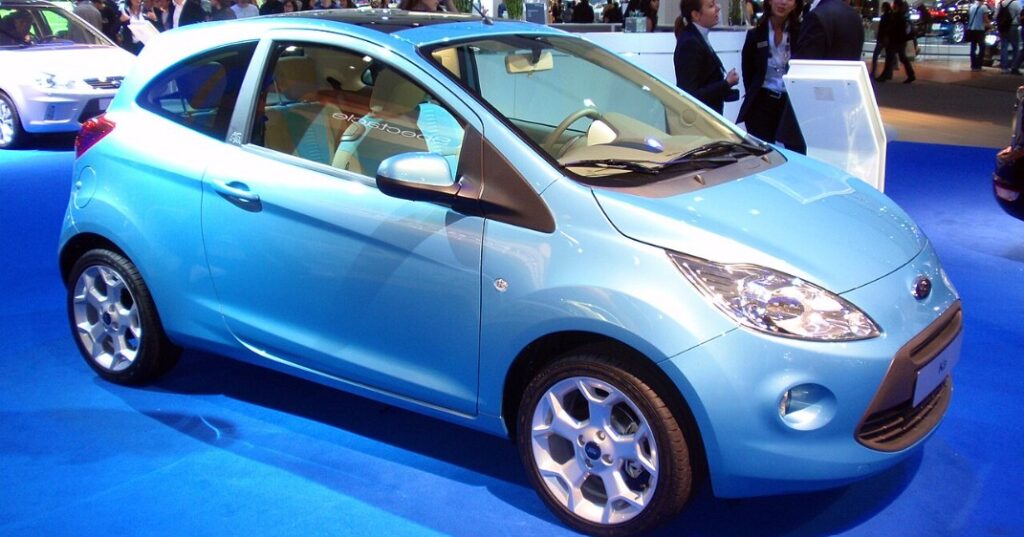
Few things make a small car feel smaller than an air-conditioning system that suddenly stops cooling. We press the A/C button in our Ford Ka, expect that refreshing blast of cold air, and instead get something that feels suspiciously like somebody breathing through a hairdryer.
If your Ford Ka air conditioning is not working, the problem can range from something relatively straightforward, such as low refrigerant or a blown fuse, to a failed compressor or electrical fault. Sometimes the fan works but the air stays warm. In other cases, nothing comes through the vents at all. We might even notice the A/C getting cold while driving but turning warm whenever the car sits at a traffic light.
Those symptoms matter because they point us in very different diagnostic directions.
In this guide, we’ll work through the most common Ford Ka air-conditioning problems, explain what each symptom usually means, look at simple checks we can make ourselves, and highlight the situations where professional diagnosis makes more sense than blindly replacing parts.
Content in this publication
- Why Is My Ford Ka Air Conditioning Not Working?
- Start With the Exact A/C Symptom
- Low Refrigerant in a Ford Ka
- Ford Ka A/C Compressor Problems
- Check the Ford Ka A/C Fuse and Relay
- Ford Ka Condenser Problems
- Cooling Fan Failure Can Affect the A/C
- Dirty Cabin Filter and Weak Airflow
- Ford Ka Blower Motor Resistor Problems
- Ford Ka A/C Button Lights Up but No Cold Air
- Pressure Sensor Faults
- Evaporator Problems Inside the Cabin
- Expansion Valve or Refrigerant Restriction
- Ford Ka Air Conditioning Smells Bad
- Ford Ka Air Conditioning Making Noise
- Ford Ka A/C Not Working After Battery Replacement
- Ford Ka Air Conditioning Not Working After a Recharge
- Can We Diagnose Ford Ka A/C Problems at Home?
- A Simple Ford Ka A/C Symptom Chart
- How Much Does Ford Ka Air Conditioning Repair Cost?
- Is It Safe to Drive With the A/C Not Working?
- Should We Repair an Older Ford Ka A/C System?
- Preventing Future Ford Ka Air Conditioning Problems
- Ford Ka Air Conditioning Troubleshooting: Best Order to Follow
- Closing Thoughts
- Frequently Asked Questions
- 1. Why is my Ford Ka air conditioning blowing hot air?
- 2. Why does my Ford Ka A/C work while driving but not when stopped?
- 3. Does a Ford Ka A/C system need regular refrigerant refills?
- 4. Can a blown fuse stop the Ford Ka air conditioning from working?
- 5. Why is my Ford Ka A/C cold at first and warm later?
Why Is My Ford Ka Air Conditioning Not Working?
The air-conditioning system in a Ford Ka depends on several components working together. Think of it like a relay race: the compressor, refrigerant, condenser, pressure sensors, cooling fan, evaporator, electrical controls, and blower motor all have to do their jobs.
One weak link can ruin the whole performance.
Common causes include:
- Low refrigerant caused by leakage
- A failed A/C compressor
- Compressor clutch problems on applicable versions
- A blown fuse or faulty relay
- Condenser damage or blockage
- Cooling fan failure
- Faulty pressure sensors
- Blower motor problems
- Cabin filter restrictions
- Electrical wiring faults
- Climate-control switch problems
- Evaporator temperature sensor faults
- Expansion valve or refrigerant-flow problems
The exact design differs according to the Ford Ka generation, engine, model year, and market, so we shouldn’t assume every Ka uses precisely the same components.
Start With the Exact A/C Symptom
Before opening the bonnet or reaching for tools, we should pay attention to what the car is actually doing.
“Air conditioning not working” can mean several different things.
Does air come from the vents but remain warm?
Does the fan fail completely?
Is the air cold for five minutes and then warm?
Does cooling improve once we start moving?
Does the system make unusual noises?
Each answer eliminates potential causes and pushes others closer to the top of the list.
Ford Ka A/C Blowing Warm Air
Warm air from otherwise functioning vents is probably the classic complaint.
If the blower responds normally to the fan-speed controls but the air never gets cold, possible causes include low refrigerant, compressor failure, pressure-sensor issues, electrical faults, or poor refrigerant circulation.
Low refrigerant is especially common on aging cars because air-conditioning systems gradually develop leaks at seals, hoses, condensers, valves, or other joints.
But here’s an important point: refrigerant does not behave like engine oil that we routinely expect to consume.
If the system has lost enough refrigerant to stop cooling, simply refilling it without checking for leakage may only hide the real problem temporarily.
Ford Ka A/C Blower Not Working
Suppose we turn the ventilation fan from position one through its higher settings and get almost nothing.
That points away from refrigerant problems.
The A/C could technically be producing cold air inside the HVAC housing, but without a functioning blower motor, that cool air has no effective way to reach us.
Likely causes include the blower fuse, blower resistor, wiring, motor, switch, or control circuitry.
Ford Ka A/C Works Only While Driving
This clue is particularly useful.
When the air conditioning becomes colder at road speed but performs poorly in stationary traffic, we should investigate airflow across the condenser.
As the car moves, natural airflow passes through the front of the vehicle. When stationary, the electric cooling fan has to compensate.
If that fan does not operate properly, refrigerant pressures can rise and cooling performance may collapse.
The condenser itself may also be dirty or obstructed.
Low Refrigerant in a Ford Ka
Refrigerant is central to the entire cooling process.
The system compresses and circulates refrigerant through pressure changes that allow heat to be absorbed from inside the cabin and released outside the vehicle.
If refrigerant quantity falls too low, cooling deteriorates.
Signs of Low A/C Refrigerant
We may notice:
- Gradually weaker cooling
- Warm air even with maximum A/C selected
- Cooling that comes and goes
- Compressor operation changing unusually
- The system refusing to engage
- Refrigerant or oil residue near a leaking component
A pressure sensor may prevent compressor operation if pressures become unsafe.
That protective behaviour can make the compressor look defective when low refrigerant is actually the underlying problem.
Why Simply Recharging the A/C Can Be Misleading
It’s tempting to see an inexpensive “A/C recharge” as a universal cure.
Sometimes a correct recharge restores cooling immediately.
But if refrigerant disappeared because of a leak, the cold air might last a few days, several weeks, or several months before the problem returns.
We’re treating the bucket while ignoring the hole.
A better approach involves recovering the remaining refrigerant, checking system pressures, testing for leakage where appropriate, repairing the fault, evacuating the system, and charging it with the correct quantity and refrigerant specification.
Ford Ka A/C Compressor Problems
The compressor is effectively the heart of the air-conditioning circuit.
It circulates refrigerant and creates the pressure difference required for the refrigeration cycle to function.
When it fails, we can have fans blowing perfectly but no meaningful cooling.
Symptoms of a Faulty Compressor
Potential clues include:
- No cold air
- Abnormal rattling or grinding
- A/C operation that cuts in and out
- Compressor not operating when commanded
- Unusual engine-bay noises when A/C is selected
However, seeing a compressor that does not operate does not automatically prove it has failed.
The system may deliberately prevent compressor activation because of abnormal refrigerant pressure, electrical problems, sensor faults, engine-management conditions, or other protective logic.
That’s why replacing a compressor without diagnosis can become a very expensive guessing game.
Compressor Clutch Issues
Some Ford Ka configurations use a compressor arrangement in which clutch engagement can be observed or diagnosed separately.
A clutch that fails to engage may have an electrical, mechanical, pressure-related, or control-system cause.
The safest diagnostic approach is to verify the command reaching the compressor and check system pressure before condemning the component itself.
Check the Ford Ka A/C Fuse and Relay
Electrical faults can turn a healthy mechanical system into a completely useless one.
A fuse may blow because of a temporary electrical event, but repeated fuse failure usually tells us something else is wrong.
Never solve a repeatedly blown fuse by fitting one with a higher amperage rating.
That’s roughly equivalent to replacing a smoke alarm with louder speakers while ignoring the fire.
How to Check the A/C Fuse
We should consult the fuse chart for our specific Ford Ka model year because fuse positions can vary significantly between generations and markets.
Once the correct fuse is located:
- Switch the ignition off.
- Remove the relevant fuse safely.
- Inspect the element or test continuity.
- Replace it only with the specified rating.
- Test the system again.
If the replacement fuse immediately fails, further electrical diagnosis is required.
Could the A/C Relay Be Faulty?
Where a removable relay is used for the relevant circuit, failure may interrupt power to the compressor or another A/C component.
Relays can sometimes fail intermittently, making diagnosis irritatingly unpredictable.
One day the A/C works. The next afternoon it doesn’t. Then, conveniently, everything behaves normally when we arrive at the garage.
Testing the electrical circuit under fault conditions is much more reliable than replacing relays at random.
Ford Ka Condenser Problems
The condenser usually sits near the front of the car, where airflow can remove heat from the refrigerant.
That exposed position makes it vulnerable.
Road debris, corrosion, dirt, insects, bent fins, and impact damage can reduce condenser performance or cause leaks.
Signs of a Damaged Condenser
A damaged or restricted condenser may contribute to:
- Weak cabin cooling
- Higher-than-normal A/C pressures
- Cooling that worsens while stationary
- Visible refrigerant/oil staining
- Loss of refrigerant
- A/C shutdown under demanding conditions
Because the condenser is positioned in an area exposed to road debris, physical inspection can sometimes reveal obvious damage.
Do Not Bend or Puncture the Condenser
The fins are delicate, and the refrigerant circuit is pressurised.
We can visually inspect the surface, but refrigerant-system repair is not a sensible place for improvised DIY techniques.
Cooling Fan Failure Can Affect the A/C
The electric cooling fan does more than manage engine temperature.
It also helps move air across the A/C condenser when the car is stationary or moving slowly.
This explains a symptom many drivers find confusing:
“My Ford Ka air conditioning works on the motorway but stops cooling in traffic.”
That pattern strongly suggests checking condenser airflow and fan operation.
How the Symptom Usually Behaves
Imagine leaving home on a warm morning.
At 50 mph, the cabin becomes comfortable.
Then we reach a queue.
Within a couple of minutes, the vents start getting warmer.
Traffic moves again and—almost magically—the cold air returns.
That isn’t magic. Road speed is effectively doing the job that the fan should be helping to perform.
A diagnostic inspection should determine whether the fan is receiving the correct command and power before we assume the fan motor itself is faulty.
Dirty Cabin Filter and Weak Airflow
Sometimes the A/C is actually cold, yet the airflow feels disappointing.
A clogged cabin filter can restrict ventilation so badly that the system seems much weaker than it really is.
Dust, pollen, leaves, moisture, and general debris gradually load the filter.
Common Cabin Filter Symptoms
Watch for:
- Weak air from the vents
- Increased fan noise without much airflow
- Misty windows that clear slowly
- Musty smells
- Uneven ventilation
Replacing a dirty cabin filter is one of the simplest maintenance jobs associated with the HVAC system.
Still, it’s important to separate weak airflow from weak cooling.
A clogged filter generally restricts the volume of air. It doesn’t normally explain air that blasts strongly but stays completely hot.
Ford Ka Blower Motor Resistor Problems
If the blower works at some speeds but not others, the blower resistor or electronic speed-control system deserves attention.
For example, we might discover that fan settings one, two, and three appear dead while the highest setting still works.
That pattern is quite different from an A/C refrigerant fault.
Why Fan Speeds Matter for Diagnosis
Try every blower setting.
If all speeds work equally but the air remains warm, concentrate on the refrigeration side.
If only certain speeds operate, investigate the blower-speed control circuit.
If no speeds work, check the fuse, power supply, switch/control unit, wiring, and blower motor.
It’s a tiny test that tells us a surprising amount.
An illuminated A/C button only tells us the control system has registered or displayed the request.
It doesn’t prove the compressor is running or that the refrigerant system is functioning correctly.
We still need to determine what happens downstream.
Possible causes include:
- Low refrigerant
- Compressor control failure
- Pressure sensor fault
- Compressor fault
- Cooling fan issue
- Refrigerant blockage
- Electrical circuit problem
Can We Hear the Compressor Engage?
On some systems, compressor operation produces a noticeable change in engine tone or a mechanical engagement sound.
On other designs, the difference is far less obvious.
Listening can provide a clue, but it should never replace proper diagnostic testing.
Pressure Sensor Faults
Modern automotive air-conditioning systems monitor refrigerant pressure for good reason.
Pressure that is too low or too high can damage components or reduce safe operation.
The control system may therefore disable the compressor when the measured value falls outside acceptable conditions.
But what happens if the sensor itself lies?
The system could refuse to operate even when the mechanical components are otherwise healthy.
Why Diagnostic Scanning Helps
A capable diagnostic tool may reveal fault codes and live sensor readings.
That can help us distinguish between:
- Genuine low pressure
- Excessively high pressure
- Implausible sensor values
- Electrical signal faults
- Compressor control problems
Replacing parts without checking this information is often much more expensive than paying for diagnosis first.
Evaporator Problems Inside the Cabin
The evaporator sits inside the HVAC system and absorbs heat from cabin air.
It is less visible than the condenser and generally harder to inspect.
Evaporator problems can include leaks, icing, contamination, sensor faults, or airflow restrictions.
A/C Starts Cold Then Becomes Warm
If the Ford Ka blows properly chilled air initially but loses cooling after extended operation, several possibilities deserve investigation.
An evaporator that freezes because of incorrect temperature control or airflow can gradually block the air passing through it.
After the system is switched off and the ice melts, it may work normally again.
That repeating pattern is valuable diagnostic information, so we should tell the technician exactly how long the system usually operates before the problem develops.
Expansion Valve or Refrigerant Restriction
The refrigerant needs to move through the system in a carefully controlled way.
A restriction at an expansion device, contaminated component, or damaged line can alter pressures and dramatically reduce cooling.
This isn’t something we can reliably diagnose by touching a few pipes and guessing.
Professional pressure readings and temperature measurements are far more useful.
Why Pressure Readings Matter
Air-conditioning diagnosis relies heavily on understanding both sides of the refrigeration circuit.
Incorrect pressure behaviour can help reveal whether the system has:
- Too little refrigerant
- Too much refrigerant
- Poor condenser cooling
- Compressor weakness
- Flow restrictions
- Control problems
This is why “just add gas” is such a blunt diagnostic strategy.
Ford Ka Air Conditioning Smells Bad
What if the A/C works, but the smell makes us want to open every window?
A musty odour usually points toward moisture, microorganisms, debris around the evaporator area, or an overdue cabin filter.
Musty Smell Versus Burning Smell
These smells should not be treated equally.
A damp, mouldy odour is unpleasant but often relates to the ventilation system itself.
A burning smell is more serious.
If we detect electrical burning, melting plastic, smoke, or another clearly abnormal odour, the sensible move is to switch the system off and investigate before continuing to use it.
Ford Ka Air Conditioning Making Noise
Noises often provide clues about mechanical condition.
We might hear:
- Clicking
- Buzzing
- Squealing
- Grinding
- Rattling
- Hissing
Some light refrigerant-flow noise can be normal, but loud new noises should get our attention.
Noise Only When A/C Is Switched On
If a strange mechanical sound begins immediately when we press the A/C button and stops when we switch the system off, the compressor drive system deserves inspection.
A technician should also check associated pulleys, bearings, belts, and mounting points.
Noise diagnosis is especially important because a failing rotating component can become much more expensive if ignored.
Ford Ka A/C Not Working After Battery Replacement
Electrical systems can occasionally behave differently after the battery has been disconnected, particularly if a control module has stored faults or needs to relearn certain values.
However, we shouldn’t automatically blame the battery replacement.
Check whether:
- The blower operates
- The A/C request is recognised
- Relevant fuses are intact
- Any electrical connectors were disturbed
- Diagnostic codes are present
A problem that appears immediately after repair work deserves investigation around the area that was touched, but coincidence is always possible too.
Ford Ka Air Conditioning Not Working After a Recharge
This situation can be incredibly frustrating.
We pay for an A/C recharge, enjoy cold air briefly, and then the warmth returns.
That strongly raises the possibility of refrigerant leakage, although other faults remain possible.
How Fast Did the Cooling Disappear?
Timing gives us a clue.
If the system loses performance extremely quickly, the leak may be significant.
If cooling declines gradually over months, the leak may be much smaller.
Either way, repeated recharging without identifying the cause becomes expensive and environmentally irresponsible.
A proper leak investigation is the logical next step.
Can We Diagnose Ford Ka A/C Problems at Home?
We can perform several useful observations without interfering with the sealed refrigerant circuit.
Start with the basics:
- Start the engine safely.
- Turn the blower through every speed.
- Select maximum cooling.
- Press the A/C button.
- Check airflow at different vents.
- Compare cooling while stationary and moving.
- Listen for abnormal noises.
- Inspect relevant fuses using the correct diagram.
- Look through the grille area for obvious condenser damage.
- Check whether the cooling fan appears to operate when conditions require it.
These observations can make professional diagnosis much faster.
What We Should Avoid Doing
Refrigerant systems operate under substantial pressure and require specific equipment.
We should avoid randomly releasing refrigerant, bypassing pressure switches, forcing compressor operation, mixing refrigerant products, or overcharging the system.
More refrigerant does not mean colder air.
An overcharged system can perform poorly and potentially damage components.
A Simple Ford Ka A/C Symptom Chart
| Symptom | Possible Cause |
|---|---|
| Strong airflow but warm air | Low refrigerant, compressor or sensor issue |
| No airflow | Blower motor, fuse, wiring or control problem |
| Only one fan speed works | Resistor or blower-control fault |
| Cold while moving, warm at idle | Cooling fan or condenser airflow problem |
| Cold at first, warm later | Icing, sensor or pressure/control issue |
| A/C recharge lasts briefly | Refrigerant leak likely |
| Noise when A/C starts | Compressor, pulley or drive-system issue |
| Musty smell | Cabin filter or evaporator contamination |
| A/C button works but compressor does not | Pressure, electrical, sensor or compressor fault |
This table is a starting point, not a definitive diagnosis. Different faults can produce surprisingly similar symptoms.
How Much Does Ford Ka Air Conditioning Repair Cost?
There isn’t one meaningful universal figure because repair costs vary enormously according to the country, Ford Ka generation, refrigerant type, labour rates, and failed component.
A basic diagnosis or service is very different from replacing a compressor or evaporator.
Cheaper Repairs Usually Include
Relatively inexpensive possibilities may include:
- Cabin filter replacement
- Fuse replacement
- Minor wiring repair
- Certain relays
- Basic system servicing
More Expensive A/C Repairs
Costs generally increase when the repair involves:
- Compressor replacement
- Condenser replacement
- Evaporator replacement
- Significant refrigerant leaks
- Contaminated systems
- Extensive electrical diagnosis
The smartest move is usually to identify the actual failure before asking for a repair price.
Otherwise, we’re comparing quotes for problems we may not even have.
Is It Safe to Drive With the A/C Not Working?
Usually, a simple loss of cabin cooling does not prevent the car from being driven.
However, there are exceptions.
If the fault involves a seized compressor, damaged auxiliary belt system, electrical burning, overheating, smoke, or another mechanical problem, continuing to drive could create additional damage.
Watch Engine Temperature Carefully
A cooling-fan problem is particularly important because the same fan system may influence both air-conditioning operation and engine cooling.
If the A/C stops cooling in traffic and the engine temperature also begins rising, stop treating this as a simple comfort issue.
The cooling system should be inspected promptly.
Should We Repair an Older Ford Ka A/C System?
This comes down to the condition and value of the car.
A modest repair that restores reliable cooling can make an older Ka considerably more pleasant to use.
A major repair involving several expensive components requires more thought.
Ask ourselves:
- Is the car otherwise reliable?
- Do we plan to keep it?
- How hot is our local climate?
- Will functioning A/C improve resale value?
- Are multiple components already failing?
Air conditioning can feel optional on a cool spring morning.
Spend an hour trapped in summer traffic and suddenly it feels as essential as the steering wheel.
Preventing Future Ford Ka Air Conditioning Problems
No maintenance routine can prevent every failure, but sensible habits help.
Run the air conditioning periodically rather than leaving it unused for extremely long periods.
Replace the cabin filter when required.
Keep the front heat exchangers reasonably clear of excessive debris.
And if cooling performance starts declining, investigate early instead of waiting until the system becomes completely ineffective.
Do Not Ignore Gradually Weakening Cooling
An A/C system rarely wakes up one morning and politely announces exactly what component is failing.
It whispers first.
Maybe cooling takes longer.
Maybe the air isn’t quite as cold.
Maybe the system struggles in traffic.
Those early changes can be useful clues.
Small Symptoms Can Reveal Larger Problems
Catching a small refrigerant leak or fan fault early may prevent additional stress on the rest of the air-conditioning system.
So when something changes, pay attention.
Our car is often telling us more than we realise.
Ford Ka Air Conditioning Troubleshooting: Best Order to Follow
Rather than jumping randomly from component to component, use a logical sequence.
First, establish whether airflow exists.
Next, determine whether the airflow becomes cold.
Then compare stationary and road-speed performance.
After that, check simple electrical items such as appropriate fuses.
Inspect for visible condenser damage and abnormal fan behaviour.
If the problem remains unresolved, professional pressure testing, leak detection, electrical diagnosis, and scan-tool data should take over.
That process saves money because diagnosis always beats parts roulette.
Closing Thoughts
When a Ford Ka air conditioning system is not working, the fault could be as simple as a restricted cabin filter or as involved as a compressor failure. The trick is not to focus on the first component somebody mentions online. We need to focus on the symptom.
Strong airflow but no cooling points us toward the refrigeration system.
No airflow sends us toward the blower circuit.
Cooling that disappears in traffic suggests condenser airflow or cooling-fan trouble.
A recharge that quickly stops working makes refrigerant leakage an obvious suspect.
Approaching the problem this way transforms diagnosis from guesswork into a process.
And that matters because replacing perfectly good parts gets expensive quickly.
Start with simple observations, check the obvious electrical items, and leave refrigerant recovery, pressure testing, and major component work to properly equipped technicians. That way, we’re fixing the actual Ford Ka A/C problem rather than throwing money at possibilities.
Frequently Asked Questions
1. Why is my Ford Ka air conditioning blowing hot air?
Warm air can result from low refrigerant, a refrigerant leak, compressor trouble, pressure-sensor faults, poor condenser cooling, or electrical problems. If the blower works normally but the air never becomes cold, the refrigeration side of the system should be checked.
2. Why does my Ford Ka A/C work while driving but not when stopped?
Poor cooling at idle often points toward insufficient airflow through the condenser. A faulty cooling fan, obstructed condenser, or related control problem may allow the A/C to cool at road speed but struggle in stationary traffic.
3. Does a Ford Ka A/C system need regular refrigerant refills?
A healthy sealed system should not require frequent refrigerant top-ups simply as routine consumption. If substantial refrigerant keeps disappearing, the system should be checked for leakage instead of repeatedly recharged.
4. Can a blown fuse stop the Ford Ka air conditioning from working?
Yes. Depending on the model and circuit design, a blown fuse can disable parts of the A/C or ventilation system. Always use the fuse diagram for the exact Ford Ka model and replace a failed fuse only with the specified rating.
5. Why is my Ford Ka A/C cold at first and warm later?
Possible causes include evaporator icing, sensor issues, pressure-related shutdown, compressor problems, airflow restrictions, or refrigerant faults. The exact timing and circumstances of the failure are useful clues during diagnosis.
If you want to know other articles similar to Ford Ka Air Conditioning Not Working: Causes, Checks, and Fixes you can visit the category Common Problems.
Volvo S90 Common Problems: Reliability & Repair Guide
Volvo S90 No Sound: Causes, Fixes and Solutions

Nissan Rogue Smells Like Gas: Causes and Fixes
Vauxhall Agila Problems: Common Faults & Fixes

Kia Sorento Jerking When Accelerating: Causes & Fixes

Jaguar F-Pace Low Battery: Causes, Warning Signs, and How to Fix It
Leave a Reply
More content of your interest