

Ford Taurus Tire Size: Complete Guide by Year and Trim

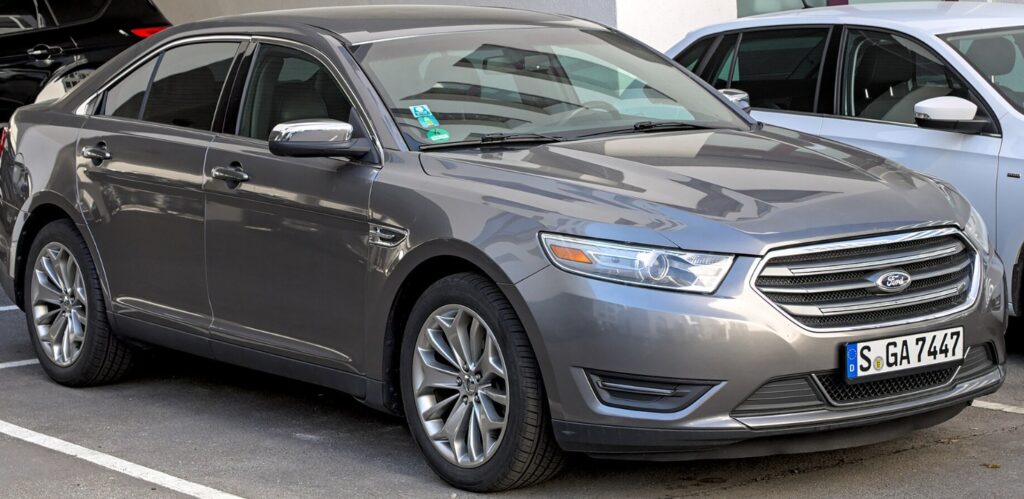
Finding the correct Ford Taurus tire size should be simple. Yet once we start comparing model years, trim levels, wheel packages, and performance variants, the answer becomes surprisingly layered.
A Taurus from the late 1990s may ride on modest 15-inch tires. A later Taurus SHO, meanwhile, can leave the factory wearing wide 20-inch rubber. Both carry the same familiar badge, but their tire requirements are as different as sneakers and racing shoes.
That is why we should never buy tires based on the vehicle name alone.
We need to know the model year, trim, wheel diameter, load rating, speed rating, and whether the car has front-wheel drive or all-wheel drive. Even two Taurus models built in the same year may use different factory sizes.
In this guide, we will break down the most common Ford Taurus tire sizes, explain how to read the numbers, compare the major factory options, and help you choose replacements without upsetting ride quality, handling, fuel economy, or safety.
Content in this publication
- What Is the Standard Ford Taurus Tire Size?
- Ford Taurus Tire Size Chart
- How to Read a Ford Taurus Tire Size
- Ford Taurus Tire Size by Generation
- First-Generation Ford Taurus Tire Sizes: 1986–1991
- Second-Generation Ford Taurus Tire Sizes: 1992–1995
- Third-Generation Ford Taurus Tire Sizes: 1996–1999
- Fourth-Generation Ford Taurus Tire Sizes: 2000–2007
- Ford Taurus Tire Sizes for 2008–2009
- Sixth-Generation Ford Taurus Tire Sizes: 2010–2019
- Which Ford Taurus Tire Size Gives the Best Ride?
- Which Tire Size Offers the Best Handling?
- Can We Install a Different Tire Size?
- Can We Put 20-Inch Wheels on a Ford Taurus?
- Can We Downsize Taurus Wheels?
- Ford Taurus AWD Tire Replacement Rules
- What Tire Pressure Does a Ford Taurus Need?
- How Tire Size Affects Fuel Economy
- How Tire Size Changes Speedometer Accuracy
- Choosing the Best Tires for a Ford Taurus
- Common Ford Taurus Tire-Buying Mistakes
- How to Confirm Your Exact Ford Taurus Tire Size
- How Long Do Ford Taurus Tires Last?
- Maintaining the Correct Ford Taurus Tire Setup
- Final Thoughts on Ford Taurus Tire Size
- Frequently Asked Questions
What Is the Standard Ford Taurus Tire Size?
There is no single tire size that fits every Ford Taurus.
Across its long production history, the Taurus has used tires ranging from relatively small 14-inch and 15-inch combinations to wide 19-inch and 20-inch performance setups. Common original-equipment sizes include:
- 195/70R14
- 205/65R15
- 215/60R16
- 215/60R17
- 225/55R18
- 235/60R17
- 235/55R18
- 255/45R19
- 245/45R20
Earlier Taurus models commonly used 14-, 15-, and 16-inch wheels, while later generations generally moved toward 17-, 18-, 19-, and 20-inch wheels. Major tire retailers also identify 18-, 19-, and 20-inch wheels as typical for the final-generation Taurus, with smaller diameters appearing on older cars.
The correct size for your particular vehicle appears on the tire-information label inside the driver’s door opening. That label should be our primary reference because it reflects the equipment fitted to the car when it left the factory.
Ford Taurus Tire Size Chart
The following chart summarizes many of the most frequently encountered factory sizes. Exact equipment can vary according to trim, production date, optional wheel package, and market.
| Model year or generation | Common trim or configuration | Typical tire size |
|---|---|---|
| 1986–1991 | Base and mainstream trims | 195/70R14, 205/70R14 |
| 1992–1995 | GL, LX and selected trims | 205/65R15 |
| 1996–1999 | GL, LX, SE and wagon | 205/65R15 |
| 1996–1999 | SHO | 225/55R16 |
| 2000–2006 | LX, SE, SEL, SES and wagon | 215/60R16 |
| 2008–2009 | SE and selected SEL models | 215/60R17 |
| 2008–2009 | Limited and optional SEL wheels | 225/55R18 |
| 2010–2013 | SE | 235/60R17 |
| 2010–2019 | SEL and selected packages | 235/55R18 |
| 2010–2019 | Limited, SEL or SHO packages | 255/45R19 |
| 2010–2019 | SHO and appearance packages | 245/45R20 |
| 2018–2019 | SE and many SEL models | 235/55R18 |
| 2018–2019 | Limited | 255/45R19 or 245/45R20 |
| 2018–2019 | SHO | 245/45R20 |
This chart is a starting point rather than permission to order immediately. We should still compare it with the door-jamb label, existing tire sidewall, owner’s manual, or a manufacturer-approved fitment system.
How to Read a Ford Taurus Tire Size
A tire code can look like a password someone created after spilling coffee on the keyboard. Fortunately, the structure is logical once we separate it into pieces.
Let us use 235/55R18 100V as an example.
235: Tire Width
The first number tells us the nominal width of the tire in millimeters.
A 235 tire is approximately 235 millimeters wide from sidewall to sidewall when mounted on an appropriate wheel. A wider tire can provide a larger contact patch and stronger cornering grip, but width alone does not guarantee better handling.
Wheel width, tire construction, compound, pressure, alignment, and suspension condition all matter.
55: Aspect Ratio
The second number represents sidewall height as a percentage of the tire width.
In a 235/55R18, the sidewall height is 55% of 235 millimeters. It does not mean the sidewall is 55 millimeters tall.
A higher ratio normally creates more sidewall cushioning. A lower ratio generally gives us sharper steering response but less protection against potholes.
R: Radial Construction
The letter R indicates radial construction, which is standard for virtually every modern passenger-car tire.
It does not stand for rim, radius, or racing.
18: Wheel Diameter
The final number in the basic size identifies the wheel diameter in inches.
A tire marked R18 must be mounted on an 18-inch wheel. It cannot safely stretch onto a 19-inch wheel or shrink onto a 17-inch wheel.
100V: Load and Speed Ratings
The number after the basic tire size is the load index. The letter is the speed rating.
These values matter. The replacement tire should meet or exceed the vehicle manufacturer’s required load capacity and should have an appropriate speed rating. Choosing a tire solely because its dimensions match is like choosing a bridge solely because it looks wide enough.
Ford Taurus Tire Size by Generation
The Taurus evolved dramatically during its American production run. Its tires followed the same path, growing wider and moving onto larger wheels as the car became heavier, more powerful, and more sophisticated.
First-Generation Ford Taurus Tire Sizes: 1986–1991
The original Taurus arrived with the smooth, aerodynamic styling that made many square-edged sedans suddenly look ancient. Its tire sizes were equally modest by modern standards.
Common sizes included:
- 195/70R14
- 205/70R14
- 215/65R15 on selected higher-performance applications
- 215/60R16 on certain SHO configurations
The taller sidewalls helped provide the soft, controlled ride buyers expected from a family sedan. They also offered useful protection from broken pavement.
Today, however, some original sizes may have fewer premium tire choices than modern 16-, 17-, or 18-inch sizes. Owners restoring an early Taurus should resist the urge to fit a dramatically wider tire merely because it looks more aggressive. Clearance, steering geometry, wheel offset, and speedometer accuracy still matter.
Second-Generation Ford Taurus Tire Sizes: 1992–1995
The second-generation Taurus refined the original formula without throwing it away.
Many GL and LX models used:
- 205/65R15
Performance-oriented versions could use wider, lower-profile tires, particularly the SHO.
This era represents a sweet spot for comfort. A 15-inch wheel paired with a generous sidewall absorbs sharp impacts better than a modern low-profile setup. Replacement tires are also often more affordable.
The trade-off is steering precision. Compared with a 19- or 20-inch setup, a 205/65R15 tire may feel softer when the car changes direction quickly. For everyday commuting, though, that softness can feel more like comfort than compromise.
Third-Generation Ford Taurus Tire Sizes: 1996–1999
The famously rounded third-generation Taurus used different tires according to trim and performance level.
The 1996 GL, LX, and wagon commonly used 205/65R15, while the SHO used 225/55R16.
Common 1996–1999 Sizes
- 205/65R15 for mainstream sedans and wagons
- 225/55R16 for the SHO
- Other variations depending on year and equipment
The SHO’s 225-millimeter tread width gave it a broader footprint than the standard cars. Its shorter sidewall also supported more responsive handling.
Still, we should not assume that SHO wheels and tires can be transferred to a standard Taurus without further checks. Brake clearance, wheel width, offset, suspension geometry, and overall diameter all deserve attention.
Fourth-Generation Ford Taurus Tire Sizes: 2000–2007
The fourth-generation Taurus simplified tire shopping considerably.
For many 2000–2006 sedans and wagons, the dominant factory size was:
- 215/60R16
Listings for the 2000 through 2005 Taurus show this size across numerous LX, SE, SEL, SES, and wagon configurations. The 2006 SE and SEL also commonly used 215/60R16.
Why 215/60R16 Works Well
This size gives the Taurus a practical balance of:
- Comfortable ride quality
- Reasonable steering response
- Broad replacement-tire availability
- Moderate purchase cost
- Useful wheel protection
- Predictable wet-weather behavior
A 16-inch Taurus may not look as dramatic as one sitting on 20s, but the ride is usually calmer. The sidewall works like a small cushion between the wheel and the road.
For drivers facing potholes, rough city streets, or long highway journeys, that cushion is valuable.
Ford Taurus Tire Sizes for 2008–2009
The Taurus name returned to a larger sedan platform for 2008. The body grew, the cabin became more spacious, and wheel sizes increased.
Common factory fitments included:
- 215/60R17
- 225/55R18
For 2008, Limited models commonly used 225/55R18, while SEL versions could use either 215/60R17 or 225/55R18. Similar combinations continued in 2009, with the SE generally using 215/60R17.
215/60R17 vs. 225/55R18
The 17-inch setup usually favors comfort, affordability, and pothole resistance.
The 18-inch setup provides:
- A slightly wider footprint
- A more substantial appearance
- Quicker steering response
- Less sidewall flex
- Potentially higher replacement cost
The difference is not night and day, but it is noticeable. The 17-inch tire behaves like a supportive walking shoe, while the 18-inch option feels closer to a firmer athletic trainer.
Sixth-Generation Ford Taurus Tire Sizes: 2010–2019
The final American Taurus generation introduced the broadest and most recognizable range of modern sizes.
Depending on the year and trim, factory sizes included:
- 235/60R17
- 235/55R18
- 255/45R19
- 245/45R20
For 2010, the SE used 235/60R17, the SEL could use 235/55R18 or 255/45R19, and the SHO offered 255/45R19 or 245/45R20.
By 2018, the SE used 235/55R18, while the SEL, Limited, and SHO could use 18-, 19-, or 20-inch sizes according to equipment.
Ford Taurus SE Tire Size
Common sixth-generation SE sizes include:
- 235/60R17 on earlier model years
- 235/55R18 on later model years
The SE normally received the most comfort-oriented setup. Its tires typically have more sidewall than the 19- and 20-inch options, helping the car glide over imperfect pavement.
For many owners, the SE configuration is the sensible choice. The tires generally cost less, ride more smoothly, and are less vulnerable to wheel damage.
Ford Taurus SEL Tire Size
Depending on year and wheel package, the SEL may use:
- 235/55R18
- 255/45R19
- 245/45R20 on selected later configurations or packages
This trim sits in the middle of the Taurus range, so its tire choices often bridge comfort and style.
Before buying, we should check the physical wheel diameter rather than assuming every SEL uses the same size. Optional wheels were common, and a previous owner may also have changed them.
Ford Taurus Limited Tire Size
Common Limited sizes include:
- 255/45R19
- 245/45R20
- 235/55R18 on certain years or configurations
The Limited usually emphasized luxury and visual presence. Its larger wheels filled the arches nicely, but the shorter sidewalls delivered less cushioning.
The 19-inch setup can be a useful middle ground. It looks upscale without becoming quite as unforgiving as the 20-inch package.
Ford Taurus SHO Tire Size
The SHO is the performance-focused Taurus, and its tire sizes reflect that mission.
Common sizes include:
- 255/45R19
- 245/45R20
The 2013 SHO, for example, could be equipped with either of these sizes.
Curiously, the 20-inch tire is nominally narrower than the 19-inch option. That reminds us that wheel diameter and tire width are separate measurements. A larger wheel does not automatically mean a wider tire.
The SHO’s tire must deal with considerable power, vehicle weight, and available all-wheel-drive traction. Choosing a low-quality replacement can make the car feel nervous in rain, noisy on the highway, or eager to spin its tires under acceleration.
Which Ford Taurus Tire Size Gives the Best Ride?
In general, the smaller factory wheel with the taller factory-approved tire sidewall gives the smoothest ride.
For the final-generation Taurus, that usually means:
- 235/60R17 where originally approved
- 235/55R18 on later models
These combinations place more rubber and air between the wheel and the road.
A 20-inch setup may look sharper, but a 245/45R20 tire has less sidewall cushioning than a comparable 17- or 18-inch option. Sharp road edges travel through the suspension with more force.
We can think of the sidewall as the first spring in the suspension system. When it becomes shorter and stiffer, the actual suspension has to absorb more of the hit.
Which Tire Size Offers the Best Handling?
A lower-profile factory setup usually provides more immediate steering response because the sidewall flexes less.
For a modern Taurus, the 19- and 20-inch combinations can feel more planted during:
- Quick lane changes
- Fast highway ramps
- Hard braking
- Repeated cornering
- Performance driving
However, size alone cannot turn an ordinary tire into a great one.
A premium 18-inch performance tire may deliver more grip than a cheap 20-inch tire. Rubber compound, tread design, temperature range, construction, and road conditions can matter more than visual dimensions.
Can We Install a Different Tire Size?
Sometimes—but not casually.
A different size may be acceptable when it preserves the overall diameter, fits the wheel correctly, clears the suspension and bodywork, and maintains the required load and speed ratings.
The replacement should also avoid disturbing:
- Speedometer accuracy
- Antilock braking operation
- Traction control
- Stability control
- All-wheel-drive operation
- Tire-pressure monitoring
- Steering clearance
- Fender clearance
The Three-Percent Guideline
Many fitment professionals try to keep the new tire’s overall diameter within roughly 3% of the original.
That is a guideline, not universal permission. A mathematically similar tire can still be unsuitable because of width, wheel compatibility, load capacity, or physical clearance.
For a Taurus with all-wheel drive, matching tire circumference is especially important. Ford warns against major differences in tire size between the front and rear axles, and even substantial tread-depth differences can affect AWD behavior.
Can We Put 20-Inch Wheels on a Ford Taurus?
Certain sixth-generation models were factory-equipped with 20-inch wheels, so the platform can accommodate them when the complete setup matches an approved configuration.
However, installing 20-inch wheels on a Taurus that originally had 17- or 18-inch wheels requires more than buying large rims.
We must verify:
- Bolt pattern
- Center bore
- Wheel width
- Wheel offset
- Brake clearance
- Tire load rating
- Overall tire diameter
- Fender clearance
- Suspension clearance
- TPMS compatibility
The common factory 20-inch tire is 245/45R20, but that does not mean every aftermarket 20-inch wheel is suitable.
A poorly chosen offset can push the wheel too far inward or outward. The tire may rub the strut, contact the fender, or place unnecessary stress on wheel bearings.
Can We Downsize Taurus Wheels?
Downsizing can be practical, particularly for winter driving.
For example, an owner with factory 20-inch wheels may consider an approved 18-inch winter setup. A smaller wheel with a taller tire can provide:
- Lower tire prices
- Better pothole resistance
- More sidewall protection
- A smoother winter ride
- More tire-model choices
- Reduced risk of cosmetic wheel damage
But brake clearance is the gatekeeper. A wheel that fits a standard Taurus may not clear SHO brakes.
We should use a verified fitment guide or work with an experienced tire shop before ordering a downsized package.
Ford Taurus AWD Tire Replacement Rules
All-wheel-drive Taurus models require extra care.
Ideally, all four tires should have:
- The same size
- The same brand
- The same model
- The same construction
- Similar tread depth
- Similar circumference
- Matching load and speed capability
Replacing only one heavily worn tire can create a meaningful circumference difference. The newer tire travels slightly farther with each rotation than the worn tires.
The AWD system may interpret that difference as wheel slip and continually compensate. Over time, that can add stress and heat to drivetrain components.
When only one tire is damaged, a professional may measure the remaining tread depths and determine whether one tire, two tires, or all four should be replaced. In some markets, a new tire can also be professionally shaved to match the existing tread depth.
What Tire Pressure Does a Ford Taurus Need?
The correct pressure is not determined solely by the tire size.
We should use the cold inflation pressure printed on the vehicle’s door-jamb label. That figure was selected for the car’s weight, handling targets, load requirements, and original tire specification.
Do not use the maximum pressure molded onto the tire sidewall as the normal operating target. That number indicates a tire limit under specified conditions, not necessarily the vehicle manufacturer’s recommended daily pressure.
When to Check Tire Pressure
Check the tires when they are cold:
- Before driving
- After the car has been parked for several hours
- Before a long trip
- When temperatures change significantly
- At least once per month
Pressure naturally changes with ambient temperature. A tire that appeared properly inflated during warm weather may trigger the TPMS warning on a cold morning.
How Tire Size Affects Fuel Economy
Larger wheels and wider tires can reduce fuel economy, although the actual change depends on the complete setup.
Possible reasons include:
- Greater rotating mass
- Increased rolling resistance
- Wider tread contact
- More aggressive compounds
- Aerodynamic differences
- Heavier aftermarket wheels
A lightweight, efficient 18-inch tire may outperform a heavy 20-inch setup at the fuel pump.
Still, we should avoid assuming every larger tire causes a dramatic penalty. Tire construction and pressure often make a noticeable difference. An underinflated factory-size tire can waste more fuel than a properly selected upgrade.
How Tire Size Changes Speedometer Accuracy
The speedometer estimates road speed using wheel rotation.
When the tire’s overall diameter changes, the number of rotations per mile also changes.
- A larger-diameter tire travels farther per rotation, so the vehicle may be moving faster than the speedometer indicates.
- A smaller-diameter tire makes more rotations, so the speedometer may display a speed higher than the car’s actual speed.
The odometer can also become inaccurate.
This is why we compare overall diameter rather than wheel diameter alone. A 20-inch wheel with a low-profile tire can have nearly the same total diameter as an 18-inch wheel with a taller tire.
Choosing the Best Tires for a Ford Taurus
Correct size gets us through the front door. Tire type determines how the car behaves once we are inside.
Touring All-Season Tires
Touring all-season tires suit most Taurus drivers.
They typically offer:
- Quiet highway operation
- Long tread life
- Predictable wet grip
- Comfortable ride quality
- Moderate cost
- Year-round convenience in mild climates
These tires match the Taurus’s character particularly well. The car is a large highway cruiser, not a featherweight sports coupe.
Performance All-Season Tires
Performance all-season tires can improve steering response and wet or dry grip.
They make sense for:
- Taurus SHO drivers
- Owners who value sharper handling
- Drivers using 19- or 20-inch wheels
- Regions with moderate seasonal changes
The trade-offs may include greater road noise, faster wear, and a firmer ride.
Winter Tires
Dedicated winter tires remain the best choice when roads regularly become cold, snowy, or icy.
All-wheel drive helps the Taurus accelerate, but it does not magically improve tire grip during braking or cornering. Four winter tires give every wheel the compound and tread pattern needed for low-temperature traction.
Summer Tires
Summer performance tires can provide excellent warm-weather grip but become unsuitable in freezing temperatures.
They are a specialized choice, most relevant to enthusiastic SHO owners in consistently warm climates or drivers who use a separate winter set.
Common Ford Taurus Tire-Buying Mistakes
Tire shopping becomes expensive when we focus on one number and ignore everything around it.
Avoid these common errors:
- Ordering by model name only
A Taurus SE and Taurus SHO from the same year may use different sizes. - Copying the current tire without checking the label
A previous owner may have installed an incorrect size. - Ignoring load index
The Taurus is a large, relatively heavy sedan. Load capacity matters. - Choosing mismatched tires on AWD models
Circumference and tread-depth differences can affect the drivetrain. - Using the sidewall maximum as normal pressure
Follow the vehicle label instead. - Assuming every wheel of the same diameter fits
Width, offset, bolt pattern, and center bore must also match. - Buying only two winter tires
Mixed seasonal grip can create unstable handling. - Prioritizing appearance over road conditions
Huge wheels may look impressive until the first deep pothole arrives.
How to Confirm Your Exact Ford Taurus Tire Size
Before ordering, use this simple process.
Step 1: Check the Driver’s Door Label
Open the driver’s door and inspect the door frame or pillar. Look for the tire and loading information label.
It normally lists:
- Original tire size
- Recommended cold pressure
- Seating capacity
- Vehicle load information
Step 2: Read the Existing Tire
Check the sidewall of the tire currently installed.
The code should look similar to:
P235/55R18 100H
Compare it with the door label. A match is reassuring, although we should still confirm that the wheel package is original.
Step 3: Identify the Trim
Determine whether the vehicle is an:
- SE
- SEL
- Limited
- SHO
- Earlier GL, LX, SES or wagon
Trim level often determines wheel and tire equipment.
Step 4: Verify the Wheel Diameter
The last number in the tire size must match the wheel diameter.
For example:
- R16 fits a 16-inch wheel
- R18 fits an 18-inch wheel
- R20 fits a 20-inch wheel
Step 5: Confirm Load and Speed Ratings
Choose a replacement that meets the vehicle manufacturer’s requirements.
When uncertain, consult a Ford dealer, tire manufacturer, or professional installer using the vehicle identification number.
How Long Do Ford Taurus Tires Last?
Many passenger tires are designed to deliver tens of thousands of miles, but actual lifespan varies dramatically.
Tire wear depends on:
- Driving style
- Alignment
- Inflation pressure
- Rotation frequency
- Road surface
- Vehicle load
- Tire compound
- Climate
- Suspension condition
- Front-wheel drive or all-wheel drive
A Taurus can be tough on its front tires because the front axle handles steering and a large share of braking. On front-wheel-drive models, it also delivers the engine’s power.
Regular rotation helps distribute that workload.
Signs the Tires Need Replacement
Replace or professionally inspect tires showing:
- Tread at or below the legal limit
- Cracks in the sidewall
- Bulges or bubbles
- Exposed cords
- Repeated pressure loss
- Severe uneven wear
- Vibration caused by tire damage
- Age-related deterioration
- Punctures in non-repairable areas
Tread depth is only part of the story. An old tire can retain visible tread while the rubber becomes hard, cracked, and less effective.
Maintaining the Correct Ford Taurus Tire Setup
Once we have chosen the correct size, maintenance protects the investment.
A strong routine includes:
- Checking pressure monthly
- Rotating tires at recommended intervals
- Inspecting tread depth
- Checking for sidewall damage
- Correcting wheel alignment
- Balancing wheels when vibration develops
- Inspecting suspension wear
- Keeping matching tires on AWD models
- Rechecking lug-nut torque after wheel service
Uneven wear often tells a story.
Wear on both outer shoulders may suggest underinflation. Center wear can be associated with excessive pressure. One-sided wear may point toward alignment or suspension trouble.
The tire is not merely wearing out; it is leaving clues.
Final Thoughts on Ford Taurus Tire Size
The correct Ford Taurus tire size depends on the year, trim level, wheel package, and drivetrain.
Older Taurus models commonly use 14-, 15-, or 16-inch tires, while later versions use larger 17-, 18-, 19-, and 20-inch combinations. The fourth-generation Taurus is strongly associated with 215/60R16, while the final generation commonly uses 235/60R17, 235/55R18, 255/45R19, or 245/45R20.
But the numbers alone are not enough.
We also need the correct load rating, speed rating, wheel dimensions, inflation pressure, and overall diameter. AWD models demand even more consistency because mismatched tire circumferences can place unnecessary strain on the drivetrain.
The safest path is refreshingly simple: start with the label inside the driver’s door, confirm the trim and wheel diameter, and choose a quality tire that matches how and where we drive.
A tire may look like an ordinary ring of black rubber, but it is the only part of the Taurus that actually touches the road. Four patches roughly the size of our hands carry the entire vehicle. Choosing them carefully is not an obsession. It is common sense.
Frequently Asked Questions
1. What is the most common Ford Taurus tire size?
The answer depends on the generation. Many 2000–2006 Taurus models use 215/60R16. Later 2010–2019 models commonly use 235/60R17, 235/55R18, 255/45R19, or 245/45R20, depending on trim and wheel package.
2. What size tires fit a 2018 Ford Taurus?
The 2018 Taurus SE commonly uses 235/55R18. SEL models may use 235/55R18 or 245/45R20. Limited models may use 255/45R19 or 245/45R20, while the SHO commonly uses 245/45R20. Always verify the driver’s door label before ordering.
3. Can I replace 255/45R19 tires with 245/45R20 tires?
Only when the vehicle has compatible 20-inch wheels and the complete setup is approved for the specific Taurus. The two tires require different wheel diameters, so a 245/45R20 tire cannot be mounted on a 19-inch wheel.
4. Do all Ford Taurus SHO models use 20-inch tires?
No. Depending on year and equipment, sixth-generation SHO models may use 255/45R19 or 245/45R20. Earlier SHO generations used smaller wheels and completely different tire sizes.
5. Where can I find the correct tire pressure for my Ford Taurus?
Check the tire-information label inside the driver’s door opening. Use the recommended cold pressure shown there rather than the maximum pressure printed on the tire sidewall.
If you want to know other articles similar to Ford Taurus Tire Size: Complete Guide by Year and Trim you can visit the category Service and Parts.
Volvo S90 Engine Oil: Type, Capacity & Change Guide
Volvo S90 Boot Space: Size, Capacity and Practicality
SEO Title: Volvo S90 Oil Capacity: Complete Guide by Engine

Kia Sorento Oil Type: Complete Guide by Year & Engine
Kia Sorento Engine Capacity: Complete Guide by Year
Peugeot 308 Clutch Replacement Cost: Complete UK Guide for 2026
Leave a Reply
More content of your interest