
Ford Taurus Weight: Complete Guide by Year and Trim

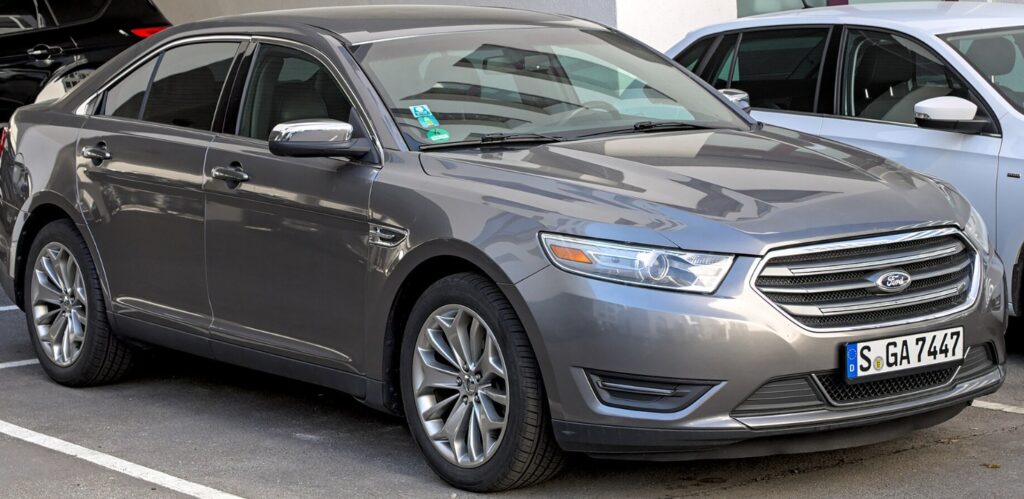
The Ford Taurus weight varies more than many drivers expect. Depending on the model year, body style, engine, drivetrain, and trim, a Taurus can weigh anywhere from roughly 3,100 pounds to more than 4,400 pounds.
That is a broad range. In automotive terms, it is the difference between a relatively ordinary midsize sedan and a substantial full-size car carrying all-wheel drive, turbochargers, luxury equipment, and enough sound insulation to make the outside world feel far away.
So, how much does a Ford Taurus weigh?
For the final United States model year, the 2019 Ford Taurus had a curb weight of approximately 3,917 pounds in its standard front-wheel-drive configuration. The performance-focused, all-wheel-drive 2019 Taurus SHO weighed about 4,327 pounds.
However, those figures do not tell the whole story. The Taurus changed dramatically during its long life. Early models were lighter, simpler family cars. Later versions became wider, taller, safer, quieter, and considerably heavier.
In this guide, we will break down Ford Taurus weight by generation, explain what curb weight really means, compare major trims, and explore how weight affects fuel economy, acceleration, handling, braking, tires, towing, and everyday ownership.
Content in this publication
- How Much Does a Ford Taurus Weigh?
- What Does Ford Taurus Curb Weight Mean?
- Ford Taurus Weight by Generation
- First-Generation Ford Taurus Weight: 1986–1991
- Second-Generation Ford Taurus Weight: 1992–1995
- Third-Generation Ford Taurus Weight: 1996–1999
- Fourth-Generation Ford Taurus Weight: 2000–2007
- Fifth-Generation Ford Taurus Weight: 2008–2009
- Sixth-Generation Ford Taurus Weight: 2010–2019
- Ford Taurus SHO Weight
- Why Did the Ford Taurus Become So Heavy?
- How Ford Taurus Weight Affects Performance
- How Weight Affects Ford Taurus Fuel Economy
- Ford Taurus Payload Capacity and Passenger Weight
- Can a Ford Taurus Tow a Trailer?
- How to Find the Exact Weight of Your Ford Taurus
- Ford Taurus Weight Compared With Other Sedans
- Does Ford Taurus Weight Affect Tire Choice?
- Does Extra Weight Wear Out Taurus Parts Faster?
- Can You Reduce Ford Taurus Weight?
- What Is the Lightest Ford Taurus?
- What Is the Heaviest Ford Taurus?
- Is Ford Taurus Weight a Problem?
- Buying a Used Taurus: Why Weight Should Matter
- Final Thoughts on Ford Taurus Weight
- Frequently Asked Questions
How Much Does a Ford Taurus Weigh?
Most Ford Taurus models weigh between approximately:
- 3,100 and 3,500 pounds for many early front-wheel-drive models
- 3,300 and 3,800 pounds for middle-generation sedans and wagons
- 3,900 and 4,200 pounds for later standard models
- 4,300 and 4,450 pounds for many modern Taurus SHO versions
The exact number depends on how the vehicle was configured when it left the factory.
A front-wheel-drive Taurus with a naturally aspirated engine will normally be lighter than an all-wheel-drive version equipped with a twin-turbocharged engine, larger wheels, upgraded brakes, and additional comfort technology.
That sounds obvious, yet online weight figures often create confusion because different sources may list different trims without making the distinction clear. One website may show the lightest base model, while another publishes the weight of an all-wheel-drive Limited or SHO.
Both numbers can be correct.
Quick Ford Taurus Weight Overview
| Ford Taurus version | Approximate curb weight |
|---|---|
| Early Taurus sedan | 3,100–3,400 lb |
| Early Taurus wagon | 3,300–3,600 lb |
| Third-generation Taurus | 3,300–3,600 lb |
| Fourth-generation Taurus | 3,300–3,700 lb |
| Fifth-generation Taurus | 3,600–3,900 lb |
| Sixth-generation FWD Taurus | 3,900–4,000 lb |
| Sixth-generation AWD Taurus | 4,100–4,250 lb |
| Taurus SHO | 4,300–4,450 lb |
These are useful general ranges rather than universal specifications. Equipment, transmission, production year, and drivetrain can move the final number in either direction.
What Does Ford Taurus Curb Weight Mean?
Curb weight is the weight of the car in normal operating condition with its standard equipment and required fluids. It generally includes engine oil, coolant, transmission fluid, brake fluid, and a tank of fuel according to the manufacturer’s measuring procedure.
It does not normally include:
- Passengers
- Luggage
- Aftermarket accessories
- Cargo inside the trunk
- A trailer
- Tools or equipment added by the owner
Think of curb weight as the Taurus standing on a scale before everyone climbs aboard.
If a Ford Taurus has a curb weight of 3,917 pounds, that does not mean it will weigh 3,917 pounds while carrying five adults, luggage, and a full trunk. Its real operating weight could easily rise above 4,700 pounds under those conditions.
Curb Weight Versus Gross Vehicle Weight
Curb weight and gross vehicle weight are not interchangeable.
Curb weight describes the empty, road-ready vehicle.
Gross vehicle weight, sometimes called actual vehicle weight, describes the car plus its occupants, cargo, accessories, and anything else it is carrying.
The Gross Vehicle Weight Rating, or GVWR, is the maximum allowable loaded weight established by the manufacturer. Drivers should never treat the difference between curb weight and GVWR as unused space that can be filled without thought. Passenger weight, cargo, and accessories all consume the available payload capacity.
Why the Door-Jamb Label Matters
The most reliable place to check the limits for a specific Taurus is the certification label inside the driver’s door or door frame.
That label may show:
- GVWR
- Front Gross Axle Weight Rating
- Rear Gross Axle Weight Rating
- Original tire size
- Recommended tire pressure
- Manufacturing information
Unlike a generalized online specification, the label belongs to the actual vehicle sitting in front of us.
Ford Taurus Weight by Generation
The Taurus name covers several distinctly different vehicles. Comparing a first-generation model with a sixth-generation SHO is almost like comparing two relatives who share a surname but grew up in different worlds.
The earliest Taurus was designed as an aerodynamic, front-wheel-drive family sedan. The final American version was a large, technology-packed car built on a platform shared with substantial crossover-based vehicles.
Naturally, the scale noticed.
First-Generation Ford Taurus Weight: 1986–1991
The first Taurus helped reshape the American family-car market. Its rounded body looked dramatically different from the squared-off sedans surrounding it during the 1980s.
Most standard first-generation sedans weighed approximately 3,100 to 3,300 pounds, although engine choice, trim, transmission, and equipment affected the number. Wagons generally weighed more because of their longer roof structure, larger cargo area, rear glass, and additional body reinforcement.
For its time, the first Taurus was not a featherweight. Still, it was considerably lighter than the final generation.
Its lower mass contributed to a relatively agile personality. The steering and suspension did not have to manage more than two tons of automobile, as they would in some later high-specification versions.
First-Generation Taurus SHO Weight
The original Taurus SHO arrived as the sensible sedan with a secret under its hood. It combined family-car practicality with a Yamaha-developed high-revving V6 and a manual transmission.
A tested 1989 Ford Taurus SHO had a curb weight of 3,380 pounds.
That figure is especially interesting when compared with the final SHO. A 2019 SHO weighed roughly 947 pounds more. In other words, the weight increase was close to carrying an additional small grand piano everywhere the car went.
The original SHO’s lighter construction helped it feel energetic and responsive even though its 220-horsepower output appears modest beside modern performance numbers.
Second-Generation Ford Taurus Weight: 1992–1995
The second-generation Taurus retained much of the original platform and basic engineering philosophy but introduced updated styling, improved equipment, and greater refinement.
Typical sedan curb weights remained in the low-to-mid 3,000-pound range, with many versions weighing approximately 3,200 to 3,500 pounds. Wagons usually sat toward the heavier end of the range.
This generation illustrates an important pattern: cars often become heavier as manufacturers add features without completely redesigning the underlying structure.
Additional sound insulation, safety equipment, power accessories, stronger seats, upgraded air conditioning, and larger engines may each add only a modest amount. Together, however, they accumulate like coins in a jar.
Why the Taurus Wagon Weighed More
The wagon required more material behind the rear seats. Its design included:
- An extended roof
- A larger rear opening
- Additional glass
- A heavier liftgate
- More interior trim
- Reinforcement around the cargo area
- Folding or optional rear-facing seating hardware
The wagon’s extra weight was not wasted. It purchased significantly more utility, making the Taurus wagon a practical alternative to the minivans and early sport utility vehicles of its era.
Third-Generation Ford Taurus Weight: 1996–1999
The oval-themed third-generation Taurus was one of the most recognizable vehicles of the 1990s. Its exterior styling, dashboard, windows, and interior controls seemed to have been drawn with a compass.
Weight generally remained around 3,300 to 3,600 pounds, depending on trim and body style.
Although the car’s appearance changed dramatically, it did not experience the huge increase in mass seen when the Taurus later moved into the full-size category.
The sedan remained a mainstream front-wheel-drive family car. Most versions used V6 engines and automatic transmissions, while the SHO received a distinctive V8.
Third-Generation Taurus SHO Weight
The 1996–1999 Taurus SHO used a 3.4-liter V8 and an automatic transmission. It was generally heavier than ordinary versions because of its engine, performance equipment, larger wheels, and additional features.
Nevertheless, it remained noticeably lighter than the turbocharged, all-wheel-drive SHO sold during the 2010s.
The contrast reveals a fundamental change in performance-car philosophy. Earlier fast sedans often relied on moderate weight and eager engines. Later ones increasingly used turbocharging, all-wheel drive, complex electronics, stronger structures, and larger brakes to overcome additional mass.
Fourth-Generation Ford Taurus Weight: 2000–2007
The fourth-generation Taurus softened the controversial styling of its predecessor while continuing as a practical front-wheel-drive sedan or wagon.
Most models weighed approximately 3,300 to 3,700 pounds. Wagons, highly equipped trims, and vehicles with heavier powertrain combinations tended to sit near the upper end.
By this point, the Taurus faced growing competition not only from sedans but also from SUVs and crossovers. Buyers expected more comfort, stronger crash protection, quieter cabins, and additional convenience equipment.
All of those expectations carried weight—literally.
Did the 2000s Taurus Feel Heavy?
Compared with the final Taurus, not especially. The fourth-generation model still behaved like a conventional midsize sedan.
It was designed more for predictable comfort than sharp cornering, so its suspension could make the car feel soft or relaxed. That sensation should not automatically be confused with excessive mass.
A softly tuned 3,400-pound car can feel less athletic than a tightly controlled 4,000-pound car. Perceived heaviness depends on steering response, body control, gearing, throttle calibration, tire design, and braking performance as well as the number shown on a scale.
Fifth-Generation Ford Taurus Weight: 2008–2009
When Ford revived the Taurus name for 2008, it applied it to the vehicle previously sold as the Ford Five Hundred. This was not merely another update of the older midsize Taurus. It was a taller, roomier, more substantial sedan.
Fifth-generation Taurus models generally weighed around 3,600 to 3,900 pounds, with all-wheel drive adding weight over front-wheel drive.
The car’s proportions explain part of the increase. It offered a tall roof, a generous passenger compartment, a large trunk, and a commanding seating position that felt almost crossover-like.
How Much Weight Does All-Wheel Drive Add?
There is no universal figure for every Taurus, but all-wheel drive can add roughly 150 to 250 pounds, depending on the year and configuration.
The extra mass comes from components such as:
- A power takeoff unit
- A driveshaft
- A rear differential
- Rear axle hardware
- Additional half-shafts
- Mounting brackets
- Protective shields
- Supporting structure
All-wheel drive improves traction, particularly when accelerating on wet, icy, or snowy roads. The tradeoff is more mechanical complexity, slightly higher fuel consumption, and additional weight.
Sixth-Generation Ford Taurus Weight: 2010–2019
The sixth-generation Taurus was the largest and heaviest American Taurus. It looked sleek from a distance, but there was no hiding its physical presence once we stood beside it.
Most front-wheel-drive versions weighed roughly 3,900 to 4,000 pounds, while many all-wheel-drive versions exceeded 4,100 pounds. The SHO could rise beyond 4,300 pounds, depending on model year and equipment.
The 2019 standard Taurus is commonly listed at 3,917 pounds, while the 2019 SHO is listed at 4,327 pounds.
That makes the SHO approximately 410 pounds heavier than the standard front-wheel-drive version.
2019 Ford Taurus Weight by Trim
Approximate published curb weights for the final model year include:
| 2019 Ford Taurus trim or configuration | Approximate curb weight |
| SE front-wheel drive | 3,917 lb |
| SEL front-wheel drive | Around 3,917 lb |
| Limited front-wheel drive | Around 3,917 lb |
| All-wheel-drive non-SHO models | Roughly 4,100–4,200 lb |
| SHO all-wheel drive | 4,327 lb |
Published databases do not always separate every drivetrain and option combination in the same way. Some sources list a general trim weight, while others show the weight associated with a specific drivetrain configuration. For that reason, a vehicle identification number, door label, build sheet, or owner’s manual data should be used when an exact figure is essential.
Why Some 2019 Taurus Weight Figures Differ
One source may list the base front-wheel-drive Taurus at 3,917 pounds, while another may display a figure above 4,100 pounds. The difference may result from:
- Front-wheel drive versus all-wheel drive
- Standard model versus SHO
- Base trim versus heavily equipped trim
- Different data-entry conventions
- Optional equipment
- Market-specific specifications
- Confusion between curb weight and another rating
The safest approach is to match the figure to the exact trim, engine, and drivetrain rather than accepting the first number that appears in a search result.
Ford Taurus SHO Weight
The Taurus SHO was almost always heavier than the ordinary Taurus sold beside it.
Why? Performance equipment is not weightless.
A later SHO carried:
- A twin-turbocharged 3.5-liter V6
- All-wheel drive
- A stronger cooling system
- Larger wheels and tires
- Upgraded brakes
- Additional powertrain hardware
- Performance-oriented suspension components
- A high level of standard cabin equipment
The 2015 SHO was listed at 4,455 pounds, while 2017 and 2018 examples were listed at approximately 4,343 pounds. The 2019 SHO was listed at about 4,327 pounds.
Minor changes in equipment, specification methods, and model-year configuration can explain some variation.
Was the Taurus SHO Too Heavy?
That depends on what we expect from it.
The SHO was not a lightweight sports sedan designed to dance through tight corners like a compact rear-wheel-drive coupe. It was a large, discreet, all-weather performance sedan.
Its turbocharged engine produced the power needed to move the mass convincingly, while all-wheel drive helped put that power onto the road. The result was closer to an express train than a go-kart: fast, stable, substantial, and confident, but never truly delicate.
Drivers who value straight-line acceleration, highway stability, cabin space, and poor-weather traction may appreciate that character. Those looking for feather-light steering feedback and playful rotation may find the car’s mass difficult to ignore.
Why Did the Ford Taurus Become So Heavy?
The Taurus gained weight for several reasons, and not all of them were negative.
Modern vehicles must satisfy expectations that were far less demanding in the 1980s. Buyers want strong crash protection, quiet cabins, advanced climate systems, power-adjustable seats, large infotainment displays, numerous airbags, and structures capable of controlling noise and vibration.
Larger Body Structure
The final Taurus was simply a large automobile. It measured more than 202 inches long and had a wheelbase of approximately 113 inches.
More length and width generally require more steel, larger body panels, longer wiring harnesses, heavier glass, and stronger structural members.
Improved Crash Protection
Safety engineering added reinforced pillars, side-impact protection, stronger roof structures, crumple zones, airbags, sensors, and electronic control systems.
We would rarely choose to remove these protections merely to save a few pounds. Vehicle weight is a tradeoff, and some of that weight buys a safer passenger compartment.
More Comfort Equipment
Heated and ventilated seats, power-adjustable controls, premium audio systems, dual-zone climate control, sound insulation, panoramic roof hardware, and electronic modules all add mass.
One feature may not change the scale dramatically. A fully loaded vehicle, however, can carry dozens of small additions.
All-Wheel Drive
As mentioned earlier, the all-wheel-drive system introduces an entire second path for engine torque to reach the road.
That path requires metal—plenty of it.
Larger Wheels, Tires, and Brakes
Large wheels often weigh more than smaller ones, especially when paired with wide tires. Performance versions also need larger brake rotors and calipers to manage greater speed and mass.
This is particularly important because wheel, tire, and brake weight is partly unsprung and rotating mass. It can influence ride quality, acceleration, and suspension response more noticeably than the same amount of weight carried quietly inside the cabin.
How Ford Taurus Weight Affects Performance
Weight influences almost everything a car does.
An engine must accelerate the vehicle’s mass. The brakes must slow it. The tires must change its direction. The suspension must control its movement. The fuel system must feed the energy required to keep it rolling.
Acceleration
A heavier car generally requires more power to achieve the same acceleration as a lighter car.
That is why the Taurus SHO needed a 365-horsepower twin-turbocharged engine. Its power compensated for its size and helped deliver strong acceleration despite a curb weight above 4,300 pounds.
The standard Taurus had less power and could feel more relaxed, particularly when carrying passengers or climbing steep roads.
Braking
More mass creates more kinetic energy at a given speed. The brakes must convert that energy into heat whenever the driver slows down.
A heavily loaded Taurus may therefore:
- Require a longer stopping distance
- Generate more brake heat
- Wear pads and rotors faster
- Feel less responsive during repeated hard stops
Healthy tires, quality brake components, and properly maintained fluid become especially important on a large sedan.
Handling
Weight itself does not automatically produce poor handling. Weight distribution, suspension tuning, center of gravity, tire grip, and chassis rigidity also matter.
However, greater mass increases the forces involved when the vehicle changes direction. During a quick maneuver, a heavy Taurus may lean more, place greater loads on its outside tires, and resist rapid transitions.
The final SHO used firmer suspension tuning and performance-oriented equipment to keep its size under control. Even so, physics never completely leaves the room.
Ride Comfort
Weight can help a vehicle feel planted and calm on the highway. A substantial sedan often absorbs small road disturbances with less nervous movement than a very light car.
The Taurus could feel stable in crosswinds and composed over long distances. Its mass gave it the sensation of pressing into the road rather than skipping across it.
That quality made the later Taurus a comfortable long-distance cruiser.
How Weight Affects Ford Taurus Fuel Economy
A heavier vehicle generally needs more energy to accelerate and climb hills. Every stoplight asks the engine to set thousands of pounds in motion again.
Weight is not the only influence on fuel economy. Aerodynamics, engine technology, transmission gearing, tires, driving speed, temperature, and maintenance also play major roles.
Still, carrying unnecessary cargo does not help.
To reduce avoidable weight, we should remove items that have turned the trunk into permanent storage, such as:
- Unused tools
- Boxes of old equipment
- Heavy sports gear
- Unnecessary automotive parts
- Large containers of fluid
- Cargo racks that are no longer needed
Removing 20 pounds will not transform a Taurus into an economy car. Clearing 150 pounds of forgotten cargo, however, is comparable to asking one passenger to step out before every journey.
Ford Taurus Payload Capacity and Passenger Weight
Payload is the combined weight of passengers, cargo, and certain added accessories that the vehicle can safely carry.
Suppose a Taurus offers approximately 900 pounds of available payload. Five adults weighing 180 pounds each would use the entire allowance before luggage entered the trunk.
That example shows why passenger capacity does not mean we can fill every seat with any combination of people and cargo without considering the vehicle’s ratings.
What Counts Toward Payload?
Payload may include:
- Driver
- Passengers
- Luggage
- Child seats
- Mobility equipment
- Tools
- Items in the trunk
- Aftermarket audio equipment
- Roof-mounted cargo
- Trailer tongue weight, where applicable
The exact payload of a particular Taurus should be verified using its labels and documentation.
Can a Ford Taurus Tow a Trailer?
Some later Taurus specifications list a maximum towing capacity of up to 1,000 pounds, depending on the model and configuration. For example, published specifications for the 2018 SHO include a 1,000-pound maximum towing figure.
That does not turn the Taurus into a tow vehicle.
A 1,000-pound limit may be enough for a very small utility trailer or other lightweight load, but owners must consider:
- Trailer weight
- Cargo inside the trailer
- Tongue weight
- Passenger and trunk weight
- Hitch rating
- Local laws
- Cooling-system condition
- Brake condition
- Manufacturer guidance
Never estimate trailer weight by appearance. A compact trailer loaded with dense materials can become surprisingly heavy.
How to Find the Exact Weight of Your Ford Taurus
General charts are helpful, but sometimes we need the weight of one specific vehicle.
There are several ways to find it.
Check the Owner’s Manual
The manual may provide weight definitions, towing information, load limits, and instructions for reading the certification label.
Read the Driver’s Door Label
The door label is essential for GVWR and axle ratings. It may not always display curb weight directly, but it establishes the vehicle’s safe loaded limits.
Use the VIN
A Ford dealer or a reliable VIN-based database may identify:
- Model year
- Trim
- Engine
- Drivetrain
- Factory equipment
- Production specifications
This can narrow the correct weight considerably.
Visit a Certified Vehicle Scale
A public scale provides the most accurate picture of what the Taurus weighs in its current condition.
Before weighing it, decide what measurement you need. A car with a driver, half a tank of fuel, tools, and luggage will not produce its published curb weight. It will show its real operating weight at that moment.
When an Actual Scale Reading Is Useful
A scale reading may help when:
- Planning to tow
- Carrying heavy equipment
- Modifying the suspension
- Preparing a competition vehicle
- Calculating axle loads
- Transporting the car
- Selecting a trailer
- Verifying a shipping quote
Ford Taurus Weight Compared With Other Sedans
The final Taurus was heavier than many mainstream midsize sedans.
A typical midsize family sedan may weigh somewhere in the mid-3,000-pound range, while the sixth-generation Taurus commonly approached or exceeded 4,000 pounds.
That difference reflects the Taurus’s larger dimensions, platform, available all-wheel drive, and high equipment levels.
The final SHO’s weight placed it closer to some crossovers and luxury sedans than to the lighter family cars that competed with early Taurus generations.
Is a Heavy Sedan Safer?
We should not assume that the heaviest car is automatically the safest.
Vehicle safety depends on:
- Crash structure
- Airbag design
- Seat-belt performance
- Electronic stability control
- Braking capability
- Tire condition
- Crash compatibility
- Driver behavior
- Collision type
Mass can offer an advantage in some collisions with smaller vehicles, but it can also increase stopping demands and make emergency maneuvers more challenging.
A well-engineered lighter vehicle may protect its occupants better than a poorly designed heavier one.
Does Ford Taurus Weight Affect Tire Choice?
Yes. Tires must support the vehicle’s weight while handling cornering, braking, heat, and road impacts.
Owners should use tires with the correct:
- Size
- Load index
- Speed rating
- Construction
- Inflation pressure
Installing a tire with insufficient load capacity can create overheating, instability, irregular wear, or failure.
The recommended tire information appears on the placard inside the driver’s door area. We should follow that placard unless a qualified specialist has properly recalculated the requirements for a modified wheel-and-tire package.
Why Correct Tire Pressure Matters More on a Heavy Taurus
Underinflation allows the tire to flex excessively. On a heavy vehicle, that flex generates additional heat and can damage the tire.
Incorrect pressure may also affect:
- Steering response
- Fuel consumption
- Braking
- Tread wear
- Wet-weather grip
- Ride comfort
- Tire-pressure monitoring warnings
Pressure should be checked when the tires are cold, not immediately after a long drive.
Does Extra Weight Wear Out Taurus Parts Faster?
Added weight increases the work performed by several components.
Habitually carrying heavy cargo may accelerate wear on:
- Brake pads
- Brake rotors
- Tires
- Wheel bearings
- Struts and shocks
- Springs
- Suspension bushings
- Transmission components
Normal passenger use should not harm a properly maintained Taurus when the vehicle remains within its ratings. The concern appears when the car is repeatedly overloaded or driven aggressively while heavily loaded.
A trunk full of equipment may seem harmless because the car still moves. Yet the suspension and brakes feel every pound, even when the driver does not.
Can You Reduce Ford Taurus Weight?
Technically, yes, but meaningful weight reduction is difficult without sacrificing comfort, safety, or practicality.
Simple and sensible steps include:
- Removing unnecessary trunk cargo
- Taking off unused roof racks
- Avoiding oversized aftermarket wheels
- Choosing reasonably weighted replacement parts
- Removing temporary equipment after use
More extreme measures—such as removing seats, interior trim, sound insulation, airbags, or safety equipment—are rarely appropriate for a road car.
For most owners, maintenance delivers better results than aggressive weight reduction. Correct tire pressure, clean filters, healthy brakes, proper alignment, and sensible driving can improve efficiency and performance without turning the cabin into an empty metal shell.
What Is the Lightest Ford Taurus?
Some early base sedans were among the lightest Taurus models, with curb weights close to the low 3,000-pound range.
The exact lightest configuration depends on model year, engine, transmission, and equipment. Early cars had fewer airbags, simpler seats, smaller wheels, less insulation, and fewer electronic systems.
They also lacked many of the comfort and safety features we now consider ordinary.
What Is the Heaviest Ford Taurus?
Highly equipped sixth-generation all-wheel-drive models, particularly some SHO versions, rank among the heaviest Taurus variants.
Published figures place certain SHO model years around 4,300 to 4,455 pounds.
Add several adults and luggage, and the car’s actual road weight can pass 5,000 pounds.
That is a remarkable figure for a vehicle carrying the same name as the comparatively lean family sedan introduced in 1986.
Is Ford Taurus Weight a Problem?
Not necessarily.
Weight becomes a disadvantage when we expect the Taurus to behave like a small sports car or deliver compact-car fuel economy. It becomes an advantage when we value highway stability, cabin isolation, passenger space, and a planted ride.
The key is understanding the car’s character.
A late Taurus is not a lightweight athlete. It is more like a broad-shouldered long-distance runner wearing a tailored suit. It can move quickly, especially in SHO form, but its strengths lie in stability, power, comfort, and confidence rather than delicacy.
Buying a Used Taurus: Why Weight Should Matter
When inspecting a used Taurus, its weight can guide us toward the components most likely to need attention.
On a large, heavy sedan, check the condition of:
- Front and rear brakes
- Tires and load ratings
- Struts and shocks
- Control-arm bushings
- Wheel bearings
- Engine and transmission mounts
- All-wheel-drive hardware
- Alignment
- Springs
- Steering components
A test drive should reveal whether the car tracks straight, stops smoothly, controls body movement, and responds consistently.
Heavy cars can hide worn suspension components behind a generally soft ride. Listen for clunks, inspect tire wear carefully, and do not assume floating or bouncing is normal simply because the Taurus is large.
Final Thoughts on Ford Taurus Weight
The Ford Taurus weight tells the story of how American family cars evolved.
Early Taurus models typically weighed a little over 3,000 pounds. They were aerodynamic, practical sedans designed to move families efficiently. Over time, the Taurus gained size, safety equipment, power, all-wheel drive, technology, stronger construction, and a more luxurious personality.
By the final United States model year, a standard 2019 Taurus weighed approximately 3,917 pounds, while the SHO reached about 4,327 pounds. Some earlier modern SHO configurations were listed as high as roughly 4,455 pounds.
That extra mass affected acceleration, braking, fuel economy, tire wear, and handling. It also helped create a quiet, stable, substantial highway sedan.
So, is the Taurus heavy? Later versions certainly are. But weight is only meaningful when we consider what came with it: room, traction, performance, comfort, safety engineering, and the unmistakable feeling of driving a genuinely large car.
The correct Ford Taurus weight ultimately depends on the year, trim, drivetrain, and equipment. For general research, published curb-weight figures provide a useful answer. For towing, shipping, loading, or modification, the vehicle’s own labels, documentation, and an actual scale reading provide the confidence we need.
Frequently Asked Questions
1. How much does a 2019 Ford Taurus weigh?
A standard front-wheel-drive 2019 Ford Taurus has a published curb weight of approximately 3,917 pounds, or about 1,777 kilograms. An all-wheel-drive configuration may weigh more, depending on trim and equipment.
2. How much does a Ford Taurus SHO weigh?
The final 2019 Taurus SHO weighs approximately 4,327 pounds, or around 1,963 kilograms. Other modern SHO model years may range from roughly 4,300 to 4,455 pounds.
3. Why is the Ford Taurus SHO so heavy?
The SHO carries a twin-turbocharged V6, standard all-wheel drive, larger wheels, stronger brakes, cooling hardware, performance equipment, and numerous comfort features. Its large body and reinforced structure also contribute to its weight.
4. Does Ford Taurus weight include passengers?
No. Published curb weight generally describes the road-ready vehicle with standard equipment and necessary fluids but without passengers or luggage. People, cargo, accessories, and trailer tongue weight add to the vehicle’s operating weight.
5. Where can I find my Taurus’s exact weight limit?
Check the certification label inside the driver’s door area for GVWR and axle ratings. The owner’s manual and factory build information can provide additional specifications. For the vehicle’s actual current weight, use a certified public scale.
If you want to know other articles similar to Ford Taurus Weight: Complete Guide by Year and Trim you can visit the category Service and Parts.
Volvo S90 Engine Oil: Type, Capacity & Change Guide
Volvo S90 Boot Space: Size, Capacity and Practicality
SEO Title: Volvo S90 Oil Capacity: Complete Guide by Engine

Kia Sorento Oil Type: Complete Guide by Year & Engine
Kia Sorento Engine Capacity: Complete Guide by Year
Peugeot 308 Clutch Replacement Cost: Complete UK Guide for 2026
Leave a Reply
More content of your interest