
Holden Colorado Fuel Tank Size: Capacity, Range, and Refuelling Guide

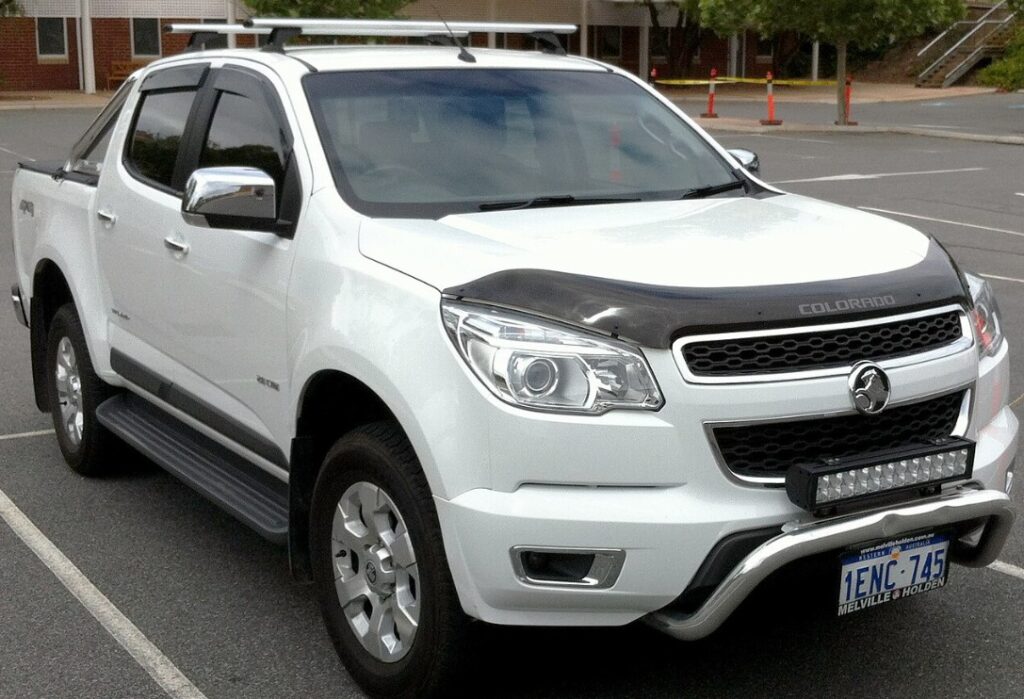
If you are trying to find the Holden Colorado fuel tank size, the short answer is pleasantly simple for the most common later-generation models: the RG Holden Colorado uses a 76-litre fuel tank. That capacity appears across multiple RG variants and model years, including examples from 2012, 2014, 2017, and 2020.
But that number only tells part of the story.
A 76-litre tank does not necessarily mean we can pump exactly 76 litres into the ute every time the fuel warning light appears. Nor does it tell us how far a Colorado can travel before the next servo, how towing affects range, or whether fitting a long-range replacement tank makes sense.
And things become even more interesting when we look at older Colorado generations, different body styles, real-world fuel economy, and aftermarket tanks that can almost double the standard capacity.
So, rather than tossing out one number and calling it a day, we are going to unpack what the Holden Colorado fuel tank capacity actually means in everyday ownership.
Content in this publication
- What Is the Holden Colorado Fuel Tank Size?
- Holden Colorado Fuel Tank Size by Model Year
- How Far Can a Holden Colorado Travel on a Full Tank?
- How to Calculate Holden Colorado Driving Range
- Why Can't We Put 76 Litres Into an Empty-Looking Colorado?
- How Fuel Economy Changes the Value of a 76-Litre Tank
- What Affects Holden Colorado Fuel Range?
- Is a 76-Litre Tank Large Enough for Touring?
- Long-Range Holden Colorado Fuel Tanks
- Holden Colorado Fuel Tank Size for 4x4 Models
- Holden Colorado Diesel Tank Capacity
- How Much Does It Cost to Fill a Holden Colorado?
- How to Get More Distance From Each Tank
- Standard Tank or Long-Range Tank: Which Should We Choose?
- The Most Important Number Isn't Always 76 Litres
- Conclusion: How Big Is a Holden Colorado Fuel Tank?
- Frequently Asked Questions
What Is the Holden Colorado Fuel Tank Size?
For the RG-generation Holden Colorado introduced in 2012, the standard fuel tank capacity is 76 litres.
Published specifications show the same 76-litre figure on several configurations. A 2012 Colorado LTZ 4x4, for example, is listed with a 76L tank, while a 2014 LT specification carries the same capacity. GoAuto also lists a 76L tank for later Colorado configurations, including a 2017 LS Crew Cab Chassis.
By 2020, nothing fundamental had changed in that department. CarsGuide lists the 2020 Holden Colorado LS with a 76.00L fuel tank.
That consistency is convenient for owners because we do not have to navigate dozens of radically different capacities across the RG range.
Holden Colorado RG Fuel Tank Capacity
If your Colorado is from the second-generation RG era, particularly a diesel model from 2012 through the end of Holden Colorado production, 76 litres is the figure to keep in mind.
It was a sensible compromise.
A larger tank adds weight, occupies valuable chassis space, and costs more to fill. A smaller one makes remote touring frustrating. Seventy-six litres lands somewhere in the middle: big enough for respectable touring range without hanging a miniature fuel tanker underneath the ute.
Independent aftermarket manufacturers reinforce the figure. The Long Ranger describes its 143L replacement system for RG Colorados as replacing the vehicle's original 76L tank.
Does Every Holden Colorado Have a 76-Litre Tank?
Not necessarily.
This is where we need to separate the widely sold RG Colorado from earlier models.
The Holden Colorado name arrived in Australia in 2008, replacing the Holden Rodeo, while the second-generation Colorado arrived in 2012. The earlier Colorado and later RG Colorado therefore should not automatically be treated as mechanically identical vehicles simply because they share the badge.
Tank specifications can also vary according to market, body configuration and production period.
So, if we own an early 2008-2011 Colorado, checking the specification for the exact model is wiser than assuming the later RG's 76L figure applies.
For the familiar 2012-onward RG, however, the evidence for the standard 76L capacity is strong across multiple model years and configurations.
Holden Colorado Fuel Tank Size by Model Year
One reassuring feature of the RG Colorado is how stable its fuel capacity remained.
The 2012 LTZ 4x4 specification shows a 76L tank. The 2014 LT is also rated at 76L. A 2015 LTZ 4x4 Space Cab specification lists 76L, while a 2017 LS Crew Cab Chassis again shows 76L. The 2020 LS continues with the same capacity.
In other words, Holden did not play musical chairs with the tank capacity every facelift.
That makes life easier when we are researching replacement tanks, calculating range, planning an outback trip, or simply wondering why a supposedly empty Colorado only accepts 65 litres at the pump.
2012 Holden Colorado Fuel Tank Size
A 2012 Holden Colorado LTZ 4x4 equipped with the 2.8-litre diesel is listed with a 76L fuel tank.
This model represents the beginning of the RG era, so it establishes the pattern that would continue through much of the Colorado's Australian life.
2014-2015 Holden Colorado Fuel Capacity
The 2014 Colorado LT specification again identifies a 76L fuel tank. Meanwhile, GoAuto lists the 2015 LTZ 4x4 Space Cab Pick Up with the same 76-litre capacity.
Different cab configuration? Same fundamental tank capacity in these examples.
2017-2018 Holden Colorado Fuel Tank Size
Following the Colorado's later updates, the tank remained at 76 litres.
GoAuto lists a 2017 LS Crew Cab Chassis with a 76L tank, while a Practical Motoring test of the 2018 Colorado Z71 specifically refers to its 76-litre fuel tank.
2019-2020 Holden Colorado Fuel Tank Size
The pattern continued into the final years.
CarsGuide's specification for the 2020 Colorado LS gives the tank capacity as 76.00 litres, alongside its 2.8-litre diesel engine.
For anyone shopping for a late used Colorado, that gives us a useful baseline for estimating touring range.
How Far Can a Holden Colorado Travel on a Full Tank?
Now we reach the more interesting question.
Tank capacity is merely the size of the bucket. Fuel economy tells us how quickly we empty it.
Suppose we have a Colorado consuming 8.0L/100km. Dividing 76 litres by eight and multiplying by 100 produces a theoretical range of roughly 950 km.
At 9L/100km, the same calculation gives about 844 km.
At 10L/100km, theoretical range falls to around 760 km.
But nobody should interpret those numbers as an invitation to drive until the engine coughs.
Real usable range should include a healthy reserve because consumption can change quickly with traffic, headwinds, towing, terrain, tyre pressures, payload and driving style.
Official Consumption and Theoretical Range
Colorado fuel-consumption figures differ between variants.
For example, CarsGuide lists the 2020 LS at a combined 8.6L/100km, while the 2012 LTZ 4x4 example is listed at 7.9L/100km.
Using the full 76L capacity mathematically, 8.6L/100km corresponds to roughly 884 km, while 7.9L/100km corresponds to around 962 km.
Those are calculations rather than guaranteed driving ranges.
Think of them as a ruler, not a promise.
Why Real-World Range Is Usually Lower
A laboratory-style combined consumption figure cannot know that we are going to strap camping gear to the ute, hitch up a caravan, climb a mountain range and then face a 40 km/h headwind.
Real driving is messy.
A Practical Motoring test of a 2018 Z71 recorded an average of 10.5L/100km and described the 76L tank as providing a touring range exceeding 650 km.
That is exactly why calculating range using our own long-term average consumption is much more useful than relying exclusively on a brochure figure.
How to Calculate Holden Colorado Driving Range
The formula is wonderfully uncomplicated:
Fuel tank capacity ÷ fuel consumption × 100 = theoretical range
Imagine our Colorado averages 9.5L/100km.
We calculate:
76 ÷ 9.5 × 100 = 800 km
That is our mathematical full-tank range.
We would not personally plan a remote journey assuming every one of those 800 kilometres is available. Leaving reserve fuel gives us room for unexpected detours, closed service stations or rising consumption.
A Practical Range Estimate
A useful planning approach is to treat the last part of the tank as reserve rather than normal travelling fuel.
For example, calculating our journey around roughly 65-68 usable litres rather than the entire 76L tank creates a much healthier margin.
At 9L/100km, 66 litres works out to around 733 km.
That feels less glamorous than claiming an 844 km theoretical range, but it is considerably more useful when the next service station is represented by a tiny dot on an outback map.
Why Can't We Put 76 Litres Into an Empty-Looking Colorado?
This confuses plenty of owners.
The dashboard says nearly empty. The low-fuel warning has appeared. We arrive at the bowser expecting to squeeze in 76 litres, but the pump stops somewhere in the 60s.
Has the tank shrunk?
No.
The stated tank capacity represents its nominal total capacity. The fuel warning and gauge are deliberately designed so that "empty" does not necessarily mean every usable drop has disappeared.
Manufacturers do not want the engine running dry every time the needle reaches its lowest point.
There are also differences caused by vehicle angle, fuel movement, filling technique, pump shut-off sensitivity and the remaining fuel already inside the tank.
Fuel Gauge Readings Are Not Laboratory Measurements
A dashboard fuel gauge should be treated as an estimate, particularly as fuel moves around inside a vehicle.
Holden's own Colorado owner resources remain available through its driving and performance support pages, including Colorado owner manuals for various model years.
So rather than obsessing over whether the gauge corresponds to an exact number of litres, we are better off learning how our own Colorado behaves between fills.
Should We Keep Filling After the Pump Clicks?
Generally, we would avoid repeatedly forcing additional fuel in after the nozzle automatically clicks off.
The automatic shut-off exists for a reason, and trying to squeeze every possible millilitre into the filler neck provides little practical benefit.
For touring, the smarter solution is planning our stops properly—or fitting a professionally designed larger-capacity tank if our use genuinely demands one.
How Fuel Economy Changes the Value of a 76-Litre Tank
Two Colorado owners can have the same tank and completely different experiences.
One driver might cover relaxed highway kilometres with an unladen ute. Another could tow a heavy caravan through rolling country.
Same 76 litres.
Very different distance.
Fuel consumption therefore matters almost as much as capacity itself.
City Driving
Stop-start traffic tends to eat through a tank faster than steady cruising.
Repeated acceleration asks more from the engine, and short journeys may prevent the drivetrain from spending long periods at its most efficient operating conditions.
We might consequently see substantially fewer kilometres between fills even though nothing is wrong with the tank.
Highway Driving
This is where the Colorado can stretch its legs.
Steady-speed highway travel generally gives us the best opportunity to approach the vehicle's lower consumption figures, provided we are not fighting strong wind or carrying excessive weight.
A tank that feels merely adequate around town can suddenly seem enormous when the ute is cruising efficiently for hundreds of kilometres.
Towing
Hook a caravan, boat or heavy trailer behind the Colorado and our 76-litre reservoir starts looking smaller.
Aerodynamic drag is often the silent villain.
A big caravan punches a Colorado-sized hole through the air like a brick wall being dragged down the highway. As speed rises, the effort required to overcome that resistance grows substantially.
That means our normal solo range should never be used blindly when calculating towing stops.
Use Towing Consumption, Not Everyday Consumption
If the ute normally returns 9L/100km but consumes 14L/100km while towing, the theoretical full-tank figure changes from about 844 km to roughly 543 km.
That is a dramatic difference.
The tank did not change.
The workload did.
What Affects Holden Colorado Fuel Range?
If we want the longest sensible distance between fuel stops, several variables matter simultaneously:
- Vehicle load: passengers, tools, accessories and cargo increase the work required to move the ute.
- Towing: trailers and caravans can dramatically increase fuel consumption.
- Tyre pressure: underinflated tyres increase rolling resistance.
- Driving speed: higher cruising speeds usually bring greater aerodynamic losses.
- Headwinds: they effectively increase the speed of the air hitting the vehicle.
- Terrain: steep or repeated climbs require additional energy.
- Driving style: hard acceleration and unnecessary braking waste fuel.
- Roof accessories: racks, rooftop tents and bulky equipment can increase aerodynamic drag.
- Four-wheel-drive conditions: sand, mud and low-range driving may consume considerably more fuel than ordinary road travel.
- Maintenance: mechanical problems, poor wheel alignment or neglected servicing can hurt efficiency.
We do not need to drive like there is an egg under the accelerator pedal, but smooth inputs make a surprising difference.
Is a 76-Litre Tank Large Enough for Touring?
For ordinary driving, absolutely.
For remote Australian touring? That depends entirely on the route.
A 76L tank can provide hundreds of kilometres of useful range, and for populated coastal and regional routes that is normally straightforward to manage.
Head inland, however, and fuel planning becomes much more important.
The distance between reliable fuel stops can be large, and a closed station can transform an otherwise comfortable margin into a problem.
When the Standard Tank Makes Sense
We would keep the standard tank when the vehicle mainly handles commuting, regional travel, weekend camping or routes with reliable fuel availability.
It is already fitted, costs nothing extra, and does not add the weight associated with carrying substantially more diesel.
Why haul around another 60 litres every day if our longest regular journey is between supermarkets and suburban service stations?
When a Long-Range Tank Starts Looking Attractive
Remote touring changes the equation.
If we regularly travel far from dependable fuel supplies, a long-range replacement tank can remove the need for frequent detours or multiple external jerry cans.
That convenience is one reason the Colorado attracts a healthy aftermarket of larger tanks.
Long-Range Holden Colorado Fuel Tanks
The standard 76L capacity is by no means the limit.
The Long Ranger offers a 143-litre replacement tank for compatible 2012-onward diesel Colorados and explicitly states that it replaces the original 76L tank.
Brown Davis also lists a 133-litre replacement long-range tank for the RG Colorado.
That is not a minor upgrade. It fundamentally changes the ute's touring personality.
76L vs 133L vs 143L
At a hypothetical 10L/100km consumption rate, a 76L tank mathematically represents 760 km of fuel, a 133L tank represents 1,330 km, and a 143L tank represents 1,430 km.
Again, those are theoretical full-capacity calculations—not recommended distances between refuelling stops.
Still, the difference is enormous.
A standard tank asks, "Where is the next servo?"
A long-range tank often allows us to ask, "Which servo do we actually want to use?"
More capacity sounds universally better until we remember that diesel has weight.
Adding dozens of extra litres increases vehicle mass. That matters when we are already carrying passengers, camping equipment, drawers, bull bars, recovery gear and tow-ball load.
A long-range tank therefore needs to be considered as part of the vehicle's total load planning rather than as a free range upgrade.
Distance-to-Empty May Be Affected
There can also be electronic quirks.
For example, The Long Ranger notes that with its 143L replacement tank, the vehicle's distance-to-empty function will no longer function with the larger tank.
That detail is easy to overlook when we are dazzled by the huge capacity figure.
Anyone considering an aftermarket tank should therefore investigate gauge compatibility, installation, legal requirements, payload impact and model fitment before buying.
Holden Colorado Fuel Tank Size for 4x4 Models
Many owners searching this question specifically have a Colorado 4x4.
The good news is that familiar RG 4WD examples also use the 76L standard capacity.
The 2012 LTZ 4x4 is documented at 76L, as is the 2015 LTZ 4x4 Space Cab Pick Up.
That gives the Colorado reasonable touring flexibility straight from the factory, although serious off-road adventurers may still prefer extra capacity.
Does Using 4WD Reduce Tank Range?
Selecting four-wheel drive does not physically reduce the tank's size, of course, but the conditions in which we need 4WD often increase fuel consumption.
Soft sand is a perfect example.
The vehicle must constantly overcome far greater rolling resistance than it does on sealed bitumen. Mud, steep terrain and low-range crawling can have similar effects.
So a Colorado that comfortably travels a long distance on sealed highway may cover dramatically fewer kilometres per tank in difficult off-road country.
Holden Colorado Diesel Tank Capacity
Later Australian RG Colorados are strongly associated with the 2.8-litre turbo-diesel engine, and published examples across the generation repeatedly show the 76L tank capacity.
For owners, the practical lesson is simple: capacity remains constant, but diesel consumption determines how useful those litres become.
Does the Colorado Need a Full Tank All the Time?
No.
There is little reason we must fill to the brim after every short journey.
That said, allowing a diesel ute to spend its entire life scraping around near empty is not a habit we would encourage, particularly when heading outside urban areas.
Keeping a comfortable fuel margin costs no more in the long run; it simply means purchasing the fuel slightly earlier.
How Much Does It Cost to Fill a Holden Colorado?
This depends entirely on the diesel price where and when we fill.
Rather than using a price that could quickly become outdated, the calculation is:
76 × diesel price per litre = theoretical cost from completely empty
If diesel costs $2.00 per litre, for example, 76 litres would cost $152.
If the vehicle already has 10 litres remaining, naturally we would only need approximately 66 litres to return it to nominal capacity.
This explains why multiplying the full tank capacity by the bowser price often produces a figure higher than our normal receipt.
How to Get More Distance From Each Tank
There is no secret switch hiding underneath the dashboard.
Most range improvements come from boring little habits—and boring habits can be wonderfully effective.
Smooth acceleration, appropriate tyre pressures, sensible cruising speeds, unnecessary weight removal and keeping the ute properly serviced all help us use the fuel we already carry more effectively.
The beautiful part is that improved economy effectively makes the tank "larger" without touching it.
Moving from 10L/100km to 9L/100km changes theoretical 76L range from 760 km to roughly 844 km.
That is about 84 extra theoretical kilometres produced simply by consuming fuel more efficiently.
Standard Tank or Long-Range Tank: Which Should We Choose?
This comes down to how we actually use the Colorado rather than how adventurous we imagine ourselves being.
For commuting, recreational towing and ordinary regional travel, the factory 76L fuel tank is a sensible capacity.
For repeated remote touring, especially where service stations are separated by large distances or availability is uncertain, an aftermarket replacement tank can make the vehicle far more practical.
The important word is repeated.
Installing a massive long-range tank for one camping trip may be difficult to justify. For someone travelling remote Australia every season, the equation looks completely different.
The Most Important Number Isn't Always 76 Litres
Yes, the Holden Colorado fuel tank size matters.
But after living with the ute, three other numbers become equally useful: our normal fuel consumption, our towing consumption and the distance we comfortably travel before refuelling.
Those are the figures that keep us moving.
A driver who knows the tank is 76L but has no idea whether the ute consumes 8L or 14L per 100 km has only half the information required for serious trip planning.
A driver who understands both capacity and real-world consumption can predict range with far greater confidence.
Conclusion: How Big Is a Holden Colorado Fuel Tank?
For the widely sold RG-generation Holden Colorado, the standard fuel tank capacity is 76 litres, a specification documented across several model years and variants from the beginning of the RG generation through 2020.
That 76L capacity gives the Colorado useful everyday and highway range, but the kilometres we actually achieve depend heavily on fuel consumption.
Towing, heavy loads, off-road driving, speed, weather and terrain can pull range downward quickly. Conversely, steady highway driving and efficient vehicle operation can stretch each fill considerably further.
For normal use, 76 litres is plenty practical. For remote touring, aftermarket options can dramatically expand capacity. Examples include 133L and 143L replacement tanks, although their extra weight, compatibility and potential effects on vehicle functions should be considered before installation.
So the next time we glance at the Colorado's fuel gauge, we should remember: 76 litres tells us how much fuel the standard RG tank holds; how far those litres take us is ultimately determined by how and where we drive.
Frequently Asked Questions
1. What is the Holden Colorado fuel tank size?
The standard fuel tank capacity for the RG-generation Holden Colorado is 76 litres. Published specifications confirm that figure across several variants and years, including 2012 and 2020 models.
2. How far can a Holden Colorado travel on a full tank?
It depends on fuel economy. At 8L/100km, a 76L tank mathematically provides around 950 km of theoretical range. At 10L/100km, it falls to around 760 km. Actual usable range should be lower because we need to allow for reserve fuel and changing driving conditions.
3. Does a Holden Colorado 4x4 have a 76-litre fuel tank?
RG 4x4 examples do. Published specifications for the 2012 LTZ 4x4 and 2015 LTZ 4x4 Space Cab both list a 76L tank.
4. Can we install a bigger fuel tank in a Holden Colorado?
Yes. Aftermarket replacement tanks are available for compatible vehicles. Brown Davis lists a 133L RG Colorado replacement tank, while The Long Ranger offers a 143L replacement for compatible diesel models. Fitment and vehicle-system compatibility should be checked before installation.
5. Why won't my Holden Colorado take 76 litres when the gauge says empty?
The fuel gauge reaching empty or the warning light appearing does not necessarily mean the tank contains zero fuel. Some fuel normally remains, while vehicle angle, pump shut-off and filling conditions can also affect how much fuel goes in. Therefore, a Colorado with a nominal 76L tank will not ordinarily require the full 76 litres at every refill.
If you want to know other articles similar to Holden Colorado Fuel Tank Size: Capacity, Range, and Refuelling Guide you can visit the category Service and Parts.
Nissan Qashqai Fuel Tank Capacity: Complete Guide

Suzuki Swift Fuel Tank Capacity: Complete Guide
Mazda CX-5 Weight (2013–2026): Complete Guide in Pounds and KG
Kia Sportage Dashboard Symbols and Warning Lights

MINI Cooper Weight (2002–2027): Complete Weight Chart & Guide
Toyota RAV4 Engine Sizes: Complete Guide (1994–2026)
Leave a Reply
More content of your interest