
Holden Colorado Tyre Pressure: PSI, kPa and Practical Guide

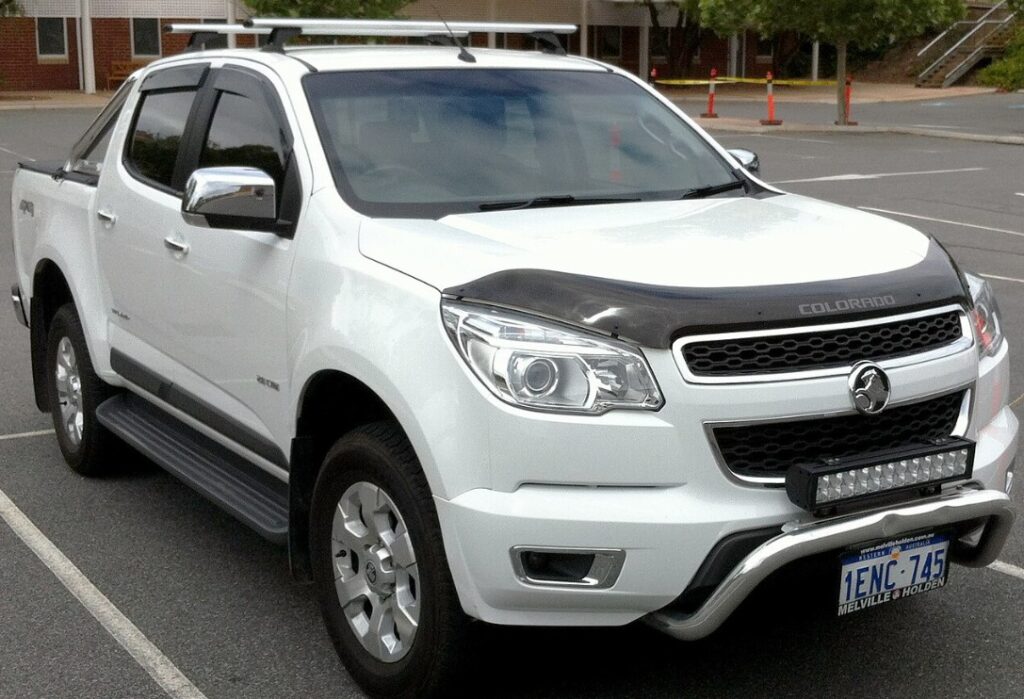
Getting the Holden Colorado tyre pressure right sounds like a tiny maintenance job, yet it affects almost everything we notice from behind the wheel: steering feel, braking, fuel consumption, tyre wear, ride comfort, and even how confidently the ute behaves with a tray full of gear.
So, what pressure should we actually run?
For many RG-generation Holden Colorado models, 35 PSI (240 kPa) front and rear when cold is a common normal-load recommendation. In Holden's official MY17 Colorado owner's manual, this figure applies to the listed 16-, 17-, and 18-inch factory tyre combinations with up to three occupants. Under maximum load, Holden specifies 38 PSI (260 kPa) at the front and 44 PSI (300 kPa) at the rear, while the spare is listed at 44 PSI (300 kPa).
But here's the important part: we should never assume that one number applies to every Colorado ever built. Different years, body styles, tyres, aftermarket wheels, loads, and market specifications can change the correct figure. The tyre placard on the driver's door frame is the final reference for the individual vehicle. Holden itself directs owners to that placard for the correct pressure.
Let's unpack all of this without turning tyre pressure into rocket science.
Content in this publication
- What Is the Recommended Holden Colorado Tyre Pressure?
- Why the Door Placard Matters More Than a Generic PSI Number
- Holden Colorado Tyre Pressure by Tyre Size
- What Does “Cold Tyre Pressure” Mean?
- How Often Should We Check Holden Colorado Tyre Pressure?
- Why Correct Holden Colorado Tyre Pressure Matters
- Holden Colorado Tyre Pressure When Carrying a Heavy Load
- Holden Colorado Tyre Pressure for Towing
- What About Off-Road Tyre Pressure?
- Should All Four Colorado Tyres Have the Same Pressure?
- What Pressure Should the Holden Colorado Spare Tyre Have?
- Holden Colorado TPMS and Tyre Pressure Warning Light
- PSI vs kPa: Understanding Holden Colorado Pressure Units
- Can Weather Change Holden Colorado Tyre Pressure?
- Can Aftermarket Tyres Change the Correct Pressure?
- How to Tell If Our Current Tyre Pressure Is Wrong
- Is 35 PSI a Good Holden Colorado Tyre Pressure?
- Common Holden Colorado Tyre Pressure Mistakes
- A Simple Holden Colorado Tyre Pressure Routine
- Final Thoughts: Getting Holden Colorado Tyre Pressure Right
- Frequently Asked Questions
What Is the Recommended Holden Colorado Tyre Pressure?
For an MY17 Holden Colorado running the factory-listed tyre sizes, Holden specifies the following cold pressures:
| Driving condition | Front | Rear |
|---|---|---|
| Up to 3 people — Light | 35 PSI / 240 kPa | 35 PSI / 240 kPa |
| Up to 3 people — ECO | 35 PSI / 240 kPa | 35 PSI / 240 kPa |
| Full load — Max | 38 PSI / 260 kPa | 44 PSI / 300 kPa |
| Spare tyre | — | 44 PSI / 300 kPa |
These specifications appear in Holden's official MY17 Colorado owner's manual for 245/70R16, 255/65R17, and 265/60R18 tyres.
That gives us a useful baseline. If we're simply commuting, carrying a couple of passengers, and running standard wheels and tyres, 35 PSI cold is a sensible figure for the MY17 configuration.
Load the ute heavily, however, and the story changes. The rear tyres have much more work to do, which explains the substantial jump to 44 PSI under Holden's maximum-load recommendation.
Why the Door Placard Matters More Than a Generic PSI Number
Search online for Holden Colorado tyre pressure and we'll find plenty of answers. Some say 32 PSI. Some say 35. Others recommend 38, 40, or even considerably more.
Who is right?
Possibly several of them—depending on the vehicle.
Holden states that the correct tyre pressures are shown on the tyre placard located in the driver's door frame, as well as in the applicable tyre-pressure table.
That's why the placard beats a generic internet recommendation. It was developed for the vehicle's original tyre size, axle loads, handling requirements, and intended operating conditions.
Think of 35 PSI as a useful reference rather than a magic number stamped into every Colorado ever made.
Where Is the Holden Colorado Tyre Pressure Placard?
Open the driver's door and look around the door frame or pillar area. Holden illustrates the placard in this location in the Colorado owner's manual.
The label typically tells us the original tyre specification and recommended pressures for different loading conditions.
If we've changed from factory wheels to larger aftermarket wheels or fitted different-load-rated tyres, the original placard remains valuable, but professional tyre advice may also be necessary because the new tyre construction can behave differently.
Holden Colorado Tyre Pressure by Tyre Size
One particularly useful detail from Holden's MY17 manual is that the three factory tyre combinations listed there all share the same recommended inflation figures.
245/70R16 Tyre Pressure
For 245/70R16 XL 111S tyres on 16 × 6.5J wheels, Holden lists 35 PSI front and rear for light or ECO use.
At full load, the recommendation rises to 38 PSI front and 44 PSI rear.
This tyre size is common on work-focused Colorado variants, where payload carrying may be part of everyday life. That's exactly why remembering the loaded rear pressure matters.
255/65R17 Tyre Pressure
For 255/65R17 SL 110S tyres on 17 × 7.0J wheels, Holden again specifies 35 PSI front and rear with up to three people.
The full-load recommendation is 38 PSI front and 44 PSI rear.
265/60R18 Tyre Pressure
For 265/60R18 SL 110T tyres on 18 × 7.5J wheels, the official MY17 table follows the same pattern: 35 PSI front and rear under normal conditions and 38/44 PSI front/rear at maximum load.
So, interestingly, jumping from the 16-inch factory setup to Holden's listed 18-inch configuration doesn't automatically mean pumping the tyres harder.
Does Bigger Wheel Size Always Mean Higher Pressure?
No.
This is a common misconception. Wheel diameter alone doesn't determine tyre pressure. Load capacity, tyre construction, tyre volume, vehicle weight, axle loading, and manufacturer tuning all play a role.
That's why guessing pressure from wheel size is a little like guessing someone's shoe size from their height. We might occasionally get close, but that's not a method we'd trust.
What Does “Cold Tyre Pressure” Mean?
Recommended vehicle tyre pressures are generally referenced with the tyres cold.
In practical terms, that means checking them before we've driven far enough to generate substantial heat in the tyres. Holden explicitly advises checking pressure when the tyres are cold because pressure increases as the tyres warm up.
If we check the Colorado after an hour on the motorway, the reading may be several PSI above the cold setting.
That doesn't necessarily mean there's too much air in the tyre.
Should We Release Air From a Warm Tyre?
Usually, no.
If we inflated the tyres correctly while cold and then notice a higher reading after driving, that's normal.
Bleeding hot tyres back down to the placard's cold figure can leave them underinflated once everything cools.
The cleaner approach is to check again the following morning before a significant drive.
How Often Should We Check Holden Colorado Tyre Pressure?
Holden recommends checking the Colorado's tyre pressures weekly, and its manual specifically includes the spare tyre in routine pressure checks.
Weekly may sound excessive to some drivers, particularly if we've grown accustomed to only looking at tyres before a road trip.
But a ute lives a more varied life than many passenger cars. Today it might travel empty to the office. Tomorrow it could carry tools, camping equipment, a tow-ball load, or a pile of hardware-store supplies.
Pressure matters more when load changes dramatically.
A sensible tyre-pressure routine includes:
- Check all four tyres cold and compare them with the driver's-door placard.
- Inspect the spare rather than assuming it has stayed inflated for years.
- Recheck before towing or carrying a major load.
- Look for cuts, cracking, punctures, uneven wear, and damaged valve stems while we're already crouched beside the wheel.
- Recheck pressure after substantial seasonal temperature changes or whenever the ute's steering suddenly feels different.
That two-minute habit can reveal a slow leak long before we're stranded at the side of the road.
Why Correct Holden Colorado Tyre Pressure Matters
Tyres are the only parts of our Colorado continuously touching the road, yet the contact patch from each tyre is surprisingly small.
Pressure determines the shape and behaviour of that patch.
Holden warns that incorrect tyre pressures can impair safety, handling, comfort, fuel economy, and tyre wear.
That's a rather large list of consequences for something controlled by a few PSI.
Underinflated Tyres
When pressure is too low, the sidewalls flex more.
That extra flex creates heat, increases rolling resistance, and can make the ute feel sluggish or vague.
The outer shoulders of the tread may also wear more quickly.
A noticeably soft tyre can be especially dangerous under load because both heat and carcass stress rise.
Overinflated Tyres
Going too far the other way isn't clever either.
Excessive pressure can make the Colorado ride harshly, reduce the tyre's ability to absorb rough surfaces, and alter the shape of the contact patch.
Some owners intentionally add pressure hoping to save fuel. A small increase may sometimes be appropriate for load—but simply chasing the highest possible PSI is not a fuel-economy strategy.
We're driving a ute, not inflating a basketball.
Holden Colorado Tyre Pressure When Carrying a Heavy Load
This is where the factory pressure table becomes especially useful.
For Holden's MY17 specifications, pressure rises from 35 PSI front/rear under lighter use to 38 PSI front and 44 PSI rear under full load.
Notice how much more the rear pressure rises.
That's logical. Place cargo in the tub or tray and much of that additional weight is supported by the rear axle.
Why Rear Tyre Pressure Increases So Much
Imagine carrying a heavy backpack.
Our shoes don't change, but our legs suddenly have more work to do.
A loaded Colorado is similar. The tyre must support a larger share of vehicle mass while maintaining stability, heat control, and predictable handling.
The increased pressure helps it do that.
Don't Confuse Maximum Load Pressure With Everyday Pressure
If Holden specifies 44 PSI in the rear for maximum loading, that doesn't automatically mean we should drive around permanently at 44 PSI when the tub is empty.
A lightly loaded ute at maximum-load pressures may feel considerably firmer than necessary.
Match pressure to the operating condition identified by the placard.
Holden Colorado Tyre Pressure for Towing
Towing adds another wrinkle because the trailer transfers tow-ball download onto the vehicle.
That load becomes part of what the Colorado's rear axle and tyres need to carry.
We should therefore treat towing as a loading question, not simply a trailer question.
Check the tyre placard, consider passenger and cargo weight, and make sure the combined loading remains within the vehicle's limits.
Holden's manual also notes that loads—including tow-ball download and accessories—must be considered when assessing axle loading.
If we're approaching maximum payload or axle limits, tyre inflation should reflect the applicable loaded condition rather than the everyday commuting setting.
What About Off-Road Tyre Pressure?
Now we enter different territory.
Off-road drivers often reduce tyre pressure on sand, corrugations, rocks, or rough tracks to enlarge the contact patch and improve ride compliance.
But there is no single universal “Holden Colorado off-road PSI.”
The right number depends on tyre construction, vehicle load, terrain, speed, wheel size, and how aggressively we're driving.
A pressure that works beautifully at crawling speed on soft sand may be unsuitable at highway speed.
Why Lower Pressure Helps on Sand
Dropping pressure allows the tyre footprint to lengthen, helping the vehicle float across soft surfaces rather than digging downward.
Think snowshoes rather than stilettos.
But lower pressures also increase sidewall flex and the risk of tyre or rim damage.
Always Reinstate Road Pressure After Off-Road Driving
This is the crucial step.
Once we're back on sealed roads and increasing speed, reinflate to the appropriate road pressure before continuing.
Highway driving on deliberately deflated off-road tyres can build excessive heat and compromise stability.
Should All Four Colorado Tyres Have the Same Pressure?
Under light driving conditions, they may.
For the MY17 factory configurations discussed above, Holden recommends 35 PSI at both ends with up to three occupants.
Under maximum loading, however, the recommended pressure becomes staggered: 38 PSI front and 44 PSI rear.
So the answer depends on what the ute is carrying.
What Pressure Should the Holden Colorado Spare Tyre Have?
Holden's MY17 pressure table specifies 44 PSI / 300 kPa for the spare tyre.
The owner's manual also instructs owners to inflate the spare to the pressure specified for maximum load.
This makes practical sense. A spare might be called into service on either axle and under unpredictable loading.
Unfortunately, the spare is also the tyre we're most likely to ignore.
A beautifully inflated set of road tyres won't feel very comforting if the spare we haven't touched in three years is sitting underneath the vehicle half-flat.
Holden Colorado TPMS and Tyre Pressure Warning Light
Some Colorado models are fitted with a Tyre Pressure Monitoring System (TPMS).
When low pressure is detected, Holden says the system illuminates a warning light and can display a message identifying the affected tyre. The manual instructs drivers to stop as soon as possible and inflate the tyres to the recommended figure shown on the tyre and loading information label.
Can We Rely Completely on TPMS?
No.
TPMS is a warning system, not a substitute for routine tyre maintenance.
Holden explicitly says the system can warn of low pressure but should not replace tyre checks. The manual also notes that replacement wheels or tyres can interfere with TPMS operation if they are incompatible with the system.
A manual pressure gauge remains one of the cheapest useful tools we can keep in the glovebox.
Why Does the TPMS Light Appear on Cold Mornings?
Air pressure decreases as temperature drops.
Holden notes that the low-pressure warning may appear when the vehicle is first started in cool weather and then disappear as the tyres warm during driving. The manufacturer treats this as a possible early sign that tyre pressure needs attention.
Don't simply ignore it because the light disappears later.
Check the tyres cold.
PSI vs kPa: Understanding Holden Colorado Pressure Units
In Australia, tyre placards often display pressure in kPa, while many portable gauges and service-station inflators prominently show PSI.
Fortunately, the official MY17 figures are easy to remember:
35 PSI = 240 kPa
38 PSI = 260 kPa
44 PSI = 300 kPa
We don't need to perform mental mathematics every time we visit a servo.
Can Weather Change Holden Colorado Tyre Pressure?
Absolutely.
Tyre pressure naturally changes with temperature because the air inside expands and contracts.
A tyre adjusted correctly on a warm afternoon can show a lower pressure on a freezing morning.
That's another reason to judge pressure according to a cold measurement rather than continually reacting to hot readings.
Seasonal temperature swings make periodic checks particularly worthwhile.
Can Aftermarket Tyres Change the Correct Pressure?
Potentially, yes.
Suppose we've replaced the original highway tyres with heavy-duty LT all-terrain tyres.
Even if the dimensions look similar, their construction, load rating, sidewall stiffness, and optimal operating pressure may differ considerably.
The door placard remains the baseline for the vehicle, but we shouldn't blindly assume that every non-standard tyre behaves identically to the original equipment.
For substantially modified wheel-and-tyre combinations, consulting a tyre professional familiar with 4WDs is far wiser than copying a number from an online forum.
How to Tell If Our Current Tyre Pressure Is Wrong
Sometimes the Colorado tells us something feels off before we even reach for a pressure gauge.
Very low pressure may cause heavier steering, excessive tyre squirm, increased road noise, or the sensation that the vehicle doesn't respond crisply.
Excessively high pressure can produce a brittle ride and make sharp bumps feel as though they're travelling directly through the suspension into the cabin.
Tyre wear is another clue.
Wear concentrated heavily toward both shoulders can be associated with persistent underinflation, while accelerated wear nearer the centre of the tread may indicate excessive inflation in some circumstances.
However, alignment, suspension condition, tyre construction, driving style, and rotation history also affect wear patterns, so we shouldn't diagnose everything from tread appearance alone.
Is 35 PSI a Good Holden Colorado Tyre Pressure?
For many standard RG Colorado configurations, yes—and Holden's official MY17 documentation supports 35 PSI front and rear under light loading for the factory tyre sizes listed earlier.
But we shouldn't transform that into “every Holden Colorado should always run 35 PSI.”
The correct answer is more useful:
35 PSI is a common normal-load figure, but check your driver's-door tyre placard and adjust for load.
That sentence will keep us out of trouble far more reliably than memorising one number.
Common Holden Colorado Tyre Pressure Mistakes
The biggest mistake is inflating tyres according to the maximum pressure printed on the tyre sidewall rather than the vehicle manufacturer's recommendation.
Those numbers are not the same thing.
Another frequent mistake is checking pressure immediately after a long drive, noticing it has risen, and releasing air.
Then there's the neglected spare, which sits silently beneath the vehicle until the exact day we need it.
And perhaps the most common mistake of all? Treating a loaded ute exactly like an empty one.
If we're carrying hundreds of kilograms of equipment, the tyres deserve the same attention we give towing capacity, payload, and suspension.
A Simple Holden Colorado Tyre Pressure Routine
We don't need specialist equipment or a garage full of tools.
A reliable gauge and a few minutes are enough.
Check the placard. Check the tyres cold. Match pressure to load. Include the spare. Look for visible damage. Recheck before towing, long-distance travel, or major payload changes.
That's it.
Simple maintenance tends to be the maintenance we actually do, and consistency matters more than obsessing over tiny fluctuations.
Final Thoughts: Getting Holden Colorado Tyre Pressure Right
The Holden Colorado tyre pressure question has a straightforward answer with one important qualification.
For the factory tyre combinations documented in Holden's MY17 owner's manual, 35 PSI (240 kPa) front and rear is specified for normal use with up to three occupants. Under maximum load, Holden raises the recommendation to 38 PSI (260 kPa) front and 44 PSI (300 kPa) rear, while the spare is specified at 44 PSI (300 kPa).
Yet our own vehicle's driver-door tyre placard should always win because model year, tyre specification, and vehicle configuration can vary. Holden itself identifies that placard as the source of the correct tyre pressures.
Tyre pressure isn't glamorous. Nobody buys a Colorado because they're excited about checking PSI at seven in the morning.
Still, those few pounds of air influence how the ute steers, stops, rides, carries weight, consumes fuel, and wears its tyres. That's an impressive amount of responsibility for something we can check in minutes.
Frequently Asked Questions
1. What PSI should Holden Colorado tyres be?
For factory tyre sizes listed in Holden's MY17 Colorado manual, the normal-load recommendation is 35 PSI front and rear when cold. Maximum-load pressures rise to 38 PSI front and 44 PSI rear. Always verify the figure on your own vehicle's tyre placard.
2. Is 40 PSI too high for a Holden Colorado?
It depends on load, tyre specification, and vehicle configuration. Forty PSI would be above the MY17 normal-load recommendation of 35 PSI but falls within the general range of pressures used when the vehicle is carrying substantial load. Follow the door placard rather than choosing pressure by feel alone.
3. What pressure should a Holden Colorado rear tyre have when loaded?
For the MY17 factory specifications cited here, Holden recommends 44 PSI / 300 kPa in the rear under maximum load. The front tyres are specified at 38 PSI / 260 kPa.
4. What tyre pressure should the Holden Colorado spare have?
The MY17 Colorado owner's manual lists the spare at 44 PSI / 300 kPa and advises inflating the spare to the maximum-load specification.
5. Where can I find the correct tyre pressure for my Holden Colorado?
Open the driver's door and locate the tyre placard on the door frame. Holden identifies this placard as the primary location for the vehicle's correct tyre pressure information.
If you want to know other articles similar to Holden Colorado Tyre Pressure: PSI, kPa and Practical Guide you can visit the category Service and Parts.
Nissan Qashqai Fuel Tank Capacity: Complete Guide

Suzuki Swift Fuel Tank Capacity: Complete Guide
Mazda CX-5 Weight (2013–2026): Complete Guide in Pounds and KG

Kia Sportage Dashboard Symbols and Warning Lights

MINI Cooper Weight (2002–2027): Complete Weight Chart & Guide

Toyota RAV4 Engine Sizes: Complete Guide (1994–2026)
Leave a Reply
More content of your interest