
Holden Colorado Weight: Kerb Mass, GVM, Payload & Towing Explained

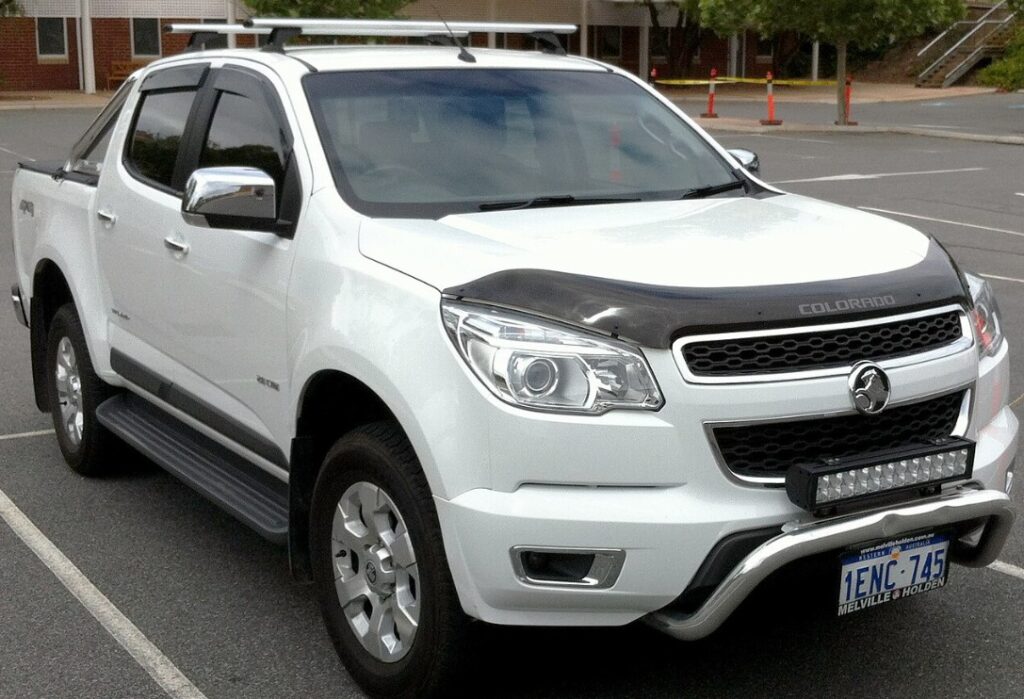
When someone asks, “How much does a Holden Colorado weigh?”, it sounds like a question that should have a one-line answer. In reality, it is more like asking how heavy a suitcase is without knowing whether it is empty, packed for a weekend, or stuffed for a six-month trip.
The Holden Colorado weight varies considerably according to model year, body configuration, drivetrain, transmission, equipment level, and accessories. A basic cab-chassis model can weigh noticeably less than a fully equipped 4x4 Crew Cab, while specifications such as Gross Vehicle Mass and Gross Combined Mass introduce another layer altogether.
As a broad guide, many later-generation RG Holden Colorado variants sit around 1,900 to 2,150 kg in kerb mass, although individual versions can fall outside that range. For example, published specifications put a 2019 Colorado LT 4x4 at approximately 2,102 kg kerb weight, while a tested 2017 Colorado LTZ was listed at 2,121 kg kerb mass.
But kerb mass is only the beginning.
If we plan to carry tools, load a tray, install accessories, tow a caravan, or simply understand whether a Colorado suits our needs, we need to look at kerb weight, tare weight, payload, GVM and GCM together.
Let's break it down without turning the subject into an engineering textbook.
Content in this publication
- What Is the Holden Colorado Weight?
- Holden Colorado Weight at a Glance
- What Does Kerb Weight Mean on a Holden Colorado?
- Kerb Weight vs Tare Weight
- What Is Holden Colorado GVM?
- How Much Payload Can a Holden Colorado Carry?
- Why Higher Trim Levels Can Have Less Payload
- Holden Colorado 4x2 vs 4x4 Weight
- Single Cab vs Space Cab vs Crew Cab Colorado Weight
- How Passenger Weight Affects Holden Colorado Payload
- How Much Does a Holden Colorado Z71 Weigh?
- Holden Colorado LTZ Weight
- What Is Holden Colorado GCM?
- Holden Colorado Towing Weight Explained
- A Simple Holden Colorado Weight Example
- Does a Full Fuel Tank Affect Holden Colorado Weight?
- Do Accessories Change Holden Colorado Weight?
- How to Find the Exact Weight of Your Holden Colorado
- Holden Colorado Axle Loads Matter Too
- Does Holden Colorado Weight Affect Fuel Economy?
- Does Weight Affect Holden Colorado Off-Road Performance?
- Holden Colorado Weight vs Other Dual-Cab Utes
- Is a Heavy Holden Colorado Safer?
- Should We Upgrade the Suspension for Extra Weight?
- Why Holden Colorado Weight Matters When Buying Used
- The Biggest Holden Colorado Weight Mistakes
- What Holden Colorado Weight Figure Should We Use?
- Final Thoughts on Holden Colorado Weight
- Frequently Asked Questions
What Is the Holden Colorado Weight?
There isn't one universal Holden Colorado weight.
Different versions of the ute were produced with:
- 4x2 and 4x4 drivetrains
- Single Cab, Space Cab and Crew Cab bodies
- Cab-chassis and pickup configurations
- Manual and automatic transmissions
- Different trim levels
- Different factory equipment
- Different model-year specifications
That combination means two Colorados parked beside each other can look broadly similar while carrying noticeably different weight ratings.
For a practical reference point, a 2017 Colorado LTZ reviewed in Australia had a kerb mass of 2,121 kg, while its tare weight was quoted at 2,065 kg. Its Gross Vehicle Mass was 3,150 kg.
A 2019 LT used in a load-and-tow evaluation was slightly lighter at 2,102 kg kerb weight, with a published payload of 1,048 kg.
Another 2017 LS Crew Cab specification listed a weight of 1,978 kg, a GVM of 3,150 kg and payload of 1,172 kg.
So our first lesson is simple: always identify the exact Colorado variant before relying on a weight figure.
Holden Colorado Weight at a Glance
For many RG-generation Colorado utes, we can use the following numbers as broad reference points rather than universal specifications:
| Specification | Typical Reference Range |
|---|---|
| Kerb weight | Around 1,900–2,150 kg |
| Gross Vehicle Mass | Around 3,100–3,150 kg on many variants |
| Payload | Roughly 800–1,300+ kg depending on configuration |
| Braked towing capacity | Up to 3,500 kg on many later models |
| Unbraked towing capacity | Up to 750 kg |
| Gross Combined Mass | Around 6,000 kg on many later variants |
Published specifications vary by exact vehicle, so we should never treat this table as a substitute for the compliance plate, owner's information, or specifications applicable to a particular Colorado.
That distinction becomes especially important when towing.
What Does Kerb Weight Mean on a Holden Colorado?
Kerb mass is essentially the vehicle's ready-to-drive mass under the definition applicable to its specification.
In practical terms, we're talking about the Colorado itself before we start loading people, camping gear, tools and half the contents of the garage into it.
Holden's published Colorado material explains that kerb mass and payload calculations depend on vehicle specification, while some items—particularly trays or customised bodies fitted to cab-chassis vehicles—may not be included in the quoted base kerb figure.
This is why cab-chassis numbers deserve special attention.
Why Kerb Mass Matters
Kerb mass matters because it forms the starting point for several other calculations.
If we know:
GVM − actual vehicle mass = remaining load capacity
we can begin estimating what we can legally carry.
Imagine the Colorado as a lift with a maximum permitted capacity. The empty lift already weighs something. Every passenger, toolbox, bull bar, canopy and suitcase then eats into the amount of additional mass we can safely add.
The ute may look ready for anything, but physics doesn't care how rugged the advertising brochure looked.
Kerb Weight vs Tare Weight
Kerb weight and tare weight are often treated as interchangeable in casual conversation, but they are not necessarily identical.
The exact definitions can vary according to the specification standard being used.
As one real-world example, a 2017 Holden Colorado LTZ test listed:
Tare weight: 2,065 kg
Kerb weight: 2,121 kg
That is a 56 kg difference before we've even started discussing passengers or cargo.
Why the Difference Matters
Fifty or sixty kilograms may not sound dramatic.
Then we add:
a bull bar,
a tow bar,
a second battery,
underbody protection,
a canopy,
a fridge,
and suddenly our apparently generous payload begins shrinking like an ice cube on a summer driveway.
Whenever payload accuracy matters, especially for touring or towing, we should work from the correct definition and preferably obtain an actual weighbridge measurement.
What Is Holden Colorado GVM?
GVM means Gross Vehicle Mass.
It is the maximum permitted operating mass of the vehicle when loaded, subject to the vehicle's applicable specification and regulatory requirements.
It includes far more than whatever happens to be sitting in the tray.
GVM Can Include
The loaded vehicle may need to account for:
- The vehicle itself
- Driver
- Passengers
- Fuel
- Cargo
- Accessories
- Tray or body equipment
- Tow-ball download where applicable
- Aftermarket modifications
Many later RG Colorado specifications list a GVM around 3,150 kg, although exact ratings vary.
For example, both the reviewed 2017 Colorado LTZ and LS Crew Cab specifications referenced a 3,150 kg GVM.
That number is much more useful than kerb weight alone.
How Much Payload Can a Holden Colorado Carry?
Payload is where things become interesting.
The simple version of the calculation is:
Payload capacity = GVM − vehicle mass used for the applicable specification
Holden's Colorado technical material similarly describes payload in relation to vehicle mass and Gross Vehicle Mass while warning that occupants, options, accessories and body equipment consume available load capacity.
Depending on configuration, Colorado payload figures can range from below a tonne in heavily equipped variants to well over a tonne in lighter work-oriented models.
Holden Colorado Payload Examples
Several published examples demonstrate how dramatically specification can influence the number.
A Colorado LS Crew Cab specification has been listed with a 1,172 kg payload and 3,150 kg GVM.
A 2019 Colorado LT evaluated by 4X4 Australia had 1,048 kg payload.
Meanwhile, a 2017 LTZ review quoted a payload of 825 kg, illustrating how higher-spec vehicles can leave less available capacity once equipment and configuration are taken into account.
That spread is enormous.
It is exactly why saying “a Holden Colorado carries a tonne” is too simplistic.
Why Higher Trim Levels Can Have Less Payload
This sounds backwards at first.
We pay more for the premium model, so shouldn't it carry more?
Not necessarily.
Luxury and off-road equipment adds mass.
Think about everything a higher specification might include: larger wheels, steps, styling equipment, interior upgrades, protection equipment, tub accessories and additional electronics.
Each component might only add a little.
Together, they become passengers that never get out of the vehicle.
The Weight We Don't See
Factory accessories aren't the only issue.
Our aftermarket additions matter too.
A ute fitted for touring can accumulate hundreds of kilograms almost without us noticing.
That beautiful build on social media might include:
- Steel bull bar
- Winch
- Driving lights
- Steel side steps
- Roof rack
- Canopy
- Drawer system
- Auxiliary battery
- Fridge
- Long-range fuel storage
- Recovery equipment
- Camping equipment
Every kilogram matters.
Holden Colorado 4x2 vs 4x4 Weight
All else being similar, a 4x4 generally carries additional drivetrain components compared with a 4x2.
That can mean a higher kerb mass.
We have the transfer case, additional drive hardware and supporting components required to send power to all four wheels.
Does that automatically mean a 4x2 is better?
No.
It simply means the choice involves trade-offs.
When a 4x2 Makes Sense
If we spend almost all our time on sealed roads, work sites with easy access or relatively mild terrain, a 4x2 Colorado may provide the capability we need without carrying the extra hardware of four-wheel drive.
When a 4x4 Is Worth the Added Weight
Mud, sand, difficult worksites, steep trails and remote touring can make 4x4 hardware far more valuable than the payload sacrificed to carry it.
Weight isn't automatically bad.
Useless weight is bad. Useful equipment can be worth every kilogram.
Single Cab vs Space Cab vs Crew Cab Colorado Weight
Cab configuration creates another major difference.
A Single Cab has less body structure and interior equipment than a Crew Cab.
A Crew Cab provides rear seating and greater passenger practicality, but all that metal, glass, seating and trim adds weight.
This often gives basic Single Cab or cab-chassis variants an advantage when maximum payload is the priority.
Single Cab Colorado
The workhorse option.
If our priority is moving equipment rather than five people, the simpler body configuration can make excellent sense.
Space Cab Colorado
The compromise.
We gain more interior room while retaining more tray flexibility than many full Crew Cab configurations.
Crew Cab Colorado
The family-friendly option and one of the most popular configurations.
It carries people comfortably while remaining useful for work and recreation.
But once four adults climb aboard, the payload arithmetic changes quickly.
How Passenger Weight Affects Holden Colorado Payload
Suppose our Colorado nominally gives us around 1,000 kg of available payload.
Sounds enormous, right?
Now imagine:
Driver: 90 kg
Passenger: 75 kg
Rear passenger: 65 kg
Rear passenger: 70 kg
We've already used 300 kg before placing anything in the tub.
Add a 70 kg canopy, 50 kg of drawers, 30 kg fridge and battery setup, 40 kg of recovery equipment and 100 kg of luggage.
The ute suddenly isn't carrying “just a few things.”
We're approaching substantial load territory.
Payload Disappears Faster Than Expected
That is one of the most important lessons for ute owners.
Payload is rarely consumed by one enormous object.
It disappears through dozens of small additions.
A kilogram here.
Twenty there.
Fifty more because we upgraded the bull bar.
Eventually the Colorado is carrying the equivalent of another small car.
How Much Does a Holden Colorado Z71 Weigh?
The Z71 sits toward the more highly equipped end of the Colorado range, so we should expect its kerb mass to be higher than some basic work-focused versions.
A 2020 Colorado Z71 automatic was quoted with a claimed 987 kg payload, along with a 3,500 kg braked towing rating, 750 kg unbraked rating and maximum tow-ball download of 350 kg.
Those numbers highlight an important point.
A premium dual-cab may still offer strong payload and towing specifications, but once passengers, accessories and trailer ball load are included, the theoretical capacity can become much less generous.
Holden Colorado LTZ Weight
A 2017 Colorado LTZ provides one of the clearer published examples.
The reviewed vehicle was listed at:
Tare: 2,065 kg
Kerb: 2,121 kg
GVM: 3,150 kg
GCM: 6,000 kg
Payload: 825 kg in the tested specification
Braked towing capacity: 3,500 kg.
What's striking is that simply seeing “3.5-tonne towing” tells us very little about how the combination can actually be loaded.
That's where GCM enters the picture.
What Is Holden Colorado GCM?
GCM means Gross Combined Mass.
It deals with the combined mass of the tow vehicle and trailer.
Many later Colorado specifications use a figure around 6,000 kg. For example, published information for a 2017 LTZ and 2019 LT references a 6,000 kg combined limit.
This creates one of the most misunderstood ute calculations.
Can a Holden Colorado Weigh 3,150 kg and Tow 3,500 kg at the Same Time?
Look at the maths:
3,150 kg + 3,500 kg = 6,650 kg
If the relevant vehicle's GCM is 6,000 kg, we clearly cannot simply load the ute to maximum GVM and simultaneously attach a trailer weighing the full advertised maximum while remaining at 6,000 kg combined.
That difference is 650 kg.
This is why maximum towing capacity should never be interpreted in isolation.
A 3.5-tonne tow rating is not a magical permission slip that makes every other weight limit disappear.
Holden Colorado Towing Weight Explained
Many later Holden Colorado diesel models were rated to tow up to 3,500 kg with a braked trailer, with up to 750 kg commonly quoted for unbraked towing.
But four numbers deserve our attention:
GVM — maximum loaded vehicle mass.
GCM — maximum combined vehicle and trailer mass.
Trailer limit — maximum permitted trailer mass.
Tow-ball load — the portion of trailer load pressing down on the vehicle.
Tow-Ball Weight Counts Too
Imagine a 3,000 kg caravan placing roughly 250–300 kg on the tow ball.
That downward force doesn't float magically between the caravan and the sky.
It is being carried by the vehicle and affects loading.
This can consume a surprisingly large part of remaining payload.
A Simple Holden Colorado Weight Example
Let's use purely illustrative numbers.
Suppose we have:
Kerb mass: 2,100 kg
GVM: 3,150 kg
That suggests approximately:
3,150 − 2,100 = 1,050 kg
of theoretical difference before accounting for how the manufacturer's stated figures and our actual vehicle are configured.
Now add:
Passengers: 300 kg
Bull bar and winch: 90 kg
Canopy: 80 kg
Drawers: 50 kg
Camping equipment: 120 kg
Tow-ball download: 250 kg
Total additional mass:
890 kg
Only about 160 kg remains before reaching our illustrative GVM.
And we haven't added water, extra fuel, bicycles or the Labrador yet.
Suddenly that one-tonne payload feels more like a wallet after Christmas.
Does a Full Fuel Tank Affect Holden Colorado Weight?
Of course.
Fuel has mass.
A later Colorado LT specification used in testing was fitted with a 76-litre fuel tank.
Depending on which weight definition we're comparing against, fuel may already be treated in a particular way within the published figure. That is another reason we shouldn't casually mix kerb, tare and measured vehicle weights.
When precision matters, an actual weighbridge measurement beats assumptions.
Do Accessories Change Holden Colorado Weight?
Absolutely.
This is especially important with used Colorados because few remain completely factory-standard.
A vehicle advertised with a particular factory kerb mass may now wear enough equipment to add 200 kg or more.
Common Heavy Accessories
The biggest contributors frequently include bull bars, winches, canopies, trays, drawers, roof platforms, underbody protection and dual-battery systems.
Even seemingly innocent items start adding up.
Five kilograms here doesn't concern us.
Neither does ten kilograms there.
But twenty such decisions can transform the vehicle's weight profile.
The Touring-Ute Trap
The classic trap is building a Colorado into an expedition vehicle before calculating the finished mass.
We install every accessory because each one has a purpose.
Then we load the family.
Then we hitch the caravan.
Only afterward do we ask what the vehicle weighs.
The sensible order is the reverse:
calculate, build, weigh, then load.
How to Find the Exact Weight of Your Holden Colorado
Internet specifications are useful for research, but our actual vehicle is what matters.
A sensible approach is:
- Identify the exact year, trim, cab configuration, transmission and drivetrain.
- Check applicable manufacturer specifications and the vehicle's compliance information.
- Account for installed accessories and tray/body equipment.
- Load the vehicle as we genuinely travel with it.
- Visit a suitable weighbridge.
- Check overall vehicle mass and, ideally, individual axle loads.
- Repeat the process with the trailer attached if towing.
The weighbridge reading can be surprisingly educational.
Sometimes pleasantly.
Sometimes painfully.
But numbers don't argue.
Holden Colorado Axle Loads Matter Too
Staying below total GVM doesn't automatically mean every loading condition is acceptable.
Individual axle limits can matter as well.
A 2020 Colorado Z71, for example, was reported with axle load limits of 1,450 kg at the front and 1,850 kg at the rear.
Heavy tow-ball download, a canopy full of equipment and rear-mounted accessories can place tremendous demand on the rear axle.
That is why simply weighing the complete vehicle on one scale doesn't always tell the entire story.
Why Rear-Axle Weight Can Become the Problem
Picture the vehicle as a seesaw.
Weight added far behind the rear axle produces a different effect from the same mass located between the axles.
Tow-ball load does something similar.
This is why intelligent weight distribution matters almost as much as the final number.
Does Holden Colorado Weight Affect Fuel Economy?
Yes.
Moving mass requires energy.
Load the Colorado with several hundred kilograms of permanent accessories and it has to accelerate, climb hills and stop that mass every kilometre of every trip.
The difference may be subtle during relaxed highway driving, but it can become more noticeable in stop-start traffic, hilly areas and off-road conditions.
Aerodynamics also matter.
A roof rack and rooftop equipment can punish fuel consumption even when they don't add dramatic weight.
Weight and Braking
More mass also means more energy must be dissipated when slowing down.
The Colorado was designed to work, but physics remains physics.
Loaded vehicles usually require greater consideration for braking distance, suspension behaviour and tyre pressures.
Does Weight Affect Holden Colorado Off-Road Performance?
It can.
Extra weight can improve traction in some circumstances, but excessive mass generally makes difficult terrain harder on components.
Sand provides a perfect example.
A heavily loaded vehicle sinks more readily and asks more from the engine, transmission and tyres.
Mud tells a similar story.
Then there's recovery.
A 2.1-tonne ute stuck in mud is one thing.
A 3-tonne touring Colorado buried to the axles is quite another.
Lighter Isn't Always Better
We shouldn't become obsessed with removing every kilogram.
Water, recovery equipment and protection gear can be vital in remote travel.
The goal isn't minimum weight.
The goal is useful, deliberate weight.
Holden Colorado Weight vs Other Dual-Cab Utes
The Colorado occupies the same general weight territory as many traditional body-on-frame diesel dual-cab utes.
That's hardly surprising.
They share the same basic recipe:
ladder-frame chassis, diesel engine, robust suspension, substantial bodywork and, in 4x4 versions, additional drivetrain hardware.
What often matters more than a 50 or 100 kg kerb-mass difference is how much usable payload remains after we configure the vehicle for our needs.
A lighter ute isn't automatically the better load carrier if its GVM is proportionally lower.
Likewise, a heavier ute isn't automatically worse if its ratings provide additional capacity.
Is a Heavy Holden Colorado Safer?
Not inherently.
Mass can offer advantages in some collisions or when towing, but safety cannot be reduced to “heavier equals safer.”
Tyres, brakes, suspension condition, stability systems, load positioning, speed and driver behaviour all play major roles.
An overloaded Colorado may feel solid while actually operating outside the limits engineers intended.
That's not strength.
That's borrowed margin.
Should We Upgrade the Suspension for Extra Weight?
Suspension upgrades can improve how a loaded ute sits and behaves, but they do not automatically change its legal mass ratings.
This distinction is crucial.
A stronger spring can reduce sag.
It doesn't magically rewrite the compliance plate.
If owners pursue GVM upgrades or other certified modifications, the legal requirements depend on jurisdiction and the specific approved system. We should verify the rules applying to the vehicle rather than assuming that aftermarket suspension equals additional legal carrying capacity.
Why Holden Colorado Weight Matters When Buying Used
When inspecting a used Colorado, weight tells us something about how the vehicle may have lived.
A stock family ute and a heavily accessorised touring rig might have started life with the same badge, but they haven't necessarily endured the same loads.
Ask:
Has it regularly towed?
Is the rear suspension sagging?
Was a heavy canopy fitted?
Are there signs of excessive tow-ball load?
Have chassis or suspension modifications been made?
Are the tyres rated appropriately?
A Colorado that has spent its life near maximum load deserves a more careful inspection than one that has cruised around empty.
The Biggest Holden Colorado Weight Mistakes
Most mistakes come from treating one specification as though it tells us everything.
The most common are confusing tare with kerb mass, assuming advertised payload is still available after accessories are installed, forgetting passengers count toward vehicle load, ignoring tow-ball download, believing maximum GVM and maximum trailer capacity can always be used simultaneously, and relying on brochure specifications instead of weighing a modified vehicle.
If we remember only one principle, make it this:
Weight limits overlap.
They are a system, not a collection of independent numbers.
What Holden Colorado Weight Figure Should We Use?
That depends on what we're trying to calculate.
Want to compare different models?
Look at kerb mass.
Want to know how heavily the vehicle can be loaded?
Look at GVM and actual vehicle mass.
Want to carry work equipment?
Calculate remaining payload.
Want to tow?
We need vehicle mass, trailer mass, GVM, GCM, axle loads and tow-ball load.
Want complete confidence?
Use a weighbridge.
The right figure depends on the question.
Final Thoughts on Holden Colorado Weight
The Holden Colorado is a substantial ute, with many RG-generation models weighing somewhere around two tonnes before we begin loading them.
But the headline kerb figure isn't what ultimately determines whether the vehicle can carry our family, tools, camping setup or caravan safely.
What matters is the relationship between actual vehicle mass, payload, GVM, GCM, axle loading and trailer weight.
Published examples show just how much variation exists. A relatively basic Colorado can offer payload comfortably above a tonne, while a better-equipped version may leave considerably less room.
That's why we should treat specifications as the beginning of the calculation rather than the end.
If our Colorado is stock and lightly loaded, weight may never become much of a concern.
But if we're adding a canopy, bull bar, drawers, passengers and a substantial caravan, those kilograms start stacking up like bricks.
Count them early.
Weigh the finished vehicle.
And suddenly the confusing world of kerb weight, payload and GVM becomes much easier to manage.
Frequently Asked Questions
1. How much does a Holden Colorado weigh?
Many later RG Holden Colorado configurations have kerb masses around 1,900–2,150 kg, although the exact figure depends on cab style, drivetrain, transmission, trim and model year. Published examples include approximately 1,978 kg for one LS Crew Cab specification, 2,102 kg for a 2019 LT and 2,121 kg for a tested 2017 LTZ.
2. What is the GVM of a Holden Colorado?
Many later Colorado specifications list a Gross Vehicle Mass of around 3,150 kg, although the exact figure should always be confirmed for the individual model. Both 2017 LS and LTZ examples have published 3,150 kg GVM figures.
3. How much payload can a Holden Colorado carry?
Payload varies substantially by version. Published examples range from around 825 kg on a tested LTZ specification to more than 1,100 kg on certain LS versions, while cab-chassis configurations can differ again. Accessories, occupants and other equipment reduce the capacity remaining on the actual vehicle.
4. Can a Holden Colorado tow 3,500 kg?
Many later diesel Colorados were rated for up to 3,500 kg of braked towing, but owners must also remain within GVM, GCM, axle limits and tow-ball requirements. Maximum towing capacity therefore cannot be considered independently from vehicle loading.
5. What is the best way to know my actual Holden Colorado weight?
Take the vehicle to a suitable weighbridge in the configuration you normally drive it—fuelled, accessorised and loaded. If towing, weighing individual axles and the complete vehicle-trailer combination gives us much more useful information than relying only on factory brochure figures.
If you want to know other articles similar to Holden Colorado Weight: Kerb Mass, GVM, Payload & Towing Explained you can visit the category Service and Parts.
Nissan Qashqai Fuel Tank Capacity: Complete Guide

Suzuki Swift Fuel Tank Capacity: Complete Guide
Mazda CX-5 Weight (2013–2026): Complete Guide in Pounds and KG
Kia Sportage Dashboard Symbols and Warning Lights

MINI Cooper Weight (2002–2027): Complete Weight Chart & Guide

Toyota RAV4 Engine Sizes: Complete Guide (1994–2026)
Leave a Reply
More content of your interest