
How Much Does Ford Edge Weight? Complete Weight Guide

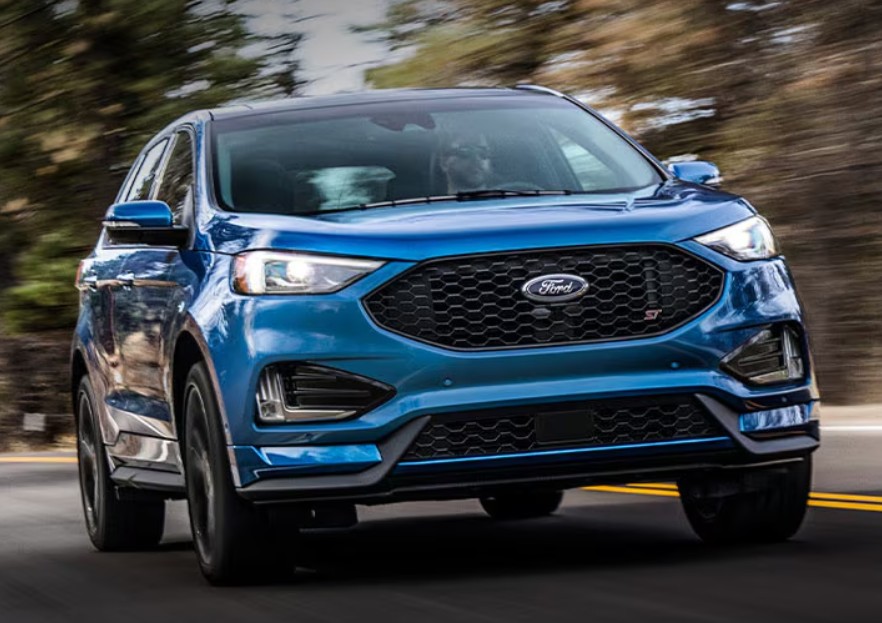
If you’re wondering how much does Ford Edge weight, the short answer is that most Ford Edge models weigh roughly 3,900 to 4,525 pounds, depending on the model year, drivetrain, engine, trim level, and equipment.
For a recent example, the 2024 Ford Edge has a curb weight of approximately 4,126 pounds for the SE, SEL, ST-Line, and Titanium trims, while the performance-oriented Ford Edge ST weighs about 4,525 pounds.
That sounds straightforward, but vehicle weight becomes surprisingly complicated once terms such as curb weight, gross vehicle weight rating, payload, towing capacity, and passenger load enter the conversation.
Think of it like weighing yourself before and after packing for a two-week vacation. The person hasn't changed, but the number on the scale certainly has.
The same principle applies to the Ford Edge.
In this guide, we’ll break down Ford Edge weight by trim and generation, explain why some versions are heavier than others, convert the figures into kilograms and tons, and show why these numbers matter for towing, fuel economy, transporting cargo, and everyday driving.
Content in this publication
- How Much Does a Ford Edge Weigh?
- Ford Edge Weight in Pounds
- Ford Edge Weight in Kilograms
- Ford Edge Weight in Tons
- 2024 Ford Edge Weight by Trim
- How Much Does an Older Ford Edge Weigh?
- 2018 Ford Edge Weight
- 2020 Ford Edge Weight
- 2021 Ford Edge Weight
- Why Does Ford Edge Weight Vary So Much?
- What Is Curb Weight?
- Curb Weight vs Gross Vehicle Weight Rating
- Ford Edge Payload Capacity and Vehicle Weight
- Does Ford Edge Weight Affect Towing?
- Does a Heavier Ford Edge Drive Differently?
- Does Ford Edge Weight Affect Fuel Economy?
- How Much Weight Can You Put in a Ford Edge?
- Can Ford Edge Weight Change After You Buy It?
- How Can I Find the Exact Weight of My Ford Edge?
- Ford Edge Weight Compared With Smaller SUVs
- Ford Edge Weight Compared With Large SUVs
- Is a Lighter Ford Edge Better?
- Is the Ford Edge ST Too Heavy?
- Why Knowing Ford Edge Weight Is Useful
- Common Ford Edge Weight Mistakes
- Ford Edge Weight Quick Reference
- Final Thoughts: How Much Does Ford Edge Weight?
- Frequently Asked Questions
How Much Does a Ford Edge Weigh?
A Ford Edge typically weighs between approximately 3,900 and 4,525 pounds in curb-weight form.
The exact number depends heavily on configuration.
For the 2024 model year, for example:
| 2024 Ford Edge Trim | Drivetrain | Approx. Curb Weight |
|---|---|---|
| Ford Edge SE | AWD | 4,126 lbs |
| Ford Edge SEL | AWD | 4,126 lbs |
| Ford Edge ST-Line | AWD | 4,126 lbs |
| Ford Edge Titanium | AWD | 4,126 lbs |
| Ford Edge ST | AWD | 4,525 lbs |
The substantial jump with the Edge ST isn't an error. The ST uses a more powerful 2.7-liter EcoBoost V6 rather than the 2.0-liter four-cylinder engine found in the other 2024 versions, along with performance-oriented hardware. The result is a vehicle approximately 400 pounds heavier.
So if somebody simply asks, "What does a Ford Edge weigh?" a useful rule of thumb is:
Expect roughly 4,100 pounds for a regular late-model Edge and around 4,500 pounds for an Edge ST.
Ford Edge Weight in Pounds
Most North American vehicle specifications express weight in pounds, making this the number Ford Edge owners are most likely to encounter.
Depending on the model year and configuration, you'll generally find Edge curb weights somewhere around:
- 3,900–4,000 lbs for some lighter front-wheel-drive versions
- 4,100–4,200 lbs for many all-wheel-drive Edge models
- Around 4,500 lbs for the performance-oriented Edge ST
For perspective, 4,100 pounds is just over two U.S. tons.
That places the Ford Edge firmly in midsize crossover territory. It isn't featherweight, but neither does it carry the mass of a body-on-frame three-row SUV or full-size pickup.
Ford Edge Weight in Kilograms
For readers outside the United States, kilograms are usually more useful.
Using the approximate conversion of 1 pound = 0.4536 kilograms, typical Ford Edge weights translate to:
| Weight in Pounds | Approx. Weight in Kilograms |
| 3,900 lbs | 1,769 kg |
| 4,000 lbs | 1,814 kg |
| 4,126 lbs | 1,871 kg |
| 4,200 lbs | 1,905 kg |
| 4,525 lbs | 2,053 kg |
Therefore, a modern Ford Edge usually has a curb weight of roughly 1,800 to 2,050 kilograms.
The 2024 four-cylinder AWD models land around 1,871 kg, while the ST crosses the two-metric-ton mark at approximately 2,053 kg.
Ford Edge Weight in Tons
Want an even easier mental picture?
A Ford Edge weighing 4,126 pounds is approximately:
2.06 U.S. tons
The 4,525-pound Edge ST is roughly:
2.26 U.S. tons
That's quite a lot of vehicle moving underneath you, yet modern suspension design, turbocharged engines, electric power steering, and carefully calibrated transmissions keep the Edge from feeling like a rolling warehouse.
Is the Ford Edge a Heavy SUV?
Relatively speaking, no.
The Edge is heavier than most compact crossovers but generally lighter than large three-row SUVs and traditional truck-based utility vehicles.
Its weight makes sense because the Edge occupies the middle ground between compact models such as the Ford Escape and substantially larger vehicles.
That middle-ground philosophy is really the Edge's identity: enough mass and space to feel substantial without becoming cumbersome.
2024 Ford Edge Weight by Trim
The 2024 model year gives us one of the cleanest examples because AWD was standard across the U.S. Edge range.
Most models shared the same published base curb weight:
2024 Ford Edge SE Weight
The 2024 Edge SE weighs approximately 4,126 pounds.
Although SE is the entry trim, we're still dealing with a fairly substantial midsize crossover featuring standard all-wheel drive.
2024 Ford Edge SEL Weight
The 2024 Ford Edge SEL also weighs approximately 4,126 pounds in published base specifications.
Additional equipment can change the real-world scale weight slightly, so don't assume every SEL sitting on a dealer lot will weigh precisely 4,126 pounds.
2024 Ford Edge ST-Line Weight
The Edge ST-Line weighs approximately 4,126 pounds.
Don't confuse ST-Line with ST.
The ST-Line borrows sporty styling cues but retains the regular 2.0-liter EcoBoost powertrain. The true ST receives the larger V6 and significantly different performance hardware.
2024 Ford Edge Titanium Weight
Published figures place the 2024 Edge Titanium at approximately 4,126 pounds.
Premium features and optional accessories may push an individually equipped vehicle above its basic published curb-weight specification.
2024 Ford Edge ST Weight
The heavyweight of the family is the Ford Edge ST.
Its base curb weight is approximately 4,525 pounds.
That's almost 400 pounds more than the four-cylinder versions.
Why?
The ST uses a 2.7-liter twin-turbo EcoBoost V6 producing 335 horsepower and 380 lb-ft of torque, along with AWD and performance-focused equipment.
It's essentially the Edge after somebody handed it a gym membership.
How Much Does an Older Ford Edge Weigh?
Ford Edge weight hasn't remained identical throughout its lifespan.
Different generations brought changes to:
- vehicle architecture
- body dimensions
- engine choices
- transmissions
- drivetrain systems
- safety equipment
- comfort features
- wheel sizes
Across the model's 2007–2024 U.S. production history, published curb weights generally fall between approximately 3,927 and 4,525 pounds, depending on trim and configuration.
That range helps explain why searching for "Ford Edge weight" can produce several apparently conflicting answers.
Often, they're all correct—they're simply referring to different versions.
2018 Ford Edge Weight
The 2018 Edge provides a useful example from before the later lineup became heavily AWD-oriented.
Ford's specifications list 2018 Edge dimensions including a 112.2-inch wheelbase and 188.1-inch overall length, with separate fuel-tank capacities for FWD and AWD models.
Some 2018 configurations weighed around 3,927 pounds, placing them among the lighter versions in the Edge's history.
The lesson?
An older front-wheel-drive four-cylinder Edge can be several hundred pounds lighter than a newer ST.
2020 Ford Edge Weight
Ford's technical specifications for the 2020 Edge list the following base curb weights:
- FWD: approximately 3,958 lbs
- AWD: approximately 4,122 lbs
- ST: approximately 4,525 lbs
Ford itself published these figures in its technical specifications.
That's a beautifully clear illustration of what all-wheel drive adds.
Moving from FWD to AWD adds roughly 164 pounds in this comparison.
Then moving to the ST pushes the vehicle another 400 pounds or so above the standard AWD configuration.
2021 Ford Edge Weight
Ford's published 2021 technical specifications show virtually the same pattern:
3,958 pounds for FWD, 4,122 pounds for AWD, and 4,525 pounds for the ST.
Those numbers also help explain why asking for an Edge's year and trim matters before quoting an exact figure.
Simply saying "a Ford Edge weighs 4,000 pounds" can be directionally correct while still being hundreds of pounds off for a particular vehicle.
Why Does Ford Edge Weight Vary So Much?
A vehicle isn't a single chunk of metal stamped into different trim names.
Mechanical and equipment changes affect its mass.
Drivetrain Makes a Difference
AWD adds components that a front-wheel-drive vehicle doesn't need.
We're talking about hardware such as:
- additional drive components
- rear differential components
- driveshaft-related hardware
- supporting structural and mechanical pieces
Those components aren't made from clouds.
They weigh something.
That's why equivalent AWD vehicles often weigh noticeably more than FWD versions.
Engine Size Changes Vehicle Weight
A larger engine can increase mass considerably.
The standard late-model Ford Edge's 2.0-liter EcoBoost four-cylinder is smaller and lighter than the 2.7-liter twin-turbo V6 used by the ST.
But the difference isn't limited to the engine block itself.
A more powerful drivetrain can require supporting changes involving cooling, transmission components, suspension tuning, exhaust hardware, and other systems.
Trim-Level Equipment Adds Pounds
Luxury features seem harmless individually.
A panoramic roof here. A larger powered seat there. Bigger wheels. Additional sound insulation. More motors. Extra speakers.
Then suddenly we've added dozens—or potentially hundreds—of pounds.
Optional Equipment Matters Too
Two Ford Edge models wearing identical trim badges might not weigh exactly the same.
Options such as panoramic roofs, tow packages, larger wheels, accessories, and other equipment can alter actual curb weight.
For serious calculations, we shouldn't rely exclusively on a generic internet figure.
Check the vehicle's own certification label and owner's documentation.
What Is Curb Weight?
Here's where vehicle-weight discussions often become messy.
Curb weight generally describes the weight of the vehicle itself with the equipment and fluids required for normal operation, but without passengers or cargo.
So when we say a Ford Edge weighs 4,126 pounds, we're usually talking about curb weight.
We are not saying your fully loaded road-trip Edge weighs 4,126 pounds.
Add four adults, luggage, groceries, bikes, and whatever mysterious collection of objects lives permanently in the cargo area, and the number climbs quickly.
Curb Weight vs Gross Vehicle Weight Rating
People frequently confuse curb weight with GVWR, or Gross Vehicle Weight Rating.
They're completely different concepts.
Curb weight tells us approximately what the vehicle itself weighs.
GVWR tells us the maximum allowable loaded weight of the vehicle.
That maximum includes things such as:
vehicle + passengers + luggage + accessories + cargo + applicable trailer tongue weight
For example, specification databases list a gross vehicle weight rating around 5,440 pounds for certain 2024 regular Edge models, while the ST may be rated around 5,700 pounds.
Those numbers should never be mistaken for curb weight.
Simple Example
Imagine an Edge with:
- curb weight: 4,126 lbs
- passengers: 550 lbs
- luggage: 250 lbs
- additional cargo: 100 lbs
Its loaded weight would be approximately:
5,026 pounds
That's why payload matters.
You don't simply ask whether everything physically fits inside the SUV.
You also need to ask whether its weight stays within the manufacturer's ratings.
Ford Edge Payload Capacity and Vehicle Weight
Payload capacity tells us how much weight can be added to the vehicle without exceeding its allowable loaded weight.
Payload includes much more than suitcases.
It includes:
- driver
- passengers
- luggage
- cargo
- accessories
- equipment
- applicable tongue weight from a trailer
This catches many drivers by surprise.
A 200-pound driver is technically part of the payload.
So are three adult passengers.
And so is the giant cooler filled with enough beverages to survive what was supposed to be a two-day camping trip.
Why Payload Matters More Than Cargo Space Alone
The Edge offers generous cargo room, but having physical space available doesn't automatically mean we can fill every cubic inch with dense material.
Thirty boxes of pillows and thirty boxes of ceramic tiles might occupy similar space.
They clearly don't impose the same load.
That's why weight ratings matter.
Does Ford Edge Weight Affect Towing?
Absolutely.
Vehicle weight, payload, towing capacity, trailer weight, tongue weight, and gross combined vehicle ratings all work together.
Some 2024 Edge configurations can tow as much as 3,500 pounds when appropriately equipped, including the Edge ST.
But towing capacity isn't simply:
3,500-pound rating = attach any 3,500-pound trailer and go.
We must also account for passengers, cargo, trailer tongue weight, accessories, and the limits printed for the specific vehicle.
Ford Edge Weight When Towing
Suppose we're loading:
- 450 pounds of passengers
- 150 pounds of luggage
- 350 pounds of trailer tongue weight
We've already added approximately 950 pounds of payload-related load.
That's why towing calculations require more than checking a single headline figure.
A vehicle can sometimes reach another limiting rating before reaching the theoretical maximum trailer weight.
Does a Heavier Ford Edge Drive Differently?
Yes.
Weight affects almost every aspect of vehicle dynamics.
Acceleration
More mass requires more energy to accelerate.
But horsepower matters too.
That's why the heavier Edge ST can still accelerate much more aggressively than lighter four-cylinder versions: its 2.7-liter EcoBoost V6 provides substantially greater power and torque.
Weight is only half the equation.
Braking
More mass means more energy has to be dissipated when stopping.
Manufacturers account for this through braking-system design, tire selection, electronic stability systems, and suspension calibration.
Still, loading your Edge heavily can increase stopping distances.
Leave extra space.
Physics doesn't negotiate.
Cornering
Weight influences how a vehicle transitions from side to side.
A low center of gravity and properly tuned suspension can make a heavier vehicle feel surprisingly controlled, while poorly managed weight can make another vehicle feel like a shopping cart carrying a refrigerator.
Ride Quality
A moderate amount of mass can actually contribute to a planted, substantial highway feel.
That's one reason the Edge often feels more substantial than smaller crossovers.
The tradeoff is that more weight must be accelerated, stopped, and supported.
Does Ford Edge Weight Affect Fuel Economy?
Vehicle weight certainly contributes to fuel consumption.
A heavier vehicle generally requires more energy to move, especially when accelerating repeatedly in city driving.
But weight isn't the only factor.
Fuel economy also depends on:
- engine design
- gearing
- aerodynamics
- tires
- drivetrain
- traffic
- speed
- temperature
- driving style
A lighter Edge packed with passengers and cargo can effectively become a much heavier vehicle during a road trip.
Likewise, constantly carrying unnecessary gear means the engine keeps hauling those pounds every mile.
Do five forgotten golf bags destroy fuel economy overnight?
Probably not.
But physics still sends the bill eventually.
How Much Weight Can You Put in a Ford Edge?
There isn't one universal answer.
Payload ratings vary by model year, engine, drivetrain, trim, equipment, and vehicle configuration.
The most reliable source is the Tire and Loading Information label on your specific Ford Edge, typically located around the driver's door jamb area.
Look for wording similar to:
The combined weight of occupants and cargo should never exceed...
That number is far more useful than guessing from generic online specifications.
Don't Calculate Payload From Curb Weight Alone
It's tempting to subtract advertised curb weight from GVWR.
That can give us a rough theoretical idea, but the actual vehicle may carry optional equipment that changes its real weight.
The door label reflects the specific vehicle much better.
Can Ford Edge Weight Change After You Buy It?
Definitely.
Permanent additions effectively increase the vehicle's operating weight.
Think about:
- aftermarket wheels
- running boards
- hitch assemblies
- cargo organizers
- roof racks
- protection equipment
- permanently stored tools
- audio upgrades
Add 20 pounds here and 40 pounds there and suddenly the Edge is carrying another passenger's worth of equipment every day.
Roof Cargo Adds Another Consideration
Roof boxes are especially worth thinking about because weight mounted high on the vehicle can influence handling more than the same weight stored low in the cargo area.
Always follow Ford's roof-load limits for your particular model and roof system.
How Can I Find the Exact Weight of My Ford Edge?
If exact weight really matters—perhaps for a trailer, transport carrier, ferry, shipping calculation, or weight-restricted facility—don't rely solely on a generalized specification table.
Use several sources.
First, identify:
- Model year
- Trim level
- Engine
- FWD or AWD
- Factory options
Then check your Ford owner's information and vehicle labels.
For absolute real-world loaded weight, visit a certified vehicle scale.
Why a Scale Is Better Than Guesswork
Published curb weight is an engineering specification.
Scale weight is reality.
Your vehicle might contain:
- fuel
- tools
- accessories
- passengers
- child seats
- floor liners
- luggage
- towing equipment
A certified scale measures the vehicle as it actually exists at that moment.
That's particularly valuable when towing near rated limits.
Ford Edge Weight Compared With Smaller SUVs
The Edge's roughly 4,000-plus-pound weight reflects its positioning as a midsize two-row crossover.
Compact SUVs tend to be lighter because they're physically smaller and often use lighter powertrains.
The Edge brings greater cabin width, substantial rear-seat room, and generous cargo capacity, so some additional mass is expected.
It's like comparing a hiking backpack with a weekend suitcase.
Both carry your stuff, but they're built for slightly different jobs.
Ford Edge Weight Compared With Large SUVs
At the opposite extreme, large three-row SUVs and body-on-frame models can weigh significantly more than a Ford Edge.
That's an important distinction for people who want something substantial without committing to the physical size, fuel demand, and parking challenges of a full-size SUV.
The Edge sits comfortably between those worlds.
Enough weight to feel planted.
Not enough to require its own zip code.
Is a Lighter Ford Edge Better?
Not automatically.
Lower weight can improve:
- efficiency
- acceleration for a given power level
- braking response
- tire wear
- handling agility
But additional weight can accompany desirable features such as:
- AWD
- larger engines
- extra sound insulation
- upgraded equipment
- stronger hardware
The goal isn't simply to buy the lightest vehicle possible.
It's to find the configuration whose weight, power, capability, comfort, and efficiency match what we actually need.
Is the Ford Edge ST Too Heavy?
At approximately 4,525 pounds, the Edge ST is considerably heavier than ordinary Edge trims.
But calling it "too heavy" misses the broader picture.
Ford paired that additional mass with a 335-horsepower twin-turbocharged V6 and 380 lb-ft of torque.
The ST was never designed to be the featherweight member of the family.
It's designed to deliver stronger acceleration and a more performance-oriented character while keeping the utility of a midsize crossover.
Weight-to-Power Matters More Than Weight Alone
A 4,500-pound vehicle with 150 horsepower would probably feel sleepy.
A 4,500-pound vehicle with 335 horsepower is a very different animal.
That's why looking at curb weight without considering power, gearing, and chassis tuning tells only part of the story.
Why Knowing Ford Edge Weight Is Useful
For most owners, vehicle weight is something they never think about.
Until suddenly they need it.
You may need your Edge's weight when:
- towing a trailer
- renting a vehicle carrier
- using a transport trailer
- calculating payload
- crossing a weight-restricted road or bridge
- shipping the vehicle
- selecting equipment
- evaluating towing accessories
- comparing SUVs
Knowing whether we're dealing with 3,950 pounds or 4,525 pounds can matter enormously in those situations.
Common Ford Edge Weight Mistakes
Perhaps the biggest mistake is searching Google, seeing one number, and treating it as universally applicable.
There is no single weight covering every Ford Edge ever produced.
Mistake 1: Confusing GVWR With Curb Weight
A 5,400-plus-pound GVWR does not mean your empty Edge weighs 5,400 pounds.
GVWR is a maximum loaded-weight rating.
Mistake 2: Ignoring AWD
AWD hardware can add meaningful mass.
Ford's 2020 technical data, for instance, listed approximately 3,958 pounds for FWD and 4,122 pounds for AWD.
That's about a 164-pound difference.
Mistake 3: Assuming Every Trim Weighs the Same
The 2024 ST is approximately 399 pounds heavier than the regular 4,126-pound AWD models.
That's roughly the mass of two adults.
Mistake 4: Forgetting Passengers Count Toward Payload
People aren't magically excluded from vehicle-weight calculations.
Every passenger reduces the remaining available payload.
Mistake 5: Using Curb Weight for a Fully Loaded Vehicle
A vacation-ready Edge can weigh hundreds of pounds more than its published curb weight.
When legal or safety limits matter, calculate using actual loaded conditions.
Ford Edge Weight Quick Reference
Here's the easiest way to remember everything we've covered:
| Ford Edge Configuration | Approximate Weight |
| Lighter older FWD Edge | 3,900–4,000 lbs |
| Typical AWD Edge | 4,100–4,200 lbs |
| 2020 Edge FWD | 3,958 lbs |
| 2020 Edge AWD | 4,122 lbs |
| 2020 Edge ST | 4,525 lbs |
| 2021 Edge FWD | 3,958 lbs |
| 2021 Edge AWD | 4,122 lbs |
| 2021 Edge ST | 4,525 lbs |
| 2024 Edge SE/SEL/ST-Line/Titanium | 4,126 lbs |
| 2024 Edge ST | 4,525 lbs |
These numbers should be viewed as reference figures rather than substitutes for the certification labels on your individual vehicle.
Final Thoughts: How Much Does Ford Edge Weight?
So, how much does Ford Edge weight?
For most versions, we're looking at roughly 3,900 to 4,525 pounds, or about 1,770 to 2,053 kilograms, depending on model year and configuration.
A particularly useful modern benchmark is the 2024 lineup: the SE, SEL, ST-Line, and Titanium weigh approximately 4,126 pounds, while the more powerful Edge ST weighs around 4,525 pounds.
Older front-wheel-drive models can dip below 4,000 pounds, while AWD hardware and larger engines push the number upward.
But the biggest takeaway isn't a single number.
It's knowing which number we're talking about.
Curb weight describes the vehicle itself. GVWR represents how much the fully loaded vehicle is allowed to weigh. Payload tells us how much passenger and cargo weight we can add. Towing capacity introduces another set of limits.
Once those distinctions click, Ford Edge weight becomes much easier to understand.
And when accuracy really matters—especially for towing or loading—we should always check the label on the actual vehicle rather than trusting a generic figure online.
Frequently Asked Questions
1. How much does a 2024 Ford Edge weigh?
Most 2024 Ford Edge trims weigh approximately 4,126 pounds, including the SE, SEL, ST-Line, and Titanium. The performance-oriented Edge ST weighs approximately 4,525 pounds because of its larger 2.7-liter EcoBoost V6 and related hardware.
2. How much does a Ford Edge weigh in kg?
Depending on model and configuration, a Ford Edge generally weighs about 1,770 to 2,050 kilograms. A 4,126-pound Edge converts to roughly 1,871 kg, while a 4,525-pound Edge ST weighs approximately 2,053 kg.
3. Why is the Ford Edge ST heavier?
The Edge ST uses a larger 2.7-liter twin-turbo V6, AWD, and additional performance-oriented hardware. The result is a base curb weight of approximately 4,525 pounds compared with roughly 4,126 pounds for regular 2024 Edge models.
4. Does AWD make a Ford Edge heavier?
Yes. AWD requires additional drivetrain hardware. Ford's 2020 specifications listed approximately 3,958 pounds for the FWD Edge and 4,122 pounds for the AWD version, making the AWD model about 164 pounds heavier in that comparison.
5. Is Ford Edge curb weight the same as GVWR?
No. Curb weight describes approximately what the vehicle itself weighs without passengers or cargo, while GVWR is the maximum permitted weight of the fully loaded vehicle. Passengers, cargo, accessories, and relevant trailer tongue weight all contribute toward loaded vehicle weight.
If you want to know other articles similar to How Much Does Ford Edge Weight? Complete Weight Guide you can visit the category Service and Parts.
Volvo S90 Engine Oil: Type, Capacity & Change Guide
Volvo S90 Boot Space: Size, Capacity and Practicality
SEO Title: Volvo S90 Oil Capacity: Complete Guide by Engine

Kia Sorento Oil Type: Complete Guide by Year & Engine
Kia Sorento Engine Capacity: Complete Guide by Year
Peugeot 308 Clutch Replacement Cost: Complete UK Guide for 2026
Leave a Reply
More content of your interest