
Hyundai Coupe Models: The Complete Guide to Hyundai’s Stylish Sports Coupes

Content in this publication
- Why Hyundai Coupe Models Still Capture Enthusiasts' Attention
- The Origins of Hyundai’s Coupe Journey
- First Generation Hyundai Coupe (1996–2001)
- The Evolution of Hyundai Coupe Styling
- Second Generation Hyundai Coupe (2001–2008)
- Engine Choices in the Second Generation
- Facelift Versions and Their Differences
- The Hyundai Tuscani Connection
- Performance Characteristics
- Special Editions and Rare Variants
- Reliability of Hyundai Coupe Models
- Why Enthusiasts Love Hyundai Coupe Models
- How Hyundai Coupe Models Compare to Rivals
- The End of the Hyundai Coupe Era
- Modern Successors to the Hyundai Coupe Spirit
- Buying a Used Hyundai Coupe Today
- Future Collectibility
- The Lasting Legacy of Hyundai Coupe Models
- Frequently Asked Questions
Why Hyundai Coupe Models Still Capture Enthusiasts' Attention
When we think about affordable sports coupes, certain names instantly come to mind. Yet, one vehicle that quietly built a loyal following across the globe is the Hyundai Coupe. Known in some markets as the Tiburon or Tuscani, Hyundai’s coupe lineup combined sporty styling, everyday practicality, and budget-friendly ownership in a way few rivals could match.
Over the years, Hyundai transformed its coupe models from simple compact sports cars into sophisticated machines with aggressive styling and improved performance. While the company has largely shifted its focus toward SUVs and electric vehicles, Hyundai coupe models remain highly desirable among enthusiasts and collectors.
In this guide, we'll explore every major Hyundai Coupe generation, their features, performance capabilities, strengths, weaknesses, and why they continue to hold a special place in automotive history.
The Origins of Hyundai’s Coupe Journey
Before Hyundai became known for award-winning vehicles and advanced technology, it sought to create a car that appealed to younger drivers.
The goal was simple:
- Offer sporty styling
- Maintain affordable pricing
- Deliver everyday reliability
- Compete with Japanese coupes
This vision ultimately led to the creation of the Hyundai Coupe, a model that would evolve dramatically over nearly two decades.
First Generation Hyundai Coupe (1996–2001)
A Bold First Step
The first Hyundai Coupe debuted in 1996 and represented a significant shift for the brand.
At the time, Hyundai was primarily associated with economy cars. The Coupe changed perceptions by introducing sleek styling and a more engaging driving experience.
Design Characteristics
The first-generation model featured:
- Rounded body lines
- Compact dimensions
- Sporty rear spoiler options
- Distinctive front fascia
Compared with Hyundai's other vehicles, it looked refreshingly modern and youthful.
Engine Options
Depending on the market, buyers could choose from:
- 1.6-liter four-cylinder
- 1.8-liter four-cylinder
- 2.0-liter four-cylinder
The 2.0-liter version delivered the strongest performance and became particularly popular among enthusiasts.
Driving Experience
While not a true sports car, the first-generation Hyundai Coupe offered:
- Responsive steering
- Lightweight handling
- Comfortable ride quality
- Good fuel economy
For many drivers, it was their first introduction to affordable sporty motoring.
The Evolution of Hyundai Coupe Styling
How Hyundai Improved the Formula
Hyundai carefully studied competitors such as:
- Honda Civic Coupe
- Toyota Celica
- Mitsubishi Eclipse
- Ford Cougar
Rather than copying rivals, Hyundai refined its own identity.
Each new generation became:
- More aggressive
- More powerful
- More refined
- Better equipped
This steady evolution helped establish credibility among enthusiasts.
Second Generation Hyundai Coupe (2001–2008)
The Most Famous Hyundai Coupe
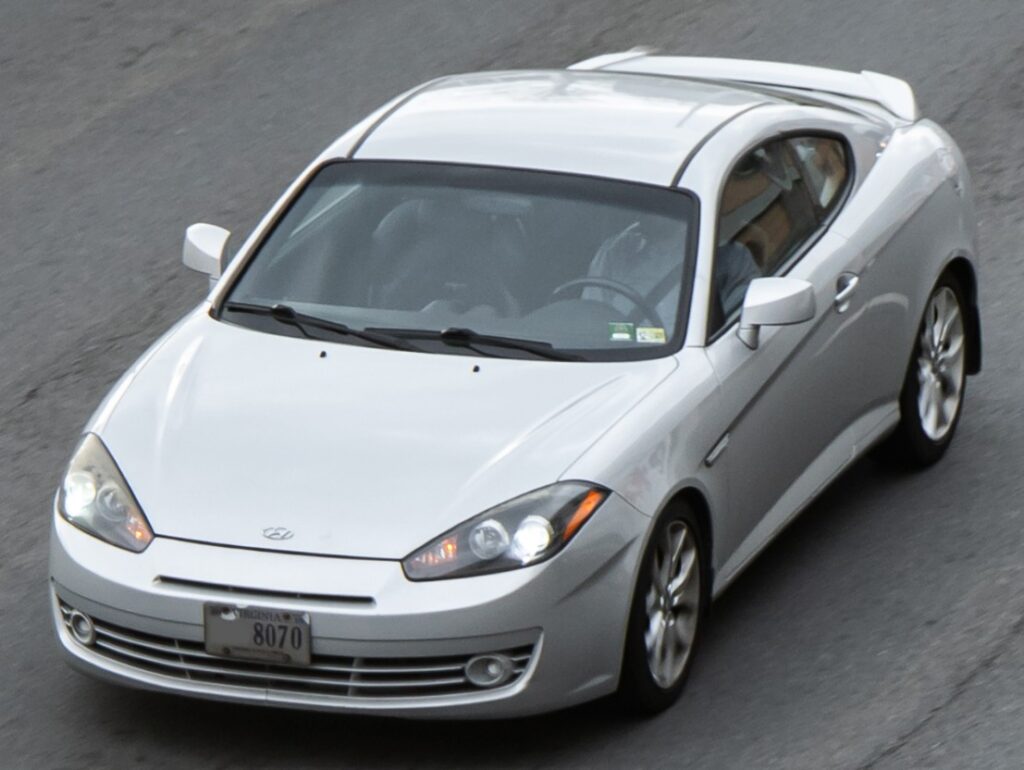
Ask most enthusiasts about Hyundai coupe models, and they'll likely picture the second generation.
This model became the most successful and recognizable Hyundai Coupe ever produced.
A Dramatic Design Upgrade
The second generation featured:
- Sharper lines
- Wider stance
- Larger wheels
- More muscular proportions
It looked significantly more expensive than its actual price tag suggested.
The Tiburon Name
In North America, this generation was commonly marketed as the Hyundai Tiburon.
The word "Tiburon" means shark in Spanish, perfectly matching the vehicle’s aggressive appearance.
Interior Improvements
Hyundai invested heavily in cabin quality.
Notable upgrades included:
- Better materials
- Sport seats
- Improved ergonomics
- Modern dashboard layout
For the first time, the Coupe felt genuinely premium.
Engine Choices in the Second Generation
Four-Cylinder Models
Entry-level versions typically featured:
- 2.0-liter inline-four engines
Benefits included:
- Lower running costs
- Better fuel economy
- Easier maintenance
V6 Models
The star of the lineup was undoubtedly the V6.
Specifications generally included:
- 2.7-liter V6 engine
- Around 172 horsepower
- Smooth power delivery
The V6 transformed the Coupe from a stylish commuter into a genuinely entertaining sports coupe.
Transmission Options
Buyers could select:
- 5-speed manual
- 6-speed manual
- 4-speed automatic
- 5-speed automatic
Manual versions remain particularly sought after today.
You may be interested in reading Hyundai Tiburon vs Mitsubishi Eclipse: Which Sport Coupe Deserves Your Garage?
Facelift Versions and Their Differences
2003 Facelift
Hyundai introduced several visual updates:
- Revised headlights
- Updated bumpers
- New wheel designs
These changes modernized the appearance considerably.
2007 Facelift
The later refresh brought:
- More aggressive front-end styling
- Updated rear lights
- Enhanced interior materials
Many enthusiasts consider these among the best-looking Hyundai Coupe models ever built.
The Hyundai Tuscani Connection
A Special Identity
In South Korea, the Coupe was often marketed as the Hyundai Tuscani.
The Tuscani name developed a cult following because:
- It sounded more premium
- It differentiated the model from mainstream Hyundais
- It became associated with enthusiast culture
Today, Tuscani badges are commonly used by owners worldwide.
Performance Characteristics
How Fast Was the Hyundai Coupe?
Performance varied by engine.
Approximate figures:
| Engine | 0-60 mph |
|---|---|
| 1.6L | 11-12 sec |
| 2.0L | 8-9 sec |
| 2.7L V6 | 7-8 sec |
While not supercar territory, these numbers were respectable for affordable sports coupes.
Cornering and Handling
The Coupe excelled in:
- Predictable handling
- Stable highway cruising
- Driver confidence
Its suspension struck a balance between comfort and sportiness.
Special Editions and Rare Variants
Limited Production Models
Over the years Hyundai released various special editions featuring:
- Unique paint colors
- Special wheels
- Leather interiors
- Performance-inspired styling packages
These limited variants are increasingly attractive to collectors.
Performance Modifications
The Coupe also became popular among tuners.
Common upgrades include:
- Cold air intakes
- Performance exhausts
- Lowering springs
- Turbocharger kits
Many owners discovered the platform responded surprisingly well to modifications.
Reliability of Hyundai Coupe Models
Can You Depend on a Hyundai Coupe?
One of the strongest aspects of Hyundai coupe models is reliability.
Properly maintained examples often exceed:
- 150,000 miles
- 200,000 miles
- Even 250,000 miles
Common Issues
Like any aging vehicle, there are areas to inspect:
Rust
Older models may develop rust around:
- Wheel arches
- Sills
- Undercarriage
Suspension Wear
Common wear items include:
- Bushings
- Ball joints
- Shock absorbers
Electrical Components
Occasionally owners report:
- Window regulator failures
- Sensor issues
- Aging wiring concerns
Fortunately, most repairs remain affordable.
Why Enthusiasts Love Hyundai Coupe Models
Affordability
The Coupe remains one of the most affordable sports coupes available on the used market.
Distinctive Appearance
Even today, the styling stands out.
Many people are surprised to learn some examples are over fifteen years old because the design has aged remarkably well.
Everyday Usability
Unlike many sports cars, the Coupe offers:
- Practical luggage space
- Comfortable seating
- Reasonable fuel consumption
- Reliable daily transportation
Strong Community Support
A passionate owner community exists worldwide.
Owners share:
- Technical advice
- Maintenance guides
- Modification ideas
- Restoration projects
This support network makes ownership easier and more enjoyable.
How Hyundai Coupe Models Compare to Rivals
Versus Toyota Celica
The Celica offered sharper handling but often cost more.
The Hyundai Coupe delivered stronger value for money.
Versus Honda Civic Coupe
Honda excelled in reliability and resale value.
You may be interested in readingHyundai Tiburon vs Mitsubishi Eclipse: Which Sport Coupe Deserves Your Garage?You may be interested in reading
Hyundai Tiburon vs Genesis: The Ultimate Hyundai Coupe ShowdownHyundai countered with more aggressive styling and lower purchase prices.
Versus Mitsubishi Eclipse
The Eclipse often provided stronger straight-line performance.
However, the Hyundai Coupe generally offered lower ownership costs.
Versus Ford Cougar
The Cougar focused on comfort.
The Hyundai Coupe delivered a sportier overall personality.
The End of the Hyundai Coupe Era
Changing Market Trends
Consumer preferences began shifting dramatically.
Drivers increasingly wanted:
- SUVs
- Crossovers
- Electric vehicles
As demand for traditional coupes declined, Hyundai gradually moved away from the segment.
The Final Years
Production eventually ended in 2008 for most markets.
While enthusiasts were disappointed, Hyundai had already begun investing heavily in future technologies and new vehicle categories.
Modern Successors to the Hyundai Coupe Spirit
Hyundai Veloster
The Veloster inherited much of the Coupe's youthful energy.
Key features included:
- Unique three-door design
- Turbocharged engines
- Modern technology
Hyundai Veloster N
This model elevated performance significantly.
Many enthusiasts consider it the spiritual successor to the Hyundai Coupe.
Hyundai N Performance Division
Hyundai's N division has further demonstrated the company’s commitment to enthusiast-oriented vehicles.
Cars like the Veloster N and Elantra N prove Hyundai still understands performance driving.
Buying a Used Hyundai Coupe Today
What to Look For
Before purchasing, inspect:
- Service history
- Rust condition
- Suspension components
- Engine health
- Transmission operation
A well-maintained example is worth paying extra for.
Best Version to Buy
Many enthusiasts recommend:
2.7 V6 Manual
Reasons include:
- Strong performance
- Excellent sound
- Engaging driving experience
2.0 Manual
Ideal for:
- Lower running costs
- Simpler maintenance
- Daily driving
Parts Availability
Despite its age, many parts remain available.
This makes restoration and maintenance relatively straightforward compared to some classic sports cars.
Future Collectibility
Will Hyundai Coupe Models Become Classics?
Signs increasingly suggest yes.
Several factors support future collectibility:
- Declining numbers
- Growing enthusiast interest
- Unique styling
- Historical significance
As the automotive world moves toward electrification, analog sports coupes like the Hyundai Coupe become increasingly special.
The Lasting Legacy of Hyundai Coupe Models
The Hyundai Coupe represents more than just a sporty two-door car. It symbolizes Hyundai's transformation from a budget-focused manufacturer into a respected global automotive brand. Through multiple generations, the Coupe demonstrated that affordable sports cars could be stylish, reliable, practical, and genuinely enjoyable to drive.
Whether we're discussing the original 1996 model, the iconic Tiburon, or the enthusiast-favorite V6 variants, Hyundai coupe models continue to inspire admiration. They remind us that driving enjoyment doesn't always require exotic price tags. Sometimes, the most memorable cars are the ones that deliver excitement, character, and value in equal measure.
For enthusiasts seeking an affordable entry into sports coupe ownership, the Hyundai Coupe remains one of the automotive world's best-kept secrets.
Frequently Asked Questions
1. What is the most popular Hyundai Coupe model?
The second-generation Hyundai Coupe/Tiburon (2001–2008) is widely considered the most popular and successful version.
2. Is the Hyundai Coupe reliable?
Yes. Most Hyundai Coupe models are known for strong reliability when properly maintained.
3. What is the fastest Hyundai Coupe?
The 2.7-liter V6 models are generally the fastest factory-produced Hyundai Coupe variants.
4. Is the Hyundai Coupe expensive to maintain?
No. Maintenance costs are typically lower than many rival sports coupes from the same era.
5. Are Hyundai Coupe models becoming collectible?
Interest is steadily increasing, especially for clean V6 manual examples and limited-edition variants.
You may be interested in readingHyundai Tiburon vs Mitsubishi Eclipse: Which Sport Coupe Deserves Your Garage?You may be interested in reading
Hyundai Tiburon vs Genesis: The Ultimate Hyundai Coupe ShowdownYou may be interested in reading
 Audi TT Generations: A Complete Guide to Every Audi TT Generation
If you want to know other articles similar to Hyundai Coupe Models: The Complete Guide to Hyundai’s Stylish Sports Coupes you can visit the category Models.
Land Rover Defender 90 vs 110 vs 130: Which Defender Is Right for You?
Land Rover Defender 90 vs 110: Which Defender Should You Buy?
Which Toyota Hilux Is the Best? The Complete Buyer’s Guide
Subaru XV vs Nissan Qashqai: Which Crossover Is Better?
Subaru XV vs Mazda CX-30: Which Compact SUV Should We Choose?
Subaru XV vs Toyota RAV4: Which SUV Is the Better Buy?
Leave a Reply
More content of your interest