

Hyundai i40 vs i30: Which Hyundai Is Right for You?

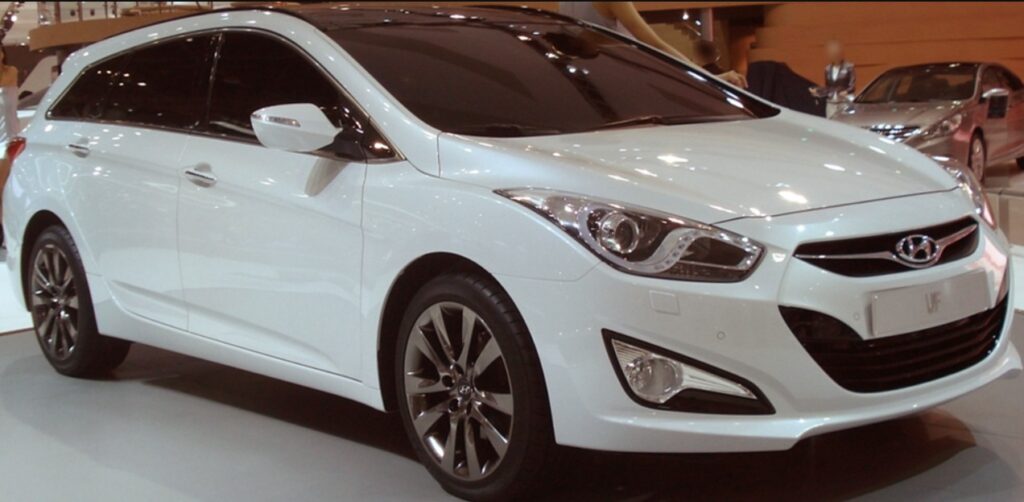
Choosing between the Hyundai i40 and Hyundai i30 can feel a little like deciding between a comfortable business-class seat and a practical city backpack. Both are useful. Both come from the same manufacturer. Yet they solve noticeably different problems.
The Hyundai i30 is a compact family car designed to remain manageable, economical, and easy to drive. The Hyundai i40, meanwhile, is a larger family model created for buyers who want more passenger space, a bigger luggage area, and a calmer long-distance experience.
At first glance, the i40 may appear to be nothing more than an enlarged i30. Spend time with both, however, and their different personalities quickly emerge. The i30 feels lighter on its feet and better suited to everyday urban life. The i40 feels more substantial, more relaxed, and more comfortable when the road stretches toward the horizon.
So, which one should we buy? Let us compare the Hyundai i40 vs i30 in terms of dimensions, practicality, comfort, performance, fuel economy, reliability, ownership costs, and overall value.
Content in this publication
- Hyundai i40 vs i30 at a Glance
- What Is the Main Difference Between the Hyundai i30 and i40?
- Hyundai i40 vs i30 Dimensions
- Exterior Design Comparison
- Interior Design and Cabin Quality
- Hyundai i40 vs i30 Interior Space
- Hyundai i40 vs i30 Boot Space
- Engine Options and Performance
- Driving Experience
- Ride Comfort
- Fuel Economy
- Reliability Comparison
- Maintenance and Repair Costs
- Technology and Safety Features
- Hyundai i40 vs i30 for Family Use
- Hyundai i40 vs i30 for Commuting
- Hyundai i40 vs i30 for Long-Distance Driving
- Used-Car Value
- Advantages of the Hyundai i30
- Disadvantages of the Hyundai i30
- Advantages of the Hyundai i40
- Disadvantages of the Hyundai i40
- Should We Buy a Hyundai i30 or Hyundai i40?
- Hyundai i40 vs i30: Our Final Verdict
- Frequently Asked Questions
Hyundai i40 vs i30 at a Glance
Before examining every detail, here is a simple overview of how the two cars differ.
| Category | Hyundai i30 | Hyundai i40 |
|---|---|---|
| Vehicle class | Compact family car | Large family car |
| Common body styles | Hatchback, wagon and fastback | Sedan and wagon |
| Best environment | Cities and mixed driving | Motorways and long trips |
| Passenger space | Good | Very good |
| Boot capacity | Practical | Larger overall |
| Driving character | Light and agile | Comfortable and composed |
| Fuel and maintenance costs | Usually lower | Usually higher |
| Parking ease | Better | More challenging |
| Used-car availability | Generally broader | More limited |
| Ideal buyer | Commuter or small family | Family or long-distance driver |
The answer is already beginning to form. The i30 places convenience first. The i40 places space and comfort first.
Neither approach is automatically better. The right choice depends on how we genuinely use a car rather than how we imagine we might use it.
What Is the Main Difference Between the Hyundai i30 and i40?
The main difference is size and market position.
The Hyundai i30 belongs to the compact family-car category. Depending on the generation and market, it has been offered as a hatchback, wagon, and fastback. It competes with vehicles such as the Volkswagen Golf, Ford Focus, Kia Ceed, Toyota Corolla, and Peugeot 308.
The Hyundai i40 sits one category above it. It was designed as a larger sedan or estate car competing with models such as the Ford Mondeo, Volkswagen Passat, Mazda6, Peugeot 508, and Vauxhall Insignia.
That distinction influences almost everything else.
The i30 is easier to park, generally cheaper to operate, and more comfortable in crowded streets. The i40 offers a longer cabin, a more generous boot, and a smoother motorway personality.
Think of the i30 as the car we use without much planning. It slips into ordinary life like a familiar pair of shoes. The i40 asks for a little more parking space but rewards us with breathing room.
Hyundai i40 vs i30 Dimensions
Overall Length and Road Presence
The Hyundai i40 is considerably longer than the i30 hatchback.
Exact measurements depend on the body style and model year, but an i40 is typically around 4.7 to 4.8 metres long. A conventional i30 hatchback is usually approximately 4.3 metres long.
That difference of roughly half a metre is significant.
We feel it when:
- Parking beside the road
- Turning through narrow streets
- Entering small garages
- Carrying adult passengers
- Loading luggage
- Travelling at motorway speeds
The i40 has more visual presence. It looks lower, longer, and more formal. The i30 looks more compact and approachable.
Width and Wheelbase
The i40 is also generally wider and has a longer wheelbase. Its wheels sit farther apart, creating a larger passenger compartment and a more stable feeling at speed.
A longer wheelbase often benefits rear legroom and ride comfort because the car can travel over uneven surfaces with less pitching. The i30’s shorter dimensions, on the other hand, make it feel more responsive and easier to place on the road.
Which Is Easier to Park?
The i30 wins this category without much debate.
Its shorter body makes parallel parking simpler, while its tighter proportions are better suited to urban parking spaces. Visibility varies by generation and body style, but the i30 generally feels less intimidating in confined areas.
The i40 is not impossibly large. Parking sensors and reversing cameras can make a dramatic difference. Nevertheless, its long rear section requires more attention.
Anyone living in an old city centre, using underground car parks, or parking on narrow residential streets will probably appreciate the i30 every day.
Exterior Design Comparison
The Hyundai i30’s Design
The i30 usually adopts the familiar proportions of a European compact car. It has a short rear overhang, a practical tailgate, and a relatively upright cabin.
Later generations look sharper and more athletic, particularly in N Line or Fastback form. The design aims to balance sportiness with everyday usefulness.
It does not shout for attention. Instead, it blends into daily life neatly, which may be precisely what many owners want.
The Hyundai i40’s Design
The i40 takes a more elegant approach. Its long bonnet, stretched roofline, and sweeping bodywork give it a more mature appearance.
The sedan has the formal look of a traditional executive-style family car. The Tourer or wagon combines that shape with a long cargo area, making it look ready for a cross-country journey.
Although design is subjective, the i40 often appears more expensive than it really is. It has the visual confidence of a larger vehicle without necessarily carrying the premium badge or premium price.
Which One Looks Better?
The i30 looks more modern, compact, and youthful.
The i40 looks more refined, spacious, and businesslike.
We would choose the i30 for an energetic urban appearance and the i40 for a more substantial road presence.
Interior Design and Cabin Quality
Inside, both cars reflect the period in which they were produced.
The i30 has remained in production through more recent model updates, so newer examples can offer fresher infotainment systems, digital displays, improved connectivity, and more advanced driver-assistance equipment. Hyundai confirmed that the i30 hatchback remained in production even after production of the Fastback version ended.
The i40 cabin is usually broader and more spacious, but its dashboard may feel older compared with a late-model i30. That does not mean it is unpleasant. Many i40 interiors are sensibly arranged, comfortable, and easy to understand.
Dashboard Layout
The i30 generally has a more compact dashboard. Controls are close to the driver, and the cabin feels neatly wrapped around the front occupants.
The i40 spreads its controls across a wider centre console. This creates a more open, relaxed impression.
Neither car is likely to overwhelm us with unnecessary complexity. Hyundai normally favours clear buttons, sensible menus, and straightforward ergonomics.
Material Quality
Material quality depends heavily on trim level.
Higher-specification versions may feature:
- Softer dashboard materials
- Leather or part-leather upholstery
- Heated seats
- Electric seat adjustment
- A panoramic roof
- Larger infotainment displays
- Premium audio equipment
- Dual-zone climate control
The i40 generally feels more substantial, especially through its larger seats and broader door panels. A newer i30, however, can feel more contemporary because its screens and technology belong to a later generation.
Hyundai i40 vs i30 Interior Space
Front-Seat Comfort
Both cars offer enough room for most front occupants.
The i30 provides a comfortable driving position with good adjustment, particularly in better-equipped trims. Its cabin does not feel cramped, although taller drivers may notice the centre console and door sitting relatively close.
The i40 gives the driver and front passenger more shoulder room. Its seats are often wider and shaped for long-distance comfort rather than sporty support.
For a 20-minute commute, the difference may seem small. After several hours on a motorway, the i40’s additional space can feel like loosening a tight collar.
Rear Legroom
Rear-seat passengers benefit most from the i40’s longer wheelbase.
Adults can sit behind adults with fewer compromises. There is more room to stretch the legs, and the cabin feels better suited to carrying four grown passengers regularly.
The i30 remains perfectly usable as a family vehicle. Children, teenagers, and average-height adults should fit comfortably. However, when a tall driver moves the front seat backward, rear legroom becomes more limited.
Rear Headroom
Headroom depends on the body style.
The i30 hatchback normally provides a reasonably upright roof. The Fastback’s sleeker shape can reduce rear headroom slightly.
The i40 sedan has a sloping rear roofline, while the wagon maintains more vertical space above rear passengers and luggage. For maximum family practicality, the i40 wagon is generally the strongest option.
Hyundai i40 vs i30 Boot Space
Boot capacity is one of the most important differences.
A modern i30 hatchback offers approximately 395 litres with the rear seats in place and around 1,301 litres when they are folded, although exact figures vary by version.
You may be interested in reading Opel Meriva vs Nissan Note: Which Used MPV Is Better?
That is a practical amount of space for:
- Weekly groceries
- A folded pushchair
- Several cabin-size suitcases
- Sports equipment
- Everyday family luggage
The i40 offers more.
Depending on body style and measurement method, the i40 sedan provides roughly 500 litres or more, while the wagon commonly offers around 550 litres with the seats upright. One set of published specifications lists approximately 552 litres for the wagon.
Which Boot Is More Practical?
The i40 wagon is the clear champion.
It provides a wide opening, a long floor, and enough space for holidays, pets, furniture, or bulky equipment. The sedan is spacious too, although its narrower boot opening makes awkward objects more difficult to load.
The i30 hatchback has a smaller luggage compartment, but its tailgate gives it excellent flexibility. In daily use, a practical opening can be more valuable than a large number on a specification sheet.
Do We Really Need the Extra Space?
This is where honest self-assessment matters.
Do we carry large loads every week, or only once a year? Are we buying a long car for a family holiday that happens occasionally? Would a roof box solve the same problem?
The i40’s luggage capacity is valuable when it is genuinely used. Otherwise, we may spend the rest of the year manoeuvring a larger vehicle for no meaningful benefit.
Engine Options and Performance
Engine availability differs considerably by country, generation, and year, so buyers should confirm the exact specification of any individual car.
Broadly speaking, the i30 has been offered with a wide selection of petrol and diesel engines, including smaller naturally aspirated units, turbocharged petrol engines, diesel engines, mild-hybrid options, and performance-focused N versions in certain markets.
The i40 was commonly sold with petrol engines and the well-known 1.7-litre CRDi diesel in several power outputs. Later versions could be paired with manual or dual-clutch automatic transmissions.
Hyundai i30 Performance
The standard i30 focuses on balanced everyday performance.
Small petrol engines suit urban journeys and moderate annual mileage. Turbocharged versions deliver stronger mid-range acceleration, making overtaking easier without dramatically increasing vehicle size.
Some i30 versions lean toward genuine performance. The i30 N, for example, belongs in a completely different conversation from an ordinary i40. It was developed as a hot hatch rather than a relaxed family cruiser.
Hyundai i40 Performance
The i40 is heavier, so it needs more torque to move confidently.
Diesel versions suit the car particularly well because they deliver useful pulling power at lower engine speeds. The i40 rarely feels designed to chase excitement. Instead, it gathers speed progressively and settles into a calm rhythm.
A healthy diesel i40 can be an excellent motorway companion. It may not launch forward like a sports car, but it carries speed with the steady confidence of a train leaving a station.
Which One Is Faster?
The answer depends entirely on the engine.
A basic i30 may be slower than a stronger i40 diesel. A turbocharged or performance-oriented i30 can be much faster than almost any ordinary i40.
As a general rule:
- Choose the i30 for a lighter, livelier feeling.
- Choose the i40 for effortless cruising and torque.
- Compare individual engines rather than model names alone.
Driving Experience
City Driving
The i30 is the better city car.
Its compact size, lighter steering, and shorter wheelbase help it move through traffic with less effort. Tight junctions feel manageable, and small parking spaces become less of a negotiation.
The i40 can handle urban driving, but we are always aware of its additional length. It feels like wearing hiking boots inside a small apartment: completely possible, just not ideal.
Motorway Driving
On open roads, the i40 begins to justify its size.
It feels planted and relaxed at motorway speeds. Its longer wheelbase reduces nervous body movements, and the larger cabin creates a calmer atmosphere.
The i30 remains stable and competent, especially in newer generations. However, road and wind noise may be more noticeable, particularly on versions fitted with larger wheels or lower-profile tyres.
Handling on Country Roads
The i30 generally feels more agile.
Its smaller dimensions help it change direction more eagerly, and the driver can place it more confidently through bends. Sportier trims may use firmer suspension, sharper steering, and larger tyres.
The i40 prefers smooth, flowing roads. It can handle corners safely, but its weight and length discourage aggressive driving. Push it hard, and it reminds us that comfort, not cornering drama, was its main mission.
Ride Comfort
The i40 usually wins for overall comfort, particularly on long journeys.
Its longer wheelbase helps soften dips and motorway undulations. The seats tend to be broader, while the suspension is tuned to create a composed driving experience.
That said, wheel size matters. An i40 fitted with large alloy wheels and thin tyres may ride more firmly than expected. Likewise, a standard i30 on modest wheels can be pleasantly comfortable.
When test-driving either vehicle, we should seek out imperfect roads. A smooth dealership route tells us very little. Potholes, patched asphalt, speed bumps, and concrete motorway sections reveal the truth.
Fuel Economy
The i30 generally has the advantage in everyday fuel consumption.
It is smaller, lighter, and often powered by lower-capacity engines. For short commutes and mixed driving, an efficient petrol i30 may offer a sensible balance between economy and mechanical simplicity.
The i40 can still be economical, particularly with a diesel engine on long journeys. A well-maintained diesel cruising steadily on a motorway may use fuel impressively slowly.
Petrol or Diesel?
A petrol model is often the safer choice for drivers who:
- Make frequent short trips
- Cover relatively low annual mileage
- Spend most of their time in cities
- Want to avoid diesel emissions-system concerns
A diesel may make more sense for drivers who:
- Cover high annual mileage
- Regularly travel long distances
- Tow or carry heavy loads
- Spend plenty of time on faster roads
Buying a diesel simply because its official fuel-economy figure looks attractive can be a mistake. Diesel particulate filters and related systems prefer regular longer journeys. A life made entirely of five-minute school runs may not allow them to operate properly.
Reliability Comparison
Both the i30 and i40 can provide dependable service when properly maintained. Their reliability, however, depends more on age, engine, gearbox, servicing, and previous ownership than on the badge alone.
The i30 has an advantage because it was sold in larger numbers in many markets. That usually means broader parts availability, more independent-garage knowledge, and a larger selection of used examples.
The i40 is less common. It is not necessarily unreliable, but finding certain trim pieces or model-specific components may take more effort.
Common Areas to Check on an i30
When inspecting a used i30, pay attention to:
- Clutch operation on manual cars
- Smooth automatic or dual-clutch shifts
- Suspension knocks
- Infotainment and electrical functions
- Diesel particulate-filter behaviour
- Turbocharger performance
- Air-conditioning operation
- Complete service history
Common Areas to Check on an i40
On a used i40, inspect:
- The clutch and dual-mass flywheel
- Automatic or dual-clutch gearbox behaviour
- Diesel emissions equipment
- Steering and suspension noises
- Electronic parking-brake operation
- Infotainment functions
- Tailgate equipment on wagons
- Service history and oil-change intervals
Condition Matters More Than Mileage Alone
A high-mileage motorway i40 with detailed service records may be a better purchase than a low-mileage example used only for short journeys and neglected maintenance.
Mileage tells us how far a car has travelled. It does not tell us how it was treated.
A stamped service book, invoices, matching tyres, clean fluids, and a smooth cold start can reveal more than the odometer.
Maintenance and Repair Costs
The i30 is likely to cost less to maintain overall.
Its smaller tyres, brakes, and suspension components may be cheaper to replace. There are also more vehicles available in breakers’ yards and more aftermarket parts in circulation.
The i40’s larger components can increase costs. It may require more expensive tyres, heavier-duty brakes, and slightly more labour for certain repairs.
Tyre Costs
Tyre prices depend on wheel diameter and brand rather than the model alone.
An i30 on sensible 15- or 16-inch wheels may be inexpensive to equip with quality tyres. Sportier versions with 18-inch wheels can cost considerably more.
The i40 often uses wider tyres. Large-wheel premium trims may turn a simple tyre replacement into an unpleasant surprise.
You may be interested in readingOpel Meriva vs Nissan Note: Which Used MPV Is Better?You may be interested in reading
 Dacia Jogger Expression vs Extreme: Which Trim Is Better?
Before buying, check the complete tyre size printed on the sidewall and compare replacement prices. It takes two minutes and can reveal a future bill worth hundreds.
Insurance Costs
The i30 is often cheaper to insure, particularly in lower-powered trims.
The i40’s larger size, stronger engines, and potentially higher parts costs may push premiums upward. However, insurance pricing depends on the driver, postcode, claims history, trim, and local market.
We should compare quotes using the exact registration or vehicle identification details rather than making assumptions based on model size.
Technology and Safety Features
A newer i30 may offer more advanced technology than an older i40.
Depending on the year and specification, available i30 equipment may include:
- Apple CarPlay and Android Auto
- A digital instrument display
- Lane-keeping assistance
- Forward-collision warning
- Autonomous emergency braking
- Blind-spot monitoring
- Rear cross-traffic alert
- Adaptive cruise control
- Wireless charging
The i40 can still be well equipped, particularly in premium trims. Possible features include heated and ventilated seats, navigation, a panoramic roof, automatic lights, parking assistance, a reversing camera, and lane-related safety systems.
However, buyers should never assume that a large car automatically has more equipment. A high-spec i30 may contain far more technology than an entry-level i40.
Which Has Better Safety?
Safety equipment depends strongly on the production year.
The i40 benefited from a strong structure and the expected safety systems of its era. The newer i30 has access to more modern active-safety technology designed to prevent accidents rather than merely protect occupants during one.
For families, features such as autonomous emergency braking, blind-spot monitoring, and rear cross-traffic assistance may be more useful than luxury upholstery.
Hyundai i40 vs i30 for Family Use
Both can work well as family cars.
The i30 is suitable for a small or medium-sized family that needs a flexible hatchback without the inconvenience of a large exterior footprint.
It handles school runs, shopping, weekend trips, and daily commuting easily. Child seats should fit, although rear-facing seats may reduce front-passenger space.
The i40 is better for families who regularly carry adults, older children, pushchairs, sports bags, or holiday luggage.
Choose the i30 for Family Life When:
- Most driving happens in town.
- Parking space is limited.
- One or two children normally use the rear seats.
- Lower running costs matter.
- Large luggage loads are occasional.
Choose the i40 for Family Life When:
- Rear-seat adults travel regularly.
- Long road trips are common.
- A large pushchair or pet crate is carried.
- Motorway comfort matters.
- Boot space is used every week.
Hyundai i40 vs i30 for Commuting
The i30 is the natural commuting choice for most drivers.
It consumes less road space, may use less fuel, and tends to be cheaper to insure and maintain. In stop-start traffic, its compact body reduces stress.
The i40 becomes attractive when the commute is long and fast. Someone travelling 100 kilometres a day on motorways may value its supportive seats, stable ride, larger fuel tank, and quieter cabin.
The key question is not simply how far we travel. It is where those kilometres occur.
Ten urban kilometres can feel more demanding in an i40 than 100 motorway kilometres.
Hyundai i40 vs i30 for Long-Distance Driving
The i40 is the stronger long-distance machine.
It offers:
- Better rear-seat space
- A larger luggage compartment
- A more relaxed ride
- Greater high-speed stability
- Wider seats
- A more mature cabin atmosphere
The i30 remains entirely capable of touring. Many owners travel long distances comfortably in one. Yet when both cars are similarly maintained and equipped, the i40 feels more naturally suited to covering large distances.
It does not hurry the road. It absorbs it.
Used-Car Value
The i30 normally has broader appeal in the used-car market.
Compact hatchbacks are easy to understand and easy to sell. New drivers, families, commuters, and older motorists can all find a suitable i30.
The i40 appeals to a narrower audience. Large sedans and wagons have lost popularity as many buyers move toward SUVs. That can make the i40 harder to sell, but it can also create excellent bargains.
A well-equipped i40 may cost less than a smaller used i30 of similar age. Buyers willing to accept higher running costs can receive a great deal of car for their money.
Which Is the Better Bargain?
The i40 may offer more vehicle per pound, euro, or dollar.
The i30 may offer the safer ownership proposition.
The bargain depends on what we measure. Purchase price alone does not include tyres, fuel, maintenance, depreciation, or ease of resale.
Advantages of the Hyundai i30
The Hyundai i30’s strongest qualities include:
- Compact exterior dimensions
- Easier parking
- Lower likely running costs
- Good fuel economy
- Practical hatchback access
- Wide used-car availability
- More recent technology on newer models
- Agile and predictable handling
- Easier resale
- Strong suitability for daily commuting
It is the car that asks little from us. We get in, drive, park, and continue with the day.
Disadvantages of the Hyundai i30
Its main limitations include:
- Less rear legroom
- A smaller boot than the i40
- More road noise in some versions
- Less relaxed motorway manners
- Limited space with tall passengers
- Firm ride quality on large wheels
- Less substantial cabin atmosphere
The i30 can do almost everything, but it cannot completely disguise its compact dimensions.
Advantages of the Hyundai i40
The Hyundai i40 offers:
- Excellent passenger space
- A large luggage compartment
- Strong motorway comfort
- Stable high-speed behaviour
- Good diesel torque
- Generous equipment in higher trims
- Attractive used prices
- A mature and elegant design
- Comfortable seats
- Strong suitability for family travel
It feels like a car built for journeys rather than errands.
Disadvantages of the Hyundai i40
Potential drawbacks include:
- More difficult parking
- Higher fuel consumption in urban driving
- More expensive tyres and brakes
- Older infotainment technology
- Lower used-car demand
- Limited availability in some countries
- Diesel-related risks on short journeys
- Greater dependence on parking sensors
- Fewer examples to choose from
The i40 gives us more space, but we pay for that space even when it is empty.
Should We Buy a Hyundai i30 or Hyundai i40?
Choose the Hyundai i30 when efficiency, convenience, and everyday usability are the priorities.
It is the better option for:
- Urban drivers
- First-time family-car buyers
- Short and medium commutes
- Drivers with limited parking
- Owners seeking lower costs
- Buyers wanting newer technology
Choose the Hyundai i40 when space, comfort, and long-distance refinement matter more.
It is the better choice for:
- Motorway commuters
- Families with older children
- Drivers carrying large luggage loads
- Estate-car buyers
- High-mileage motorists
- Anyone wanting maximum used-car value
Hyundai i40 vs i30: Our Final Verdict
The Hyundai i30 is the better all-round choice for most drivers.
It is easier to live with, cheaper to operate, simpler to park, and available in a wider range of ages and specifications. It provides enough space for ordinary family life without making every narrow street feel like an obstacle course.
The Hyundai i40 is the more comfortable and spacious car.
For long-distance drivers, large families, and buyers who genuinely need a big boot, it can be exceptional value. Its relaxed road manners and generous cabin make long journeys feel less tiring.
Ultimately, the Hyundai i40 vs i30 decision comes down to one simple question: do we value compact convenience or full-size comfort?
The i30 is the sensible everyday companion. The i40 is the long-legged traveller.
Buy the one that fits the journeys we actually make—not the journeys we occasionally dream about.
Frequently Asked Questions
1. Is the Hyundai i40 bigger than the Hyundai i30?
Yes. The Hyundai i40 is longer, generally wider, and built on a longer wheelbase. It offers more rear-passenger space and a larger luggage compartment, particularly in wagon form.
2. Is the Hyundai i30 cheaper to run than the i40?
Usually, yes. The i30 is lighter and commonly uses smaller engines, tyres, and brakes. Fuel, insurance, maintenance, and replacement-part costs may therefore be lower.
3. Which is more reliable, the Hyundai i30 or i40?
Both can be reliable when properly serviced. The i30 may be easier to maintain because it is more common and parts are widely available. Condition and service history matter more than the model name alone.
4. Is the Hyundai i40 better for motorway driving?
Yes. Its longer wheelbase, larger seats, greater cabin space, and stable road manners make it especially suitable for frequent motorway journeys.
You may be interested in readingOpel Meriva vs Nissan Note: Which Used MPV Is Better?You may be interested in reading
Dacia Jogger Expression vs Extreme: Which Trim Is Better?You may be interested in reading
Dacia Jogger vs Skoda Kodiaq: Which Seven-Seater Is Better?5. Which should a family buy, the i30 or i40?
A small family mainly driving in town will probably prefer the i30. A family regularly carrying adult passengers, pets, pushchairs, or substantial luggage will benefit from the i40’s additional space.
If you want to know other articles similar to Hyundai i40 vs i30: Which Hyundai Is Right for You? you can visit the category Models.
Nissan Rogue Dark Armor vs Platinum: Which Trim Is Better?

Kia Sorento Models: Complete Guide to Trims, Engines and Versions
BYD Shark 6 vs Ranger vs HiLux: Which Ute Makes the Most Sense in 2026?
BYD Shark 6 vs MG U9: Which Ute Makes More Sense in 2026?
BYD Shark 6 vs Ford Ranger Raptor: Which Performance Ute Is Better in 2026?
BYD Shark 6 vs Kia Tasman: Which Ute Is Better?
Leave a Reply
More content of your interest