
Hyundai Santa Fe Transmission Problems: Symptoms, Causes, Repairs, and Years to Watch

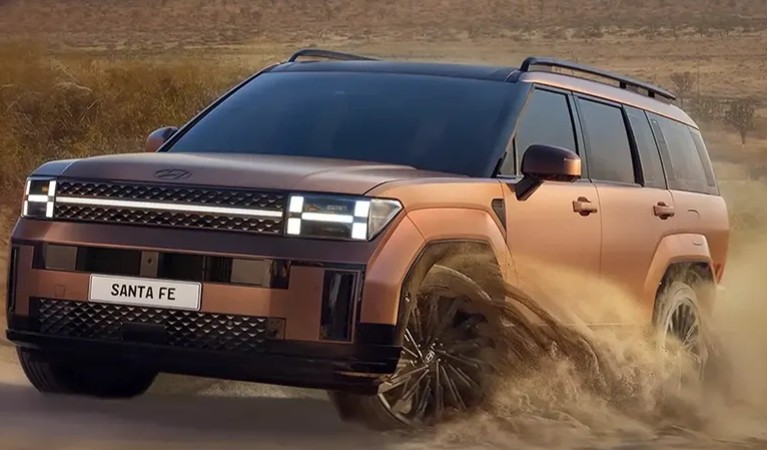
The Hyundai Santa Fe has spent more than two decades evolving from a relatively simple family SUV into a sophisticated vehicle packed with turbocharged engines, hybrid technology, electronic controls, and increasingly complex transmissions. Most Santa Fe owners may never experience a serious gearbox failure. Still, when Hyundai Santa Fe transmission problems appear, they can range from an irritating hesitation at low speed to a situation where the SUV struggles—or completely fails—to move.
And here is where things become complicated.
There is no single "Santa Fe transmission." Depending on the model year, engine, trim level, and country, Hyundai has paired the Santa Fe with conventional automatic transmissions, six-speed automatics, eight-speed automatics, and eight-speed wet dual-clutch transmissions. Hybrid versions can use yet another drivetrain arrangement.
That means a symptom that looks alarming on one Santa Fe might simply reflect the normal behavior of a dual-clutch gearbox on another.
We therefore need to diagnose the vehicle, not just the badge on the tailgate.
In this guide, we'll explore the most common Santa Fe transmission symptoms, explain which generations deserve particular attention, examine Hyundai's well-documented eight-speed DCT issues, and help owners decide when a strange shift is merely annoying and when it's time to stop driving.
Content in this publication
- Are Hyundai Santa Fe Transmission Problems Common?
- Most Common Hyundai Santa Fe Transmission Problems
- Hyundai Santa Fe Hesitation When Accelerating
- Hyundai Santa Fe Jerking or Hard Shifting
- Hyundai Santa Fe Transmission Shudder
- Hyundai Santa Fe Transmission Slipping
- Delayed Drive or Reverse Engagement
- Santa Fe Transmission Won't Go Into Gear
- The 8-Speed Dual-Clutch Transmission Deserves Special Attention
- Hyundai Recall 236 and Santa Fe DCT Problems
- 2024 Hyundai Santa Fe Transmission Recall
- Newer Santa Fe DCT Service Information
- Which Hyundai Santa Fe Years Have Transmission Problems?
- Hyundai Santa Fe Hybrid Transmission Problems
- Can Transmission Fluid Cause Santa Fe Shifting Problems?
- Can Software Fix Hyundai Santa Fe Transmission Problems?
- How Do We Diagnose Santa Fe Transmission Trouble Properly?
- How Much Does Santa Fe Transmission Repair Cost?
- Should You Keep Driving With a Transmission Warning?
- Buying a Used Hyundai Santa Fe: Transmission Checklist
- How Can We Reduce the Risk of Future Transmission Problems?
- Is the Hyundai Santa Fe Transmission Unreliable?
- Final Thoughts on Hyundai Santa Fe Transmission Problems
- Frequently Asked Questions
- 1. What are the most common Hyundai Santa Fe transmission problems?
- 2. Does the Hyundai Santa Fe have DCT transmission problems?
- 3. How do I know if my Santa Fe transmission recall was completed?
- 4. Is hesitation normal with the Hyundai Santa Fe DCT?
- 5. Should I buy a used Hyundai Santa Fe with an 8-speed DCT?
Are Hyundai Santa Fe Transmission Problems Common?
The answer depends heavily on the year and drivetrain.
Older Santa Fe models generally used traditional torque-converter automatic transmissions. Their problems tend to resemble those found in many aging automatic vehicles: delayed shifting, slipping, harsh shifts, worn internal components, fluid deterioration, sensors, solenoids, or valve-body issues.
Later vehicles became technologically more interesting.
Certain newer Santa Fe versions use Hyundai's eight-speed wet dual-clutch transmission. Hyundai describes a DCT as something similar to an automatically shifted manual gearbox: the transmission provides automatic operation while using clutch-based gear engagement rather than behaving exactly like a conventional torque-converter automatic.
That distinction matters.
A small amount of clutch engagement sensation, particularly during crawling traffic or parking maneuvers, does not automatically mean the transmission is failing.
Sudden loss of propulsion certainly can.
The Transmission Type Matters More Than the Santa Fe Badge
Before diagnosing anything, we would identify three details:
- Model year and engine
- Exact transmission installed
- Whether any outstanding recalls or service campaigns apply to the vehicle
Different markets received different drivetrains. For example, Hyundai has offered the Santa Fe Hybrid with a six-speed automatic, while turbocharged versions in certain markets have used an eight-speed DCT.
Two Santa Fe SUVs parked beside one another may therefore require completely different troubleshooting approaches.
Most Common Hyundai Santa Fe Transmission Problems
Transmission trouble rarely arrives carrying a sign saying, "Hello, I'm your gearbox."
Instead, we usually notice changes in the way the vehicle behaves.
The most important warning signs include delayed engagement when selecting Drive or Reverse, shuddering while accelerating, unusually harsh gear changes, hesitation from a stop, slipping engine RPM, transmission warning messages, abnormal whining or grinding noises, overheating warnings, difficulty selecting gears, and complete or temporary loss of drive.
Some symptoms overlap with engine, electrical, or drivetrain faults. A weak battery, failed sensor, engine misfire, damaged mount, or electronic control problem can occasionally imitate transmission trouble.
That is why replacing expensive components before scanning the vehicle for diagnostic trouble codes can become a painfully expensive guessing game.
Hyundai Santa Fe Hesitation When Accelerating
Hesitation is one of the most confusing complaints because several unrelated problems can create almost the same sensation.
Press the accelerator and imagine the vehicle taking a moment to decide what it wants to do. The engine may respond, but forward movement feels delayed.
On a conventional automatic Santa Fe, possible causes include transmission control problems, worn hydraulic components, fluid issues, or internal transmission wear.
With a dual-clutch Santa Fe, some low-speed characteristics may feel different from a traditional automatic because the DCT engages physical clutches. Hyundai itself explains that its DCT provides some characteristics associated with a manual transmission despite operating automatically.
However, increasingly severe hesitation, warning lights, juddering, or an inability to accelerate normally deserves diagnosis.
When Hesitation Becomes a Red Flag
We would pay particularly close attention when hesitation:
appears suddenly, becomes progressively worse, occurs together with a warning light, is accompanied by unusual transmission noise, prevents the vehicle from pulling safely into traffic, or follows a message relating to the transmission.
That moves us beyond "quirky shifting" territory.
Hyundai Santa Fe Jerking or Hard Shifting
A transmission should not feel as though someone kicked the back of the seat every time it changes gears.
Occasional firmness can occur depending on temperature, throttle position, road conditions, and transmission design. Repeated violent shifting is different.
Possible causes can include transmission control software, adaptation issues, sensors, hydraulic pressure problems, worn internal components, clutch issues on DCT-equipped vehicles, or a fault elsewhere in the powertrain.
One important clue is timing.
Does it happen only when the vehicle is cold?
Only from first to second gear?
Only after the transmission gets hot?
Only in stop-and-go traffic?
The pattern often gives a technician more useful information than simply saying, "The transmission shifts badly."
Cold Transmission Versus Warm Transmission Behavior
Automatic transmissions depend on precisely controlled hydraulic pressure and fluid characteristics. Temperature therefore affects behavior.
A slightly firmer shift immediately after a cold start can differ considerably from repeated banging shifts after 30 minutes of driving.
Recording when the symptom happens can significantly improve diagnosis.
Hyundai Santa Fe Transmission Shudder
Shuddering can feel like driving over a strip of tiny road bumps even though the pavement is smooth.
On vehicles with a DCT, clutch engagement deserves attention because the gearbox uses clutches as part of its normal operating principle.
A transmission shudder may also be confused with an engine misfire, worn engine mount, drivetrain vibration, wheel problem, or axle issue.
What Does DCT Judder Feel Like?
Drivers often describe DCT-related judder as vibration while moving away from a stop, especially under light throttle.
The sensation may disappear once the vehicle gains speed.
An occasional mild characteristic is not automatically catastrophic. Strong, worsening, or persistent judder deserves inspection—particularly if other transmission symptoms appear at the same time.
Hyundai Santa Fe Transmission Slipping
Traditional transmission slipping usually feels different from hesitation.
Imagine pressing the accelerator. Engine RPM rises, yet vehicle speed does not increase proportionally.
That relationship is the clue.
A healthy transmission transfers engine output effectively to the wheels. If the engine suddenly races without corresponding acceleration, something within the drivetrain may not be engaging properly.
Possible explanations depend heavily on transmission design and can include clutch-related problems, hydraulic pressure loss, internal wear, fluid problems, or electronic control faults.
Continued driving while a transmission is genuinely slipping can sometimes turn a manageable repair into a much larger one.
Delayed Drive or Reverse Engagement
Another complaint owners may encounter is delayed engagement.
We move the selector from Park into Reverse.
Nothing.
Then—clunk—the vehicle engages.
A small delay under certain conditions does not necessarily indicate failure, but long or increasingly harsh engagement should not be ignored.
Possible causes range from transmission control behavior to fluid pressure or internal mechanical faults.
One practical rule works well here: if the behavior has clearly changed from how the vehicle normally operates, investigate the change.
Santa Fe Transmission Won't Go Into Gear
This symptom deserves immediate attention.
The vehicle may start normally. The selector may indicate Drive. Yet pressing the accelerator produces little or no movement.
Electrical faults, control-system failures, DCT problems, hydraulic faults, damaged internal components, selector problems, or other drivetrain failures may be responsible.
A diagnostic scan should normally be one of the first steps.
Trying repeatedly to force the vehicle forward by revving the engine is rarely the clever solution. If the transmission cannot transmit power correctly, adding more engine power may simply add more stress.
The 8-Speed Dual-Clutch Transmission Deserves Special Attention
The eight-speed wet DCT represents one of the most important chapters in any discussion of newer Hyundai Santa Fe transmission problems.
Hyundai designed the wet DCT with oil-submerged clutch packs. The manufacturer has described the system as offering better heat tolerance and durability than a dry-clutch design while reducing noise and harshness.
Yet certain vehicles equipped with eight-speed DCT units became subject to safety recalls in the United States.
This is important because we're no longer talking about scattered online complaints. We're dealing with documented manufacturer and NHTSA recall actions.
Hyundai Recall 236 and Santa Fe DCT Problems
In 2022, Hyundai initiated U.S. Safety Recall 236 involving certain vehicles equipped with an eight-speed dual-clutch transmission. Hyundai's recall documentation identified drivability symptoms including rough upshifts, hesitation, and lack of motive power under the relevant failure condition.
One particularly serious characteristic documented in the recall involved a fail-safe strategy.
NHTSA documentation states that an affected vehicle could enter fail-safe operation and lose motive power approximately 20 to 30 seconds after the diagnostic trouble code and warning lamp appeared.
That's substantially different from an irritating rough shift.
Losing propulsion while traveling through an intersection or merging into traffic creates an obvious safety concern.
What Caused the Recall 236 Problem?
The recall involved the transmission's electric oil pump system and associated transmission control logic.
Hyundai's remedy included a transmission control unit software update and inspection procedures. Recall documentation also indicated that transmission replacement could be required under specified diagnostic conditions.
This distinction matters when shopping for a used Santa Fe.
A transmission that received the proper recall remedy is not equivalent to one whose recall history is unknown.
Why Checking the VIN Matters
Recall applicability is determined by the individual vehicle rather than by assumptions such as "all 2022 Santa Fes are affected."
Owners in the United States can check open recalls through NHTSA, while Hyundai provides recall lookup systems in various markets. Hyundai Australia, for example, allows owners to enter a 17-digit VIN to check applicable safety recalls.
If we're buying a used Santa Fe with an eight-speed DCT, checking the VIN should be part of the buying process—not something we remember after handing over the money.
2024 Hyundai Santa Fe Transmission Recall
The redesigned Santa Fe also encountered a separate DCT-related recall in the United States.
In 2024, NHTSA recall documentation covering certain Santa Fe vehicles described a condition where transmission control unit software could result in damage to the dual-clutch transmission during normal operation.
Hyundai's recall procedure involved updating TCU software, inspecting the vehicle, and replacing the DCT when damage was identified.
Symptoms technicians were instructed to consider included abnormal rolling behavior, noise, hesitation or juddering, and transmission damage.
Once again, VIN verification beats assumptions.
Not every Santa Fe from a particular model year is necessarily included.
Newer Santa Fe DCT Service Information
The story did not stop with the initial recalls.
Hyundai service information filed with NHTSA in 2026 discusses certain eight-speed wet DCT vehicles, including Santa Fe applications, where specific high-pressure electric oil pump diagnostic trouble codes can require transmission replacement.
That does not mean every newer Santa Fe DCT is destined to fail.
It does show why diagnostic trouble codes matter enormously on these electronically managed transmissions.
Guesswork has become increasingly useless.
Modern transmissions are mechanical systems wrapped inside a digital nervous system.
Which Hyundai Santa Fe Years Have Transmission Problems?
We should be careful with broad "bad year" declarations.
A 15-year-old Santa Fe with neglected maintenance can develop transmission trouble simply because components wear with mileage and age. That does not make every Santa Fe built that year defective.
Newer models require a different approach because particular DCT-equipped vehicles have been covered by formal recalls.
So rather than creating a dramatic blacklist, we would divide Santa Fe ownership into three broad categories.
Older Santa Fe Models
Older conventional automatic transmissions can experience age- and mileage-related problems such as delayed engagement, slipping, shift solenoid faults, valve-body problems, fluid leaks, sensor failures, or internal mechanical wear.
Condition and maintenance history become extremely important.
A well-maintained higher-mileage vehicle can sometimes be a better purchase than a lower-mileage example whose maintenance history resembles a mystery novel.
2021-2023 Era DCT-Equipped Santa Fe Models
Certain vehicles equipped with Hyundai's eight-speed wet DCT deserve additional attention because of Recall 236 and the electric oil pump/TCU issue documented by Hyundai and NHTSA.
For these vehicles, confirming recall completion is one of the first steps we would take.
2024 Santa Fe DCT Models
Certain redesigned Santa Fe vehicles were involved in the separate 2024 DCT recall concerning TCU software and possible transmission damage.
Again, check the VIN rather than treating the entire model year as defective.
Hyundai Santa Fe Hybrid Transmission Problems
Hybrid Santa Fe models deserve their own section because shoppers sometimes assume every current Santa Fe uses the controversial eight-speed DCT.
They do not.
Hyundai has paired the Santa Fe Hybrid powertrain with a six-speed automatic transmission in markets where that configuration is offered.
Therefore, DCT recall discussions should not automatically be applied to every Santa Fe Hybrid.
Hybrid drivetrains also introduce other components that can alter the way power delivery feels, so correct diagnosis remains essential.
Can Transmission Fluid Cause Santa Fe Shifting Problems?
Transmission fluid is the lifeblood of many automatic gearbox systems, but fluid advice should never be reduced to "just change it."
The correct fluid specification, service method, transmission temperature, fill procedure, and maintenance schedule depend on the exact gearbox.
Using the wrong fluid can create more problems than it solves.
Likewise, transmission fluid that smells burned or contains obvious metallic contamination can be evidence of internal distress rather than the root cause itself.
Think of dirty fluid as smoke coming from a building.
Changing the smoke doesn't extinguish the fire.
Can Software Fix Hyundai Santa Fe Transmission Problems?
Sometimes.
The official recalls themselves demonstrate how important transmission control software has become. Hyundai's DCT recall remedies have included TCU software updates, although inspection and even transmission replacement may also be necessary depending on vehicle condition.
Modern transmissions depend on software to determine clutch behavior, hydraulic pressure, shift timing, protection strategies, and fault responses.
That means a mechanical-feeling symptom can occasionally originate in electronic control logic.
But software is not magic.
No update will reconstruct physically damaged gears, bearings, clutch assemblies, or hydraulic components.
How Do We Diagnose Santa Fe Transmission Trouble Properly?
A sensible diagnosis should move from evidence toward repair rather than from anxiety toward parts replacement.
We would begin by documenting exactly when the symptom occurs and checking whether warning lights or messages appear. Next comes a full diagnostic scan—not merely a generic engine-code reader when transmission-module access is required. Recall status should then be checked using the VIN. Fluid condition and leaks can be inspected where applicable, followed by wiring, connectors, battery voltage, relevant sensors, mounts, and transmission-specific service information. Only after those steps should expensive internal transmission repairs or replacement become the working conclusion.
A skilled technician armed with accurate data is worth far more than five people guessing from a parking lot.
How Much Does Santa Fe Transmission Repair Cost?
There is no meaningful single price.
A software update performed under a recall could cost the owner nothing.
A sensor or wiring repair may be comparatively modest.
Valve-body, clutch, hydraulic, or internal transmission repairs can become substantially more expensive.
Complete transmission replacement sits near the painful end of the spectrum.
Costs also vary enormously between the United States, Canada, Australia, the UK, Europe, and other markets.
Before approving a major repair, we would want three things: the diagnostic codes, the technician's explanation of the failed component, and confirmation that no recall, campaign, warranty, or manufacturer assistance applies.
That ten-minute conversation can occasionally save thousands.
Should You Keep Driving With a Transmission Warning?
It depends on the symptom, but certain situations deserve immediate caution.
If the Santa Fe loses propulsion, struggles to engage Drive or Reverse, displays a serious transmission warning, emits grinding noises, produces a burning smell, repeatedly enters fail-safe operation, or behaves unpredictably in traffic, continuing to drive may be unsafe.
The Recall 236 documentation is a perfect illustration of why. The documented failure condition could ultimately lead to loss of motive power.
If the vehicle cannot deliver power reliably, towing it for diagnosis is considerably wiser than discovering the full extent of the problem while crossing six lanes of traffic.
Buying a Used Hyundai Santa Fe: Transmission Checklist
A used Santa Fe can still be a very attractive family SUV, but we would never buy one based solely on a shiny dashboard and fresh tire dressing.
Drive it cold if possible. Test Reverse engagement. Accelerate gently from a stop. Repeat the test under moderate throttle. Cruise at several speeds. Slow down and allow the transmission to downshift. Spend time in stop-and-go conditions. Listen for abnormal mechanical noise. Watch for warning messages. Ask for maintenance invoices rather than accepting "always serviced" as evidence.
For DCT-equipped vehicles, add one more non-negotiable step:
Check the VIN for outstanding recalls and confirm completed recall work.
A five-minute check can tell us more than a salesperson's twenty-minute speech.
How Can We Reduce the Risk of Future Transmission Problems?
No maintenance strategy can guarantee a transmission will last forever, but sensible ownership improves the odds.
Follow Hyundai's service requirements for the exact vehicle and market. Use the specified transmission fluid when service is required. Do not ignore leaks. Address warning lights quickly. Keep the vehicle's battery and electrical system healthy because modern transmission controls depend heavily on stable voltage. Avoid repeatedly abusing the transmission with unnecessary hard launches or excessive loads.
And if we own a DCT-equipped Santa Fe, understanding how a dual-clutch gearbox behaves is helpful.
A DCT is not simply a conventional automatic wearing a different name.
Is the Hyundai Santa Fe Transmission Unreliable?
Calling every Santa Fe transmission unreliable would be misleading.
The Santa Fe family spans numerous generations, markets, engines, and transmission designs.
Some older vehicles develop ordinary high-mileage automatic transmission issues. Certain newer eight-speed DCT vehicles have had documented problems serious enough to trigger recalls. At the same time, many Santa Fe owners may drive for years without encountering a major gearbox failure.
The useful question isn't:
"Are Santa Fe transmissions bad?"
It is:
"Which transmission is in this particular Santa Fe, how has it been maintained, what recall history does it have, and how does it behave today?"
That question actually helps us buy or repair a car.
Final Thoughts on Hyundai Santa Fe Transmission Problems
Hyundai Santa Fe transmission problems cover a surprisingly wide spectrum.
Older conventional automatics can develop the familiar problems associated with mileage, wear, fluid deterioration, sensors, solenoids, or internal components.
Newer eight-speed DCT models require closer attention because Hyundai and NHTSA have documented specific faults and recalls involving transmission control, electric oil pump operation, possible DCT damage, hesitation, juddering, and—in certain affected vehicles—loss of motive power.
Yet panic is rarely useful.
Diagnosis is.
Identify the exact gearbox. Scan the transmission system. Check the VIN. Review recall completion. Compare the vehicle's current behavior with its normal characteristics. Then decide whether we're dealing with software, maintenance, an electrical fault, a mechanical component, or a transmission genuinely approaching the end of its life.
Transmissions are expensive enough without replacing one that wasn't broken.
And when a serious fault genuinely exists, finding it early is usually far kinder to our wallet.
Frequently Asked Questions
1. What are the most common Hyundai Santa Fe transmission problems?
Common symptoms can include hesitation, harsh shifting, delayed Drive or Reverse engagement, shuddering, slipping, warning lights, abnormal noises, and failure to move. The likely cause differs significantly between conventional automatic and DCT-equipped Santa Fe models.
2. Does the Hyundai Santa Fe have DCT transmission problems?
Certain Santa Fe vehicles equipped with Hyundai's eight-speed wet dual-clutch transmission have been subject to U.S. safety recalls. Recall 236 addressed an issue that could lead to drivability problems and loss of motive power, while a separate 2024 recall involved TCU software that could result in DCT damage in certain vehicles.
3. How do I know if my Santa Fe transmission recall was completed?
Check the vehicle's VIN through the applicable Hyundai recall lookup service or national vehicle-safety authority. In the United States, NHTSA provides recall lookup tools. Recall eligibility is vehicle-specific, so checking the VIN is more reliable than assuming every Santa Fe from a particular year is affected.
4. Is hesitation normal with the Hyundai Santa Fe DCT?
A DCT can behave differently from a torque-converter automatic because it operates using automatically controlled clutches. Mild low-speed characteristics may therefore feel unfamiliar. Severe hesitation, worsening judder, warning lights, unusual noise, or loss of power should be investigated.
5. Should I buy a used Hyundai Santa Fe with an 8-speed DCT?
We wouldn't automatically reject one. Instead, we would verify its VIN for outstanding recalls, confirm that applicable recall work was completed, inspect maintenance records, scan for diagnostic trouble codes, and test-drive the vehicle carefully. Condition and documented history matter far more than internet reputation alone.
If you want to know other articles similar to Hyundai Santa Fe Transmission Problems: Symptoms, Causes, Repairs, and Years to Watch you can visit the category Common Problems.
Volvo S90 Common Problems: Reliability & Repair Guide
Volvo S90 No Sound: Causes, Fixes and Solutions

Nissan Rogue Smells Like Gas: Causes and Fixes
Vauxhall Agila Problems: Common Faults & Fixes

Kia Sorento Jerking When Accelerating: Causes & Fixes

Jaguar F-Pace Low Battery: Causes, Warning Signs, and How to Fix It
Leave a Reply
More content of your interest