
Hyundai Veloster Turbo Specs: Complete Engine and Performance Guide

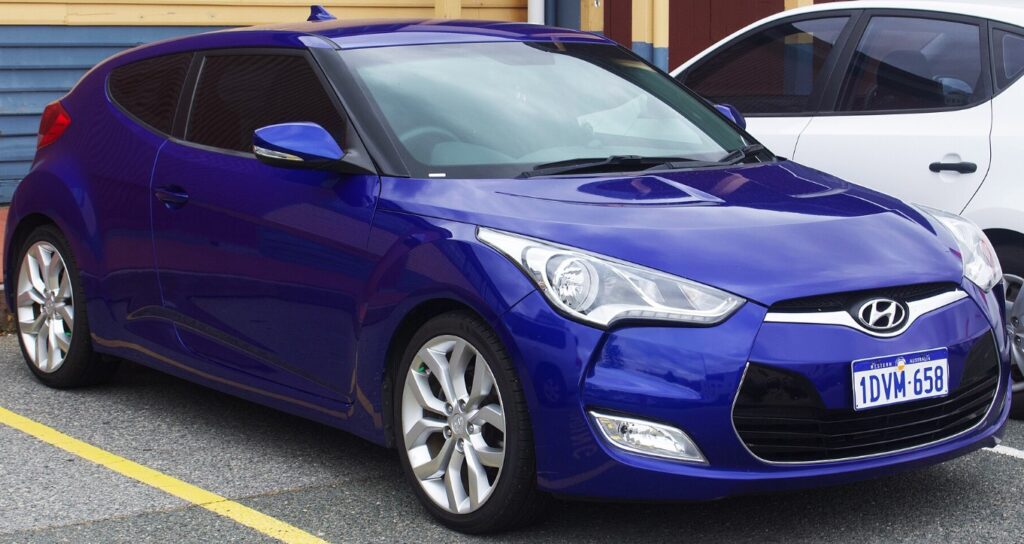
The Hyundai Veloster Turbo specs tell us quite a lot about what made this unusual three-door hatchback such an interesting alternative to traditional sporty compacts. It never relied on enormous horsepower or a giant engine. Instead, Hyundai squeezed strong torque from a small turbocharged four-cylinder, wrapped it in a relatively light chassis, and gave drivers a choice between manual and dual-clutch transmissions.
In North America, the second-generation Veloster Turbo's headline figures are simple: a 1.6-liter turbocharged direct-injection four-cylinder producing 201 horsepower and 195 lb-ft of torque. Hyundai rated maximum horsepower at 6,000 rpm, while peak torque arrives across a broad 1,500-to-4,500-rpm range. Under maximum acceleration, an overboost function can briefly raise peak torque to approximately 202 lb-ft.
Those numbers only tell part of the story, though. The Veloster Turbo changed across generations and markets, while the Veloster N introduced an entirely different 2.0-liter performance engine. So, rather than throwing a pile of specifications at the page, we're going to unpack what the numbers actually mean.
Content in this publication
- Hyundai Veloster Turbo Specs at a Glance
- What Engine Does the Hyundai Veloster Turbo Have?
- How Much Horsepower Does a Hyundai Veloster Turbo Have?
- Hyundai Veloster Turbo Torque Specs
- First-Generation Hyundai Veloster Turbo Specs
- Second-Generation Veloster Turbo Specs
- Hyundai Veloster Turbo Transmission Options
- Is the Hyundai Veloster Turbo Front-Wheel Drive?
- How Fast Is the Hyundai Veloster Turbo?
- Hyundai Veloster Turbo Curb Weight
- What Turbocharger Does the Veloster Use?
- Hyundai Veloster Turbo Fuel Requirements
- Veloster Turbo vs Veloster N Specs
- Hyundai Veloster Turbo Dimensions and Packaging
- What Makes the Veloster Turbo Fun to Drive?
- Is the Hyundai Veloster Turbo Good for Daily Driving?
- Which Hyundai Veloster Turbo Version Should We Choose?
- What to Check When Buying a Used Veloster Turbo
- Are Hyundai Veloster Turbo Specs Still Competitive?
- Understanding the Hyundai Veloster Turbo Specs in Context
- Conclusion: The Specs Explain Only Half the Veloster Turbo Story
- Frequently Asked Questions
Hyundai Veloster Turbo Specs at a Glance
For the second-generation U.S.-market Veloster Turbo, the core specifications include:
- Engine: 1.6-liter turbocharged inline-four
- Displacement: 1,591 cc
- Fuel system: Gasoline direct injection
- Horsepower: 201 hp at 6,000 rpm
- Torque: 195 lb-ft from 1,500 to 4,500 rpm
- Overboost torque: Approximately 202 lb-ft
- Drive layout: Front-wheel drive
- Manual transmission: Six-speed
- Automatic transmission: Seven-speed dual-clutch transmission
- Engine family: Hyundai Gamma
- Cylinders: Four
- Turbocharged: Yes
- Body style: Three-door sporty hatchback
- Typical curb weight: Roughly 1,270–1,330 kg depending on specification and market
Hyundai's own global specification information lists the 1.6 Gamma turbo engine at 1,591 cc, while official weight specifications for certain markets range from approximately 1,270 to 1,330 kg depending on configuration.
Pretty modest displacement, right? Yet that is precisely what makes the Veloster Turbo interesting. It's a classic example of turbocharging turning a small engine into something that feels much larger when the accelerator goes down.
What Engine Does the Hyundai Veloster Turbo Have?
At the heart of the Veloster Turbo sits Hyundai's 1.6-liter Gamma turbocharged gasoline engine.
The displacement is 1,591 cubic centimeters, meaning we're dealing with a relatively compact four-cylinder engine. Instead of depending purely on displacement to produce power, Hyundai combines direct fuel injection with turbocharging.
Official Hyundai documentation for the second-generation Veloster describes the engine as a 1.6 T-GDi, or turbocharged gasoline direct-injection, unit. Depending on the market's measurement standard, its output may be advertised as approximately 201 hp, 204 PS, or 150 kW.
Those figures are essentially different ways of expressing a very similar level of performance rather than evidence that every Veloster Turbo has a completely different engine.
Why the 1.6-Liter Engine Works So Well
A naturally aspirated 1.6-liter engine might sound fairly ordinary. Attach a well-matched turbocharger, however, and everything changes.
The turbo uses exhaust gases to compress the air entering the engine. More air allows the engine management system to add more fuel while maintaining the correct mixture, producing a larger combustion event.
Think of the difference like blowing gently onto a campfire versus using a bellows. The basic ingredients haven't changed, but substantially more oxygen suddenly makes the fire much more energetic.
That's essentially what turbocharging does for the Veloster.
How Much Horsepower Does a Hyundai Veloster Turbo Have?
The second-generation U.S.-spec Hyundai Veloster Turbo produces 201 horsepower at 6,000 rpm.
That's a healthy figure for a 1.6-liter engine.
Hyundai highlighted that the engine delivered approximately 125.6 horsepower per liter, an impressive specific output for a mainstream sporty hatchback designed to run on regular fuel.
Horsepower-per-liter figures don't necessarily determine whether one car is better than another, of course. But they do show how aggressively an engine extracts performance from its displacement.
Is 201 Horsepower Actually Fast?
This is where context matters.
Put 201 horsepower into a large SUV and it may feel merely adequate. Put it into a relatively compact hatchback with a curb weight around 1.3 metric tons, and things become considerably more entertaining.
The Veloster Turbo won't pin you against the seat like a modern 500-horsepower performance car, but that's arguably part of the appeal. We can actually explore its performance without needing a runway every time we press the accelerator.
It sits in that sweet spot where the driver can use much of the available power during ordinary road driving.
Hyundai Veloster Turbo Torque Specs
Torque might be even more important than horsepower in explaining why the Veloster Turbo feels punchy.
U.S.-market second-generation models develop 195 lb-ft of torque from just 1,500 rpm through 4,500 rpm.
That wide plateau matters.
Instead of forcing us to rev the engine near its limit whenever we need acceleration, the turbocharger supplies substantial pulling power relatively early.
Press the throttle while merging onto a freeway or leaving a slow corner and the engine doesn't need an engraved invitation. The torque is already waiting.
What Is Veloster Turbo Overboost?
The second-generation Veloster Turbo includes an overboost feature that can temporarily increase torque under hard acceleration.
Hyundai states that peak torque can rise from 195 lb-ft to approximately 202 lb-ft during maximum acceleration.
Australian specifications communicate a similar idea using metric measurements: the 150 kW 1.6-liter turbo produces 265 Nm normally and up to approximately 275 Nm with overboost.
The effect isn't equivalent to suddenly adding another engine under the hood, but it gives the car a little extra shove when we're demanding everything it has.
First-Generation Hyundai Veloster Turbo Specs
Here's where online research can become confusing.
The Veloster Turbo was sold across multiple countries and model years, so searching for something as simple as "Veloster Turbo horsepower" can produce different answers.
Earlier versions also used Hyundai's turbocharged 1.6-liter Gamma four-cylinder, but calibration varied by market.
For example, Hyundai's Australian documentation for the Veloster Street Turbo lists the 1.6-liter Turbo GDi engine at 150 kW and 265 Nm, with maximum power arriving at 6,000 rpm and maximum torque available from 1,750 to 4,500 rpm. Hyundai also described technology including direct injection, a twin-scroll turbocharger, dual continuously variable valve timing and a timing chain.
So before comparing specifications, we should always check the model year and country.
Why Veloster Turbo Power Figures Differ Online
You'll frequently encounter horsepower, PS, kilowatts, pound-feet and Newton-meters on different Veloster specification sheets.
That alone can make two virtually identical engines look different.
We also have genuine regional differences caused by tuning, emissions requirements, fuel standards and model-year changes.
Consequently, one number shouldn't automatically be applied to every Veloster Turbo ever sold.
US Specs vs International Specs
For second-generation cars, the difference is easy to illustrate.
Hyundai's U.S. documentation quotes 201 hp and 195 lb-ft, while Australian documentation describes the turbo engine as producing 150 kW and 265 Nm.
Those figures are very close after unit conversion.
Hyundai's Asia-Pacific specification uses 204 PS at 6,000 rpm for the 1.6 T-GDi engine.
The lesson? Don't panic when one brochure says 201 hp and another says 204 PS. We're often looking at measurement conventions rather than a mysterious horsepower disappearance.
Second-Generation Veloster Turbo Specs
The redesigned Veloster arrived for the 2019 model year in the United States.
Hyundai retained the basic 1.6-liter turbo formula but revised far more than simply the styling.
The turbocharged engine continued with 201 horsepower and 195 lb-ft of torque, while Hyundai concentrated on making that output accessible through strong low- and mid-range response.
This approach suited the Veloster's personality perfectly.
Rather than creating a peaky engine that only wakes up near redline, Hyundai gave it a broad torque curve that works during the situations drivers experience every day.
Hyundai Veloster Turbo Transmission Options
A good engine can be ruined by an uninspiring transmission.
Fortunately, Veloster Turbo buyers received choices.
Depending on trim and model year, the second-generation car was available with a six-speed manual transmission or seven-speed dual-clutch transmission.
Each produces a noticeably different driving experience.
Six-Speed Manual Transmission
For drivers who enjoy participating in the process, the manual is arguably the most natural pairing.
You decide when to shift. You control the clutch. You can keep the engine inside its strongest torque range when attacking a winding road.
Does that make the car objectively faster in every situation? No.
Does it make an ordinary trip to buy groceries substantially more entertaining? Quite possibly.
The enthusiast-oriented Turbo R-Spec particularly emphasized this hands-on approach.
Seven-Speed Dual-Clutch Transmission
The seven-speed DCT offers the convenience of an automatic while using a dual-clutch architecture designed to provide quicker, more direct gear changes than a traditional torque-converter automatic.
One clutch essentially handles one set of gears while the second prepares another, allowing the transmission to transition between ratios quickly.
For commuters who still want rapid shifts during spirited driving, it's a compelling compromise.
Is the Hyundai Veloster Turbo Front-Wheel Drive?
Yes. The Veloster Turbo is front-wheel drive.
That means the front tires are responsible for steering and transmitting engine power to the pavement.
Some enthusiasts instinctively prefer rear-wheel or all-wheel drive for high-performance cars, but front-wheel drive makes plenty of sense at the Veloster Turbo's power level.
It reduces complexity, helps packaging efficiency and keeps the vehicle relatively light.
Once power rises substantially beyond this point, managing front-wheel traction becomes increasingly challenging. At around 200 horsepower, however, the arrangement remains quite manageable.
How Fast Is the Hyundai Veloster Turbo?
Performance isn't defined by horsepower alone.
Vehicle weight, gearing, tires, launch technique, road conditions, temperature and transmission choice all influence acceleration.
That's why we shouldn't treat a single zero-to-60 result as a universal Veloster Turbo specification.
What we can say confidently is that the combination of roughly 200 horsepower, substantial low-rpm torque and relatively low curb weight makes the car meaningfully quicker than an ordinary economy hatchback.
Its strongest characteristic isn't necessarily explosive launch performance.
It's responsiveness.
The engine's torque arrives early enough that the car feels eager during overtaking, freeway merging and corner exits.
Why Torque Delivery Matters More Than the Headline Number
Imagine two cars with identical 201-horsepower ratings.
Car A doesn't deliver serious torque until 5,000 rpm. Car B offers almost all of its torque from 1,500 rpm.
On paper, the horsepower box looks identical.
Around town, though, Car B will often feel considerably stronger because we don't have to constantly rev it to access useful performance.
That broad 1,500-to-4,500-rpm torque band is one of the most important figures on the Veloster Turbo's specification sheet.
Hyundai Veloster Turbo Curb Weight
Weight varies according to transmission, equipment and market.
Hyundai's global specification information lists curb-weight figures ranging from approximately 1,270 to 1,330 kg for certain Veloster Turbo configurations.
In an age when even relatively compact vehicles can become surprisingly heavy, those numbers help explain the Veloster's lively personality.
Weight affects nearly everything.
A lighter car requires less energy to accelerate, places less demand on its brakes and generally reacts more eagerly when changing direction.
That's why power-to-weight ratio often gives us a better understanding of real-world performance than horsepower alone.
What Turbocharger Does the Veloster Use?
First-generation documentation specifically identifies a twin-scroll turbocharger as part of the 1.6-liter Turbo GDi package.
A twin-scroll design separates exhaust pulses to improve the way exhaust energy reaches the turbine.
The objective is straightforward: improve response and reduce the lazy feeling commonly associated with older turbo engines.
And this brings us to turbo lag.
Does the Veloster Turbo Have Much Turbo Lag?
Every turbocharged engine needs some time and exhaust flow to build boost, but the Veloster's relatively low torque peak suggests exactly what Hyundai was trying to achieve: quick response at everyday engine speeds.
Peak torque arriving as low as 1,500 rpm on second-generation U.S. models helps make the turbo feel much more immediate than the stereotypical old-school turbo car where nothing happens... nothing happens... and then suddenly everything arrives at once.
There's still a distinct turbocharged character, but it's designed to be usable rather than dramatic for drama's sake.
Hyundai Veloster Turbo Fuel Requirements
One particularly useful detail about the second-generation U.S. Veloster Turbo is that Hyundai advertised its 201-horsepower output on regular fuel.
That's worth appreciating because performance engines often demand premium gasoline to achieve their published output.
Fuel requirements can nevertheless vary between markets, engine versions and model years.
Hyundai owner's documentation for 1.6 T-GDi applications in certain markets specifies unleaded fuel of RON 91 or higher, for example.
So rather than applying a generic internet recommendation, we should follow the fuel label and owner's manual supplied with the specific vehicle.
Veloster Turbo vs Veloster N Specs
This is one distinction we absolutely need to make.
The Veloster Turbo and Veloster N are not simply two trim levels with the same engine tune.
The regular Turbo uses the 1.6-liter turbocharged four-cylinder producing roughly 201 horsepower.
The Veloster N steps into genuine hot-hatch territory with a 2.0-liter turbocharged engine.
For the 2022 U.S. Veloster N, Hyundai specifies 275 horsepower at 6,000 rpm and 260 lb-ft of torque from 1,450 to 4,700 rpm.
That's a very different animal.
201 HP vs 275 HP
Seventy-four horsepower is a substantial gap in a compact car.
The regular Veloster Turbo is the playful road-going athlete. The Veloster N is the one arriving in racing shoes and asking where the nearest track is.
Hyundai developed the N as its dedicated high-performance version, with much more than extra boost. The N model received specialized chassis, braking, suspension and performance features intended to support its additional power. Hyundai itself described the Veloster N as a performance car designed for both road and track use.
So shoppers comparing used examples shouldn't assume that "Turbo" and "N" are interchangeable names.
They represent distinctly different performance levels.
Veloster N DCT Overboost
Things get even more interesting with later Veloster N models equipped with Hyundai's eight-speed wet dual-clutch transmission.
Hyundai introduced this transmission for the 2021 Veloster N.
The N's performance features can temporarily increase torque during aggressive acceleration. This should not be confused with the regular Veloster Turbo's 202-lb-ft overboost function.
Different engine. Different transmission. Different level of performance.
Hyundai Veloster Turbo Dimensions and Packaging
Part of the Veloster's charm has always been its unusual body design.
Instead of following the conventional two-door coupe or five-door hatchback formula, Hyundai gave the car one conventional door on the driver's side and two passenger-side doors.
It's strange when described on paper.
In reality, it's rather clever.
We get the visual profile of a coupe from one side while passengers have easier rear-seat access from the other.
Earlier Hyundai specifications list the Veloster Turbo with a 104.3-inch wheelbase, while a 2016 Turbo measured around 167.3 inches long and 71.1 inches wide.
The unusual packaging became part of the Veloster identity rather than merely a styling gimmick.
What Makes the Veloster Turbo Fun to Drive?
Here's the interesting part: none of the individual specifications sound outrageous.
A 1.6-liter engine? Normal.
Front-wheel drive? Normal.
Around 200 horsepower? Healthy, but hardly supercar territory.
Put them together in a compact, relatively light hatchback with a wide torque curve and responsive transmission options, though, and the recipe works.
A great driver's car doesn't necessarily require gigantic numbers.
Sometimes moderate horsepower lets us explore more of a chassis more often.
It's the difference between owning a musical instrument we can actually play and having a concert organ installed in the living room.
The Veloster Turbo provides enough performance to entertain without requiring absurd speeds before things become interesting.
Is the Hyundai Veloster Turbo Good for Daily Driving?
Its engine specifications actually make a strong argument for everyday use.
Peak torque beginning around 1,500 rpm means we don't need to endlessly downshift in traffic. The compact footprint makes the car easy to maneuver. The passenger-side rear door makes the rear seat more accessible than its coupe-like shape suggests.
And because second-generation U.S. Turbo models were designed to deliver their published 201 horsepower on regular gasoline, fuel requirements don't automatically turn every trip to the pump into a premium-fuel ritual.
There are compromises, naturally.
The low roofline and sporty packaging don't offer crossover-like practicality, and a firmly tuned hatchback won't isolate occupants from every broken road surface.
But that's not really what we came here for, is it?
Which Hyundai Veloster Turbo Version Should We Choose?
The right Veloster depends less on finding the highest number and more on deciding what kind of driving experience we want.
Drivers who enjoy shifting for themselves will naturally gravitate toward manual versions, particularly enthusiast-oriented specifications such as the Turbo R-Spec.
Those dealing with regular city traffic may find the dual-clutch transmission easier to live with while retaining a sporty character.
And anyone looking at a Veloster Turbo but constantly wishing it had another 70-plus horsepower should probably stop negotiating with themselves and investigate the Veloster N instead.
Buying the more powerful car isn't always the answer, however.
A regular Veloster Turbo can be less intense, easier to exploit on public roads and potentially better suited to a mixed diet of commuting and weekend driving.
What to Check When Buying a Used Veloster Turbo
Specifications matter when shopping for a used performance car, but condition matters considerably more.
A pristine 201-horsepower Veloster Turbo with proper maintenance is a much more attractive proposition than a heavily modified example whose previous owner treated every traffic light like qualifying at Monaco.
Service records deserve close attention.
Turbocharged direct-injection engines operate under substantial thermal and mechanical loads, so consistent oil changes and correct servicing matter. We should also evaluate clutch behavior on manual cars, transmission operation on DCT versions, tires, brakes, cooling-system condition and evidence of questionable aftermarket tuning.
Remember: a modified Veloster isn't automatically a bad Veloster.
The question is whether the modifications were appropriate, professionally installed and supported by sensible maintenance.
Are Hyundai Veloster Turbo Specs Still Competitive?
Modern performance cars have moved the goalposts.
Today, 200 horsepower can sound almost modest when 300-horsepower compact cars aren't unusual.
But spec-sheet inflation doesn't erase the Veloster Turbo's appeal.
The car came from an era when Hyundai was rapidly transforming its enthusiast image, and the Veloster Turbo occupies an interesting middle ground between an ordinary sporty hatchback and the harder-edged N models that followed.
Its approximately 200-horsepower output is enough to be enjoyable, while its unusual body style means it still looks different from almost everything else parked beside it.
Sometimes distinctiveness ages better than raw horsepower.
Understanding the Hyundai Veloster Turbo Specs in Context
The most useful way to read a Veloster Turbo specification sheet is as a complete package rather than a collection of isolated numbers.
The 1.6-liter engine supplies the foundation.
Turbocharging provides the muscle.
Direct injection contributes to precise fuel delivery.
A broad torque band gives the car real-world urgency.
Manual and dual-clutch transmissions let buyers choose their preferred style of involvement.
Relatively restrained curb weight allows approximately 200 horsepower to accomplish more than the number might suggest.
And the bizarre-but-brilliant three-door layout gives the car a personality that specifications can't really measure.
That's ultimately why the Veloster Turbo developed a following.
It isn't perfect because the numbers are perfect.
It's appealing because Hyundai used sensible numbers to build something unusual.
Conclusion: The Specs Explain Only Half the Veloster Turbo Story
So, what should we remember about the Hyundai Veloster Turbo specs?
For the second-generation U.S. model, the essentials are a 1.6-liter turbocharged direct-injection four-cylinder, 201 horsepower at 6,000 rpm and 195 lb-ft of torque from 1,500 to 4,500 rpm, with temporary overboost capable of pushing torque to approximately 202 lb-ft.
Pair that engine with a relatively lightweight front-wheel-drive platform and either a manual or dual-clutch transmission, and the numbers begin making sense.
The Veloster Turbo never tried to win a horsepower arms race.
Instead, it made approximately 200 horsepower feel useful.
And there's an important difference.
We can buy cars with far more power, faster acceleration and bigger engines. But few combine turbocharged punch, compact dimensions, an asymmetrical three-door body and genuine enthusiast character quite like the Veloster.
That oddness isn't something we need to excuse.
It's one of the best specifications the car has.
Frequently Asked Questions
1. How much horsepower does a Hyundai Veloster Turbo have?
The second-generation U.S.-spec Hyundai Veloster Turbo produces 201 horsepower at 6,000 rpm from its 1.6-liter turbocharged four-cylinder engine. Specifications can differ slightly by market because some countries advertise output in PS or kilowatts rather than U.S. horsepower.
2. What size engine is in the Hyundai Veloster Turbo?
The regular Veloster Turbo uses a 1.6-liter, 1,591 cc turbocharged four-cylinder gasoline engine. It belongs to Hyundai's Gamma engine family and uses gasoline direct injection.
3. How much torque does the Veloster Turbo make?
Second-generation U.S. models produce 195 lb-ft between 1,500 and 4,500 rpm. An overboost feature can temporarily increase peak torque to approximately 202 lb-ft under maximum acceleration.
4. Is the Veloster N the same as the Veloster Turbo?
No. The regular second-generation Veloster Turbo uses a 1.6-liter turbo engine producing approximately 201 horsepower. The 2022 Veloster N uses a larger 2.0-liter turbocharged engine producing 275 horsepower and 260 lb-ft of torque, making it a significantly more serious performance model.
The second-generation U.S. Veloster Turbo was advertised as producing its 201 horsepower on regular fuel. Fuel requirements vary by country and model year, however, so owners should always follow the fuel specification printed in their vehicle's owner's manual and fuel-door information.
If you want to know other articles similar to Hyundai Veloster Turbo Specs: Complete Engine and Performance Guide you can visit the category Service and Parts.
Vauxhall Mokka Tyre Pressure Reset: Complete Guide
How to Reset the Tire Pressure System on Your Hyundai Tucson
Hyundai Kona Tire Pressure: Complete PSI Guide

Vauxhall Corsa Timing Belt Replacement Cost UK 2026

Mazda CX-5 Tire Size Chart: 2013–2026 Guide

How to Reset a Honda Civic: Complete Step-by-Step Guide
Leave a Reply
More content of your interest