
Mazda BT-50 Lights Staying On: Causes, Fixes, and Battery-Saving Steps

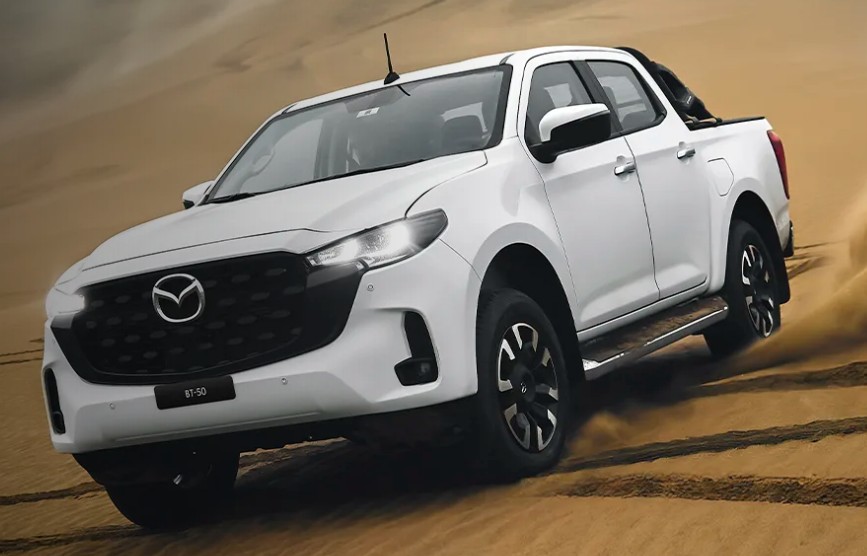
When the Mazda BT-50 lights stay on after we switch off the engine, the problem can feel surprisingly confusing. The truck is parked, the key is out, the doors are closed, yet a headlight, brake light, interior lamp, parking light, or dashboard indicator keeps glowing like it has unfinished business.
Sometimes, this is completely normal. Modern vehicles often use delayed lighting systems to illuminate the path around the vehicle after we lock it. In other cases, though, a light that refuses to switch off can point to a faulty switch, a damaged door sensor, a stuck relay, an electrical wiring problem, or an accessory that has been left in the wrong position.
The urgent concern is battery drain. One small cabin bulb may take hours to flatten a healthy battery, while headlights or brake lights can leave us with a no-start situation much sooner. That is why we should not ignore the problem and assume the lights will eventually turn themselves off.
In this guide, we will look at the most common reasons for Mazda BT-50 lights staying on, how to identify which system is responsible, what we can safely check at home, and when it is time to call an auto electrician.
Content in this publication
- Why Are My Mazda BT-50 Lights Staying On?
- First, Identify Which Lights Remain On
- Could It Be the Normal Headlight Delay Feature?
- Check the Headlight Switch Position Carefully
- A Stuck Headlight Relay Can Keep the Lights Powered
- Why Mazda BT-50 Interior Lights Stay On
- Door Latch Sensors and Door-Ajar Warnings
- Why Mazda BT-50 Brake Lights Stay On
- Parking Lights Staying On After the Truck Is Locked
- Can Daytime Running Lights Stay On Normally?
- Dashboard Lights Remaining On After Shutdown
- The Ignition May Still Be in Accessory Mode
- Aftermarket Accessories Can Cause Strange Lighting Faults
- Trailer Wiring Is a Common Place to Look
- LED Bulb Conversions May Create Electrical Confusion
- Water, Corrosion, and Wiring Damage
- Could a Weak Battery Make the Lights Stay On?
- How Quickly Can the Battery Drain?
- What to Do Immediately When the Lights Will Not Turn Off
- A Simple Diagnostic Checklist
- Does the Light Switch Off After a Fixed Delay?
- Does Locking the Truck Change Anything?
- Does Opening and Closing One Door Affect the Light?
- Do the Brake Lights Go Out When We Pull the Pedal Upward?
- Does Tapping the Fuse Box Change the Problem?
- Did the Fault Begin After Electrical Work?
- Does the Problem Occur Only With a Trailer Connected?
- Is the Light Bright or Only Faintly Glowing?
- When a Fuse Test Can Help
- Checking for Parasitic Battery Drain
- Body Control Module or Smart Junction Box Problems
- Can We Reset the Lighting System?
- Model-Year Differences Matter
- When Is It Safe to Keep Driving?
- When to Call an Auto Electrician
- Common Mistakes to Avoid
- How to Prevent Future Lighting Problems
- Mazda BT-50 Lights Staying On: Final Thoughts
- Frequently Asked Questions
- 1. Why do my Mazda BT-50 headlights stay on after I lock the truck?
- 2. Can interior lights staying on flatten the battery?
- 3. Why are my Mazda BT-50 brake lights permanently on?
- 4. Should I disconnect the battery when the lights will not switch off?
- 5. Can aftermarket LED bulbs cause lights to glow after shutdown?
Why Are My Mazda BT-50 Lights Staying On?
The answer depends on which lights remain illuminated.
A Mazda BT-50 uses separate switches, modules, relays, sensors, and wiring circuits for different lighting systems. That means headlights staying on may have a completely different cause from brake lights, dashboard lights, or an interior dome lamp.
Common explanations include:
- A normal headlight delay feature
- A light switch left in the parking-light position
- A door or tailgate sensor that still thinks something is open
- A damaged brake pedal switch stopper
- A sticking relay
- A faulty combination switch
- An aftermarket accessory interfering with factory wiring
- Moisture or corrosion inside an electrical connector
- A body control module or smart junction box fault
- A weak battery causing unusual electronic behavior
Before removing parts, we should identify the exact light and note when it stays on. Does it happen every time? Does it switch off after several minutes? Does locking the truck make any difference? Those clues can turn an electrical guessing game into a logical diagnosis.
First, Identify Which Lights Remain On
Not all lights should be diagnosed in the same way. Walk around the truck and check the front, rear, cabin, dashboard, mirrors, cargo area, and number plate.
Headlights Staying On
If the low beams or daytime running lights remain illuminated, possible causes include the automatic lighting function, a delayed shutoff feature, a sticking headlight relay, or a faulty multifunction switch.
Parking Lights Staying On
Parking lights include smaller front lamps, rear tail lamps, side markers, and often the number-plate lights. These may remain on because the rotary light control is not fully in the OFF or AUTO position.
Brake Lights Staying On
Brake lights that remain illuminated without anyone pressing the pedal usually indicate a brake light switch problem, a missing pedal stopper, incorrect switch adjustment, or a wiring short.
Interior Lights Staying On
Cabin lamps often remain on because a door is not fully closed, the dome-light switch is set to ON, the dashboard dimmer has been rotated to its highest position, or a door-ajar sensor is malfunctioning.
Dashboard Lights Staying On
Some dashboard indicators may remain visible briefly after shutdown. If they stay illuminated for an extended period, the truck may not be fully switching off, an accessory circuit may still be active, or a control module may not be entering sleep mode.
Cargo or Canopy Lights Staying On
BT-50 models fitted with a canopy, tray, toolbox, or aftermarket cargo lighting may have separate switches. These accessories are easy to overlook because we may not see the light from the driver’s seat.
Could It Be the Normal Headlight Delay Feature?
Many Mazda BT-50 variants have a delayed exterior lighting function. Depending on the model year and equipment, the headlights may remain on briefly after the ignition is switched off. This feature is designed to light the driveway, garage entrance, or path to the front door.
The exact behavior varies by generation, trim level, market, and vehicle settings. In some trucks, the delay is triggered automatically. In others, it may activate when we operate the headlight stalk after turning off the ignition.
If the headlights go out after a short, consistent delay, the system is probably behaving normally.
However, the situation deserves investigation when:
- The lights remain on indefinitely
- They stay on for much longer than usual
- The battery repeatedly goes flat
- Locking the truck does not turn them off
- The lighting delay suddenly behaves differently
- Only one side stays illuminated
- The switch is in OFF, but the lights remain fully powered
A normal convenience feature acts like a timer. A fault behaves more like a tap that refuses to close.
Check the Headlight Switch Position Carefully
One of the simplest causes is also one of the easiest to miss. The exterior light control may appear to be switched off when it is actually set to parking lights, automatic mode, or another nearby position.
Turn the control through each setting and return it firmly to OFF. If the truck has an AUTO position, cover and uncover the light sensor on the dashboard to see whether the system responds.
We should also check whether the switch feels loose, rough, or inconsistent. A worn combination switch may develop damaged internal contacts. When that happens, the lights may stay on even though the control appears to be in the correct position.
Try this basic test:
- Switch the ignition on.
- Move the light control through every position.
- Watch which lamps respond.
- Return the control to OFF.
- Switch the ignition off.
- Remove the key or exit with the smart key.
- Close all doors and lock the vehicle.
- Wait several minutes.
If the lighting continues after the expected delay, move to the next checks.
A Stuck Headlight Relay Can Keep the Lights Powered
Relays act like electrically controlled switches. A small control signal tells the relay to supply power to a larger circuit, such as the headlights. Over time, internal relay contacts can stick together.
When a headlight relay sticks, the lights may continue receiving power after the control signal disappears.
Signs of a Sticking Relay
A faulty relay may cause:
- Headlights that remain on with the switch off
- Lights that turn off after tapping the fuse box
- Intermittent operation
- One beam setting that behaves differently from another
- A clicking sound from the relay area
- A relay that feels unusually warm
If the fuse-box diagram clearly identifies a removable headlight relay, a technician may test it by swapping it with an identical relay used by a noncritical circuit. We should only do this when the relays have matching part numbers and electrical ratings.
Blindly moving relays around can create new problems. When the layout is unclear, it is better to consult the owner’s information or have an auto electrician test the circuit.
Why Mazda BT-50 Interior Lights Stay On
Interior lights usually depend on the door switches, dome-light control, dimmer wheel, and body electronics. When any of those components falsely reports that a door is open, the cabin lamp may remain illuminated.
Start by checking the obvious:
- Is the dome-light switch set to ON?
- Is the dashboard brightness control turned fully upward?
- Are all doors securely latched?
- Is the tailgate or rear access panel closed?
- Is anything trapped in a door seal?
- Does the instrument panel show a door-open warning?
- Does the light dim when we lock the vehicle?
A door may look closed while the latch is only resting on the first catch. Open and firmly close each door individually.
Test Each Door One at a Time
Open the driver’s door, locate the door switch or observe the latch mechanism, and operate it manually where safe. Repeat the process for every passenger door.
If the interior light responds normally to every door except one, we may have found the faulty sensor or latch.
On some models, the door-ajar switch is integrated into the latch rather than appearing as a separate push-button. That means the latch assembly may need cleaning, adjustment, testing, or replacement.
Door Latch Sensors and Door-Ajar Warnings
The vehicle’s electrical system relies on door-latch signals for more than the interior lamps. The same input may control the alarm, central locking, battery-saver timer, key warning, and dashboard door-open symbol.
A faulty latch sensor can tell the vehicle that a door is permanently open. The truck may then keep the cabin lights awake and prevent some modules from entering sleep mode.
Signs of a door-latch sensor issue include:
- Interior lights staying on
- A door-open icon appearing with all doors closed
- Central locking behaving inconsistently
- The alarm triggering unexpectedly
- A warning chime continuing
- The cabin lights flickering over bumps
- The vehicle refusing to auto-lock
Sometimes, dirt or dried lubricant inside the latch causes the sensor to stick. Cleaning may help, but electrical latch problems often require proper testing.
Why Mazda BT-50 Brake Lights Stay On
Brake lights staying on are especially important because they can drain the battery and confuse drivers behind us. Constant brake lights also make it harder for other road users to tell when we are actually slowing down.
The most common cause is a brake pedal switch issue.
The switch sits near the upper section of the brake pedal. When the pedal is released, a stopper or contact point presses the switch plunger. When we press the pedal, the plunger moves and the brake lights illuminate.
If the stopper breaks, falls out, or becomes misaligned, the switch may behave as though the pedal is constantly depressed.
Inspect the Brake Pedal Stopper
Look above the brake pedal with a flashlight. We are checking for:
- A missing rubber or plastic stopper
- Broken fragments on the floor mat
- A switch plunger that is not being pressed
- Excessive pedal movement
- A loose switch
- Damaged wiring around the pedal assembly
A missing stopper can sometimes be temporarily replaced to prevent battery drain, but the correct automotive-grade part should be installed as soon as possible.
Brake Light Switch Adjustment
A brake light switch may also be threaded or clipped into an adjustable bracket. If it has moved too far from the pedal, the lights may remain on.
Adjustment must be precise. If the switch is pushed too close, the brake lights may not activate soon enough. If it sits too far away, they may stay on. Because brake lights are a safety system, we should verify their operation before driving.
Parking Lights Staying On After the Truck Is Locked
Parking lights may stay on because the lighting control has been left in the parking-lamp setting. Depending on the market and model, a warning chime may sound when we open the driver’s door.
If the switch is definitely off, check whether all parking lights remain on or only one side.
When all parking lights stay illuminated, likely causes include:
- The light switch
- A parking-light relay
- A wiring short
- A control module command
- Aftermarket alarm wiring
- Trailer wiring problems
When only one side stays on, the issue may involve a local wiring fault, damaged lamp holder, corrosion, or an unintended parking-light function.
Can Daytime Running Lights Stay On Normally?
Daytime running lights normally operate when the vehicle is running or when certain ignition conditions are met. They should not remain fully illuminated for an extended period after the truck has shut down.
However, what appears to be a daytime running light may actually be a position lamp or welcome-light feature.
Observe the brightness. Daytime running lights may operate at a different intensity from parking lights. If the lights remain bright and never shut down, the issue may involve a relay, ignition signal, lighting module, or aftermarket wiring.
Dashboard Lights Remaining On After Shutdown
A few dashboard lights may stay on briefly while the truck completes its shutdown routine. Modern vehicles are rolling computer networks, and their modules do not always go to sleep the instant we press the stop button or remove the key.
Concern begins when the cluster remains illuminated for many minutes, warning lights continue glowing, or the battery is weak the next morning.
Possible reasons include:
- The ignition has been left in accessory mode
- The start button was pressed without fully shutting down
- The key is still detected inside the vehicle
- A door remains open
- An aftermarket stereo is back-feeding the accessory circuit
- A control module is staying awake
- An ignition relay is sticking
- The ignition switch is worn
For push-button models, verify that the engine is off and the instrument cluster shows the vehicle has fully entered the OFF state. Pressing the button repeatedly without the brake pedal can cycle the truck through accessory and ignition modes.
The Ignition May Still Be in Accessory Mode
This issue can be surprisingly easy to create. We stop the engine, continue listening to music, then walk away without realizing that the vehicle remains in accessory mode.
In accessory mode, the stereo, dashboard, charging ports, or other circuits may remain powered. The headlights or interior lamps may also behave differently because the truck does not yet consider itself fully shut down.
Check for:
- Radio still playing
- Instrument cluster partially illuminated
- Power windows still active
- Accessory socket still powered
- Start-button illumination
- A warning message about the ignition or key
Cycle the ignition fully off, exit the truck, close the doors, and lock it. Watch whether the lights shut down normally.
Aftermarket Accessories Can Cause Strange Lighting Faults
Aftermarket additions are common on pickup trucks. Driving lights, light bars, canopies, alarms, stereos, trailer brake controllers, reversing cameras, dual-battery systems, UHF radios, and remote starters may all connect to factory wiring.
When installed correctly, they work without disturbing the original electrical system. When installed poorly, they can back-feed power into circuits that should be off.
A back-feed is a little like water travelling through the wrong pipe. Electricity enters a circuit from an unintended direction and keeps lights or modules active.
Pay special attention if the fault began after fitting:
- A light bar
- LED headlight bulbs
- Trailer wiring
- A canopy
- A stereo
- An alarm system
- A dash camera
- Additional reversing lights
- A dual-battery setup
- A remote-start kit
Disconnecting an accessory fuse may help isolate the cause, but we should avoid cutting wires or unplugging control modules without a wiring diagram.
Trailer Wiring Is a Common Place to Look
Pickup trucks frequently tow trailers, caravans, work equipment, or boats. Trailer sockets live in a harsh environment where they face rain, mud, road salt, dust, impact, and corrosion.
A corroded trailer connector can bridge circuits together. For example, moisture may connect the tail-light feed to another powered wire, causing the vehicle’s rear lights to stay on or behave unpredictably.
Inspect the trailer socket for:
- Green or white corrosion
- Bent pins
- Water
- Dirt
- Loose wires
- Cracked insulation
- A damaged socket cover
- Signs of overheating
If the problem only appears when a trailer is connected, the trailer wiring should be tested separately before blaming the truck.
LED Bulb Conversions May Create Electrical Confusion
Replacing halogen bulbs with aftermarket LEDs may cause flickering, warning messages, ghost illumination, or lights that glow faintly after shutdown.
LEDs require very little current. A tiny monitoring current that would never illuminate a halogen bulb may be enough to make an LED glow.
This faint afterglow does not always mean the main lighting relay is stuck. It may be a compatibility issue between the bulb and the vehicle’s monitoring system.
Possible solutions include:
- Installing vehicle-compatible LED bulbs
- Returning to the correct halogen bulbs
- Using approved load modules
- Correcting polarity or wiring problems
- Replacing poor-quality LED components
We should avoid adding random resistors without understanding heat output and circuit load. Resistors can become extremely hot and damage nearby wiring or plastic.
Water, Corrosion, and Wiring Damage
Electrical problems often begin where water and copper meet. A tiny amount of corrosion can increase resistance, create false signals, or connect circuits that should remain separate.
Common inspection areas include:
- Headlight connectors
- Rear lamp housings
- Trailer sockets
- Fuse boxes
- Battery terminals
- Ground connections
- Door wiring boots
- Canopy wiring
- Engine-bay accessory connections
Rodents can also damage wiring, especially when the vehicle is parked for long periods. Chewed insulation may allow wires to touch the body or each other.
Look for brittle insulation, exposed copper, melted plugs, green corrosion, loose ground points, or signs of previous repair.
Could a Weak Battery Make the Lights Stay On?
A weak battery does not usually act as the direct cause of a lamp staying powered, but low voltage can make electronic systems behave strangely.
Control modules need stable voltage to communicate and shut down correctly. When battery voltage drops too far, relays may chatter, dashboard lights may flicker, central locking may malfunction, and modules may fail to enter sleep mode.
Check for these additional symptoms:
- Slow engine cranking
- Clicking during startup
- Clock or radio settings resetting
- Multiple warning lights
- Dim exterior lamps
- Central locking acting inconsistently
- Stop-start system unavailable
- Battery repeatedly needing a jump-start
The battery should be tested under load, not judged only by its resting voltage.
How Quickly Can the Battery Drain?
The answer depends on battery condition, bulb wattage, ambient temperature, and how many lights remain on.
Headlights consume much more power than a small interior bulb. A pair of conventional headlamps can drain a weak battery within a few hours. A dome lamp may take much longer, but it can still leave the truck unable to start overnight.
Battery drain happens faster when:
- The battery is old
- Temperatures are low
- Several lamps are illuminated
- The battery was not fully charged
- The vehicle makes mostly short trips
- Other modules remain awake
- Accessories are also drawing power
Even if the truck starts today, repeated deep discharge can shorten battery life dramatically.
What to Do Immediately When the Lights Will Not Turn Off
When we discover lights staying on, the first priority is protecting the battery and keeping the vehicle safe.
Follow this sequence:
- Confirm the ignition is fully off.
- Remove the key or move the smart key away from the truck.
- Turn every light control to OFF.
- Close and relatch all doors.
- Check the tailgate, canopy, and glovebox.
- Lock the vehicle.
- Wait for the normal lighting delay to expire.
- Recheck the lights from outside.
- Identify the exact lamps that remain illuminated.
- Arrange further diagnosis if they do not switch off.
If the lights continue to draw power and we cannot repair the fault immediately, a fuse or battery connection may need to be isolated. However, removing the wrong fuse can disable important systems, and disconnecting the battery may erase settings or create additional warning messages.
When uncertain, roadside assistance or an auto electrician is the safer choice.
A Simple Diagnostic Checklist
We can narrow down the cause by answering a few practical questions.
Does the Light Switch Off After a Fixed Delay?
If yes, the behavior may be normal.
Does Locking the Truck Change Anything?
If the light goes out after locking, it may be connected to a welcome or courtesy lighting feature.
Does Opening and Closing One Door Affect the Light?
If yes, focus on that door’s latch or sensor.
Do the Brake Lights Go Out When We Pull the Pedal Upward?
If they do, the brake switch or pedal stopper may be involved.
Does Tapping the Fuse Box Change the Problem?
A response may suggest a sticking relay, although this is not a complete test.
Did the Fault Begin After Electrical Work?
Recent accessory installation strongly increases the chance of incorrect wiring or back-feeding.
Does the Problem Occur Only With a Trailer Connected?
Inspect the trailer plug, socket, and trailer wiring.
Is the Light Bright or Only Faintly Glowing?
A faint LED glow may indicate residual monitoring current rather than full circuit power.
When a Fuse Test Can Help
Fuses protect electrical circuits from excessive current. Removing the correct fuse can help identify which circuit is keeping a light active.
However, fuse testing should be methodical. Pulling random fuses may create stored fault codes, disable safety systems, or make diagnosis harder.
Use the fuse-box legend and remove only one relevant fuse at a time. Record its original location and rating.
If removing the lighting fuse switches the lamp off, we have confirmed the powered circuit, but not necessarily the defective component. The problem could still be the switch, relay, wiring, or control module controlling that circuit.
Never replace a fuse with one of a higher amperage. That is like replacing a smoke alarm with earplugs: it hides the warning while making the danger worse.
Checking for Parasitic Battery Drain
If no obvious lights are visible but the battery keeps going flat, the truck may have a parasitic electrical draw.
A small sleep-mode current is normal because the alarm, clock, and electronic memory require power. Excessive current after the vehicle has shut down is not normal.
A proper parasitic draw test involves:
- Fully charging the battery
- Connecting a suitable ammeter
- Allowing the vehicle’s modules to enter sleep mode
- Measuring the remaining current draw
- Removing fuses systematically
- Identifying which circuit causes the current to fall
This procedure can be tricky because opening a door, unlocking the vehicle, or disturbing a module may wake the network and alter the reading. Incorrect meter connection can also blow the meter’s internal fuse.
For that reason, parasitic drain testing is often best handled by an experienced technician.
Body Control Module or Smart Junction Box Problems
Later Mazda BT-50 generations rely heavily on electronic control modules to manage lighting, locking, wipers, alarms, and other body functions.
When a body control module receives an incorrect input or suffers an internal fault, it may keep a lighting circuit active.
Possible signs include:
- Several unrelated lighting problems
- Interior lights and door locks malfunctioning together
- Random warning messages
- Lights staying on despite correct switch inputs
- Intermittent problems after rain
- Failure to enter sleep mode
- Repeated battery drain
- Communication fault codes
A module should not be replaced simply because the symptoms seem electronic. Wiring faults, poor grounds, low battery voltage, water intrusion, and bad sensors can imitate module failure.
Professional scan-tool testing can show whether the module sees a door as open, a switch as active, or a relay as commanded on.
Can We Reset the Lighting System?
Sometimes, cycling the ignition and locking the vehicle clears a temporary electronic glitch. A battery disconnect may also reset certain modules, but it should not be treated as a universal repair.
Before disconnecting the battery, consider that the vehicle may lose:
- Clock settings
- Radio presets
- Window initialization
- Stored diagnostic information
- Learned idle or transmission values
- Aftermarket accessory settings
A reset may make the symptom disappear temporarily without fixing the cause. If the fault returns, proper diagnosis is still necessary.
Model-Year Differences Matter
The Mazda BT-50 has changed substantially across generations. Earlier models use more traditional switches and relays, while later vehicles rely more heavily on networked modules and shared electronic architecture.
That means a procedure that works on an older BT-50 may not apply to a newer one. Fuse locations, relay layouts, light-delay settings, door sensors, and scan-tool functions can differ.
Before testing components, confirm:
- Model year
- Engine
- Cab configuration
- Trim level
- Country specification
- Whether the truck has automatic headlights
- Whether any accessories have been added
A workshop manual or wiring diagram matched to the exact vehicle can save hours of unnecessary testing.
When Is It Safe to Keep Driving?
It depends on which lights are affected.
A delayed interior light is usually less urgent than brake lights that remain permanently illuminated. Headlights that will not turn off may not prevent driving, but they can leave us stranded once we park.
Do not continue driving normally when:
- Brake lights do not respond correctly
- Headlights cannot be controlled
- Wiring smells hot
- A fuse keeps blowing
- Lamps flicker unpredictably
- The battery warning light is on
- The fuse box or relay is overheating
- Smoke appears near wiring
- Exterior lights fail while driving at night
Lighting problems are not merely annoying. They can affect visibility, communication with other drivers, and the truck’s ability to restart.
When to Call an Auto Electrician
Professional diagnosis is recommended when the basic checks do not reveal an obvious cause.
An auto electrician may use:
- Circuit diagrams
- Scan-tool live data
- Relay testing
- Voltage-drop measurements
- Continuity tests
- Parasitic-draw testing
- Module communication scans
- Thermal inspection
- Connector pin testing
Book professional help when the lights stay on repeatedly, the battery drains overnight, the issue began after wiring modifications, or multiple electrical systems are behaving abnormally.
Common Mistakes to Avoid
Electrical faults invite shortcuts, but shortcuts often make the problem worse.
Avoid:
- Replacing the battery without testing the lighting fault
- Installing larger fuses
- Cutting wires to stop a lamp
- Ignoring constantly illuminated brake lights
- Replacing a control module without diagnosis
- Spraying excessive lubricant into electrical connectors
- Assuming every delayed light is a fault
- Assuming every delayed light is normal
- Fitting cheap LED bulbs without compatibility checks
- Leaving the problem overnight with the headlights on
We want to solve the cause, not simply silence the symptom.
How to Prevent Future Lighting Problems
Not every electrical issue can be prevented, but a few habits reduce the risk.
Keep Trailer Connections Clean
Use the socket cover and inspect the connector after towing in rain, mud, or coastal areas.
Choose Quality Accessories
Light bars, alarms, stereos, and canopies should be installed with proper relays, fuses, grounds, and connectors.
Check the Battery Regularly
A strong battery gives modules stable voltage and helps the truck shut down correctly.
Watch for Water Leaks
Moisture around fuse boxes, doors, lamps, or wiring looms should be addressed early.
Respond to Intermittent Symptoms
A light that occasionally stays on may be warning us before the fault becomes permanent.
Use the Correct Bulb Type
Incorrect bulb wattage or poorly designed LED conversions can create heat, warning messages, and strange behavior.
Mazda BT-50 Lights Staying On: Final Thoughts
When Mazda BT-50 lights stay on, the best approach is calm, structured diagnosis. We start by identifying the exact lamp, confirming whether a normal timer is involved, checking switches and doors, and looking for recent accessory or trailer-wiring changes.
Headlights that remain on may point to a delay setting, relay, switch, or control module. Interior lights commonly involve door sensors or dome-light controls. Brake lights usually lead us toward the pedal switch or stopper. Faintly glowing aftermarket LEDs may indicate a compatibility issue rather than a fully powered circuit.
Whatever the cause, we should take the problem seriously because even a small light can drain the battery when given enough time. If the basic checks do not isolate the fault, professional electrical testing is usually cheaper than repeatedly replacing batteries or guessing at parts.
The lights are the truck’s way of speaking. When they refuse to go dark, we simply need to listen carefully and trace the message back to its source.
Frequently Asked Questions
1. Why do my Mazda BT-50 headlights stay on after I lock the truck?
They may be operating through a normal delayed-lighting or follow-me-home feature. If they remain on beyond the usual delay, check the light switch, automatic lighting setting, relay, and aftermarket wiring.
2. Can interior lights staying on flatten the battery?
Yes. A single cabin lamp may drain the battery overnight, particularly if the battery is old, weak, or only partially charged.
3. Why are my Mazda BT-50 brake lights permanently on?
The most likely causes are a faulty brake light switch, incorrect switch adjustment, or a missing rubber or plastic stopper above the brake pedal.
4. Should I disconnect the battery when the lights will not switch off?
Disconnecting the battery can prevent further discharge, but it may erase settings and should only be done when safe. Removing the correct fuse or contacting roadside assistance may be more appropriate.
5. Can aftermarket LED bulbs cause lights to glow after shutdown?
Yes. LEDs require very little current, so a small monitoring current may make them glow faintly. Compatible bulbs, proper load modules, or returning to the original bulb type may solve the issue.
If you want to know other articles similar to Mazda BT-50 Lights Staying On: Causes, Fixes, and Battery-Saving Steps you can visit the category Common Problems.
Volvo S90 Common Problems: Reliability & Repair Guide
Volvo S90 No Sound: Causes, Fixes and Solutions

Nissan Rogue Smells Like Gas: Causes and Fixes
Vauxhall Agila Problems: Common Faults & Fixes

Kia Sorento Jerking When Accelerating: Causes & Fixes

Jaguar F-Pace Low Battery: Causes, Warning Signs, and How to Fix It
Leave a Reply
More content of your interest