

Mazda BT-50 Models: Complete Range and Buyer’s Guide

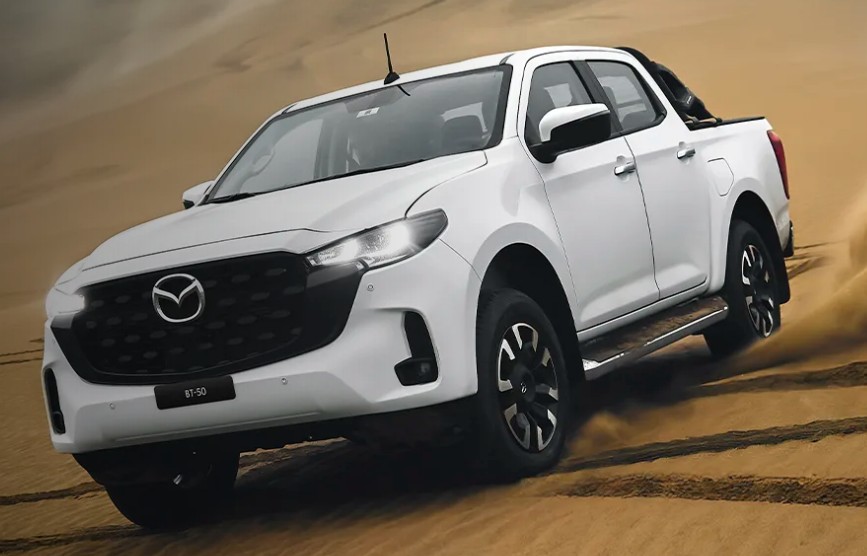
Choosing between Mazda BT-50 models can feel a little like ordering coffee in a busy café. At first, everything appears straightforward. Then we notice different cab styles, engines, drivetrains, grades, trays, tubs, luxury packages, and off-road accessories.
The good news? The range becomes much easier to understand once we separate three basic decisions:
- Which cab and body configuration do we need?
- Do we need 4x2 or 4x4?
- How much comfort, technology, and factory equipment do we want?
The Mazda BT-50 is positioned as both a serious work vehicle and a lifestyle pickup. At one end of the range, we find practical cab-chassis models designed for trays, tools, and commercial use. At the other, we find polished dual-cab pickups with leather upholstery, advanced cameras, sports bars, tonneau covers, and accessories intended for touring or recreation.
For 2026, the Australian range—the broadest and most useful reference point—includes 20 variants across Single Cab, Freestyle Cab, and Dual Cab configurations. Its principal grades are XS, XT, XTR, GT, SP, Boss, and Thunder. Availability varies by engine, body, and drivetrain.
Let us break down the family without drowning in specification-sheet alphabet soup.
Content in this publication
- What Is the Mazda BT-50?
- Understanding the Mazda BT-50 Model Structure
- Mazda BT-50 Cab Styles
- Mazda BT-50 XS
- Mazda BT-50 XT
- Mazda BT-50 Boss
- Mazda BT-50 XTR
- Mazda BT-50 GT
- Mazda BT-50 SP
- Mazda BT-50 Thunder
- Mazda BT-50 4x2 Models
- Mazda BT-50 4x4 Models
- Mazda BT-50 Engine Options
- Mazda BT-50 Models in Different Countries
- Which Mazda BT-50 Model Should We Buy?
- What to Check Before Choosing a BT-50
- Are Higher BT-50 Models Better?
- Final Thoughts on Mazda BT-50 Models
- Frequently Asked Questions
What Is the Mazda BT-50?
The Mazda BT-50 is a midsize pickup truck, commonly called a ute in Australia and New Zealand or a bakkie in Southern Africa. It combines a ladder-frame chassis, diesel power, commercial carrying ability, and available four-wheel drive with Mazda’s more passenger-car-like approach to design.
The current-generation BT-50 was introduced internationally in 2020. Unlike earlier BT-50 generations that were closely related to the Ford Ranger, the present model shares its fundamental platform and major mechanical components with the Isuzu D-Max.
That relationship is important, but it does not mean the two trucks are identical in every detail. Mazda gives the BT-50 its own exterior styling, interior materials, model structure, equipment packages, warranty arrangements, accessories, and dealer experience.
In simple terms, we can think of the modern BT-50 as a hardworking truck wearing a cleaner, more tailored jacket.
Understanding the Mazda BT-50 Model Structure
Before comparing individual grades, we need to understand how Mazda builds the range.
A full model name may contain four pieces of information:
- Cab configuration
- Chassis or pickup body
- Equipment grade
- Drivetrain and engine
For example, a Mazda BT-50 Dual Cab Pickup XTR 4x4 is a five-seat dual cab with a factory tub, XTR equipment, and four-wheel drive.
A Mazda BT-50 Single Cab Chassis XT 4x2, meanwhile, is a work-focused two-door model supplied without a conventional factory tub, allowing the owner to install a tray or specialised body.
Once we decode the name, the lineup stops looking like a wall of random letters.
Mazda BT-50 Cab Styles
Single Cab
The Single Cab is the simplest and most work-oriented configuration.
It generally provides seating for two or three occupants, depending on the market and specification, with a long area behind the cab for a tray or custom body. It is ideal for operators who prioritise payload space over rear passenger accommodation.
Typical Single Cab buyers include:
- Farmers
- Builders
- Electricians
- Landscaping businesses
- Local councils
- Fleet operators
- Mobile service technicians
The Single Cab is not trying to imitate an SUV. It is a tool, plain and purposeful, like a strong pair of work boots.
Who Should Choose a Single Cab?
We should consider the Single Cab when passengers rarely travel with us and maximum tray length matters more than cabin space.
It may also make sense for a business that wants to fit:
- An aluminium tray
- Toolboxes
- A service body
- A tipper body
- Refrigerated equipment
- A camping module
Its main disadvantage is obvious: there is no proper second row. Anyone who regularly carries family members, employees, or clients will probably find a Dual Cab more useful.
Freestyle Cab
The Freestyle Cab sits between the Single Cab and Dual Cab.
It offers additional interior space behind the front seats without becoming as long or passenger-focused as a conventional Dual Cab. Depending on the market, this configuration may include small rear seats and rear-hinged access doors.
The Freestyle Cab can be a clever compromise. It gives us room for occasional passengers, work equipment, bags, or weather-sensitive tools while preserving a relatively generous tray area.
Why Choose a Freestyle Cab?
A Freestyle Cab works well when we need more cabin flexibility but do not want to sacrifice as much load length as we would with a Dual Cab.
Think of it as the pocketknife of the BT-50 lineup: not the largest tool for every job, but adaptable enough to solve several problems.
Availability is much narrower than it is for the Dual Cab. In Australia’s 2026 lineup, Freestyle Cab versions are offered as XT cab-chassis models with either 4x2 or 4x4.
Dual Cab
The Dual Cab is the most popular and versatile body style.
It has four conventional doors, two seating rows, and space for up to five occupants. Buyers can select either a cab-chassis version for a custom tray or a pickup version with a factory-fitted tub.
This is the configuration most likely to serve as both a weekday workhorse and a weekend family vehicle.
It can carry tools on Friday, mountain bikes on Saturday, and supermarket bags on Sunday without feeling completely out of place in any of those roles.
Dual Cab Chassis vs Dual Cab Pickup
A Dual Cab Chassis leaves the rear body open for a tray or specialised installation. It suits commercial users, touring builds, and owners who need a flat load floor.
A Dual Cab Pickup includes the familiar steel cargo tub. It is usually better for buyers who want an immediately usable, factory-finished vehicle.
The pickup looks more integrated and lifestyle-oriented. The cab-chassis offers greater customisation.
Mazda BT-50 XS
The XS is the entry point into the current Australian lineup.
Do not confuse “entry level” with “empty.” Modern safety and connectivity requirements mean even basic work trucks now carry equipment that would have looked extravagant a decade ago.
Depending on its body configuration, the XS includes features such as:
- LED headlights
- Steel wheels
- Touchscreen infotainment
- Apple CarPlay
- Android Auto
- Reverse camera
- Adaptive cruise control
- Lane-related driver assistance
- Autonomous emergency braking
- Blind-spot monitoring
Mazda’s Australian build information identifies the XS Cab Chassis with 17-inch steel wheels, an 8-inch touchscreen, smartphone integration, LED headlights, a reverse camera, adaptive cruise control, blind-spot monitoring, and lane-departure warning.
Who Is the BT-50 XS For?
The XS is best for buyers who care more about purchase price, durability, and operating practicality than visual upgrades.
It is especially suitable for:
- Commercial fleets
- Sole traders
- Rural properties
- Delivery operations
- Buyers planning extensive aftermarket modifications
Steel wheels may not attract admiring glances outside a restaurant, but they can be easier and cheaper to replace after harsh worksite use.
XS Engine Choices
Mazda Australia introduced a newer 2.2-litre turbo-diesel engine into the expanded 2026 range, replacing the earlier 1.9-litre unit in relevant entry-level variants.
In the 2026 Australian lineup, the 2.2-litre engine is used in selected XS models, while most higher grades retain the 3.0-litre turbo-diesel. All listed 2026 variants use a six-speed automatic transmission.
The smaller engine should appeal to buyers who value efficiency and lower entry cost. Those expecting to tow frequently, carry heavy loads, or drive in demanding terrain will probably prefer the stronger 3.0-litre option.
Mazda BT-50 XT
The XT is the backbone of the BT-50 family.
It spans more cab styles, body types, and drivetrain configurations than most other grades. That breadth makes it the practical sweet spot for many buyers.
The XT adds useful equipment rather than decorative glitter. Depending on the exact version, features can include:
- 17-inch alloy wheels
- 3.0-litre turbo-diesel power
- 4x2 or 4x4 availability
- Locking rear differential on 4x4 models
- Rough-Terrain Mode
- Rear air vents in Dual Cab versions
- Tailgate assistance on pickups
- Rear parking sensors
- Improved everyday cabin equipment
Mazda’s 2025 model information describes the XT as available in Single Cab, Freestyle Cab, and Dual Cab bodies, with 4x2 and 4x4 options. Four-wheel-drive versions receive capability-related features such as a locking rear differential and Rough-Terrain Mode.
Why the XT May Be the Best Value
For many of us, the XT is where the BT-50 starts to feel complete without becoming expensive for the sake of appearances.
It gives buyers access to the 3.0-litre engine and serious 4x4 hardware while avoiding the larger wheels, premium upholstery, and styling packages of upper grades.
The XT is a sensible choice for:
- Regular towing
- Farm use
- Tradespeople
- Touring conversions
- Buyers who plan to add their own accessories
- Families who want capability without luxury pricing
The XT as a Blank Canvas
An XT can also be the best starting point for a customised vehicle.
Instead of paying for factory styling components we may later remove, we can direct the budget toward equipment such as:
- Bull bar
- Winch
- Canopy
- Drawer system
- Suspension upgrade
- All-terrain tyres
- Auxiliary battery
- Roof platform
- Long-range fuel tank
For owners who enjoy building a vehicle around a specific purpose, the XT is often more logical than buying the fanciest trim.
Mazda BT-50 Boss
The Boss joined the Australian BT-50 lineup for 2026 as a distinct 3.0-litre 4x4 Dual Cab Pickup.
It starts with XT equipment and adds a tougher factory appearance. Mazda specifies gloss-black door and tailgate handles, black mirrors, a black steel sports bar, a tub liner, and side steps.
What Makes the Boss Different?
The Boss is not positioned as the ultimate luxury model or the most heavily equipped off-road version.
You may be interested in reading Peugeot 206 vs Honda Civic: Which Used Car Is Better?
Instead, it gives buyers the mechanical fundamentals of the XT with a more assertive showroom-ready look.
That makes it attractive to someone who thinks the regular XT is slightly too plain but does not need the comfort and technology of an XTR or GT.
Who Should Buy the Boss?
The Boss makes sense for buyers who want:
- A 3.0-litre diesel
- Four-wheel drive
- A factory tub
- Black exterior detailing
- Side steps
- A sports bar
- A tougher visual identity
It occupies an interesting middle ground: more personality than the workhorse grades, fewer frills than the premium ones.
Mazda BT-50 XTR
The XTR is where the range begins to shift from purely practical to genuinely comfortable.
It retains the BT-50’s work and off-road ability but adds the technology and convenience many private buyers expect in a modern family vehicle.
Typical XTR upgrades include:
- 18-inch machined alloy wheels
- Front LED fog lights
- Auto-levelling LED headlights
- Signature daytime running lights
- Power-folding mirrors
- Side steps
- Advanced keyless entry
- Dual-zone climate control
- Satellite navigation
- Tyre-pressure monitoring
- Nine-inch central touchscreen
- Tow bar equipment on applicable pickups
- Tub liner on pickup versions
Mazda’s specification information places the XTR above the XT and limits it to Dual Cab configurations. For 2026, applicable XTR pickups also gain a 360-degree camera, improving visibility in parking areas, worksites, and confined off-road situations.
Is the XTR the Sweet Spot?
For private buyers, very possibly.
The XTR offers enough visual polish to feel special and enough technology to make daily driving easier. Yet it stops short of the more expensive upholstery and styling packages found further up the ladder.
We can think of it as the “one vehicle for everything” trim.
It can tow a caravan, carry children, visit a muddy campsite, and still look appropriate in an office car park.
XTR 4x2 or 4x4?
Australia’s current range includes both 4x2 and 4x4 Dual Cab Pickup XTR variants, while cab-chassis availability is concentrated on the 4x4 side.
The 4x2 can suit urban drivers who like the pickup format but rarely leave sealed roads. It generally costs less and avoids paying for a four-wheel-drive system that may never be used.
The 4x4 is the more versatile choice for touring, slippery boat ramps, rural tracks, construction access, sand, mud, and remote travel.
Mazda BT-50 GT
The GT introduces a stronger luxury flavour.
This is the point where the BT-50 begins to compete not only with other pickups but also with family SUVs in terms of comfort.
GT equipment includes features such as:
- Black leather upholstery
- Heated front seats
- Power-adjustable driver’s seat
- Heated exterior mirrors
- Remote engine start
- Front parking sensors
- Upper-grade infotainment
- Additional convenience technology
Mazda lists the GT as a 4x4-only grade in the Australian range.
Who Is the GT Designed For?
The GT is a strong match for buyers who spend long hours behind the wheel.
Leather seats and electric adjustment do not increase towing capacity, but they can make a meaningful difference during long-distance touring or daily commuting.
The GT suits:
- Caravan owners
- Rural professionals
- Families replacing an SUV
- Long-distance drivers
- Buyers wanting capability without aggressive styling
GT Cab Chassis or Pickup
The 2026 Australian range includes both Dual Cab Chassis and Dual Cab Pickup GT versions.
The cab-chassis is especially interesting for premium touring builds. We could fit a custom tray and canopy while retaining the comfort of the higher-grade cabin.
The pickup offers the simpler route: buy it, load it, and go.
Mazda BT-50 SP
The SP turns up the visual drama.
While the GT focuses on comfort, the SP combines premium equipment with a darker, more distinctive design.
Its characteristic elements include:
- Gloss-black 18-inch alloy wheels
- Black sports bar
- Black side steps
- Black wheel-arch flares
- Black roof rails
- Black mirror caps
- Black door and tailgate handles
- Manual roller tonneau cover
- Black and terracotta upholstery
- Suede-style seat inserts
The Australian SP is offered as a 3.0-litre, automatic, 4x4 Dual Cab Pickup. It also receives the 360-degree camera included on upper pickup grades for 2026.
Is the SP More Capable Than the GT?
Not necessarily in a fundamental mechanical sense.
The SP’s appeal lies heavily in design, presentation, and factory-installed lifestyle equipment. Its sports bar, black details, roof rails, and tonneau cover create a more complete appearance straight from the showroom.
The GT may be the quieter, more traditional luxury choice. The SP is for someone who wants the truck to enter the room before they do.
When the SP Makes Sense
The SP is attractive when we value:
- Distinctive styling
- Factory-backed accessories
- A premium interior
- Secure tub coverage
- Strong resale appeal
- A vehicle needing fewer immediate modifications
It may be less suitable for a buyer planning to remove the sports bar, replace the wheels, and install a large canopy. Paying for factory equipment only to store it in a garage rarely makes financial sense.
Mazda BT-50 Thunder
The Thunder sits at the top of the Australian 2026 lineup.
It returns as a 3.0-litre 4x4 Dual Cab Pickup based on the GT, adding a substantial selection of touring and styling equipment.
Standard Thunder additions include:
- Single-hoop bull bar
- Lightforce driving lights
- Reinforced anti-slip side steps
- Steel sports bar
- Manual roller tonneau cover
- Gloss-black exterior details
- Unique Thunder decals
Mazda positions the Thunder as the range-topping grade, aimed at buyers who want a highly equipped adventure vehicle without beginning an extensive aftermarket build.
What Is the Thunder Really For?
The Thunder is less like a blank sheet of paper and more like a finished illustration.
It suits the buyer who wants major accessories fitted, integrated, and covered through the manufacturer or dealer environment from the beginning.
Its driving lights, bull bar, tonneau cover, side steps, and sports bar would otherwise require separate research, purchasing, installation, and compatibility checks.
Is the Thunder Worth the Extra Money?
That depends on whether we genuinely want its equipment.
If we already planned to add a bull bar, high-quality driving lights, side steps, tub security, and exterior upgrades, the Thunder’s package may be convenient and financially defensible.
If we simply want leather seating and four-wheel drive, the GT may offer better value.
The top model is not automatically the best model. It is only the best when its extra equipment matches our actual life.
Mazda BT-50 4x2 Models
A 4x2 BT-50 drives through the rear wheels under normal operation and does not include the selectable four-wheel-drive system found in 4x4 versions.
For urban use, highway travel, light commercial work, and moderate loads, a 4x2 can be entirely adequate.
Advantages of a BT-50 4x2
Potential advantages include:
- Lower purchase price
- Simpler drivetrain
- Lower weight in some configurations
- Potentially better fuel use
- Reduced maintenance complexity
- Sufficient capability for sealed-road work
A 4x2 can also provide a higher payload in certain specifications because less of the vehicle’s gross mass allowance is consumed by four-wheel-drive hardware. Exact figures vary by version, so buyers should verify the compliance plate and local specification.
Limitations of 4x2
Rear-wheel-drive pickups can lose traction on wet grass, loose gravel, mud, sand, and steep unsealed surfaces—especially when the tub is empty.
A 4x2 may look nearly identical to a 4x4 in the car park, but the difference becomes clear when the ground turns slippery.
Mazda BT-50 4x4 Models
Four-wheel-drive BT-50 models are intended for more demanding conditions.
The system provides selectable drive modes, while appropriate versions include a locking rear differential and Rough-Terrain Mode.
Rough-Terrain Mode works with the vehicle’s traction systems to reduce wheelspin and direct useful torque toward wheels with grip. Mazda also highlights this technology in the Philippine-market 4x4 Pangolin.
Reasons to Choose 4x4
A BT-50 4x4 is worth considering when we regularly encounter:
- Muddy worksites
- Farm tracks
- Sand
- Snow
- Rocky trails
- Steep boat ramps
- Remote touring routes
- Wet unsealed roads
Four-wheel drive can also provide additional confidence while towing on loose or uneven surfaces.
It does not, however, make the vehicle unstoppable. Tyres, clearance, driver judgement, load distribution, and recovery planning still matter.
You may be interested in readingPeugeot 206 vs Honda Civic: Which Used Car Is Better?You may be interested in reading
Opel Corsa vs Peugeot 206: Which Used Hatchback Wins?Mazda BT-50 Engine Options
2.2-Litre Turbo-Diesel
The 2.2-litre diesel is the newer entry engine in the Australian 2026 range.
It is primarily associated with selected XS models and is intended to deliver a practical balance between commercial performance and operating efficiency.
This engine will appeal most to:
- Urban fleets
- Light-duty operators
- Buyers with limited towing needs
- Cost-conscious owners
- Drivers prioritising economy over maximum torque
We should not assume the smaller engine is weak merely because it has less displacement. Modern turbo-diesels can deliver useful low-speed performance. Still, regular heavy towing and maximum-load operation naturally favour the larger engine.
3.0-Litre Turbo-Diesel
The 3.0-litre four-cylinder turbo-diesel is the heart of most BT-50 models.
In current specifications, it produces approximately 140 kW and 450 Nm, although some markets quote output as 190 PS. It is paired with a six-speed automatic transmission.
Its broad torque delivery makes it better suited to:
- Towing
- Loaded touring
- Steep roads
- Off-road driving
- Commercial operation
- Heavier accessories
The engine does not turn the BT-50 into a sports car, nor should it. Its job is to pull steadily, like a strong current rather than a sudden wave.
Mazda BT-50 Models in Different Countries
Model names and specifications are not universal.
Australia
Australia receives the broadest range, spanning Single Cab, Freestyle Cab, and Dual Cab bodies with XS, XT, Boss, XTR, GT, SP, and Thunder grades.
The 2026 lineup contains 20 variants, ranging from a 2.2-litre 4x2 Single Cab Chassis XS to the 3.0-litre 4x4 Dual Cab Pickup Thunder.
New Zealand
New Zealand uses a different grade structure. Current official listings include versions such as:
- GTX Wellside 2WD
- GTX Wellside 4WD
- Limited Wellside 4WD
- Takami Wellside 4WD
The Takami name functions as a premium flagship designation in New Zealand, much as the SP or Thunder names identify upper-market versions elsewhere.
Philippines
The 2025 Philippine lineup is much simpler.
Mazda Philippines announced two main variants:
- BT-50 3.0L AT 4x2
- BT-50 3.0L AT 4x4 Pangolin
Both use the 3.0-litre diesel, while the Pangolin adds distinctive styling, all-terrain tyres, a cargo-bed cover, Rough-Terrain Mode, four-wheel drive, and additional off-road-focused equipment.
Other Markets
In Southern Africa and other regions, model grades, transmissions, warranty packages, and available bodies may differ considerably.
For that reason, we should never rely solely on an overseas review when choosing a BT-50. A model called “GT,” “Limited,” or “Dynamic” in one country may not match an apparently similar vehicle elsewhere.
Local brochures, build tools, and dealer specifications remain essential.
Which Mazda BT-50 Model Should We Buy?
Best for Basic Work: XS
Choose the XS when affordability, commercial use, and durability matter most.
It provides the essential safety and connectivity features without asking us to pay for cosmetic extras.
Best All-Round Workhorse: XT
Choose the XT when we want the 3.0-litre engine, broad configuration choice, and useful 4x4 equipment at a sensible position in the range.
For many commercial and touring buyers, this is the rational answer.
Best Rugged-Style Value: Boss
Choose the Boss when the XT’s equipment is sufficient but its appearance feels too plain.
The Boss adds factory toughness without climbing fully into luxury territory.
Best Family and Lifestyle Value: XTR
Choose the XTR when the BT-50 will replace a family SUV while still performing towing, touring, or work duties.
Its larger screen, climate control, keyless access, improved lighting, and extra technology make daily life noticeably easier.
Best for Long-Distance Comfort: GT
Choose the GT for leather seating, heated front seats, powered driver adjustment, remote start, and premium comfort.
It is particularly appealing for caravan touring and high annual mileage.
Best for Sporty Styling: SP
Choose the SP when we want premium equipment wrapped in dark exterior detailing and a more expressive design.
It is a lifestyle truck first and a fashion statement second—but definitely both.
Best Factory-Equipped Adventure Model: Thunder
Choose the Thunder when we already want a bull bar, driving lights, side steps, tub security, and a high-end touring appearance.
It is the model for buyers who prefer a finished package rather than a long accessory shopping list.
What to Check Before Choosing a BT-50
Before signing an order, we should compare more than the grade badge.
Important questions include:
- How many passengers will we carry?
- Do we need a tray or factory tub?
- How often will we tow?
- What is the trailer’s actual loaded mass?
- Will we drive on sand, mud, snow, or farm tracks?
- How much payload remains after accessories?
- Will a canopy, bull bar, or tow bar be fitted?
- Can the vehicle fit in our garage?
- Do we need leather seats or simply want them?
- Are replacement tyres affordable?
- Is the model available locally?
- What warranty applies in our country?
Do Not Ignore Payload
Payload is one of the most misunderstood pickup specifications.
A one-tonne headline does not always mean we can place a full tonne in the tub after fitting accessories and loading passengers.
The following all consume payload:
- Driver and passengers
- Bull bar
- Winch
- Canopy
- Drawers
- Roof rack
- Tow-ball load
- Fridge
- Recovery equipment
- Fuel and water carried separately
- Camping equipment
A heavily accessorised premium model can have less practical payload remaining than a simpler cab-chassis.
The shiny accessories are the visible part of the iceberg. Vehicle mass is what sits beneath the water.
Are Higher BT-50 Models Better?
They are better equipped, but they are not automatically better suited to every owner.
A farmer may receive more value from an XT with suitable tyres and a custom tray than from a Thunder with luxury equipment.
A family towing a caravan may appreciate the GT’s seats and parking technology every day.
A city buyer may prefer an XTR 4x2 because four-wheel drive would add cost without solving a real problem.
The smartest choice is the model whose standard equipment prevents us from paying twice—once at the dealership and again in the aftermarket.
Final Thoughts on Mazda BT-50 Models
The Mazda BT-50 range stretches from straightforward commercial vehicles to highly equipped adventure pickups.
The XS and XT grades form the practical foundation. The Boss adds visual attitude. The XTR balances family comfort with capability. The GT moves into premium territory. The SP adds bold lifestyle styling, while the Thunder arrives with a substantial collection of factory-installed touring equipment.
Cab choice is just as important as trim.
A Single Cab provides maximum work focus. A Freestyle Cab creates flexible storage and occasional passenger space. A Dual Cab is the natural all-rounder for families, recreation, and mixed business use.
We should therefore choose in the correct order: first the body, then the drivetrain, then the engine, and finally the grade.
Reversing that process can lead us toward an attractive vehicle that does not actually fit the job.
The best Mazda BT-50 is not always the most expensive one. It is the model that carries what we need, travels where we go, tows what we own, and includes the features we will genuinely use.
Frequently Asked Questions
What are the main Mazda BT-50 models?
In Australia, the current principal grades are XS, XT, Boss, XTR, GT, SP, and Thunder. The lineup includes Single Cab, Freestyle Cab, and Dual Cab configurations, although not every grade is available with every body style. Other countries use different names, including GTX, Limited, Takami, and Pangolin.
Which Mazda BT-50 model is the best value?
The XT is often the best value for work and custom builds because it offers broad body selection, the 3.0-litre engine, and available 4x4 capability. Private family buyers may find the XTR better value because it adds more comfort, technology, and convenience equipment.
What is the top Mazda BT-50 model?
In Australia, the Thunder is the range-topping 2026 model. It is based on a 3.0-litre 4x4 Dual Cab Pickup and includes equipment such as a bull bar, driving lights, reinforced side steps, sports bar, and roller tonneau cover. In New Zealand, the Takami occupies the flagship position.
Is the Mazda BT-50 available with a smaller diesel engine?
Yes. Selected Australian XS models use a 2.2-litre turbo-diesel engine. Most other current Australian grades use the 3.0-litre turbo-diesel. Engine availability varies by country and model year.
Should we buy a 4x2 or 4x4 Mazda BT-50?
A 4x2 is usually sufficient for sealed-road driving, urban work, and light commercial use. A 4x4 is the better choice for mud, sand, snow, steep unsealed roads, farm access, remote touring, or slippery boat ramps. We should choose according to real driving conditions rather than appearance alone.
You may be interested in readingPeugeot 206 vs Honda Civic: Which Used Car Is Better?You may be interested in reading
Opel Corsa vs Peugeot 206: Which Used Hatchback Wins?You may be interested in reading
Peugeot 206 vs Toyota Yaris: Which Used Car Is Better?If you want to know other articles similar to Mazda BT-50 Models: Complete Range and Buyer’s Guide you can visit the category Models.
Honda Passport vs Toyota 4Runner: Which SUV Is Better?
Honda Passport vs Ford Bronco: Which SUV Is Better?
Honda Passport vs Ford Explorer: Which SUV Is Better?
Honda Passport or Pilot: Which SUV Is Better?
Honda Passport vs Jeep Grand Cherokee: Which SUV Is Better?
Honda Passport vs Nissan Pathfinder: Which SUV Is Better?
Leave a Reply
More content of your interest