

Mazda CX-9 Tire Size: Complete Size and Fitment Guide

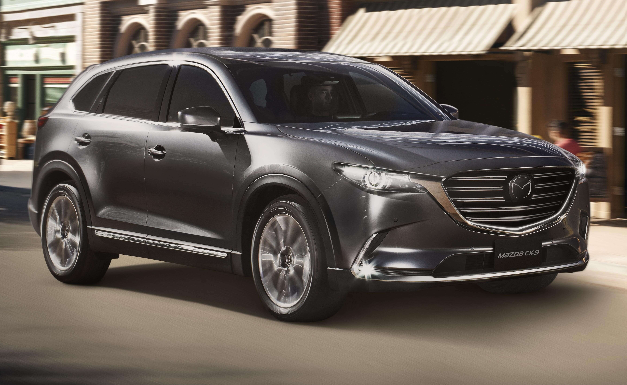
Choosing the correct Mazda CX-9 tire size sounds simple until we start shopping. One website says 18 inches, another says 20 inches, and suddenly we're wondering whether both can possibly be right.
They can.
Depending on the model year and trim, the Mazda CX-9 left the factory with several different wheel and tire combinations. The first-generation SUV commonly used 245-width tires, while the redesigned second-generation CX-9 switched to wider 255-section rubber.
For most 2016–2023 Mazda CX-9 models sold in the United States and Canada, the two main factory sizes are P255/60R18 and P255/50R20. Mazda's 2023 owner's manual lists both sizes, with 34 psi recommended front and rear.
Older first-generation CX-9 models are different. For example, Mazda's official 2015 specifications list P245/60R18 tires on Sport and Touring models and P245/50R20 tires on the Grand Touring.
That's why buying tires based only on the words "Mazda CX-9" isn't enough.
In this guide, we'll break down the CX-9 tire sizes by generation, explain what those strange numbers on the sidewall actually mean, compare 18-inch and 20-inch wheels, discuss replacement tires, pressure, load ratings, winter fitment, and help you determine which size belongs on your specific vehicle.
Content in this publication
- What Is the Standard Mazda CX-9 Tire Size?
- Mazda CX-9 Tire Size by Generation
- Mazda CX-9 18-Inch Tire Size
- Mazda CX-9 20-Inch Tire Size
- 255/60R18 vs 255/50R20 on the Mazda CX-9
- What Tire Size Does a 2018 Mazda CX-9 Use?
- What Tire Size Does a 2019 Mazda CX-9 Use?
- What Tire Size Does a 2020 Mazda CX-9 Use?
- What Tire Size Does a 2022 Mazda CX-9 Use?
- What Tire Size Does a 2023 Mazda CX-9 Use?
- What Do Mazda CX-9 Tire Numbers Mean?
- How to Find Your Exact Mazda CX-9 Tire Size
- What Is the Mazda CX-9 Tire Pressure?
- Mazda CX-9 Spare Tire Size
- Can You Put 18-Inch Wheels on a CX-9 With 20-Inch Wheels?
- Can We Put Wider Tires on a Mazda CX-9?
- Can You Use a Different Aspect Ratio?
- Why Matching Tires Matters on AWD Mazda CX-9 Models
- Best Type of Tire for the Mazda CX-9
- Should You Choose 18-Inch or 20-Inch CX-9 Tires?
- When Should Mazda CX-9 Tires Be Replaced?
- How to Make CX-9 Tires Last Longer
- Common Mazda CX-9 Tire-Size Mistakes
- Mazda CX-9 Tire Size Quick Reference
- Conclusion: Which Mazda CX-9 Tire Size Do You Need?
- Frequently Asked Questions About Mazda CX-9 Tire Size
What Is the Standard Mazda CX-9 Tire Size?
If we want the short answer, here it is:
| Mazda CX-9 generation | Common factory tire sizes |
|---|---|
| First generation (2007–2015) | 245/60R18, 245/50R20 |
| Second generation (2016–2023) | 255/60R18, 255/50R20 |
Those sizes cover the majority of North American CX-9 configurations, although equipment can vary by year, trim, market, wheel package, and previous-owner modifications.
For the second-generation CX-9, Mazda officially specifies P255/60R18 107H and P255/50R20 104V for U.S. and Canadian vehicles.
Think of them as two different pairs of shoes designed for the same runner. The 18-inch setup has a taller, more forgiving sidewall. The 20-inch option uses a shorter sidewall wrapped around a larger wheel, creating a sportier appearance and somewhat sharper response.
Neither is automatically "better." They simply prioritize different things.
Mazda CX-9 Tire Size by Generation
Understanding the generation is one of the easiest ways to avoid ordering the wrong tires.
The CX-9 went through a major redesign for the 2016 model year. Along with completely different styling and a switch to Mazda's turbocharged four-cylinder engine, its wheels and tires changed too.
2007–2015 Mazda CX-9 Tire Size
The first-generation CX-9 generally uses:
- 245/60R18
- 245/50R20
Mazda's official 2015 specification sheet confirms P245/60R18 for Sport and Touring versions and P245/50R20 for the Grand Touring. The corresponding wheels were 18 x 7.5J and 20 x 7.5J.
That distinction matters because a 245-width first-generation tire is not the same as the 255-width tires fitted to the later SUV.
An online tire selector may occasionally lump CX-9 model years together. We shouldn't.
Always enter the exact year and trim.
2016–2023 Mazda CX-9 Tire Size
Mazda introduced the second-generation CX-9 for 2016, and its principal North American tire sizes became:
P255/60R18 107H
and
P255/50R20 104V
Mazda's 2016 owner's manual confirms both configurations and specifies approximately 34 psi for U.S. and Canadian vehicles.
The same two sizes continued through later years. Mazda's manuals confirm them for the 2018, 2019, 2020, 2022, and 2023 CX-9.
That consistency makes replacement shopping relatively straightforward once we know whether our CX-9 has 18-inch or 20-inch wheels.
Mazda CX-9 18-Inch Tire Size
For a second-generation CX-9 equipped with factory 18-inch wheels, the standard North American size is typically:
255/60R18
Let's decode that.
- 255 — tire width in millimeters
- 60 — sidewall height equals 60% of the tire's width
- R — radial construction
- 18 — designed for an 18-inch wheel
Mazda specifies P255/60R18 107H in its CX-9 manuals.
That relatively tall 60-series sidewall is one reason 18-inch CX-9s can feel comfortable over rough pavement.
Advantages of 18-Inch CX-9 Tires
The 18-inch configuration makes a lot of sense for everyday family driving.
We generally get more rubber between the rim and the road, which can help absorb sharp bumps and pothole impacts.
That brings several practical advantages: typically lower replacement costs, more sidewall protection, a comfortable ride, and plenty of tire options.
For drivers living somewhere with damaged roads, gravel routes, snow, or nasty potholes, an 18-inch wheel can be the sensible choice.
A giant wheel might look better parked outside a restaurant. The smaller wheel may look much better when we hit a pothole the size of a swimming pool.
Mazda CX-9 20-Inch Tire Size
The primary factory 20-inch size on the second-generation CX-9 is:
255/50R20
Mazda identifies the complete specification as P255/50R20 104V for U.S. and Canadian CX-9s.
Here, we're still looking at a 255-mm nominal width, but the sidewall height is only 50% of that width.
The larger 20-inch wheel therefore receives a lower-profile tire.
Why Does Mazda Use a Lower Profile on 20-Inch Wheels?
Because the overall tire diameter needs to remain relatively similar.
If Mazda installed a 255/60 profile around a 20-inch wheel, the resulting tire would be significantly taller. That could affect gearing, speedometer readings, clearance, handling, and electronic driver-assistance systems.
Instead, wheel diameter goes up while sidewall height comes down.
Imagine replacing a thick picture frame with a larger photograph but wanting the whole thing to occupy roughly the same space. Something has to shrink.
Here, that something is the tire sidewall.
255/60R18 vs 255/50R20 on the Mazda CX-9
These are the two tire sizes most second-generation CX-9 owners will encounter.
And despite looking quite different, their overall dimensions are intentionally close.
Ride Comfort
The 255/60R18 generally has the comfort advantage.
Its taller sidewall has more room to flex when encountering broken asphalt, expansion joints, or potholes. That rubber effectively becomes another tiny suspension component.
The 255/50R20 has less cushioning between the wheel and road, so impacts may feel sharper.
Handling and Steering Feel
The 20-inch setup can feel slightly more immediate.
A shorter sidewall typically flexes less during cornering, which can contribute to a more direct steering sensation.
Nobody buys a three-row CX-9 expecting a lightweight roadster, of course, but Mazda deliberately gave the SUV relatively engaging road manners. The lower-profile setup complements that character.
Appearance
This is subjective, but 20-inch wheels fill the CX-9's large arches nicely.
They give the vehicle a more premium, planted appearance.
The 18s are less dramatic but still well proportioned.
Replacement Cost
This is where 18-inch tires often fight back.
Twenty-inch SUV tires can be expensive, particularly if we choose a premium touring, performance, or all-weather model.
Over several tire changes, the price difference can become meaningful.
What Tire Size Does a 2018 Mazda CX-9 Use?
For the 2018 CX-9, Mazda listed:
- P255/60R18 on Sport and Touring
- P255/50R20 on Grand Touring and Signature
Mazda's 2018 specification sheet pairs the 18-inch tires with 18 x 8J wheels and the 20-inch tires with 20 x 8.5J wheels.
Its owner's manual additionally identifies the factory ratings as P255/60R18 107H and P255/50R20 104V.
That's a useful example of why trim level matters.
Two CX-9s from exactly the same year can legitimately have different tires.
What Tire Size Does a 2019 Mazda CX-9 Use?
Mazda's 2019 owner's manual again lists the two familiar North American sizes:
P255/60R18 107H
and
P255/50R20 104V.
Both were specified at 34 psi front and rear under the conditions covered by Mazda's U.S./Canadian specification.
Before ordering, however, look at your actual tire and door-jamb label.
A used CX-9 may no longer have its original wheels.
What Tire Size Does a 2020 Mazda CX-9 Use?
The 2020 CX-9 continued with:
- P255/60R18 107H
- P255/50R20 104V
Mazda's 2020 owner's manual gives the same 34-psi inflation recommendation front and rear for those U.S./Canadian fitments.
So owners moving between 2019, 2020, and later second-generation models will see remarkably familiar numbers.
What Tire Size Does a 2022 Mazda CX-9 Use?
Nothing dramatic changed here.
Mazda specifies:
P255/60R18 107H — 34 psi
P255/50R20 104V — 34 psi
for U.S. and Canadian models in its 2022 CX-9 manual.
That's front and rear.
This doesn't mean we should blindly inflate every replacement CX-9 tire to a number copied from the internet, though.
The vehicle's own tire-information placard remains the primary reference.
What Tire Size Does a 2023 Mazda CX-9 Use?
The final model-year CX-9 uses those same two principal sizes in the United States and Canada:
- P255/60R18 107H
- P255/50R20 104V
Mazda specifies 230 kPa, or 34 psi, front and rear.
Mazda ended the CX-9's run after the 2023 model year in the U.S., with newer models such as the CX-90 taking over its role in the lineup.
For shoppers buying used CX-9s, however, knowing this last-model-year specification is particularly useful because plenty of these vehicles will need replacement tires for years to come.
What Do Mazda CX-9 Tire Numbers Mean?
Suppose our CX-9 says:
255/50R20 104V
At first glance, it resembles a password generated by a particularly paranoid IT department.
It's actually easy once we break it apart.
255: Tire Width
The first number describes the nominal section width in millimeters.
So 255 indicates a tire roughly 255 mm wide from sidewall to sidewall under standardized measurement conditions.
50: Aspect Ratio
The second number is not a millimeter measurement.
It's a percentage.
A 50-series tire has a sidewall height equal to approximately 50% of its section width.
A 60-series tire has a taller sidewall equal to about 60%.
R: Radial Construction
The R indicates radial construction.
That's the standard construction method used by essentially every modern passenger vehicle tire.
20: Wheel Diameter
The final number before the load index identifies the wheel diameter.
A tire ending in R20 belongs on a 20-inch wheel.
An R18 tire cannot simply be installed on a 20-inch wheel, or vice versa.
104: Load Index
The load index indicates how much weight an individual tire can carry under specified conditions.
This is important on a large three-row crossover.
We shouldn't downgrade to a tire with an inadequate load capacity simply because its width and diameter happen to fit.
V: Speed Rating
The final letter indicates the tire's speed rating.
Factory CX-9 sizes may carry different ratings depending on the tire size. Mazda's second-generation specifications, for example, list an H rating for the 18-inch fitment and V for the 20-inch fitment.
Replacement tires should meet appropriate vehicle requirements for size, load capacity, speed rating, and usage.
How to Find Your Exact Mazda CX-9 Tire Size
Want the easiest solution?
Look at the car.
We don't need to memorize charts.
Check the Tire Sidewall
The current size will be printed prominently on the tire.
You may see something like:
255/60R18
or
255/50R20
But there's one catch.
The tires currently installed aren't guaranteed to be correct.
Previous owners modify vehicles.
Check the Driver-Door Placard
This is the better reference.
Open the driver's door and look for the vehicle's tire-and-loading label on the door jamb or nearby bodywork.
Mazda itself tells owners to check the tire-pressure label for tire size and inflation pressure.
That sticker tells us what Mazda intended for that specific vehicle configuration.
Check the Owner's Manual
The manual provides another authoritative source, particularly when we're comparing factory options.
Mazda explicitly warns that using an incorrect tire size can affect ride, handling, ground clearance, tire clearance, and speedometer calibration.
That's why "close enough" isn't necessarily close enough.
What Is the Mazda CX-9 Tire Pressure?
For many second-generation CX-9 models in the United States and Canada, Mazda specifies:
34 PSI Front / 34 PSI Rear
This applies to the factory P255/60R18 107H and P255/50R20 104V sizes in Mazda's 2023 manual.
The 2022 manual gives the same figures.
Still, pressure specifications can vary by market and configuration.
Don't use the maximum-pressure number molded onto the sidewall as your target inflation pressure. That's not what that number means.
Our first reference should be the pressure placard on the vehicle itself.
Check Pressure When Tires Are Cold
Tire pressure rises as the tire warms.
For a meaningful reading, check it before a long drive or after the vehicle has been sitting long enough for the tires to cool.
Keeping them properly inflated helps preserve predictable handling, tire life, and fuel efficiency.
Mazda CX-9 Spare Tire Size
For the second-generation CX-9 in the U.S. and Canada, Mazda lists the temporary spare as:
T155/90D17 101M
with an inflation pressure of 60 psi.
That tiny spare may look almost comically narrow beside the regular 255-mm tires.
That's intentional.
It's designed as a temporary emergency solution rather than a normal road tire.
Follow the limitations printed on the spare and in the owner's manual.
The first-generation 2015 CX-9 used a different temporary-spare designation: Mazda's official specification sheet lists T155/90R18.
Once again, model year matters.
Can You Put 18-Inch Wheels on a CX-9 With 20-Inch Wheels?
For certain second-generation CX-9 configurations, an OEM-style 18-inch setup is a logical alternative because Mazda itself offered both 18- and 20-inch wheel/tire packages.
The obvious matched conversion is:
255/50R20 → 255/60R18
But we shouldn't assume that every random 18-inch aftermarket wheel will fit.
Diameter is only one part of wheel compatibility.
We also need correct:
- Bolt pattern
- Wheel width
- Offset
- Center bore
- Brake clearance
- Load rating
- Tire load capacity
- Overall tire diameter
This conversion can be particularly interesting for winter driving.
In fact, Mazda's 2018 manual notes that chains on P255/50R20 tires could interfere with the vehicle body and says that, if chains are required, owners should consult a Mazda dealer about replacing the front and rear tires with P255/60R18 tires.
That's a pretty strong clue about how useful the 18-inch configuration can be in snow-country conditions.
Can We Put Wider Tires on a Mazda CX-9?
Technically, aftermarket alternatives may exist.
But "can physically fit" and "should use" are two very different questions.
Changing tire width can affect clearance, steering response, hydroplaning resistance, fuel consumption, road noise, wheel compatibility, speedometer accuracy, and suspension behavior.
A tire that's too wide for the wheel may also distort its intended profile.
Mazda recommends replacing tires with the same type originally fitted and cautions owners against using incorrectly sized tires.
So unless we're building a carefully researched aftermarket setup, sticking to a documented factory-equivalent size is the low-drama option.
And tires are one area where low drama is wonderful.
Can You Use a Different Aspect Ratio?
Again, possibly—but this is where tire math becomes important.
Let's say we change from a 50-profile tire to a 55 without adjusting anything else.
That increases the sidewall height and therefore the overall tire diameter.
A significantly altered diameter can affect speedometer accuracy and clearance.
It may also interact with ABS, traction-control, AWD, or stability-control behavior.
The goal with an alternative tire size is generally to keep the overall rolling diameter close to the original while retaining sufficient load capacity and physical clearance.
When in doubt, use the factory specification.
Why Matching Tires Matters on AWD Mazda CX-9 Models
AWD deserves special attention.
Four tires may all display the same nominal size yet have meaningfully different rolling circumferences if some are heavily worn and others are brand new.
That's why replacing a single damaged tire on an AWD vehicle deserves more thought than simply buying whatever matching size is cheapest.
Ideally, all four tires should have compatible dimensions, construction, and tread characteristics, with tread-depth differences kept within the vehicle and tire manufacturers' acceptable limits.
For an AWD crossover, consistency is our friend.
Best Type of Tire for the Mazda CX-9
Correct size is only the beginning.
The right type depends on where and how we drive.
All-Season Touring Tires
These are probably the sweet spot for many CX-9 owners.
A good touring all-season tire can prioritize quietness, wet-weather confidence, tread life, and highway comfort.
That suits the CX-9 nicely because, despite its athletic Mazda character, it's still primarily a family crossover.
All-Weather Tires
For drivers who regularly encounter winter weather but don't want separate winter tires, an all-weather option can make sense.
Look for proper severe-snow certification where winter capability matters.
Dedicated Winter Tires
If we deal with persistent snow, ice, and genuinely cold temperatures, dedicated winter tires remain difficult to beat.
An 18-inch package can be particularly attractive here because of its taller sidewalls and potentially lower tire costs.
Performance-Oriented Tires
Want sharper dry-road response?
Performance-biased tires may deliver it, particularly with the 20-inch wheels.
The trade-off may include reduced tread life, higher cost, greater road noise, or weaker winter capability depending on the model.
Every tire is a compromise. We're simply choosing which compromises matter least.
Should You Choose 18-Inch or 20-Inch CX-9 Tires?
If we already own the vehicle, the easiest option is usually to stay with its original wheel size.
But if we're deliberately choosing between OEM-compatible packages, here's the simple version.
Choose 18-inch tires if we prioritize:
- Ride comfort
- Rough-road durability
- Lower replacement costs
- Extra sidewall protection
- Winter practicality
Choose 20-inch tires if we prioritize:
- Premium appearance
- Slightly more immediate road feel
- Factory higher-trim aesthetics
- Lower-profile styling
For an everyday family CX-9, we'd have no hesitation running the 18-inch setup.
For someone who values the CX-9's upscale look, the twenties suit the SUV beautifully.
There isn't one universal winner.
When Should Mazda CX-9 Tires Be Replaced?
Tread depth matters, but it isn't the only consideration.
Tires should be inspected for abnormal wear, cracking, cuts, bulges, punctures, vibration, or age-related deterioration.
If one edge is disappearing much faster than the other, simply buying new tires without correcting the underlying cause wastes money.
Alignment, suspension wear, incorrect inflation, or driving conditions may be contributing.
Consider the tires a report card for what's happening underneath the vehicle.
They often tell us a story if we know where to look.
How to Make CX-9 Tires Last Longer
There's no magic trick here.
Good habits win.
Keep pressure at the vehicle manufacturer's specification, rotate tires at appropriate intervals, maintain proper alignment, inspect tread regularly, and avoid smashing potholes whenever physics gives us a choice.
Also keep an eye on uneven wear.
Catching a bad alignment early might save thousands of miles of usable tread.
And remember that a 4,000-plus-pound crossover asks a lot from its tires. Tire maintenance isn't glamorous, but it's far cheaper than throwing away a half-worn set.
Common Mazda CX-9 Tire-Size Mistakes
We've seen how easy the CX-9's fitment can be once we understand the generations. Most mistakes come from skipping that step.
The big ones are buying 245-width tires for a second-generation CX-9 because they fit an older model, assuming every CX-9 uses 20-inch wheels, choosing an alternative size without checking overall diameter, ignoring load and speed ratings, or copying tire pressure from the tire sidewall rather than the vehicle placard.
Another classic error?
Ordering tires online and realizing after delivery that our vehicle is riding on aftermarket wheels installed by a previous owner.
Five seconds spent reading the sidewall and door sticker can save a very annoying Saturday.
Mazda CX-9 Tire Size Quick Reference
Here's the information most readers actually came looking for:
| CX-9 configuration | Typical factory size |
|---|---|
| 2007–2015 CX-9 18-inch | 245/60R18 |
| 2007–2015 CX-9 20-inch | 245/50R20 |
| 2016–2023 CX-9 18-inch | 255/60R18 |
| 2016–2023 CX-9 20-inch | 255/50R20 |
| 2023 U.S./Canada 18-inch rating | P255/60R18 107H |
| 2023 U.S./Canada 20-inch rating | P255/50R20 104V |
| Typical second-gen pressure | 34 psi front/rear |
| Second-gen U.S./Canada temporary spare | T155/90D17 101M |
The first-generation 2015 figures come from Mazda's published vehicle specifications, while Mazda's manuals confirm the second-generation sizes through the final 2023 model year.
We should still verify the placard on our specific vehicle before buying.
Conclusion: Which Mazda CX-9 Tire Size Do You Need?
The Mazda CX-9 tire size becomes surprisingly simple once we separate the two generations.
Most first-generation CX-9s use either 245/60R18 or 245/50R20, with Mazda's 2015 specifications confirming those fitments for the Sport/Touring and Grand Touring respectively.
The redesigned 2016–2023 CX-9 generally moved to 255/60R18 and 255/50R20, and Mazda repeatedly lists those specifications in its official North American owner's manuals.
Between the second-generation options, the 18-inch package emphasizes comfort, sidewall protection, and practicality, while the 20-inch package delivers the lower-profile appearance many buyers associate with the CX-9's upscale trims.
But here's the rule worth remembering above everything else:
Check the sticker on your own CX-9 before ordering.
Model year, trim, country, wheel package, and previous modifications can all matter.
Tires are literally the four small patches connecting thousands of pounds of SUV to the road. Getting the size right isn't merely about making the wheels look good—it helps the vehicle behave the way Mazda designed it to.
Frequently Asked Questions About Mazda CX-9 Tire Size
1. What size tires are on a Mazda CX-9?
Most second-generation 2016–2023 Mazda CX-9 models in the United States and Canada use either P255/60R18 or P255/50R20 tires. Mazda's 2023 manual confirms both factory sizes. Older first-generation CX-9s commonly use 245/60R18 or 245/50R20.
2. What size tires are on a Mazda CX-9 with 20-inch wheels?
For the second-generation CX-9, the factory 20-inch size is generally P255/50R20 104V. The older first-generation CX-9 used a narrower P245/50R20 configuration in applications such as the 2015 Grand Touring.
3. What size are Mazda CX-9 18-inch tires?
A second-generation 2016–2023 CX-9 with factory 18-inch wheels typically uses P255/60R18 107H tires. First-generation models may instead use 245/60R18, so always confirm the model year and tire placard.
4. What is the recommended tire pressure for a Mazda CX-9?
Mazda lists 34 psi front and rear for both P255/60R18 and P255/50R20 tires on 2023 CX-9 models sold in the United States and Canada. Specifications may vary by market or configuration, so the pressure label on your individual vehicle should take priority.
5. Can I replace Mazda CX-9 20-inch wheels with 18-inch wheels?
An OEM-compatible second-generation setup can use 255/60R18 instead of 255/50R20, provided the wheels meet the vehicle's requirements for dimensions, offset, bolt pattern, center bore, brake clearance, and load rating. Mazda even discusses changing 20-inch-equipped vehicles to the P255/60R18 configuration when tire chains are required. Always verify compatibility before purchasing aftermarket wheels.
If you want to know other articles similar to Mazda CX-9 Tire Size: Complete Size and Fitment Guide you can visit the category Service and Parts.
Volvo S90 Engine Oil: Type, Capacity & Change Guide
Volvo S90 Boot Space: Size, Capacity and Practicality
SEO Title: Volvo S90 Oil Capacity: Complete Guide by Engine

Kia Sorento Oil Type: Complete Guide by Year & Engine
Kia Sorento Engine Capacity: Complete Guide by Year
Peugeot 308 Clutch Replacement Cost: Complete UK Guide for 2026
Leave a Reply
More content of your interest