

Mazda CX-9 Fuel Economy: MPG, Range, Costs, and Real-World Efficiency

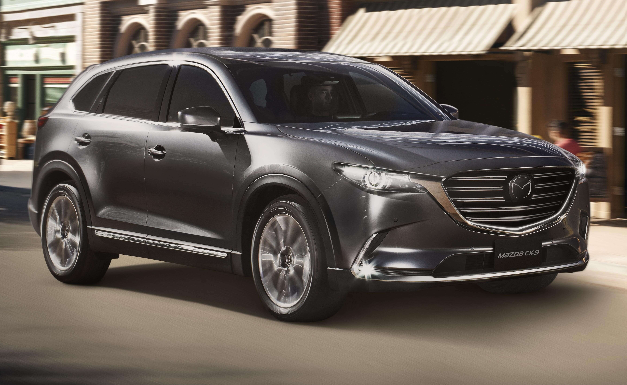
The Mazda CX-9 fuel economy story is more interesting than a simple MPG number suggests. This is a three-row SUV with space for the family, a turbocharged engine, and—on many versions—all-wheel drive. That sounds like the recipe for frequent fuel-station visits. Yet the CX-9 manages to balance performance and efficiency surprisingly well, especially in its second generation.
If we're shopping for a used CX-9, comparing different model years, or simply trying to figure out how much fuel one will use every month, the key thing to remember is that not every CX-9 has the same rating. Front-wheel-drive models are generally the most economical, while AWD versions sacrifice a small amount of efficiency in exchange for additional traction.
For most second-generation models, fuel economy falls roughly in the 20 to 28 mpg range depending on drivetrain and driving conditions. Mazda's official 2021 specifications, for example, rated the CX-9 at 22 mpg city and 28 mpg highway with front-wheel drive, compared with 20 mpg city and 26 mpg highway with AWD.
But EPA numbers are only the starting line. How fast we accelerate, where we drive, what tires we use, and even how heavily we load the SUV can change the real-world result considerably.
Let's dig into what owners and prospective buyers really need to know.
Content in this publication
- Mazda CX-9 Fuel Economy at a Glance
- What MPG Does a Mazda CX-9 Get?
- Mazda CX-9 City Fuel Economy
- Mazda CX-9 Highway Fuel Economy
- Mazda CX-9 FWD vs AWD Fuel Economy
- Why the Mazda CX-9 Uses a Turbocharged 2.5-Liter Engine
- Does the Mazda CX-9 Require Premium Gas?
- Mazda CX-9 Fuel Tank Capacity
- Mazda CX-9 Driving Range
- First-Generation Mazda CX-9 Fuel Economy
- Which Mazda CX-9 Has the Best Fuel Economy?
- Real-World Mazda CX-9 Fuel Economy
- How Tire Pressure Affects Mazda CX-9 MPG
- How Engine Oil Relates to Fuel Economy
- Does Sport Mode Use More Gas?
- How Much Does It Cost to Fuel a Mazda CX-9?
- How to Improve Mazda CX-9 Fuel Economy
- Is 20 MPG Bad for a Mazda CX-9?
- Mazda CX-9 Fuel Economy vs Performance
- Is the Mazda CX-9 Good on Gas for a Three-Row SUV?
- Mazda CX-9 Fuel Economy by Generation
- What About the 2023 Mazda CX-9?
- Should You Buy a Mazda CX-9 for Fuel Economy?
- Mazda CX-9 Fuel Economy: Final Verdict
- Frequently Asked Questions About Mazda CX-9 Fuel Economy
Mazda CX-9 Fuel Economy at a Glance
The second-generation Mazda CX-9 introduced in 2016 represented a major improvement over the SUV it replaced. Instead of relying on a larger naturally aspirated V6, Mazda switched to a smaller 2.5-liter turbocharged four-cylinder engine.
That change helped transform the CX-9's efficiency.
Mazda stated that the 2016 redesign improved fuel economy by approximately 32 percent compared with the previous-generation vehicle. The 2016 front-wheel-drive CX-9 was originally rated at 22 mpg city, 28 mpg highway, and 25 mpg combined, while the AWD model achieved 21 mpg city, 27 highway, and 23 combined.
That was a significant leap for a large three-row crossover.
Typical Mazda CX-9 MPG Figures
Here is a useful snapshot of several representative versions.
| CX-9 version | City MPG | Highway MPG | Combined MPG |
|---|---|---|---|
| 2016 FWD | 22 | 28 | 25 |
| 2016 AWD | 21 | 27 | 23 |
| 2019 FWD | 22 | 28 | 24 |
| 2019 AWD | 20 | 26 | 23 |
| 2021 FWD | 22 | 28 | Around 24 |
| 2021 AWD | 20 | 26 | Around 23 |
| 2022 AWD | 20 | 26 | 23 |
| 2023 AWD | Around 20 | Around 26 | Around 23 |
Mazda's 2019 specification sheet, for example, lists the FWD model at 22/28/24 mpg city/highway/combined, while the AWD version was rated at 20/26/23 mpg.
By 2022, Mazda had made i-ACTIV AWD standard, and the official specification listed 20 city, 26 highway, and 23 combined MPG.
That distinction matters tremendously when we're comparing used examples.
What MPG Does a Mazda CX-9 Get?
For a simple answer, most second-generation Mazda CX-9 models should return somewhere around 20 to 25 mpg in mixed driving, with highway mileage potentially reaching the upper 20s under favorable conditions.
The most economical configurations are generally earlier second-generation front-wheel-drive versions.
AWD models normally sit closer to 23 mpg combined.
That's respectable rather than revolutionary. A hybrid three-row SUV can obviously do better, but the CX-9 was never intended to chase maximum fuel economy at the expense of driving character.
Instead, Mazda engineered it as something of a compromise: practical enough for school runs and road trips but responsive enough that it doesn't feel like we're steering a refrigerator on wheels.
Mazda CX-9 City Fuel Economy
City driving is where the CX-9's size becomes most obvious.
Constant acceleration consumes energy. So does idling at traffic lights. Add school traffic, short journeys, air-conditioning and stop-and-go congestion, and our average MPG can drop quickly.
Most second-generation AWD CX-9s are officially rated around 20 mpg city, while some FWD versions carry ratings around 22 mpg city.
In especially heavy urban traffic, however, real-world averages can fall below those numbers.
Why City MPG Can Drop Quickly
A turbocharged SUV rewards a smooth right foot.
Every time we accelerate aggressively, the turbocharger helps deliver strong torque. That's fun, especially considering the CX-9's size, but boost pressure and fuel economy rarely become best friends.
Short trips create another problem because engines operate less efficiently before reaching normal operating temperature.
A five-minute grocery run therefore tends to consume disproportionately more fuel per mile than a long highway drive.
Traffic Makes a Bigger Difference Than Distance
Two people can both drive ten miles to work yet achieve dramatically different fuel consumption.
One cruises along at 40 mph with a handful of traffic lights. The other crawls through downtown traffic for 45 minutes.
Same distance. Entirely different fuel bill.
That is why we shouldn't automatically assume something is wrong with a CX-9 merely because its dashboard shows 17 or 18 mpg after several days of dense urban driving.
Mazda CX-9 Highway Fuel Economy
Highway driving is where the CX-9 becomes much more efficient.
Once the vehicle reaches a steady cruising speed, the engine doesn't have to repeatedly accelerate more than two tons of SUV, passengers, and luggage.
Official highway ratings of approximately 26 to 28 mpg are common among second-generation models, depending on drivetrain.
That makes the CX-9 fairly well suited to long-distance travel.
Can a Mazda CX-9 Actually Get 28 MPG?
Yes, but conditions matter.
The 28-mpg figure applies to certain front-wheel-drive versions under standardized EPA testing. It isn't a guarantee that every owner will see 28 mpg every day.
A lightly loaded FWD CX-9 traveling steadily on relatively flat highways may approach or even occasionally exceed its official highway number.
An AWD CX-9 carrying six people, luggage and a roof box at high interstate speeds probably will not.
Speed Is an Invisible Fuel-Economy Tax
Aerodynamic drag rises rapidly as speed increases.
Driving at 75 or 80 mph therefore requires noticeably more energy than cruising at 60 or 65 mph.
The CX-9's sleek design disguises its size visually, but the air doesn't care how stylish the SUV looks. At higher speeds, it still has to push a substantial body through the atmosphere.
Mazda CX-9 FWD vs AWD Fuel Economy
If fuel economy is one of our priorities when shopping for an older CX-9, drivetrain deserves attention.
The difference isn't enormous, but it adds up over thousands of miles.
A 2019 CX-9 FWD, for instance, carried an official combined rating of 24 mpg, compared with 23 mpg for the AWD model. The city/highway figures were 22/28 for FWD and 20/26 for AWD.
The AWD system adds hardware and weight while distributing torque to additional wheels when needed.
Is FWD Worth Choosing Just to Save Fuel?
It depends on where we live.
If our climate is mild, snow is rare, and we spend most of our time on paved roads, a FWD CX-9 may make perfect sense.
But if we regularly encounter snow, slippery roads, steep gradients or poor weather, many drivers will happily trade a little fuel efficiency for the added reassurance of AWD.
There's another complication for buyers looking at newer examples: Mazda eventually made AWD standard.
By the 2022 model year, the CX-9 specification listed i-ACTIV AWD as standard equipment.
Why the Mazda CX-9 Uses a Turbocharged 2.5-Liter Engine
The second-generation CX-9's efficiency improvement makes more sense once we look beneath the hood.
Rather than installing a large V6, Mazda used its Skyactiv-G 2.5 Dynamic Pressure Turbo four-cylinder.
In 2021 specification, the engine produced up to 250 horsepower and 320 lb-ft of torque when using 93-octane premium gasoline, or 227 horsepower and 310 lb-ft on 87-octane regular fuel.
That generous low-end torque helps the SUV move without requiring constant high revs.
Does Turbocharging Hurt Mazda CX-9 MPG?
It can—if we frequently ask the turbocharger for full performance.
A small turbo engine can behave almost like two personalities sharing the same body.
Drive gently and it can operate efficiently.
Push deeply into the accelerator and it suddenly behaves like a much hungrier engine.
That's why real-world CX-9 fuel economy depends heavily on driving style.
One of the CX-9's most useful traits is that premium gasoline is not strictly required for the second-generation turbo engine.
Mazda designed the engine to operate on regular 87-octane fuel, although maximum advertised horsepower and torque are achieved with 93 octane on versions carrying Mazda's dual power ratings.
That distinction is important when calculating ownership costs.
We shouldn't assume premium gasoline will automatically improve fuel economy enough to pay for itself.
Its primary benefit in the CX-9 is allowing the engine management system to deliver its maximum rated performance under the appropriate operating conditions.
Some drivers may notice differences in responsiveness, but buying premium solely to save fuel generally doesn't make much economic sense unless local fuel prices make the difference unusually small.
Mazda CX-9 Fuel Tank Capacity
Fuel-tank size influences how frequently we stop even when actual MPG remains unchanged.
For 2021, Mazda listed approximately:
- 19.0 U.S. gallons for FWD CX-9 models
- 19.5 U.S. gallons for AWD CX-9 models
A 19.5-gallon tank combined with roughly 23 mpg theoretically represents close to 450 miles if every usable gallon could be consumed under ideal conditions.
Real life is different, of course.
We don't normally drive until the tank is literally empty, and mileage changes with traffic, weather and terrain.
Mazda CX-9 Driving Range
For many families, range matters almost as much as MPG.
A thirsty vehicle with a huge tank may travel farther between stops than an efficient vehicle with a tiny tank.
The CX-9 generally offers a useful road-trip range.
Estimated Range at Different Fuel-Economy Levels
| Average fuel economy | Approx. theoretical range with 19.5 gallons |
|---|---|
| 18 mpg | 351 miles |
| 20 mpg | 390 miles |
| 23 mpg | 449 miles |
| 25 mpg | 488 miles |
| 27 mpg | 527 miles |
These are mathematical illustrations rather than guaranteed driving ranges because the usable amount of fuel and real-world conditions vary.
Still, they show why highway trips can feel dramatically different from city driving.
At 18 mpg around town, we're visiting the gas station far more often than someone averaging 26 or 27 mpg on open highways.
First-Generation Mazda CX-9 Fuel Economy
The biggest efficiency divide in the CX-9 family isn't FWD versus AWD.
It's first generation versus second generation.
Older CX-9 models used a V6 engine and generally consume considerably more fuel.
A representative 2015 CX-9 carried EPA ratings around 17 mpg city and 24 highway for FWD, while AWD variants were around 16 city and 22 highway, according to published EPA-derived figures.
Compare that with the redesigned 2016 FWD model's 22 city and 28 highway rating and we can immediately see why the redesign mattered.
2015 vs 2016 Mazda CX-9 MPG
| Model | City | Highway | Combined |
|---|---|---|---|
| 2015 FWD | 17 | 24 | About 19 |
| 2015 AWD | 16 | 22 | About 18 |
| 2016 FWD | 22 | 28 | 25 |
| 2016 AWD | 21 | 27 | 23 |
The 2016 model wasn't just a styling refresh. It fundamentally changed the CX-9's efficiency profile.
Mazda itself described the improvement as roughly 32 percent compared with the predecessor.
Which Mazda CX-9 Has the Best Fuel Economy?
Among U.S.-market second-generation models, the early FWD versions are generally the efficiency champions.
The original 2016 FWD model was officially rated at 25 mpg combined, making it especially attractive for drivers who don't require AWD.
Later FWD versions typically carried similar 22/28 city/highway figures, although official combined ratings can vary slightly by year.
Why Newer Doesn't Always Mean More Efficient
We often assume every newer vehicle must consume less fuel than the previous one.
Not necessarily.
Equipment changes, drivetrain standardization, emissions calibration, testing procedures, wheel sizes and model configurations can all affect ratings.
In the CX-9's case, later U.S. models became AWD-only, meaning someone focused purely on maximum MPG may actually prefer an earlier FWD example.
Real-World Mazda CX-9 Fuel Economy
EPA figures give us a standardized comparison tool, not a promise.
Your CX-9 might beat its rating.
It might also miss it by several MPG.
Both outcomes can be perfectly normal.
Driving conditions matter enormously.
What Reduces CX-9 Fuel Economy?
Aggressive acceleration, prolonged idling, frequent short trips, low tire pressure, heavy cargo, towing, roof boxes, cold weather, steep terrain and high cruising speeds can all increase fuel consumption.
A dirty air filter or mechanical issue may also influence performance in certain circumstances, although we shouldn't jump immediately to mechanical conclusions every time the dashboard MPG changes.
Sometimes the explanation is simply that Tuesday involved three school runs and an hour sitting in traffic.
How Tire Pressure Affects Mazda CX-9 MPG
Tires are easy to overlook because they don't seem connected to the fuel system.
But the engine has to overcome rolling resistance whenever the vehicle moves.
Underinflated tires increase that resistance.
Mazda's 2021 U.S. specifications show recommended pressures of 34 psi front and rear for both P255/60R18 and P255/50R20 standard tire configurations, although owners should always follow the pressure label on their specific vehicle rather than applying a generic number from another model year.
Bigger Wheels Can Change the Equation
Many higher-trim CX-9s use 20-inch wheels.
They look fantastic, but larger wheel-and-tire combinations may carry weight and rolling-resistance penalties depending on tire design.
That doesn't mean we should avoid them. It simply reminds us that fuel economy is the result of dozens of small variables working together.
How Engine Oil Relates to Fuel Economy
Even engine oil plays a small role.
Mazda specifies SAE 5W-30 engine oil for the 2021 CX-9 in the U.S., Canada and Puerto Rico and notes that the correct oil contributes to optimum fuel economy by reducing the energy required to overcome internal engine friction.
We don't need to obsess over tiny efficiency gains, but following the manufacturer's maintenance specifications helps ensure the engine operates as designed.
Does Sport Mode Use More Gas?
Sport Mode itself isn't a magical switch that pours fuel into the cylinders.
What it changes is how the vehicle responds.
The transmission may hold gears differently and keep the engine ready to respond more aggressively.
If that encourages us to accelerate harder and rev the engine more frequently, fuel economy will usually suffer.
A careful driver using Sport Mode occasionally may consume less fuel than an aggressive driver who never touches it.
Fuel economy isn't simply about settings.
It's about how those settings alter our behavior behind the wheel.
How Much Does It Cost to Fuel a Mazda CX-9?
Fuel cost depends on three numbers: distance traveled, average MPG, and fuel price.
Suppose we drive 12,000 miles per year and average 23 mpg.
We would consume approximately:
12,000 ÷ 23 = 522 gallons per year.
At $3.50 per gallon, that comes to roughly $1,827 annually.
At 20 mpg, consumption rises to 600 gallons, or $2,100 at the same fuel price.
That 3-mpg difference therefore costs roughly $273 per year in this example.
Why Small MPG Differences Matter Over Time
One MPG doesn't sound dramatic.
Multiply it across 50,000 or 100,000 miles and the difference becomes real money.
That's especially relevant when comparing an older first-generation CX-9 returning around 18 or 19 mpg with a later model achieving 23 or 24.
How to Improve Mazda CX-9 Fuel Economy
The easiest way to improve efficiency isn't modifying the engine. It's reducing unnecessary energy losses.
We can accelerate progressively, anticipate traffic rather than repeatedly braking and accelerating, maintain correct tire pressures, remove unused roof equipment, avoid carrying unnecessary cargo, combine short trips when practical, keep the vehicle properly maintained, and reduce excessive highway speed.
None of these techniques will transform a CX-9 into a hybrid.
Together, however, they can make a noticeable difference.
Use the CX-9's Fuel Economy Display
The CX-9 includes both current and average fuel-economy information.
Mazda explains that the average figure is calculated using traveled distance and fuel consumption and can be reset through the vehicle information controls.
This is useful because we can turn fuel efficiency into a little experiment.
Reset the trip average before a long highway journey. Compare 65 mph with 75 mph. Watch what happens after a week of short urban trips.
The dashboard becomes a teacher.
Is 20 MPG Bad for a Mazda CX-9?
Not necessarily.
If we're driving an AWD CX-9 primarily in city traffic, 20 mpg is close to the official city rating for several model years.
If we're driving gently at 65 mph on an empty highway and still averaging 20 mpg over hundreds of miles, however, the result deserves a closer look.
Context matters more than a single number.
When Low Fuel Economy Might Need Investigation
A sudden and persistent drop is more meaningful than a naturally low city average.
If a vehicle that historically averaged 23 mpg suddenly falls to 17 mpg without any change in route, weather or driving behavior, checking basics such as tire pressure and maintenance condition is reasonable.
Diagnostic problems should be evaluated properly rather than blamed automatically on one component.
Mazda CX-9 Fuel Economy vs Performance
This is where the CX-9 makes its strongest case.
There are more economical three-row SUVs, particularly modern hybrids.
But the CX-9 delivers something many efficiency-focused crossovers don't: character.
The turbo engine produces strong low-end torque, the chassis feels comparatively engaging, and the SUV is willing to move when we ask it to.
That personality inevitably costs some fuel.
Yet it doesn't behave like the thirsty V6 crossovers of an earlier era.
Is the Mazda CX-9 Good on Gas for a Three-Row SUV?
For its era, especially after the 2016 redesign, we'd call its fuel economy competitive.
Mazda's original 2016 announcement even highlighted the FWD model as achieving class-leading or best-in-class efficiency under the comparisons Mazda used at the time.
By today's standards, electrified rivals have moved the goalposts.
Hybrid SUVs can offer significantly better urban consumption because electric assistance is particularly useful during stop-and-go driving.
The CX-9 nevertheless remains reasonable for buyers who prioritize conventional gasoline power, responsive performance, and a more engaging driving experience.
Mazda CX-9 Fuel Economy by Generation
The easiest way to remember the story is this:
First-generation CX-9 models are noticeably thirstier.
Second-generation models from 2016 onward are substantially more efficient.
Within the second generation, FWD usually provides the best MPG, while AWD gives up a modest amount of fuel economy.
Later U.S. models use AWD as standard.
That simple framework is more useful than memorizing every individual model-year rating.
What About the 2023 Mazda CX-9?
The 2023 CX-9 represents the end of the line in the United States.
Mazda officially announced that the CX-9 would be discontinued in the U.S. after the 2023 model year, paving the way for newer products including the CX-90.
The 2023 CX-9 came with i-ACTIV AWD as standard in the U.S., continuing the drivetrain strategy introduced in the preceding model year.
That means shoppers looking for a late-model CX-9 should generally expect fuel economy around the AWD figures rather than the higher numbers associated with older FWD variants.
Does Discontinuation Make MPG Information Less Relevant?
Quite the opposite.
Because the CX-9 is now primarily a used-vehicle purchase in the U.S., fuel economy becomes an important part of comparing different years.
A well-priced older CX-9 may look like a bargain until we calculate annual fuel consumption.
That's especially true when comparing the original V6 generation with the turbocharged second generation.
Should You Buy a Mazda CX-9 for Fuel Economy?
We wouldn't buy a CX-9 solely because we want the lowest possible fuel bill.
That's not its mission.
We'd buy it because we want a stylish, well-finished three-row crossover that drives with more enthusiasm than many family SUVs while still providing respectable gasoline fuel economy.
The efficiency is a supporting actor, not the star of the movie.
Who Will Be Happy With CX-9 MPG?
Drivers coming from an older V6 SUV may find the second-generation CX-9 impressively economical.
Someone moving from a compact hybrid will probably feel the opposite.
Perspective changes everything.
Mazda CX-9 Fuel Economy: Final Verdict
The Mazda CX-9 fuel economy is one of the reasons the second generation remains appealing on the used market.
Early FWD versions can achieve official highway ratings of around 28 mpg, while common AWD versions generally sit around 20 mpg city, 26 highway, and approximately 23 combined.
More importantly, the redesigned 2016 model dramatically improved efficiency compared with the older V6 CX-9.
That's the real story.
The CX-9 manages to carry three rows of passengers, deliver substantial turbocharged torque and still return fuel consumption that feels reasonable for its size.
No, it's not a fuel-sipping hybrid.
But neither is it a rolling gas station loyalty program.
Drive smoothly, keep it maintained, watch tire pressures and avoid treating every freeway on-ramp like qualifying at Le Mans, and the CX-9 can deliver respectable mileage without sacrificing the lively personality that made the model distinctive in the first place.
Frequently Asked Questions About Mazda CX-9 Fuel Economy
1. What is the average Mazda CX-9 fuel economy?
Most second-generation CX-9 models return official combined ratings around 23 to 25 mpg depending on model year and drivetrain. AWD versions commonly sit around 23 mpg combined, while some earlier FWD models achieved approximately 24 to 25 mpg combined.
2. How many MPG does a Mazda CX-9 get on the highway?
Second-generation models generally carry official highway ratings between approximately 26 and 28 mpg. FWD models tend to occupy the upper end of that range, while AWD versions are commonly rated around 26 mpg.
3. Which Mazda CX-9 gets the best gas mileage?
The second-generation front-wheel-drive versions are generally the most fuel-efficient U.S.-market CX-9s. The 2016 FWD model was originally rated at 22 mpg city, 28 highway, and 25 combined.
No. Second-generation turbocharged CX-9 models can operate on regular 87-octane gasoline. Certain versions produce their maximum advertised horsepower and torque when using 93-octane premium fuel, but premium isn't required simply to operate the vehicle.
5. Why is my Mazda CX-9 getting poor gas mileage?
Heavy city traffic, aggressive acceleration, short journeys, low tire pressure, high speeds, cold weather, roof accessories, towing and heavy cargo can all reduce fuel economy. Compare mileage over several tanks rather than judging the vehicle from one short journey. If fuel economy falls suddenly without an obvious change in driving conditions, checking tire pressures and maintenance condition is a sensible starting point.
If you want to know other articles similar to Mazda CX-9 Fuel Economy: MPG, Range, Costs, and Real-World Efficiency you can visit the category Driving.
Can Nissan Rogue Pull a Boat? Complete Towing Guide
Can Nissan Rogue Be Flat Towed? Complete Towing Guide
Are Nissan Rogue Good on Gas? MPG, Fuel Economy, and Real-World Costs
Can Nissan Rogue Drive in Snow? Complete Winter Driving Guide

Kia Sorento Diesel Fuel Consumption: MPG, Efficiency and Real-World Range
Haval Jolion Hybrid Fuel Consumption: How Efficient Is It Really?
Leave a Reply
More content of your interest