

MINI Cooper Won’t Start? Common Causes, Symptoms, and Fixes

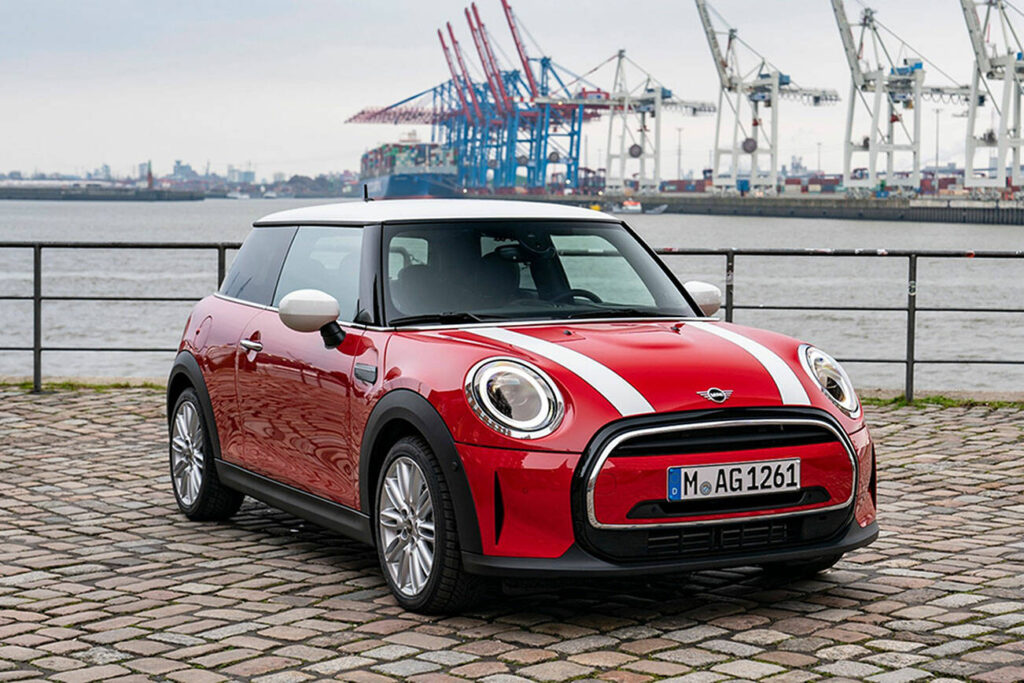
There is nothing more frustrating than getting into your MINI Cooper, pressing the Start button or turning the key, and discovering that the engine refuses to start. Whether your MINI makes a clicking noise, cranks without starting, or shows absolutely no signs of life, the problem can have several explanations.
The good news? A MINI Cooper that won't start doesn't necessarily have a serious engine problem. Sometimes, the issue is as simple as a discharged battery, a weak key fob battery, or a loose electrical connection.
However, other situations may involve a faulty starter motor, fuel pump, crankshaft position sensor, or electronic control module.
In this comprehensive guide, we'll explain why your MINI Cooper won't start, how to identify the problem based on its symptoms, which repairs you can attempt yourself, and how much professional repairs might cost.
We'll also cover common starting problems affecting different MINI generations, including older R50 and R56 models and newer F56 vehicles.
Content in this publication
- Why Won't My MINI Cooper Start?
- 1. Dead or Weak Battery
- 2. MINI Cooper Won't Start but Makes a Clicking Noise
- 3. Faulty Starter Motor
- 4. MINI Cooper Cranks but Won't Start
- 5. MINI Cooper Won't Start Because the Key Is Not Detected
- 6. MINI Cooper Won't Start but the Lights Come On
- 7. MINI Cooper Won't Start After Sitting Overnight
- 8. MINI Cooper Won't Start When Hot
- 9. MINI Cooper Starts Then Dies Immediately
- 10. MINI Cooper Won't Start After Battery Replacement
- 11. MINI Cooper Won't Start: Problems by Generation
- 12. How to Fix a MINI Cooper That Won't Start: Step-by-Step
- 13. MINI Cooper Won't Start: Diagnostic Trouble Codes
- 14. How Much Does It Cost to Fix a MINI Cooper That Won't Start?
- 15. How to Prevent MINI Cooper Starting Problems
- 16. When Should You Call a Mechanic?
- Frequently Asked Questions About MINI Cooper Starting Problems
- Final Thoughts: What to Do When Your MINI Cooper Won't Start
Why Won't My MINI Cooper Start?
When a MINI Cooper refuses to start, we can usually narrow down the problem by observing what happens when we attempt to start the engine.
There are two important situations:
- No crank: The engine does not turn over when you attempt to start the vehicle.
- Cranks but won't start: The starter turns the engine, but the engine fails to run.
This distinction matters because the potential causes are significantly different.
A MINI that doesn't crank may have a battery, starter, ignition authorization, or electrical problem. Meanwhile, a vehicle that cranks normally but doesn't start may have a fuel delivery, ignition, sensor, or mechanical issue.
MINI Cooper Starting Problems: Quick Diagnosis Chart
| Symptom | Possible Cause | First Thing to Check |
|---|---|---|
| No lights or electrical power | Dead battery or main electrical connection | Battery voltage and terminals |
| Rapid clicking when starting | Weak battery or poor connection | Battery condition |
| One loud click, no crank | Starter circuit or starter motor | Battery and starter circuit |
| Engine cranks but won't start | Fuel, ignition, or sensor problem | Fuel level and fault codes |
| Starts with a jump but not afterward | Battery or charging system | Battery and alternator |
| Key not detected | Key fob battery or interference | Spare key and emergency detection |
| Starts and immediately stalls | Fuel delivery or engine management | Diagnostic fault codes |
| Won't start when hot | Heat-sensitive electrical component | Starter and crankshaft sensor |
| Won't start after sitting overnight | Battery discharge or parasitic drain | Battery state of charge |
| Won't start after battery replacement | Incorrect installation, low voltage, or electronic issue | Connections and diagnostic scan |
These symptoms can overlap, so we should treat the chart as a starting point rather than a definitive diagnosis.
1. Dead or Weak Battery
A discharged or failing battery is one of the first things we should investigate when a MINI Cooper won't start.
The battery supplies the electrical energy required to power the starter motor and vehicle electronics.
If the voltage drops too low, the engine may not crank properly, even if the dashboard lights still work.
Signs of a Bad MINI Cooper Battery
Common warning signs include:
- The engine cranks slowly.
- You hear rapid clicking when attempting to start.
- The dashboard lights flicker or dim.
- The central locking operates inconsistently.
- Electronic warning messages appear unexpectedly.
- The car starts after a jump-start.
- The vehicle struggles to start after sitting overnight.
A battery can still power the radio or dashboard while lacking sufficient capacity to turn the engine.
This is why working interior lights do not automatically rule out a battery problem.
How to Check the Battery
We can perform a basic battery test using a digital multimeter.
With the engine switched off and the battery rested, the approximate readings for a conventional 12-volt lead-acid battery are:
| Battery Voltage | Approximate Condition |
|---|---|
| 12.6–12.8V | Fully charged |
| 12.4V | Partially discharged |
| 12.2V | Significantly discharged |
| 12.0V or lower | Very low charge |
| Below 12.0V | Deeply discharged |
These figures are general guidance. AGM batteries, temperature, recent charging, and surface charge can affect readings.
A battery can also show reasonable voltage at rest but fail under starting load. A professional load or conductance test provides a more reliable assessment.
How to Fix It
If the battery is discharged, we can try charging it with a compatible battery charger or performing a jump-start according to the vehicle's owner's manual.
If the battery repeatedly goes flat, it is important to investigate whether the cause is:
- An ageing battery
- A failing alternator
- Excessive electrical consumption while parked
- Corroded terminals
- A loose battery connection
- Frequent short journeys that prevent sufficient charging
Many MINI models also require battery registration after replacement. The correct battery specification and registration procedure depend on the vehicle's generation and equipment.
Our recommendation: Have the battery and charging system tested before paying for a replacement.
2. MINI Cooper Won't Start but Makes a Clicking Noise
A clicking sound is one of the most recognizable symptoms of a starting-system problem.
However, the type of clicking can help us identify what might be wrong.
Rapid Clicking When Starting
If your MINI produces repeated clicking sounds, the battery may not have enough power to keep the starter motor engaged.
This can happen when battery voltage collapses under load.
Other possible causes include poor battery terminals or a high-resistance ground connection.
Single Click but No Start
If we hear one solid click without the engine turning over, possible explanations include:
- A failing starter motor
- A defective starter solenoid
- Insufficient battery power
- Loose or corroded power connections
- A problem in the starter control circuit
A single click does not automatically mean the starter needs replacing.
What Should We Do?
Start by checking the battery voltage and terminal connections.
If the battery passes a proper load test, a technician should check whether the starter is receiving its commanded electrical supply.
Replacing the starter without confirming the problem could result in an unnecessary repair.
3. Faulty Starter Motor
The starter motor is responsible for rotating the engine during startup.
Over time, internal brushes, electrical contacts, solenoids, and other components can wear out.
When the starter fails, the MINI may have sufficient electrical power, but the engine will not turn over.
Symptoms of a Bad Starter Motor
Typical symptoms include:
- One click when pressing the Start button
- No engine rotation
- Intermittent starting problems
- Starting difficulties when the engine is hot
- Complete failure to crank despite a healthy battery
Sometimes a worn starter works intermittently before eventually failing completely.
How to Diagnose a Starter Problem
Before replacing the starter, we should confirm that:
- The battery is sufficiently charged.
- The battery terminals and ground connections are secure.
- The vehicle recognizes the key.
- The brake or clutch starting requirements are satisfied.
- The starter receives the correct power and control signals.
If the starter receives the required supply but fails to operate, replacement may be necessary.
Starter accessibility and labor requirements differ between MINI generations and engine configurations.
4. MINI Cooper Cranks but Won't Start
What if the engine turns over normally but refuses to start?
This situation generally suggests that the starting motor is functioning, but something is preventing the engine from running.
For a petrol-powered MINI Cooper, the engine requires several essential conditions:
- Adequate fuel delivery
- Correct ignition timing and spark
- Sufficient air
- Proper engine compression
- Accurate crankshaft and camshaft synchronization
- Authorization from the vehicle's electronic systems
If one of these requirements is missing, the engine may crank continuously without starting.
Check the Fuel System
A faulty fuel pump can prevent sufficient petrol from reaching the engine.
Depending on the model, MINI fuel systems may include both low-pressure and high-pressure pumps.
For example, turbocharged petrol engines with direct injection use a high-pressure fuel system in addition to their low-pressure fuel supply.
Possible symptoms of fuel delivery problems include:
- Extended cranking before starting
- Engine hesitation under acceleration
- Unexpected stalling
- Loss of power
- Intermittent starting difficulties
- Cranking without ignition
A technician can measure fuel pressure and examine fuel pump electrical operation to identify the problem.
Check the Ignition System
Petrol MINI engines rely on ignition coils and spark plugs to ignite the air-fuel mixture.
A defective ignition coil can cause misfires, rough running, and difficult starts.
However, a single failed coil will often cause a misfire rather than prevent every cylinder from firing.
If the MINI cranks but will not start at all, we should also investigate shared ignition power supplies, engine-management signals, and other possible causes.
Check the Crankshaft Position Sensor
The crankshaft position sensor tells the engine control unit how fast the engine is rotating and where the crankshaft is positioned.
Without a valid signal, the engine-management system may be unable to control ignition and fuel injection correctly.
A defective sensor or damaged wiring can produce a crank-no-start condition.
We can investigate this with a compatible diagnostic scanner by checking engine RPM and crankshaft synchronization data while cranking.
5. MINI Cooper Won't Start Because the Key Is Not Detected
Modern MINI vehicles rely on electronic authorization systems to confirm that the correct key is present.
If your MINI displays a message such as "Remote Control Not Detected" or "Key Not Detected," the vehicle may refuse to start.
Possible causes include:
- Discharged key fob battery
- Interference from nearby electronic devices
- A damaged key
- A fault in the vehicle's key recognition system
- Low vehicle battery voltage
- Electronic communication problems
How to Start a MINI Cooper With a Dead Key Fob Battery
On many modern MINI models, we can use the emergency key recognition procedure when the key fob battery is discharged.
Try the following:
- Enter the vehicle using the mechanical key if necessary.
- Place the transmission in Park or Neutral, as appropriate.
- Hold the key fob against the designated emergency recognition point.
- Press the brake or clutch pedal as required.
- Attempt to start the vehicle.
On certain MINI generations, the emergency recognition point is marked on the steering column. Other generations may use a different arrangement, so check the owner's manual for your particular MINI.
MINI's official key-recognition guidance also identifies radio interference and nearby electronic devices as potential causes of key detection problems.
MINI FAQ
What if the Spare Key Works?
If the MINI starts normally with a spare key, the original key may have a battery, internal electronics, or programming issue.
Before purchasing a replacement, try the appropriate battery replacement procedure and retest the key.
Not all MINI key generations use the same battery arrangement.
6. MINI Cooper Won't Start but the Lights Come On
One of the most common questions owners ask is:
Why won't my MINI Cooper start if all the dashboard lights are working?
The explanation is relatively simple.
Dashboard lights require much less electrical power than the starter motor.
A weak battery may illuminate the instrument cluster while being unable to produce enough current to crank the engine.
However, other possibilities include:
- Faulty starter motor
- Defective brake pedal switch
- Clutch pedal switch malfunction
- Electronic immobilizer issue
- Transmission selector recognition problem
- Poor engine ground connection
Check the Brake or Clutch Pedal
Many MINI models with push-button starting require the driver to press the brake or clutch pedal before starting the engine.
If the car doesn't recognize the pedal input, it may refuse to engage the starter.
For automatic MINI models, confirm that the transmission is correctly in Park.
On models that permit starting in Neutral, selecting Neutral may help identify a selector recognition problem, provided the vehicle is securely stationary and the parking brake is applied.
For manual transmission vehicles, fully depress the clutch pedal.
If the starting issue disappears when the pedal is pressed differently, a pedal-position switch may require inspection.
7. MINI Cooper Won't Start After Sitting Overnight
If your MINI starts normally during the day but struggles after sitting overnight, battery discharge is one of the main possibilities.
An ageing battery may gradually lose its ability to hold a charge.
However, the vehicle might also have an electrical component that continues drawing excessive power while parked.
This is known as a parasitic battery drain.
What Can Drain a MINI Cooper Battery Overnight?
Possible causes include:
- Faulty electrical control modules
- Interior or luggage compartment lights remaining on
- Malfunctioning accessories
- Aftermarket alarm systems
- Dashcams connected to permanent power
- Damaged electrical wiring
- Modules that fail to enter sleep mode
A faulty alternator or charging system can also leave the battery insufficiently charged before the vehicle is parked.
How to Identify the Problem
If we charge the battery fully and the car starts normally, but it fails again after being parked, we should not immediately assume that the battery itself is defective.
A workshop can carry out a battery test and a parasitic current draw assessment.
This helps identify whether the battery has deteriorated or something is draining it while the car is switched off.
8. MINI Cooper Won't Start When Hot
Some MINI owners experience a particularly confusing problem: the vehicle starts normally when cold but refuses to restart after driving.
Once the engine cools down, it starts again.
This pattern can indicate a component that fails when exposed to heat.
Heat-Sensitive Crankshaft Position Sensor
An ageing crankshaft position sensor may malfunction as temperatures increase.
When the sensor signal disappears, the engine management system can lose track of crankshaft position.
The result may be extended cranking without starting.
Starter Motor Heat Problems
Electrical resistance and internal wear can also cause a starter motor to become unreliable when hot.
If your MINI does not crank when warm but starts normally after cooling, the starter motor and its electrical connections deserve attention.
Fuel Pressure Issues
Some fuel delivery problems can become more noticeable during hot restarts.
The fuel pump, fuel pressure regulation, and related sensors may require testing.
Important: A hot-start problem is not enough to prove that the crankshaft sensor, fuel pump, or starter has failed. Diagnostic testing should reproduce the fault before parts are replaced.
9. MINI Cooper Starts Then Dies Immediately
Does your MINI engine start for one or two seconds before shutting off?
This symptom suggests that the engine initially manages to run but cannot maintain normal operation.
Possible causes include:
- Inadequate fuel pressure
- Intermittent fuel pump operation
- Faulty crankshaft or camshaft signals
- Electronic throttle issues
- Severe intake air measurement problems
- Immobilizer or engine-management authorization faults
- Electrical power interruption
Could a Dirty Throttle Body Cause This?
On some vehicles, significant throttle contamination or airflow-related problems can contribute to unstable idle operation.
However, throttle cleaning should not be treated as an automatic solution.
Before cleaning or replacing components, scan the vehicle for diagnostic trouble codes and investigate the relevant operating data.
What if the MINI Stalls While Driving?
If the vehicle has stalled unexpectedly while moving, avoid driving it again until the cause is identified.
A problem that causes an unexpected stall can leave you stranded and create a safety hazard in traffic.
Professional diagnosis is particularly important if the engine repeatedly cuts out.
10. MINI Cooper Won't Start After Battery Replacement
Occasionally, a MINI Cooper refuses to start shortly after the battery has been replaced.
This can happen for several reasons.
Incorrect Battery Installation
We should first verify that the new battery matches the vehicle's required specifications and that the terminals are securely attached.
Loose connections can interrupt the electrical supply even when the battery itself is brand new.
Battery Registration
Many MINI generations use battery management systems that monitor the battery's charging condition and ageing.
On applicable models, replacing the battery requires registration using suitable diagnostic equipment.
Changing battery chemistry or capacity may also require additional coding.
Battery registration is important for correct charging management, although missing registration alone does not necessarily explain an immediate no-start condition.
Electronic Problems Following Low Voltage
A severely discharged battery can cause multiple warning messages and module communication faults.
Some of these faults disappear once the electrical supply is restored, while others require further diagnosis.
If your MINI still won't start after a battery replacement, check the voltage, installation, fuses, and relevant fault codes before replacing electronic modules.
11. MINI Cooper Won't Start: Problems by Generation
Not every MINI Cooper uses the same engine, starter arrangement, fuel system, or electronic architecture.
This means the diagnostic approach may vary depending on the model year.
First-Generation MINI Cooper (R50, R52, R53)
First-generation MINI models include vehicles produced during the early and mid-2000s, with production years differing by body style.
Potential starting problems include:
- Ageing starter motors
- Deteriorated battery cables
- Fuel pump failures
- Crankshaft position sensor problems
- Ignition system faults
- Immobilizer authorization problems
Because these vehicles are now relatively old, wiring condition, corrosion, and previous repairs are especially important.
Even a small electrical connection problem can result in starting difficulties.
Second-Generation MINI Cooper (R56, R55, R57)
Second-generation MINI models introduced different engines and electronic systems.
On these vehicles, potential causes of starting problems include:
- Weak battery
- Starter motor failure
- Fuel pump or fuel pump relay faults
- Crankshaft and camshaft sensor problems
- Engine control module communication issues
- Timing chain problems on certain engines
Fuel Pump Relay and Junction Box Problems
Some second-generation MINI models can develop issues involving the Junction Box Electronics (JBE) and its fuel pump relay circuitry.
A failure in this system can interrupt fuel pump operation, leaving the engine able to crank but unable to start.
Before replacing the fuel pump, a qualified technician should verify the relevant power supply, control signals, and fuel pressure.
Timing Chain Problems on Certain Cooper S Engines
Some earlier turbocharged MINI Cooper S models equipped with the N14 engine are known for timing chain and tensioner concerns.
Warning signs may include a rattling noise from the engine, particularly during cold starts.
If the timing chain has slipped or mechanical timing is incorrect, the engine may struggle to start or fail to start altogether.
A MINI with severe metallic timing chain noise or suspected timing failure should not be repeatedly cranked.
Professional inspection is recommended to avoid further engine damage.
Third-Generation MINI Cooper (F55, F56, F57)
Third-generation MINI vehicles introduced newer engine families and updated electronics.
Potential starting problems still include familiar issues such as weak batteries, starter faults, and defective sensors.
However, key recognition, electronic modules, charging management, and communication faults may become more important during diagnosis.
With these vehicles, we recommend using a diagnostic scanner capable of accessing MINI-specific control modules rather than relying exclusively on basic OBD-II fault codes.
Newer MINI Cooper Models (2025–2027)
Newer MINI Cooper models have increasingly sophisticated electronic starting and access systems.
Depending on the variant, potential issues may involve:
- Low 12-volt battery voltage
- Key recognition faults
- Brake pedal input recognition
- Electronic control module communication
- Starter or engine-management faults on petrol models
- Software-related errors
Fully electric MINI Cooper variants operate differently from petrol models.
An electric MINI does not use a conventional petrol-engine starter or fuel system. If an electric MINI will not enter its ready-to-drive state, the problem may involve the 12-volt system, authorization electronics, drivetrain control, or high-voltage system.
High-voltage components must only be inspected by appropriately trained personnel.
Also, 2027 model specifications may vary by market and production version, so we should not assume that all future MINI Cooper models share identical systems.
12. How to Fix a MINI Cooper That Won't Start: Step-by-Step
Before replacing expensive parts, we can perform several basic checks to narrow down the problem.
Step 1: Check the Battery
Start by checking whether the dashboard lights illuminate normally.
If they flicker, dim significantly, or disappear when starting, investigate the battery and main electrical connections.
Measure the battery voltage if you have a suitable multimeter.
Step 2: Inspect the Battery Terminals
Check for obvious corrosion, damaged wiring, or loose battery terminal connections.
Do not touch damaged or exposed electrical components.
If you find corrosion or loose connections, have them corrected safely before continuing.
Step 3: Try the Spare Key
If the dashboard indicates that the key is not detected, try a spare key.
If the problem disappears, the original key may need attention.
Step 4: Check the Transmission and Pedals
For an automatic MINI, ensure the vehicle is in Park.
For a manual MINI, fully depress the clutch pedal.
Also check whether the vehicle displays instructions related to the brake pedal, clutch, or transmission position.
Step 5: Attempt a Safe Jump-Start
If the battery appears discharged, a suitable 12-volt jump-start may help.
Use only the designated jump-start terminals and follow the procedure specified in your MINI owner's manual.
Incorrect cable connections can damage electronic components or cause injury.
Never attempt a jump-start if the battery is frozen, visibly damaged, or leaking.
If the vehicle starts, arrange a battery and charging-system test rather than assuming that the issue has been permanently resolved.
Step 6: Listen to the Engine
Pay attention to what happens when you attempt to start:
- Rapid clicking: Investigate the battery and connections.
- Single click: Check the starter system.
- Normal cranking: Investigate fuel, ignition, and synchronization.
- No sound: Check start authorization, electrical power, and the starter circuit.
- Unusually fast cranking: Stop and seek professional diagnosis if mechanical timing or compression loss is suspected.
Step 7: Scan for Diagnostic Trouble Codes
If the basic checks don't reveal the issue, use an OBD-II scanner.
A MINI-compatible diagnostic system is particularly useful because some important faults are stored in modules that generic scanners cannot access.
Step 8: Avoid Repeated Starting Attempts
If the MINI refuses to start after several brief attempts, stop cranking.
Repeated attempts can discharge the battery, overheat the starter, or worsen an existing mechanical problem.
This is particularly important if you hear unusual rattling or metallic noises.
13. MINI Cooper Won't Start: Diagnostic Trouble Codes
When troubleshooting a starting problem, fault codes can provide useful clues.
However, a diagnostic code does not automatically confirm that a specific component needs replacement.
| OBD-II Code | Description | Potential Relevance |
|---|---|---|
| P0335 | Crankshaft position sensor circuit | Crank-no-start or stalling |
| P0340 | Camshaft position sensor circuit | Starting and synchronization problems |
| P0087 | Fuel rail/system pressure too low | Insufficient fuel pressure |
| P0300 | Random or multiple misfires | Ignition, fuel, or mechanical problems |
| P0562 | System voltage low | Battery or charging system issues |
| P0016 | Crankshaft/camshaft correlation | Timing or sensor synchronization problems |
| P0230 | Fuel pump primary circuit | Fuel pump electrical control issue |
These are generic descriptions. Code availability and interpretation depend on the engine and diagnostic system.
We should examine freeze-frame information, live sensor readings, and related MINI-specific codes before reaching a conclusion.
14. How Much Does It Cost to Fix a MINI Cooper That Won't Start?
The cost of repairing a MINI Cooper that won't start depends on the underlying fault, model year, engine configuration, and location.
A simple battery problem can be much less expensive than a fuel system or major engine repair.
Estimated MINI Cooper Repair Costs
The following figures are approximate U.S. estimates for common MINI Cooper repairs.
| Repair | Estimated Cost (USD) |
|---|---|
| Battery replacement | $376–$466 |
| Starter motor replacement | $649–$854 |
| Fuel pump replacement | $1,452–$1,597 |
| Key fob battery | Usually a low-cost consumable |
| Sensor replacement | Varies by sensor and model |
| Electrical diagnosis | Depends on testing and labor |
| Timing chain repair | Requires a vehicle-specific quote |
The battery, starter, and fuel pump figures reflect published MINI Cooper repair estimates, not guaranteed prices. Individual model-year costs may differ substantially.
RepairPal.com
+2
Is It Expensive to Repair a MINI Cooper That Won't Start?
Not necessarily.
If the cause is a weak battery or poor electrical connection, the repair may be relatively straightforward.
However, if the problem involves engine timing, fuel injection, or electronic module failure, repair costs can rise significantly.
The most cost-effective approach is to identify the cause through testing rather than replacing several components based on symptoms alone.
15. How to Prevent MINI Cooper Starting Problems
Although not every failure can be prevented, regular maintenance reduces the likelihood of unexpected starting difficulties.
Maintain the Battery
We recommend having the battery tested periodically, particularly when it is several years old.
Drivers who make frequent short journeys should pay special attention to battery condition.
Inspect the Charging System
If the alternator is not charging correctly, a healthy battery can still become discharged.
An electrical system inspection can help identify charging problems before they leave you stranded.
Follow the Recommended Service Schedule
Regular maintenance helps prevent starting issues associated with neglected spark plugs, deteriorating engine components, and other mechanical faults.
Service requirements vary by MINI generation and engine.
Investigate Unusual Engine Noises
Never ignore persistent rattling, knocking, or other abnormal engine sounds.
On certain MINI engines, unusual startup noises may indicate timing chain or tensioner problems requiring prompt investigation.
Address Warning Lights Early
If your MINI displays a check engine warning or charging-system message, investigate it before the vehicle becomes unreliable.
Not every warning light indicates an immediate breakdown, but ignoring recurring faults can make diagnosis more difficult.
16. When Should You Call a Mechanic?
Some MINI Cooper starting problems can be identified through simple checks.
However, we recommend professional assistance when:
- The engine cranks normally but consistently fails to start.
- The vehicle repeatedly stalls while driving.
- The battery and starter appear healthy, but nothing happens.
- Several electrical modules report communication problems.
- The engine makes unusual metallic noises.
- The vehicle has suffered water damage.
- The problem involves suspected mechanical timing failure.
- An electric MINI displays a high-voltage system fault.
A qualified MINI specialist can use manufacturer-compatible diagnostic equipment to investigate the starting system and avoid unnecessary parts replacement.
Frequently Asked Questions About MINI Cooper Starting Problems
1. Why Is My MINI Cooper Not Starting but the Battery Is Good?
If the battery has passed a proper load test, possible causes include a faulty starter motor, poor electrical ground, defective brake or clutch pedal switch, immobilizer problem, or electronic control issue.
If the engine cranks normally, the problem may instead involve fuel delivery, ignition, sensors, or engine synchronization.
The next step is to determine whether the engine is cranking and inspect the relevant electrical signals.
2. Why Does My MINI Cooper Click but Won't Start?
Rapid clicking often indicates a weak battery or poor electrical connection.
A single click without engine rotation may suggest a starter motor or starter circuit problem.
Testing battery voltage under load is a useful first step.
3. Can a Dead Key Fob Battery Stop a MINI Cooper From Starting?
Yes. On MINI models that rely on electronic key detection, a discharged key fob battery can prevent normal key recognition.
Many models provide an emergency key detection procedure that allows the vehicle to start even when the remote battery is discharged.
The procedure depends on the MINI generation.
4. Why Does My MINI Cooper Start With a Jump but Not Normally?
If the MINI starts with external battery assistance, the vehicle may have a discharged battery, poor electrical connection, or charging-system problem.
However, a successful jump-start does not prove that the battery must be replaced.
A battery load test and charging-system inspection can help identify the actual cause.
5. Can I Drive My MINI Cooper After It Finally Starts?
That depends on why it failed to start.
If the problem was a discharged battery that has been properly charged and tested, the vehicle may be safe to operate.
However, if the MINI has an intermittent stalling problem, abnormal engine noises, or warning messages indicating a serious fault, we recommend professional inspection before driving.
A MINI that starts after several attempts may still have an unresolved problem capable of leaving you stranded.
Final Thoughts: What to Do When Your MINI Cooper Won't Start
If your MINI Cooper won't start, the best approach is to identify the exact symptom before replacing any parts.
A completely unresponsive MINI may have a battery, electrical connection, key authorization, or starter circuit problem. Rapid clicking often points toward insufficient battery power, while normal cranking without starting suggests an issue involving fuel delivery, ignition, engine sensors, or mechanical timing.
Fortunately, many starting problems can be diagnosed without immediately replacing expensive components.
We recommend beginning with the battery, terminals, key recognition, and starting conditions before moving on to more advanced electrical and mechanical testing.
The most important thing to remember is that a MINI Cooper that won't start is not automatically a MINI Cooper with a damaged engine. Careful diagnosis can save time, prevent unnecessary repairs, and help get your MINI safely back on the road.
If you want to know other articles similar to MINI Cooper Won’t Start? Common Causes, Symptoms, and Fixes you can visit the category Common Problems.
Volvo XC40 Sound Not Working? Complete Troubleshooting Guide

Mazda Diesel Engine Problems: Common Faults and Fixes
Volkswagen Key Not Detected or No Key Error: Causes and Fixes

Volvo S90 Common Problems: Reliability & Repair Guide
Volvo S90 No Sound: Causes, Fixes and Solutions

Nissan Rogue Smells Like Gas: Causes and Fixes
Leave a Reply
More content of your interest