
Mitsubishi Outlander Engine Specs: Complete Powertrain Guide

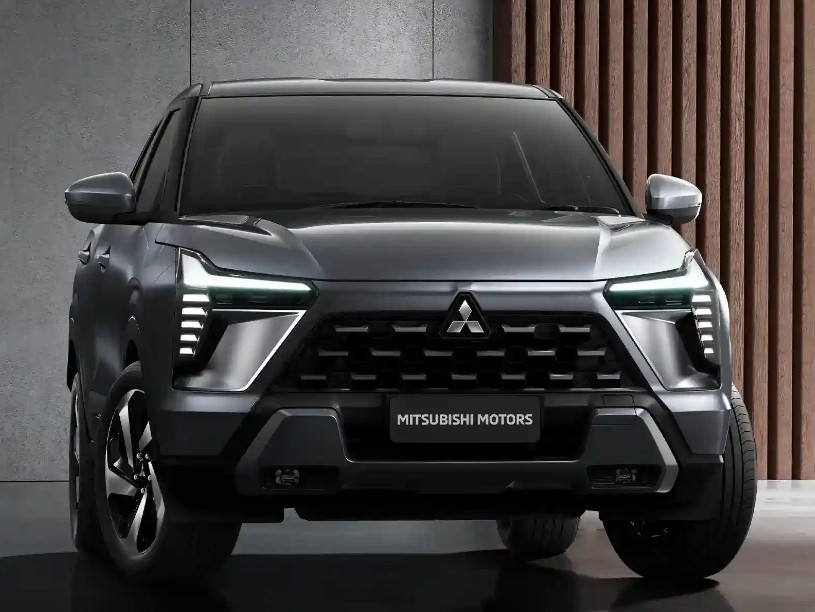
The Mitsubishi Outlander has worn many different mechanical personalities over the years. Depending on the generation, model year, and country, we can find it with a modest four-cylinder gasoline engine, a torquey diesel, a surprisingly lively V6, or an advanced plug-in hybrid system that blends petrol and electric power.
That variety is useful, but it can also make researching Mitsubishi Outlander engine specs feel like opening a toolbox in the dark. One website mentions a 2.5-liter engine. Another talks about a 2.4-liter PHEV. Used-car advertisements may show 2.0-liter petrol, 2.2-liter diesel, and 3.0-liter V6 models—all carrying the same Outlander badge.
So, which engine are we actually looking at?
In this guide, we will break down the principal Mitsubishi Outlander engines by generation and powertrain type. We will compare displacement, horsepower, torque, transmission design, driving character, efficiency, and practical suitability. Because specifications vary by market, every buyer should still verify the vehicle identification number, engine code, and local brochure before making a purchase.
Content in this publication
- Mitsubishi Outlander Engine Specs at a Glance
- Why Outlander Engine Specifications Vary So Much
- Current Mitsubishi Outlander Gasoline Engine Specs
- The Newer 1.5-Liter Turbo Mild-Hybrid Direction
- Mitsubishi Outlander PHEV Engine Specs
- Outlander PHEV Battery Capacity and Electric Range
- How Outlander PHEV Drive Modes Work
- Earlier 2.0-Liter Outlander PHEV Specs
- Older 2.4-Liter Gasoline Engine Specs
- The 2.0-Liter Gasoline Outlander Engine
- The 3.0-Liter V6 Outlander Engine
- Mitsubishi Outlander Diesel Engine Specs
- MIVEC Technology Explained
- Outlander Transmission Options
- Front-Wheel Drive, AWC, and S-AWC
- Which Mitsubishi Outlander Engine Is Fastest?
- Which Outlander Engine Is Most Fuel-Efficient?
- Which Outlander Engine Is Most Reliable?
- How to Identify Your Outlander Engine
- Common Outlander Engine Codes
- Oil and Maintenance Considerations
- Best Mitsubishi Outlander Engine for Buying Used
- Final Thoughts on Mitsubishi Outlander Engine Specs
- Frequently Asked Questions
Mitsubishi Outlander Engine Specs at a Glance
The Outlander has used a broad selection of engines since its introduction. The following table summarizes the most common configurations, although exact outputs can vary by year and country.
| Engine type | Approximate displacement | Typical output | Common transmission | Best suited to |
|---|---|---|---|---|
| Gasoline inline-four | 2.0 liters | 140–150 hp | Manual or CVT | Urban driving |
| Gasoline inline-four | 2.4 liters | 160–170 hp | CVT or automatic | Mixed family use |
| Gasoline inline-four | 2.5 liters | Around 181 hp | CVT | Modern non-hybrid models |
| Turbo-diesel inline-four | 2.2 liters | 140–175 hp | Manual or automatic | Highway mileage and towing |
| Gasoline V6 | 3.0 liters | Around 220–230 hp | Six-speed automatic | Stronger acceleration |
| Earlier PHEV system | 2.0-liter petrol plus motors | Market-dependent | Electric-drive hybrid system | Efficient commuting |
| Later PHEV system | 2.4-liter petrol plus motors | Up to roughly 300 hp combined | Twin-motor electric 4WD | Performance and efficiency |
These figures should be treated as a map rather than a street address. Mitsubishi adjusted engine tuning, emissions equipment, battery capacity, and combined power output throughout the Outlander’s production life.
Why Outlander Engine Specifications Vary So Much
The Outlander is a global vehicle, and global vehicles rarely wear identical mechanical shoes in every country.
North American models have traditionally leaned toward larger naturally aspirated gasoline engines. European markets received economical petrol engines, turbo-diesels, and plug-in hybrids. Australia and New Zealand have seen combinations of gasoline, diesel, and PHEV variants. Some Asian markets continued selling older-generation configurations after newer models had already reached the United States.
Three vehicles registered in the same year may therefore have very different engines.
Specification differences can come from:
- Model generation
- Production year
- Trim level
- Front-wheel-drive or all-wheel-drive configuration
- Local emissions regulations
- Fuel-quality requirements
- Transmission availability
- Hybrid battery generation
- Manufacturer updates during a model cycle
That is why we should never order engine parts using the words “Mitsubishi Outlander” alone. The engine code, model year, VIN, and market specification matter just as much.
Current Mitsubishi Outlander Gasoline Engine Specs
The 2.5-Liter MIVEC Four-Cylinder
Recent North American Outlanders have been closely associated with a naturally aspirated 2.5-liter four-cylinder engine. In the 2025 U.S.-market model, this direct-injection MIVEC unit displaced 2,488 cc and produced 181 horsepower at 6,000 rpm and 181 lb-ft of torque at 3,600 rpm. Mitsubishi paired it with a continuously variable transmission.
Key 2025 U.S. specifications included:
- Configuration: Inline-four
- Displacement: 2,488 cc
- Valve system: DOHC with MIVEC
- Fuel delivery: Direct injection
- Maximum power: 181 hp at 6,000 rpm
- Maximum torque: 181 lb-ft at 3,600 rpm
- Compression ratio: 12.0:1
- Transmission: Continuously variable transmission
- Available drivetrains: Front-wheel drive and S-AWC
- Maximum published tow rating: Up to 2,000 pounds when properly equipped
This engine is not a fire-breathing performance unit. It behaves more like a dependable hiking partner: steady, predictable, and happy to keep moving, even when it is not sprinting up the hill.
For everyday commuting, school runs, and normal highway travel, its output is adequate. Under hard acceleration, however, the CVT may hold the engine at elevated rpm, creating more noise than speed. That characteristic is common among naturally aspirated crossovers with continuously variable transmissions.
How the 2.5-Liter Engine Feels
The naturally aspirated design gives us relatively linear throttle response. There is no turbocharger waiting to build boost, so power arrives in a smooth, progressive fashion.
Its strongest qualities include:
- Predictable response around town
- Straightforward power delivery
- Reasonable fuel economy for a seven-seat crossover
- Fewer turbo-related components
- Adequate low- and mid-range torque
- Comfortable compatibility with the CVT
Its limitations become clearer when the Outlander is heavily loaded. Seven occupants, luggage, a steep road, and warm weather can make 181 horsepower feel stretched thin. The engine will complete the task, but it may sound as though it is reading the instructions aloud.
The Newer 1.5-Liter Turbo Mild-Hybrid Direction
Mitsubishi’s U.S. website identifies the 2026 Outlander with a new 1.5-liter turbocharged mild-hybrid engine. The system captures energy during braking and deceleration to improve everyday efficiency.
This represents a meaningful change in philosophy. Rather than relying solely on displacement, a turbocharged mild-hybrid engine can use forced induction and electrical assistance to provide stronger low-speed response while reducing fuel use under lighter conditions.
A mild hybrid differs from a full hybrid or plug-in hybrid. Its battery and electric hardware generally assist the combustion engine rather than powering the vehicle for long electric-only journeys.
What Mild-Hybrid Assistance Does
A mild-hybrid system may help by:
- Supporting the engine during acceleration
- Smoothing stop-start operation
- Recovering energy during deceleration
- Reducing fuel consumption under selected conditions
- Powering electrical equipment more efficiently
- Filling small gaps in turbo response
We should not expect it to behave like an Outlander PHEV. Think of the mild-hybrid system as a strong supporting actor, while the gasoline engine remains the star of the scene.
Because new-model specifications can change by trim and production date, buyers should use the official specification sheet for their exact 2026 vehicle rather than assuming that figures from the previous 2.5-liter Outlander still apply.
Mitsubishi Outlander PHEV Engine Specs
The Outlander PHEV is not simply a normal Outlander with a battery placed beneath the floor. Its powertrain works according to a different blueprint.
It combines:
- A gasoline engine
- A front electric motor
- A rear electric motor
- A high-voltage traction battery
- Regenerative braking
- Electronic all-wheel-drive management
- Multiple operating modes
The twin-motor arrangement allows Mitsubishi to control the front and rear axles electrically. Instead of depending exclusively on a mechanical driveshaft to distribute power, the system can manage torque rapidly and precisely.
The 2.4-Liter PHEV Gasoline Engine
Modern Outlander PHEV models use a 2.4-liter gasoline engine as part of the hybrid system. In many driving situations, the petrol engine does not behave like the sole source of propulsion. It may generate electricity, support the motors, or directly assist the front wheels during efficient high-speed driving.
Mitsubishi explains that the PHEV normally begins with electric propulsion. When greater power is needed, the 2.4-liter petrol engine can act as a generator, while during sustained higher-speed driving it can contribute more directly.
That flexibility is the secret sauce. The system selects the most suitable power path without asking the driver to perform a mechanical juggling act.
Outlander PHEV Combined Power
Combined output varies between countries and model years. Mitsubishi lists 297 horsepower for the 2026 U.S.-market Outlander PHEV, while the newly introduced UK version is advertised with more than 300 bhp from its 2.4-liter engine and front and rear motors.
The important point is that combined hybrid output cannot always be calculated by simply adding the maximum rating of every motor to the engine’s peak horsepower. The components may reach peak output at different speeds, and the battery or control software may limit how much total power can be delivered simultaneously.
Typical Modern PHEV Layout
| Component | Function |
| 2.4-liter petrol engine | Generates electricity and assists propulsion |
| Front electric motor | Drives the front axle |
| Rear electric motor | Drives the rear axle |
| Traction battery | Stores electricity for EV and hybrid operation |
| Generator | Converts engine power into electrical energy |
| S-AWC system | Coordinates acceleration, braking, and torque distribution |
Outlander PHEV Battery Capacity and Electric Range
Battery specifications have developed rapidly. Mitsubishi announced an updated Outlander PHEV with a 22.7-kWh battery—approximately 13 percent larger than the previous version—and a claimed 72-kilometer range under the measurement standard used for that release.
The Australian version also advertises a 22.7-kWh battery and up to 103 kilometers of electric range under its applicable test cycle. The difference illustrates why electric-range figures from separate countries should not be compared without checking the test procedure.
Range depends heavily on:
- Test cycle
- Outside temperature
- Cabin heating or air-conditioning use
- Vehicle speed
- Driving style
- Tire pressure
- Elevation changes
- Battery condition
- Passenger and cargo load
A calm urban journey may allow the PHEV to spend much of its time in electric mode. A cold, fast motorway trip can wake the petrol engine much sooner.
How Outlander PHEV Drive Modes Work
EV Mode
In EV mode, the battery supplies electricity to the motors. The gasoline engine can remain off while sufficient charge and suitable operating conditions are available.
This is where the Outlander feels most refined. Acceleration is quiet, torque arrives immediately, and stop-and-go traffic becomes less exhausting.
Series Hybrid Mode
In series hybrid operation, the gasoline engine runs a generator while the electric motors continue driving the wheels.
Imagine a portable power station following the vehicle internally. The petrol engine creates electricity, but the motors remain responsible for the immediate propulsion.
Parallel Hybrid Mode
At sustained higher speeds, the gasoline engine may contribute directly to driving the front wheels because that arrangement can be more efficient than converting engine power into electricity and then back into motion.
The electric motors can still provide assistance, particularly when extra acceleration is required.
Why the PHEV Does Not Use a Conventional Gearbox
Traditional transmissions use multiple ratios to keep the engine in a useful operating range. The Outlander PHEV’s electric motors deliver strong torque across a broad speed range, reducing the need for a conventional multi-speed automatic.
The resulting experience feels smooth and nearly seamless. We press the accelerator, the control system makes dozens of decisions, and the vehicle moves without presenting us with a mechanical committee meeting.
Earlier 2.0-Liter Outlander PHEV Specs
The first widely recognized Outlander PHEV models used a 2.0-liter gasoline engine with twin electric motors.
These earlier models helped establish the plug-in hybrid SUV category. Mitsubishi notes that the Outlander PHEV was originally released in 2013, combining SUV utility with plug-in hybrid technology at a time when that pairing was still unusual.
Although exact figures differ by market, the earlier system generally offered:
- A 2.0-liter naturally aspirated petrol engine
- Separate front and rear electric motors
- Plug-in charging
- Electric-focused urban driving
- Regenerative braking
- Electrically controlled four-wheel drive
Compared with later 2.4-liter versions, early examples usually have less combined power, shorter electric range, and smaller batteries. Nevertheless, a well-maintained early PHEV can remain attractive to buyers who have short commutes and reliable access to charging.
Older 2.4-Liter Gasoline Engine Specs
Before the current 2.5-liter generation, many Outlanders used a 2.4-liter naturally aspirated four-cylinder engine.
For example, Mitsubishi’s 2012 U.S. specifications listed a 2.4-liter DOHC MIVEC four-cylinder producing 168 horsepower at 6,000 rpm and 167 lb-ft of torque at 4,100 rpm. It was paired with a Sportronic CVT in the Outlander ES.
Typical 2.4-Liter Characteristics
- Smooth rather than sporty acceleration
- Straightforward naturally aspirated response
- Sufficient power for normal family driving
- Better performance with fewer passengers
- Noticeable engine noise during hard CVT acceleration
- Broad availability of service parts in many markets
This engine often sits in the practical middle ground. The smaller 2.0-liter can feel strained, while the V6 consumes more fuel. The 2.4-liter is the bowl of porridge between them—not too small, not too thirsty, and usually acceptable for daily use.
The 2.0-Liter Gasoline Outlander Engine
Many international Outlanders have used a 2.0-liter MIVEC petrol engine. Outputs commonly sit around the mid-140-horsepower range, although exact numbers vary.
This engine generally prioritizes affordability and efficiency over acceleration. It can be a sensible choice for urban driving, lighter loads, and buyers who do not tow frequently.
Advantages of the 2.0-Liter Petrol Engine
- Potentially lower fuel consumption
- Often lower purchase price
- Simpler naturally aspirated construction
- Suitable for calm city driving
- Adequate for lightly loaded vehicles
Potential Disadvantages
- Limited overtaking power
- More frequent high-rpm operation
- Slower acceleration with passengers
- Less suitable for mountain roads
- Modest towing performance
A 2.0-liter Outlander may look large enough to swallow the family holiday, but its engine can feel like a small umbrella in heavy rain once every seat and cargo compartment is filled.
The 3.0-Liter V6 Outlander Engine
One of the most interesting engines in the Outlander story is the 3.0-liter V6.
For the second-generation 2007 U.S. Outlander, Mitsubishi introduced a 220-horsepower aluminum MIVEC V6 paired with a six-speed Sportronic automatic transmission. Paddle shifters were available, giving the vehicle a sportier character than four-cylinder versions.
Why the V6 Still Attracts Buyers
The V6 offers:
- Stronger acceleration
- Smoother high-speed power delivery
- Better performance with passengers
- A conventional stepped automatic transmission
- More confident highway merging
- A richer engine sound
Unlike the CVT-equipped four-cylinder, the six-speed automatic changes through distinct gears. Some drivers prefer this familiar rhythm because engine speed rises and falls with each shift rather than remaining fixed during acceleration.
The Trade-Offs of the V6
Extra cylinders rarely work for free.
Buyers should expect:
- Higher fuel consumption
- More expensive maintenance access in some areas
- Additional ignition components
- Tighter engine-bay packaging
- Greater potential for age-related cooling and gasket issues
- Higher running costs than smaller engines
A well-serviced V6 Outlander can be satisfying, particularly for highway use. A neglected one can become a charming but expensive dinner guest.
Mitsubishi Outlander Diesel Engine Specs
Several markets received 2.2-liter turbo-diesel Outlanders. These engines appealed to drivers covering long distances or requiring stronger low-rpm torque.
Depending on the model year and source engine, outputs generally ranged from roughly 140 to 175 horsepower. Torque was usually much stronger than that of an equivalent petrol four-cylinder, often exceeding 350 Nm.
How the Diesel Drives
A diesel Outlander does not necessarily feel fast in the traditional sense. Instead, it provides a firm push from low engine speeds.
That makes it useful for:
- Motorway travel
- Carrying heavy loads
- Climbing inclines
- Towing within the approved limit
- Long-distance fuel economy
- Rural driving
The engine may run out of enthusiasm earlier in the rev range than a petrol unit, but it reaches useful pulling power sooner.
Diesel Components to Inspect
Modern diesels use emissions-control equipment that needs the correct driving pattern and maintenance.
Important components include:
- Diesel particulate filter
- Exhaust gas recirculation system
- Turbocharger
- High-pressure fuel pump
- Fuel injectors
- Intercooler hoses
- Emissions sensors
- Dual-mass flywheel on certain versions
Repeated short journeys may prevent the diesel particulate filter from completing regeneration. For drivers who rarely leave the city, a petrol or plug-in hybrid Outlander may make more sense.
MIVEC Technology Explained
MIVEC stands for Mitsubishi Innovative Valve timing Electronic Control system.
In simple terms, it changes aspects of valve operation to help the engine perform across different speeds and loads. An engine needs different breathing characteristics while idling, cruising, and accelerating. MIVEC allows it to adjust rather than relying on one fixed compromise.
Potential benefits include:
- Improved low-speed torque
- Better high-rpm breathing
- Reduced fuel consumption
- Lower emissions
- Smoother power delivery
- More flexible engine response
MIVEC is not one identical mechanism across every Mitsubishi engine. The exact hardware and operating strategy can differ between engine families.
Outlander Transmission Options
The engine only creates power. The transmission decides how that power reaches the road.
Continuously Variable Transmission
A CVT does not depend on a fixed set of conventional gears. It continuously changes its ratio to keep the engine near an efficient or powerful operating point.
Benefits include:
- Smooth acceleration
- Efficient cruising
- No conventional gear-change interruptions
- Reduced engine speed under light loads
Possible drawbacks include:
- Engine drone during hard acceleration
- Less mechanical feedback
- Heat sensitivity if overloaded or poorly maintained
- Strong dependence on correct fluid
Using the manufacturer-approved CVT fluid is essential. Universal fluid may claim broad compatibility, but a modern CVT is not the place for creative chemistry.
Six-Speed Automatic
The V6 Outlander’s traditional automatic provides clear gear changes and a more familiar driving sensation. It can also make manual control through paddles feel more meaningful.
Manual Transmission
Some older and international Outlanders were available with manual gearboxes. These can offer direct control and simpler mechanics, although clutch wear becomes an important consideration on high-mileage vehicles.
PHEV Electric Drive
The PHEV uses its motors and hybrid control system rather than a normal stepped automatic. Drivers experience smooth torque delivery while the software selects electric, series-hybrid, or parallel-hybrid operation.
Front-Wheel Drive, AWC, and S-AWC
Engine specifications tell only part of the performance story. Two Outlanders with identical horsepower can behave differently if one is front-wheel drive and the other uses Mitsubishi’s all-wheel-control technology.
Front-Wheel Drive
Front-wheel drive usually offers:
- Lower vehicle weight
- Simpler mechanical construction
- Slightly better fuel economy
- Lower purchase cost
- Adequate traction in ordinary conditions
All-Wheel Control
AWC can distribute power or braking assistance to improve traction and stability. It is useful on wet roads, loose surfaces, and mild off-pavement routes.
Super All-Wheel Control
S-AWC integrates multiple systems rather than acting as a basic on-demand four-wheel-drive setup. Depending on the model, it can coordinate motor torque, braking, stability control, and yaw management.
We should still remember that all-wheel drive does not shorten every braking distance. Tires remain the vehicle’s handshake with the road.
Which Mitsubishi Outlander Engine Is Fastest?
The modern high-output PHEV is generally the strongest performer because its electric motors provide immediate torque and work alongside the gasoline engine.
The older V6 is also quick by Outlander standards, particularly once moving at highway speed. Its power delivery feels more traditional and mechanical.
A broad performance ranking would look like this:
- Modern high-output Outlander PHEV
- Older 3.0-liter V6
- Modern 2.5-liter gasoline model
- Stronger 2.2-liter diesel versions
- Older 2.4-liter petrol
- 2.0-liter gasoline versions
This order can change according to model weight, battery charge, transmission, drivetrain, and local engine tuning.
Which Outlander Engine Is Most Fuel-Efficient?
A charged PHEV can be the most economical for short daily trips because much of the journey may use electricity instead of gasoline.
However, its real-world efficiency depends on charging behavior. Buying a plug-in hybrid and never plugging it in is like carrying a reusable bottle and purchasing a new plastic one every morning. The equipment exists, but we are not using its primary advantage.
For high annual motorway mileage, a diesel may deliver strong fuel economy. For mixed driving without access to charging, a smaller petrol engine or mild hybrid may be the simpler solution.
Best Engine by Driving Pattern
| Driving pattern | Most suitable engine |
| Short commute with home charging | PHEV |
| Frequent urban driving without charging | Small petrol or mild hybrid |
| Long motorway journeys | Diesel or efficient petrol |
| Strong acceleration preference | PHEV or V6 |
| Low annual mileage | Naturally aspirated petrol |
| Regular heavy loads | Diesel, V6, or stronger PHEV |
| Simple used-car ownership | Well-maintained petrol four-cylinder |
Which Outlander Engine Is Most Reliable?
Reliability depends more on maintenance history than on displacement alone.
Naturally aspirated petrol engines are often appealing because they avoid turbochargers, diesel particulate filters, and high-pressure diesel injection. Nevertheless, they can still develop oil leaks, cooling-system problems, sensor faults, or timing-related wear.
The PHEV introduces additional complexity, including:
- High-voltage battery
- Power electronics
- Electric motors
- Charging hardware
- Cooling circuits
- Hybrid control modules
That complexity does not automatically make it unreliable. Electric motors contain fewer moving parts than combustion engines, and the petrol engine may run less frequently during regularly charged urban use. Battery health and specialist diagnostic access simply become more important.
What Matters More Than the Engine Name
Before buying, we should inspect:
- Complete service records
- Correct oil-change intervals
- Transmission-fluid history
- Cooling-system condition
- Warning lights and stored fault codes
- Cold-start behavior
- Oil or coolant leaks
- Unusual exhaust smoke
- PHEV battery condition
- Recall and software-update completion
A carefully maintained 150,000-mile Outlander may be a safer purchase than a neglected 70,000-mile example wearing shiny tires and a fresh coat of dashboard polish.
How to Identify Your Outlander Engine
We should not rely solely on the badge attached to the tailgate.
The most reliable identification methods are:
- Check the VIN
- Read the under-hood emissions label
- Locate the engine code
- Review the registration document
- Use the owner’s manual
- Contact a Mitsubishi dealer
- Match the VIN through an official parts catalogue
- Check the original market brochure
This is particularly important for imported vehicles. A grey-import Outlander may use an engine, transmission, or emissions configuration that local parts shops do not expect.
Common Outlander Engine Codes
Engine codes vary, but several are widely associated with the Outlander family.
Examples may include:
- 4B11: 2.0-liter petrol
- 4B12: 2.4-liter petrol
- 4J11: Later 2.0-liter petrol applications
- 4J12: Later 2.4-liter petrol and PHEV applications
- 6B31: 3.0-liter V6 petrol
- 4N14: 2.2-liter turbo-diesel
- 4N15: Diesel applications in selected markets
- PR25DD: 2.5-liter direct-injection petrol in newer models
The same general engine family may receive different software, accessories, emissions equipment, or output ratings. An engine-code match is therefore important, but it is not always the final answer when ordering parts.
Oil and Maintenance Considerations
The correct oil specification depends on the engine, climate, emissions system, and model year.
We should avoid choosing oil based only on internet popularity. The viscosity printed on a forum may be correct for a 2008 V6 in Canada and completely unsuitable for a 2024 PHEV in Australia.
Essential Engine Maintenance
- Use the specified oil grade and certification
- Replace oil filters with quality parts
- Maintain the cooling system
- Inspect belts and hoses
- Replace spark plugs at the scheduled interval
- Use correct CVT or automatic-transmission fluid
- Service diesel fuel filters
- Allow diesel particulate-filter regeneration
- Keep PHEV cooling inlets unobstructed
- Address warning lights promptly
Why Maintenance Intervals May Differ
Some countries use fixed mileage intervals. Others combine mileage and time. Severe-service schedules may apply when the vehicle experiences:
- Repeated short trips
- Dusty roads
- Extreme heat or cold
- Frequent idling
- Mountain driving
- Towing
- Heavy urban congestion
A yearly oil change may still be necessary even when the vehicle has covered little distance.
Best Mitsubishi Outlander Engine for Buying Used
There is no universal winner, but we can narrow the field.
Choose a 2.0-Liter Petrol When
You prioritize affordability, drive mostly in town, and rarely carry a full load.
Choose a 2.4- or 2.5-Liter Petrol When
You want balanced performance without diesel emissions equipment or plug-in charging requirements.
Choose the V6 When
You value smooth acceleration and do not mind higher fuel costs.
Choose a Diesel When
You cover long distances, regularly drive at motorway speeds, and need strong low-rpm torque.
Choose the PHEV When
You can charge frequently, travel shorter daily distances, and want quiet electric operation with gasoline backup for long trips.
Final Thoughts on Mitsubishi Outlander Engine Specs
The Mitsubishi Outlander has never been tied to one single engine philosophy. It has evolved from conventional four-cylinder and V6 power into diesel efficiency, twin-motor electrification, and mild-hybrid assistance.
For straightforward ownership, a well-maintained naturally aspirated petrol engine remains easy to understand. For long-distance work, the diesel offers valuable torque. The V6 brings old-school smoothness and stronger acceleration. The PHEV, meanwhile, turns the Outlander into something more flexible: an electric commuter during the week and a gasoline-supported family SUV when the road stretches beyond the battery’s reach.
The most important lesson is simple: engine specifications must be matched to the exact year and market. Do not assume that every 2.4-liter model has the same output or that every PHEV uses the same battery. Verify the VIN, engine code, drivetrain, service record, and official local specifications.
Once we do that, the Outlander engine range stops looking like a confusing maze. It becomes a menu—and we can choose the powertrain that suits the way we actually drive.
Frequently Asked Questions
1. What engine does the Mitsubishi Outlander have?
The engine depends on the year and market. Common choices include 2.0-, 2.4-, and 2.5-liter gasoline four-cylinders, a 3.0-liter V6, 2.2-liter turbo-diesels, and 2.0- or 2.4-liter plug-in hybrid systems.
2. How much horsepower does a Mitsubishi Outlander produce?
Output ranges from roughly 140 horsepower in smaller petrol versions to around 220 horsepower in older V6 models. Modern Outlander PHEV variants can approach or exceed 300 horsepower in combined system output, depending on the market.
3. Is the Mitsubishi Outlander engine turbocharged?
Many gasoline Outlanders use naturally aspirated engines, although newer mild-hybrid versions may use turbocharging. Diesel Outlanders generally use turbocharged engines. The PHEV’s 2.4-liter petrol engine is normally naturally aspirated.
4. Does the Mitsubishi Outlander use a Nissan engine?
Some newer Outlander models share platform and powertrain technology with vehicles developed through the Renault-Nissan-Mitsubishi Alliance. For example, the 2.5-liter engine used in recent North American versions is associated with Nissan’s PR25DD engine family. Older Outlanders commonly used Mitsubishi-designed engines.
5. Which Mitsubishi Outlander engine is best?
The 2.4- or 2.5-liter petrol engine suits buyers seeking conventional family transport. The diesel is attractive for long-distance driving, the V6 offers stronger traditional performance, and the PHEV is usually the best option for drivers who can charge regularly.
If you want to know other articles similar to Mitsubishi Outlander Engine Specs: Complete Powertrain Guide you can visit the category Service and Parts.
Volvo S90 Engine Oil: Type, Capacity & Change Guide
Volvo S90 Boot Space: Size, Capacity and Practicality
SEO Title: Volvo S90 Oil Capacity: Complete Guide by Engine

Kia Sorento Oil Type: Complete Guide by Year & Engine
Kia Sorento Engine Capacity: Complete Guide by Year
Peugeot 308 Clutch Replacement Cost: Complete UK Guide for 2026
Leave a Reply
More content of your interest