
Mitsubishi Pajero Sport Engine Size: Complete Engine Guide

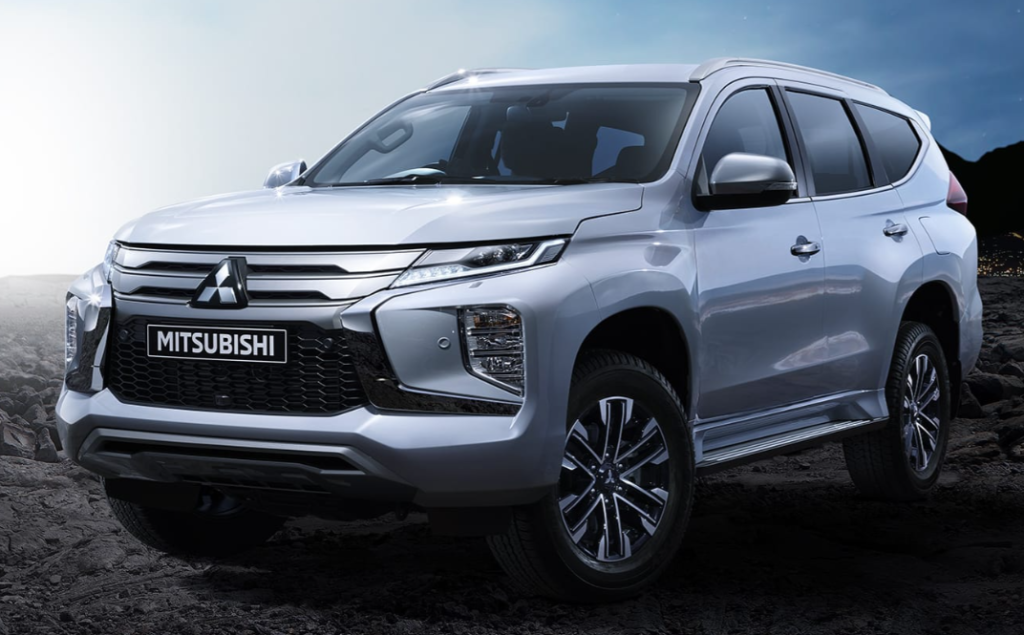
When we talk about Mitsubishi Pajero Sport engine size, there is no single number that works for every Pajero Sport ever built. Depending on the generation, model year, fuel type, and country, this rugged SUV has appeared with everything from four-cylinder turbo-diesels to larger V6 petrol engines.
For many modern versions, the number that matters most is 2.4 liters, or more precisely 2,442 cc. Mitsubishi introduced its 4N15 2.4-liter MIVEC turbo-diesel with the third-generation Pajero Sport, combining it with an eight-speed automatic transmission. Mitsubishi documentation lists the engine at 2,442 cc, while specifications from some markets also include older 2.5-liter diesels and 3.0-liter petrol engines.
But displacement alone only tells part of the story.
A smaller modern turbo-diesel can pull harder, use less fuel, and feel more useful in everyday driving than an older engine with greater capacity. Think of engine size as the size of the kitchen rather than the quality of the meal. A bigger kitchen gives us room to work, but good technology determines what comes out of it.
So, which Pajero Sport engine do we actually have? Which size is preferable? And does a 2.4-liter engine really have enough muscle for a seven-seat 4WD?
Let's dig in.
Content in this publication
- What Is the Mitsubishi Pajero Sport Engine Size?
- Mitsubishi Pajero Sport Engine Size by Generation
- Third-Generation Mitsubishi Pajero Sport Engine Size
- What Does Engine Size Actually Mean?
- Mitsubishi Pajero Sport 2.4 Diesel Engine Explained
- Mitsubishi Pajero Sport 2.5 Engine Size
- 2.4 vs 2.5 Pajero Sport Engine
- 2.4 Diesel vs 3.0 Petrol Pajero Sport
- Which Pajero Sport Engine Size Is Best for Towing?
- Does Engine Size Affect Pajero Sport Fuel Consumption?
- Is a Bigger Pajero Sport Engine More Reliable?
- How to Find Your Pajero Sport Engine Size
- Is the Mitsubishi Pajero Sport a 4-Cylinder or 6-Cylinder?
- Pajero Sport Engine Size and Off-Road Driving
- Should We Choose a Pajero Sport Based on Engine Size?
- Mitsubishi Pajero Sport Engine Size at a Glance
- Conclusion: Understanding Mitsubishi Pajero Sport Engine Size
- Frequently Asked Questions
What Is the Mitsubishi Pajero Sport Engine Size?
The Mitsubishi Pajero Sport engine size varies substantially between generations and markets.
Among the best-known engine capacities are:
- 2.4-liter petrol four-cylinder
- 2.5-liter turbo-diesel four-cylinder
- 2.8-liter turbo-diesel four-cylinder
- 3.2-liter turbo-diesel four-cylinder
- 2.4-liter MIVEC turbo-diesel four-cylinder
- 3.0-liter V6 petrol
- 3.5-liter V6 petrol
Not every engine was sold everywhere, and that point is important.
Someone shopping for a Pajero Sport in Australia, Thailand, South Africa, the Middle East, Southeast Asia, or another export market may encounter completely different specifications despite looking at vehicles carrying essentially the same badge.
Even current or relatively recent market listings illustrate the difference. Mitsubishi documentation has listed 2,442 cc, 2,477 cc, and 2,998 cc engines for different Pajero Sport specifications.
How Many CC Is a 2.4-Liter Pajero Sport?
The familiar modern 2.4-liter Mitsubishi Pajero Sport diesel has a displacement of 2,442 cc.
Technically, 2,442 cc equals 2.442 liters, but manufacturers round displacement figures when naming engines. That's why we simply call it a 2.4L.
Its bore and stroke are listed at 86.0 mm × 105.1 mm in Mitsubishi specifications.
That long-stroke design suits the character we expect from a diesel-powered 4WD: useful pulling ability rather than an obsession with high engine speeds.
Mitsubishi Pajero Sport Engine Size by Generation
Looking at the Pajero Sport generation by generation makes things much easier.
The badge has existed since the 1990s, and its engine philosophy has changed considerably along the way.
First-Generation Pajero Sport Engine Sizes
The original Pajero Sport appeared in the 1990s and was also known under names such as Montero Sport, Challenger, and Shogun Sport depending on the country.
Engine availability was diverse.
Older first-generation vehicles could be equipped with engines including:
| Engine size | Fuel | Typical configuration |
|---|---|---|
| 2.4L | Petrol | Inline-four |
| 2.5L | Diesel | Turbo inline-four |
| 2.8L | Diesel | Turbo inline-four |
| 3.0L | Petrol | V6 |
| 3.5L | Petrol | V6 |
| 3.2L | Diesel | Turbo inline-four in selected applications |
Historical catalog data identifies, among others, the 2,477 cc 4D56 diesel, 2,835 cc 4M40 diesel, 2,972 cc 6G72 V6 and 3,497 cc 6G74 V6.
In other words, asking about the engine size of an older Pajero Sport without specifying its year and country is a little like asking what shoe size a football team wears. There are several correct answers.
Why Were the Early Engines So Varied?
Mitsubishi had to serve very different markets.
Diesel engines appealed strongly to regions where torque, range, commercial use, and off-road capability mattered. Petrol V6 models made sense in countries where gasoline was comparatively affordable and buyers wanted smoother power delivery.
Emissions regulations were also less globally harmonized than they are today.
As a result, Mitsubishi could keep several engines alive simultaneously.
Second-Generation Mitsubishi Pajero Sport Engine Size
The second generation continued the multi-engine approach, although diesel power became particularly significant.
One important engine was the 2.5-liter 4D56 turbo-diesel, with an actual displacement of 2,477 cc.
Mitsubishi's Indian Pajero Sport specification, for example, identifies the 2.5L DI-Diesel as a four-cylinder, 16-valve DOHC engine with 2,477 cc displacement. That version was rated at 131 kW (178 PS) and 400 Nm in manual-transmission form.
Other markets received different calibrations.
This demonstrates why engine capacity and engine output should never be treated as interchangeable specifications.
Two 2.5-liter Pajero Sports can share the same basic displacement while producing different power or torque figures.
The 3.2-Liter Diesel
Some second-generation Pajero Sport markets also offered a 3.2-liter turbo-diesel.
The attraction was simple: generous low-speed torque and a relaxed character in a heavy SUV.
Yet engine development was moving quickly. Turbocharger control, injection pressure, combustion design, electronic management, and transmission technology were becoming increasingly important.
Engine displacement alone was losing its position as the easiest way to judge performance.
The 3.0-Liter V6 Petrol Pajero Sport
The 3.0-liter V6 petrol deserves special attention because it continued the tradition of offering the Pajero Sport with something quite different from its four-cylinder diesels.
An official Mitsubishi specification sheet lists a 2,998 cc petrol V6 producing 161 kW and 285 Nm in one configuration.
Another Mitsubishi market document lists a 2,998 cc 3.0 petrol version alongside 2.5-liter diesel derivatives.
Petrol buyers generally get smoother revving and a different throttle response, but diesel buyers often prioritize stronger low-rpm torque and fuel efficiency.
Neither approach is automatically right for everyone.
Third-Generation Mitsubishi Pajero Sport Engine Size
This is where the story becomes simpler.
The third-generation Pajero Sport, introduced in 2015, became strongly associated with Mitsubishi's 2.4-liter 4N15 MIVEC turbo-diesel.
Mitsubishi itself stated that the new Pajero Sport shared the 4N15 2.4L MIVEC turbocharged diesel with the Triton and paired it with a newly developed eight-speed automatic transmission.
2.4L 4N15 Engine Displacement
The 4N15 displaces:
2,442 cc
That figure is more useful than simply saying "2.4L" because it tells us the exact swept volume of the cylinders.
Typical specifications include:
- Four cylinders
- Inline configuration
- 2,442 cc displacement
- DOHC layout
- MIVEC technology
- Common-rail diesel injection
- Turbocharging
- Intercooling
A 2025 Mitsubishi South Africa specification sheet lists the Pajero Sport's 2.4L turbo-diesel at 133 kW and 430 Nm, paired with an eight-speed automatic transmission in both 4x2 and 4x4 versions.
Those numbers show why we shouldn't dismiss the engine because it is "only" a 2.4.
Is the Pajero Sport 2.4 Engine Too Small?
On paper, 2.4 liters may sound modest for a body-on-frame SUV.
After all, we are talking about a large vehicle designed to carry passengers, luggage and potentially tow substantial loads.
Yet modern turbo-diesel engineering changes the equation.
What really matters is not how much air the engine displaces without context, but how effectively the complete powertrain turns fuel and airflow into usable torque.
Turbocharging forces additional air into the engine. Common-rail injection delivers fuel with great precision. Electronic management continually controls combustion. Then an eight-speed automatic transmission keeps the engine operating where it can work effectively.
The result?
A 2.4-liter engine doesn't necessarily behave like the naturally aspirated 2.4-liter engines many of us remember from decades ago.
What Does Engine Size Actually Mean?
Engine size, or displacement, refers to the combined volume swept by all the pistons as they travel through their cylinders.
It is normally expressed in either:
- Cubic centimeters (cc)
- Liters (L)
So:
1,000 cc = approximately 1.0 liter
Therefore, the Pajero Sport's 2,442 cc engine is described commercially as a 2.4-liter engine.
Does a Larger Engine Always Make More Power?
No.
This is one of the biggest misconceptions surrounding the Mitsubishi Pajero Sport engine size.
A larger engine has greater displacement, but power depends on numerous factors, including:
- Turbocharger design
- Boost pressure
- Fuel injection
- Compression ratio
- Airflow
- Valve timing
- Engine management
- Exhaust restrictions
- Emissions calibration
- Maximum operating speed
A technologically advanced 2.4-liter turbo-diesel can therefore outperform an older naturally aspirated engine of greater displacement in several meaningful areas.
Displacement Versus Turbocharging
Imagine filling a bucket.
A bigger bucket holds more water naturally. Turbocharging is a little like attaching a high-pressure hose to the smaller bucket. Suddenly, its physical size tells us much less about how much can be pushed through it during a given period.
That's an oversimplification of engine physics, of course, but it explains why modern downsized turbo engines can deliver impressive performance.
Mitsubishi Pajero Sport 2.4 Diesel Engine Explained
The 2.4 diesel became one of the defining mechanical characteristics of the modern Pajero Sport.
Rather than simply chasing peak horsepower, Mitsubishi designed the powertrain around the needs of an SUV.
That means torque matters enormously.
How Much Torque Does the 2.4 Pajero Sport Have?
A widely used 4N15 specification produces 430 Nm of torque at 2,500 rpm, with output of 133 kW at 3,500 rpm.
Torque is especially valuable when we are:
- Starting with a heavy load
- Climbing hills
- Driving off-road
- Towing
- Accelerating without revving aggressively
- Crawling over uneven terrain
That is why comparing SUVs purely by horsepower can be misleading.
Why a 2.4-Liter Diesel Works in a Large SUV
The answer comes down to gearing and torque.
The Pajero Sport does not need to behave like a high-revving sports sedan. Instead, we want useful thrust low in the rev range.
The eight-speed automatic also gives the engine more ratios to work with.
Rather than forcing one gear to cover a huge speed range, the transmission can choose a ratio that keeps the engine closer to its useful operating zone.
That partnership matters just as much as displacement.
Mitsubishi Pajero Sport 2.5 Engine Size
The 2.5-liter diesel is another major chapter in Pajero Sport history.
Its exact displacement is commonly 2,477 cc, rather than a mathematically perfect 2,500 cc.
Official Mitsubishi specifications for some markets continue to identify Pajero Sport variants with this displacement.
2.5L 4D56 Engine
The 4D56 is one of Mitsubishi's long-running diesel engine families.
Depending on market and specification, Pajero Sport applications have used different versions and output levels.
That history is both a strength and a warning for used-car shoppers.
Why?
Because seeing "2.5 diesel" in an advertisement isn't enough information.
We should establish:
- Model year
- Engine code
- Power output
- Transmission
- Drive system
- Service history
- Market specification
Only then can we make a sensible comparison.
2.4 vs 2.5 Pajero Sport Engine
At first glance, a 2.5-liter engine sounds more substantial than a 2.4.
The difference in physical displacement, however, is tiny.
Comparing the common versions gives us:
| Specification | 2.4L diesel | 2.5L diesel |
|---|---|---|
| Approx. displacement | 2,442 cc | 2,477 cc |
| Difference | — | 35 cc larger |
| Cylinders | 4 | 4 |
| Induction | Turbocharged | Turbocharged |
| Main distinction | Newer-generation design | Older engine family |
Just 35 cc separates the two in displacement.
That's almost nothing in practical terms.
Why the Smaller 2.4 Can Be Stronger
Engineering generation matters far more.
The newer 2.4L 4N15 uses more modern engine-management, combustion and turbo-diesel technology than earlier 4D56 installations.
So, judging the two by "2.4 versus 2.5" alone misses the point.
It's like comparing two computers by the physical size of their cases.
2.4 Diesel vs 3.0 Petrol Pajero Sport
Here the difference becomes more meaningful.
The diesel and petrol engines have fundamentally different characters.
2.4 Diesel Characteristics
We generally associate the 2.4 turbo-diesel with:
- Strong low-rpm torque
- Relatively low engine speeds
- Good suitability for long-distance driving
- Strong towing characteristics
- Better fuel economy than a comparable large petrol engine
- A more obvious diesel sound and vibration profile
3.0 V6 Petrol Characteristics
The 3.0 V6 petrol tends to offer:
- Smoother engine operation
- Quieter combustion
- Greater willingness to rev
- More traditional petrol throttle response
- Less low-rpm torque than some turbo-diesel configurations
- Potentially higher fuel consumption depending on conditions
Neither specification tells the whole ownership story.
For a driver covering long highway distances or towing regularly, diesel characteristics may be attractive. For someone prioritizing smooth petrol operation and doing different kinds of driving, the V6 may make more sense.
Which Pajero Sport Engine Size Is Best for Towing?
Engine capacity alone should never determine towing suitability.
Instead, we need to consider:
- Maximum permitted towing capacity
- Gross vehicle mass
- Gross combination mass
- Tow-ball download limits
- Cooling capacity
- Transmission
- Final-drive ratio
- Torque output
- Local regulations
A larger engine isn't permission to tow whatever we like.
Why Torque Matters More Than Liters
Suppose one engine has greater displacement but produces less low-rpm torque than a smaller turbocharged alternative.
When pulling a caravan uphill, which characteristic are we likely to appreciate?
Torque.
The ability to produce useful twisting force at accessible engine speeds matters enormously in heavy-duty driving.
That is one reason the modern 2.4-liter turbo-diesel can make sense in a vehicle of the Pajero Sport's size.
Does Engine Size Affect Pajero Sport Fuel Consumption?
Absolutely—but not by itself.
Larger displacement often creates the potential to burn more fuel because each combustion cycle involves greater cylinder volume.
Yet real fuel consumption depends on far more than displacement.
Factors That Influence Pajero Sport Fuel Economy
These include:
- Vehicle weight
- 2WD or 4WD configuration
- Tire pressure
- Tire type
- Driving speed
- Aerodynamic drag
- Roof racks
- Traffic
- Payload
- Towing
- Terrain
- Transmission behavior
- Engine condition
- DPF regeneration
- Ambient temperature
- Driver technique
A 2025 Mitsubishi South Africa specification lists combined-cycle consumption of 8.1 L/100 km for its 2.4L Pajero Sport derivatives, though real-world consumption naturally varies with conditions and market specification.
So we should treat official figures as standardized comparison tools, not promises.
Is a Bigger Pajero Sport Engine More Reliable?
Not necessarily.
There is no universal law saying bigger engines last longer.
Reliability depends on engine design, operating conditions, maintenance, manufacturing quality, and how the previous owner treated the vehicle.
A neglected 3.2-liter diesel can become a headache.
A carefully serviced 2.4-liter can potentially deliver years of dependable use.
Or vice versa.
Maintenance Matters More Than Displacement
When buying a used Pajero Sport, we would place much more importance on evidence of proper maintenance than on a small difference in displacement.
Check for:
- Regular engine-oil changes
- Correct oil specification
- Cooling-system maintenance
- Proper timing-system servicing where applicable
- Clean and suitable fuel
- Turbocharger condition
- Injector condition
- DPF history on applicable vehicles
- Warning lights
- Excessive smoke
- Unusual engine noises
- Documented service history
A vehicle's maintenance folder can tell us more about its future than a shiny engine cover ever will.
How to Find Your Pajero Sport Engine Size
Not sure which engine is under your bonnet?
Don't rely entirely on the badge.
Model designations and trim names can be misleading, especially with imported vehicles.
Check the VIN and Vehicle Documentation
Good places to verify engine specification include:
- Vehicle registration documents
- Owner's manual
- VIN information
- Engine identification markings
- Manufacturer specification documents
- Dealer service systems
- Original sales documentation
Why the Market Matters
This is particularly important with the Pajero Sport because Mitsubishi has sold different powertrains simultaneously across different countries.
A specification from Thailand cannot automatically be applied to a South African, Australian, Middle Eastern, Indian, or other market vehicle.
Always match information to the model year, VIN, and country specification.
Is the Mitsubishi Pajero Sport a 4-Cylinder or 6-Cylinder?
It can be either.
Many diesel Pajero Sports use inline four-cylinder engines, including the popular 2.4L 4N15 and 2.5L 4D56.
Some petrol models use V6 engines, including 3.0-liter variants.
Historical Pajero Sport models also used different configurations depending on the market.
That is why the question "How many cylinders does a Pajero Sport have?" needs essentially the same answer as the engine-size question:
Which Pajero Sport?
Pajero Sport Engine Size and Off-Road Driving
A huge engine is not automatically the secret to good off-road performance.
Off-road ability depends heavily on controllability.
We want predictable torque rather than a dramatic burst of power that makes traction difficult.
Low gearing, four-wheel-drive hardware, differential behavior, tires, suspension articulation, ground clearance, and driver judgment can matter more than an extra few hundred cubic centimeters.
Why Low-Speed Torque Helps
On a steep or slippery trail, low-speed torque lets us maintain momentum without constantly chasing high rpm.
It makes the vehicle easier to place and control.
Think of it like moving a heavy wardrobe. We don't want someone sprinting into it at full speed. We want steady, controlled force.
That's closer to the way a good turbo-diesel delivers its best work.
Should We Choose a Pajero Sport Based on Engine Size?
Engine displacement belongs on the checklist, but it shouldn't sit at the top by itself.
For most buyers, the better question is:
Which Pajero Sport powertrain best matches the way we actually drive?
If we mainly cover long distances, tow, or travel off-road, a turbo-diesel's torque characteristics may be particularly attractive.
If we're looking at an older petrol model, the smoothness of a V6 could appeal.
If we're buying used, condition and maintenance history may outweigh almost everything else.
What to Compare Before Buying
Rather than obsessing over liters, compare:
- Engine type
- Torque
- Power
- Transmission
- Fuel consumption
- Towing requirements
- Reliability history
- Maintenance costs
- Parts availability
- Vehicle condition
That gives us a much clearer picture.
Mitsubishi Pajero Sport Engine Size at a Glance
If we strip everything back to the essentials, here is what we need to remember.
The Pajero Sport has used multiple engine sizes throughout its life.
The modern third-generation model is particularly well known for its 2.4-liter 4N15 turbo-diesel with 2,442 cc displacement. Mitsubishi documentation identifies this engine as a MIVEC turbocharged diesel, and a common specification produces 133 kW and 430 Nm.
The older 2.5-liter 4D56 diesel measures 2,477 cc, while selected markets have offered a 2,998 cc 3.0-liter petrol V6.
Earlier generations broaden the family further with 2.8-liter, 3.2-liter and 3.5-liter engines in certain markets and periods.
That's quite a family tree.
Conclusion: Understanding Mitsubishi Pajero Sport Engine Size
So, what is the Mitsubishi Pajero Sport engine size?
For many modern Pajero Sport models, the answer is 2.4 liters or 2,442 cc, delivered through a four-cylinder MIVEC turbo-diesel.
But that's not the only answer.
Depending on year and market, Pajero Sport buyers may encounter 2.5-liter diesels, larger diesel engines and V6 petrol options.
More importantly, displacement should never be viewed in isolation.
A modern 2.4-liter turbo-diesel can produce the kind of torque that once required a considerably larger engine. Turbocharging, common-rail injection, electronic controls and well-matched transmissions have changed the game.
So instead of asking only, "How big is the engine?" we should ask something more useful:
How well does this engine suit what we expect the Pajero Sport to do?
That's where the liters on the specification sheet turn into something meaningful on the road.
Frequently Asked Questions
1. What engine size is the Mitsubishi Pajero Sport?
Modern third-generation Mitsubishi Pajero Sport models are widely offered with a 2.4-liter turbo-diesel engine measuring 2,442 cc. However, engine availability varies by year and market, with 2.5-liter diesels, 3.0-liter petrol V6s and other engine sizes appearing across the model's history.
2. Is the Mitsubishi Pajero Sport 2.4 or 2.5 liters?
It can be either. The modern 4N15 turbo-diesel is 2,442 cc and marketed as a 2.4L, while the older 4D56 diesel used in many Pajero Sport versions has 2,477 cc and is marketed as a 2.5L.
3. Is the Pajero Sport 2.4 diesel powerful enough?
For normal SUV duties, the widely used 2.4L specification provides substantial low-speed torque. One current Mitsubishi specification lists 133 kW and 430 Nm, demonstrating that relatively modest displacement does not necessarily mean modest pulling ability.
4. Does the Pajero Sport have a V6 engine?
Some versions do. Pajero Sport models have been sold with petrol V6 engines, including 3.0-liter and 3.5-liter options in various generations and markets. An official Mitsubishi specification lists a 3.0-liter petrol engine with 2,998 cc displacement.
5. Which Pajero Sport engine size should I choose?
We should choose based on how the vehicle will be used rather than displacement alone. Consider torque, fuel economy, towing requirements, maintenance history, parts availability, transmission, vehicle condition and local engine availability. For a used Pajero Sport especially, a well-maintained smaller engine can be a far better purchase than a neglected larger one.
If you want to know other articles similar to Mitsubishi Pajero Sport Engine Size: Complete Engine Guide you can visit the category Service and Parts.
Volvo S90 Engine Oil: Type, Capacity & Change Guide
Volvo S90 Boot Space: Size, Capacity and Practicality
SEO Title: Volvo S90 Oil Capacity: Complete Guide by Engine

Kia Sorento Oil Type: Complete Guide by Year & Engine
Kia Sorento Engine Capacity: Complete Guide by Year
Peugeot 308 Clutch Replacement Cost: Complete UK Guide for 2026
Leave a Reply
More content of your interest