

Peugeot RCZ Engine Swap: Options, Costs, Compatibility, and What You Need to Know

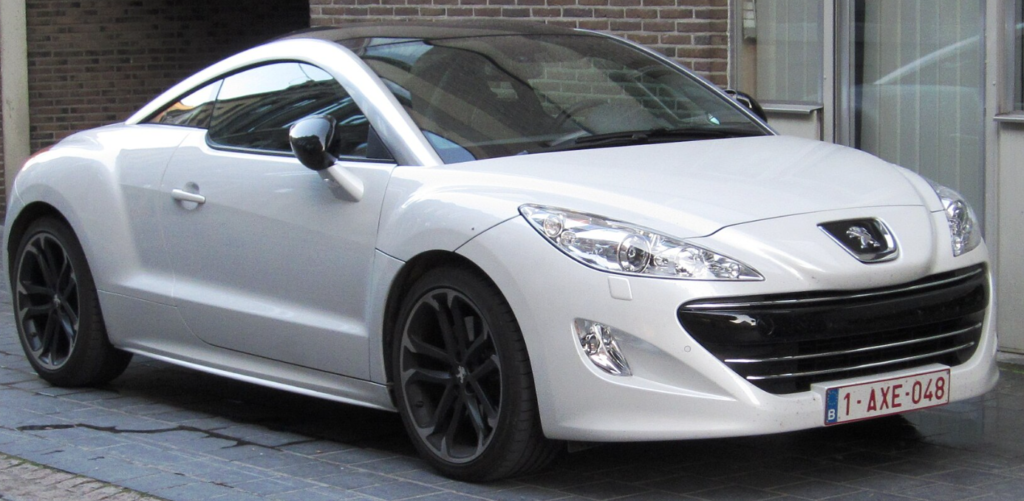
The Peugeot RCZ engine swap is one of those projects that sounds beautifully simple when we first imagine it. Remove the tired engine, drop something stronger into that dramatic double-bubble coupe, connect a few wires, turn the key, and suddenly we have our own home-built RCZ R.
If only it worked like changing batteries in a remote.
Modern engine swaps are less like replacing one mechanical component and more like introducing a new member into a tightly connected digital family. The engine, ECU, immobilizer, gearbox, fuel system, cooling system, exhaust, ABS, stability control, instrument cluster, and body electronics all communicate with one another.
That does not mean swapping an engine in a Peugeot RCZ is impossible. Quite the opposite. The RCZ offers several genuinely interesting routes, particularly because Peugeot originally sold it with multiple turbocharged engines and eventually created the spectacular RCZ R with 270 hp.
The sensible question, therefore, is not simply, "What engine fits?"
We should ask:
Which Peugeot RCZ engine swap gives us the performance we want without turning the car into an unfinished wiring project?
Let's dig into it.
Content in this publication
- Understanding the Peugeot RCZ Before Planning an Engine Swap
- What Is the Best Peugeot RCZ Engine Swap?
- Option 1: Like-for-Like Peugeot RCZ Engine Replacement
- Option 2: RCZ 156 to 200 HP Engine Swap
- Can We Swap an RCZ R Engine Into a Normal RCZ?
- What Makes the RCZ R Engine Different?
- The Transmission Problem People Forget
- Peugeot 308 GTi Engine Into an RCZ
- Can a MINI Cooper Engine Be Swapped Into a Peugeot RCZ?
- Can We Put a Larger Engine in the Peugeot RCZ?
- Could We Swap a Diesel RCZ to Petrol?
- Peugeot RCZ Engine Swap Electronics
- Cooling Is More Important Than Headline Horsepower
- Fuel System Requirements
- Exhaust and Intake Compatibility
- Brakes and Suspension After an Engine Swap
- Should We Rebuild the Original THP Instead of Swapping It?
- How Much Does a Peugeot RCZ Engine Swap Cost?
- How to Choose a Donor Engine
- What Should Be Replaced While the Engine Is Out?
- Should We Tune the Engine Immediately After the Swap?
- Is an RCZ R Engine Swap Worth It?
- Road-Legal and Insurance Considerations
- Common Peugeot RCZ Engine Swap Mistakes
- Our Ideal Peugeot RCZ Engine Swap Strategy
- Final Thoughts on the Peugeot RCZ Engine Swap
- Frequently Asked Questions
Understanding the Peugeot RCZ Before Planning an Engine Swap
The RCZ was mechanically related to Peugeot's compact-car architecture rather than being an exotic standalone sports-car platform. Peugeot described the production model as front-engined, front-wheel drive, with mechanical foundations related to the 308.
That is useful for anyone considering a swap because there is substantial PSA engineering knowledge surrounding the engines and drivetrains used in these cars.
Factory RCZ powertrains included several versions of the turbocharged 1.6-liter petrol engine as well as the 2.0-liter HDi diesel.
For the facelift-era range, Peugeot listed:
| RCZ engine | Power | Torque | Factory transmission |
|---|---|---|---|
| 1.6 THP | 156 hp | 240 Nm | 6-speed manual/automatic |
| 1.6 THP | 200 hp | 275 Nm | 6-speed manual |
| 2.0 HDi FAP | 163 hp | 340 Nm | 6-speed manual |
| RCZ R 1.6 THP | 270 hp | 330 Nm | 6-speed manual |
Peugeot's own specifications confirm the 156 hp, 200 hp and 163 hp diesel figures, while the RCZ R was officially rated at 270 hp and 330 Nm.
That factory variety gives us several possible approaches.
What Is the Best Peugeot RCZ Engine Swap?
There is no universal answer because "best" changes depending on what we want from the car.
For a dependable road car, the smartest solution is normally an engine from the same original specification and engine family.
For additional performance, moving from a lower-output THP setup toward a stronger Peugeot THP configuration can make sense.
For a serious performance build, an RCZ R-style powertrain is the obvious dream.
And for a completely custom project, almost anything becomes theoretically possible once we are prepared to fabricate mounts, rewrite electronics, modify driveshafts, engineer the cooling system, and spend enough money.
That last sentence matters.
Anything can fit when the angle grinder and credit card become enthusiastic enough.
The Main RCZ Swap Routes
Broadly, we can divide the project into four categories:
- like-for-like replacement engine
- higher-output 1.6 THP conversion
- RCZ R or related Peugeot Sport engine conversion
- completely different engine-family swap
Each step down that list increases complexity dramatically.
Option 1: Like-for-Like Peugeot RCZ Engine Replacement
If our original engine has suffered catastrophic damage and the objective is simply getting the RCZ back on the road, replacing it with the same engine code and specification is normally the cleanest approach.
It is not glamorous.
It will not generate thousands of likes on social media.
But it tends to make financial and engineering sense.
Why Matching the Original Engine Code Matters
Two engines can share the same displacement and still differ significantly.
Changes can include:
- sensors
- turbochargers
- fuel systems
- cylinder heads
- wiring
- emissions equipment
- ECU calibration
- ancillary mounting points
- intake plumbing
- exhaust systems
This is particularly relevant to the Peugeot 1.6 THP family, which evolved substantially over its production life.
Finding a complete engine that matches the original specification reduces the number of variables we must solve.
Buy the Donor as Complete as Possible
A bare long block may look cheaper initially, but small missing components have a habit of attacking the budget one invoice at a time.
When possible, we would rather obtain an engine with its:
- turbocharger
- intake hardware
- injectors and fuel rail
- sensors
- wiring harness
- alternator
- starter
- brackets
- engine accessories
We should still verify compatibility by VIN and engine code rather than assuming that every visually similar THP engine is interchangeable.
Option 2: RCZ 156 to 200 HP Engine Swap
This is probably one of the first ideas that occurs to owners of the lower-powered petrol RCZ.
Why not replace the 156 hp THP with the factory 200 hp version?
On paper, it sounds straightforward. Both are turbocharged 1.6-liter engines and were offered in the same car.
But that does not automatically make the conversion plug-and-play.
Peugeot rated the 156 hp RCZ at 240 Nm while the 200 hp version produced 275 Nm.
The extra performance was created through more than a simple ECU file.
What Should Be Considered in a 156-to-200 Conversion?
Before buying anything, we should compare the complete donor and recipient vehicles, including:
- engine assembly
- turbo and manifold
- engine wiring
- ECU configuration
- transmission
- clutch
- intercooler
- intake system
- exhaust
- cooling system
- fuel system
- driveshafts
- engine mounts
- braking equipment
- stability-control configuration
Using a complete donor car can sometimes make far more sense than buying an isolated engine.
Why?
Because we suddenly possess every mysterious bracket, connector and hose Peugeot thought was necessary.
That pile of apparently insignificant parts can be priceless halfway through the conversion.
Can We Swap an RCZ R Engine Into a Normal RCZ?
Now we arrive at the interesting part.
The Peugeot RCZ R engine swap is the conversion many enthusiasts immediately dream about.
And we understand why.
The RCZ R produced 270 hp from only 1.6 liters, with 330 Nm available across a broad portion of the rev range. Peugeot officially quoted maximum torque from 1,900 to 5,500 rpm.
That turns the elegant RCZ into something substantially more serious.
But we should forget the idea that the R engine is simply a normal THP with a large turbo bolted onto it.
It isn't.
What Makes the RCZ R Engine Different?
Peugeot identified the RCZ R unit as the EP6CDTR and extensively modified it for the higher output.
The manufacturer documented a strengthened block treatment, forged pistons developed with Mahle, upgraded connecting rods and bearings, a dedicated twin-scroll turbocharger, and a specific exhaust manifold.
This is precisely why building a normal THP into an RCZ R equivalent is more complicated than increasing boost.
RCZ R Engine Highlights
The factory RCZ R package included:
- 1.6-liter turbocharged direct-injection petrol engine
- 270 hp
- 330 Nm
- strengthened engine construction
- forged pistons
- reinforced connecting-rod components
- dedicated turbocharger
- specific exhaust architecture
- performance-oriented calibration
Peugeot designed those components as a system.
That philosophy is worth copying during a swap.
Power is rarely destroyed by one spectacular mistake. More often, reliability disappears because five small compromises stack on top of each other.
The Transmission Problem People Forget
An engine swap conversation naturally concentrates on horsepower.
The gearbox gets mentioned about five minutes before installation.
That is backwards.
The transmission has to survive the new torque while delivering it effectively through the front wheels.
The RCZ R demonstrated this perfectly. Peugeot did not simply install the 270 hp engine and call the car finished. The R used a Torsen limited-slip differential, helping manage its 330 Nm through the front axle.
Why a Limited-Slip Differential Matters
Imagine asking one front tire to put considerably more power onto the road while steering the car at the same time.
Without good traction management, additional horsepower can become wheelspin rather than acceleration.
A limited-slip differential helps distribute torque more effectively across the driven wheels.
For serious RCZ builds, we should therefore think beyond engine output and consider the drivetrain as a complete system.
Peugeot 308 GTi Engine Into an RCZ
Another fascinating donor is the Peugeot 308 GTi by Peugeot Sport.
Peugeot offered the 308 GTi with a 1.6 THP producing up to 270 hp and 330 Nm. The later Euro 6 version was identified as EP6FDTR, making it closely related conceptually to the RCZ R powerplant but not automatically identical in every installation detail.
Peugeot has itself described the 308 GTi's 270 hp engine as originating from the performance lineage established by the RCZ.
That makes the 308 GTi attractive from a performance perspective.
It does not mean we can buy a 308 GTi engine on Monday and have an RCZ driving Tuesday afternoon.
RCZ R vs 308 GTi Donor Engine
We still need to investigate:
- ECU generation
- engine wiring
- immobilizer communication
- fuel pressure requirements
- sensors
- emissions systems
- turbo plumbing
- cooling connections
- exhaust
- gearbox compatibility
- mounting hardware
Think of the engines as cousins rather than identical twins.
They speak the same family language, but they may not share the same keys to the house.
Can a MINI Cooper Engine Be Swapped Into a Peugeot RCZ?
The Peugeot/BMW-developed Prince engine family naturally leads owners toward MINI engines.
Several MINI Cooper S and JCW engines share architectural ancestry with Peugeot THP engines.
Does that make a MINI engine an easy RCZ swap?
No.
Shared architecture does not guarantee identical accessories, cylinder-head configuration, management systems, wiring, sensors, mounts, turbo equipment, or electronics.
A MINI-derived build can be technically interesting, particularly for experienced engine builders, but it should not automatically be considered an easier route than using a Peugeot donor.
Architecture Is Not Compatibility
This is a useful rule for every engine swap.
Two engines may share:
- bore spacing
- displacement
- basic block architecture
- component designs
while still requiring substantial modification to function in another vehicle.
If our goal is a factory-like road car, staying inside the Peugeot ecosystem normally reduces unnecessary complications.
Can We Put a Larger Engine in the Peugeot RCZ?
Could we install a two-liter turbo petrol engine?
A Honda K-series?
A V6?
Some ambitious turbocharged monster that makes the front tires question their career choices?
With enough fabrication, probably.
But at this stage we are no longer performing a conventional engine replacement.
We are building a custom car.
A Full Custom Swap Changes Everything
A truly different engine may require:
- fabricated engine mounts
- custom subframe work
- custom driveshafts
- alternative gearbox
- standalone ECU
- CAN-bus integration
- custom fuel lines
- modified exhaust
- custom cooling
- altered shifter mechanism
- upgraded brakes
- modified suspension
- revised front springs
- custom intake
- instrument-cluster solutions
Packaging becomes another challenge.
Engines do not live alone underneath the bonnet. We need room for the turbocharger, radiator, intercooler piping, air-conditioning compressor, alternator, exhaust, steering components and maintenance access.
A swap that technically "fits" but requires removing the engine to change a starter motor is not necessarily good engineering.
Could We Swap a Diesel RCZ to Petrol?
Technically, a 2.0 HDi-to-THP conversion can be imagined because Peugeot sold petrol and diesel versions of the RCZ body.
Financially, however, it can quickly become questionable.
The factory 2.0 HDi was rated at 163 hp and 340 Nm.
Notice something interesting?
Its torque already exceeded the standard 200 hp petrol version.
Changing fuel type involves far more than replacing the engine.
Diesel-to-Petrol Conversion Requirements
Potential differences include:
- fuel tank hardware
- fuel pumps
- fuel lines
- ECU
- engine harness
- body electronics coding
- exhaust
- emissions components
- instrument programming
- cooling system
- gearbox ratios
- clutch
- engine mounts
- ancillary components
Unless we already own a damaged petrol donor vehicle, buying a factory petrol RCZ is often the more logical starting point.
Peugeot RCZ Engine Swap Electronics
Here is where modern engine swaps become dramatically different from the old-school conversions we see in classic cars.
The engine ECU does not operate on an island.
It communicates with other modules across the vehicle.
The Immobilizer and ECU Challenge
Depending on specification, successful integration may require coordination between components such as the:
- engine ECU
- BSI/body control system
- key transponder
- immobilizer
- ABS/ESP controller
- instrument cluster
- steering electronics
Installing an engine mechanically but failing to integrate the electronics can produce a beautiful RCZ-shaped paperweight.
The engine may crank but not start.
Or it may start while generating warning lights and communication faults.
Why a Full Donor Vehicle Helps Again
An entire donor provides matched electronic components and allows the installer to compare wiring diagrams connector by connector.
Professional diagnostic equipment becomes extremely valuable here.
Modern Peugeot swaps are as much software projects as mechanical ones.
Cooling Is More Important Than Headline Horsepower
Turbocharged engines generate heat.
Modified turbocharged engines generate more.
The cooling system must therefore be sized for the new power level and the way we intend to use the vehicle.
A motorway pull and a twenty-minute track session create very different thermal demands.
What Should We Inspect?
We should consider the condition and capacity of the:
- radiator
- thermostat
- water pump
- hoses
- intercooler
- oil cooling
- cooling fans
- expansion system
Heat is one of the quiet assassins of modified engines.
A dyno graph may look heroic while coolant and oil temperatures are preparing the invoice.
Fuel System Requirements
More airflow requires appropriate fuel delivery.
With direct-injection engines such as the THP, fuel-system compatibility cannot simply be assumed.
The higher-output 308 GTi provides a good illustration. Peugeot specifically highlighted its high-pressure direct-injection system in describing the 270 hp engine.
When changing engine specification, we need to evaluate the entire fueling package rather than just the injectors.
Fueling Components to Check
These can include:
- low-pressure fuel supply
- high-pressure pump
- injectors
- fuel rail
- fuel-pressure sensors
- ECU calibration
Running lean under heavy boost is not an experiment we want to conduct with expensive forged components.
Exhaust and Intake Compatibility
An engine's breathing system is part of the powertrain.
The RCZ R illustrates this particularly well because Peugeot developed a dedicated turbo and exhaust manifold for the 270 hp application.
That means installing only the long block and retaining unsuitable supporting equipment may defeat the purpose of the swap.
Think in Systems, Not Parts
We want the engine to breathe properly from beginning to end:
airbox → intake → turbo → intercooler → throttle → engine → manifold → catalyst → exhaust
One serious restriction can compromise the entire combination.
Brakes and Suspension After an Engine Swap
Extra horsepower gets attention.
Stopping repeatedly from high speed gets less attention until the brake pedal becomes frighteningly soft.
Peugeot's own RCZ R engineering offers a useful lesson. Alongside the stronger engine, Peugeot fitted substantial performance hardware, including 380 mm front brake discs and four-piston fixed calipers, plus revised suspension and the Torsen differential.
Likewise, the 270 hp 308 GTi received 380 mm front brakes and a Torsen differential.
That tells us something.
Factory Engineers Upgraded the Whole Car
If our RCZ suddenly gains 70, 100 or more horsepower, we should inspect:
- brake discs and pads
- brake fluid
- tires
- suspension bushings
- dampers
- springs
- wheel alignment
- engine mounts
- transmission mounts
Performance is an ecosystem.
Power without control is just noise and tire smoke.
Should We Rebuild the Original THP Instead of Swapping It?
Sometimes the best engine swap is no swap at all.
If the original engine can be rebuilt, strengthening it may offer a cleaner path than integrating an entirely different powertrain.
A properly planned rebuild can address known wear points while allowing us to choose components appropriate for our target output.
When a Rebuild Makes Sense
A rebuild may be attractive when:
- the original block and head are salvageable
- we want moderate rather than extreme power
- preserving factory electronics matters
- the car must remain road-friendly
- good replacement engines are scarce
- we already have a trusted Peugeot engine specialist
But rebuilding a damaged engine without identifying why it failed is risky.
Installing shiny new components while ignoring an oiling, fueling, overheating or calibration problem simply resets the countdown clock.
How Much Does a Peugeot RCZ Engine Swap Cost?
There is no reliable universal price because labor rates, donor availability, taxes and parts costs vary dramatically between countries.
Instead of chasing a seductive single number, we should divide the budget into categories.
Typical RCZ Swap Budget Categories
- Donor engine
- Engine inspection or rebuild
- Gearbox and clutch
- Engine mounts
- ECU and electronics
- Wiring
- Fuel system
- Cooling system
- Intake/intercooler system
- Exhaust fabrication
- Fluids and service components
- Brakes and chassis upgrades
- Diagnostic work
- Dyno calibration
- Labor
- Registration, inspection or engineering approval
Then we add contingency.
A sensible project reserve is important because engine swaps uncover problems we could not see before dismantling the car.
The expensive sentence in automotive modification is:
"While we're in there..."
How to Choose a Donor Engine
Do not shop only by mileage.
A low-mileage engine that has overheated badly can be worse than a higher-mileage engine with excellent maintenance history.
What We Want to Know Before Buying
Look for evidence concerning:
- engine code
- donor VIN
- mileage
- service records
- compression
- oil condition
- cooling-system condition
- accident damage
- turbo condition
- timing-system condition
- fault codes
- cold-start behavior
Whenever possible, hear the donor engine running before removal.
Video is useful.
Seeing it personally is better.
A compression or leak-down test is better still.
What Should Be Replaced While the Engine Is Out?
Access is never going to be easier than when the powertrain is sitting outside the car.
That makes preventive maintenance attractive.
Depending on engine type, mileage and condition, we may consider replacing aging or wear-sensitive parts such as:
- seals and gaskets
- timing components
- water pump
- thermostat
- accessory belt
- spark plugs
- filters
- engine mounts
- clutch and release components
- questionable coolant hoses
Replacing a relatively inexpensive component during the swap can save hours of duplicated labor later.
Should We Tune the Engine Immediately After the Swap?
Resist the temptation.
First make the car function properly in a conservative configuration.
Verify:
- stable fuel pressure
- correct boost
- proper cooling
- no oil leaks
- no coolant leaks
- normal sensor readings
- healthy air-fuel control
- correct ECU communication
- proper clutch operation
Then establish baseline data.
Only after that should we consider increasing output.
Reliability Before Dyno Numbers
A properly engineered 250 hp RCZ that starts every morning is more satisfying than a theoretical 350 hp RCZ permanently parked on axle stands.
The biggest horsepower number does not necessarily make the best car.
Is an RCZ R Engine Swap Worth It?
It depends on why we are building the car.
For pure economics, purchasing a genuine RCZ R may sometimes make more sense where one is available at a reasonable price.
But projects are not always accounting exercises.
Some of us simply enjoy creating something unusual.
An RCZ R-inspired conversion can be fascinating because Peugeot already demonstrated what the platform could accomplish when the engine, differential, suspension, brakes and electronics were developed together.
That gives us a factory engineering reference instead of a blank sheet of paper.
The Smart RCZ R-Inspired Approach
Rather than asking only how to install a 270 hp engine, we should study the whole R package:
- engine
- turbo
- intercooling
- fuel delivery
- gearbox
- differential
- brakes
- suspension
- tires
- calibration
That approach creates a balanced car rather than a dyno queen.
Road-Legal and Insurance Considerations
Before ordering an engine from another country, check the rules where the vehicle will be registered.
Engine-conversion regulations vary considerably between jurisdictions.
Changing displacement, fuel type, power output or emissions equipment can affect:
- vehicle registration
- roadworthiness inspection
- emissions compliance
- insurance
- taxation
- engineering certification
Never assume that because the engine physically fits, the conversion is automatically legal for public-road use.
Keep receipts and document the donor engine's origin as well.
That paperwork may seem boring during the build, but it can become extraordinarily important when registering, insuring or selling the vehicle.
Common Peugeot RCZ Engine Swap Mistakes
The biggest failures are often planning failures rather than mechanical ones.
Avoid These Traps
- Buying an engine before checking its exact code
- Assuming every 1.6 THP is identical
- Buying a bare engine without ancillary components
- Ignoring ECU and immobilizer compatibility
- Reusing an unsuitable clutch
- Forgetting transmission torque limits
- Underestimating cooling requirements
- Running aggressive software before testing
- Ignoring brakes and tires
- Building without a wiring diagram
- Starting with no contingency budget
- Throwing away donor parts too early
That final mistake sounds silly until we need a bracket that Peugeot stopped manufacturing ten years ago.
Our Ideal Peugeot RCZ Engine Swap Strategy
If we wanted to build an RCZ today, we would prioritize integration rather than chasing the most exotic engine possible.
The order would look something like this:
For Reliability
Use a verified like-for-like engine matching the original code and retain as much factory equipment as possible.
For a Faster Road Car
Start with the strongest compatible THP architecture practical for the original vehicle and upgrade the supporting systems alongside it.
For an RCZ R-Style Project
Use the most complete RCZ R or closely related Peugeot Sport donor package possible rather than collecting unrelated components one at a time.
For an Extreme Custom Build
Accept from day one that we are constructing a bespoke vehicle.
Budget accordingly.
Once we introduce unrelated engines and transmissions, fabrication and electronic engineering become part of the project rather than occasional inconveniences.
Final Thoughts on the Peugeot RCZ Engine Swap
The Peugeot RCZ remains an unusually interesting foundation for an engine project.
Its styling still looks special, its front-wheel-drive architecture is familiar to specialists, and Peugeot itself proved that the platform could handle serious performance when it developed the RCZ R.
But the lesson from the R is not simply that 270 horsepower fits inside an RCZ.
The more important lesson is how Peugeot achieved it.
The manufacturer strengthened the engine, engineered specific turbo and exhaust components, revised the drivetrain, added a limited-slip differential, upgraded braking hardware and developed the chassis around the extra performance.
That should shape the way we approach our own project.
A good Peugeot RCZ engine swap is not the one with the most surprising engine squeezed beneath the bonnet.
It is the one that feels finished.
It starts cleanly. It communicates properly with the electronics. It keeps its temperatures under control. It delivers its power through the gearbox without drama. It stops repeatedly. It passes whatever inspections are required where we live.
And when we open the bonnet, it looks as though somebody actually planned the project.
That is the difference between an engine swap and an engineered car.
Frequently Asked Questions
1. What engines can be swapped into a Peugeot RCZ?
The easiest route is normally another engine matching the RCZ's original specification. Higher-output 1.6 THP Peugeot engines are attractive alternatives because they belong to closely related engine families, but differences in electronics, fueling, turbo hardware, emissions equipment and transmission compatibility still need to be addressed.
A completely unrelated engine can potentially be installed with enough fabrication, but the project becomes dramatically more complicated.
2. Can you put an RCZ R engine in a standard Peugeot RCZ?
An RCZ R-inspired conversion is technically feasible as a custom project, but the 270 hp powertrain should not be treated as a plug-and-play replacement for the ordinary THP.
Peugeot extensively modified the RCZ R's EP6CDTR engine, including its block treatment, pistons, connecting-rod components, turbocharger and exhaust architecture.
Electronics, fueling, cooling, transmission and chassis components must also be considered.
3. Is the Peugeot 308 GTi engine suitable for an RCZ swap?
The 270 hp Peugeot 308 GTi engine is an interesting donor because it belongs to Peugeot Sport's later high-output THP family and produces 270 hp and 330 Nm. However, the 308 GTi uses the later EP6FDTR specification, so installers should verify wiring, ECU, fuel-system, emissions, mounting and transmission differences rather than assuming direct interchangeability.
4. Is it cheaper to rebuild an RCZ engine or swap it?
It depends on the failure. If the original block, cylinder head and major components remain usable, rebuilding can be attractive because we retain the vehicle's original electronics and installation architecture. If the engine has suffered extensive internal damage, a verified replacement unit may offer better value.
A proper diagnosis should come before either decision.
5. How much power can an engine-swapped Peugeot RCZ handle?
There is no responsible universal horsepower limit because durability depends on the exact engine, internal components, turbocharger, fueling, calibration, gearbox, differential, cooling, tires and intended use.
The factory RCZ R demonstrates that Peugeot successfully engineered the platform around 270 hp and 330 Nm, but it achieved that figure with substantial changes beyond the engine itself.
If you want to know other articles similar to Peugeot RCZ Engine Swap: Options, Costs, Compatibility, and What You Need to Know you can visit the category Service and Parts.
Volvo S90 Engine Oil: Type, Capacity & Change Guide
Volvo S90 Boot Space: Size, Capacity and Practicality
SEO Title: Volvo S90 Oil Capacity: Complete Guide by Engine

Kia Sorento Oil Type: Complete Guide by Year & Engine
Kia Sorento Engine Capacity: Complete Guide by Year
Peugeot 308 Clutch Replacement Cost: Complete UK Guide for 2026
Leave a Reply
More content of your interest