
Nissan Note e-Power Battery Life: A New Zealand Buyer’s Guide

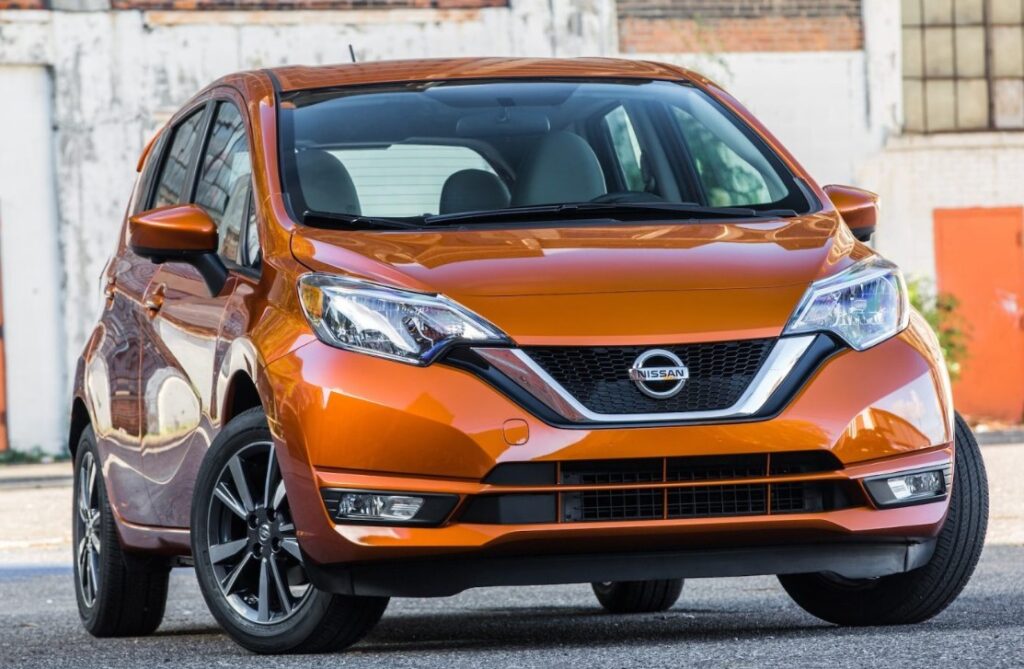
The Nissan Note e-Power battery life is one of the first things potential buyers ask about—and understandably so. A used hybrid can appear economical on the showroom floor, but nobody wants to discover that its most complicated component is quietly approaching retirement.
Here is the reassuring part: the Note e-Power is not a conventional battery-electric vehicle. It does not depend on a large battery to deliver hundreds of kilometres of driving range. Instead, it uses a relatively small lithium-ion traction battery as an energy buffer between its petrol generator and electric motor.
That distinction matters enormously.
The Note’s wheels are always driven by an electric motor, while its petrol engine generates electricity rather than mechanically powering the wheels. Nissan classifies this arrangement as a series-hybrid system.
In practical terms, we get much of the smoothness and instant response of an electric car without plugging it into a charger. The vehicle continually manages the battery on its own, charging it through the petrol generator and regenerative braking.
But how long does that battery actually last? Is an eight- or ten-year-old Japanese import still worth buying in New Zealand? What warning signs should we look for, and how much should battery condition influence the purchase price?
Let us unpack it properly.
Content in this publication
- What Is the Nissan Note e-Power?
- How Long Does a Nissan Note e-Power Battery Last?
- Why the e-Power Battery May Age Differently from an EV Battery
- What Causes Nissan Note e-Power Battery Degradation?
- Traction Battery Versus 12-Volt Battery
- Signs of a Weak e-Power Traction Battery
- How to Check Battery Health Before Buying
- Should We Trust the Dashboard Battery Display?
- What Battery Condition Is Acceptable in a Used Note?
- Will a Weak Battery Stop the Car from Driving?
- Can the Nissan Note e-Power Battery Be Repaired?
- Does the Nissan Warranty Cover Imported Notes in New Zealand?
- How Can Owners Extend e-Power Battery Life?
- E12 Versus E13 Battery Life
- Is the Nissan Note e-Power a Good Buy in New Zealand?
- A Practical New Zealand Buyer’s Checklist
- Common Battery-Life Myths
- Final Verdict: How Worried Should Buyers Be?
- Frequently Asked Questions
What Is the Nissan Note e-Power?
Before discussing battery lifespan, we need to understand what the battery actually does.
The Nissan Note e-Power arrived in Japan in late 2016 as part of the second-generation E12 Note range. The third-generation E13, introduced in Japan in late 2020, continued with a more advanced second-generation e-Power system.
Unlike a Toyota-style parallel hybrid, the Note’s petrol engine does not directly drive the wheels. Its main role is to generate electricity. That electrical energy can:
- Power the traction motor
- Recharge the lithium-ion battery
- Support the motor and battery during stronger acceleration
- Replace energy recovered through regenerative braking
Think of the battery as a small reservoir in a hydroelectric system. It does not need to store enough energy for an entire journey. It simply catches, holds and releases energy whenever the vehicle needs it.
That makes its working life different from the life of a full electric-car battery.
Is the Note e-Power a Hybrid or an EV?
Technically, it is a non-plug-in series hybrid.
The driving sensation is electric because the electric motor alone propels the vehicle. However, the petrol engine supplies most of the energy required for longer journeys.
We never need to plug a standard Note e-Power into a wall socket. We simply fill it with petrol, and the vehicle handles energy generation and battery charging automatically.
How Large Is the e-Power Battery?
The exact capacity varies by e-Power generation and model, but Nissan describes typical e-Power batteries as considerably smaller than those fitted to fully electric vehicles. Depending on the application, Nissan cites capacities of approximately 1.5 to 2.1 kWh, while its technical review describes roughly 1.5 to 1.8 kWh as sufficient for regenerative-energy recovery and short periods of electric running.
The first-generation Note e-Power is widely associated with a battery of approximately 1.5 kWh. By comparison, a Nissan Leaf may carry a battery measured in tens of kilowatt-hours.
That small size does not mean the Note’s battery is unimportant. It works frequently and delivers substantial power. However, it does mean that moderate capacity loss does not affect the car in the same way that it affects a full EV.
Why Battery Size Changes the Ownership Experience
In a battery-electric vehicle, degradation directly reduces driving range. If an EV loses 20% of its usable capacity, we may notice a meaningful reduction in the distance available between charges.
In the Note e-Power, the petrol generator can run more frequently to compensate for a weaker battery. The car may still drive normally, but fuel consumption, engine-running time and refinement could gradually worsen.
Instead of asking only, “How far can the battery take me?” we should ask:
- How efficiently does it accept and release energy?
- Can it support the motor during acceleration?
- Does it maintain charge without rapid fluctuations?
- Is the generator running more often than expected?
- Are there battery, inverter or hybrid-system fault codes?
Those questions reveal far more than the dashboard’s charge graphic alone.
How Long Does a Nissan Note e-Power Battery Last?
There is no universal expiry date.
For a well-maintained Note e-Power operating under normal conditions, a traction-battery service life of roughly 10 to 15 years is a reasonable planning estimate rather than a manufacturer guarantee. Some packs may remain usable for longer, while others may require repair or replacement earlier because of heat exposure, high mileage, physical damage, electrical faults or poor maintenance.
Mileage also matters. A pack may remain serviceable beyond 150,000 km, but age, operating conditions and individual cell balance can be just as important as the odometer reading.
A 2017 car with 160,000 km of gentle motorway and suburban use could have a healthier battery than a lower-mileage vehicle repeatedly operated under severe conditions. Battery age is not a perfect health meter, just as grey hair does not tell us precisely how fit someone is.
Expected Battery Life by Vehicle Age
The following guide is not a promise, but it offers potential buyers a practical framework.
| Vehicle age | General battery outlook | Buyer approach |
|---|---|---|
| Under 5 years | Significant deterioration would be unusual | Confirm service history and scan for faults |
| 5–8 years | Some natural ageing is expected | Obtain a hybrid-system diagnostic report |
| 8–12 years | Condition varies more noticeably between vehicles | Make battery testing an essential purchase condition |
| Over 12 years | Remaining life becomes increasingly vehicle-specific | Budget for possible repair and negotiate accordingly |
A battery should not be condemned simply because the car is eight years old. Equally, we should not assume it is healthy because the dashboard has no warning lights.
The computer can compensate for gradual deterioration until performance moves outside acceptable limits. A professional assessment gives us a much clearer picture.
Does High Mileage Automatically Mean a Bad Battery?
No.
High mileage can mean more charging and discharging cycles, but hybrid batteries are managed within a controlled operating window. The vehicle normally avoids keeping the battery completely full or completely empty, even when the dashboard graphic appears near one end of its displayed range.
This control strategy helps reduce stress.
A high-mileage car with consistent maintenance, smooth operation and a healthy diagnostic result may be a better purchase than a low-mileage car with accident damage, long periods of neglect or unresolved warning lights.
We should assess mileage alongside:
- Battery-state data
- Cell-voltage balance
- Service records
- Fault-code history
- Cooling-system condition
- Vehicle age
- Previous use
- Road-test behaviour
Why the e-Power Battery May Age Differently from an EV Battery
A Note e-Power battery lives a busy life. It repeatedly accepts energy from the generator and regenerative braking, then sends that energy to the traction motor.
Nevertheless, several design characteristics may help it age steadily.
The Car Controls Charging Automatically
Owners do not choose when or how quickly to charge the traction battery. There is no home charger, no rapid-charging station and no temptation to leave the car plugged in at 100% for days.
The vehicle’s battery-management system handles the process. This removes many charging decisions that can affect a plug-in vehicle.
The Battery Uses a Managed Charge Window
Hybrid systems generally use only part of a battery’s theoretical capacity. Maintaining a reserve at the top and bottom reduces the stress associated with true full charges and deep discharges.
The dashboard indicator should therefore be viewed as a representation of the system’s managed operating range, not necessarily the battery’s absolute chemical limits.
The Petrol Generator Supports Energy Demand
The battery is not alone when the driver requests sustained power. The generator can produce electricity while the battery provides additional support.
This cooperation is one reason the e-Power system can deliver electric-motor response from a much smaller battery than a fully electric car.
What Causes Nissan Note e-Power Battery Degradation?
All lithium-ion batteries gradually age. Time changes their internal chemistry, and repeated use slowly reduces their ability to store and deliver energy.
The rate of that change is influenced by several factors.
Age and Calendar Degradation
A battery ages even when the car is not driven frequently.
This is called calendar degradation. Chemical reactions continue inside the cells over time, gradually reducing available capacity and performance.
A ten-year-old Note with only 35,000 km is therefore not automatically equivalent to a three-year-old Note with the same mileage.
Heat Exposure
Sustained heat is one of the major enemies of lithium-ion batteries.
New Zealand generally offers a milder climate than many hotter countries, which may be favourable for long-term battery health. However, individual use still matters. A car regularly left in direct summer sun, operated with obstructed battery ventilation or driven under heavy loads may experience more thermal stress.
Does New Zealand’s Climate Help?
In broad terms, New Zealand’s moderate temperatures can be kinder to a battery than persistently extreme heat.
However, local conditions vary. Auckland humidity, Central Otago winters, hot parked cabins and coastal corrosion each create different ownership challenges.
Cold weather may temporarily reduce battery performance and increase fuel consumption, but temporary winter sluggishness is not necessarily permanent degradation.
High Electrical Demand
Repeated hard acceleration, steep hill climbing and heavy loading make the battery and generator work harder.
This does not mean we must drive like we are balancing a cup of tea on the dashboard. The system was designed for ordinary driving. Nevertheless, constant aggressive use may create more heat and higher power demand than calm urban operation.
Cooling Problems
Battery cooling is easy to overlook because owners rarely see the system working.
Dust, pet hair, debris or damaged ventilation pathways can reduce airflow. If the battery cannot release heat effectively, long-term cell ageing may accelerate.
During an inspection, we should ask the technician to examine relevant battery-cooling vents, ducts and fan operation where applicable.
Long Periods of Storage
A vehicle that sits unused for months can develop battery-related issues, although the traction battery is not the only concern.
The smaller 12-volt auxiliary battery may discharge first. When that happens, the vehicle might not enter its ready-to-drive mode, even if the high-voltage traction battery is healthy.
This brings us to one of the most common points of confusion.
Traction Battery Versus 12-Volt Battery
The Note e-Power contains more than one battery.
The high-voltage lithium-ion traction battery stores energy for the electric drive system. The 12-volt auxiliary battery powers control units, locks, lights and the electronic systems needed to start the vehicle’s operating sequence.
A weak 12-volt battery can cause:
- Failure to enter READY mode
- Multiple warning messages
- Unusual dashboard behaviour
- Central-locking problems
- Electronic faults
- Intermittent starting issues
These symptoms can make owners fear that the expensive hybrid battery has failed when the real culprit is a much smaller conventional battery.
Nissan New Zealand’s standard warranty terms treat the original 12-volt battery separately and list limited coverage for manufacturing defects, illustrating that it is a distinct component from the lithium-ion traction system.
Which Battery Usually Fails First?
In ordinary ownership, the 12-volt battery is much more likely to require routine replacement.
A 12-volt battery is a consumable item. Its life can be shortened by infrequent use, accessory loads, cold starts, internal age or leaving lights switched on.
The high-voltage pack is intended to last far longer, although it is considerably more expensive when a serious failure does occur.
Signs of a Weak e-Power Traction Battery
Battery degradation is not always dramatic. It may arrive like a slowly dripping tap rather than a burst pipe.
Potential warning signs include:
- The petrol engine runs more frequently
- The battery gauge rises and falls unusually quickly
- Fuel economy becomes noticeably worse without another explanation
- Engine revving feels excessive during light driving
- Electric assistance feels inconsistent
- Acceleration is weaker than expected
- Hybrid-system warning lights appear
- The vehicle enters reduced-power mode
- Diagnostic scans reveal battery or cell-voltage faults
None of these signs proves that the battery is defective. A dirty air filter, worn spark plugs, engine problem, sensor fault, inverter issue, poor tyre pressure or cold weather can produce overlapping symptoms.
That is why diagnosis matters.
Rapid Charge-Gauge Movement
A healthy small hybrid battery naturally changes its indicated charge faster than a large EV battery. We should not panic simply because the bars move during a hill climb or after strong regenerative braking.
The concern is an extreme pattern: the battery appears to charge almost instantly, drains almost immediately and repeatedly forces the engine to intervene.
That can indicate reduced usable capacity, although software behaviour and driving conditions must also be considered.
Frequent Generator Operation
The engine is supposed to run. Its operation alone is not evidence of a failing battery.
It may start because:
- Battery charge is low
- Cabin heating is required
- Speed or power demand has increased
- The vehicle is warming itself
- Electrical consumption is high
- The system is protecting battery condition
We should become suspicious when engine activity is clearly excessive relative to similar driving conditions and is accompanied by poor economy, unstable charge readings or diagnostic abnormalities.
Warning Lights and Fault Messages
Never buy a Note e-Power with an illuminated hybrid-system warning light based solely on a seller’s promise that it is “probably just a sensor.”
Sometimes it is a minor sensor. Sometimes it is not.
Warning lights should be professionally scanned before money changes hands. Clearing codes without correcting the cause merely wipes fingerprints from the scene.
How to Check Battery Health Before Buying
Potential buyers in New Zealand should make battery testing part of the pre-purchase process, particularly when considering older E12 Japanese imports.
A normal mechanical inspection remains valuable, but the technician should also have suitable hybrid knowledge and compatible diagnostic equipment.
Request a Hybrid Battery Diagnostic Scan
Ask for a written report rather than a quick verbal assurance.
Depending on the diagnostic system and vehicle generation, useful information may include:
- Stored and pending fault codes
- Battery-module or cell-group voltages
- Voltage differences between groups
- Battery temperature readings
- Charge and discharge behaviour
- Cooling-fan operation
- Estimated battery condition
- Historical fault information
State of Health, commonly abbreviated as SOH, can be useful, but it should not be treated as a flawless single-number verdict. Even battery-health reporting may vary by system and testing method. We should combine the reported figure with cell balance, fault history and real-world behaviour.
The New Zealand Automobile Association similarly recommends using condition information and professional inspection when assessing electrified vehicles rather than relying on appearance alone.
Check Cell-Voltage Balance
Capacity is not the only concern. Balance between cell groups can reveal whether one section is weaker than the rest.
A battery pack is like a rowing team: overall performance can be limited by the weakest rower. If one cell group reaches its voltage limit earlier than the others, the system may reduce available battery use to protect the pack.
A technician should interpret the readings under suitable conditions because small voltage differences can be normal.
Take a Proper Test Drive
A five-minute loop around the dealership is rarely enough.
Ask to drive the vehicle through several conditions:
- Start it from cold.
- Drive gently in urban traffic.
- Accelerate firmly onto a faster road.
- Climb a moderate hill.
- Descend and observe regenerative braking.
- Stop and restart the vehicle.
- Check for delayed warnings.
- Monitor engine behaviour and charge-gauge movement.
Listen for rough generator-engine operation, unusual whining, vibration or abrupt changes in power delivery.
The driving experience should feel smooth and predictable. The petrol engine may rev independently of road speed, which can feel unusual at first, but harshness or severe hesitation deserves investigation.
Inspect the Service History
A healthy battery does not excuse poor mechanical maintenance.
The petrol generator engine still needs appropriate servicing. Oil quality, filters, spark plugs, cooling components and associated electrical systems all affect how well the e-Power drivetrain works.
A complete Japanese service record may not always accompany an import, but any available documents are valuable. Check:
- Japanese auction sheet
- Export certificate
- Odometer verification
- Workshop invoices
- New Zealand service records
- Previous diagnostic reports
- Evidence of accident repair
- Recall completion where applicable
Nissan Japan provides a chassis-number search for recalls and service campaigns, which may be useful when investigating the history of a Japanese-market vehicle.
Why Accident History Matters
The battery pack is protected within the vehicle, but significant impact damage, flooding or poor-quality repairs can create risks.
We should inspect the underbody, structural rails, electrical connectors and signs of water intrusion. A cheap repair can hide an expensive future problem like fresh paint hiding rust beneath a fence.
Should We Trust the Dashboard Battery Display?
The charge display tells us the battery’s current operating charge, not necessarily its long-term health.
This is the same difference as fuel level versus fuel-tank condition. A full tank tells us how much petrol is present, not whether the tank is corroded.
A battery showing many charge bars can still have reduced usable capacity. Conversely, a low displayed charge during a test drive does not automatically indicate degradation because the generator may soon recharge it.
The display is useful for observing patterns, but not for measuring remaining battery life by itself.
What Battery Condition Is Acceptable in a Used Note?
There is no single percentage that guarantees a good purchase.
A newer car should naturally be expected to have stronger battery performance than an older one. However, a mildly degraded pack may still provide years of useful service if cell balance is good, no faults are present and the car performs efficiently.
Instead of chasing a magical number, we should ask whether:
- The battery behaves consistently
- Cell-group voltages are reasonably balanced
- No relevant faults are stored
- The cooling system works
- Fuel economy is appropriate
- Performance is smooth
- The purchase price reflects age and condition
A written assessment from a technician experienced with Nissan hybrids is more valuable than an unsupported claim that the battery is “100% healthy.”
Will a Weak Battery Stop the Car from Driving?
Not necessarily.
Gradual capacity loss may initially lead to more frequent generator operation rather than immediate breakdown. The system can compensate within limits.
However, a failed cell group, electrical isolation fault, damaged battery controller or serious temperature problem may trigger warning lights, reduced power or a no-drive condition.
This is why battery degradation and battery failure should be treated as different concepts.
Battery Degradation
Degradation means the battery can store or deliver less energy than when new. The vehicle may remain usable.
Battery Failure
Failure means the pack or associated control system can no longer operate safely or correctly. Repair may then be necessary before the car can be driven normally.
It is possible to have degradation without failure—and possible to experience an electrical fault even when overall battery capacity remains relatively strong.
Can the Nissan Note e-Power Battery Be Repaired?
In some cases, yes.
Specialist hybrid workshops may be able to diagnose or repair particular battery-related issues. Depending on the fault, possible solutions can include:
- Replacing a defective module
- Repairing wiring or connectors
- Servicing cooling components
- Replacing sensors
- Rebalancing or rebuilding the pack
- Installing a tested used battery
- Installing a professionally refurbished pack
- Replacing the complete assembly
Not every pack should be repaired at module level. Mixing cells or modules with significantly different ages and characteristics can produce short-lived results if the work is not done correctly.
We should ask the repairer:
- What exactly failed?
- Is the replacement component new, used or refurbished?
- How were modules matched?
- What testing was completed?
- Is labour included?
- What written warranty is provided?
- Does the quoted price include GST?
- Will fault codes and battery data be documented?
Replacement Cost Is Not One Fixed Number
Battery-replacement pricing in New Zealand can vary widely depending on generation, parts availability, pack condition, freight, labour and whether the solution uses new or second-hand components.
A full new assembly, where available, may cost enough to challenge the value of an older Note. A targeted professional repair or tested used pack could cost much less.
Because parts pricing changes and many Notes are parallel imports, buyers should obtain current written quotations for the exact chassis code instead of relying on a generic online estimate.
Does the Nissan Warranty Cover Imported Notes in New Zealand?
This requires careful attention.
Many Nissan Note e-Power vehicles on New Zealand roads are used Japanese imports rather than New Zealand-new vehicles. We should not assume that a Japanese manufacturer warranty automatically transfers to New Zealand or that Nissan New Zealand’s current new-vehicle warranty applies.
Nissan New Zealand advertises warranty coverage for eligible new Nissan vehicles sold through its local network, but those terms should not be confused with coverage for an older parallel-imported Note.
Before buying, obtain the warranty conditions in writing from the dealer.
Ask whether the warranty covers:
- The traction battery
- Battery-capacity loss
- Complete battery failure
- Inverter and motor components
- Diagnostic labour
- Removal and installation
- Used or refurbished replacement parts
- Towing
- Consequential damage
- Pre-existing conditions
A vague promise that the vehicle has a “hybrid warranty” is not enough. The definition of hybrid components may be narrower than we expect.
How Can Owners Extend e-Power Battery Life?
The Note manages most battery decisions automatically, so owners do not need a complicated charging routine.
Still, several habits can support the entire system.
Service the Vehicle on Time
Fresh engine oil, clean filters and correct cooling-system maintenance help the generator operate efficiently.
The petrol engine may not mechanically drive the wheels, but it remains an essential part of the powertrain. Neglecting it forces the electrical system to work alongside an unhealthy energy source.
Keep Cooling Vents Clear
Avoid blocking battery-airflow areas with bags, seat covers, pet hair or loose items.
During servicing, ask for relevant ducts and fans to be inspected, particularly if the vehicle regularly carries pets or operates in dusty environments.
Drive the Car Regularly
Regular use helps maintain the 12-volt battery and allows the e-Power system to complete normal operating cycles.
A vehicle stored for an extended period should be managed according to the owner’s manual and professional advice.
Maintain Correct Tyre Pressure
Underinflated tyres increase rolling resistance. That forces the motor, battery and generator to supply more energy for the same trip.
Tyre pressure may sound unrelated to battery life, but inefficiency anywhere in the vehicle creates extra work elsewhere.
Respond to Warning Lights Early
Small faults rarely become cheaper when ignored.
A cooling-fan error, temperature-sensor problem or charging fault may be manageable when detected early. Continuing to drive without diagnosis can allow a minor defect to become a major repair.
E12 Versus E13 Battery Life
New Zealand buyers will encounter both generations, although imported E12 models from 2016 onward remain especially common in the used market.
E12 Note e-Power
The E12 introduced the technology and is now old enough for condition differences to become meaningful.
Its advantages often include:
- Lower purchase prices
- Strong parts familiarity among specialists
- Proven real-world use
- Good urban efficiency
- Wide availability in New Zealand
Its disadvantages may include:
- Greater age
- More variable import histories
- Higher accumulated mileage
- Older 12-volt batteries and supporting components
- Increasing likelihood of age-related repairs
For an E12, battery testing should be treated as essential rather than optional.
E13 Note e-Power
The E13 uses Nissan’s newer-generation e-Power technology and is generally younger, so significant age-related battery deterioration should be less common.
However, newer does not mean invincible. Accident history, flood exposure, poor repairs, unusually high usage and electrical faults remain relevant.
An E13 may cost more, but its younger battery and updated drivetrain could reduce near-term risk.
Is the Nissan Note e-Power a Good Buy in New Zealand?
For many buyers, yes.
It can be an appealing urban and suburban hatchback because it combines electric-motor response with petrol convenience. There is no need for home charging, yet the vehicle can feel smooth, lively and quiet around town.
The Note e-Power may suit buyers who:
- Drive regularly in urban traffic
- Want strong low-speed response
- Cannot charge an EV at home
- Prefer a compact hatchback
- Value fuel efficiency
- Are comfortable buying a Japanese import
- Have access to a competent hybrid specialist
It may be less suitable for buyers who:
- Want a locally supported factory warranty
- Regularly tow or carry heavy loads
- Expect diesel-like open-road economy
- Live far from hybrid repair specialists
- Refuse to obtain a battery inspection
- Need a completely documented local history
The Battery Should Influence Price, Not Create Panic
An older hybrid battery is not automatically a ticking time bomb.
It is simply a component whose condition must be measured and priced. Engines, transmissions and turbochargers also age, yet buyers routinely assess them rather than avoiding every petrol or diesel vehicle.
The sensible response is not fear. It is evidence.
A Practical New Zealand Buyer’s Checklist
Before purchasing a Nissan Note e-Power, complete the following checks.
Documentation Checks
- Verify the chassis number
- Obtain the Japanese auction sheet where possible
- Confirm the odometer history
- Review service records
- Investigate outstanding recalls
- Read the dealer warranty carefully
- Confirm whether the vehicle has suffered structural or flood damage
Battery and Electrical Checks
- Request a full hybrid diagnostic scan
- Review battery-related fault codes
- Compare cell-group voltages
- Check battery temperatures
- Inspect cooling vents and fan operation
- Test the 12-volt battery
- Confirm the vehicle consistently enters READY mode
- Ask for written battery-test results
Road-Test Checks
- Start the car when cold
- Test gentle and firm acceleration
- Drive up and down a hill
- Observe regenerative braking
- Monitor the charge display
- Listen to generator-engine behaviour
- Check for hesitation or reduced power
- Recheck the dashboard after the drive
Commercial Checks
- Compare the price with similar Notes
- Ask what the warranty excludes
- Obtain a battery-repair estimate for context
- Confirm parts and workshop availability nearby
- Do not pay a premium based on unsupported battery claims
- Make the sale conditional on a satisfactory inspection
Questions to Ask the Seller
A confident seller should be willing to answer practical questions.
Ask:
- Has the traction battery ever been repaired or replaced?
- Is there a recent battery diagnostic report?
- Have any hybrid warning lights appeared?
- Is the dealer warranty insurance-backed or dealer-backed?
- Does the warranty cover battery degradation or only sudden failure?
- Has the car been involved in an accident?
- Has it been exposed to flooding?
- Is the 12-volt battery original?
- Can we inspect the car at an independent hybrid workshop?
- Will the seller provide all battery claims in writing?
If the seller resists an independent inspection, that is useful information in itself.
Common Battery-Life Myths
“The Battery Dies After Eight Years”
Eight years is not an automatic expiry date. Batteries degrade gradually, and their condition varies considerably.
“A Small Battery Is Cheap to Replace”
Not always. Physical capacity is only one cost factor. Packaging, electronics, availability, labour and import freight also matter.
“No Warning Light Means the Battery Is Perfect”
A dashboard without warnings is encouraging, but gradual capacity loss may not immediately generate a fault.
“The Engine Charges It, So It Cannot Degrade”
Recharging does not prevent ageing. Every rechargeable lithium-ion battery experiences chemical change over time.
“The Charge Bars Show Battery Health”
They mainly indicate present charge within the managed operating range. They are not a complete health report.
Final Verdict: How Worried Should Buyers Be?
Potential buyers should respect the Nissan Note e-Power battery, but they do not need to fear it.
The system uses a small lithium-ion pack as a rapidly managed energy buffer, while the petrol engine produces electricity and the motor drives the wheels. This configuration means battery degradation may initially appear as increased generator activity or lower efficiency rather than an immediate collapse in driving range.
A properly maintained traction battery may remain useful for roughly 10 to 15 years or longer, but no lifespan can be guaranteed from age or mileage alone. Each used vehicle should be judged individually.
For New Zealand buyers, the best strategy is straightforward: verify the import history, obtain a hybrid-specific diagnostic scan, test the 12-volt battery, complete a meaningful road test and read every warranty exclusion.
A cheap Note with an unknown battery can become an expensive gamble. A slightly dearer car with transparent records, balanced battery data and a proper warranty may be the better bargain.
In other words, we should buy the evidence—not merely the polished paintwork.
Frequently Asked Questions
1. How many years does a Nissan Note e-Power battery last?
A reasonable planning estimate is around 10 to 15 years under normal use, although some batteries may last longer and others may require attention earlier. Age, heat, mileage, cell balance, cooling and previous use all influence lifespan. A diagnostic inspection is more reliable than judging the battery by age alone.
2. Can a Nissan Note e-Power drive with a weak battery?
It may continue driving if the battery has moderate capacity loss because the petrol generator can run more frequently to provide electricity. Serious cell, controller, isolation or temperature faults may trigger reduced power or prevent normal operation.
3. How do we check a Nissan Note e-Power battery before buying?
Arrange a hybrid-specific pre-purchase inspection. Ask for fault-code scanning, cell-group voltage comparison, battery-temperature data, cooling-system checks and a road test under varied conditions. Also test the separate 12-volt battery.
4. Does the Note e-Power battery need external charging?
No. The standard Note e-Power is not a plug-in vehicle. Its petrol engine generates electricity, while regenerative braking recovers energy during deceleration. The vehicle controls traction-battery charging automatically.
5. Is an eight-year-old Nissan Note e-Power worth buying?
It can be, provided its battery, generator engine, inverter, motor and electrical systems test well. At that age, we should insist on an independent hybrid inspection and ensure the purchase price reflects the vehicle’s condition, history and warranty coverage.
If you want to know other articles similar to Nissan Note e-Power Battery Life: A New Zealand Buyer’s Guide you can visit the category Service and Parts.
Toyota Yaris Cross Dashboard Symbols

BMW 3 Series Warning Lights: The Complete Guide to Understanding Every Dashboard Symbol
Nissan Qashqai Fuel Tank Capacity: Complete Guide

Suzuki Swift Fuel Tank Capacity: Complete Guide

Mazda CX-5 Weight (2013–2026): Complete Guide in Pounds and KG

Kia Sportage Dashboard Symbols and Warning Lights
Leave a Reply
More content of your interest