

Nissan Serena Tire Size: Complete Fitment Guide

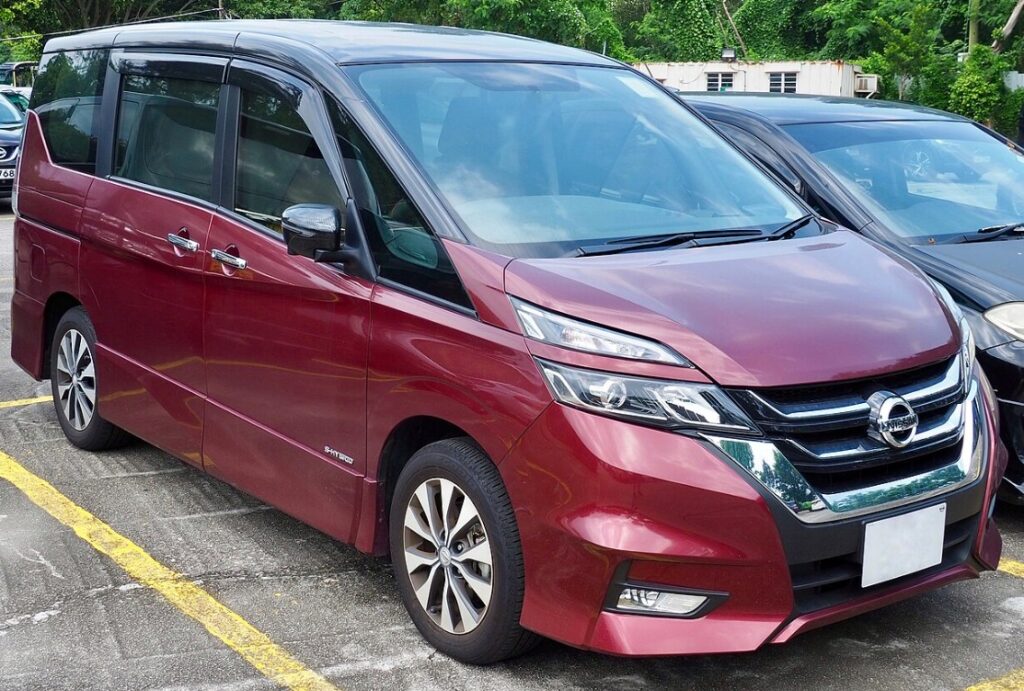
Choosing the correct Nissan Serena tire size sounds simple until we begin comparing generations, trim levels, wheel diameters, hybrid versions, imports, and aftermarket setups. One Serena may leave the factory on practical 15-inch wheels, while another wears sportier 16- or 17-inch alloys. Both can be correct, yet they are not automatically interchangeable.
That is where confusion creeps in.
The Serena has been sold across Japan and several export markets for decades. During that time, Nissan has changed the vehicle’s body design, weight, suspension, powertrain, and available wheel packages. Tire specifications can therefore differ even between two Serena models built in the same year.
The safest approach is not to rely on appearance, internet forums, or the tire currently fitted to a used vehicle. We should check the tire-information label, owner’s manual, exact model code, and original wheel specifications before ordering replacements.
In this guide, we will explore common Nissan Serena tire sizes, explain the markings on the sidewall, compare replacement options, and show how to avoid expensive fitment mistakes.
Content in this publication
- What Is the Standard Nissan Serena Tire Size?
- Nissan Serena Tire Size Chart
- How to Find Your Exact Nissan Serena Tire Size
- Understanding Nissan Serena Tire Size Numbers
- Nissan Serena C23 Tire Size
- Nissan Serena C24 Tire Size
- Nissan Serena C25 Tire Size
- Nissan Serena C26 Tire Size
- Nissan Serena C27 Tire Size
- Nissan Serena C28 Tire Size
- 195/65 R15 vs 195/60 R16 on the Nissan Serena
- Can We Install Wider Tires on a Nissan Serena?
- How Much Can Tire Diameter Change?
- Wheel Size Is Not the Same as Tire Size
- Choosing the Best Tire Type for a Nissan Serena
- Nissan Serena Tire Load Rating
- Should All Four Serena Tires Match?
- Nissan Serena Spare-Tire Size
- Common Nissan Serena Tire Fitment Mistakes
- Signs Your Nissan Serena Tires Are the Wrong Size
- When Should Nissan Serena Tires Be Replaced?
- How to Make Serena Tires Last Longer
- Does Tire Size Affect Serena Fuel Consumption?
- Does Tire Size Affect Ride Comfort?
- How to Buy the Correct Nissan Serena Tires
- Final Thoughts on Nissan Serena Tire Size
- Frequently Asked Questions
What Is the Standard Nissan Serena Tire Size?
There is no single tire size that fits every Nissan Serena.
However, several sizes appear frequently across different generations and regional specifications:
- 195/70 R14
- 195/65 R15
- 195/60 R16
- 205/65 R16
- Selected 17-inch sizes on certain higher-specification or aftermarket configurations
For example, Nissan’s heritage information lists the 1993 C23 Serena with 195/70 R14 tires, while the 2006 C25 Serena 20RS is listed with 195/65 R15 91S tires.
Nissan Malaysia also lists 195/65 R15 and 195/60 R16 for different versions of its Serena, paired with 15- and 16-inch alloy wheels respectively.
These examples reveal an important lesson: the model name alone is not enough. We also need the generation, trim, production year, market, and wheel package.
Nissan Serena Tire Size Chart
The following table provides a practical overview of sizes commonly associated with the Serena. It should be treated as an identification guide rather than a substitute for the vehicle’s tire placard.
| Serena generation | Approximate production period | Commonly encountered tire sizes |
|---|---|---|
| C23 | 1991–2001 | 195/70 R14 and market-specific alternatives |
| C24 | 1999–2005 | 195/65 R15 and other trim-dependent sizes |
| C25 | 2005–2010 | 195/65 R15; selected 16-inch options |
| C26 | 2010–2016 | 195/65 R15; 195/60 R16 on some versions |
| C27 | 2016–2022 | 195/65 R15; 195/60 R16; market-specific alternatives |
| C28 | 2022 onward | Specification varies by trim, powertrain, wheel package, and market |
We should never order tires from this table alone. A Serena imported from Japan may have a different specification from a locally distributed Serena carrying a similar trim name.
Why the Sizes Overlap Between Generations
Nissan does not redesign every part simply because a new generation arrives. A tire such as 195/65 R15 offers a useful balance of comfort, cost, load capacity, and rolling efficiency, so it appears across several Serena generations.
Yet two vehicles using the same tire size may still have different:
- Wheel offsets
- Rim widths
- Load requirements
- Speed ratings
- Tire-pressure recommendations
- Suspension clearances
- Lug-nut specifications
The printed tire size is only one piece of the fitment puzzle.
How to Find Your Exact Nissan Serena Tire Size
The most reliable specification is usually printed on the vehicle itself.
Check the Tire-Information Placard
Open the driver’s door and inspect the door jamb, door pillar, or nearby body panel. Depending on the country and model, the label may show:
- Original front tire size
- Original rear tire size
- Recommended cold inflation pressure
- Spare-tire specification
- Seating or load information
Some Japanese-import vehicles may have labels written partly or entirely in Japanese. The tire-size code remains recognizable because it follows the familiar format, such as 195/65 R15.
Read the Existing Tire Sidewall
The current tire’s sidewall provides a quick clue. Look for a sequence similar to:
195/60 R16 89H
This tells us the tire’s dimensions and performance classification. Nevertheless, we should not assume the existing tire is correct. Previous owners sometimes install cheaper, wider, taller, or more visually appealing alternatives.
Use the current tire as evidence, not final proof.
Consult the Owner’s Manual
The manual may identify approved tire and wheel combinations, inflation recommendations, rotation patterns, and spare-tire limitations.
Nissan’s regional documentation can differ, so it is best to use a manual matching the exact model code and market. Nissan Malaysia, for example, separates Serena documentation by model and powertrain rather than presenting one universal Serena manual.
Use the Chassis or Model Code
The chassis code helps narrow down the generation and drivetrain. Serena owners commonly encounter identifiers such as:
- C23
- C24
- C25
- C26
- C27
- C28
- HC26
- HFC26
- GFC27
- GC27
- GNC27
Letters before or around the main generation code can indicate variations in engine, hybrid system, drivetrain, or body specification. They matter when confirming parts.
Where to Find the Model Code
Look at:
- The identification plate in the engine compartment
- The registration document
- Import paperwork
- The door-frame identification label
- The chassis number record
- An official Nissan parts catalogue
Understanding Nissan Serena Tire Size Numbers
A tire code may look like alphabet soup, but it becomes simple once we separate it.
Let us use 195/65 R15 91S as an example.
195: Tire Width
The first number represents the nominal section width in millimetres.
A 195 tire is approximately 195 mm wide at its widest section when mounted on an approved rim. It does not mean the tread itself measures exactly 195 mm.
Two tires carrying the same nominal width may look slightly different because manufacturers use different casing shapes and tread designs.
65: Aspect Ratio
The second number represents the sidewall height as a percentage of the tire width.
For a 195/65 tire:
- Width: 195 mm
- Sidewall ratio: 65%
- Approximate sidewall height: 126.75 mm
A larger percentage generally creates a taller sidewall. Taller sidewalls often absorb potholes and broken pavement more gently, which suits a family minivan rather well.
R: Radial Construction
The letter R means radial construction. Nearly all modern passenger-vehicle tires use this design.
It does not mean “rim,” even though that misconception is common.
15: Wheel Diameter
The final dimensional number indicates that the tire fits a 15-inch wheel.
A 15-inch tire cannot be installed on a 16-inch rim. The tire’s inner diameter and wheel diameter must match exactly.
91: Load Index
The load index indicates the maximum weight one tire can support under specified conditions.
This number is particularly important on the Serena because it is a multi-passenger vehicle. A tire that appears physically correct may still be unsuitable if its load rating is lower than Nissan’s requirement.
We should use an equal or higher approved load index unless a qualified tire specialist or vehicle manufacturer states otherwise.
S: Speed Rating
The final letter represents the tire’s speed capability under controlled test conditions.
A speed rating is not an invitation to drive at that speed. It indicates the tire’s tested performance category and forms part of the vehicle’s approved specification.
Avoid downgrading the speed rating without checking local regulations and manufacturer guidance.
Nissan Serena C23 Tire Size
The C23 introduced the Serena name during the 1990s and can now be found mainly as an older used vehicle or import.
Nissan’s heritage specification for the 1993 Vanette Serena FX Rio lists 195/70 R14 tires.
This is a tall-sidewall configuration by modern standards. It supports the softly sprung, practical character of an early minivan and offers several benefits:
- Good bump absorption
- Relatively inexpensive replacement tires
- Strong protection against minor wheel damage
- Comfortable urban driving
- Suitable behavior on imperfect roads
Because these vehicles are now decades old, many have non-original wheels. Rust, accident repairs, replacement hubs, and suspension modifications can also affect fitment. Inspect the wheel markings and vehicle placard rather than relying only on the model year.
Nissan Serena C24 Tire Size
The C24 was sold in several trims and drivetrain combinations. Many examples use 15-inch wheels, with 195/65 R15 frequently encountered.
However, imported C24 models may wear different original or dealer-installed combinations. Before replacing the tires, verify:
- Whether the vehicle is two-wheel drive or four-wheel drive
- The width and offset stamped inside the wheel
- The load index on the existing approved tire
- Clearance around the front strut and rear suspension
- Whether the speedometer reading is already inaccurate
An old Serena wearing attractive aftermarket alloys may look polished, but beauty does not guarantee mechanical compatibility.
Nissan Serena C25 Tire Size
The C25 generation is particularly common in used-import markets.
Nissan’s official heritage entry for the 2006 Serena 20RS identifies 195/65 R15 91S as its tire specification.
That size remains popular because it delivers a family-friendly mixture of:
- Ride comfort
- Predictable handling
- Reasonable replacement cost
- Broad tire availability
- Moderate rolling resistance
Some C25 trims may have larger wheels or different ratings. We should therefore match the trim and chassis code rather than assuming every C25 uses the 20RS specification.
Can We Use 16-Inch Wheels on a C25?
Potentially, but only with the right combination of wheel width, offset, tire diameter, load rating, and clearance.
A successful upgrade keeps the new tire’s overall diameter close to the original. As the rim grows, the sidewall normally becomes shorter. This is known as plus sizing.
Done correctly, it can sharpen steering response. Done badly, it may create rubbing, a rough ride, inaccurate speed readings, and excessive stress on suspension components.
Nissan Serena C26 Tire Size
The C26 continued the Serena’s focus on family practicality and introduced the S-Hybrid name on various models.
Common configurations include:
- 195/65 R15
- 195/60 R16 on selected trims or wheel packages
The 15-inch option generally prioritizes comfort and affordability. The 16-inch alternative often looks more modern and may feel slightly more direct during cornering.
The difference is not dramatic, but we can feel it. The 15-inch setup behaves like a cushioned walking shoe, while the 16-inch setup feels more like a supportive trainer: firmer, tidier, and a little more communicative.
S-Hybrid Does Not Automatically Determine Tire Size
The Serena S-Hybrid badge describes the powertrain system, not one fixed wheel specification.
Two S-Hybrid vehicles can have different tires because of:
- Trim grade
- Country specification
- Production date
- Two-wheel-drive or four-wheel-drive layout
- Optional alloy-wheel package
Always identify the exact vehicle.
Nissan Serena C27 Tire Size
The C27 is widely available in both Japanese-import and officially distributed forms. Consequently, online size information can appear contradictory.
Nissan Malaysia lists two wheel-and-tire combinations for its Serena:
- 195/65 R15 with 15-inch alloy wheels
- 195/60 R16 with 16-inch alloy wheels
These are useful reference points, but they do not prove that every Japanese-market C27 uses the same combinations.
A Japanese Highway Star, an export-market S-Hybrid, and a four-wheel-drive model can carry different approved specifications.
C27 Highway Star Tire Considerations
Highway Star versions often feature sportier exterior styling and may use larger wheels than basic grades. When inspecting one, look closely at:
- Inner wheel clearance
- Outer fender clearance
- Tire load rating
- Wheel offset
- Full-lock steering clearance
- Clearance when the vehicle is fully loaded
A tire that clears the body when the Serena is empty may rub once passengers and luggage settle the suspension.
C27 e-POWER Tire Considerations
The e-POWER drivetrain changes how the Serena delivers power, but tire selection still depends on the complete model specification.
Nissan describes e-POWER as an electric-drive system in which the gasoline engine generates electricity while the motor drives the wheels.
Instant motor response can make poor-quality tires more noticeable, particularly on wet roads. Prioritize grip, braking stability, load suitability, and low noise rather than choosing solely by price.
Nissan Serena C28 Tire Size
The C28 generation introduced a newer platform presentation, updated technology, and multiple grade and powertrain choices. Current official Serena specifications are organized by grade, emphasizing that equipment varies throughout the range.
For that reason, we should avoid treating one C28 tire size posted online as universal.
Before buying tires for a C28, confirm:
- The full chassis code.
- The trim grade.
- Whether it is gasoline or e-POWER.
- The original wheel diameter.
- The tire placard specification.
- The required load and speed ratings.
- Whether the vehicle was officially sold locally or privately imported.
Newer vehicles may also depend more heavily on calibrated driver-assistance and stability systems. Maintaining the correct rolling circumference becomes increasingly important.
195/65 R15 vs 195/60 R16 on the Nissan Serena
These two sizes are often discussed together because they appear on different Serena specifications.
Ride Comfort
The 195/65 R15 has a taller sidewall. It normally absorbs potholes, expansion joints, and rough asphalt more softly.
For a family vehicle used in city traffic, that extra cushioning can be valuable.
Steering Response
The 195/60 R16 has a slightly shorter sidewall. It can feel more stable and immediate when changing direction.
Do not expect the Serena to become a sports car. The difference is more like tightening a backpack strap: the vehicle feels a little more controlled, not completely transformed.
Replacement Cost
Fifteen-inch tires are often less expensive, although local supply can reverse the situation. A common 16-inch size may cost less than a rare 15-inch premium tire.
Compare equivalent brands, load ratings, and performance categories rather than looking only at diameter.
Wheel Protection
The taller sidewall of the 15-inch configuration provides more cushioning between the road and wheel.
On roads filled with deep potholes, this may reduce the likelihood of bending or cracking an alloy wheel.
Appearance
Sixteen-inch wheels fill the arches more confidently and often complement the Serena’s tall body.
Appearance matters, but it should sit behind safety and fitment. A beautiful wheel that rubs the suspension is simply an expensive mistake wearing makeup.
Can We Install Wider Tires on a Nissan Serena?
A modest width increase may be possible, but wider is not automatically better.
Potential benefits include:
- More assertive appearance
- Different tire-model availability
- Improved dry-road response in some conditions
- Greater lateral grip when properly matched
Possible disadvantages include:
- Increased road noise
- Heavier steering
- Reduced fuel efficiency
- Greater aquaplaning sensitivity
- Fender or suspension rubbing
- Higher replacement cost
- Altered speedometer accuracy
- Extra strain on steering and suspension parts
Wider tires also need suitable rim widths. Squeezing a wide tire onto a narrow wheel can distort the tread shape and weaken handling rather than improve it.
How Much Can Tire Diameter Change?
When changing sizes, installers often aim to keep the overall diameter close to the factory tire. A commonly used practical target is within roughly 1–2%, although legal and technical limits vary.
The closer we remain to the original circumference, the less likely we are to disrupt:
- Speedometer readings
- Odometer readings
- ABS behavior
- Traction control
- Stability control
- Effective gearing
- Ground clearance
What Happens With a Taller Tire?
A taller tire travels farther with each revolution. It may:
- Make the speedometer read lower than the actual speed
- Raise the vehicle slightly
- Reduce acceleration marginally
- Create rubbing under compression
- Change effective gearing
What Happens With a Shorter Tire?
A shorter tire rotates more times over the same distance. It may:
- Make the speedometer read higher
- Lower ground clearance
- Increase engine or motor speed at a given road speed
- Leave a larger visual gap around the wheel
- Alter ride quality
Even a small numerical change can ripple through the vehicle like a stone dropped into water.
Wheel Size Is Not the Same as Tire Size
Drivers sometimes say they need “16-inch tires” as though every 16-inch tire were interchangeable.
The wheel diameter is only one measurement. A Serena tire must also have the correct:
- Width
- Aspect ratio
- Load index
- Speed rating
- Construction type
- Overall diameter
Similarly, the wheel itself requires the correct:
- Diameter
- Width
- Bolt pattern
- Center bore
- Offset
- Load capacity
- Lug-seat design
A wheel can bolt onto the hub and still be wrong. It may sit too far inward, protrude beyond the fender, contact a brake component, or place unwanted leverage on the wheel bearings.
Choosing the Best Tire Type for a Nissan Serena
Correct size comes first, but tire design also shapes the driving experience.
Touring Tires
Touring tires suit most Serena owners. They usually emphasize:
- Quiet operation
- Comfortable ride
- Long tread life
- Predictable wet-road behavior
- Everyday efficiency
For school runs, commuting, shopping, and family trips, a quality touring tire is often the smartest choice.
Fuel-Efficient Tires
Low-rolling-resistance tires can support fuel economy and complement hybrid or e-POWER models.
However, we should not sacrifice wet grip merely to chase a small efficiency gain. Compare independent tire labels or testing where available.
Wet-Weather Tires
Drivers living in rainy climates should prioritize water evacuation and wet braking.
Look for well-designed circumferential grooves, strong wet-grip ratings, and a reputable model history. A minivan carrying several passengers needs confidence in a sudden downpour.
All-Season Tires
All-season products provide balanced performance where winters are mild. They are convenient but not identical to dedicated winter tires.
Winter Tires
In regions with regular snow, freezing temperatures, or ice, proper winter tires can dramatically improve control.
Use four matching winter tires rather than fitting only two. Mixed seasonal grip can make the vehicle unstable during emergency braking or cornering.
Nissan Serena Tire Load Rating
Load capacity deserves special attention because the Serena may carry seven or eight occupants plus luggage.
Never select a lower load index simply because the tire is cheaper or readily available.
An overloaded or underrated tire can experience:
- Excessive heat
- Sidewall deformation
- Rapid shoulder wear
- Poor steering response
- Internal structural damage
- Increased failure risk
Remember that accessories, roof cargo, mobility equipment, tools, and luggage all contribute to the vehicle’s operating load.
Extra Load Tires
Some replacement sizes are available with an XL, or Extra Load, designation.
An XL tire is not automatically better. It may support higher pressure and load, but it can also ride more firmly. It must still match the wheel, vehicle requirements, and recommended inflation strategy.
Should All Four Serena Tires Match?
Ideally, all four primary tires should match in:
- Brand
- Model
- Size
- Construction
- Load rating
- Speed rating
- Tread pattern
- Approximate tread depth
Mixing tires can create different grip levels between axles. The vehicle may feel normal during gentle driving but react unpredictably during heavy braking or wet cornering.
For four-wheel-drive Serena models, circumference differences may be even more important. Follow Nissan’s replacement guidance and avoid operating with significantly mismatched tread depths.
Nissan Serena Spare-Tire Size
Some Serena models carry a full-size spare, others use a compact temporary spare, and newer configurations may rely on a puncture-repair kit.
A compact spare usually has strict limits regarding:
- Maximum speed
- Maximum distance
- Inflation pressure
- Installation position
- Vehicle load
It is a temporary rescue tool, not a normal replacement tire.
Check its pressure periodically. A spare can wait silently for years and then be useless precisely when we need it most.
Common Nissan Serena Tire Fitment Mistakes
Copying Another Owner’s Setup
Two vehicles may look identical but have different drivetrains, brakes, trims, or market specifications.
Ignoring the Load Index
A passenger-car tire may fit physically but fail to meet the Serena’s load requirement.
Focusing Only on Wheel Diameter
Matching “R16” is not enough. Width and aspect ratio still matter.
Using the Wrong Wheel Offset
Incorrect offset can cause rubbing and change steering geometry.
Installing Cheap Tires on the Rear
Some drivers put the newest tires at the front because those wheels steer. In many situations, tire professionals recommend placing the tires with the strongest grip or deepest tread on the rear to reduce sudden rear-end loss of control. Follow local professional guidance for the vehicle and conditions.
Assuming Aftermarket Wheels Are Original
A used Serena may have been modified long before we bought it.
Forgetting the Spare
A flat spare is little more than luggage.
Signs Your Nissan Serena Tires Are the Wrong Size
Watch for:
- Rubbing during full steering lock
- Scraping when carrying passengers
- Speedometer errors
- Steering that feels unusually heavy
- New vibration after a wheel change
- Tires protruding beyond the fenders
- Uneven shoulder wear
- Reduced fuel economy
- ABS or stability-system warnings
- The sliding door or body clearance appearing unusually tight
Any of these symptoms deserves inspection.
When Should Nissan Serena Tires Be Replaced?
Replace a tire when it reaches the legal tread limit in your country or develops damage that makes it unsafe.
Warning signs include:
- Cracks in the sidewall
- Bulges or bubbles
- Exposed cords
- Deep cuts
- Repeated air loss
- Severe uneven wear
- Impact damage
- Excessive age
- Persistent vibration
Tread depth is not the only measure of health. An old tire can look well treaded while its rubber has become hard and cracked.
Check the Tire Date Code
The manufacturing date is usually represented by four digits in the DOT code.
For example:
2525
This generally indicates the 25th week of 2025.
Not every market presents the full code in exactly the same visible format, and it may appear on only one side of the tire.
How to Make Serena Tires Last Longer
A few habits can add thousands of kilometres to tire life.
- Check pressure when the tires are cold.
- Use the pressure listed for the vehicle, not the maximum molded into the tire.
- Rotate the tires according to the manual or tire-maker guidance.
- Inspect alignment after hitting a severe pothole.
- Balance the wheels when vibration appears.
- Avoid overloading the vehicle.
- Accelerate and brake smoothly.
- Inspect the tread monthly.
- Repair punctures professionally.
- Replace worn suspension components promptly.
A tire is like the sole of a shoe. Even the finest one wears badly when the body above it walks crooked.
Does Tire Size Affect Serena Fuel Consumption?
Yes, although size is only one factor.
A heavier or wider wheel-and-tire package may increase:
- Rotational mass
- Rolling resistance
- Aerodynamic drag
- Energy required during acceleration
The result can be slightly higher fuel consumption.
Incorrect pressure may have an even greater everyday effect. Underinflated tires deform more as they roll, generating heat and resistance.
For hybrid and e-POWER owners, an efficient tire can support the vehicle’s economy-focused design, but it should still provide strong wet grip and proper load capacity.
Does Tire Size Affect Ride Comfort?
Absolutely.
A taller sidewall usually offers:
- Better bump absorption
- More protection from potholes
- A softer ride
- Less risk of wheel damage
A shorter sidewall may provide:
- Sharper response
- Firmer road feel
- More precise appearance
- Less sidewall flex
For most Serena drivers, comfort should remain a high priority. This is a family minivan, not a track machine wearing seven seats.
How to Buy the Correct Nissan Serena Tires
Before placing an order, collect the following information:
- Production year
- Serena generation
- Full chassis code
- Trim level
- Powertrain
- Two-wheel drive or four-wheel drive
- Tire-placard size
- Current wheel dimensions
- Required load index
- Required speed rating
- Typical passenger and luggage load
- Local climate
- Normal road conditions
Then ask the seller to confirm the specification in writing.
For imported vehicles, use a tire shop familiar with Japanese domestic-market models. A generic database may identify the generation but miss an unusual grade or factory option.
Final Thoughts on Nissan Serena Tire Size
The correct Nissan Serena tire size depends on much more than the Serena badge on the tailgate. Generation, chassis code, trim, drivetrain, market, and factory wheel package can all change the approved specification.
Common sizes include 195/70 R14, 195/65 R15, and 195/60 R16, while other combinations may appear on particular models. Official examples show how specifications evolved from 195/70 R14 on an early C23 to 195/65 R15 on the C25, with later regional Serena models offering both 15- and 16-inch configurations.
The best tire is not necessarily the widest, largest, or most expensive. It is the one that matches Nissan’s requirements, supports the vehicle’s load, suits local roads, and performs reliably when the weather turns ugly.
Start with the door placard. Confirm the wheel. Match the load and speed ratings. Then choose the best-quality tire your budget allows.
That approach may not sound glamorous, but neither does waiting beside the road with a damaged tire and a van full of impatient passengers.
Frequently Asked Questions
1. What is the most common Nissan Serena tire size?
195/65 R15 is one of the most frequently encountered Serena sizes, particularly across several middle-generation and regional models. Nevertheless, it is not universal. Check the door placard and model code before purchasing.
2. Can I replace 195/65 R15 with 195/60 R16?
Only if you also use compatible 16-inch wheels and the complete setup meets requirements for overall diameter, offset, rim width, clearance, load index, and speed rating. The fact that both sizes appear on some Serena ranges does not make them interchangeable on every vehicle.
3. Can I put 17-inch wheels on a Nissan Serena?
It may be possible on selected models with a correctly calculated tire size and suitable wheels. Larger wheels can reduce comfort and increase the risk of rubbing or pothole damage. Professional fitment verification is strongly recommended.
4. Are Serena S-Hybrid and e-POWER tire sizes the same?
Not necessarily. Tire size depends on the generation, trim, drivetrain, regional specification, and factory wheel package. The hybrid badge alone cannot confirm the correct size.
5. Where can I find my Serena’s recommended tire pressure?
Look at the tire-information label on the driver’s door opening or door pillar. The owner’s manual may also provide the specification. Use the vehicle’s recommended cold pressure rather than the maximum pressure printed on the tire sidewall.
If you want to know other articles similar to Nissan Serena Tire Size: Complete Fitment Guide you can visit the category Service and Parts.
Kia Sorento Service Reset: How to Reset the Service Light
Kia Sorento Fuel Tank Capacity: Gallons, Litres and Model Differences
Kia Sorento Tyre Pressure: Recommended PSI, Bar and Complete Guide
Kia Sorento Boot Space: How Much Luggage Space Does It Really Have?
Kia Sorento Towing Capacity: How Much Can a Sorento Tow?
Honda Passport Payload Capacity: How Much Weight Can It Carry?
Leave a Reply
More content of your interest