

Nissan Serena Hybrid Fuel Consumption: Real-World MPG, Costs, and Efficiency

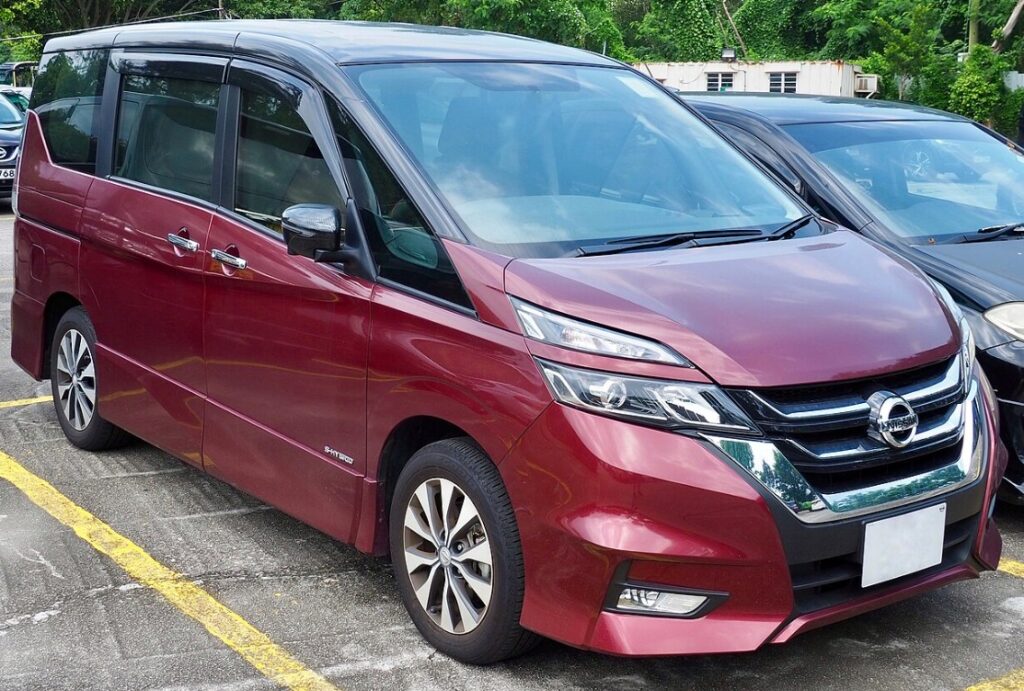
The Nissan Serena Hybrid fuel consumption figures can look remarkably attractive on paper. Depending on the generation and hybrid system, official ratings may suggest that this spacious family minivan can travel farther on a litre of petrol than many smaller crossovers.
But will a Serena Hybrid really deliver those numbers on school runs, motorway journeys, steep roads, and heavily congested streets?
That depends on which Serena we are discussing.
Nissan has used two noticeably different electrified powertrains in the Serena: the earlier S-Hybrid, sometimes called the Smart Simple Hybrid, and the more advanced e-POWER system. Although sellers frequently place both vehicles under the same “hybrid” umbrella, they do not work in the same way—and their fuel consumption can be dramatically different.
As a practical rule, we can expect approximately:
- Nissan Serena e-POWER: around 15–19 km/L in mixed real-world driving
- Nissan Serena S-Hybrid: around 9–14 km/L in mixed real-world driving
- Heavy urban use: potentially better for e-POWER than motorway driving
- Fast motorway use: frequently less economical than official figures
- Short cold journeys: noticeably higher fuel consumption
- Fully loaded driving: a reduction of roughly 1–3 km/L may occur
Those are broad ranges rather than promises. Vehicle age, traffic, weather, tyre pressure, passenger load, road gradient, air-conditioning use, and driving style all matter.
Let us untangle the numbers and find out what Serena owners should realistically expect.
Content in this publication
- What Is the Nissan Serena Hybrid?
- Nissan Serena Hybrid Fuel Consumption at a Glance
- What Fuel Consumption Can We Expect in the Real World?
- Nissan Serena e-POWER Fuel Consumption
- Nissan Serena S-Hybrid Fuel Consumption
- Why e-POWER Can Use Less Fuel in Town
- Why Motorway Driving Can Reduce e-POWER Economy
- How Passenger Load Changes Fuel Consumption
- Air Conditioning and Serena Fuel Economy
- Cold Weather Fuel Consumption
- Driving Habits That Improve Serena Hybrid Economy
- Tyre Pressure and Fuel Consumption
- How to Calculate Nissan Serena Fuel Consumption Correctly
- Why the Dashboard Reading May Be Wrong
- How Far Can a Serena Hybrid Travel on One Tank?
- Estimated Fuel Cost per 1,000 Kilometres
- When Poor Fuel Economy May Signal a Problem
- Does an Ageing e-POWER Battery Increase Fuel Consumption?
- Is Premium Petrol Required?
- Can Larger Wheels Increase Fuel Consumption?
- e-POWER Versus S-Hybrid: Which Uses Less Fuel?
- How the Serena Compares With Other Hybrid MPVs
- Best Ways to Improve Nissan Serena Hybrid Fuel Consumption
- Is Nissan Serena Hybrid Fuel Consumption Good?
- Final Thoughts
- Frequently Asked Questions
What Is the Nissan Serena Hybrid?
The Nissan Serena is a large Japanese people carrier designed around family practicality. Depending on its specification, it may offer seven or eight seats, sliding rear doors, flexible seating, generous headroom, and numerous storage areas.
It is popular in Japan and is also widely imported into markets such as New Zealand, Australia, Singapore, Malaysia, Ireland, the United Kingdom, and parts of the Caribbean.
The word “hybrid,” however, needs a little explanation.
Nissan Serena S-Hybrid
The S-Hybrid uses a conventional petrol engine assisted by a relatively small electric motor and battery. The electrical system supports functions such as restarting the engine, regenerative charging, and brief motor assistance.
It is better described as a mild-hybrid arrangement than a full hybrid.
The electric motor generally does not propel the vehicle independently for meaningful distances. Instead, it gives the petrol engine a helping hand, rather like someone gently pushing a heavily loaded shopping trolley from behind.
Nissan Serena e-POWER
The Serena e-POWER takes a substantially different approach.
Its petrol engine generates electricity, while an electric motor drives the wheels. This means the driving experience often resembles that of an electric vehicle: acceleration feels smooth, immediate, and relatively quiet.
The engine is still required, but it is not mechanically driving the wheels in the conventional sense. It supplies energy to the electrical system and battery.
This difference is important because e-POWER tends to perform particularly well in stop-start traffic, where regenerative braking and electric propulsion can recover and reuse energy.
Nissan Serena Hybrid Fuel Consumption at a Glance
The following figures provide a practical comparison. Exact results vary by model year, trim, drivetrain, wheel size, testing standard, and road conditions.
| Serena version | Typical official figure | Realistic mixed-driving range | Approximate L/100 km |
|---|---|---|---|
| C26 S-Hybrid | 15.2–16.0 km/L under older Japanese testing | 9–13 km/L | 7.7–11.1 |
| C27 S-Hybrid | Around 13–15 km/L, depending on specification | 9–13.5 km/L | 7.4–11.1 |
| C27 e-POWER | Around 17–18 km/L under WLTC testing | 14–18 km/L | 5.6–7.1 |
| C28 e-POWER | Approximately 18–20 km/L, depending on grade | 15–19 km/L | 5.3–6.7 |
| e-POWER in heavy traffic | Depends heavily on journey length | 16–21 km/L | 4.8–6.3 |
| e-POWER at sustained high speed | Usually below its urban result | 12–16 km/L | 6.3–8.3 |
For historical context, Nissan promoted certain C26 Serena S-Hybrid versions with official figures of up to 16.0 km/L under Japan’s older JC08 test cycle. Nissan also cautioned that weather, traffic, air-conditioning, driving behaviour, maintenance, and tyre pressure could alter actual consumption.
The official number is therefore a useful comparison tool, but it should not be treated as a guaranteed daily average.
What Fuel Consumption Can We Expect in the Real World?
A healthy Serena e-POWER driven carefully may average approximately 15–19 km/L, equivalent to around:
- 5.3–6.7 L/100 km
- 35–45 mpg US
- 42–54 mpg UK
An S-Hybrid model may average closer to 9–14 km/L, equivalent to approximately:
- 7.1–11.1 L/100 km
- 21–33 mpg US
- 25–40 mpg UK
Why is the range so broad?
Because a Serena is not a lightweight hatchback. It is a tall, spacious minivan that may be carrying several passengers, luggage, child seats, and enough snacks to open a small convenience store.
Its fuel economy can change substantially from one journey to the next.
Good Real-World Results
We may regard the following as encouraging mixed-driving results:
- 18 km/L or more: excellent for an e-POWER Serena
- 15–17.9 km/L: good and realistic for e-POWER
- 12–14.9 km/L: acceptable for an older e-POWER or strong motorway use
- 11–13 km/L: respectable for an S-Hybrid
- 9–10.9 km/L: ordinary for an S-Hybrid in traffic
- Below 9 km/L: worth investigating if consistently recorded
One road test of an S-Hybrid quoted a manufacturer claim of 14.2 km/L but achieved around 9.2 km/L in real use, demonstrating how passenger load, air-conditioning, traffic, and driving conditions can widen the gap between test figures and everyday consumption.
That does not automatically mean the vehicle is defective. It means laboratory numbers and daily family driving live in different worlds.
Nissan Serena e-POWER Fuel Consumption
The e-POWER Serena is generally the efficiency champion of the range.
Because the electric motor drives the wheels, acceleration can feel smoother and more responsive than we might expect from a large people carrier. The system also captures energy during deceleration and stores part of it in the battery.
C27 Serena e-POWER Economy
The C27 e-POWER arrived later in the C27 generation and is a common used import.
A reasonable real-world expectation is:
- Urban driving: 16–20 km/L
- Mixed driving: 14–18 km/L
- Motorway driving: 12–16 km/L
- Short winter journeys: 10–14 km/L
- Fully loaded use: 12–16 km/L
Some C27 e-POWER specifications are associated with a WLTC figure of approximately 17.2 km/L.
A well-maintained example may beat that figure under gentle urban or suburban conditions. Conversely, fast motorway driving can pull the average downward.
C28 Serena e-POWER Economy
The C28 generation introduced a newer e-POWER system and a larger 1.4-litre generating engine in relevant versions.
Depending on grade and configuration, owners may see approximately:
- Urban driving: 17–21 km/L
- Mixed driving: 15–19 km/L
- Motorway driving: 13–17 km/L
- Heavy-load driving: 13–17 km/L
- Very short trips: 11–15 km/L
Nissan’s Japanese environmental information explains that WLTC consumption combines urban, suburban, and motorway-style testing. It also states that actual fuel consumption varies with climate, congestion, acceleration, air-conditioning, and other operating conditions.
Why the C28 Can Be More Efficient
The later system benefits from refinements to energy management, engine operation, electric-motor control, and regenerative braking.
That does not mean every C28 automatically beats every C27. A carefully driven C27 on flat suburban roads may still outperform a C28 carrying eight people through winter traffic.
Efficiency is a conversation between technology and conditions—not a number carved into stone.
Nissan Serena S-Hybrid Fuel Consumption
The S-Hybrid’s name can create unrealistic expectations.
We may hear “hybrid” and imagine long stretches of electric-only driving. That is not what the S-Hybrid delivers. Its small electrical system assists the petrol engine, but the engine still performs most of the work.
C26 Serena S-Hybrid Economy
For the C26, realistic results commonly fall around:
- Urban driving: 8–11 km/L
- Mixed driving: 9–13 km/L
- Open-road driving: 11–15 km/L
- Heavy traffic with air conditioning: 7–10 km/L
Nissan quoted up to 16.0 km/L for some C26 S-Hybrid versions under the JC08 test, while heavier or differently equipped grades could carry slightly lower ratings.
JC08 figures should be interpreted cautiously because that older Japanese test often produced optimistic results compared with modern real-world use.
C27 Serena S-Hybrid Economy
A C27 S-Hybrid may generally return:
- Urban driving: 8.5–12 km/L
- Mixed driving: 10–13.5 km/L
- Open-road driving: 12–15 km/L
- Short cold trips: 7–10 km/L
Its economy can be perfectly reasonable for a large petrol minivan, but it normally cannot match the e-POWER version in dense traffic.
Is the S-Hybrid Still Worth Considering?
Yes, particularly when its purchase price is substantially lower.
The S-Hybrid may suit buyers who:
- Cover modest annual mileage
- Mostly drive on open roads
- Prefer a more familiar petrol-and-CVT layout
- Find a well-maintained example at a good price
- Want simpler electrical hardware than e-POWER
- Do not expect full-hybrid fuel economy
Purchase condition matters more than the badge. A clean, serviced S-Hybrid may be a better ownership proposition than a neglected e-POWER with unresolved warning lights.
Why e-POWER Can Use Less Fuel in Town
Traditional petrol vehicles waste energy whenever they brake. That energy becomes heat through the braking system and disappears into the air.
The Serena e-POWER can recover some of that energy through regenerative braking.
Imagine pouring water from one bucket into another. A normal petrol vehicle spills much of the water each time it slows down. The e-POWER system catches some of it and pours it back into the battery.
It cannot recover everything, but the process improves urban efficiency.
Regenerative Braking
When we lift off the accelerator or press the brake pedal gently, the drive motor can operate as a generator. It slows the vehicle while producing electrical energy.
This energy is stored temporarily and used again for acceleration.
Regeneration is most useful when:
- Traffic speeds rise and fall repeatedly
- The vehicle descends long hills
- We anticipate stops early
- Braking is smooth rather than abrupt
- Battery temperature and charge level permit recovery
Electric-Motor Efficiency
Electric motors deliver strong torque from low speed. They do not need to climb through engine revs and transmission ratios in the same way as conventional powertrains.
For a large vehicle repeatedly moving away from traffic lights, this can make e-POWER feel as though it is gliding rather than dragging itself forward.
Why Motorway Driving Can Reduce e-POWER Economy
This may sound backwards. Most petrol vehicles become more efficient on open roads, so why can an e-POWER Serena perform better in town?
At sustained motorway speeds, the vehicle needs continuous power to overcome aerodynamic drag. The petrol engine must repeatedly or continuously generate electricity, and that electricity must then power the motor.
Each conversion introduces some energy loss.
Meanwhile, regenerative braking opportunities become limited because the vehicle is travelling at a steady speed.
Aerodynamic Drag Matters
The Serena is tall and wide. Its cabin is wonderfully practical, but it moves through the air more like a wardrobe than a dart.
Aerodynamic drag rises rapidly with speed. Travelling at 110 or 120 km/h usually requires far more energy than cruising at 80 or 90 km/h.
A small reduction in cruising speed may therefore create a noticeable improvement.
Motorway Consumption Expectations
At steady speeds, an e-POWER Serena may record approximately:
- 80 km/h: 16–20 km/L
- 90 km/h: 15–19 km/L
- 100 km/h: 14–17 km/L
- 110 km/h: 13–16 km/L
- 120 km/h: 11–14 km/L
These figures are broad estimates rather than official guarantees. Wind, hills, tyres, temperature, load, and driving style can move them considerably.
How Passenger Load Changes Fuel Consumption
A Serena may feel economical when one person is driving, then suddenly appear thirsty during a family holiday.
That is normal.
Every extra passenger and suitcase increases the energy needed for acceleration and climbing. The vehicle’s air-conditioning system may also work harder when all seats are occupied.
Typical Effects of a Full Load
Compared with solo driving, a full passenger and luggage load may reduce economy by approximately:
- 0.5–1.5 km/L on flat open roads
- 1–2 km/L in mixed driving
- 2–3 km/L in hilly urban conditions
- More when carrying roof-mounted cargo
Weight matters most during repeated acceleration and climbing. At a steady speed on flat roads, aerodynamics may become the larger factor.
Do Roof Boxes Make a Difference?
Yes.
A roof box adds frontal area and disturbs airflow. At city speeds, the effect may be modest. At motorway speeds, it can become significant.
Remove unused roof boxes and roof racks when practical. Leaving them attached year-round is like making the Serena run while wearing a parachute.
Air Conditioning and Serena Fuel Economy
The Serena has a large cabin. Cooling it requires more energy than cooling a compact car.
In hot climates, strong air-conditioning may reduce economy by around 5–15%, sometimes more during short journeys.
Why Short Journeys Are Hit Hardest
Suppose we drive for only ten minutes.
The air-conditioning may operate at maximum output for most of the journey, while the engine and battery system are still reaching efficient temperatures. A large proportion of the fuel is therefore used for warm-up and cabin cooling.
During a longer journey, the cabin reaches the selected temperature and the system can reduce its workload.
How to Reduce Air-Conditioning Load
We can improve efficiency by:
- Ventilating the cabin before departure
- Using a sunshade when parked
- Selecting recirculation after hot air escapes
- Avoiding unnecessarily low temperature settings
- Parking in shade when possible
- Keeping doors and windows closed once cooling begins
- Checking that the cabin filter is not blocked
Comfort still matters. There is little value in saving a fraction of a litre while the family melts into the seats.
Cold Weather Fuel Consumption
Cold conditions can reduce Serena Hybrid efficiency because:
- The petrol engine needs longer to warm up
- Cabin heating may require additional engine operation
- Battery performance can temporarily decline
- Tyre pressure falls as temperature drops
- Wet or snowy roads increase resistance
- Short winter journeys may end before the system reaches full efficiency
An e-POWER Serena that normally achieves 17 km/L might fall to 12–15 km/L during repeated cold, short trips.
This does not necessarily indicate battery failure.
Should We Warm the Serena While Parked?
Extended idling usually wastes fuel.
A gentler approach is to start the vehicle, allow a brief moment for systems to stabilise, and then drive moderately. The powertrain warms more efficiently under light use than while sitting still for a long period.
Always follow local laws and the instructions in the owner’s manual.
Driving Habits That Improve Serena Hybrid Economy
The largest improvement often comes not from buying a gadget but from changing how we use the accelerator.
Accelerate Smoothly
Electric torque can make the e-POWER feel eager. That instant response is enjoyable, but repeated hard acceleration quickly consumes energy.
Aim for confident yet progressive acceleration.
Moving too slowly is not always efficient either. Crawling up to speed can keep the engine generating power for longer than necessary. The goal is smoothness, not hesitation.
Look Far Ahead
Anticipation is free fuel economy.
When we see a red light ahead, easing off early allows regenerative braking to recover energy. Racing toward the light and braking sharply wastes momentum.
Maintain a Stable Speed
Constant acceleration and deceleration make the powertrain work harder.
On open roads:
- Leave space from the vehicle ahead
- Avoid chasing minor changes in traffic speed
- Use cruise control selectively on flat roads
- Allow speed to reduce slightly on steep climbs
- Build speed gently after descending
Use Eco Mode Sensibly
Eco mode can soften accelerator response and encourage efficient climate-control operation.
It helps most when the driver uses it as a guide. Eco mode cannot cancel the effect of aggressive acceleration, high speed, low tyre pressure, or excess weight.
Do Not Obsess Over the Energy Display
The efficiency monitor is useful, but staring at it constantly can become distracting.
Use the display to understand patterns, not to turn every journey into a video game. Safe, predictable driving comes first.
Tyre Pressure and Fuel Consumption
Underinflated tyres create extra rolling resistance. The vehicle must use more energy simply to keep moving.
Nissan specifically notes that maintenance conditions, including tyre pressure, can affect fuel consumption.
Check pressures when the tyres are cold and use the specification shown on the vehicle’s tyre placard—not the maximum pressure printed on the tyre sidewall.
Signs That Tyres May Be Hurting Economy
Watch for:
- Fuel consumption gradually increasing
- Steering feeling unusually heavy
- Tyres looking slightly flattened
- Uneven shoulder wear
- The vehicle pulling to one side
- A tyre-pressure warning
- Different pressures across the same axle
Wheel alignment also matters. A misaligned Serena may feel as though it is constantly fighting itself.
How to Calculate Nissan Serena Fuel Consumption Correctly
Dashboard displays are convenient, but a manual calculation gives us a useful second opinion.
Full-Tank Calculation Method
Follow these steps:
- Fill the tank until the pump automatically stops.
- Reset the trip meter.
- Drive normally for at least 300–500 kilometres.
- Refill at the same station if possible.
- Use the same pump orientation and stopping method.
- Record the litres required.
- Divide kilometres travelled by litres added.
For example:
620 kilometres ÷ 38 litres = 16.3 km/L
To convert km/L into L/100 km:
100 ÷ 16.3 = 6.13 L/100 km
Useful Conversion Formulas
km/L to L/100 km
100 ÷ km/L
Example:
100 ÷ 15 = 6.67 L/100 km
L/100 km to km/L
100 ÷ L/100 km
Example:
100 ÷ 7 = 14.29 km/L
km/L to UK mpg
km/L × 2.825
Example:
17 km/L × 2.825 = 48.0 mpg UK
km/L to US mpg
km/L × 2.352
Example:
17 km/L × 2.352 = 40.0 mpg US
Why the Dashboard Reading May Be Wrong
The Serena’s display is useful, but it may not perfectly match pump calculations.
Differences can result from:
- Fuel-pump shut-off variation
- Resetting the display mid-journey
- Tyre-size changes
- Long idling periods
- Fuel used by cabin conditioning
- Rounding within the display
- Different journey lengths
- Parking on an incline while refuelling
A difference of several percent is not unusual.
For the clearest picture, calculate consumption over three to five full tanks rather than judging the vehicle from one short trip.
How Far Can a Serena Hybrid Travel on One Tank?
Range depends on tank capacity, consumption, and how much fuel remains when the warning appears.
As an illustration, consider a Serena with a usable tank volume near 55 litres.
Estimated Range Examples
| Average economy | Theoretical 55-litre range | Conservative usable range |
| 10 km/L | 550 km | 440–500 km |
| 12 km/L | 660 km | 530–600 km |
| 15 km/L | 825 km | 660–750 km |
| 17 km/L | 935 km | 750–850 km |
| 19 km/L | 1,045 km | 835–950 km |
These are mathematical estimates. We should not plan to use every drop in the tank.
Traffic diversions, hills, weather, and unavailable fuel stations can quickly turn an optimistic range calculation into a stressful adventure.
Estimated Fuel Cost per 1,000 Kilometres
Fuel cost is calculated as:
Litres used × local petrol price
Suppose petrol costs the equivalent of $2.00 per litre.
| Economy | Fuel used per 1,000 km | Cost per 1,000 km |
| 10 km/L | 100 litres | $200 |
| 12 km/L | 83.3 litres | $166.60 |
| 15 km/L | 66.7 litres | $133.40 |
| 17 km/L | 58.8 litres | $117.60 |
| 19 km/L | 52.6 litres | $105.20 |
The difference between 10 and 17 km/L is approximately 41 litres every 1,000 kilometres.
For a household covering 15,000 kilometres annually, that difference becomes substantial. However, we should also compare purchase price, servicing, insurance, battery condition, and depreciation—not fuel alone.
When Poor Fuel Economy May Signal a Problem
One bad tank is rarely enough to diagnose a fault.
Heavy traffic, bad weather, short trips, strong air conditioning, or a sudden increase in passengers may explain the change.
Consistently poor economy deserves investigation.
Possible Causes
Common possibilities include:
- Low tyre pressure
- Incorrect wheel alignment
- Binding brake caliper
- Worn spark plugs
- Dirty engine air filter
- Ageing 12-volt battery
- Incorrect engine oil
- Faulty oxygen or air-flow sensor
- Cooling-system temperature problem
- Hybrid-system fault
- Deteriorated traction battery
- Incorrectly sized wheels or tyres
- Excessive idling
- Frequent short journeys
- Poor-quality fuel
Warning Signs Requiring Inspection
Arrange professional diagnosis when poor fuel economy appears alongside:
- Hybrid-system warning messages
- Check-engine light
- Abnormal engine noise
- Jerking or hesitation
- Reduced power
- Strong fuel smell
- Cooling fans running excessively
- Battery charge swinging abnormally
- Engine operating almost continuously
- Brakes or wheels becoming unusually hot
A scan with appropriate Nissan-compatible diagnostic equipment is more valuable than replacing parts based on guesswork.
Does an Ageing e-POWER Battery Increase Fuel Consumption?
It can.
The traction battery stores energy recovered during braking and supplies electricity during acceleration. As it ages, its usable capacity and ability to accept or deliver power may decline.
The engine may then need to run more frequently to maintain charge.
However, a lower dashboard average does not prove the battery is failing. Weather, journey type, tyre pressure, and driver behaviour should be checked first.
How to Evaluate Battery Condition
A knowledgeable technician may examine:
- Diagnostic trouble codes
- Battery-module voltage differences
- State-of-health information
- Temperature-sensor readings
- Charge and discharge behaviour
- Cooling-system operation
- Engine-running frequency
- Road-test performance
For imported vehicles, a pre-purchase hybrid inspection is especially valuable because service records may be incomplete.
Fuel requirements depend on the exact engine, model year, and market specification.
Use the octane rating shown in the owner’s manual and fuel-door label. Imported Japanese vehicles may display Research Octane Number, or RON.
Using a higher octane than required does not automatically improve fuel economy. Premium fuel is not magic syrup. Unless the engine is designed to benefit from it, the financial return may be negligible.
Using fuel below the required octane, however, may affect performance and combustion control.
Can Larger Wheels Increase Fuel Consumption?
Yes.
Larger aftermarket wheels may:
- Add rotating weight
- Use wider tyres
- Increase rolling resistance
- Alter aerodynamics
- Reduce ride comfort
- Affect speedometer accuracy
- Change the displayed economy
- Place extra load on suspension components
A stylish wheel package may look impressive, but efficiency often prefers modest dimensions and sensible tyre widths.
For family use, the factory wheel specification is usually the safest balance between comfort, handling, noise, and fuel consumption.
e-POWER Versus S-Hybrid: Which Uses Less Fuel?
In most stop-start and mixed-driving situations, the Serena e-POWER should use less fuel than the S-Hybrid.
Choose e-POWER When We Prioritise
- Urban efficiency
- Smooth electric-motor acceleration
- Regenerative braking
- Quiet low-speed operation
- Lower fuel use in congestion
- A more EV-like driving experience
Choose S-Hybrid When We Prioritise
- A potentially lower purchase price
- Familiar petrol-engine behaviour
- Simpler mild-hybrid operation
- Moderate annual mileage
- Open-road use
- A well-documented service history
The most economical vehicle to buy is not always the one with the best consumption figure. A significant purchase-price difference may take years to recover through fuel savings.
How the Serena Compares With Other Hybrid MPVs
The Serena competes with vehicles such as the Toyota Noah, Toyota Voxy, Honda Stepwgn, and other Japanese people carriers.
In broad terms:
- The e-POWER Serena is often strong in urban efficiency.
- Toyota full-hybrid systems may perform consistently across mixed conditions.
- The Serena’s electric-motor response can feel especially smooth.
- Motorway economy may not be e-POWER’s strongest advantage.
- Actual condition matters enormously among used imports.
- Equipment and seating layouts vary by grade and market.
Rather than comparing one advertised number, compare vehicles under the same test cycle and examine real-world owner patterns.
A JC08 number from an older model should not be compared directly with a WLTC figure from a newer vehicle without context.
Best Ways to Improve Nissan Serena Hybrid Fuel Consumption
For better economy, focus on the fundamentals:
- Maintain correct cold tyre pressure.
- Remove unnecessary roof racks and cargo.
- Accelerate progressively.
- Anticipate traffic lights and junctions.
- Use regenerative deceleration smoothly.
- Reduce motorway speed where safe.
- Combine short journeys when practical.
- Service the vehicle on schedule.
- Use the correct engine oil.
- Check wheel alignment and brake drag.
- Avoid long periods of stationary idling.
- Keep the air-conditioning system maintained.
- Record economy across several full tanks.
- Investigate warning lights promptly.
- Use the specified fuel grade.
None of these steps will transform a damaged vehicle into an efficiency champion. Together, however, they can make a healthy Serena noticeably cheaper to run.
Is Nissan Serena Hybrid Fuel Consumption Good?
Yes—particularly in e-POWER form.
Achieving around 15–19 km/L from a tall, seven- or eight-seat family vehicle is impressive. The Serena carries people and luggage with the appetite of a much smaller conventional petrol vehicle when conditions suit its hybrid system.
The S-Hybrid is less remarkable. Its economy can still be reasonable, but buyers should not expect the same performance as a full hybrid or e-POWER model.
We should therefore judge the Serena according to its exact powertrain:
- e-POWER: genuinely efficient for a large MPV
- S-Hybrid: moderately efficient for a petrol minivan
- Older or poorly maintained examples: potentially expensive regardless of badge
Final Thoughts
The central lesson is simple: there is no single Nissan Serena Hybrid fuel-consumption figure that applies to every version.
A C26 S-Hybrid achieving 10 km/L may be operating normally in heavy urban traffic. A C27 e-POWER returning the same figure under mild mixed conditions may deserve closer inspection.
For most Serena e-POWER owners, 15–19 km/L is a sensible real-world target. Results above 19 km/L are possible in favourable urban or suburban driving, while sustained high-speed travel, cold weather, steep roads, and full passenger loads may push the average closer to 12–15 km/L.
For the S-Hybrid, approximately 9–14 km/L is more realistic.
Rather than chasing one perfect dashboard number, we should track consumption over several tanks and compare similar journeys. Fuel economy is like a family budget: one expensive weekend tells us very little, but the pattern over several months reveals the truth.
Frequently Asked Questions
1. What is the average Nissan Serena e-POWER fuel consumption?
A healthy Nissan Serena e-POWER commonly returns around 15–19 km/L in mixed real-world driving. Urban conditions may produce 17–21 km/L, while fast motorway travel may reduce economy to approximately 12–16 km/L.
2. What is the fuel consumption of the Serena S-Hybrid?
Most Serena S-Hybrid models can be expected to achieve approximately 9–14 km/L, depending on generation, traffic, maintenance, climate, passenger load, and driving style. The S-Hybrid is a mild hybrid and is normally less economical than e-POWER.
3. Why is my Nissan Serena Hybrid using too much petrol?
Possible causes include short journeys, low tyre pressure, air-conditioning use, high speed, heavy loads, brake drag, wheel misalignment, overdue servicing, sensor faults, or declining hybrid-battery performance. Persistent poor economy accompanied by warning lights should be professionally diagnosed.
4. Is the Nissan Serena e-POWER economical on motorways?
It can still be reasonably economical, but motorway driving is not always where e-POWER performs best. At high sustained speeds, aerodynamic drag increases and regenerative-braking opportunities decrease. Approximately 12–17 km/L is a realistic motorway range.
5. How can we get better fuel economy from a Nissan Serena Hybrid?
Keep the tyres correctly inflated, accelerate smoothly, anticipate stops, reduce unnecessary weight, avoid excessive motorway speed, combine short journeys, maintain the vehicle properly, and calculate consumption over several complete tanks.
If you want to know other articles similar to Nissan Serena Hybrid Fuel Consumption: Real-World MPG, Costs, and Efficiency you can visit the category Driving.
Can Nissan Rogue Pull a Boat? Complete Towing Guide
Can Nissan Rogue Be Flat Towed? Complete Towing Guide
Are Nissan Rogue Good on Gas? MPG, Fuel Economy, and Real-World Costs
Can Nissan Rogue Drive in Snow? Complete Winter Driving Guide

Kia Sorento Diesel Fuel Consumption: MPG, Efficiency and Real-World Range
Haval Jolion Hybrid Fuel Consumption: How Efficient Is It Really?
Leave a Reply
More content of your interest