

Ram 1500 Differential Fluid Change Interval: When Should We Change It?

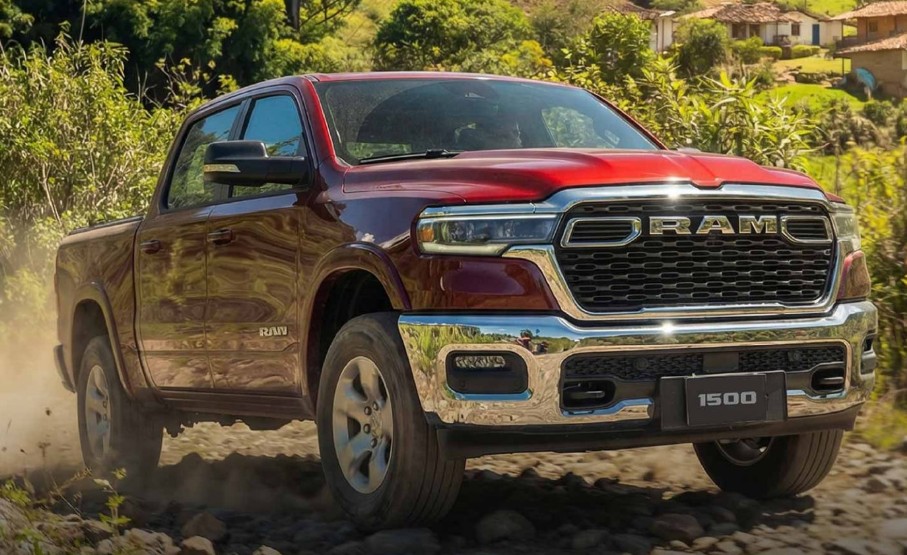
The Ram 1500 differential fluid change interval is one of those maintenance topics that sounds simple until we open the owner's manual. Unlike engine oil, which usually comes with a fairly obvious mileage target, differential fluid does not always have one universal replacement interval.
That is partly because a differential lives a very different life depending on how we use the truck. A Ram 1500 that spends most of its time cruising unloaded on the highway puts relatively little stress on its axle lubricant. Another truck might tow a camper through the mountains, crawl along muddy trails, or work every day with a heavy load.
Same truck family. Completely different workload.
Ram's own maintenance guidance reflects that difference. For example, the 2021 Ram 1500 owner's manual tells owners to inspect the front and rear axle surfaces and check the lubricant level if leakage is suspected. It specifically calls for axle-fluid changes when the truck is used for demanding applications such as police, taxi, fleet, off-road, or frequent trailer-towing service.
So, how often should we actually change the differential fluid?
For many owners, a practical preventive-maintenance approach is to inspect the differential regularly and consider replacing the lubricant somewhere around 30,000 to 60,000 miles (48,000 to 96,000 km) when the truck works hard. Trucks used mainly for gentle highway driving may go considerably longer, but the owner's manual for our specific model year should always take priority over a generic mileage rule.
Let's break down exactly why.
Content in this publication
- What Does Differential Fluid Actually Do?
- What Is the Recommended Ram 1500 Differential Fluid Change Interval?
- Why Ram Does Not Give Every Truck the Same Interval
- Normal Service vs Severe Service
- Front vs Rear Differential Fluid on a Ram 1500
- Does Towing Shorten the Ram 1500 Differential Fluid Change Interval?
- What About Off-Road Driving?
- Does Differential Fluid Really Wear Out?
- Signs Our Ram 1500 Differential Fluid May Need Attention
- What Happens If We Never Change Differential Fluid?
- What Differential Fluid Does a Ram 1500 Use?
- Do Limited-Slip Differentials Need Special Fluid?
- How Much Differential Fluid Does a Ram 1500 Take?
- Should We Change or Flush Ram 1500 Differential Fluid?
- Can We Change Ram 1500 Differential Fluid Ourselves?
- Rear Differential Service vs Front Differential Service
- Should We Replace Differential Fluid at 30,000 Miles?
- Should We Change It at 60,000 Miles?
- What About 100,000 Miles With the Original Fluid?
- Differential Fluid Change Interval for a Ram 1500 Used for Towing
- Differential Fluid Change Interval for Mostly Highway Driving
- Should We Service the Transfer Case at the Same Time?
- How Driving Conditions Affect Differential Fluid Life
- Is Differential Fluid "Lifetime Fluid"?
- How Much Does a Ram 1500 Differential Fluid Change Cost?
- How Can We Make a Ram 1500 Differential Last Longer?
- A Simple Ram 1500 Differential Maintenance Schedule
- Final Thoughts on the Ram 1500 Differential Fluid Change Interval
- Frequently Asked Questions
- 1. How often should Ram 1500 differential fluid be changed?
- 2. Should I change Ram 1500 differential fluid at 60,000 miles?
- 3. Does a 4x4 Ram 1500 have two differentials?
- 4. Does towing require more frequent differential fluid changes?
- 5. What happens if Ram 1500 differential fluid is never changed?
What Does Differential Fluid Actually Do?
Differential fluid is a heavy-duty gear lubricant that protects some of the hardest-working components underneath our Ram 1500.
Inside the differential, gears constantly transfer engine torque toward the wheels. When we're accelerating, hauling cargo, towing a trailer, or climbing a steep grade, those gear surfaces experience enormous pressure.
Differential oil creates a protective film between them.
Without healthy gear oil, metal surfaces would essentially grind against each other like two pieces of machinery running without grease.
The fluid helps:
- Reduce friction between gears and bearings
- Remove heat from heavily loaded components
- Protect surfaces against wear and corrosion
- Reduce gear noise
- Cushion shock loads during acceleration and towing
- Lubricate bearings, ring gears, pinion gears, and differential components
It may not get the attention that motor oil receives, but it performs a serious job.
What Is the Recommended Ram 1500 Differential Fluid Change Interval?
Here's where things become interesting.
There isn't one maintenance interval that applies perfectly to every Ram 1500 ever built.
On modern Ram 1500 maintenance schedules, normal-duty owners may see inspection requirements rather than a simple mandatory "replace every X miles" instruction. Ram's 2021 owner's manual, for instance, directs owners to inspect the axle surfaces and check the gear-oil level when leakage is suspected. More demanding operating conditions are specifically associated with changing the axle fluid.
Older Ram documentation follows a similar philosophy. The 2018 Ram 1500 maintenance schedule also states that the front and rear axle surfaces should be inspected and that axle fluid should be changed when the vehicle is used for police, taxi, fleet, off-road, or frequent towing service.
That makes the answer less tidy than we'd like.
A Practical Interval for Most Owners
If we're building a conservative maintenance schedule instead of waiting for problems, the following ranges make sense as general guidelines rather than factory rules:
| Driving Conditions | Practical Differential Fluid Strategy |
|---|---|
| Mostly highway driving | Inspect regularly; replacement may be extended |
| Mixed city/highway use | Consider service around 50,000–75,000 miles |
| Frequent towing | Consider roughly 30,000–50,000 miles |
| Regular off-roading | Around 30,000–50,000 miles or sooner if contaminated |
| Heavy commercial use | Shorter intervals may be sensible |
| Water/mud crossings | Inspect fluid soon afterward |
We should treat these numbers as preventive-maintenance guidelines, not substitutes for the schedule associated with our truck's VIN and model year.
Why Ram Does Not Give Every Truck the Same Interval
Think about differential fluid the way we'd think about hiking shoes.
Walking through an airport for three hours barely touches them.
Hiking through mud, rocks, water, and steep mountains for three hours is another story entirely.
Differential oil experiences the same contrast.
A lightly driven pickup might spend most of its life moving smoothly at constant highway speeds.
A towing truck repeatedly puts heavy torque through its ring-and-pinion gears.
Higher load produces more heat.
More heat accelerates lubricant deterioration.
That's why how we drive can matter just as much as how far we drive.
Normal Service vs Severe Service
Understanding this difference helps us decide whether our Ram needs early differential maintenance.
Normal Service
Typical light-duty operation might include:
- Highway commuting
- Moderate city driving
- Little or no towing
- Light payloads
- Mild climates
- Mostly paved-road use
These conditions are relatively easy on differential lubricant.
Severe Service
More demanding operation includes situations such as:
- Frequent trailer towing
- Off-road driving
- Commercial or fleet operation
- Heavy payloads
- Steep mountain roads
- Repeated low-speed hauling
- Extremely hot operating environments
Ram specifically identifies frequent trailer towing and off-road use among the operating conditions where axle-fluid changes become important.
If our Ram lives this kind of life, treating differential fluid as a "leave it alone forever" fluid would be a poor maintenance strategy.
Front vs Rear Differential Fluid on a Ram 1500
A two-wheel-drive Ram 1500 and a four-wheel-drive Ram 1500 don't have exactly the same drivetrain layout.
Rear Differential
Every conventional Ram 1500 needs a rear differential because engine torque must ultimately reach the rear wheels.
The rear axle often does the hardest work, especially during:
- Towing
- Heavy acceleration
- Payload hauling
- Steep climbs
That makes rear differential fluid particularly important.
Front Differential on 4x4 Models
Four-wheel-drive Ram 1500 models also have a front driving axle.
Ram's service literature refers to both the rear axle and the 4x4 front driving axle when discussing axle-fluid maintenance.
If we own a 4WD truck, therefore, we shouldn't think only about the rear.
We effectively have two gear-oil service points to consider.
Does Towing Shorten the Ram 1500 Differential Fluid Change Interval?
Absolutely.
Towing is one of the clearest reasons to take differential-fluid maintenance seriously.
Imagine pulling a travel trailer uphill.
The engine creates torque.
The transmission multiplies and manages that torque.
The driveshaft sends it toward the axle.
Then the differential gears transfer that force to the wheels.
The harder the truck pulls, the harder those gears work.
Ram explicitly identifies frequent trailer towing as one of the conditions where axle fluid should be changed rather than merely inspected.
How Often Should We Change It When Towing?
For a regularly towing Ram 1500, many owners will find a preventive interval around 30,000–50,000 miles reasonable.
But towing severity matters.
Pulling a small utility trailer six weekends per year isn't the same as towing a large camper across mountain passes every month.
Consider Shorter Intervals When We Tow:
- Near maximum trailer capacity
- Through mountainous terrain
- In very hot climates
- For long distances
- Several times per month
- With significant payload at the same time
Heat is the enemy here.
Once gear lubricant experiences repeated high-temperature cycles, its protective additives gradually lose effectiveness.
What About Off-Road Driving?
Off-roading can be brutal on axle lubricant.
The problem isn't only torque.
Contamination is another concern.
Deep water crossings can occasionally allow moisture to enter an axle through vents or compromised seals.
Mud, debris, heat, steep angles, and repeated wheel slip also increase drivetrain stress.
Ram includes off-road operation among the conditions requiring more aggressive axle-fluid maintenance.
After Deep-Water Driving
If we've driven through unusually deep water, inspecting drivetrain fluids afterward can be smart.
Healthy gear oil normally has a consistent oily appearance.
Water-contaminated lubricant can become cloudy, milky, or emulsified.
And water inside a differential is about as welcome as sand inside an engine.
We want it gone.
Does Differential Fluid Really Wear Out?
Yes.
Gear oil doesn't suddenly expire at one magic number on the odometer, but it gradually degrades.
Over thousands of miles, it deals with:
- Heat
- Pressure
- Shear forces
- Microscopic metal particles
- Moisture
- Oxidation
- Additive depletion
Fresh differential oil is designed to maintain a protective layer between heavily loaded gear teeth.
As the lubricant ages, that protection can weaken.
The difference is usually gradual rather than dramatic.
That's why we rarely wake up one morning and discover that the differential oil has suddenly "gone bad."
Instead, the fluid quietly becomes less effective.
Signs Our Ram 1500 Differential Fluid May Need Attention
Mileage isn't the only clue.
A differential can tell us something is wrong long before a scheduled maintenance date arrives.
1. Whining or Humming Noise
A noticeable whine that changes with vehicle speed can indicate differential or bearing problems.
Low or deteriorated lubricant may contribute.
But changing the oil isn't guaranteed to repair mechanical wear that has already occurred.
2. Growling From the Axle
Growling noises can point toward bearings, gears, or insufficient lubrication.
The differential deserves inspection quickly.
3. Visible Fluid Leakage
Look around the differential housing and axle seals.
Wet, oily residue may indicate a leak.
Ram's maintenance guidance specifically tells owners to inspect the axle surfaces and check fluid level when gear-oil leakage is suspected.
4. Burning Smell
Gear oil subjected to extreme heat can produce a strong odor.
That's not something we'd ignore after towing.
5. Excessive Metal in the Fluid
A tiny amount of fine metallic material on a magnetic plug can be normal.
Large flakes or chunks?
That's a different story.
Those deserve professional inspection.
What Happens If We Never Change Differential Fluid?
Sometimes nothing happens for a very long time.
That's exactly why people neglect it.
The truck keeps driving normally at 40,000 miles.
Then 70,000.
Then 100,000.
So we assume everything is fine.
But aged lubricant can gradually contribute to:
- Bearing wear
- Ring-and-pinion wear
- Increased gear noise
- Higher operating temperature
- Reduced protection under heavy loads
- Premature differential failure
And here's the financial irony.
Gear oil isn't particularly glamorous.
Neither is paying for differential repairs.
One is inexpensive maintenance. The other can become an expensive mechanical job.
What Differential Fluid Does a Ram 1500 Use?
This question requires care because the correct lubricant can differ according to:
- Model year
- Front or rear axle
- Axle type
- Differential configuration
- Conventional vs limited-slip design
- Rear axle size
We should not simply buy a bottle because the label says "gear oil."
Our owner's manual or official service information should determine the exact specification.
Common Gear-Oil Viscosities
Depending on the particular Ram 1500 configuration, owners may encounter specifications involving gear oils such as:
- SAE 75W-85
- SAE 75W-90
- SAE 75W-140
These are not interchangeable recommendations for every truck.
The correct viscosity is the one specified for our exact axle.
Why Viscosity Matters
Gear-oil viscosity affects:
- Cold-flow behavior
- Film strength
- Heat resistance
- Bearing lubrication
- Gear protection
Using a thicker fluid just because it "sounds stronger" isn't necessarily better.
Engineering beats guesswork.
Do Limited-Slip Differentials Need Special Fluid?
Potentially.
Limited-slip differentials contain friction-sensitive components that may require a specific lubricant formulation or friction-modifier requirement.
Using the wrong product can cause chatter, binding, or undesirable behavior.
Before servicing a limited-slip differential, we should verify:
- Which axle our truck has
- Whether it's limited slip
- Which lubricant specification Ram requires
- Whether supplemental friction modifier is needed
Don't add friction modifier automatically.
Some modern lubricants already contain the required additive package.
More isn't always better.
How Much Differential Fluid Does a Ram 1500 Take?
There isn't one universal capacity.
Fluid quantity varies depending on the axle installed.
That's why filling by blindly measuring a quantity from an internet forum isn't ideal.
A proper service typically involves confirming:
- Exact axle configuration
- Factory capacity
- Recommended fluid
- Correct fill-level procedure
In many differentials, the final level is determined relative to the fill opening, but we should follow the exact procedure for our axle.
Should We Change or Flush Ram 1500 Differential Fluid?
A differential normally doesn't need a pressurized "flush" like people sometimes imagine with other automotive systems.
The usual service is straightforward:
- Remove the drain plug or differential cover, depending on axle design.
- Drain the old gear oil.
- Inspect the lubricant and magnetic plug.
- Clean the sealing surfaces if the cover was removed.
- Reinstall using the appropriate gasket or sealant.
- Refill with the specified gear lubricant.
- Set the fluid level according to the factory procedure.
- Check for leaks.
Simple in theory.
Messy in practice.
Gear oil has a smell that likes to announce its presence to everyone within walking distance.
Can We Change Ram 1500 Differential Fluid Ourselves?
Yes, if we're comfortable working safely underneath a truck.
Differential service isn't usually one of the most technically complex maintenance jobs.
But it does require attention to detail.
Typical Supplies Include
- Correct differential lubricant
- Drain pan
- Ratchet or appropriate socket/hex tool
- Torque wrench
- Fluid pump
- Brake cleaner or suitable cleaner
- Gloves
- Replacement gasket, sealant, or sealing washer when required
The Golden Rule: Open the Fill Plug First
Before draining anything, make sure the fill plug can be removed.
Why?
Because draining the differential first and then discovering a seized fill plug creates a very stationary pickup truck.
That's one lesson we only need to learn once.
Rear Differential Service vs Front Differential Service
On a 4x4 Ram 1500, we should think of front and rear axle service independently.
The front differential may experience fewer loaded miles if four-wheel drive is rarely used, but that doesn't make it immune to:
- Condensation
- Seal leaks
- Contamination
- Lubricant aging
Meanwhile, the rear axle is continuously involved in propulsion.
When building a maintenance plan, servicing both axles at sensible intervals can simplify record keeping.
Should We Replace Differential Fluid at 30,000 Miles?
Maybe.
At 30,000 miles, replacement can make sense when the truck has experienced:
- Heavy towing
- Off-road use
- Frequent hauling
- Water crossings
- Severe heat
- Commercial operation
For an easy-going highway truck, 30,000 miles may be earlier than necessary.
Remember: factory Ram guidance on modern trucks often emphasizes inspection under normal operation and fluid replacement under severe operating conditions, rather than demanding replacement for every owner at exactly 30,000 miles.
Should We Change It at 60,000 Miles?
For owners who want a conservative preventive-maintenance plan, 60,000 miles is a reasonable checkpoint.
Even if the fluid isn't technically "overdue" according to a particular maintenance schedule, replacing aged lubricant at this point can provide fresh additives and give us a chance to inspect what comes out of the axle.
It's particularly attractive when we plan to keep the Ram well past 100,000 miles.
What About 100,000 Miles With the Original Fluid?
If we've reached 100,000 miles without changing differential oil, we don't need to panic.
But we'd certainly want to inspect the truck's service history and operating conditions.
If the differential isn't leaking, making noise, or exhibiting obvious mechanical problems, replacing old lubricant can still be sensible preventive maintenance.
There is a myth that changing old gear oil will somehow "destroy" a healthy differential.
That isn't how properly performed differential service normally works.
Fresh lubricant doesn't create mechanical wear.
However, if the differential already has damaged bearings or gears, new fluid won't magically reverse that damage either.
Differential Fluid Change Interval for a Ram 1500 Used for Towing
Let's turn everything into a practical schedule.
If our Ram frequently pulls:
- Travel trailers
- Boats
- Car trailers
- Work equipment
- Enclosed cargo trailers
we'd lean toward inspection at every major service and consider replacement approximately every 30,000–50,000 miles, depending on severity.
Very heavy towing may justify even more frequent attention.
This aligns with Ram's own distinction between ordinary driving and frequent trailer-towing service.
Differential Fluid Change Interval for Mostly Highway Driving
Highway miles are generally easier than towing or stop-and-go commercial work.
If our truck spends its life cruising gently and rarely carries significant weight, the oil may remain serviceable far longer.
A practical approach is:
- Inspect the axle for leakage during routine maintenance
- Review the factory schedule
- Check fluid if leakage is suspected
- Consider preventive replacement around 60,000–100,000 miles if we're keeping the truck long term
Again, this is a preventive strategy rather than a universal Ram factory mandate.
Should We Service the Transfer Case at the Same Time?
If we own a 4x4 Ram 1500, it's worth remembering that the differential and transfer case are different components.
They also typically use different fluids.
The transfer case distributes torque between the front and rear drivetrains.
The differential distributes torque between wheels on an axle.
Ram's maintenance schedules list transfer-case inspection separately from axle-fluid service.
So don't assume one fluid service automatically takes care of the other.
It doesn't.
A Convenient Maintenance Strategy
At roughly the same mileage, we can review:
- Front differential
- Rear differential
- Transfer case
- Transmission service requirements
- Driveshaft and universal joints
- Axle seals
That gives us a broader drivetrain health check instead of focusing on one component in isolation.
How Driving Conditions Affect Differential Fluid Life
Mileage only tells half the story.
Imagine two Ram 1500s with 50,000 miles.
Truck A:
- Drives mostly empty
- Travels on flat highways
- Rarely tows
- Lives in a moderate climate
Truck B:
- Tows a camper
- Climbs mountain roads
- Hauls tools
- Drives off-road
- Works in hot weather
Would we expect their gear oil to age identically?
Of course not.
That's why maintenance schedules should reflect usage, not just odometer numbers.
Is Differential Fluid "Lifetime Fluid"?
The phrase "lifetime fluid" causes endless confusion in automotive maintenance.
Lifetime of what?
The fluid?
The warranty?
The component?
The vehicle?
Differential lubricant may not have a short mandatory replacement interval under normal operation, but that doesn't mean it is physically incapable of aging.
Fluids face heat, contamination, oxidation, and mechanical stress.
If we're keeping a Ram 1500 for many years, preventive fluid replacement can be cheap insurance.
How Much Does a Ram 1500 Differential Fluid Change Cost?
Pricing varies widely by region, axle configuration, fluid specification, and whether we're servicing one differential or two.
The job usually consists mostly of:
- Gear lubricant
- Shop labor
- Gasket or sealant where applicable
- Shop supplies
A 4x4 truck naturally costs more if we're servicing both front and rear axles.
DIY service can reduce the cost considerably, assuming we already own the tools and can work safely.
How Can We Make a Ram 1500 Differential Last Longer?
Good differential life isn't complicated.
A little mechanical sympathy goes a long way.
We can:
- Use the correct gear oil
- Avoid exceeding towing and payload ratings
- Inspect for leaks
- Address axle noises early
- Service severe-use trucks more frequently
- Inspect fluids after deep-water exposure
- Avoid unnecessary aggressive launches while heavily loaded
- Maintain tires at correct pressures
- Use matching tire sizes on four-wheel-drive models
A differential is remarkably durable when properly lubricated.
Treat it well and it often disappears into the background—which is exactly where we want it.
A Simple Ram 1500 Differential Maintenance Schedule
If we wanted a straightforward long-term strategy, we'd use something like this:
Every Oil Change
Glance underneath the truck for:
- Differential leaks
- Wet axle seals
- Damaged housings
- Unusual fluid residue
Around 30,000 Miles
Severe-duty owners should begin taking differential service seriously, especially with regular towing or off-road use.
Around 50,000–60,000 Miles
This is a sensible preventive replacement window for trucks working moderately hard.
Around 60,000–100,000 Miles
Light-duty highway trucks can consider differential-fluid replacement as part of long-term preventive maintenance, provided the model-specific owner's manual doesn't specify something different.
Immediately After Suspected Contamination
Don't wait for mileage if water or another contaminant may have entered the axle.
The Rule We Would Remember
Usage beats mileage.
A hard-working 30,000-mile truck can put more stress on differential oil than a gently driven 70,000-mile truck.
Final Thoughts on the Ram 1500 Differential Fluid Change Interval
The ideal Ram 1500 differential fluid change interval isn't one magic mileage number.
Ram's own service guidance for modern trucks emphasizes axle inspection during normal service while identifying demanding applications—particularly frequent trailer towing, off-road driving, and certain fleet-type uses—as conditions requiring axle-fluid changes.
For owners who prefer preventive maintenance, a practical strategy is straightforward.
If we tow or drive off-road regularly, we'd consider differential-fluid service roughly every 30,000–50,000 miles.
For moderate mixed driving, 50,000–75,000 miles is a sensible maintenance window.
For light highway use, the interval can often be longer, with regular inspection and model-specific factory guidance taking priority.
Ultimately, differential oil is inexpensive compared with the gears and bearings it protects.
Changing it a little early might feel unnecessary.
Changing a differential assembly because we ignored the lubricant?
That's a lesson we'd rather learn from someone else's truck.
Frequently Asked Questions
1. How often should Ram 1500 differential fluid be changed?
There is no single interval that applies to every Ram 1500. Ram's maintenance guidance emphasizes inspection for normal driving and calls for axle-fluid changes under demanding conditions such as frequent towing and off-road use. As a practical preventive approach, many hard-working trucks can benefit from service around 30,000–50,000 miles, while lightly driven trucks may go significantly longer.
2. Should I change Ram 1500 differential fluid at 60,000 miles?
For many owners, 60,000 miles is a sensible preventive-service point, particularly if the truck sees towing, hauling, city driving, or occasional off-road use. However, the maintenance schedule for the exact model year and axle configuration should remain the primary reference.
3. Does a 4x4 Ram 1500 have two differentials?
Yes. A four-wheel-drive Ram 1500 has a rear differential and a front driving axle/differential. Ram service documentation specifically addresses both the rear axle and the 4x4 front driving axle when discussing axle lubricant maintenance.
4. Does towing require more frequent differential fluid changes?
Yes. Frequent trailer towing places greater thermal and mechanical loads on axle components, and Ram specifically identifies frequent towing as one of the conditions where axle fluid should be changed.
5. What happens if Ram 1500 differential fluid is never changed?
Old or contaminated gear oil can gradually lose some of its ability to protect gears and bearings against friction, heat, and extreme pressure. Over the long term, neglected lubrication can contribute to noise, bearing wear, gear damage, or premature differential failure. Regular inspection and condition-appropriate servicing are inexpensive compared with axle repairs.
If you want to know other articles similar to Ram 1500 Differential Fluid Change Interval: When Should We Change It? you can visit the category Service and Parts.
Vauxhall Mokka Tyre Pressure Reset: Complete Guide
How to Reset the Tire Pressure System on Your Hyundai Tucson

Hyundai Kona Tire Pressure: Complete PSI Guide

Vauxhall Corsa Timing Belt Replacement Cost UK 2026
Mazda CX-5 Tire Size Chart: 2013–2026 Guide

How to Reset a Honda Civic: Complete Step-by-Step Guide
Leave a Reply
More content of your interest