

Ram 1500 8 Speed Transmission Fluid Change Interval: Complete Maintenance Guide

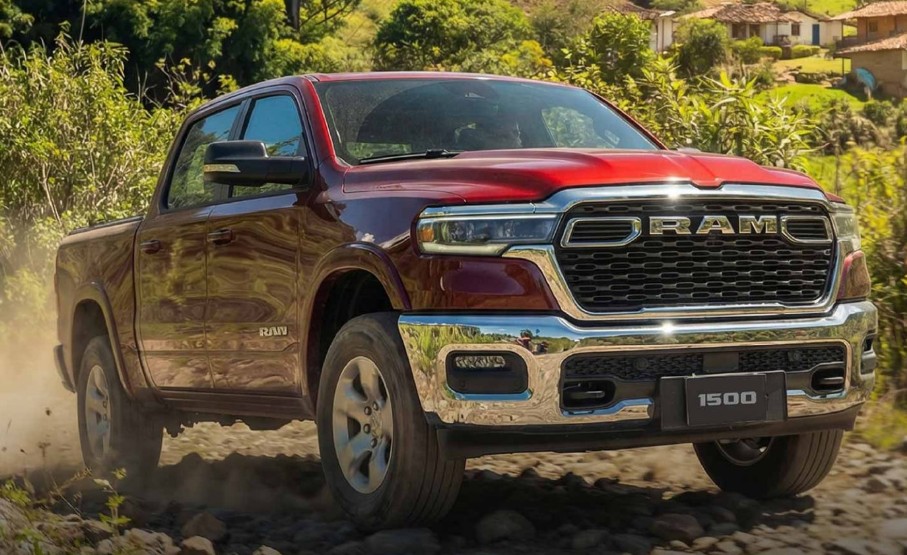
The Ram 1500 8 speed transmission fluid change interval is one of those maintenance topics that sounds simple until we start digging into the details. Ask the truck manufacturer, the transmission manufacturer, an independent mechanic, and three longtime Ram owners, and we may hear several different answers.
That confusion largely comes from one phrase: “lifetime transmission fluid.”
Ram has historically stated for certain Ram 1500 applications that the factory automatic transmission fluid provides satisfactory lubrication for the life of the vehicle under normal operating conditions and that routine fluid and filter changes are not required. For example, the 2022 Ram 1500 owner's manual says exactly that while also requiring a fluid and filter change if contamination occurs or the transmission is disassembled.
ZF, the company behind the transmission family on which many Ram 1500 eight-speed automatics are based, takes a more conservative approach. ZF documentation says its transmissions are generally filled with lifetime oil but recommends an oil change after 150,000 km, or roughly 93,000 miles, with shorter intervals potentially appropriate when the transmission experiences high temperatures, heavy loads, or uncertain previous service.
So, what should we actually do with our Ram?
For owners planning to keep their truck well beyond the warranty period, a sensible preventive-maintenance target is typically around 60,000 to 100,000 miles, adjusted according to towing, heat, traffic, modifications, and driving conditions. Heavy-duty users may reasonably lean toward the lower end, while lightly driven highway trucks can often move closer to ZF's roughly 93,000-mile recommendation.
Let's break down why.
Content in this publication
- What Is the Ram 1500 8-Speed Automatic Transmission?
- What Is the Official Ram 1500 Transmission Fluid Change Interval?
- Our Practical Ram 1500 8 Speed Transmission Fluid Change Interval
- Ram 1500 Transmission Fluid Interval Chart
- Why Transmission Fluid Eventually Ages
- Does Towing Shorten the Ram 1500 Transmission Fluid Interval?
- Does City Driving Wear Transmission Fluid Faster?
- What Transmission Fluid Does a Ram 1500 8-Speed Use?
- Does the Ram 1500 8-Speed Have a Transmission Dipstick?
- Should We Replace the Transmission Filter Too?
- Drain and Fill Versus Transmission Flush
- Signs Your Ram 1500 Transmission Fluid May Need Attention
- Should We Change Fluid on a High-Mileage Ram That Has Never Been Serviced?
- How Much Does a Ram 1500 8-Speed Transmission Fluid Change Cost?
- Can We Change Ram 1500 8-Speed Transmission Fluid Ourselves?
- What Happens If We Never Change the Transmission Fluid?
- Should We Change the Fluid at 60,000 Miles?
- Should We Change It at 100,000 Miles?
- What About Ram 1500 Trucks Used in Extreme Heat?
- What About Modified Ram 1500 Trucks?
- How to Extend Ram 1500 8-Speed Transmission Life
- Ram 1500 Transmission Service Checklist
- So, What Is the Best Ram 1500 8 Speed Transmission Fluid Change Interval?
- Conclusion: Lifetime Fluid Doesn't Mean We Should Stop Thinking About It
- Frequently Asked Questions
- 1. How often should Ram 1500 8-speed transmission fluid be changed?
- 2. Should I change my Ram 1500 transmission fluid at 60,000 miles?
- 3. What fluid does a Ram 1500 8-speed transmission use?
- 4. Does the Ram 1500 8-speed transmission have a dipstick?
- 5. Is it better to flush or drain and fill a Ram 1500 transmission?
What Is the Ram 1500 8-Speed Automatic Transmission?
Modern Ram 1500 trucks have widely used eight-speed automatic transmissions designed to combine smooth shifting, strong towing ability, and relatively efficient highway cruising.
Depending on model year, engine, drivetrain, and application, Ram has used different versions of eight-speed automatics. You'll often encounter designations such as 8HP70, 8HP75, 850RE, and related variants when researching parts or service information.
The exact transmission matters because fluid specifications, pan designs, capacities, and service procedures can differ.
That's why we should never order a transmission service kit based solely on the words “Ram 1500.”
The VIN and transmission identification should come first.
Why Eight Speeds Help the Ram 1500
Think of transmission gears like steps on a staircase. With larger gaps between steps, the engine has to make bigger jumps. Add more steps, and the transitions become smaller.
An eight-speed gearbox gives the engine more opportunities to operate near an efficient rpm while still providing low gearing for acceleration and tall gearing for cruising.
That helps deliver:
- Smooth acceleration
- Strong low-speed response
- Lower cruising rpm
- Better towing flexibility
- Improved fuel efficiency compared with older transmissions
- Less noticeable gear hunting when everything is working properly
But none of that means the transmission fluid is immortal.
What Is the Official Ram 1500 Transmission Fluid Change Interval?
Here's where the conversation gets interesting.
For at least some Ram 1500 eight-speed applications, Ram does not specify a routine transmission-fluid replacement interval under normal service.
The 2022 Ram 1500 manual states that the original fluid can provide satisfactory lubrication for the vehicle's life under normal operating conditions and says routine fluid and filter changes aren't required. It nevertheless calls for replacement when fluid becomes contaminated or the transmission is opened for repair.
This is why some dealers will tell us:
“The transmission is filled for life.”
Technically, that position can align with Ram's published maintenance information for the applicable truck.
But there's another side to the story.
What Does ZF Recommend?
ZF's documentation concerning LifeguardFluid 8 says its automatic transmissions are generally lifetime-filled, yet ZF also recommends an oil change after 150,000 km because real-world operating conditions affect fluid life. ZF specifically notes that shorter intervals can make sense under high temperatures and loads.
That equals approximately:
150,000 km = 93,000 miles
This distinction matters.
“Lifetime fill” doesn't necessarily mean the oil chemically remains identical forever. It means the transmission was designed around a long-life lubricant and may not require routine replacement under the automaker's normal maintenance definition.
Ram Versus ZF: Who Should We Follow?
There isn't necessarily a contradiction.
Ram publishes maintenance requirements for the complete vehicle. ZF considers transmission durability and lubricant aging across its transmission applications.
If we're leasing a truck for three years, our priorities differ dramatically from those of somebody hoping to put 200,000 or 300,000 miles on a Ram 1500.
For long-term ownership, preventive fluid replacement becomes much easier to justify.
Our Practical Ram 1500 8 Speed Transmission Fluid Change Interval
For a normally driven Ram 1500 that we plan to keep long term, an interval of approximately:
80,000–100,000 miles
is a reasonable preventive-maintenance window, with ZF's approximately 93,000-mile recommendation providing a useful reference point.
For trucks exposed to harder service, we would consider:
60,000–80,000 miles
instead.
And exceptionally hard-working trucks may justify inspection and service even sooner based on operating history and fluid condition.
There is no magical odometer number at which transmission fluid suddenly becomes bad. Fluid degradation is gradual, like cooking oil being heated repeatedly. Temperature, pressure, contamination, and mechanical wear slowly change its properties.
Ram 1500 Transmission Fluid Interval Chart
| Driving Conditions | Practical Preventive Interval |
|---|---|
| Light highway driving | 90,000–100,000 miles |
| Normal mixed driving | 80,000–100,000 miles |
| Frequent city traffic | 60,000–80,000 miles |
| Regular trailer towing | 60,000–75,000 miles |
| Heavy towing/high temperatures | 50,000–70,000 miles |
| Off-road or demanding commercial use | 50,000–70,000 miles |
| Unknown used-truck history | Inspect before deciding |
These numbers are preventive-maintenance guidelines rather than a universal Ram factory schedule. Owners should always prioritize the service information for their specific VIN and model year.
Why Transmission Fluid Eventually Ages
Automatic transmission fluid has several jobs.
It lubricates bearings and gears, transfers hydraulic pressure, cools internal components, protects against corrosion, and helps friction elements engage smoothly.
That's a lot of responsibility for one liquid.
Every trip subjects the fluid to:
- Heat
- Shearing forces
- Pressure
- Oxidation
- Microscopic clutch material
- Metal wear particles
- Repeated heating and cooling cycles
Modern ATF handles these demands exceptionally well, but exceptional isn't the same thing as infinite.
Heat Is Transmission Fluid's Biggest Enemy
Transmission fluid and excessive heat have never been close friends.
Normal operating temperatures are accounted for in the transmission's design. Sustained excessive heat is different.
Imagine repeatedly heating the same pan of cooking oil. At first, little appears to happen. Keep doing it, though, and the oil darkens, smells different, and no longer behaves quite the same.
Automatic transmission fluid faces a more sophisticated version of this process.
Ram even warns that high transmission-fluid temperatures can occur during strenuous use such as trailer towing.
That is one reason towing trucks deserve closer attention than pavement cruisers.
Does Towing Shorten the Ram 1500 Transmission Fluid Interval?
It certainly can.
Pulling a trailer increases load through the drivetrain. The transmission may shift more frequently, spend longer periods under substantial torque, and generate additional heat—especially on grades or during hot weather.
ZF explicitly identifies high loads and high operating temperatures as reasons that changing transmission oil at shorter intervals can make sense.
If our Ram regularly pulls a travel trailer, boat, equipment trailer, or enclosed cargo trailer, we'd be more comfortable treating 60,000–75,000 miles as the preventive-service neighborhood rather than automatically waiting until 100,000 miles.
Occasional Towing Versus Frequent Towing
There's a substantial difference between towing a small utility trailer twice a year and hauling a heavy camper across mountain passes every month.
We should consider:
- Trailer weight
- Terrain
- Ambient temperature
- Highway speed
- Frequency of towing
- Transmission-temperature history
- Payload in the truck
- Whether the truck is modified
The harder the transmission works, the less compelling the idea of stretching fluid service indefinitely becomes.
Does City Driving Wear Transmission Fluid Faster?
Potentially, yes.
Highway driving looks severe because speed is high, yet transmissions often enjoy steady highway cruising. Once top gear is engaged, shifting is relatively limited.
Stop-and-go traffic is different.
The transmission constantly cycles through gears, the torque converter sees repeated engagement events, airflow around cooling components can decrease, and the entire drivetrain spends more time working without covering many miles.
That's why mileage alone doesn't tell the whole story.
A Ram with 60,000 miles accumulated during brutal urban delivery service may have experienced far more transmission activity than a truck with 90,000 leisurely interstate miles.
What Transmission Fluid Does a Ram 1500 8-Speed Use?
This is not a transmission where we'd casually grab a bottle labeled “universal ATF” and hope for the best.
Ram specifies Mopar ZF 8 & 9 Speed ATF Automatic Transmission Fluid, or an appropriate equivalent, for applicable Ram 1500 automatic transmissions. Current Ram documentation continues to identify this specification for the automatic transmission.
The 2022 manual also warns that using the wrong transmission fluid can degrade shift quality and potentially contribute to torque-converter shudder.
Why the Correct ATF Matters
Transmission fluid isn't simply slippery red oil.
Its viscosity and friction characteristics are part of the transmission's calibration.
Clutches are expected to engage at particular rates under electronically controlled hydraulic pressure. Change those friction characteristics substantially and shift behavior can change as well.
It's a bit like putting hiking boots on a sprinter. The equipment technically fits the feet, but everything about how the athlete moves changes.
Should We Use ZF LifeguardFluid 8?
ZF LifeguardFluid 8 was specifically developed for applicable ZF 8HP automatic transmissions. ZF warns that inappropriate oils can cause problems ranging from poor shifting characteristics to transmission failure.
However, transmission identification remains essential.
Not every Ram 1500 eight-speed application should automatically be treated as identical simply because it has eight forward gears.
Confirm the specification using the VIN, current Ram service documentation, or the correct transmission part identification before purchasing fluid.
Does the Ram 1500 8-Speed Have a Transmission Dipstick?
Usually, no conventional owner-accessible dipstick is provided on these applications.
Ram's 2022 documentation says the fluid level is preset at the factory, routine level checks aren't required, and the transmission therefore does not have a dipstick. It also notes that proper fluid-level checking requires the appropriate service procedure and equipment.
That means servicing this transmission isn't quite like servicing an old automatic where we'd pull a dipstick, add half a quart, check again, and call it a day.
Why Fluid Temperature Matters During Service
The correct fluid level depends on temperature.
ZF's service guidance for 8HP transmissions involves checking fluid level within a specified temperature window and following an exact filling procedure.
That's one reason transmission-fluid replacement is less forgiving than a conventional engine-oil change.
Add too little and lubrication or hydraulic performance can suffer.
Add too much and we can create a different set of problems.
Accuracy matters.
Should We Replace the Transmission Filter Too?
When performing a proper scheduled preventive service on an applicable eight-speed transmission, replacing the filter along with the fluid is generally the more complete approach.
On many ZF 8HP configurations, the filter is incorporated into the transmission oil pan. ZF's own oil-change kits may therefore include a complete plastic pan with an integrated filter, along with the appropriate seals and drain/fill components.
That surprises owners accustomed to inexpensive separate filters.
Why Replace the Pan/Filter Assembly?
The filter captures contaminants circulating in the fluid.
Replacing fluid while leaving an old filter in place can be a partial solution.
If we're already paying for labor to open and service the transmission correctly, replacing the applicable filter or integrated pan assembly gives us a much more thorough maintenance event.
Drain and Fill Versus Transmission Flush
This distinction is important.
A drain-and-fill service removes transmission fluid through the prescribed service procedure, replaces appropriate service components, and refills the transmission with the specified fluid.
A power or chemical flush uses equipment—and sometimes chemicals—to push fluid through the system.
For the Ram 1500, we would favor the manufacturer-approved service procedure rather than an indiscriminate chemical flush.
Ram specifically warns not to use chemical flushes in the automatic transmission because they can damage transmission components.
Is a Transmission Flush Dangerous?
Not every machine-assisted fluid exchange is identical, so blanket statements can be misleading.
The key point is simpler:
Follow the approved service method for the specific transmission.
If a shop's first explanation is, “We flush every transmission the same way,” we'd want more information before handing over the keys.
Signs Your Ram 1500 Transmission Fluid May Need Attention
Transmission behavior can provide clues, although symptoms should never automatically be blamed on fluid.
Potential warning signs include:
- Rough or unusually firm shifting
- Delayed engagement after selecting Drive or Reverse
- Transmission shudder
- Unexpected gear hunting
- Abnormal whining or mechanical noises
- Fluid leakage underneath the truck
- Transmission overheating warnings
- Burnt-smelling fluid during professional inspection
- Diagnostic trouble codes
- Unexplained changes in shift quality
A malfunctioning transmission should be diagnosed, not simply given new fluid in the hope that the problem disappears.
A Fluid Change Is Maintenance, Not Magic
This point deserves emphasis.
Fresh ATF can maintain a healthy transmission. It cannot rebuild worn clutch packs, repair a failing valve body, replace damaged seals, or erase mechanical damage.
If the transmission suddenly begins slipping badly, changing the fluid isn't the automotive equivalent of rebooting a computer.
We need diagnosis first.
Should We Change Fluid on a High-Mileage Ram That Has Never Been Serviced?
This question makes owners nervous.
We've all heard the story:
“Never change old transmission fluid because the new fluid will make the transmission fail.”
The situation is more nuanced.
Fresh fluid doesn't normally destroy a healthy transmission. The problem is that a severely worn transmission may already be relying on compromised internal components. Servicing it after symptoms have appeared may reveal problems that were already present.
What Should We Do at 120,000 or 150,000 Miles?
If the transmission:
- Shifts normally
- Has no major leaks
- Shows no transmission fault codes
- Hasn't been overheating
- Has no severe slipping
we'd discuss a proper drain-and-fill/filter service with a shop experienced in Ram/ZF eight-speed transmissions rather than automatically abandoning maintenance forever.
But if the gearbox is already slipping, shuddering violently, or producing significant debris, diagnosis should come first.
How Much Does a Ram 1500 8-Speed Transmission Fluid Change Cost?
Costs vary substantially by location, transmission version, fluid quantity, labor rates, and whether the pan/filter assembly is replaced.
This service is often more expensive than owners expect because several components contribute to the bill:
- Correct-specification ATF
- Pan/filter assembly where applicable
- Seals and fasteners
- Shop labor
- Fluid-temperature monitoring
- Diagnostic equipment
- Proper vehicle leveling
It isn't simply a $40 bottle-and-filter job like servicing some older automatic transmissions.
Still, compared with the cost of major transmission repair, preventive maintenance can look relatively modest.
Can We Change Ram 1500 8-Speed Transmission Fluid Ourselves?
Experienced DIY mechanics can service some versions, but this isn't an ideal first transmission-fluid project.
The procedure can require:
- Safely raising and leveling the truck
- Monitoring transmission-fluid temperature
- Correctly removing and installing the pan
- Following specified tightening sequences
- Using proper ATF
- Cycling the transmission through gear ranges
- Setting the fluid level at the specified temperature
- Correctly torquing drain and fill plugs
- Keeping contamination out of the transmission
Get the level wrong and our attempt at preventive maintenance can become expensive surprisingly quickly.
When Professional Service Makes More Sense
We'd lean toward a qualified shop if:
- We don't have a scan tool that displays transmission temperature
- We can't keep the truck safely level
- We haven't identified the exact transmission
- The truck has existing shift problems
- The transmission has a leak
- The truck is still under applicable warranty coverage
Competence matters more than whether the logo outside the shop says “dealer” or “independent.”
A specialist who understands the eight-speed procedure can be worth far more than a general quick-lube shop treating every gearbox identically.
What Happens If We Never Change the Transmission Fluid?
Maybe nothing obvious for a very long time.
That's what makes this question difficult.
Modern transmission fluid is remarkably durable, and Ram's own documentation for applicable models says routine fluid and filter replacement isn't necessary under normal operating conditions.
But ZF simultaneously recognizes that lubricant life depends on operating conditions and recommends replacement around 150,000 km, with shorter intervals under harder use.
For someone planning to trade the truck at 50,000 miles, the debate may barely matter.
For someone targeting 200,000 miles?
It matters considerably more.
Should We Change the Fluid at 60,000 Miles?
Not necessarily for every Ram 1500.
At 60,000 miles, a highway-driven truck that rarely tows may still be comfortably below the ZF preventive recommendation.
But 60,000 miles can be perfectly reasonable if the truck:
- Frequently tows
- Operates in extreme heat
- Carries heavy payloads
- Does commercial work
- Spends most of its life in stop-and-go traffic
- Has been driven hard or modified
Preventive maintenance should reflect actual use, not just the odometer.
Should We Change It at 100,000 Miles?
For a healthy long-term truck, approximately 100,000 miles is a particularly logical point to consider transmission service if it hasn't been done before.
Why?
Because ZF's 150,000-km recommendation converts to roughly 93,000 miles.
So an approximately 90,000–100,000-mile service isn't an arbitrary internet tradition. It closely tracks the transmission manufacturer's published preventive recommendation.
What About Ram 1500 Trucks Used in Extreme Heat?
Hot climates can make us more conservative.
Transmission cooling systems are engineered to handle normal operating conditions, but repeated heavy loads in high ambient temperatures place greater thermal stress on fluid.
Imagine:
A loaded Ram towing uphill in 100°F heat while the air conditioning runs and pavement radiates heat underneath the truck.
That's a much different environment from cruising empty at 65 mph on a cool spring morning.
If that's our normal use case, shorter service intervals make sense.
What About Modified Ram 1500 Trucks?
Performance modifications change the equation.
A tuned engine may deliver more torque than the stock calibration. Larger tires increase effective drivetrain load. Heavy aftermarket bumpers, campers, and accessories increase mass. Aggressive driving adds heat.
None of those modifications automatically doom an eight-speed transmission.
They simply make us less inclined to stretch fluid indefinitely.
Transmission Tune and Engine Tune Considerations
If a truck has been tuned, we'd pay particular attention to:
- Line-pressure changes
- Shift scheduling
- Torque-management changes
- Increased engine torque
- Additional towing loads
- Fluid temperatures
More power is fun.
Heat still sends the invoice.
How to Extend Ram 1500 8-Speed Transmission Life
Fluid changes matter, but they're only one part of transmission longevity.
A better approach combines maintenance with sensible operation.
We can improve the odds by:
- Using only the correct transmission fluid.
- Addressing leaks immediately.
- Monitoring transmission temperature when towing.
- Avoiding repeated unnecessary overheating.
- Keeping engine and cooling systems maintained.
- Respecting payload and towing limits.
- Using appropriate towing modes when required.
- Servicing the fluid proactively if the truck works hard.
- Diagnosing unusual shifting instead of ignoring it.
- Keeping records of every transmission service.
The cheapest transmission repair is usually the one we never need.
Ram 1500 Transmission Service Checklist
Before authorizing a transmission-fluid change, we should verify a few things.
Ask the Shop These Questions
- Which eight-speed transmission does my Ram have?
- What exact ATF specification will you use?
- Does my transmission use an integrated pan and filter?
- Are you replacing the filter?
- Will the truck be level during filling?
- Will you monitor fluid temperature?
- Are you performing the manufacturer-approved service rather than a chemical flush?
- What parts and fluid brands appear on the invoice?
- Will you inspect the removed pan for abnormal debris?
- Do you routinely service Ram/ZF eight-speed transmissions?
A competent technician shouldn't be offended by those questions.
Good shops usually appreciate informed customers.
So, What Is the Best Ram 1500 8 Speed Transmission Fluid Change Interval?
For owners who want one straightforward answer:
Around 80,000–100,000 miles is a sensible preventive interval for a normally driven, long-term Ram 1500, while approximately 60,000–75,000 miles is a reasonable target for trucks that tow frequently or experience heavy loads and high temperatures.
ZF's own published recommendation of 150,000 km, approximately 93,000 miles, supports the idea of servicing near the 100,000-mile mark even though Ram's documentation for certain models describes the factory fill as satisfactory for vehicle life under normal conditions.
We shouldn't present either position dishonestly.
Ram's factory guidance matters.
ZF's maintenance guidance matters too.
Our ownership plans matter most when deciding how conservative to be.
Conclusion: Lifetime Fluid Doesn't Mean We Should Stop Thinking About It
The Ram 1500 8 speed transmission fluid change interval isn't carved into stone.
For some Ram 1500 model years, factory literature says routine fluid and filter replacement is unnecessary under normal operating conditions. ZF, meanwhile, recommends approximately 150,000 km or 93,000 miles and acknowledges that severe conditions may justify earlier replacement.
For most owners keeping their Ram for the long haul, we see the sweet spot around 80,000–100,000 miles.
Tow regularly? Work the truck hard? Live in extreme heat?
Moving that interval toward 60,000–75,000 miles is a reasonable preventive strategy.
Most importantly, use the correct fluid, correct pan/filter arrangement, and correct temperature-based filling procedure. Eight-speed transmissions are sophisticated machines. Treating them like an old three-speed automatic is like servicing a smartwatch with instructions for a pocket watch.
A little precision now may help keep those shifts nearly invisible for many miles to come.
Frequently Asked Questions
1. How often should Ram 1500 8-speed transmission fluid be changed?
Ram doesn't prescribe routine fluid changes for certain eight-speed applications under normal operating conditions, but ZF recommends transmission-oil replacement at about 150,000 km or 93,000 miles. For long-term ownership, roughly 80,000–100,000 miles is a sensible preventive range, with shorter intervals appropriate for severe service.
2. Should I change my Ram 1500 transmission fluid at 60,000 miles?
It can be worthwhile at 60,000 miles if the truck regularly tows, carries heavy loads, sees high temperatures, performs commercial work, or spends much of its life in demanding stop-and-go conditions. A lightly used highway truck generally has less reason to service it that early.
3. What fluid does a Ram 1500 8-speed transmission use?
Applicable Ram documentation specifies Mopar ZF 8 & 9 Speed ATF Automatic Transmission Fluid or an approved equivalent. Always verify the correct specification for the truck's VIN and transmission before purchasing fluid.
4. Does the Ram 1500 8-speed transmission have a dipstick?
Applicable eight-speed Ram transmissions do not have a conventional owner-serviceable transmission dipstick. Ram states that the factory fluid level is preset and that proper level adjustment requires the appropriate service procedure and equipment.
5. Is it better to flush or drain and fill a Ram 1500 transmission?
A manufacturer-approved drain-and-refill/filter service is the safer default. Ram specifically warns against chemical transmission flushes because the chemicals may damage internal components. Follow the service procedure designed for the exact transmission rather than using a generic flush process.
If you want to know other articles similar to Ram 1500 8 Speed Transmission Fluid Change Interval: Complete Maintenance Guide you can visit the category Service and Parts.
Vauxhall Mokka Tyre Pressure Reset: Complete Guide

How to Reset the Tire Pressure System on Your Hyundai Tucson

Hyundai Kona Tire Pressure: Complete PSI Guide

Vauxhall Corsa Timing Belt Replacement Cost UK 2026

Mazda CX-5 Tire Size Chart: 2013–2026 Guide

How to Reset a Honda Civic: Complete Step-by-Step Guide
Leave a Reply
More content of your interest