
Ram 1500 Engine Size: Complete Guide to Every Engine

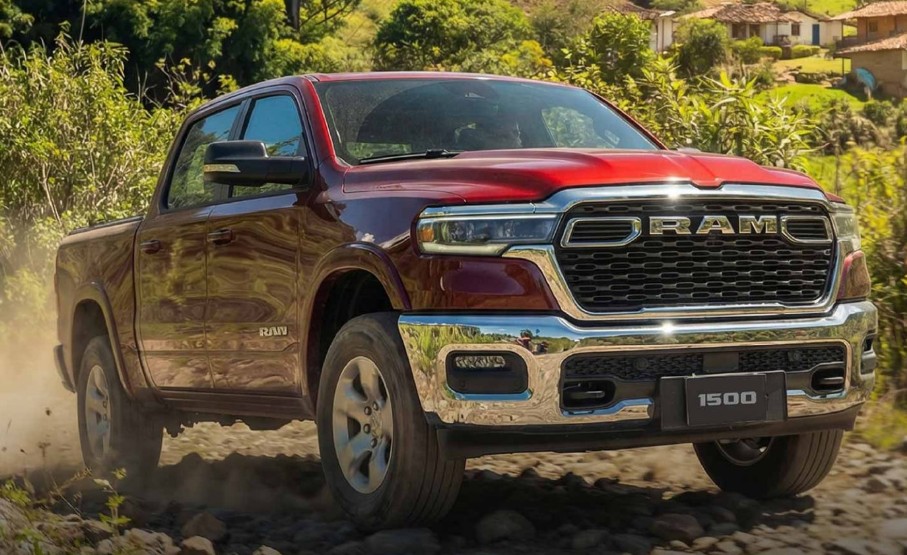
When we talk about Ram 1500 engine size, the conversation is no longer as simple as choosing between a V6 and a big V8. Ram has transformed its half-ton pickup lineup over the years, moving from traditional naturally aspirated engines toward turbocharged technology while still keeping familiar options alive for buyers who prefer old-school muscle.
For the 2026 model year, that mix is especially interesting. The Ram 1500 is available with a 3.6-liter Pentastar V6, two versions of the 3.0-liter Hurricane twin-turbo inline-six, and the returning 5.7-liter HEMI V8. Ram confirms four available engine configurations for the 2026 truck, with the 3.6L Pentastar serving as the standard engine.
And that raises an obvious question: does a bigger engine still mean a stronger Ram?
Not necessarily.
The modern 3.0-liter Hurricane shows exactly why displacement alone doesn't tell the whole story. Despite being substantially smaller than the familiar 5.7-liter HEMI, the High-Output Hurricane can produce up to 540 horsepower and 521 lb-ft of torque.
So whether we're shopping for a daily driver, towing machine, work truck, luxury pickup, or used Ram 1500, understanding engine displacement is only the beginning.
Let's look beneath the hood.
Content in this publication
- What Is the Ram 1500 Engine Size?
- Ram 1500 Engine Size Comparison
- 3.6L Pentastar V6 Engine
- 3.0L Hurricane Standard-Output Engine
- 3.0L High-Output Hurricane Engine
- 5.7L HEMI V8 Engine
- Ram 1500 3.0L vs 5.7L Engine Size
- What Was the Ram 1500 EcoDiesel Engine Size?
- Older Ram 1500 Engine Sizes
- Does Bigger Engine Size Mean More Towing Capacity?
- Which Ram 1500 Engine Is Best for Fuel Economy?
- Which Ram 1500 Engine Size Is Most Reliable?
- Which Ram 1500 Engine Should We Choose?
- Does Engine Size Affect Ram 1500 Resale Value?
- Ram 1500 Engine Size and Maintenance
- How to Identify Your Ram 1500 Engine Size
- Is the 3.0L Hurricane Replacing Big V8 Engines?
- Why Engine Displacement Matters Less Than It Used To
- Ram 1500 Engine Size: Final Verdict
- Frequently Asked Questions
What Is the Ram 1500 Engine Size?
There isn't one universal Ram 1500 engine size. Engine displacement depends on the model year, trim, configuration, and powertrain selected.
For the current 2026 Ram 1500 lineup, the major engine sizes are:
- 3.0 liters: Hurricane twin-turbo inline-six, offered in Standard-Output and High-Output versions.
- 3.6 liters: Pentastar V6 with eTorque.
- 5.7 liters: HEMI V8, returning to the Ram 1500 lineup for 2026.
That means the smallest current displacement is actually attached to some of the most powerful engines.
Welcome to modern turbocharging.
Twenty years ago, telling someone a 3.0-liter six-cylinder would become a flagship Ram engine might have earned us a strange look. Today, forced induction allows that relatively compact engine to punch like something considerably larger.
Ram 1500 Engine Size Comparison
Here's a useful snapshot of the principal 2026 engine choices.
| Engine | Displacement | Configuration | Maximum Horsepower | Maximum Torque |
|---|---|---|---|---|
| Pentastar eTorque | 3.6L | V6 | 305 hp | 269 lb-ft |
| Hurricane Standard Output | 3.0L | Twin-Turbo I6 | 420 hp | 469 lb-ft |
| Hurricane High Output | 3.0L | Twin-Turbo I6 | 540 hp | 521 lb-ft |
| HEMI | 5.7L | V8 | Varies by configuration | V8-focused performance |
Ram's official 2026 specifications list the 3.6-liter Pentastar at 305 horsepower and 269 lb-ft, while the Standard-Output Hurricane delivers 420 horsepower and 469 lb-ft. The High-Output 3.0-liter Hurricane reaches 540 horsepower and 521 lb-ft.
Immediately, we can see why choosing an engine based exclusively on liters doesn't work anymore.
Engine Size vs Engine Power
Engine displacement describes the total swept volume of an engine's cylinders. Traditionally, greater displacement generally meant more air and fuel could be burned during each combustion cycle, which often translated into greater power and torque.
Turbochargers change the equation.
Instead of relying entirely on atmospheric pressure to fill the cylinders, turbochargers compress additional air and force it into the engine. The result is a relatively small engine behaving like a substantially larger one when additional power is required.
That's exactly the philosophy behind the Hurricane.
The 3.0-liter Hurricane has less displacement than the 3.6-liter Pentastar, yet its turbocharged design produces dramatically greater output.
Think of displacement as the size of the lungs and turbocharging as adding an oxygen tank. Bigger lungs still matter, but they're no longer the only route to taking a deeper breath.
3.6L Pentastar V6 Engine
For buyers wondering what the "standard" Ram 1500 engine size is, 3.6 liters is the answer for many configurations.
The Pentastar V6 has been around for years and has become one of Stellantis' most recognizable gasoline engines. In the 2026 Ram 1500, it works with the eTorque mild-hybrid system and an eight-speed automatic transmission.
Ram rates the engine at 305 horsepower and 269 lb-ft of torque. On a properly configured 2026 4x2 truck, maximum towing capacity can reach 8,130 pounds, while maximum payload can reach 2,360 pounds.
Those aren't weak numbers.
Is the 3.6L V6 Big Enough for a Ram 1500?
For everyday driving, absolutely.
We don't all spend weekends pulling massive enclosed trailers across mountain passes. Plenty of Ram owners use their trucks for commuting, occasional hauling, home projects, vacations, and relatively light trailers.
In those situations, the Pentastar makes plenty of sense.
Its 305 horsepower gives the truck respectable performance without requiring buyers to step into the more powerful turbocharged or V8 options. Because the engine has been widely used across Stellantis vehicles, it is also familiar territory for many technicians and long-time owners.
Where does it feel less ideal?
Heavy towing and drivers who simply want effortless low-end muscle.
With 269 lb-ft of torque, the Pentastar sits well behind the Hurricane engines. A truck carrying passengers, cargo, and a substantial trailer will therefore ask more from the V6.
Who Should Choose the 3.6L Pentastar?
We'd look closely at it if our Ram 1500 spends most of its life unloaded, handles moderate work, or serves as a daily vehicle.
For buyers who want a truck without necessarily needing the strongest available engine, the 3.6L represents a sensible entry point.
It's the comfortable pair of boots in the Ram engine closet: maybe not the flashiest, but useful almost everywhere.
3.0L Hurricane Standard-Output Engine
Now things get considerably more interesting.
The 3.0-liter Hurricane Standard Output is a twin-turbocharged inline-six. Despite having half a liter less displacement than the Pentastar V6, it produces much stronger figures.
For the 2026 Ram 1500, Ram lists 420 horsepower and 469 lb-ft of torque for this engine. In 4x2 configuration, maximum towing capability can reach 11,610 pounds, depending on equipment and configuration.
That's an enormous leap from the naturally aspirated V6.
Why Is the Hurricane Only 3.0 Liters?
Because Ram doesn't need huge displacement to achieve strong output when two turbochargers are supplying compressed air.
The inline-six layout also has inherent advantages. Six cylinders arranged in a straight line can operate with excellent natural balance, contributing to smooth power delivery.
More importantly for truck buyers, turbocharging provides substantial torque.
The Standard-Output Hurricane produces 469 lb-ft, which gives the Ram considerably more muscle for acceleration, passing, climbing grades, and pulling trailers.
This is why looking only at the engine-size badge can fool us.
A 3.0-liter label might sound modest beside 5.7L, but there's nothing modest about 420 horsepower.
3.0L Hurricane vs 3.6L Pentastar
If we compare these engines based purely on displacement, the Pentastar wins: 3.6 liters versus 3.0.
If we compare performance, the situation reverses dramatically.
The Hurricane offers 115 additional horsepower and 200 additional lb-ft of torque based on Ram's published 2026 figures.
That's why the 3.0L Hurricane is appealing to drivers who regularly tow or simply prefer strong acceleration.
The tradeoff is complexity.
A naturally aspirated V6 avoids turbochargers and their associated hardware. The Hurricane introduces twin turbos and higher specific output, meaning buyers planning extremely long ownership periods may naturally place more emphasis on maintenance history and proper servicing.
That doesn't make turbocharging inherently unreliable. It simply means there are more sophisticated components involved.
3.0L High-Output Hurricane Engine
The engine-size badge doesn't change.
The personality certainly does.
Ram's High-Output 3.0L Hurricane turns the same basic three-liter displacement concept into one of the strongest engines available in the Ram 1500.
Ram publishes maximum output of 540 horsepower and 521 lb-ft of torque.
Read that again for a moment.
We're talking about 540 horsepower from an engine measuring just three liters.
A few decades ago, numbers like these belonged to exotic performance cars or heavily modified engines. Now they're available beneath the hood of a full-size pickup with leather seats, storage compartments, cupholders, and enough cabin space for the family.
Standard-Output vs High-Output Hurricane
Although both engines displace 3.0 liters, they are calibrated for different purposes.
The Standard-Output version emphasizes the broad capability most Ram owners need. Its 420 horsepower and 469 lb-ft already place it comfortably above the Pentastar.
The High-Output version takes performance significantly further, reaching 540 horsepower and 521 lb-ft.
That distinction is important for anyone searching for Ram 1500 engine size information.
Two engines can have identical displacement and dramatically different output.
Engine size tells us how much volume the cylinders sweep. It does not tell us turbo boost pressure, internal calibration, airflow, cooling strategy, fuel requirements, or maximum output.
Is 3.0 Liters Too Small for a Full-Size Truck?
Not when it produces more than 500 horsepower.
That's really the end of the displacement argument.
Modern pickup engines demonstrate that physical size and capability don't follow the straightforward relationship they once did. We still need enough torque, cooling, transmission strength, and overall engineering capacity to perform heavy work, but displacement is just one ingredient in that recipe.
5.7L HEMI V8 Engine
And then we arrive at the name that needs almost no introduction.
HEMI.
For years, the 5.7-liter HEMI V8 became deeply associated with Ram trucks. Its sound, character, cylinder count, and naturally aspirated power delivery gave the Ram 1500 an identity that couldn't be described by specification sheets alone.
Ram removed the HEMI from the initial refreshed Ram 1500 powertrain lineup and leaned heavily into Hurricane engines, but the company subsequently brought the 5.7L HEMI V8 back as an available engine for the 2026 Ram 1500.
For traditional truck enthusiasts, that return matters.
Why Do Buyers Still Want the 5.7L HEMI?
Because numbers aren't everything.
Some buyers enjoy the immediate response and linear character of a naturally aspirated V8. Others love the exhaust note. Some have owned several HEMI-powered trucks and simply know what they like.
Then there's familiarity.
The 5.7L HEMI has existed in Ram applications for years, meaning there's an enormous body of owner experience around it.
A turbocharged inline-six may produce greater output from substantially less displacement, but the V8 provides something emotional.
Starting a V8 in the morning feels different.
Is that scientifically important?
No.
Does it matter when somebody spends tens of thousands of dollars on a vehicle they'll drive for years?
Absolutely.
Ram 1500 3.0L vs 5.7L Engine Size
This may be the most fascinating comparison in the entire lineup.
On paper, we'd expect a 5.7-liter engine to crush a 3.0-liter engine.
After all, 5.7 liters represents roughly 90% more displacement.
But turbocharging changes everything.
The Hurricane uses forced induction to extract considerably more performance from each liter of displacement. The High-Output Hurricane's published 540 horsepower demonstrates just how far modern engine technology has moved.
The HEMI, meanwhile, offers the naturally aspirated V8 experience many Ram owners still value.
Which Engine Feels Bigger?
That's where specifications and subjective experience separate.
The Hurricane can deliver massive torque and rapid acceleration, making it feel extremely muscular when the turbos are working.
The HEMI delivers its own kind of theater. There is a mechanical richness to eight cylinders that a turbo inline-six doesn't attempt to copy exactly.
Choosing between them isn't merely deciding whether three liters or 5.7 liters is "better."
We're choosing between two philosophies.
One says sophisticated turbocharging can create huge performance from smaller displacement.
The other says there's still something special about a big naturally aspirated V8.
Neither philosophy is difficult to understand.
What Was the Ram 1500 EcoDiesel Engine Size?
Used-truck buyers may also encounter the 3.0-liter EcoDiesel V6.
This engine shouldn't be confused with the new 3.0-liter Hurricane.
They share a displacement figure, but virtually everything about their mission is different.
The EcoDiesel is a diesel V6 built around diesel efficiency and low-rpm torque. The Hurricane is a gasoline twin-turbo inline-six designed to deliver high horsepower and substantial torque.
This is an excellent reminder that seeing "3.0L" in an advertisement tells us very little by itself.
We always want to identify the actual engine family.
Older Ram 1500 Engine Sizes
Anyone shopping for a used Ram 1500 will encounter considerably more variety than today's lineup.
Depending on model year and generation, Ram trucks have been offered with engines such as the 3.6L Pentastar V6, 5.7L HEMI V8, 3.0L EcoDiesel V6, and other engines in earlier Dodge Ram eras.
That historical variety is important because online discussions often mix generations together.
Someone complaining about a "Ram 1500 3.0 engine," for example, might be talking about an EcoDiesel or a Hurricane. Those are completely different engines.
Likewise, recommendations for the 5.7L HEMI may relate to older versions with different supporting systems and calibrations.
When researching reliability, fuel economy, towing, oil requirements, or common problems, we should always include the model year and exact engine in the search.
Otherwise, we're comparing apples, oranges, and turbochargers.
Does Bigger Engine Size Mean More Towing Capacity?
Not automatically.
The 2026 lineup is a perfect demonstration.
Ram's published maximum towing capability for a properly configured 4x2 with the Standard-Output 3.0L Hurricane reaches 11,610 pounds. The 3.6L Pentastar, despite having greater displacement, reaches a lower maximum of 8,130 pounds in the referenced 4x2 configuration.
Towing capability depends on far more than engine displacement.
Transmission, axle ratio, drivetrain, cooling capacity, suspension, curb weight, cab configuration, bed configuration, Gross Combined Weight Rating, and factory equipment all influence the final rating.
Never choose a towing vehicle by engine size alone.
Check the specific truck's configuration and official towing information.
Which Ram 1500 Engine Is Best for Towing?
For serious towing, we'd place torque and the truck's actual certified tow rating above simple displacement.
The Hurricane Standard Output is particularly compelling because its 469 lb-ft of torque and available maximum towing figure give it a strong capability profile.
But maximum numbers aren't always the smartest buying target.
If we tow frequently, we should leave reasonable capacity in reserve rather than operating at the theoretical ceiling every weekend.
A truck that handles our typical trailer comfortably is generally more useful than one selected purely because its brochure contains the largest number.
Which Ram 1500 Engine Is Best for Fuel Economy?
Smaller displacement can help fuel efficiency, but again, it isn't the only variable.
Ram lists manufacturer-estimated 20 mpg city and 25 mpg highway for certain 2026 4x2 configurations equipped with the 3.6L Pentastar, while a corresponding Standard-Output Hurricane configuration is listed at 18 mpg city and 25 mpg highway.
Real-world consumption can vary enormously.
Driving at 70 mph into a headwind while towing a tall travel trailer is a completely different situation from cruising unloaded through flat suburban roads.
Turbocharged engines can be relatively efficient during light-load driving, but asking for frequent boost requires fuel. There's no free horsepower buffet.
Does the 3.0L Hurricane Save Fuel Because It Is Smaller?
Not automatically.
A three-liter engine has less displacement than a 3.6L or 5.7L engine, but fuel consumption depends on how much power we're demanding.
A turbocharger allows an engine to operate efficiently under some conditions while supplying much more air when stronger performance is needed.
Put our foot down regularly, though, and those 420 or 540 horses need feeding.
Engine downsizing creates opportunities for efficiency; it doesn't repeal physics.
Which Ram 1500 Engine Size Is Most Reliable?
This is where simple answers become dangerous.
Reliability depends on design, maintenance, operating conditions, mileage, production changes, and the specific vehicle we're considering.
The 3.6L Pentastar and 5.7L HEMI have lengthy histories, giving used-truck buyers a much larger pool of long-term ownership data.
The Hurricane is newer technology by comparison.
That doesn't mean the older engines automatically win. Newer engines may benefit from engineering improvements while older engines have well-documented weak points of their own.
For a used Ram, we'd value a complete service history above internet mythology.
A beautifully maintained higher-mileage engine can be a safer purchase than a neglected low-mileage example.
Maintenance records don't look exciting in an advertisement.
They become very exciting when repair bills arrive.
Which Ram 1500 Engine Should We Choose?
The answer depends less on cubic centimeters and more on how we actually use the truck.
For basic commuting and lighter-duty use, the 3.6L Pentastar provides plenty of horsepower and avoids paying for performance we may rarely use.
For buyers wanting a strong combination of towing capability, acceleration, and modern technology, the 3.0L Standard-Output Hurricane might be the sweet spot.
For maximum gasoline performance, the High-Output Hurricane is the obvious powerhouse, with its 540-horsepower rating.
And if the sound and personality of a naturally aspirated eight-cylinder matter as much as specifications, the returning 5.7L HEMI provides something the six-cylinder engines simply aren't designed to imitate.
Best Engine Size for Everyday Driving
We'd lean toward the 3.6L Pentastar if budget and normal driving are the priorities.
Three hundred and five horsepower is hardly slow.
A generation ago, 305 horsepower in a pickup would have sounded serious. Modern horsepower inflation has simply changed our expectations.
Best Engine Size for Balanced Performance
The Standard-Output 3.0L Hurricane makes a particularly convincing all-rounder.
With 420 horsepower and 469 lb-ft, it has enough muscle to make a full-size pickup feel effortless while retaining the compact displacement of a modern turbocharged six-cylinder.
Best Engine Size for Maximum Power
The High-Output Hurricane.
Its three liters may look unimpressive on paper until we reach the next column and see 540 horsepower.
Then nobody asks whether three liters is enough.
Best Engine Size for V8 Fans
There can only be one answer.
5.7 liters.
HEMI.
Some decisions are made with calculators. Others are made when we press the start button.
Does Engine Size Affect Ram 1500 Resale Value?
It can.
Powertrain choice frequently influences used-truck desirability because engines attract different groups of buyers.
V8-powered pickups traditionally have strong enthusiast appeal, while efficient or high-torque engines may attract commuters and towing-focused buyers.
However, resale depends heavily on market conditions, trim level, mileage, condition, location, equipment, and maintenance history.
We shouldn't automatically pay thousands more for a larger engine expecting to recover every dollar later.
Buy the engine we'll actually enjoy and use.
That's usually the smarter equation.
Ram 1500 Engine Size and Maintenance
Engine displacement itself doesn't determine maintenance expense.
Design complexity often matters more.
A naturally aspirated engine avoids turbochargers. A turbocharged engine adds turbochargers, plumbing, thermal management, and related components. Mild-hybrid systems add their own hardware.
At the same time, modern systems are engineered as integrated packages rather than random accessories bolted onto an old engine.
The practical rule is simple: follow the correct maintenance schedule, use the specified fluids, don't ignore warning lights, and avoid assuming every Ram 1500 takes the same oil or parts.
A 3.0L Hurricane, 3.0L EcoDiesel, 3.6L Pentastar, and 5.7L HEMI are completely different animals.
Giving them identical treatment because they're all installed in Ram 1500s would be like feeding a horse, a dog, and a goldfish from the same bowl.
How to Identify Your Ram 1500 Engine Size
If we've purchased a used truck and aren't certain which engine sits underneath the hood, guessing from appearance isn't ideal.
The vehicle identification number, original build information, owner's documentation, emissions label, dealer records, and vehicle-specific parts databases can normally identify the installed engine.
This becomes especially important before buying oil, filters, spark plugs, belts, or other service components.
Even two Ram 1500 trucks parked side by side can require completely different parts.
And yes, discovering that after draining the oil is considerably less entertaining than checking beforehand.
Is the 3.0L Hurricane Replacing Big V8 Engines?
Broadly speaking, the Hurricane demonstrates the industry's movement toward smaller turbocharged engines that can produce power once associated with substantially larger displacement.
But the story isn't simply "small engines replace V8s."
Ram's decision to offer the 5.7L HEMI again for 2026 alongside both Hurricane engines and the Pentastar illustrates something more nuanced: different customers value different characteristics.
Some want maximum output per liter.
Some want towing torque.
Some want efficiency.
Some want mechanical simplicity.
And some want to hear eight cylinders wake up when they turn the key.
The modern Ram 1500 lineup is interesting precisely because those priorities can coexist.
Why Engine Displacement Matters Less Than It Used To
There was a time when engine displacement acted almost like a shorthand performance rating.
A 5.7-liter engine sounded powerful because, generally speaking, it was.
Today, displacement remains useful information, but we need context.
Turbocharging, variable valve technology, sophisticated engine management, direct injection strategies, transmission gearing, hybrid assistance, and thermal management all affect what an engine can actually do.
The 2026 Ram 1500 captures that change perfectly.
Its 3.6L naturally aspirated V6 produces 305 horsepower.
Its smaller 3.0L Hurricane produces 420 horsepower in Standard-Output form.
Another version of that same 3.0-liter displacement produces 540 horsepower.
Same basic number on the engine-size line.
Wildly different experience from the driver's seat.
The Better Question Isn't “How Big Is the Engine?”
A more useful question is:
What do we need the engine to do?
If we're commuting 90% of the time, buying the most powerful engine available may accomplish little besides making highway entrance ramps more entertaining.
If we're towing several thousand pounds through mountainous terrain, extra torque becomes genuinely valuable.
If we're keeping the truck for a decade, maintenance complexity may carry more weight.
If we simply love V8s, pretending that emotional preference doesn't exist won't make us happier with a different engine.
Buying a truck isn't an engineering examination. It's matching capability with actual life.
Ram 1500 Engine Size: Final Verdict
The modern Ram 1500 engine size lineup shows why displacement alone can no longer tell us which truck engine is strongest.
The 3.6L Pentastar V6 remains a practical baseline with 305 horsepower. The 3.0L Standard-Output Hurricane delivers a much stronger 420 horsepower and 469 lb-ft. Move to the High-Output 3.0L Hurricane and output climbs to an extraordinary 540 horsepower and 521 lb-ft. Meanwhile, the available 5.7L HEMI V8 keeps traditional naturally aspirated V8 character alive in the 2026 lineup.
So which size wins?
There isn't one winner.
The 3.6L V6 makes sense for everyday usability. The 3.0L Hurricane offers enormous performance relative to its displacement. The High-Output Hurricane is built for buyers chasing serious horsepower. And the 5.7L HEMI speaks directly to drivers who still want a V8 experience.
Rather than asking which Ram engine is biggest, we'd ask which engine best matches our workload, budget, driving habits, maintenance expectations, and personality.
Because underneath all the horsepower figures and displacement numbers, that's the engine we'll be happiest living with.
Frequently Asked Questions
What engine size does a Ram 1500 have?
The 2026 Ram 1500 offers several engine sizes, including a 3.6L Pentastar V6, two 3.0L Hurricane twin-turbo inline-six configurations, and an available 5.7L HEMI V8. Engine availability varies by trim and configuration.
Is the Ram 1500 3.0L engine a V6?
Not if we're talking about the modern Hurricane. The 3.0L Hurricane is a twin-turbocharged inline-six, meaning all six cylinders are arranged in a straight line. Older Ram 1500 models could also use a 3.0L EcoDiesel, which is a completely different diesel V6 engine.
Is the 3.6L or 3.0L Ram engine more powerful?
The smaller 3.0L Hurricane is substantially more powerful. Ram lists the 3.6L Pentastar at 305 horsepower and 269 lb-ft of torque, while the Standard-Output 3.0L Hurricane reaches 420 horsepower and 469 lb-ft. The High-Output Hurricane raises output to 540 horsepower and 521 lb-ft.
Does the Ram 1500 still have a 5.7L HEMI?
Yes. The 5.7L HEMI V8 returned as an available engine for the 2026 Ram 1500, joining the Pentastar and Hurricane engines. Availability can depend on trim and vehicle configuration.
What is the best Ram 1500 engine size?
For everyday use, the 3.6L Pentastar is a sensible choice. The 3.0L Standard-Output Hurricane offers a stronger balance of power and towing performance, while the High-Output Hurricane targets maximum performance. Drivers who specifically want traditional V8 character will likely prefer the 5.7L HEMI.
If you want to know other articles similar to Ram 1500 Engine Size: Complete Guide to Every Engine you can visit the category Service and Parts.
Nissan Qashqai Fuel Tank Capacity: Complete Guide

Suzuki Swift Fuel Tank Capacity: Complete Guide
Mazda CX-5 Weight (2013–2026): Complete Guide in Pounds and KG
Kia Sportage Dashboard Symbols and Warning Lights

MINI Cooper Weight (2002–2027): Complete Weight Chart & Guide
Toyota RAV4 Engine Sizes: Complete Guide (1994–2026)
Leave a Reply
More content of your interest