
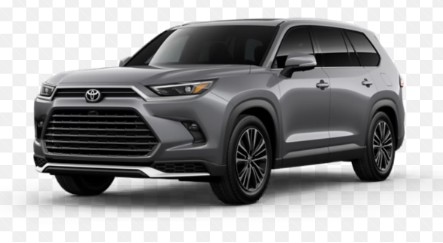
Toyota Grand Highlander Engine Size

Content in this publication
- Why the Toyota Grand Highlander Engine Size Matters More Than You Think
- Toyota Grand Highlander Engine Size Overview
- Understanding Engine Size in Simple Terms
- The Standard 2.4-Liter Turbocharged Engine
- How the 2.4-Liter Turbo Feels on the Road
- Fuel Economy Benefits of the 2.4-Liter Engine
- The 2.5-Liter Hybrid Engine
- Why the Hybrid Engine Feels Relaxed
- Fuel Economy of the 2.5-Liter Hybrid
- The 2.4-Liter Hybrid MAX Engine
- How Fast Is the Hybrid MAX?
- Which Toyota Grand Highlander Engine Size Is Best?
- Toyota Grand Highlander Towing Capacity by Engine Size
- Comparing the Grand Highlander to Rivals
- Does Smaller Engine Size Mean Less Reliability?
- Real-World Driving Experience
- Engine Size and Long-Distance Comfort
- Maintenance Considerations
- Why Toyota Moved Away From Large V6 Engines
- The Future of Toyota SUV Engines
- Should You Worry About Turbocharged Engines?
- The Best Engine for Different Buyers
- Is the Toyota Grand Highlander Underpowered?
- Final Thoughts on Toyota Grand Highlander Engine Size
- FAQs
Why the Toyota Grand Highlander Engine Size Matters More Than You Think
The Toyota Grand Highlander is not just another family SUV trying to squeeze into a crowded parking lot of competitors. It is Toyota’s answer to a question many drivers have quietly asked for years: Can we have a spacious three-row SUV without sacrificing efficiency, comfort, or driving confidence?
And right at the center of that conversation sits one crucial topic: engine size.
Engine size shapes almost everything we experience behind the wheel. It affects acceleration, towing capability, fuel economy, highway refinement, and even how relaxed we feel during long road trips. Think of the engine as the heartbeat of the vehicle. A weak heartbeat makes the SUV feel sluggish and strained. A balanced one creates harmony between power and practicality.
The Toyota Grand Highlander offers multiple engine options, each tailored to different driving personalities. Whether we prioritize fuel savings, family hauling, or spirited acceleration, understanding the engine lineup helps us choose the right configuration without regrets later.
Let’s break it all down carefully.
Toyota Grand Highlander Engine Size Overview
Toyota designed the Grand Highlander with three primary powertrain choices:
| Engine Option | Engine Size | Power Output |
|---|---|---|
| Turbocharged Gas Engine | 2.4-liter | 265 hp |
| Hybrid Engine | 2.5-liter | 245 hp |
| Hybrid MAX Performance Engine | 2.4-liter turbo hybrid | 362 hp |
At first glance, these engine sizes may seem modest for such a large SUV. But modern engineering has rewritten the rules. Smaller turbocharged engines now perform like larger V6 engines from the past while consuming less fuel.
That is where the Grand Highlander becomes fascinating.
Understanding Engine Size in Simple Terms
What Does Engine Size Actually Mean?
Engine size refers to the total volume of all cylinders inside the engine.
For example:
- A 2.4-liter engine means the cylinders displace 2.4 liters of air and fuel mixture.
- A 2.5-liter engine slightly increases that displacement.
Years ago, bigger displacement automatically meant more power. Today, turbochargers and hybrid systems dramatically change the equation.
It is a bit like comparing athletes:
- One runner relies purely on muscle.
- Another combines muscle with advanced technology and endurance training.
The second athlete often performs better despite appearing smaller on paper.
The Standard 2.4-Liter Turbocharged Engine
The Mainstream Choice
The base gasoline engine in the Toyota Grand Highlander is a 2.4-liter turbocharged four-cylinder.
This engine produces:
- 265 horsepower
- 310 lb-ft of torque
That torque figure is particularly important because torque determines how effortlessly the SUV moves, especially during:
- Highway merging
- Climbing hills
- Carrying passengers
- Towing trailers
Toyota paired this engine with an 8-speed automatic transmission, creating smooth and predictable performance.
How the 2.4-Liter Turbo Feels on the Road
Surprisingly Strong for a Four-Cylinder
Some drivers still hesitate when hearing “four-cylinder” in a large SUV. That hesitation usually comes from memories of older underpowered engines.
The Grand Highlander changes that perception quickly.
The turbocharger acts like a pressure booster for the engine, forcing additional air into the combustion chamber. The result feels muscular and responsive.
Instead of the lazy acceleration we once associated with large family SUVs, the Grand Highlander feels composed and energetic.
It behaves more like a confident marathon runner than a bulky moving van.
Fuel Economy Benefits of the 2.4-Liter Engine
Balancing Power and Efficiency
One reason Toyota downsized from older V6 engines is fuel economy.
The 2.4-liter turbo delivers respectable efficiency for a three-row SUV:
- Around 21 mpg city
- Around 28 mpg highway
Those numbers make a major difference for families covering:
- School commutes
- Weekend road trips
- Daily errands
- Long-distance travel
Fuel savings accumulate quietly over time like drops filling a bucket.
The 2.5-Liter Hybrid Engine
The Efficiency Champion
The hybrid version uses a naturally aspirated 2.5-liter four-cylinder engine combined with electric motors.
Together, the system generates:
- 245 horsepower
While horsepower is slightly lower than the turbo gas engine, the hybrid setup delivers power differently.
Electric motors provide immediate torque from a standstill, making the SUV feel smoother and more responsive in city driving.
Why the Hybrid Engine Feels Relaxed
Smoothness Over Aggression
The hybrid Grand Highlander is not designed to be a sports SUV. Instead, it focuses on calm, efficient travel.
The power delivery feels:
- Linear
- Predictable
- Quiet
- Refined
In traffic, the electric assistance creates almost effortless movement. It glides through urban environments like a boat floating across still water.
For families prioritizing comfort and fuel savings, the hybrid engine size makes tremendous sense.
Fuel Economy of the 2.5-Liter Hybrid
One of the Biggest Advantages
This is where the hybrid truly shines.
Estimated fuel economy reaches approximately:
- 36 mpg combined
For a three-row SUV, those figures are impressive.
That means:
- Fewer fuel stops
- Lower ownership costs
- Reduced environmental impact
For drivers who spend hours commuting weekly, this engine can become a financial lifesaver over time.
The 2.4-Liter Hybrid MAX Engine
The Performance Beast
Now we arrive at the most exciting option.
Toyota’s Hybrid MAX system combines:
- A 2.4-liter turbocharged engine
- Electric motors
- Advanced hybrid technology
Total output:
- 362 horsepower
- Massive torque delivery
This setup transforms the Grand Highlander from a practical family SUV into something unexpectedly quick.
How Fast Is the Hybrid MAX?
Shockingly Quick for a Family SUV
The Hybrid MAX accelerates with authority.
It feels less like a traditional family hauler and more like a luxury performance SUV.
The electric motors instantly deliver torque, while the turbocharged engine adds sustained power at higher speeds.
Imagine pushing a shopping cart downhill with a hidden rocket attached. That is the sensation many drivers describe when accelerating hard in the Hybrid MAX.
Which Toyota Grand Highlander Engine Size Is Best?
The Answer Depends on Lifestyle
There is no universal “best” engine.
Instead, each option fits a different type of driver.
Choose the 2.4-Liter Turbo If You Want:
- Balanced performance
- Strong towing capability
- Traditional driving feel
- Lower upfront cost
Choose the 2.5-Liter Hybrid If You Want:
- Maximum fuel economy
- Smooth commuting
- Lower long-term fuel expenses
- Quiet operation
Choose the Hybrid MAX If You Want:
- Fast acceleration
- Premium performance
- Powerful highway passing
- Luxury-level driving feel
Toyota Grand Highlander Towing Capacity by Engine Size
Capability Matters for Families
Engine size directly affects towing performance.
Here is how the lineup compares:
| Engine | Towing Capacity |
|---|---|
| 2.4L Turbo | Up to 5,000 lbs |
| 2.5L Hybrid | Around 3,500 lbs |
| Hybrid MAX | Up to 5,000 lbs |
That means the turbo and Hybrid MAX can comfortably tow:
- Small campers
- Boats
- Utility trailers
- Jet skis
The hybrid model sacrifices some towing capability in favor of efficiency.
Comparing the Grand Highlander to Rivals
How Its Engine Sizes Stack Up
The three-row SUV segment is fiercely competitive.
Competitors include:
- Honda Pilot
- Kia Telluride
- Hyundai Palisade
- Mazda CX-90
Many rivals still rely heavily on naturally aspirated V6 engines around 3.5 liters.
Toyota took a different path:
- Smaller engines
- Turbocharging
- Hybrid integration
- Greater efficiency
This modern strategy aligns with evolving fuel economy regulations and consumer demand.
Does Smaller Engine Size Mean Less Reliability?
Toyota’s Reputation Matters Here
Many buyers worry that turbocharged or hybrid systems introduce complexity.
That concern is understandable.
However, Toyota has decades of hybrid experience dating back to the Toyota Prius.
Toyota engines are widely respected for:
- Longevity
- Durability
- Consistency
- Low maintenance costs
While no machine is perfect, Toyota’s engineering history gives buyers confidence that these smaller engines are built for long-term use.
Real-World Driving Experience
What Families Actually Notice
Interestingly, most families do not obsess over engine displacement once they start driving.
Instead, they notice:
- Cabin quietness
- Smooth acceleration
- Fuel savings
- Confidence on highways
- Easy overtaking
The Grand Highlander delivers strongly in these areas.
Even with smaller-displacement engines, the SUV rarely feels strained.
That balance is Toyota’s real achievement.
Engine Size and Long-Distance Comfort
Road Trip Personality
Long drives expose weaknesses quickly.
An underpowered SUV becomes tiring. Constant downshifting, loud engine noise, and weak acceleration can make road trips exhausting.
The Grand Highlander’s engines avoid those issues surprisingly well.
The turbocharged engines maintain strong highway confidence, while the hybrid setup reduces noise and vibration during relaxed cruising.
It feels like traveling with a calm, capable companion rather than dragging reluctant machinery across the highway.
Maintenance Considerations
What Owners Should Expect
Modern engines require proper maintenance regardless of size.
For the Grand Highlander, owners should pay attention to:
- Regular oil changes
- Quality fuel
- Cooling system maintenance
- Hybrid battery health checks
- Scheduled service intervals
Toyota’s service network makes ownership relatively straightforward.
The hybrid systems are also designed to minimize stress on traditional engine components because electric motors share part of the workload.
Why Toyota Moved Away From Large V6 Engines
The Industry Shift
Years ago, large SUVs almost automatically received:
- 3.5-liter V6 engines
- 4.0-liter V6 engines
- Even V8 engines
Today, automakers prioritize:
- Fuel efficiency
- Emissions reduction
- Electrification
- Turbocharged performance
Toyota’s engine strategy reflects that transition perfectly.
The Grand Highlander proves that intelligent engineering can replace raw displacement without sacrificing usability.
The Future of Toyota SUV Engines
Electrification Is Expanding
The Grand Highlander may represent a transitional moment in SUV history.
We are moving toward:
- More hybrid systems
- Plug-in hybrids
- Fully electric SUVs
Toyota appears committed to gradually reducing dependence on large gasoline engines while preserving practicality and reliability.
The Grand Highlander’s engine lineup feels like a bridge between traditional SUVs and the electrified future.
Should You Worry About Turbocharged Engines?
Common Concerns Explained
Turbo engines sometimes create anxiety among buyers unfamiliar with the technology.
People worry about:
- Heat
- Long-term durability
- Repair costs
Yet modern turbocharged Toyota engines are engineered carefully.
Benefits include:
- More power from smaller displacement
- Better fuel efficiency
- Strong low-end torque
As long as maintenance schedules are followed, these engines are designed to provide dependable service.
The Best Engine for Different Buyers
For Daily Commuters
Choose the 2.5-liter hybrid.
For Families Who Tow
Choose the 2.4-liter turbo.
For Drivers Who Love Power
Choose the Hybrid MAX.
For Long-Term Fuel Savings
The hybrid remains the smartest financial choice.
Is the Toyota Grand Highlander Underpowered?
Not at All
Despite modest engine displacement numbers, the Grand Highlander rarely feels weak.
Modern turbocharging and hybrid technology compensate beautifully for smaller engine sizes.
In fact, many drivers are shocked by how refined and capable the SUV feels.
Toyota essentially squeezed the strength of a larger engine into a more efficient package.
Final Thoughts on Toyota Grand Highlander Engine Size
The Toyota Grand Highlander demonstrates how dramatically automotive engineering has evolved.
Its engine lineup proves we no longer need massive displacement to achieve:
- Strong acceleration
- Comfortable highway cruising
- Family practicality
- Towing confidence
- Excellent fuel economy
The 2.4-liter turbo offers balanced versatility.
The 2.5-liter hybrid excels in efficiency and smoothness.
The Hybrid MAX injects excitement into the family SUV formula.
Ultimately, the best engine size depends on how we drive, where we travel, and what matters most to us behind the wheel.
One thing is certain: Toyota engineered the Grand Highlander to feel far larger in capability than its engine numbers initially suggest.
FAQs
What engine size does the Toyota Grand Highlander have?
The Toyota Grand Highlander offers three engine options: a 2.4-liter turbocharged engine, a 2.5-liter hybrid engine, and a 2.4-liter Hybrid MAX turbo hybrid.
Is the Toyota Grand Highlander hybrid engine powerful enough?
Yes. The hybrid system delivers 245 horsepower and provides smooth, responsive performance for daily driving and family travel.
Which Toyota Grand Highlander engine is the fastest?
The Hybrid MAX powertrain is the fastest option, producing 362 horsepower and offering significantly quicker acceleration.
Does the Grand Highlander still use a V6 engine?
No. Toyota replaced traditional V6 engines with smaller turbocharged and hybrid powertrains for better efficiency and modern performance.
What is the best engine option for fuel economy?
The 2.5-liter hybrid engine offers the best fuel economy, achieving around 36 mpg combined.
If you want to know other articles similar to Toyota Grand Highlander Engine Size you can visit the category Service and Parts.
Vauxhall Mokka Tyre Pressure Reset: Complete Guide
How to Reset the Tire Pressure System on Your Hyundai Tucson
Hyundai Kona Tire Pressure: Complete PSI Guide
Vauxhall Corsa Timing Belt Replacement Cost UK 2026
Mazda CX-5 Tire Size Chart: 2013–2026 Guide
How to Reset a Honda Civic: Complete Step-by-Step Guide
Leave a Reply
More content of your interest