

Toyota Grand Highlander Miles Per Gallon

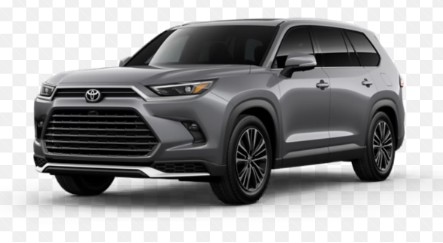
The Toyota Grand Highlander arrived like a breath of fresh air in a crowded SUV market. Families wanted more room. Road-trippers wanted comfort. Drivers wanted hybrid efficiency without sacrificing power. Toyota looked at all those demands and essentially said, “Why not all at once?”
That’s where the conversation around Toyota Grand Highlander miles per gallon becomes fascinating. This isn’t just another large SUV trying to sip fuel politely while secretly guzzling it behind your back. The Grand Highlander genuinely attempts to balance size, practicality, and efficiency in a way that feels surprisingly modern.
And honestly? That balance matters now more than ever.
Fuel prices fluctuate like a roller coaster with no seat belts. Long commutes stretch wallets thin. Weekend getaways suddenly feel more expensive than the getaway itself. So when we start talking about MPG figures in a three-row SUV, we’re not discussing boring numbers on a spec sheet anymore. We’re talking about daily life.
Let’s dive deep into what the Toyota Grand Highlander delivers in real-world fuel economy, how the different engines compare, and whether its MPG numbers actually live up to the hype.
Content in this publication
- Why MPG Matters More in Large SUVs
- Toyota Grand Highlander MPG by Engine Option
- Toyota Grand Highlander Hybrid MPG
- Hybrid MAX MPG Figures
- Real-World MPG vs EPA Estimates
- How the Grand Highlander Compares to Rivals
- Why Toyota Hybrids Perform So Well
- Does AWD Affect MPG?
- How Driving Style Changes Fuel Economy
- Toyota Grand Highlander Highway MPG
- City MPG Performance
- Towing and Fuel Economy
- Seasonal MPG Changes
- How Weight Affects MPG
- Fuel Type Recommendations
- Long-Term Fuel Savings
- Is the Grand Highlander Hybrid Worth It?
- Who Should Choose Each Powertrain?
- The Psychological Side of Good MPG
- Technology That Improves Fuel Economy
- Maintenance and MPG
- Future Resale Value and Fuel Efficiency
- Final Thoughts on Toyota Grand Highlander Miles Per Gallon
- FAQs
Why MPG Matters More in Large SUVs
Large SUVs used to follow one simple rule:
More space equals terrible fuel economy.
For years, buyers accepted that tradeoff. If you wanted three rows, cargo room, towing capability, and comfort, you also accepted frequent gas station visits like they were part of your weekly routine.
But expectations changed.
Modern drivers now expect:
- Better fuel efficiency
- Lower ownership costs
- Reduced emissions
- Longer driving range
- Hybrid technology without compromise
The Toyota Grand Highlander enters this landscape almost like a chess master anticipating every move. It offers multiple powertrains specifically designed to appeal to different drivers.
Some want maximum MPG.
Others want turbocharged performance.
Some want the best mix of both.
Toyota essentially laid out a buffet table and said, “Pick your flavor.”
Toyota Grand Highlander MPG by Engine Option
The Grand Highlander comes with three primary powertrain configurations, and each tells a completely different fuel economy story.
2.4L Turbocharged Gas Engine MPG
The standard gasoline engine is a 2.4-liter turbocharged four-cylinder.
Estimated MPG:
- City: Around 21 MPG
- Highway: Around 28 MPG
- Combined: Around 24 MPG
For a vehicle this large, those numbers are respectable. Not groundbreaking, but respectable.
This engine suits drivers who prioritize straightforward ownership and don’t necessarily want hybrid complexity. It provides decent acceleration while maintaining fuel economy that won’t make your credit card cry at the pump.
Still, the gasoline version is really just the opening act.
The hybrid models steal the spotlight.
Toyota Grand Highlander Hybrid MPG
This is where things become genuinely impressive.
The standard hybrid version combines a 2.5-liter engine with electric motors to deliver exceptional efficiency.
Estimated MPG:
- City: Around 36 MPG
- Highway: Around 32 MPG
- Combined: Around 34 MPG
Now pause for a second.
We’re talking about a three-row SUV capable of carrying seven or eight passengers while achieving fuel economy numbers that rival some compact sedans from a decade ago.
That’s not just good.
That’s absurdly good.
Toyota’s hybrid system feels polished because, frankly, they’ve been refining hybrid technology longer than many automakers have even been taking it seriously.
Hybrid MAX MPG Figures
Then comes the wildcard:
Hybrid MAX Powertrain
This setup blends hybrid efficiency with significantly more performance.
Estimated MPG:
- City: Around 26 MPG
- Highway: Around 27 MPG
- Combined: Around 27 MPG
The Hybrid MAX sacrifices some efficiency for power, but it transforms the driving experience dramatically.
This version produces strong acceleration that feels almost shocking in a family SUV. It’s like discovering your quiet suburban neighbor secretly trains for Formula 1 on weekends.
Real-World MPG vs EPA Estimates
EPA estimates are helpful, but let’s be honest:
Real-world driving is chaos.
Traffic jams.
Aggressive acceleration.
Mountain roads.
Kids blasting climate controls.
Cargo packed like a game of Tetris.
Actual MPG depends heavily on how and where we drive.
Here’s what many owners commonly experience:
| Powertrain | Typical Real-World MPG |
|---|---|
| Gas Turbo | 22–25 MPG |
| Hybrid | 32–36 MPG |
| Hybrid MAX | 24–28 MPG |
The standard hybrid consistently delivers the best real-world efficiency. That’s partly because Toyota’s hybrid systems thrive in stop-and-go traffic where regenerative braking helps recharge the battery.
Ironically, city driving often becomes more efficient than highway driving.
That still feels backward to some people.
How the Grand Highlander Compares to Rivals
The Grand Highlander doesn’t compete in isolation. It battles some heavyweight names in the SUV segment.
Toyota Grand Highlander vs Kia Telluride MPG
Kia Telluride typically delivers:
- Around 20–26 MPG combined
The Telluride remains an excellent SUV, but Toyota’s hybrid efficiency leaves it trailing.
Toyota Grand Highlander vs Hyundai Palisade MPG
Hyundai Palisade generally achieves:
- Around 22 MPG combined
Again, respectable numbers, but not hybrid-level efficiency.
Toyota Grand Highlander vs Honda Pilot MPG
Honda Pilot typically offers:
- Around 22–25 MPG combined
The Pilot competes closely with the gas-powered Grand Highlander, but Toyota’s hybrid options shift the entire battlefield.
Why Toyota Hybrids Perform So Well
Toyota hybrids don’t rely on gimmicks.
They work because Toyota refined the formula obsessively over decades.
Key efficiency advantages include:
- Regenerative braking
- Smooth electric assistance
- Intelligent power management
- Lightweight battery systems
- Aerodynamic optimization
The Grand Highlander benefits from all that accumulated engineering knowledge.
Driving it often feels seamless because the transition between gasoline and electric power is nearly invisible.
There’s no drama.
No strange surging.
No awkward hesitation.
Just smooth efficiency.
Does AWD Affect MPG?
Yes, absolutely.
All-wheel drive typically reduces fuel economy slightly because the vehicle sends power to more wheels, increasing drivetrain resistance and overall weight.
Here’s the general difference:
| Drivetrain | MPG Impact |
|---|---|
| FWD | Better efficiency |
| AWD | Slightly lower MPG |
However, Toyota’s AWD systems remain relatively efficient compared to competitors.
The MPG penalty isn’t dramatic.
That’s important for buyers in snowy or rainy climates where AWD provides peace of mind.
How Driving Style Changes Fuel Economy
Two drivers can own identical Grand Highlanders and achieve wildly different MPG figures.
Why?
Driving habits matter enormously.
Habits That Improve MPG
- Gentle acceleration
- Smooth braking
- Consistent highway speeds
- Proper tire pressure
- Reduced cargo weight
Habits That Hurt MPG
- Aggressive acceleration
- High-speed driving
- Excessive idling
- Heavy towing
- Overloaded cargo areas
Think of fuel economy like a garden.
Treat it carefully and it flourishes.
Treat it recklessly and it withers fast.
Toyota Grand Highlander Highway MPG
Long-distance travel is where the Grand Highlander becomes especially attractive.
The hybrid model can comfortably exceed 500 miles of driving range on a full tank under favorable conditions.
That changes road trips dramatically.
Instead of frequent fuel stops interrupting the journey, we spend more time actually enjoying the drive.
The cabin’s quietness helps too.
Wind noise remains controlled.
Road vibrations stay muted.
The SUV feels composed at highway speeds, which makes efficient cruising easier.
City MPG Performance
Urban driving used to be the natural enemy of large SUVs.
Not anymore.
The hybrid Grand Highlander shines in cities because electric motors handle low-speed driving efficiently.
Stoplights become opportunities for energy recovery.
Traffic jams become less painful financially.
That’s one reason many drivers see higher-than-expected city MPG numbers.
The SUV adapts well to modern commuting realities.
Towing and Fuel Economy
Towing changes everything.
Even efficient hybrids consume significantly more fuel when pulling heavy loads.
The Grand Highlander can tow respectable amounts depending on configuration, but MPG naturally drops during towing.
Typical towing MPG ranges:
- Gas version: 15–19 MPG
- Hybrid: 20–25 MPG
- Hybrid MAX: 18–23 MPG
Terrain matters too.
Flat highways differ enormously from mountain climbs.
Seasonal MPG Changes
Weather influences fuel economy more than many people realize.
Winter MPG Drops
Cold temperatures can reduce efficiency because:
- Engines require more warm-up time
- Batteries operate less efficiently
- Cabin heating increases energy demand
Summer MPG Changes
Extreme heat can also reduce efficiency due to aggressive air conditioning usage.
Still, Toyota hybrids tend to manage seasonal changes better than many competitors.
How Weight Affects MPG
The Grand Highlander is larger than the standard Highlander, which naturally affects efficiency.
More size means:
- More passenger room
- More cargo space
- More comfort
- More weight
Toyota counteracts that extra mass through efficient engine design and hybrid systems.
Without hybrid assistance, MPG figures would likely be far lower.
Fuel Type Recommendations
Toyota recommends regular unleaded gasoline for most Grand Highlander configurations.
That’s important because premium fuel requirements can quietly increase ownership costs over time.
The ability to achieve strong MPG on regular fuel keeps operating expenses manageable.
For families, that matters immensely.
Long-Term Fuel Savings
The hybrid version may cost more upfront, but fuel savings accumulate steadily over years.
Let’s imagine:
- 15,000 miles annually
- Gas model averages 24 MPG
- Hybrid averages 34 MPG
That difference could save hundreds of gallons annually.
Over five years, the savings become substantial.
And when fuel prices spike, hybrid owners feel less pain.
Is the Grand Highlander Hybrid Worth It?
For many buyers, yes.
Especially if we:
- Commute frequently
- Drive long distances
- Keep vehicles for years
- Prioritize efficiency
- Want lower fuel costs
The hybrid strikes a sweet spot between practicality and economy.
It feels like Toyota finally cracked the code for large family SUVs.
Who Should Choose Each Powertrain?
Choose the Gas Version If:
- You want lower upfront cost
- You drive less annually
- You prefer simpler ownership
- You rarely encounter traffic
Choose the Hybrid If:
- MPG is your priority
- You drive often
- You want maximum efficiency
- You spend time in urban traffic
Choose Hybrid MAX If:
- You want strong acceleration
- You tow regularly
- You value performance
- You still want decent MPG
Each version serves a different personality.
That flexibility is part of the Grand Highlander’s appeal.
The Psychological Side of Good MPG
This sounds strange, but good fuel economy changes how we feel about driving.
When MPG is poor, every trip feels expensive.
Every detour feels wasteful.
But efficient vehicles remove some of that mental friction.
We stop obsessing over fuel stops.
Road trips feel freer.
Commutes feel lighter.
The Grand Highlander hybrid taps into that emotional benefit beautifully.
Technology That Improves Fuel Economy
Toyota equips the Grand Highlander with several efficiency-focused technologies:
- Eco driving modes
- Regenerative braking
- Automatic start-stop systems
- Aerodynamic body shaping
- Hybrid energy displays
These features subtly encourage smarter driving habits.
Some drivers even turn efficient driving into a personal challenge.
Watching MPG averages climb becomes oddly satisfying.
Maintenance and MPG
Poor maintenance can quietly destroy fuel economy.
To preserve optimal MPG:
- Replace air filters regularly
- Maintain correct tire pressure
- Follow oil change schedules
- Use recommended fluids
- Address warning lights promptly
A neglected vehicle slowly loses efficiency over time.
Think of maintenance as protecting your MPG investment.
Future Resale Value and Fuel Efficiency
Fuel-efficient SUVs often hold value better during periods of high fuel prices.
Toyota hybrids historically perform strongly in resale markets.
That means MPG doesn’t just save money today.
It may also help preserve vehicle value tomorrow.
That’s an underrated advantage.
Final Thoughts on Toyota Grand Highlander Miles Per Gallon
The Toyota Grand Highlander proves something important:
Large SUVs no longer need to be fuel-hungry giants.
Toyota managed to create a vehicle that feels spacious, comfortable, powerful, and surprisingly efficient all at once. The standard gas model delivers respectable MPG for its class, while the hybrid version genuinely changes expectations for what a family SUV can achieve.
The hybrid model stands out most dramatically. Achieving mid-30 MPG figures in a three-row SUV feels almost like bending the laws of physics. Yet Toyota makes it feel effortless.
And perhaps that’s the real magic here.
The Grand Highlander doesn’t force buyers to choose between practicality and efficiency anymore. It blends both into one refined package that feels ready for modern life — from school runs to cross-country adventures.
For families seeking space without surrendering fuel economy, the Toyota Grand Highlander sits near the top of the mountain.
FAQs
Does the Toyota Grand Highlander hybrid really get over 30 MPG?
Yes. Many drivers report real-world fuel economy between 32 and 36 MPG depending on driving conditions and habits.
Which Toyota Grand Highlander has the best MPG?
The standard hybrid version offers the best fuel economy, typically around 34 MPG combined.
Is the Hybrid MAX more fuel efficient than the gas model?
Yes. The Hybrid MAX generally achieves better combined MPG than the standard gas engine while also delivering significantly more power.
Does AWD reduce Toyota Grand Highlander MPG?
Yes. AWD models usually experience a slight reduction in fuel economy compared to front-wheel-drive versions.
How far can the Toyota Grand Highlander travel on a full tank?
The hybrid version can often exceed 500 miles of range depending on driving conditions and fuel tank size.
If you want to know other articles similar to Toyota Grand Highlander Miles Per Gallon you can visit the category Driving.
Can Nissan Rogue Pull a Boat? Complete Towing Guide
Can Nissan Rogue Be Flat Towed? Complete Towing Guide
Are Nissan Rogue Good on Gas? MPG, Fuel Economy, and Real-World Costs
Can Nissan Rogue Drive in Snow? Complete Winter Driving Guide

Kia Sorento Diesel Fuel Consumption: MPG, Efficiency and Real-World Range
Haval Jolion Hybrid Fuel Consumption: How Efficient Is It Really?
Leave a Reply
More content of your interest