

Nissan Altima Fuel Economy: A Complete Guide to Efficiency, Savings, and Real-World MPG

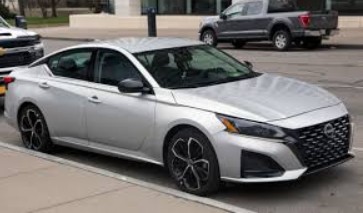
The Nissan Altima has long been one of the most popular midsize sedans on the road. While many drivers appreciate its comfortable ride, stylish design, and advanced technology, one feature consistently attracts attention: fuel economy. In a world where fuel prices can fluctuate like waves on the ocean, choosing a vehicle with strong efficiency can make a significant difference to our budgets.
In this comprehensive guide, we will explore Nissan Altima fuel economy across different model years, engine options, driving conditions, and ownership scenarios. Whether we're considering buying a new Altima or evaluating an older model, understanding its fuel efficiency helps us make smarter decisions.
Content in this publication
- Why Nissan Altima Fuel Economy Matters
- Understanding MPG in the Nissan Altima
- Nissan Altima Fuel Economy by Engine Type
- Fuel Economy of Recent Nissan Altima Models
- How All-Wheel Drive Affects Fuel Economy
- Real-World Nissan Altima Fuel Economy
- The Role of Nissan's Xtronic CVT
- Factors That Influence Nissan Altima Fuel Economy
- Best Nissan Altima Model Years for Fuel Economy
- Comparing Nissan Altima Fuel Economy to Competitors
- Tips to Maximize Nissan Altima Fuel Economy
- Fuel Economy and Long-Term Ownership Costs
- Environmental Benefits of Better Fuel Economy
- Common Fuel Economy Myths
- Should Fuel Economy Be the Main Reason to Buy a Nissan Altima?
- Conclusion
- Frequently Asked Questions
Why Nissan Altima Fuel Economy Matters
Fuel economy is more than a number on a specification sheet. It directly impacts:
- Monthly fuel expenses
- Long-term ownership costs
- Environmental footprint
- Road trip affordability
- Vehicle resale value
Think of fuel efficiency as the silent partner in every journey. It works behind the scenes, helping us travel farther while spending less.
Understanding MPG in the Nissan Altima
Before diving into specific figures, let's clarify what fuel economy ratings actually mean.
City MPG
City MPG measures fuel consumption during stop-and-go driving, including:
- Traffic lights
- Congested roads
- Frequent acceleration
- Idling periods
Highway MPG
Highway MPG reflects fuel efficiency during steady-speed travel on open roads.
Combined MPG
Combined MPG averages city and highway performance, giving us a realistic overview of daily driving efficiency.
Nissan Altima Fuel Economy by Engine Type
The Nissan Altima has offered several engines throughout its history, each with unique efficiency characteristics.
2.5-Liter Four-Cylinder Engine
The 2.5-liter engine has been the backbone of the Altima lineup for years.
Typical fuel economy ratings include:
- City: 27–32 MPG
- Highway: 37–39 MPG
- Combined: 31–34 MPG
This engine strikes an excellent balance between power and efficiency.
2.0-Liter VC-Turbo Engine
Introduced as a more advanced powertrain, the VC-Turbo engine features variable compression technology.
Typical ratings include:
- City: 25–26 MPG
- Highway: 34–36 MPG
- Combined: 29–30 MPG
While slightly less efficient than the standard engine, it delivers substantially greater performance.
3.5-Liter V6 Engine (Older Models)
Previous Altima generations offered a V6 option.
Typical fuel economy:
- City: 20–22 MPG
- Highway: 28–32 MPG
- Combined: 24–26 MPG
Drivers gained additional horsepower but sacrificed some efficiency.
Fuel Economy of Recent Nissan Altima Models
Let's examine how recent generations perform.
2025 Nissan Altima Fuel Economy
The latest Altima remains among the most fuel-efficient midsize sedans.
Estimated ratings:
- Up to 27 MPG city
- Up to 39 MPG highway
- Up to 32 MPG combined
These figures make it highly competitive in its segment.
2024 Nissan Altima Fuel Economy
The 2024 model offers similar efficiency:
| Engine | City MPG | Highway MPG |
|---|---|---|
| 2.5L FWD | 27 | 39 |
| 2.5L AWD | 26 | 36 |
| VC-Turbo | 25 | 34 |
2023 Nissan Altima Fuel Economy
The 2023 Altima continues Nissan's tradition of efficiency while providing modern safety technologies.
Average combined ratings ranged from 29 to 32 MPG depending on configuration.
How All-Wheel Drive Affects Fuel Economy
Many drivers appreciate AWD for added traction.
However, AWD systems increase:
- Vehicle weight
- Mechanical complexity
- Rolling resistance
As a result, AWD Altimas typically lose 1–3 MPG compared to front-wheel-drive versions.
Is AWD Worth the Fuel Economy Trade-Off?
The answer depends on location.
AWD may be worthwhile if we regularly encounter:
- Snow
- Ice
- Heavy rain
- Mountain roads
Otherwise, front-wheel drive generally provides better efficiency.
Real-World Nissan Altima Fuel Economy
EPA estimates provide useful benchmarks, but real-world driving often tells a different story.
Urban Driving Conditions
City driving can reduce fuel economy because:
- Frequent braking wastes momentum
- Stoplights increase idle time
- Traffic causes repeated acceleration
Many owners report:
- 24–30 MPG in city environments
Highway Driving Conditions
Highway travel often exceeds expectations.
Drivers commonly achieve:
- 35–42 MPG on extended trips
Some owners report surpassing official ratings during ideal conditions.
Mixed Driving Scenarios
Most commuters experience:
- 29–34 MPG combined
This range reflects typical daily use.
The Role of Nissan's Xtronic CVT
One reason the Altima performs so well is its continuously variable transmission.
How CVT Technology Improves Fuel Economy
Traditional transmissions shift between fixed gears.
The Xtronic CVT continuously adjusts ratios to keep the engine operating efficiently.
Benefits include:
- Reduced fuel consumption
- Smoother acceleration
- Better highway efficiency
- Lower engine strain
CVT Versus Traditional Automatic Transmission
Compared to conventional automatics, CVTs often deliver:
- Improved MPG
- More consistent performance
- Lower operating costs
For fuel-conscious drivers, this technology provides a significant advantage.
Factors That Influence Nissan Altima Fuel Economy
No vehicle achieves identical results for every driver.
Driving Habits
Aggressive driving can dramatically reduce efficiency.
Common MPG killers include:
- Hard acceleration
- Excessive speeding
- Rapid braking
- Long idling periods
Vehicle Maintenance
Poor maintenance acts like a hidden leak in our fuel budget.
Essential tasks include:
Regular Oil Changes
Fresh oil reduces engine friction.
Proper Tire Pressure
Underinflated tires increase rolling resistance.
Air Filter Replacement
Clean filters improve airflow and combustion efficiency.
Spark Plug Maintenance
Healthy spark plugs support efficient fuel burning.
Best Nissan Altima Model Years for Fuel Economy
Certain model years stand out.
2020–2025 Models
These vehicles generally provide:
- Advanced engine technology
- Improved aerodynamics
- Enhanced transmission calibration
2019 Altima Redesign
The 2019 redesign represented a major leap forward.
Notable improvements included:
- New platform
- Better aerodynamics
- Available AWD
- Improved fuel efficiency
Comparing Nissan Altima Fuel Economy to Competitors
The midsize sedan segment is highly competitive.
Nissan Altima vs Toyota Camry
Toyota Camry typically achieves similar fuel economy.
Comparison:
- Altima: Up to 39 MPG highway
- Camry: Up to 39 MPG highway
The competition remains extremely close.
Nissan Altima vs Honda Accord
Honda Accord also delivers strong efficiency.
Comparison:
- Altima: Up to 39 MPG highway
- Accord: Up to 37 MPG highway
The Altima often holds a slight advantage.
Nissan Altima vs Hyundai Sonata
Hyundai Sonata remains another efficient rival.
Both vehicles offer competitive fuel consumption and ownership costs.
Tips to Maximize Nissan Altima Fuel Economy
Small adjustments can produce noticeable improvements.
Drive Smoothly
Imagine balancing a glass of water on your dashboard.
Smooth inputs improve efficiency.
Use Cruise Control
Cruise control helps maintain consistent speeds during highway travel.
Remove Excess Weight
Extra cargo forces the engine to work harder.
Reduce Aerodynamic Drag
Remove unused roof racks and cargo carriers whenever possible.
Plan Routes Efficiently
Avoiding traffic can save both time and fuel.
Fuel Economy and Long-Term Ownership Costs
Efficiency compounds over time.
Annual Fuel Savings Example
Assume:
- 15,000 miles driven annually
- Fuel price of $4 per gallon
Vehicle A:
- 25 MPG
Vehicle B:
- 32 MPG
The more efficient vehicle can save hundreds of dollars each year.
Five-Year Ownership Impact
Over five years, fuel savings can reach thousands of dollars depending on driving habits and fuel prices.
Environmental Benefits of Better Fuel Economy
Improved efficiency offers more than financial advantages.
Benefits include:
- Lower carbon emissions
- Reduced fuel consumption
- Smaller environmental footprint
- Increased sustainability
Every gallon saved represents a step toward cleaner transportation.
Common Fuel Economy Myths
Many misconceptions persist.
Most Altima models are designed for regular gasoline.
Premium fuel usually provides little benefit.
Warming Up the Car for Long Periods Saves Fuel
Modern engines require minimal warm-up time.
Extended idling wastes fuel.
Air Conditioning Always Hurts Fuel Economy
Modern systems are surprisingly efficient.
At highway speeds, open windows may actually reduce efficiency more than using air conditioning.
Should Fuel Economy Be the Main Reason to Buy a Nissan Altima?
Fuel economy is undoubtedly one of the Altima's strongest attributes.
However, it's not the only reason drivers choose it.
Additional strengths include:
- Comfortable ride quality
- Spacious interior
- Advanced safety technology
- Available all-wheel drive
- Competitive pricing
When combined with excellent fuel efficiency, these characteristics create a well-rounded package.
Conclusion
The Nissan Altima fuel economy story is one of balance. It delivers impressive efficiency without sacrificing comfort, practicality, or everyday usability. Whether we choose a modern 2.5-liter model, an AWD variant, or a performance-oriented VC-Turbo version, the Altima remains one of the most economical midsize sedans available.
For commuters, families, and road-trip enthusiasts alike, the Altima proves that fuel efficiency doesn't have to come at the expense of enjoyment. Like a marathon runner who maintains speed without exhausting energy reserves, the Nissan Altima continues to demonstrate why it remains a favorite among drivers seeking value and efficiency.
Frequently Asked Questions
1. What is the average fuel economy of a Nissan Altima?
Most modern Nissan Altima models average between 29 and 34 MPG combined.
2. Which Nissan Altima gets the best gas mileage?
Recent front-wheel-drive models equipped with the 2.5-liter engine achieve the highest fuel economy, reaching up to 39 MPG on the highway.
3. Does AWD reduce Nissan Altima fuel economy?
Yes. AWD models typically lose 1–3 MPG compared to front-wheel-drive versions.
4. Is the Nissan Altima fuel-efficient for long road trips?
Absolutely. Many drivers report highway fuel economy between 35 and 42 MPG during extended trips.
Most Altima models are designed for regular gasoline, and premium fuel generally offers little or no improvement in efficiency.
If you want to know other articles similar to Nissan Altima Fuel Economy: A Complete Guide to Efficiency, Savings, and Real-World MPG you can visit the category Driving.
Can Nissan Rogue Pull a Boat? Complete Towing Guide
Can Nissan Rogue Be Flat Towed? Complete Towing Guide
Are Nissan Rogue Good on Gas? MPG, Fuel Economy, and Real-World Costs
Can Nissan Rogue Drive in Snow? Complete Winter Driving Guide

Kia Sorento Diesel Fuel Consumption: MPG, Efficiency and Real-World Range
Haval Jolion Hybrid Fuel Consumption: How Efficient Is It Really?
Leave a Reply
More content of your interest