
Toyota Hilux Weight: Kerb Weight, GVM, Payload and More

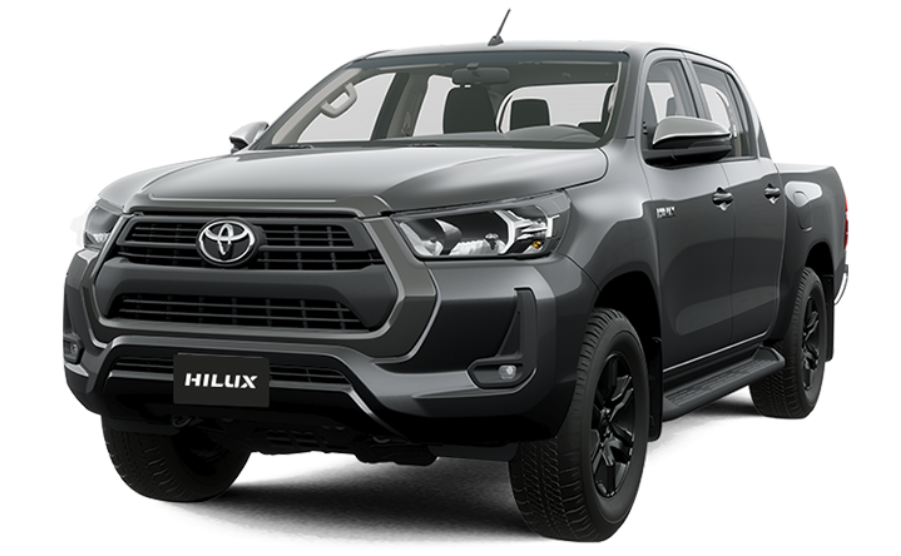
If you are searching for Toyota Hilux weight, you have probably already discovered something slightly frustrating: there is no single number that answers the question.
A Toyota Hilux can weigh considerably less than 2,000 kg in one configuration and comfortably exceed 2,300 kg in another. Then we have Gross Vehicle Mass, payload, axle limits, towing weight, and Gross Combination Mass to think about. Suddenly, what looked like a simple specification turns into alphabet soup.
Fortunately, it becomes much easier once we separate the different measurements.
For many contemporary Hilux models, kerb weight generally sits somewhere around 1,700–2,300 kg, depending heavily on body style, drivetrain, specification, equipment, and market. For example, Toyota Australia's May 2026 specification sheet lists a 4x2 WorkMate Single-Cab Cab-Chassis at approximately 1,690 kg maximum kerb weight with a manual transmission and 1,700 kg with an automatic. Some Double-Cab 4x2 variants exceed 2,000 kg.
Meanwhile, Toyota UK's Hilux specifications show some versions at roughly 2,110–2,325 kg kerb/unladen weight, demonstrating just how significantly regional specifications can differ.
So rather than chasing one magic figure, let us break down what Toyota Hilux weight really means, how each measurement affects everyday ownership, and why understanding these numbers matters before loading the tray or attaching a trailer.
Content in this publication
- What Is the Toyota Hilux Weight?
- Toyota Hilux Kerb Weight Explained
- Toyota Hilux Weight by Cab Style
- Toyota Hilux 4x2 Weight vs 4x4 Weight
- What Is Toyota Hilux GVM?
- Toyota Hilux Payload Capacity
- Toyota Hilux Tare Weight vs Kerb Weight
- Toyota Hilux Gross Combination Mass
- Toyota Hilux Towing Weight
- Toyota Hilux Axle Weight Limits
- How Accessories Increase Toyota Hilux Weight
- How Passengers Affect Hilux Payload
- Does a Heavier Hilux Use More Fuel?
- Does Toyota Hilux Weight Affect Performance?
- Toyota Hilux Weight and Off-Road Driving
- Why Toyota Hilux Weight Differs by Country
- Older Toyota Hilux Weight
- How to Find the Exact Weight of Your Toyota Hilux
- Toyota Hilux Weight vs Payload: Which Matters More?
- Can You Reduce Toyota Hilux Weight?
- Is Toyota Hilux Weight Good for Stability?
- Toyota Hilux Weight: The Practical Numbers to Remember
- Final Thoughts on Toyota Hilux Weight
- Frequently Asked Questions
What Is the Toyota Hilux Weight?
The short answer is that most modern Toyota Hilux models weigh somewhere in the neighbourhood of 1.7 to 2.3 tonnes when unloaded, although specific models may fall outside that range.
A basic 4x2 work-oriented Hilux typically weighs less than a heavily equipped 4x4 Double Cab because the latter carries considerably more hardware.
Think about everything that adds mass:
- Four-wheel-drive components
- Larger wheels and tyres
- Additional doors
- Extra seats
- More interior equipment
- Larger engines or electrified components
- Underbody protection
- Tow bars
- Sports bars
- Canopies
- Bull bars
- Additional safety and convenience equipment
A Hilux is a little like a backpack. The basic shell might not seem enormously heavy, but once we start adding equipment, accessories and passengers, the total climbs surprisingly quickly.
Toyota Hilux Kerb Weight Explained
Kerb weight, sometimes called curb weight, is one of the figures buyers encounter most frequently.
It essentially represents the vehicle's operational weight before passengers and cargo are added, although the precise regulatory definition can vary by country.
That last detail matters.
One market may calculate kerb mass with certain fluids, fuel levels or standard equipment included differently from another. Consequently, we should not automatically compare an Australian Hilux specification with a British or South African number as if the measurement methodology were identical.
Toyota Australia currently publishes approximate maximum kerb weights for individual Hilux configurations. Its May 2026 specification data, for example, lists the 4x2 WorkMate Single-Cab Cab-Chassis at around 1,690 kg manual and 1,700 kg automatic, while selected Double-Cab 4x2 automatic versions are above 2,000 kg.
That alone demonstrates why asking "How much does a Hilux weigh?" requires a second question:
Which Hilux?
Toyota Hilux Weight by Cab Style
Cab configuration is one of the biggest influences on vehicle mass.
Toyota Hilux Single Cab Weight
The Single Cab is generally among the lighter Hilux configurations.
There is less passenger compartment structure, fewer doors, fewer seats and usually fewer comfort-oriented components.
For commercial users, that can be extremely valuable.
A lighter vehicle may leave more of its Gross Vehicle Mass available for payload, meaning we can devote more of the legal weight allowance to tools, machinery, supplies or other cargo.
Australian 4x2 Single-Cab configurations can be around the high-1,600 kg to low-1,700 kg region before accessories and payload are added, depending on specification.
Toyota Hilux Extra Cab Weight
Extra Cab versions sit somewhere between Single and Double Cab models.
They provide additional interior space while retaining more tray length than a traditional Double Cab.
Naturally, the additional body structure adds weight.
Depending on trim, drivetrain and country, an Extra Cab Hilux may weigh well above 2,000 kg in some specifications. Historical and regional Hilux data show clearly that Extra Cab models generally sit above equivalent Single Cab versions in kerb mass.
Toyota Hilux Double Cab Weight
Double Cab models are typically the heaviest mainstream Hilux body configuration.
That hardly comes as a surprise.
We are adding:
- Two additional doors
- A full rear seating area
- More glass
- More interior trim
- Additional restraints and safety hardware
- Greater sound insulation on premium models
- More convenience equipment
Some current UK Hilux Double Cab configurations list kerb/unladen weight within approximately 2,110–2,325 kg, depending on powertrain and specification.
A lifestyle-focused Hilux, therefore, can weigh substantially more than the stripped-back work ute sharing the same badge.
Toyota Hilux 4x2 Weight vs 4x4 Weight
Four-wheel drive does not come free from a weight perspective.
A 4x4 Hilux requires additional mechanical components such as a transfer case, front differential, driveshafts and related hardware.
That extra equipment may add considerable mass.
Toyota Australia's current Hilux information illustrates the difference clearly. The company lists substantially different kerb-weight figures across 4x2 and 4x4 WorkMate configurations, with 4x4 versions generally heavier.
Does that make the 4x2 automatically better?
Not necessarily.
Everything depends on how we use the ute.
A 4x2 may make more sense for city deliveries, highway driving and relatively predictable worksites. A 4x4 earns its additional kilograms when traction becomes important on muddy properties, steep trails, construction sites, beaches or rough terrain.
Weight is simply part of the trade-off.
What Is Toyota Hilux GVM?
Now we reach one of the most important figures: Gross Vehicle Mass, normally abbreviated to GVM.
GVM is the maximum legal mass of the vehicle when loaded.
That includes far more than the ute itself.
We need to account for:
- Vehicle kerb weight
- Driver
- Passengers
- Cargo
- Tools
- Accessories
- Fuel where applicable
- Tow-ball download
- Anything else being carried by the vehicle
Toyota Australia's May 2026 specification sheet lists GVM figures around 2,950–2,980 kg for the cited 4x2 configurations, while selected 4x4 models can be rated higher.
Toyota UK's specifications show Gross Vehicle Weight figures reaching around 3,130–3,210 kg on certain current configurations.
Once again, country-specific specifications matter.
Why Hilux GVM Matters
Exceeding GVM is not simply a theoretical specification problem.
An overloaded ute can affect:
- Braking performance
- Steering response
- Tyre temperatures
- Suspension behaviour
- Stability
- Insurance
- Vehicle legality
- Mechanical durability
It is therefore better to think of GVM as a hard ceiling rather than a suggestion.
Toyota Hilux Payload Capacity
Payload is basically the useful weight we can add to the vehicle.
A simplified calculation is:
Payload = GVM − vehicle weight
Suppose we have a hypothetical Hilux with:
- Kerb weight: 2,050 kg
- GVM: 3,050 kg
Our theoretical payload allowance is approximately:
3,050 − 2,050 = 1,000 kg
Simple, right?
Only until accessories enter the conversation.
If we subsequently install a 60 kg bull bar, 40 kg winch, 70 kg canopy and 25 kg drawers, those components consume part of our payload allowance permanently.
Then add four occupants.
Then luggage.
Then camping gear.
Then tow-ball weight.
Our apparently enormous one-tonne payload can shrink like an ice cube on hot asphalt.
Current UK Toyota specifications list payload figures around 1,010–1,025 kg for several Hilux powertrain configurations.
Toyota Hilux Tare Weight vs Kerb Weight
Another term commonly encountered is tare weight or tare mass.
Although people frequently use tare and kerb weight interchangeably, they are not necessarily identical.
Definitions vary according to jurisdiction.
Tare mass may refer to the mass of an unloaded vehicle prepared according to a particular legal standard, potentially including some fluids but excluding payload and passengers.
Kerb mass similarly describes an operationally ready vehicle but may use different assumptions regarding fuel and equipment.
The practical lesson is simple:
Use the measurement listed on the compliance documentation applicable to your specific vehicle and country.
Do not calculate legal payload using a random kerb-weight figure pulled from another market.
Toyota Hilux Gross Combination Mass
Gross Combination Mass, or GCM, becomes especially important when towing.
GCM represents the maximum permitted combined mass of the Hilux and the trailer.
Toyota Australia's 2026 specifications list GCM figures of roughly 5,800–5,880 kg for the referenced 4x2 models.
Some overseas specifications use the term Gross Train Weight instead. Toyota UK's current Hilux specification lists a Gross Train Weight of 6,300 kg for several configurations.
This is where towing mathematics gets interesting.
A ute may advertise a strong maximum towing capacity, yet we cannot necessarily load the vehicle to maximum GVM and simultaneously tow the heaviest permitted trailer.
The relationship between GVM, GCM, payload and trailer mass must all be considered together.
Toyota Hilux Towing Weight
Many modern Hilux 4x4 variants are rated to tow as much as 3,500 kg with trailer brakes, depending on specification and market.
Toyota Australia's current range information lists up to 3,500 kg braked towing capacity for selected 4x4 models.
Current UK Toyota specifications also list 3,500 kg maximum braked trailer weight across the referenced Hilux powertrains.
But maximum towing capacity should never be viewed in isolation.
Tow-Ball Weight Counts Too
A trailer places downward force on the tow ball.
That load sits on the vehicle.
Consequently, tow-ball download effectively consumes available payload and contributes to axle loading.
Imagine our Hilux has only 350 kg of usable payload remaining after accessories and occupants.
If the trailer contributes 300 kg of tow-ball load, we suddenly have almost nothing left for additional equipment.
That is why experienced touring owners weigh their vehicles rather than relying entirely on brochure numbers.
Toyota Hilux Axle Weight Limits
Even remaining below GVM does not automatically guarantee that everything is legal.
Vehicles also have maximum permitted axle loads.
We can theoretically remain below total GVM while overloading the rear axle.
This situation becomes particularly relevant when we add:
- Canopies
- Drawers
- Spare tyres
- Long-range fuel tanks
- Toolboxes
- Heavy tow-ball loads
- Cargo positioned behind the rear axle
Weight placed far behind the axle can behave like someone pushing down on the long end of a lever.
It does not merely increase overall mass; it can significantly change axle loading and handling.
How Accessories Increase Toyota Hilux Weight
Accessories are often the silent payload killers.
A stock Hilux might have healthy payload capacity. Then we prepare it for touring or work.
Suddenly the build includes:
- Bull bar
- Winch
- Steel underbody protection
- Roof rack
- Rooftop tent
- Canopy
- Drawer system
- Auxiliary battery
- Fridge
- Water tank
- Recovery equipment
- Tow bar
- Additional spare wheel
Individually, each component may look manageable.
Collectively, they can add several hundred kilograms.
The Touring Hilux Example
Imagine starting with 900 kg of theoretical payload.
We add:
- Bull bar and winch: 90 kg
- Canopy: 80 kg
- Drawers: 70 kg
- Roof rack and tent: 80 kg
- Battery system: 40 kg
- Fridge and food: 50 kg
- Water: 60 kg
- Recovery equipment: 30 kg
We have already consumed:
500 kg
Now add two adults, two children and luggage.
That comfortable margin disappears rapidly.
How Passengers Affect Hilux Payload
We sometimes forget passengers are cargo from a weight-calculation perspective.
Five adults can represent several hundred kilograms.
Suppose five occupants average 80 kg each.
That is:
5 × 80 = 400 kg
If the Hilux started with 1,000 kg of usable payload, passengers alone have consumed 40% of it before tools, luggage, accessories or trailer download enter the equation.
For Double Cab owners, this matters enormously.
A vehicle may have five seats without necessarily having enough remaining payload for five adults plus a fully loaded tray.
Does a Heavier Hilux Use More Fuel?
All else being equal, moving greater mass requires more energy.
So yes, additional weight can influence fuel consumption.
However, aerodynamic drag, tyre type, gearing, driving style, terrain and trailer resistance may matter just as much—or even more—in real driving.
Adding 200 kg of tools might increase consumption modestly.
Adding a roof tent and aggressive all-terrain tyres can create another type of penalty through aerodynamic resistance and rolling resistance.
Weight should therefore be part of a broader efficiency picture.
Does Toyota Hilux Weight Affect Performance?
Absolutely.
A lightly loaded Hilux generally feels more responsive than one operating close to maximum GVM.
Acceleration may become slower, braking distances can increase and suspension behaviour changes.
On steep roads, additional mass becomes even more noticeable.
Anyone who has pushed a loaded shopping trolley knows the feeling.
An empty trolley changes direction instantly.
Load it with several cases of water and suddenly momentum becomes the boss.
A heavily loaded Hilux behaves according to exactly the same basic physics—just on a much larger scale.
Toyota Hilux Weight and Off-Road Driving
Weight also matters away from pavement.
A heavier vehicle may:
- Sink deeper into soft sand
- Stress suspension components more heavily
- Require lower tyre pressures in some terrain
- Carry more momentum downhill
- Be harder to recover when stuck
At the same time, the Hilux's robust chassis and four-wheel-drive system are precisely why so many owners choose it for demanding conditions.
The goal is not to make the ute feather-light.
The goal is to carry weight intelligently.
Weight Distribution Matters as Much as Total Weight
Where we place cargo can be just as important as how much cargo we carry.
Heavy items should generally sit:
- Low
- Securely restrained
- Close to the vehicle's centre
- As far forward in the load area as practical
Placing hundreds of kilograms at the extreme rear of the tray can make steering lighter, overload the rear axle and negatively affect stability.
Why Toyota Hilux Weight Differs by Country
This is one of the most overlooked points in online vehicle specifications.
A Toyota Hilux sold in Australia may not weigh exactly the same as a Hilux carrying the same trim name elsewhere.
Differences can include:
- Engine availability
- Emissions equipment
- Safety equipment
- Standard accessories
- Suspension specification
- Wheel and tyre packages
- Local homologation requirements
- Measurement methodology
For instance, Toyota Australia's 2026 data lists considerably different kerb and gross-mass figures from current UK specifications.
That does not mean either specification is incorrect.
They simply refer to different market configurations.
Older Toyota Hilux Weight
Hilux models have become substantially larger and heavier over the decades.
Older Toyota UK technical data illustrates the difference rather dramatically. Some earlier Hilux variants had unladen weights of approximately 1,325–1,740 kg, depending on drivetrain and body configuration.
Another earlier Hilux generation included variants with kerb weights ranging from roughly 1,305 kg to 1,735 kg.
Compare that with contemporary Double Cab models exceeding 2,000 kg and we can see how much the modern pickup has evolved.
Why the increase?
Modern vehicles contain far more:
- Crash protection
- Airbags
- Electronic systems
- Comfort equipment
- Noise insulation
- Larger wheels
- Stronger structures
- Emissions hardware
Today's Hilux is therefore not merely an old work truck wearing newer headlights. It is a much more sophisticated machine.
How to Find the Exact Weight of Your Toyota Hilux
Internet tables are useful for research, but when legal loading matters, we should identify the specification of the actual vehicle.
Check:
- The vehicle's compliance plate or official label.
- Toyota's owner's documentation.
- The specification sheet for the exact model year.
- Local registration documents.
- The manufacturer's official regional website.
- A certified weighbridge after accessories are installed.
The last option is particularly useful.
Why a Weighbridge Is Better Than Guessing
Manufacturer kerb weight describes a standard vehicle configuration.
Your vehicle may be far from standard.
Once we add aftermarket equipment, dealer accessories and personal gear, the only reliable way to know real-world operating mass is to weigh the vehicle.
Ideally, obtain:
- Total vehicle mass
- Front axle load
- Rear axle load
- Trailer axle mass where applicable
- Combined vehicle-and-trailer mass
Then compare those figures with the legal ratings for the specific Hilux.
Toyota Hilux Weight vs Payload: Which Matters More?
Both matter, but payload is usually the more practical number for owners.
Kerb weight tells us where we start.
Payload tells us how much room remains.
Imagine two Hilux variants:
| Specification | Hilux A | Hilux B |
|---|---|---|
| Kerb weight | 1,850 kg | 2,100 kg |
| GVM | 3,000 kg | 3,100 kg |
| Theoretical payload | 1,150 kg | 1,000 kg |
Hilux B has a higher GVM, yet because it starts heavier, its theoretical payload is lower.
That is why judging capability purely by gross ratings can be misleading.
Can You Reduce Toyota Hilux Weight?
To some extent, yes.
Owners building a work or touring Hilux can save significant mass by choosing lighter accessories.
Possible strategies include:
- Aluminium instead of steel trays
- Aluminium canopies
- Lightweight drawer systems
- Smaller water tanks
- Removing unnecessary tools
- Avoiding duplicate recovery equipment
- Carrying only the fuel required
- Choosing lightweight roof platforms
- Removing unused accessories
Every kilogram saved creates another kilogram of potential payload capacity, assuming all other legal limits remain unchanged.
Weight Saving Becomes More Valuable Than It Sounds
Saving 15 kg here and 20 kg there feels trivial.
Do it six or seven times and suddenly we have recovered 100 kg.
That could represent another passenger, additional water or a useful chunk of trailer ball weight.
Is Toyota Hilux Weight Good for Stability?
Moderate mass can contribute to a planted feel, especially on highways and when towing.
But heavier is not automatically safer.
Once additional mass raises the centre of gravity or moves too far rearward, handling can become worse.
A poorly loaded heavy ute may feel less stable than a properly balanced lighter one.
Suspension upgrades can sometimes help manage additional loads, but they do not magically increase the manufacturer's legal axle, GVM or GCM limits unless the vehicle has undergone an approved legal upgrade under local regulations.
That distinction is crucial.
Toyota Hilux Weight: The Practical Numbers to Remember
If we want a simple overview, here is the useful mental framework:
- Kerb weight: what the Hilux itself weighs in its defined ready-to-drive configuration.
- Payload: passengers, accessories and cargo we can add within the vehicle's limits.
- GVM: maximum permitted loaded vehicle mass.
- Axle limit: maximum permitted mass carried by each axle.
- Towing capacity: permitted trailer mass under specified conditions.
- GCM: maximum permitted combined mass of vehicle and trailer.
Current Hilux numbers differ considerably across markets. Australian 4x2 examples can start at around 1,690–1,700 kg maximum kerb weight, while contemporary UK Double Cab specifications may exceed 2,300 kg at the upper end of their listed kerb/unladen ranges.
That spread is exactly why model-specific specifications matter.
Final Thoughts on Toyota Hilux Weight
So, how much does a Toyota Hilux weigh?
For many current models, we can broadly expect an unloaded weight somewhere between roughly 1.7 and 2.3 tonnes, but the exact figure depends on body configuration, drivetrain, engine, trim, accessories and market.
A basic Single Cab 4x2 work ute can be dramatically lighter than a loaded 4x4 Double Cab. More importantly, kerb weight is only the beginning of the equation.
What truly matters in everyday ownership is the interaction between:
kerb weight + passengers + accessories + cargo + tow-ball load + GVM + axle limits + GCM.
That might sound complicated, but the principle is beautifully simple: every kilogram has to go somewhere.
If we know what our Hilux weighs before loading it, understand how much legal capacity remains, and distribute that load sensibly, we can use the vehicle exactly as Toyota intended—a hard-working pickup capable of carrying, towing and travelling without turning every journey into a guessing game.
Frequently Asked Questions
1. How much does a Toyota Hilux weigh in kg?
Most modern Toyota Hilux variants weigh approximately 1,700 to 2,300 kg unloaded, although the exact kerb weight depends heavily on cab style, drivetrain, trim and country. Some Australian work-oriented variants sit near the lower end, whereas highly equipped Double Cab models can exceed 2,300 kg in certain overseas specifications.
2. How much does a Toyota Hilux Double Cab weigh?
A modern Hilux Double Cab commonly weighs around 2,000 kg or more. Toyota UK's current specifications list Double Cab kerb/unladen figures reaching approximately 2,325 kg, depending on engine and configuration.
3. What is the GVM of a Toyota Hilux?
GVM varies by model and market. Current Australian 4x2 examples are listed at approximately 2,950–2,980 kg, while selected 4x4 models have higher ratings. Current UK Hilux versions may have Gross Vehicle Weight ratings of roughly 3,130–3,210 kg.
4. Can a Toyota Hilux carry one tonne?
Many Hilux variants offer payload capacity close to or exceeding one tonne in factory specification. Current UK Hilux specifications, for example, show payload figures around 1,010–1,025 kg for several configurations. However, accessories, passengers and tow-ball load all reduce the payload available for cargo.
5. Does towing reduce Toyota Hilux payload capacity?
Yes. Trailer tow-ball download adds weight to the vehicle, which contributes to vehicle and axle loading. Therefore, towing a heavy trailer can significantly reduce the payload available for passengers, equipment and cargo even when the trailer itself remains within its rated towing limit.
If you want to know other articles similar to Toyota Hilux Weight: Kerb Weight, GVM, Payload and More you can visit the category Service and Parts.
Volvo S90 Engine Oil: Type, Capacity & Change Guide
Volvo S90 Boot Space: Size, Capacity and Practicality
SEO Title: Volvo S90 Oil Capacity: Complete Guide by Engine

Kia Sorento Oil Type: Complete Guide by Year & Engine
Kia Sorento Engine Capacity: Complete Guide by Year
Peugeot 308 Clutch Replacement Cost: Complete UK Guide for 2026
Leave a Reply
More content of your interest