
Vauxhall Meriva Code 61: Meaning, Reset and Repair Guide

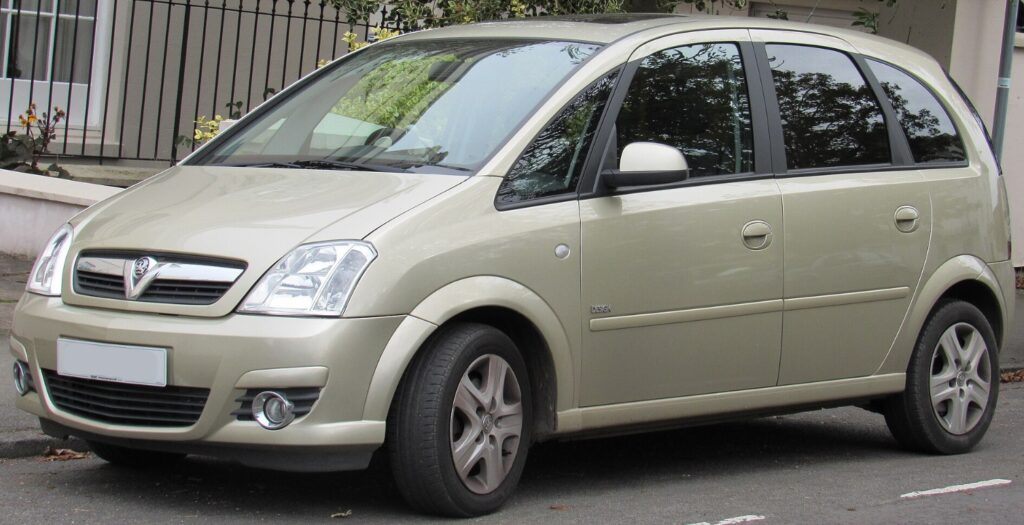
Seeing Vauxhall Meriva Code 61 appear on the dashboard can feel slightly alarming, especially when the car appears to drive normally. A number suddenly flashes on the information display, but there is no obvious explanation, no strange engine noise, and perhaps no traditional warning light.
The good news is that Code 61 is usually not an engine, gearbox, braking, or emissions fault. On the Vauxhall Meriva B, it is a vehicle message telling us to open and then close the rear-left electric window. This instruction is confirmed in official Vauxhall and Opel owner’s manuals for the second-generation Meriva.
In most cases, the electric window has simply lost its stored upper and lower positions. This often happens after the battery has been disconnected, replaced, or allowed to run low. Operating the window through a complete opening and closing cycle usually restores the calibration and removes the message.
That sounds easy—and often it is. However, what should we do when the window does not move, Code 61 refuses to disappear, or several window codes appear together? Let us work through the problem from the simplest reset to the more serious electrical possibilities.
Content in this publication
- What Does Vauxhall Meriva Code 61 Mean?
- Why Does Code 61 Appear?
- How to Reset Vauxhall Meriva Code 61
- Resetting All Windows After Battery Replacement
- What If the Rear-Left Window Will Not Move?
- Code 61 Returns After the Reset
- Window Moves but Code 61 Remains
- Can We Drive With Vauxhall Meriva Code 61?
- Common Misunderstandings About Code 61
- DIY Diagnostic Checklist
- Possible Repairs When Resetting Does Not Work
- How Much Might a Code 61 Repair Cost?
- How to Prevent Code 61 From Returning
- Vauxhall Meriva Code 61 Troubleshooting Table
- Final Thoughts on Vauxhall Meriva Code 61
- Frequently Asked Questions
What Does Vauxhall Meriva Code 61 Mean?
Vauxhall Meriva Code 61 means:
Open and then close the rear-left window.
In a right-hand-drive UK vehicle, this refers to the electric window in the rear door behind the front passenger. To avoid confusion, it is better to identify the window by its position relative to the car rather than the driver: rear left when facing forward from inside the vehicle.
The official Meriva message list places Code 61 among four electric-window calibration messages:
- Code 59: Open and close the driver’s window
- Code 60: Open and close the front passenger window
- Code 61: Open and close the rear-left window
- Code 62: Open and close the rear-right window
These are instructional vehicle messages, not conventional diagnostic trouble codes.
Code 61 Is Not Normally an Engine Fault
It is important to distinguish a dashboard vehicle message from an OBD fault code.
An OBD code normally begins with a letter, such as:
- P for powertrain
- B for body
- C for chassis
- U for network communication
Examples include P0300 for random engine misfires or P0420 for catalyst-efficiency problems. A simple dashboard message reading Code 61 belongs to a separate Vauxhall notification system.
In other words, plugging a basic engine-code scanner into the car may reveal nothing because the dashboard is not necessarily reporting an engine-management problem.
Which Vauxhall Meriva Uses Code 61?
This meaning is associated primarily with the Vauxhall Meriva B, the second-generation model sold from approximately 2010 to 2017.
Older Meriva A models use different displays, electronics, and diagnostic arrangements. Therefore, we should not assume that every mention of “fault code 61” on an older Opel or Vauxhall refers to a window.
This distinction matters because older diagnostic systems sometimes use plain numerical codes for unrelated engine faults. The vehicle’s generation and the location where the code appears make all the difference.
Why Does Code 61 Appear?
The electric-window control system needs to remember where the glass is when it reaches the fully open and fully closed positions. These stored limits allow features such as one-touch operation and anti-trap protection to work correctly.
When the control module loses that information, it asks us to operate the affected window so it can relearn its travel.
Think of the system as someone waking from a nap and briefly forgetting where the furniture is. The motor still works, the glass still moves, and the switch still responds—but the module needs to walk through the room once before it feels confident again.
Battery Disconnection
One of the most common triggers is disconnecting the battery.
This may happen during:
- Battery replacement
- Starter-motor work
- Alternator repairs
- Electrical diagnosis
- Fuse-box maintenance
- Long-term vehicle storage
Removing power can clear the window’s memorised end positions. Once power returns, Code 61 may appear until the rear-left window is recalibrated.
Weak or Flat Battery
The battery does not always need to be physically disconnected. A severe voltage drop may also disturb the vehicle’s stored settings.
Possible situations include:
- The car was left unused for several weeks
- Interior lights remained on overnight
- The battery is old or sulphated
- Cold weather reduced battery output
- Repeated short journeys prevented proper charging
- The engine needed a jump-start
If Codes 59, 60, 61, and 62 appear together, a recent loss of electrical power is especially likely.
Recent Jump-Start
Jump-starting can restore enough power to start the engine, but the low-voltage event that came before it may already have erased window calibration data.
Code 61 appearing immediately after a jump-start does not automatically mean the jump leads caused damage. More often, the original flat battery caused the system to lose its memory.
Fuse Removal or Electrical Repairs
Removing a window fuse, disconnecting a door wiring connector, or carrying out repairs around the body-control system may interrupt power to the window circuit.
Once the circuit is restored, the module may request a fresh calibration.
Temporary Voltage Interruption
A loose battery terminal, poor earth connection, charging-system fault, or intermittent supply can produce the same symptom.
This possibility becomes more important when Code 61 repeatedly returns after a successful reset. A one-off message is usually harmless. A recurring message is the car tapping us on the shoulder and saying that its electrical supply may not be stable.
How to Reset Vauxhall Meriva Code 61
The basic reset is simple and requires no diagnostic scanner.
Basic Code 61 Reset Procedure
Follow these steps:
- Sit in the vehicle and close all doors.
- Switch on the ignition.
- Locate the rear-left electric-window switch.
- Lower the rear-left window completely.
- Raise the window completely.
- Keep holding the switch in the closing position for several seconds.
- Release the switch.
- Switch the ignition off and restart the vehicle.
The official manual’s electric-window activation procedure instructs owners to close the doors, switch on the ignition, open the window fully, close it, and continue holding the switch after it reaches the top.
In many cases, Code 61 disappears as soon as the window finishes its complete travel or after the next ignition cycle.
Should We Use the Rear-Door Switch or Driver’s Controls?
Either switch may work, but using the switch on the affected rear door is often the clearest method.
If the local rear-door switch does not respond, try the driver’s master switch. Make sure the rear-window safety lock has not disabled the rear switches.
The essential point is not which switch we use. The window must travel fully down and fully up without interruption.
How Long Should We Hold the Switch?
After the glass reaches the fully closed position, continue holding the switch upward for roughly five seconds.
Do not repeatedly jab the switch. A steady press gives the control module time to register the upper limit.
We can also hold the switch briefly after fully lowering the glass before raising it again, although the upper-position hold is generally the most important part of the relearning procedure.
What If the Code Does Not Clear Immediately?
Repeat the process carefully:
- Turn the ignition off.
- Wait briefly.
- Switch it back on.
- Fully lower the rear-left window.
- Fully raise it.
- Hold the switch upward for five seconds.
- Turn the ignition off again.
- Restart the car.
Sometimes the first attempt fails because the glass did not quite reach its mechanical stop, the switch was released too quickly, or the door was open during the procedure.
Resetting All Windows After Battery Replacement
When the battery has been disconnected, more than one window may lose its calibration.
If Codes 59 through 62 appear, reset each window individually:
- Driver’s window
- Front-passenger window
- Rear-left window
- Rear-right window
Fully open and close each one, holding the switch after it reaches the top.
The order is not always critical, but following the numerical sequence makes the process easier to track.
Why Several Codes May Appear Together
Multiple window codes usually indicate a shared event rather than four separate broken windows.
For example, if the battery went flat, every window module may lose its learned positions simultaneously. The dashboard then displays several instructions, one after another.
This can look dramatic, like the car has suddenly developed a family of faults overnight. In reality, the windows may simply need to be introduced to their endpoints again.
What If the Rear-Left Window Will Not Move?
Code 61 becomes more complicated when the window cannot complete the requested cycle.
If pressing the switch produces no movement, listen carefully and observe what happens.
Check the Rear-Window Lock
The driver’s door normally has a safety switch that disables the rear electric-window controls.
Make sure this lock is not active. Then test the window from both:
- The rear-left door switch
- The driver’s master switch
If the window works from the driver’s controls but not from the rear door, the local switch or its wiring may be faulty.
Listen for the Window Motor
Press the switch and listen near the rear-left door.
Motor Noise but No Glass Movement
If we hear the motor running, grinding, clicking, or straining but the glass does not move correctly, possible causes include:
- Broken window regulator cable
- Detached glass mounting
- Damaged regulator guides
- Jammed mechanism
- Worn regulator gears
This is mainly a mechanical problem. Continuing to operate the switch may make the damage worse.
No Sound at All
If there is complete silence, possible causes include:
- Blown fuse
- Faulty window switch
- Failed motor
- Broken wiring
- Loose connector
- Door-module fault
- Body-control-module communication problem
Electrical testing will be needed if the simple checks reveal nothing.
Inspect the Window Fuse
The exact fuse position can vary according to production year and equipment, so we should use the fuse chart for the specific vehicle.
The Meriva manual identifies separate electrical circuits associated with the rear power windows, including the rear-left window circuit.
Never replace a fuse with one of a higher rating. If a new fuse blows immediately, there is likely a short circuit, overloaded motor, damaged regulator, or wiring fault that needs investigation.
Check for Frozen or Stuck Glass
In cold weather, the glass may freeze to the rubber seal. Dirt, tree sap, deteriorated weatherstripping, or a twisted seal can also restrict movement.
Do not force a frozen window by repeatedly holding the switch. The motor and regulator may be powerful, but they are not invincible. Forcing the mechanism is like pulling a locked drawer harder—the handle often gives up before the obstruction does.
Allow the vehicle to warm naturally and free the seal carefully before trying the window again.
Code 61 Returns After the Reset
If the code clears and later returns, we need to identify what caused the calibration to disappear again.
Test the Battery
A weak battery is a strong suspect, especially when the car:
- Cranks slowly
- Needs frequent jump-starts
- Displays several unrelated messages
- Resets the clock or radio settings
- Shows warning lights briefly during starting
- Has dim or flickering lights
A resting battery reading can provide a basic indication, but a proper load test is more useful. A battery may show acceptable voltage with no load and still collapse when the starter demands high current.
Check the Alternator Output
A healthy battery cannot remain healthy if the charging system is failing.
Possible charging-system symptoms include:
- Battery warning light
- Headlights changing brightness with engine speed
- Electrical messages appearing while driving
- Repeatedly flat battery
- Burning smell near the alternator
- Unusual alternator noise
- Vehicle cutting out at low speed
If window codes appear alongside flickering lights, engine hesitation, or multiple electrical warnings, the issue may be broader than window calibration. Owners have reported clusters of window messages after unstable electrical behaviour, which reinforces the need to investigate voltage supply rather than treating each message as an isolated window failure.
Inspect Battery Terminals and Earth Connections
Loose or corroded connections can interrupt power for a fraction of a second—long enough to confuse control modules.
Check for:
- Loose positive terminal
- Loose negative terminal
- White or green corrosion
- Damaged battery cables
- Frayed earth straps
- Poor body-earth contact
- Signs of overheating around connections
The terminals should be clean and secure. However, disconnecting the battery for cleaning may trigger the need to recalibrate the windows again, so be prepared to repeat the reset afterward.
Inspect the Door Wiring Loom
Wiring passes between the vehicle body and rear door through a flexible rubber conduit. Every time the door opens and closes, those wires bend.
After years of use, a conductor can break internally or its insulation can split.
Symptoms of a damaged door loom may include:
- Window works only when the door is in a certain position
- Central locking behaves intermittently
- Door speaker cuts in and out
- Courtesy light gives incorrect door status
- Code 61 returns repeatedly
- Window moves in short bursts
- Rear-door switch sometimes loses power
A technician can test continuity while gently moving the loom to expose an intermittent break.
Window Moves but Code 61 Remains
A moving window does not necessarily mean the system is calibrated correctly.
The Window May Not Reach Its Full Travel
The module needs clear upper and lower endpoints. Dirt in the channels, a tight seal, or regulator wear may stop the glass just short of its expected position.
Clean the visible channels carefully and watch whether the glass rises evenly. Tilting, shuddering, slowing, or dropping slightly at the top points toward a mechanical issue.
One-Touch Operation May Still Be Disabled
After a loss of calibration, the window may move only while the switch is held. That is a clue that the module has not relearned its limits.
Repeat the activation process and hold the switch after closing. Once calibration succeeds, one-touch operation may return.
Anti-Trap Protection May Be Intervening
Electric windows use anti-trap logic to reduce the risk of injury. If the system detects abnormal resistance, it may reverse or stop the glass.
Resistance can be caused by:
- Dirty window channels
- Dry seals
- Misaligned glass
- Bent regulator parts
- Cold weather
- A foreign object
- A failing motor
Never disable or bypass safety functions simply to remove the warning.
The Switch May Not Register a Continuous Command
A worn switch can operate the motor intermittently without providing the stable signal needed for calibration.
Try both the driver’s master control and the rear-door switch. If one completes the reset and the other does not, the unsuccessful switch may be worn or contaminated.
Can We Drive With Vauxhall Meriva Code 61?
In most cases, yes.
Code 61 itself usually does not indicate a fault that affects the engine, steering, brakes, or transmission. If the rear-left window works normally and there are no other warnings, the vehicle is generally drivable.
However, the surrounding circumstances matter.
When It Is Usually Safe to Continue Driving
Driving is normally reasonable when:
- Code 61 is the only message
- The car starts normally
- Exterior lights operate correctly
- The battery warning light is off
- The window is fully closed
- There are no burning smells
- There are no signs of unstable voltage
Perform the reset when it is safe and convenient.
When We Should Investigate Promptly
Arrange diagnosis soon if:
- Code 61 repeatedly returns
- Several electrical codes appear
- The battery frequently goes flat
- Lights flicker
- The engine cuts out
- The window is stuck open
- The window motor continues running
- A fuse repeatedly blows
- Wiring smells hot
- Rain can enter the vehicle
A window stuck open creates security and weather risks even if the car remains mechanically drivable.
Common Misunderstandings About Code 61
Because the display gives only a number, it is easy to misinterpret the message.
It Does Not Mean the Battery Must Automatically Be Replaced
Code 61 often follows battery disconnection or low voltage, but its presence alone does not prove the battery is defective.
A healthy battery that was deliberately disconnected during maintenance can trigger exactly the same message.
Test before replacing.
It Does Not Usually Require an OBD Scanner
A diagnostic scanner is rarely required for a straightforward calibration loss. Operating the window normally resolves the message.
A professional scan becomes useful when:
- The window will not operate
- The reset repeatedly fails
- Body-control faults are suspected
- Communication codes are present
- Several electrical systems malfunction together
A basic engine scanner may not access the body or door modules, so a more capable diagnostic tool may be needed.
It Does Not Mean “Service the Engine”
Code 61 is unrelated to engine oil, coolant, emissions, or scheduled servicing.
For comparison, the Meriva message list assigns other numbers to matters such as topping up engine oil or servicing power steering. Each number has a specific meaning; they are not ranked by seriousness.
It Is Not the Same as a “61-Plate Meriva”
In the UK, “61 plate” refers to a registration period, not a dashboard error.
A person writing “my 61 Meriva has Code 4” may mean a Meriva registered on a 61 plate, while another person writing “my Meriva displays Code 61” means the vehicle message itself.
The difference sounds small but completely changes the diagnosis.
DIY Diagnostic Checklist
Before booking the vehicle into a garage, we can perform a sensible sequence of checks.
Stage One: Attempt the Reset
- Close all doors
- Switch on the ignition
- Fully lower the rear-left window
- Fully raise it
- Hold the switch upward for five seconds
- Restart the car
Stage Two: Test Both Switches
- Try the rear-door switch
- Try the driver’s master switch
- Check the rear-window safety lock
- Note whether the motor makes any sound
Stage Three: Observe the Window
Look for:
- Slow movement
- Uneven travel
- Clicking
- Grinding
- Glass tilting
- Automatic reversal
- Failure to reach the top
- Movement only when the door is positioned a certain way
Stage Four: Consider Recent Events
Ask ourselves:
- Was the battery replaced?
- Was the car jump-started?
- Did the battery go flat?
- Was a fuse removed?
- Was door work recently completed?
- Did heavy rain enter the door?
- Did the problem start after freezing weather?
Stage Five: Check the Electrical Supply
If the message returns:
- Test battery condition
- Test charging voltage
- Inspect battery terminals
- Inspect major earth connections
- Check the correct fuse
- Examine the rear-door wiring loom
This method moves from free and easy checks toward more involved diagnosis. It prevents us from replacing an expensive window motor when the car only needed five seconds of switch-holding.
Possible Repairs When Resetting Does Not Work
The required repair depends on what testing reveals.
Window Switch Replacement
A faulty rear switch is usually simpler to replace than a motor or regulator. Before buying parts, confirm whether the window works from the driver’s controls.
If it does, the motor, fuse, and much of the wiring are probably functional.
Window Regulator Repair
The regulator guides the glass up and down. Cable-driven regulators may fray, snap, tangle, or pull away from their mounting points.
Typical signs include:
- Crunching or grinding
- Glass falling into the door
- Motor running without movement
- Window rising at an angle
- Sudden drop after closing
The door trim must usually be removed to inspect and replace the mechanism.
Window Motor Replacement
A failed motor may produce silence, occasional clicking, slow movement, or operation only after tapping the door.
Before replacing it, verify that power and ground reach the motor when the switch is operated. Otherwise, a wiring fault could be mistaken for motor failure.
Wiring Repair
Broken wires should be repaired correctly with suitable automotive wire, secure joints, proper insulation, and enough flexibility for door movement.
Simply twisting conductors together and wrapping them loosely in tape is not a durable solution in a moving, damp environment.
Module Diagnosis or Programming
Body-control or door-module failure is less common than calibration loss, switches, regulators, or wiring problems. Nevertheless, it is possible.
Module replacement may require coding or programming to the vehicle. This is the point where professional diagnostic equipment becomes especially valuable.
How Much Might a Code 61 Repair Cost?
The reset itself costs nothing.
If a component has failed, the final price depends on labour rates, part quality, and whether the door mechanism has caused secondary damage.
Broadly, the repair could involve:
- No cost for recalibration
- A modest cost for fuse or switch replacement
- A moderate cost for wiring repair
- A higher cost for regulator or motor replacement
- A potentially substantial cost for module diagnosis and programming
We should avoid quoting a precise figure without inspecting the vehicle because “Code 61” describes the requested action, not the failed component. Two cars displaying the same message may need completely different repairs.
How to Prevent Code 61 From Returning
We cannot prevent every electrical interruption, but a few habits reduce the chances.
Maintain the Battery
Keep the battery charged, especially if the car is used mainly for short trips.
If the Meriva sits unused for long periods, an appropriate smart charger may help maintain battery condition.
Repair Charging Problems Early
Do not ignore:
- Slow cranking
- Flickering lights
- Battery warnings
- Repeated jump-starts
- Electrical systems resetting
Modern vehicles depend on stable voltage. When supply becomes erratic, modules begin behaving like musicians following a conductor who keeps dropping the baton.
Keep Window Channels Clean
Clean seals and channels reduce strain on the motor and regulator.
Avoid spraying unsuitable sticky products into the channel. Use products intended for automotive rubber and window mechanisms.
Do Not Force a Frozen Window
Free the glass from ice before pressing the switch. This protects the regulator, motor, cable, and glass mountings.
Recalibrate After Battery Work
Whenever the battery has been disconnected, test all electric windows before driving away.
A quick opening and closing cycle can prevent several dashboard messages from appearing later.
Vauxhall Meriva Code 61 Troubleshooting Table
| Symptom | Most Likely Explanation | Recommended Action |
|---|---|---|
| Code 61 after battery replacement | Window lost its calibration | Fully open and close rear-left window |
| Code 61 after jump-start | Low voltage erased stored position | Reset window and test battery |
| Codes 59, 60, 61 and 62 together | All window positions were lost | Recalibrate every window |
| Window works but code remains | Reset procedure incomplete | Repeat and hold switch after closing |
| Window works only from driver’s control | Rear-door switch or wiring fault | Test or replace local switch |
| Motor runs but glass does not move | Regulator or glass mounting failure | Remove door trim and inspect |
| No sound from motor | Fuse, switch, wiring, motor or module fault | Perform electrical diagnosis |
| Code returns repeatedly | Unstable voltage or intermittent connection | Test battery, alternator and wiring |
| Window reverses near the top | Excess resistance or anti-trap activation | Inspect seals, channels and alignment |
| Window works when door moves | Broken wire in door loom | Inspect and repair flexible wiring |
Final Thoughts on Vauxhall Meriva Code 61
Vauxhall Meriva Code 61 usually carries a much simpler message than its mysterious appearance suggests: open and then close the rear-left electric window.
The system has normally lost the window’s stored position after a battery disconnection, flat battery, jump-start, fuse removal, or temporary interruption in voltage. Fully lowering the glass, raising it again, and holding the switch upward for several seconds will often clear the message immediately.
The situation deserves closer attention when the window does not move, the code repeatedly returns, several electrical systems behave strangely, or the battery keeps losing charge. In those cases, we should look beyond calibration and investigate the fuse, switch, motor, regulator, door wiring, battery, alternator, and control modules.
Start with the easy solution. A five-second reset may be all the Meriva wants. If the warning keeps coming back, treat it not as a nuisance to silence but as a useful clue about what the electrical system is experiencing.
Frequently Asked Questions
What does Code 61 mean on a Vauxhall Meriva?
Code 61 means the vehicle wants us to open and then close the rear-left electric window. It normally appears when the window control system has lost its stored open and closed positions.
How do I clear Vauxhall Meriva Code 61?
Switch on the ignition, fully lower the rear-left window, fully raise it, and continue holding the switch upward for about five seconds. Then switch the ignition off and restart the vehicle.
Is Vauxhall Meriva Code 61 dangerous?
The message itself is generally not dangerous because it relates to window calibration rather than the engine or brakes. However, recurring codes may indicate low battery voltage or an unstable electrical connection that should be checked.
Why did Code 61 appear after changing the battery?
Disconnecting the battery can erase the electric window’s memorised travel limits. The window must then be operated through a complete opening and closing cycle so the system can relearn them.
What should I do if the rear-left window does not move?
Check the rear-window lock, test both the rear-door and driver’s switches, inspect the relevant fuse, and listen for motor noise. If the window still does not move, the switch, wiring, motor, regulator, or control module may require professional diagnosis.
If you want to know other articles similar to Vauxhall Meriva Code 61: Meaning, Reset and Repair Guide you can visit the category Service and Parts.
Nissan Qashqai Fuel Tank Capacity: Complete Guide

Suzuki Swift Fuel Tank Capacity: Complete Guide

Mazda CX-5 Weight (2013–2026): Complete Guide in Pounds and KG

Kia Sportage Dashboard Symbols and Warning Lights

MINI Cooper Weight (2002–2027): Complete Weight Chart & Guide

Toyota RAV4 Engine Sizes: Complete Guide (1994–2026)
Leave a Reply
More content of your interest