

Vauxhall Meriva Warning Lights: Meanings and Solutions

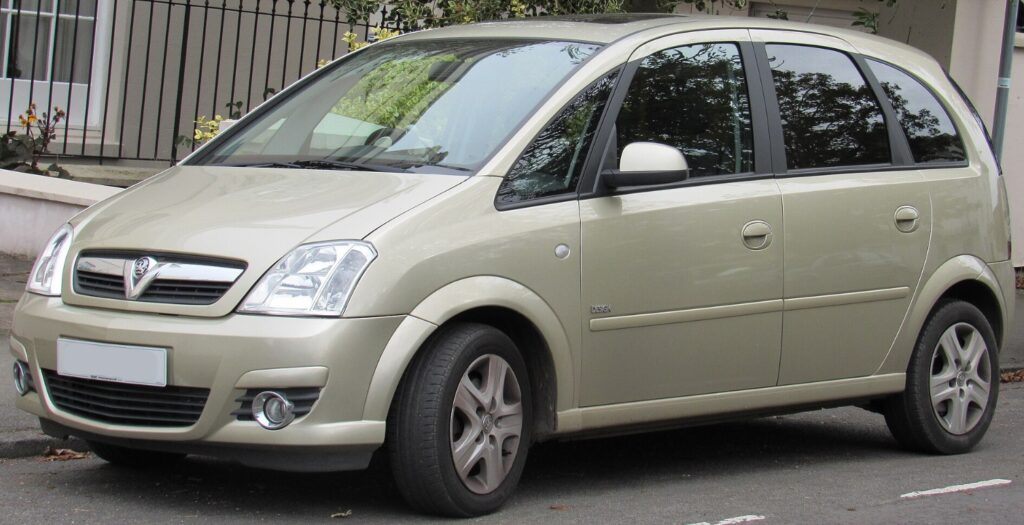
Seeing an unfamiliar symbol appear on your Vauxhall Meriva dashboard can make an ordinary journey feel tense in seconds. One moment, everything seems fine. The next, an amber engine icon, a red oil can, or a mysterious car-and-spanner symbol is staring back at us like an unanswered question.
Fortunately, a dashboard warning light does not always mean that the car is about to break down. Some lights simply confirm that a system is active. Others tell us that maintenance will soon be required. A smaller group, particularly red warnings, demands immediate action.
The important thing is knowing the difference.
In this guide, we explain the most common Vauxhall Meriva warning lights, what their colours mean, whether it is safe to continue driving, and what we should do next. Because symbols and behaviour can vary between the Meriva A and Meriva B, the vehicle’s year, engine and owner’s manual should always be considered before making a final diagnosis.
Content in this publication
- Understanding Vauxhall Meriva Dashboard Light Colours
- What to Do When a Warning Light Appears
- Vauxhall Meriva Engine Management Light
- Vauxhall Meriva Car and Spanner Warning Light
- Vauxhall Meriva Oil Pressure Warning Light
- Change Engine Oil Soon Message
- Vauxhall Meriva Coolant Temperature Warning Light
- Vauxhall Meriva Battery Warning Light
- Brake System Warning Light
- Vauxhall Meriva ABS Warning Light
- Electronic Stability Control Warning
- Power Steering Warning Light
- Airbag and Seat-Belt Pretensioner Warning
- Tyre-Pressure Monitoring Warning Light
- Diesel Glow Plug Warning Light
- Diesel Particulate Filter Warning Light
- Low Fuel Warning Light
- Door, Tailgate and Bonnet Warnings
- Seat Belt Reminder Light
- Immobiliser or Security Warning
- Easytronic and Automatic Transmission Warnings
- Hill Start Assist Warning
- Cruise Control and Speed Limiter Indicators
- Exterior Lighting Warning
- Parking Sensor Warning
- Why Several Warning Lights May Appear Together
- Common Low-Voltage Warning Light Problems
- Should We Clear a Vauxhall Meriva Warning Light?
- Can a Cheap OBD Scanner Diagnose Every Meriva Warning?
- Vauxhall Meriva A vs Meriva B Warning Lights
- Warning Lights That Require Immediate Attention
- Warning Lights That Usually Allow Cautious Driving
- How to Prevent Dashboard Warnings
- Final Thoughts on Vauxhall Meriva Warning Lights
- Frequently Asked Questions
- 1. What is the most serious Vauxhall Meriva warning light?
- 2. Can I drive my Vauxhall Meriva with the engine light on?
- 3. What does the car-and-spanner light mean on a Vauxhall Meriva?
- 4. Why are the ABS and traction-control lights on together?
- 5. Will disconnecting the battery reset Meriva warning lights?
Understanding Vauxhall Meriva Dashboard Light Colours
Before examining individual symbols, we need to understand the dashboard’s colour system. It works a little like traffic lights: red means danger, amber means caution, and green generally means that a feature is operating normally.
Red Warning Lights
A red warning light usually indicates a serious safety or mechanical issue. We should stop as soon as it is safe when the warning relates to:
- Engine oil pressure
- Engine overheating
- Brake system failure
- Charging system failure
- Power steering failure accompanied by heavy steering
A red seat belt light or open-door warning may not indicate mechanical damage, but it still points to an immediate safety concern.
Amber or Yellow Warning Lights
Amber lights usually mean that the Meriva has detected a fault requiring investigation. The car may remain driveable, but ignoring the warning could make the eventual repair more expensive.
Common amber warnings include:
- Engine management light
- ABS warning
- Electronic stability control warning
- Diesel particulate filter warning
- Glow plug warning
- Tyre-pressure monitoring warning
- Airbag warning
- Service vehicle soon light
An amber symbol is often the car whispering before it begins to shout.
Green, Blue and White Indicator Lights
Green, blue and white dashboard symbols usually confirm that a feature is switched on rather than reporting a fault.
Examples include:
- Green direction indicators
- Green cruise-control indicator
- Green side-light symbol
- Blue main-beam indicator
- White information symbols
However, a rapidly flashing indicator arrow can suggest that an exterior indicator bulb has failed.
What to Do When a Warning Light Appears
A dashboard warning deserves attention, but panic rarely helps. We can respond more effectively by following a simple routine.
- Notice the colour. Red normally requires faster action than amber.
- Observe the vehicle. Check for smoke, smells, strange noises, power loss or heavy steering.
- Read the information display. Many Meriva B models show a message or numbered vehicle code.
- Reduce speed and engine load. Avoid hard acceleration while assessing the situation.
- Stop safely when necessary. Pull away from traffic and switch on the hazard lights.
- Consult the correct manual. Meriva warnings can differ by model year and specification.
- Arrange diagnostic testing. A compatible scanner can reveal the stored fault code.
Vauxhall provides separate Meriva manuals for different production periods, so the correct publication for the vehicle should take priority over a generic symbol list.
Vauxhall Meriva Engine Management Light
The engine management light resembles the outline of an engine. It is also called the malfunction indicator lamp or check-engine light.
It means that the engine control system has detected a fault, commonly involving combustion, emissions, sensors, ignition or fuel delivery.
Possible causes include:
- Faulty oxygen sensor
- Ignition-coil failure
- Worn spark plugs
- Airflow or pressure-sensor fault
- Intake leak
- Injector problem
- Exhaust gas recirculation fault
- Catalytic-converter inefficiency
- Diesel particulate filter issue
- Loose or damaged fuel cap on applicable models
Engine Light Staying On Steadily
A steady amber engine light usually means that a fault has been stored but is not currently considered an immediate emergency.
We may be able to drive carefully to a garage when:
- The engine sounds normal
- There is no severe loss of power
- The temperature remains normal
- No red warning appears
- There is no strong smell of fuel
- The car is not shaking or misfiring
Even then, the vehicle should be diagnosed promptly. Continuing to drive for weeks with the light illuminated could damage the catalytic converter or worsen fuel consumption.
Engine Management Light Flashing
A flashing engine light is more urgent. It often points to an active misfire capable of sending unburned fuel into the exhaust.
We should:
- Reduce speed immediately
- Avoid hard acceleration
- Stop when safe
- Switch off the engine
- Arrange professional assistance
Driving aggressively with a flashing engine light can overheat and damage the catalytic converter.
Vauxhall Meriva Car and Spanner Warning Light
The car-and-spanner symbol is one of the most misunderstood Vauxhall Meriva warning lights. It is commonly associated with the Service Vehicle Soon system.
Despite its appearance, it does not necessarily mean that the car only needs routine servicing. It can indicate a fault in the engine electronics, transmission electronics or another monitored vehicle system.
Possible causes include:
- Throttle-body fault
- Accelerator-pedal sensor issue
- Engine sensor failure
- Easytronic or automatic transmission problem
- Brake-switch fault
- Glow-plug system fault
- Electrical voltage irregularity
- Communication fault between control modules
Can We Drive With the Car-and-Spanner Light On?
That depends on how the Meriva behaves.
If the light is steady and the car drives normally, a short and gentle journey to a repairer may be reasonable. If the Meriva enters limp mode, changes gear harshly, refuses to accelerate or displays another serious warning, we should stop and seek assistance.
Limp mode is the car’s version of walking home with a twisted ankle. It restricts performance to protect essential components.
Why Scanning Matters
The symbol alone does not identify the failed component. Reading the stored diagnostic trouble codes is essential. A code should guide further testing rather than automatically condemn the component named in its description.
For example, a code relating to an oxygen sensor may be caused by:
- Damaged wiring
- An exhaust leak
- Incorrect fuel mixture
- A vacuum leak
- A genuinely faulty sensor
Replacing parts without testing can turn diagnosis into an expensive guessing game.
Vauxhall Meriva Oil Pressure Warning Light
The red oil-can symbol is among the most serious dashboard warnings. It usually indicates insufficient engine oil pressure, not simply that an oil change is due.
If it remains illuminated after the engine starts or appears while driving, we should:
- Pull over safely.
- Switch off the engine immediately.
- Wait several minutes.
- Check the oil level on level ground.
- Add the correct oil if the level is below minimum.
- Do not restart if the warning remains on or the engine sounds abnormal.
Possible causes include:
- Low engine-oil level
- Major oil leak
- Blocked oil pickup
- Faulty oil-pressure switch
- Wiring problem
- Worn oil pump
- Internal engine wear
- Incorrect oil viscosity
- Blocked oil filter
Why Continuing to Drive Is Dangerous
Engine oil creates a protective film between fast-moving metal parts. Without sufficient pressure, that film disappears. Bearings, camshafts and turbocharger components can then suffer major damage within a short distance.
An oil-pressure warning is not a “check it next weekend” message. It is a “stop the engine now” message.
Change Engine Oil Soon Message
The Change Engine Oil Soon message is different from the red oil-pressure warning.
It normally means that the engine-oil life monitoring system has calculated that an oil change is required. The calculation can consider mileage, operating conditions and engine use rather than relying only on a fixed distance.
We should arrange an oil and filter change using the correct specification. After completing the service, the oil-life system must be reset correctly. The official Meriva manuals include the oil-life warning and reset information for applicable models.
Resetting the message without changing the oil only hides the reminder. It does not restore the oil’s protective properties.
Vauxhall Meriva Coolant Temperature Warning Light
The coolant-temperature warning resembles a thermometer above waves. A red light means that the engine may be overheating.
What We Should Do
- Turn off the air conditioning.
- Reduce speed and engine load.
- Stop safely as soon as possible.
- Switch off the engine.
- Allow the engine to cool.
- Check the coolant level only when the system is cold.
- Look for leaks beneath the vehicle.
- Arrange recovery if overheating continues.
Never remove the coolant cap while the engine is hot. The cooling system may be pressurised, and escaping steam or boiling coolant can cause serious burns.
Common Causes of Overheating
Overheating may result from:
- Low coolant
- Coolant leak
- Failed thermostat
- Faulty radiator fan
- Broken fan resistor or relay
- Water-pump problem
- Blocked radiator
- Damaged coolant hose
- Cylinder-head gasket failure
- Faulty temperature sensor
A low coolant level is a symptom, not a complete diagnosis. Coolant does not normally disappear without a reason.
Vauxhall Meriva Battery Warning Light
The red battery symbol relates mainly to the charging system rather than the battery alone.
It should illuminate when the ignition is switched on and go out after the engine starts. If it remains on while the engine is running, the alternator may not be charging the battery.
Possible causes include:
- Failed alternator
- Broken auxiliary belt
- Faulty voltage regulator
- Loose battery terminal
- Damaged charging cable
- Poor earth connection
- Weak battery
- Wiring or control-module fault
Can We Continue Driving?
The Meriva may continue running temporarily using energy stored in the battery, but once that reserve is exhausted, the engine can stop.
Turn off unnecessary electrical equipment, including:
- Heated rear window
- Heated seats
- Audio equipment
- Phone chargers
- Climate-control blower, where safe
If the steering becomes heavy or the engine temperature begins rising, stop immediately. A broken auxiliary belt may affect more than the alternator on some engine configurations.
Brake System Warning Light
The red brake warning often appears when the parking brake is applied. If it remains illuminated after the parking brake is fully released, there may be another problem.
Possible causes include:
- Low brake-fluid level
- Hydraulic brake-system fault
- Worn brake components
- Parking-brake switch problem
- Electronic parking-brake fault on equipped versions
- Combined ABS and braking-system malfunction
When We Must Stop
Stop driving when:
- The brake pedal feels soft
- The pedal travels unusually far
- Braking performance has decreased
- Brake fluid is visibly leaking
- The red brake warning appears with the ABS light
- The vehicle pulls strongly under braking
Brakes are not an area for optimistic experiments. If braking behaviour has changed, recovery is safer than continuing the journey.
Vauxhall Meriva ABS Warning Light
ABS stands for anti-lock braking system. Its warning symbol usually displays the letters ABS inside a circle.
When the amber ABS light remains illuminated, conventional braking may still work, but the anti-lock function may be unavailable. During emergency braking, the wheels could lock more easily, particularly on wet or slippery roads.
Common causes include:
- Faulty wheel-speed sensor
- Damaged sensor wiring
- Cracked or corroded reluctor ring
- Wheel-bearing problem
- Low system voltage
- Blown fuse
- ABS control-module fault
- Hydraulic pump problem
We should drive cautiously, leave more stopping distance and arrange diagnosis soon.
Electronic Stability Control Warning
The electronic stability control symbol usually shows a car with wavy skid lines.
Flashing Stability-Control Light
A flashing light normally means the system is actively intervening because it has detected wheel slip or loss of stability.
This can happen during:
- Hard acceleration
- Cornering on a slippery road
- Driving through snow
- Pulling away on mud
- Sudden steering manoeuvres
We should ease off the accelerator and drive smoothly.
Stability-Control Light Staying On
A steady light can mean:
- The system has been switched off
- A system fault is present
- An ABS fault has disabled stability control
- A steering-angle sensor requires calibration
- A wheel-speed sensor is malfunctioning
Because stability control relies on information from several systems, one faulty wheel sensor can illuminate multiple warning lights at once.
Power Steering Warning Light
A steering-wheel symbol, sometimes accompanied by an exclamation mark, indicates a power-steering problem.
The Meriva may use electrically assisted steering, so faults can involve:
- Low battery voltage
- Weak alternator output
- Steering motor failure
- Torque-sensor fault
- Steering-angle sensor issue
- Control-module failure
- Damaged wiring or connectors
What Heavy Steering Means
If the warning appears but steering assistance still feels normal, drive cautiously to a suitable repairer. If the steering becomes suddenly heavy, reduce speed and stop safely.
The mechanical connection to the wheels may remain, but turning the steering wheel—especially at low speed—can require much more effort.
Airbag and Seat-Belt Pretensioner Warning
The airbag warning normally depicts a seated person with a circle in front. If it remains on after starting, the supplementary restraint system has detected a fault.
The problem may affect:
- Front airbags
- Side airbags
- Curtain airbags
- Seat-belt pretensioners
- Passenger-seat occupancy sensor
- Airbag control module
- Wiring under a front seat
- Steering-wheel clock spring
A common temptation is to ignore the light because the Meriva still drives normally. However, one or more airbags or pretensioners may fail to operate correctly in a collision.
Avoid probing airbag wiring with ordinary test equipment unless properly trained. Airbag circuits contain pyrotechnic devices and require specific safety procedures.
Tyre-Pressure Monitoring Warning Light
The tyre-pressure warning resembles a horseshoe-shaped tyre with an exclamation mark.
It can indicate:
- Low tyre pressure
- A puncture
- A slow leak
- Temperature-related pressure loss
- Incorrectly inflated tyres
- Sensor failure
- Sensor battery depletion
- Failure to relearn sensors after tyre work
What We Should Do
Stop somewhere safe and inspect all four tyres. Use a reliable pressure gauge and inflate them according to the vehicle’s recommended values, not the maximum figure moulded into the tyre sidewall.
The correct pressures may vary according to:
- Tyre size
- Passenger load
- Luggage weight
- Driving speed
- Model year
If a tyre is visibly damaged or losing pressure rapidly, do not continue driving on it.
Diesel Glow Plug Warning Light
On diesel Merivas, the glow-plug symbol looks like a small coil.
It normally illuminates briefly before starting in cold conditions. We should wait for it to go out before cranking the engine.
Glow Plug Light Flashing or Staying On
A flashing or persistent coil light can indicate:
- Failed glow plug
- Glow-plug relay fault
- Wiring problem
- Engine-management fault
- Exhaust-emissions issue
- Brake-switch fault on certain applications
Symptoms may include difficult cold starting, rough initial running, white smoke or increased emissions.
Diesel Particulate Filter Warning Light
The diesel particulate filter, or DPF, traps soot from the exhaust. Under suitable conditions, the vehicle raises exhaust temperature and burns the soot away in a process called regeneration.
A DPF warning can mean that the filter is becoming saturated.
This is more likely when the Meriva is regularly used for:
- Short urban journeys
- Low-speed driving
- Repeated cold starts
- Stop-and-go traffic
- Trips that end before regeneration finishes
Helping the DPF Regenerate
When the owner’s manual permits it and there are no red warnings, a sustained drive at normal operating temperature may allow regeneration to complete.
During regeneration, we may notice:
- Higher idle speed
- Increased fuel consumption
- Cooling fan operation
- Hot exhaust smell
- Stop-start becoming unavailable
Do not park over dry grass or other combustible material when the exhaust system is extremely hot.
If the warning persists, begins flashing, or appears with the engine-management light, diagnostic attention is required. Forced regeneration is not always appropriate because excessive soot loading, sensor faults or oil dilution may need to be addressed first.
Low Fuel Warning Light
The amber fuel-pump symbol means that the fuel level is low.
Although this warning is straightforward, repeatedly driving until the tank is almost empty is not ideal. It can:
- Increase the chance of running out of fuel
- Leave us stranded in traffic
- Make diesel-system restarting more difficult
- Draw accumulated contamination toward the fuel pickup
- Allow the fuel pump to run with reduced cooling on some systems
Refuel promptly rather than treating the remaining range as a personal challenge.
Door, Tailgate and Bonnet Warnings
A red vehicle outline or door symbol usually means that a door, the tailgate or possibly the bonnet is not fully closed.
Check each opening individually. A door may appear closed while resting on the first latch.
If the warning remains on after everything is shut, possible causes include:
- Faulty latch microswitch
- Misaligned door or tailgate
- Broken wiring near a hinge
- Corroded connector
- Defective lock actuator
A false open-door warning may also leave the interior lights on and gradually discharge the battery.
Seat Belt Reminder Light
The seat-belt reminder usually illuminates red and may be accompanied by a chime.
Make sure that:
- The driver is belted
- The front passenger is belted
- Heavy bags are not resting on an occupied-seat sensor
- Rear-seat reminders are checked where fitted
- The belt buckle is fully engaged
If the warning remains active with an empty seat, the occupancy sensor, buckle switch or related wiring may need diagnosis.
Immobiliser or Security Warning
Depending on the Meriva generation, a security-related warning may involve a car, key, padlock or flashing security indicator.
If the engine does not start, try:
- Removing other keys from the same keyring
- Locking and unlocking the vehicle
- Trying the spare key
- Replacing the key-fob battery where appropriate
- Checking the main vehicle battery voltage
- Moving the key away from electronic devices
A rapidly flashing security light during a failed start may indicate that the transponder has not been recognised.
Do not assume that the key-fob battery is always responsible. In many immobiliser systems, the transponder used for starting is passive and separate from the remote-locking battery.
Easytronic and Automatic Transmission Warnings
Some Meriva models use Easytronic, an automated manual transmission, while others may have a conventional automatic gearbox. Transmission faults can produce a gear symbol, an F in the display, the car-and-spanner light or a warning message.
Possible causes include:
- Weak battery voltage
- Clutch-actuator fault
- Gear-selector actuator fault
- Clutch wear
- Position-sensor error
- Transmission-control fault
- Wiring problem
- Incorrect adaptation
- Overheating
What an “F” Display Can Mean
An F on an Easytronic display generally signals a transmission malfunction. The vehicle may refuse to select a gear or may enter a restricted operating mode.
Because Easytronic operation depends heavily on stable voltage and accurate actuator calibration, battery condition should be checked before expensive parts are ordered.
Hill Start Assist Warning
Hill start assist briefly holds brake pressure to reduce rollback when moving away on a slope.
If its warning appears, the feature may be unavailable due to:
- ABS fault
- Stability-control fault
- Brake-switch issue
- Low voltage
- Sensor malfunction
The normal brakes may still function, but we should be prepared to control the vehicle manually on inclines.
Cruise Control and Speed Limiter Indicators
Cruise-control symbols are normally informational rather than warnings.
Depending on the model, the indicator may show that:
- Cruise control is available
- A speed has been stored
- The system is actively controlling speed
- The speed limiter is enabled
If cruise control stops working without a dedicated warning, check whether the ABS, engine-management or brake-switch systems have logged faults. Cruise control may be disabled when another system cannot provide reliable information.
Exterior Lighting Warning
A bulb-failure message or warning code can appear when the Meriva detects a problem with an exterior lamp.
Check:
- Dipped-beam headlights
- Main beam
- Side lights
- Front and rear indicators
- Brake lights
- Number-plate lights
- Rear fog light
- Reversing lights
A bulb that still glows may have poor resistance, an incorrect wattage or a damaged connection. LED replacements can also trigger bulb monitoring errors when their electrical resistance differs from the original bulb.
Parking Sensor Warning
If the parking-assistance system is unavailable, the Meriva may display a message or warning and stop producing normal distance tones.
Possible causes include:
- Dirt or ice covering a sensor
- Water ingress
- Damaged bumper wiring
- Failed ultrasonic sensor
- Towbar interference
- Control-module fault
- Low voltage
Clean the sensors gently before assuming that a component has failed. A layer of road salt can make a perfectly good sensor behave like it has gone deaf.
Why Several Warning Lights May Appear Together
Seeing multiple lights at once does not always mean that several unrelated systems have failed.
Modern vehicle systems share information. One failure can create a chain reaction.
For example:
- A faulty wheel-speed sensor can trigger ABS, traction-control and hill-start warnings.
- Low battery voltage can trigger steering, transmission and stability-control faults.
- An engine fault can disable cruise control and stop-start.
- A brake-switch fault can affect brake lights, cruise control and transmission behaviour.
This is why replacing parts based only on illuminated symbols is risky. The first stored fault or root cause may explain the entire dashboard display.
Common Low-Voltage Warning Light Problems
Merivas can display apparently unrelated electrical warnings when system voltage falls too low.
Low voltage may result from:
- Ageing battery
- Poor battery terminals
- Weak alternator
- Corroded earth strap
- Frequent short journeys
- Interior light remaining on
- Cold weather
- Vehicle left unused
- Parasitic electrical drain
Before chasing several electronic faults, a technician should test:
- Battery state of charge
- Battery health
- Cranking voltage
- Alternator output
- Voltage drop across positive cables
- Voltage drop across earth connections
A battery can start the engine and still be too weak to keep every control module happy.
Should We Clear a Vauxhall Meriva Warning Light?
Clearing a warning code is not the same as repairing the fault.
A scanner may switch the light off temporarily, but it will return if the underlying problem remains. Clearing codes too early can also erase useful freeze-frame data showing:
- Engine speed
- Coolant temperature
- Vehicle speed
- Fuel-trim readings
- System voltage
- Operating load when the fault occurred
Read and record the codes before clearing anything.
When Clearing a Code Is Reasonable
Clearing may be appropriate after:
- The fault has been repaired
- Wiring has been restored
- A sensor has been replaced and tested
- Battery voltage has been corrected
- Required adaptation has been completed
- The system has passed further checks
Can a Cheap OBD Scanner Diagnose Every Meriva Warning?
A basic OBD-II reader is useful for engine and emissions codes, but it may not communicate with every vehicle module.
A more capable diagnostic tool may be required for:
- ABS
- Airbag system
- Electric power steering
- Body-control module
- Parking sensors
- Instrument panel
- Easytronic transmission
- Immobiliser
- Electronic climate control
The cheapest scanner may tell us that the engine is unhappy while remaining completely silent about the airbag, steering or transmission systems.
Vauxhall Meriva A vs Meriva B Warning Lights
The Meriva A and Meriva B do not use identical instrument clusters, electronics or warning displays.
The Meriva A, produced during the earlier generation, relies more heavily on conventional warning symbols and may have Easytronic-related indicators depending on specification.
The Meriva B uses a more advanced driver information display and can show numbered vehicle messages alongside dashboard lights.
Therefore:
- Do not rely only on a generic internet image.
- Confirm the model year.
- Check the exact engine.
- Identify the transmission type.
- Use the corresponding owner’s manual.
- Record any message or code exactly as displayed.
The official Vauxhall manual archive contains different Meriva editions because equipment and instructions changed across the model’s production life.
Warning Lights That Require Immediate Attention
Stop as soon as it is safe when any of the following occurs:
- Red oil-pressure light stays on
- Coolant-temperature warning turns red
- Red brake warning appears with reduced braking
- Battery warning appears with overheating or heavy steering
- Steering becomes dangerously heavy
- Engine light flashes while the engine misfires
- Smoke or a burning smell accompanies any warning
- The engine makes knocking, grinding or rattling sounds
- The vehicle loses substantial power in fast traffic
Call roadside assistance when continuing could damage the engine or compromise control of the vehicle.
Warning Lights That Usually Allow Cautious Driving
A short, careful journey may be possible when:
- The engine-management light is steady
- The ABS light is on but normal braking remains
- The tyre-pressure warning appears without rapid deflation
- The airbag light is on
- The parking-sensor system is unavailable
- The bulb-failure warning appears
- The service reminder is due
- Stability control is disabled but the car handles normally
“Usually driveable” does not mean “safe to ignore indefinitely.” The vehicle should still be checked promptly.
How to Prevent Dashboard Warnings
Not every warning can be prevented, but regular maintenance reduces the likelihood of unexpected lights.
Monthly Checks
- Check engine-oil level.
- Check coolant level when cold.
- Inspect tyre condition and pressure.
- Test exterior lights.
- Look beneath the car for leaks.
- Listen for unusual noises.
Service-Interval Checks
- Replace oil and filters on schedule.
- Test battery and charging performance.
- Inspect brake fluid and brake components.
- Scan for pending fault codes.
- Check auxiliary-belt condition.
- Inspect cooling hoses.
- Use the correct engine oil and coolant.
- Maintain diesel emissions systems correctly.
Good Driving Habits
- Avoid repeatedly running the fuel tank very low.
- Allow diesel engines regular fully warmed journeys.
- Do not ignore small misfires.
- Avoid switching off during active DPF regeneration when practical.
- Investigate fluid loss.
- Address weak-battery symptoms early.
- Do not continue driving an overheating engine.
Preventive maintenance is less dramatic than roadside recovery—and far cheaper.
Final Thoughts on Vauxhall Meriva Warning Lights
Vauxhall Meriva warning lights are the car’s way of translating mechanical and electronic information into something we can see. Some symbols are simple reminders. Others signal faults that should be diagnosed soon. A few demand that we switch off the engine immediately.
The colour gives us the first clue:
- Red: stop and assess the danger.
- Amber: investigate the fault promptly.
- Green or blue: a system is usually active.
Still, colour alone cannot provide a complete diagnosis. We also need to consider the way the vehicle drives, any information-display message, the model year and the stored diagnostic codes.
The smartest approach is neither panic nor neglect. We should observe the warning, respond according to its urgency and diagnose the cause before replacing parts. That way, a small dashboard symbol remains a useful early warning rather than becoming the opening scene of a much larger repair bill.
Frequently Asked Questions
1. What is the most serious Vauxhall Meriva warning light?
The red oil-pressure warning is among the most serious because insufficient oil pressure can cause severe engine damage very quickly. The red coolant-temperature and brake-system warnings also require immediate attention. Stop safely, switch off the engine when appropriate and investigate before continuing.
2. Can I drive my Vauxhall Meriva with the engine light on?
A short journey may be possible when the light is steady, the engine runs smoothly and no red warnings are present. If the light flashes, the engine misfires, power drops sharply or the car begins shaking, stop driving and arrange assistance.
3. What does the car-and-spanner light mean on a Vauxhall Meriva?
The car-and-spanner symbol usually indicates a Service Vehicle Soon fault involving an electronically controlled system. It may relate to the engine, transmission, throttle, sensors or another control module. Diagnostic code reading is needed to identify the cause.
4. Why are the ABS and traction-control lights on together?
Both systems use wheel-speed information. A failed wheel-speed sensor, damaged reluctor ring, wiring fault or low system voltage can therefore activate both warnings. Normal braking may remain, but ABS and stability assistance may be unavailable.
5. Will disconnecting the battery reset Meriva warning lights?
Disconnecting the battery may temporarily clear some symptoms, but it rarely repairs the underlying fault. It can also erase settings, create new low-voltage codes or require system relearning. Reading and recording diagnostic codes before disconnecting the battery is the better approach.
If you want to know other articles similar to Vauxhall Meriva Warning Lights: Meanings and Solutions you can visit the category Service and Parts.
Nissan Qashqai Fuel Tank Capacity: Complete Guide

Suzuki Swift Fuel Tank Capacity: Complete Guide

Mazda CX-5 Weight (2013–2026): Complete Guide in Pounds and KG

Kia Sportage Dashboard Symbols and Warning Lights

MINI Cooper Weight (2002–2027): Complete Weight Chart & Guide

Toyota RAV4 Engine Sizes: Complete Guide (1994–2026)
Leave a Reply
More content of your interest