

Vauxhall Meriva Code 89: Meaning, Causes, Diagnosis, and Fix

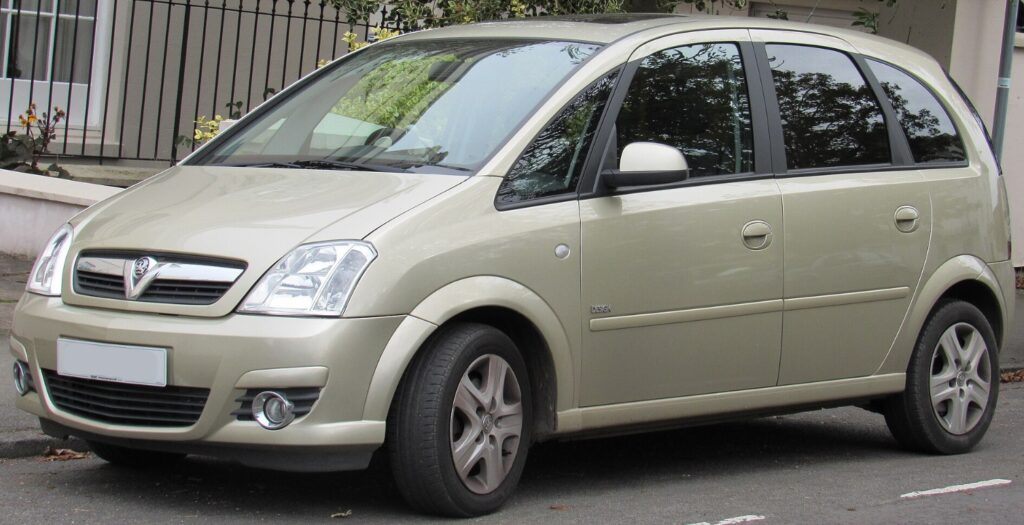
Seeing Vauxhall Meriva Code 89 appear on the dashboard can be unsettling, especially when the car still seems to drive normally. The number flashes up without much explanation, leaving us wondering whether the engine is about to overheat, whether an expensive repair is coming, or whether the vehicle simply wants routine maintenance.
Here is the most important point: Code 89 is a vehicle message, not a precise diagnostic trouble code.
In the official Vauxhall Meriva owner’s manual, dashboard message 89 means “Service vehicle soon.” It tells us that the vehicle’s control system has detected a fault requiring investigation, but it does not identify the failed component by itself.
On many Meriva B models—particularly petrol versions—Code 89 is frequently associated with the cooling system, including the thermostat, thermostat housing, coolant-temperature sensor, wiring, or an abnormal engine-temperature reading. However, replacing the thermostat without scanning the car is still a gamble. Code 89 can be triggered by other faults, so a proper diagnostic scan should come before buying parts.
Let’s decode the message, examine its most likely causes, and work through a sensible repair process without turning a dashboard warning into a parts-replacement lottery.
Content in this publication
- What Does Vauxhall Meriva Code 89 Mean?
- Which Vauxhall Meriva Models Display Code 89?
- The Most Common Cause: A Thermostat-System Fault
- Other Causes of Vauxhall Meriva Code 89
- Symptoms That May Appear With Code 89
- Can We Drive a Vauxhall Meriva With Code 89?
- How to Diagnose Vauxhall Meriva Code 89
- How to Fix Vauxhall Meriva Code 89
- How Much Does a Code 89 Repair Cost?
- Can Code 89 Be Reset Without Repairing the Car?
- Common Mistakes to Avoid
- Preventing Code 89 From Returning
- When Should We Call a Mechanic?
- Final Thoughts on Vauxhall Meriva Code 89
- Frequently Asked Questions
What Does Vauxhall Meriva Code 89 Mean?
Vauxhall Meriva Code 89 officially translates to:
Service vehicle soon
That wording matters. It does not specifically mean:
- The engine needs an oil change
- The thermostat has definitely failed
- The vehicle has reached its scheduled service interval
- The engine must immediately be switched off
- Fault code P0089 is stored
- The car is necessarily unsafe to drive
The Meriva’s display uses short numerical vehicle messages because the smaller dashboard screen cannot always show a complete sentence. Code 89 is therefore the dashboard’s compact way of saying that an electronic control module has noticed a problem.
Think of it as a smoke alarm rather than a fire investigator. It warns us that something needs attention, but it does not tell us which room contains the smoke.
Code 89 Is Not the Same as an OBD-II Fault Code
This distinction causes a great deal of confusion.
An OBD-II diagnostic trouble code normally begins with a letter, such as:
- P0597
- P0598
- P0599
- P0115
- P0116
- P0128
- P0171
By contrast, the number 89 shown on the instrument panel is a vehicle message number. It is not enough for a mechanic to diagnose the fault accurately.
For example, a Meriva displaying Code 89 may store an OBD code related to thermostat-heater control. Another Meriva showing exactly the same dashboard message may have a coolant-temperature sensor fault, a voltage problem, or an entirely different engine-management issue.
Why This Difference Matters
Suppose we automatically replace the thermostat because Code 89 appeared. The new thermostat may cost money, require coolant drainage, and consume several hours of labour. If the real problem is a broken connector wire, the warning will return immediately.
Reading the stored diagnostic codes gives us the clue hidden behind the general dashboard message.
Which Vauxhall Meriva Models Display Code 89?
The message is most commonly discussed in relation to the second-generation Vauxhall Meriva, generally known as the Meriva B.
This generation was sold from around 2010 until 2017 and was available with several petrol and diesel engines. The exact equipment, warning displays, and engine options vary by year and market.
Code 89 can appear on models fitted with engines such as:
- 1.4-litre naturally aspirated petrol
- 1.4-litre turbo petrol
- 1.3 CDTi diesel
- 1.6 CDTi diesel
- 1.7 CDTi diesel
Cooling-system complaints are especially common in discussions involving 1.4-litre petrol engines, but engine type alone cannot confirm the diagnosis.
Does Code 89 Appear on the Meriva A?
The first-generation Meriva uses a different electrical architecture and dashboard-message system. Some Meriva A vehicles may show warning lights or service messages, but the familiar numerical Code 89 complaint is primarily associated with later Vauxhall and Opel models.
Before ordering parts, confirm:
- The registration year
- The exact engine
- The engine code
- Whether the car is a Meriva A or Meriva B
- Which OBD-II codes are stored
Two cars wearing the same Meriva badge can require completely different components.
The Most Common Cause: A Thermostat-System Fault
Although Code 89 is general, a thermostat-related problem is one of the most frequently suspected causes on petrol Meriva B models.
Modern thermostats are more sophisticated than the simple wax-operated valves fitted to older cars. Certain engines use an electronically controlled heating element within or around the thermostat assembly. The engine control module can influence thermostat operation according to driving conditions, load, temperature, and emissions requirements.
When the module detects an electrical problem in that circuit, it may display Code 89.
A scan may reveal codes such as:
- P0597: Thermostat heater control circuit open
- P0598: Thermostat heater control circuit low
- P0599: Thermostat heater control circuit high
- P0128: Coolant temperature below thermostat regulating temperature
These codes are far more useful than the dashboard’s number 89.
P0597, for instance, points us toward an open circuit. That could mean a failed thermostat-heater element, but it could also mean a disconnected plug, damaged wire, corroded terminal, or poor electrical contact.
How a Thermostat Fails
A thermostat can fail in several ways.
It may become stuck open, causing the engine to run cooler than intended. It may stick closed, causing overheating. The internal heating element may fail electrically. The plastic housing may crack. Its seal may leak, or the connector may become contaminated with coolant.
A thermostat stuck open often produces subtle symptoms. The vehicle may still drive, yet:
- The engine takes too long to warm up
- Cabin heating feels weak
- Fuel consumption increases
- The temperature gauge stays unusually low
- Emissions rise
- Code 89 appears intermittently
A thermostat stuck closed is more serious because coolant cannot circulate properly through the radiator. The engine temperature may climb rapidly, and continuing to drive could cause severe damage.
Other Causes of Vauxhall Meriva Code 89
The thermostat receives plenty of attention, but it is not the only possibility. We should treat Code 89 as the beginning of the investigation rather than the final answer.
Faulty Engine Coolant-Temperature Sensor
The coolant-temperature sensor tells the engine control module how hot the engine is. The module uses this information to control fuelling, cooling-fan operation, idle behaviour, emissions systems, and other functions.
A failing sensor can report a temperature that is:
- Higher than the actual temperature
- Lower than the actual temperature
- Intermittently impossible
- Frozen at one value
- Unstable as the engine vibrates
A sensor or circuit problem may store codes including P0115, P0116, P0117, P0118, or P0119.
Symptoms of a Bad Temperature Sensor
We may notice:
- Cooling fan running from a cold start
- Fan remaining on after the engine stops
- Difficult cold starting
- Poor fuel economy
- Rough idle
- Incorrect temperature-gauge readings
- Black exhaust smoke
- Weak heater performance
- Code 89 alongside the engine-management light
Live diagnostic data is especially helpful here. If the engine is completely cold but the scanner reports 120°C, we know the reading is implausible.
Low Coolant Level
Low coolant may contribute to abnormal temperature readings and overheating. It should never be ignored.
When the engine is completely cold, inspect the expansion tank and compare the coolant level with the marked range. Never remove the coolant cap while the engine is hot. Pressurised coolant can escape like boiling water from a shaken kettle and cause serious burns.
Low coolant is not a diagnosis by itself. Coolant does not normally disappear without a reason. Possible leak points include:
- Expansion tank
- Expansion-tank cap
- Radiator
- Thermostat housing
- Water pump
- Coolant hoses
- Hose connections
- Heater matrix
- Cylinder-head gasket
Topping up the reservoir may temporarily hide the symptom, but the leak still needs to be found.
Damaged Thermostat Wiring or Connector
The thermostat assembly may be perfectly functional while the electrical supply to it is not.
Heat, engine vibration, oil contamination, previous repairs, and brittle insulation can damage wiring. Connectors may loosen or corrode. A wire can break internally while its outer insulation still appears intact.
Inspect the connector for:
- Green or white corrosion
- Coolant contamination
- Bent pins
- Loose terminals
- Broken locking tabs
- Stretched wires
- Rubbed-through insulation
- Previous tape or crimp repairs
A careful wiring repair can solve Code 89 for a fraction of the cost of replacing multiple cooling-system components.
Cooling-Fan Control Fault
The engine cooling fan is managed electrically. A failed fan motor, fuse, relay, resistor, control module, connector, or wiring circuit can cause temperature-management problems.
Depending on the fault, the fan may:
- Never switch on
- Run continuously
- Operate only at one speed
- Work intermittently
- Activate immediately after a cold start
Fan behaviour provides clues, but it must be interpreted alongside temperature readings and stored fault codes.
Water-Pump Problem
The water pump circulates coolant through the engine, radiator, heater matrix, and related passages. If its impeller is damaged or its bearing fails, coolant circulation may become inadequate.
Possible symptoms include:
- Engine overheating
- Coolant leakage
- Grinding or rumbling noise
- Temperature rising under load
- Poor cabin heating
- Steam or coolant smell
- Temperature fluctuating unexpectedly
A water-pump problem is less commonly linked directly to a thermostat electrical code, but it belongs on the diagnostic list whenever the engine genuinely overheats.
Battery or Charging-System Voltage Problems
Modern vehicles are sensitive to voltage. A weak battery, loose terminal, poor ground connection, or failing alternator can produce seemingly unrelated electronic warnings.
Low voltage may upset control modules, sensor references, and communication networks. If Code 89 appears during cold starting, alongside several other warnings, or after the battery has gone flat, voltage testing deserves attention.
With the engine off, a healthy fully charged battery usually reads around 12.6 volts. With the engine running, charging voltage is commonly somewhere around 13.5 to 14.8 volts, although intelligent charging systems may vary their output.
Voltage figures should be interpreted in context rather than treated as rigid pass-or-fail numbers.
Other Engine-Management Faults
Because Code 89 broadly means that the vehicle needs servicing, other systems may trigger it.
Possible examples include:
- Intake-air leaks
- Boost-pressure faults
- Sensor failures
- Emissions-system faults
- Throttle-body problems
- Fuel-pressure irregularities
- Diesel glow-plug faults
- Exhaust-gas recirculation problems
- Diesel particulate-filter issues
- Communication faults between modules
That is why scanning the vehicle is not optional if we want an accurate answer.
Symptoms That May Appear With Code 89
Some Merivas display Code 89 while continuing to drive normally. Others develop several noticeable symptoms.
Code 89 With No Obvious Symptoms
This is common with an electrical thermostat fault. The engine may start, idle, and accelerate normally, while the control module has detected an issue invisible to the driver.
The lack of symptoms does not mean the message should be ignored. An early electrical fault can eventually turn into poor temperature control or a coolant leak.
Code 89 and Weak Cabin Heating
Weak heating often suggests that the coolant is not reaching or maintaining normal operating temperature. A thermostat stuck open is one possibility.
Other explanations include:
- Low coolant
- Air trapped in the cooling system
- Blocked heater matrix
- Heater-control fault
- Incorrect coolant-temperature data
If the heater suddenly turns cold while the engine temperature rises, stop driving. That combination may indicate coolant loss or failed circulation.
Code 89 and an Overheating Engine
An overheating engine changes the urgency completely.
The Meriva manual warns that if coolant temperature becomes too high, we should stop the vehicle, switch off the engine, and check the coolant level once it is safe to do so.
Do not continue driving merely because the vehicle still moves. An overheated engine can suffer:
- Warped cylinder head
- Failed head gasket
- Cracked components
- Piston damage
- Turbocharger damage
- Oil degradation
- Complete engine failure
A recovery truck is cheaper than an engine rebuild.
Code 89 and a Constantly Running Fan
A fan running at high speed from a cold start often indicates that the engine control module does not trust the temperature signal. As a protective strategy, it may activate the fan continuously.
Likely areas to inspect include:
- Coolant-temperature sensor
- Sensor connector
- Wiring
- Thermostat electrical circuit
- ECU-related fault codes
Code 89 and the Engine-Management Light
When Code 89 appears with the amber engine-management light, the car has normally stored one or more diagnostic trouble codes.
The warning light may remain solid or, in more serious cases, flash.
A flashing engine light often suggests active misfiring severe enough to damage the catalytic converter. Reduce load, stop safely, and seek professional assistance.
Can We Drive a Vauxhall Meriva With Code 89?
The honest answer is: it depends on the symptoms and the stored fault.
Code 89 by itself does not always require an immediate roadside stop. However, we should not assume it is harmless.
Driving May Be Reasonable for a Short Distance When
A short, cautious journey to a garage may be reasonable when:
- The engine temperature is normal
- The coolant level is correct when cold
- There are no visible leaks
- The heater works normally
- The engine runs smoothly
- There is no steam or strong coolant smell
- No red temperature warning is present
- The engine-management light is steady rather than flashing
- The car is not in reduced-power mode
Continue watching the temperature gauge closely.
Stop Driving Immediately When
Pull over safely and switch off the engine when:
- The temperature gauge enters the hot zone
- A red coolant-temperature warning appears
- Steam comes from under the bonnet
- Coolant pours from the vehicle
- The heater suddenly blows cold while temperature rises
- The engine knocks, rattles, or loses power severely
- The engine-management light flashes
- There is a strong burning smell
- Multiple warning lights appear with charging problems
Never open the expansion-tank cap while the cooling system is hot.
How to Diagnose Vauxhall Meriva Code 89
A structured diagnosis saves time, money, and frustration.
Step 1: Record Exactly What Happened
Before clearing anything, note:
- Whether the engine was cold or warm
- Outside temperature
- Vehicle speed
- Temperature-gauge position
- Whether the fan was running
- Whether the heater worked
- Any loss of power
- Any other dashboard messages
- Whether Code 89 disappeared after restarting
Intermittent faults leave footprints. We should record them before they fade.
Step 2: Check Coolant Only When Cold
Park on level ground and allow the engine to cool fully.
Inspect:
- Coolant level
- Coolant colour
- Oil or sludge in the reservoir
- Cracks in the expansion tank
- Dampness around hoses
- Deposits around the thermostat housing
- Signs of leakage under the vehicle
Use coolant that meets the manufacturer’s specification. Mixing incompatible coolants can create deposits and reduce corrosion protection.
Step 3: Scan Every Relevant Module
Connect a capable diagnostic scanner. Basic code readers may access only generic engine codes, while better tools can read manufacturer-specific data and other control modules.
Record:
- Stored codes
- Pending codes
- Permanent codes
- Freeze-frame data
- Coolant temperature
- Intake-air temperature
- Battery voltage
- Thermostat command, where available
- Cooling-fan command
- Vehicle mileage when the fault occurred
Do not erase the codes until they have been recorded.
Step 4: Compare Cold-Engine Sensor Readings
After the car has sat overnight, coolant temperature and intake-air temperature should usually be relatively close to the surrounding temperature.
For example, if the air temperature is 15°C but the coolant sensor reports 90°C before the engine starts, the sensor circuit needs investigation.
This simple comparison can reveal a bad reading without dismantling anything.
Step 5: Inspect the Thermostat Connector and Wiring
Disconnect the battery when appropriate and follow safe repair procedures.
Check the thermostat plug, nearby harness, sensor wiring, and grounding points. Wiggle testing while monitoring live data can sometimes reveal an intermittent connection, although this should be done carefully.
Electrical tests may include:
- Continuity
- Resistance
- Reference voltage
- Supply voltage
- Ground quality
- Voltage drop under load
- Short-to-ground testing
- Short-to-voltage testing
Use the correct wiring diagram. Guessing which terminal should carry voltage can damage a control module.
Step 6: Observe Warm-Up Behaviour
Starting from cold, monitor the coolant temperature with a scanner.
The temperature should generally rise steadily. Behaviour suggesting a thermostat stuck open may include:
- Very slow warm-up
- Temperature dropping significantly during motorway driving
- Heater output remaining weak
- Engine never reaching expected operating temperature
Behaviour suggesting poor circulation or a thermostat stuck closed may include:
- Temperature rising too quickly
- Upper radiator hose remaining cold while the engine overheats
- Sudden pressure build-up
- Coolant boiling
- Heater output becoming erratic
Physical hose-temperature checks carry burn and moving-component risks. An infrared thermometer provides a safer view.
Step 7: Pressure-Test the Cooling System
A cooling-system pressure tester can reveal leaks that are invisible when the engine is cold and unpressurised.
Inspect for coolant emerging around:
- Thermostat housing
- Water pump
- Radiator seams
- Hose joints
- Expansion tank
- Heater connections
- Engine block or cylinder head
If pressure drops without an external leak, further testing may be needed for an internal engine leak.
How to Fix Vauxhall Meriva Code 89
The correct repair depends on the diagnostic result. There is no universal Code 89 reset button that permanently solves a mechanical or electrical fault.
Replacing the Thermostat or Thermostat Housing
If testing confirms thermostat failure, replacement is usually required. On some engines, the thermostat is supplied as part of a complete housing assembly.
A typical repair involves:
- Allowing the engine to cool
- Disconnecting the battery when required
- Draining enough coolant
- Removing obstructing components
- Disconnecting hoses and the electrical plug
- Removing the thermostat housing
- Cleaning the sealing surface
- Installing the replacement with a new seal
- Refilling with specified coolant
- Bleeding air from the cooling system
- Checking for leaks
- Clearing codes
- Confirming normal warm-up through live data
Bolts must be tightened to the correct torque. Plastic housings can crack if overtightened.
Replacing the Coolant-Temperature Sensor
If the sensor reading is implausible and its wiring tests correctly, replacement may solve the problem.
Some coolant will usually escape when the sensor is removed. The system must then be refilled and bled correctly.
A cheap sensor of questionable quality can create a new problem immediately. Cooling-system sensors play too important a role to justify the lowest-quality component available.
Repairing Wiring or Connectors
Damaged wiring should be repaired using automotive-grade methods.
A proper repair normally includes:
- Removing corroded copper
- Matching wire size
- Using sealed terminals or suitable splices
- Providing strain relief
- Restoring heat protection
- Securing the harness away from sharp or hot surfaces
Twisting wires together and wrapping them with household tape is not a durable engine-bay repair.
Refilling and Bleeding the Coolant
Air trapped in the system can produce weak heating, irregular temperature readings, gurgling noises, and overheating.
The exact bleeding procedure depends on the engine. General principles include:
- Filling slowly
- Setting the heater controls appropriately
- Opening bleed points where specified
- Avoiding excessive revving
- Monitoring the coolant level during warm-up
- Allowing the engine to cool before final adjustment
- Rechecking for leaks after a road test
Overfilling is not helpful. Coolant needs expansion space inside the reservoir.
How Much Does a Code 89 Repair Cost?
Repair cost depends on the engine, failed component, labour rate, parts quality, and whether overheating has caused additional damage.
Approximate UK workshop expectations might include:
- Diagnostic scan: £30–£100
- Coolant-temperature sensor replacement: £70–£180
- Wiring or connector repair: £60–£250
- Thermostat or housing replacement: £150–£450
- Cooling-fan repair: £150–£600
- Water-pump replacement: £250–£700
- Head-gasket repair after overheating: £900–£2,500 or more
These are broad estimates rather than fixed quotations. Turbocharged engines, difficult access, seized fasteners, and dealership labour can increase the total.
The cheapest first step is usually not a thermostat. It is an accurate diagnosis.
Can Code 89 Be Reset Without Repairing the Car?
The message may disappear after:
- Restarting the engine
- Disconnecting the battery
- Clearing stored codes
- Repairing the underlying fault
- Completing several fault-free drive cycles
Only the last two represent meaningful solutions.
Disconnecting the battery can erase learned settings and may create inconvenience without fixing anything. Clearing the code merely wipes the warning from memory. If the fault remains, the message will return—sometimes immediately, sometimes after the next cold start.
It is like silencing a doorbell while leaving the visitor outside.
Why Code 89 Sometimes Disappears by Itself
An intermittent connection may work again after vibration, temperature change, or moisture evaporation. The control module may then stop displaying the warning, although the fault remains stored as historic or pending.
A disappearing message is useful evidence, not proof of repair.
Common Mistakes to Avoid
Code 89 becomes expensive when we replace parts based on assumptions.
Replacing the Thermostat Without Scanning
The thermostat is common enough to be suspicious, but not common enough to skip diagnosis.
Opening the Coolant Cap While Hot
This can release scalding coolant under pressure. Always wait for the engine to cool.
Using the Wrong Coolant
Incorrect or mixed coolant may reduce corrosion protection and form contamination inside the system.
Ignoring a Rising Temperature Gauge
Code 89 may be general, but overheating is specific and urgent.
Buying the Part by Registration Alone
Parts catalogues are not infallible. Confirm the engine code, connector, housing design, and part number.
Replacing Only the Sensor When the Plug Is Corroded
A new sensor cannot communicate through damaged terminals.
Clearing the Code Before Recording It
Freeze-frame data may reveal the engine temperature, voltage, speed, and load when the fault occurred. Erasing it destroys useful evidence.
Preventing Code 89 From Returning
Not every electrical failure can be prevented, but good maintenance reduces the risk of cooling-system trouble.
Check the Coolant Level Regularly
Inspect it only when the engine is cold. A gradual drop should be investigated rather than repeatedly topped up.
Use the Correct Coolant Specification
Coolant is not merely coloured water. It controls freezing, boiling, corrosion, lubrication, and deposit formation.
Repair Small Leaks Early
A faint smell or dried coolant stain may be the opening chapter of a much larger failure.
Keep the Battery Healthy
A weak electrical supply can generate misleading warnings and place stress on modules.
Investigate Slow Warm-Up
An engine that never reaches normal temperature may consume more fuel and produce weak cabin heating long before a warning appears.
Avoid Repeated Short Journeys Where Possible
Frequent cold starts and short trips prevent the engine from reaching stable operating temperature. This is particularly troublesome for diesel emissions systems.
When Should We Call a Mechanic?
Professional diagnosis is the sensible route when:
- The temperature is rising
- Coolant is leaking
- The fan behaves abnormally
- The warning returns after clearing
- Several fault codes are present
- Wiring tests are required
- The cooling system needs pressure testing
- The vehicle has overheated
- Coolant and oil appear contaminated
- The repair requires coolant bleeding or specialist tools
Ask the workshop for the actual diagnostic codes rather than accepting “Code 89 means thermostat” as the entire explanation.
A useful invoice should identify:
- Stored OBD codes
- Tests performed
- Confirmed failed component
- Parts replaced
- Coolant specification used
- Whether the system was pressure-tested
- Whether codes remained after the road test
Final Thoughts on Vauxhall Meriva Code 89
Vauxhall Meriva Code 89 officially means “Service vehicle soon.” It is a broad dashboard message, not a component-specific fault code.
On many Meriva B petrol models, the investigation leads toward the thermostat, thermostat-heater circuit, coolant-temperature sensor, or related wiring. Nevertheless, the correct repair should be based on stored OBD codes, live temperature data, electrical testing, and cooling-system inspection.
When the engine temperature remains normal and no serious symptoms are present, a short trip to a workshop may be reasonable. When the temperature rises, coolant leaks, steam appears, or the heater suddenly turns cold, stop driving and allow the engine to cool.
Code 89 is the car tapping us on the shoulder. We do not need to panic, but we should not keep walking as though nothing happened.
Frequently Asked Questions
1. What does Code 89 mean on a Vauxhall Meriva?
Code 89 means “Service vehicle soon.” It indicates that the car has detected a fault requiring diagnosis. It does not identify a specific failed component.
2. Does Vauxhall Meriva Code 89 always mean a bad thermostat?
No. A thermostat or thermostat-heater fault is a common cause, especially on certain petrol models, but Code 89 can also result from temperature-sensor faults, wiring problems, low coolant, voltage issues, or other engine-management faults.
3. Can low coolant cause Code 89?
Low coolant may contribute to abnormal temperature behaviour and warning messages, although it may not be the direct electrical cause. Check the level only when the engine is completely cold and investigate any repeated coolant loss.
4. Will Code 89 clear after replacing the thermostat?
It should clear if the thermostat was the confirmed cause and the replacement was installed correctly. The diagnostic code may need to be erased with a scanner, or it may disappear after several successful drive cycles.
5. Is Code 89 dangerous?
The number itself is a general service warning. The underlying fault determines the danger. It becomes urgent when accompanied by overheating, coolant loss, steam, severe power reduction, unusual noises, or a flashing engine-management light.
If you want to know other articles similar to Vauxhall Meriva Code 89: Meaning, Causes, Diagnosis, and Fix you can visit the category Service and Parts.
MG HS Tyre Pressure Guide: Correct PSI and TPMS

Toyota Yaris Cross Dashboard Symbols

BMW 3 Series Warning Lights: The Complete Guide to Understanding Every Dashboard Symbol

Nissan Qashqai Fuel Tank Capacity: Complete Guide

Suzuki Swift Fuel Tank Capacity: Complete Guide

Mazda CX-5 Weight (2013–2026): Complete Guide in Pounds and KG
Leave a Reply
More content of your interest