

Mitsubishi ASX KM Per Liter: Real Fuel Economy, Tips & Insights

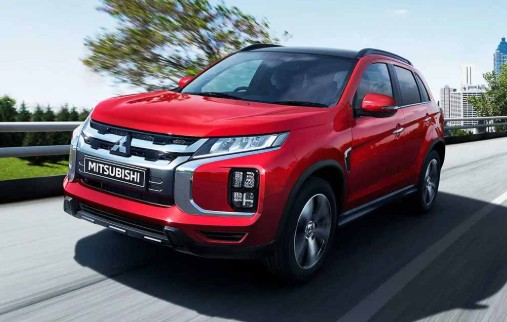
When we talk about compact SUVs that balance practicality with efficiency, the Mitsubishi ASX quietly holds its ground. It’s not flashy. It doesn’t scream for attention. But when it comes to fuel economy—especially measured in kilometers per liter (km/l)—it often surprises drivers who expect a thirsty SUV.
So, how efficient is it really? And more importantly… can we squeeze more kilometers out of every liter?
Let’s break it down like a road trip with friends—easy, engaging, and packed with useful insights.
Content in this publication
- What Does KM Per Liter Really Mean?
- Mitsubishi ASX Fuel Economy Overview
- Why KM Per Liter Matters More Than You Think
- Real-World Mitsubishi ASX KM/L: What Drivers Experience
- Petrol vs Diesel: Which ASX Is More Efficient?
- Transmission Matters: Manual vs CVT
- Driving Habits That Affect KM/L
- Tire Pressure: The Silent Efficiency Booster
- Vehicle Weight and Load Impact
- Maintenance: The Backbone of Good KM/L
- Fuel Quality: Does It Really Matter?
- Aerodynamics: Small Changes, Big Impact
- Comparing ASX KM/L With Rivals
- Is the Mitsubishi ASX Fuel Efficient for 2026 Standards?
- Tips to Maximize Your Mitsubishi ASX KM/L
- Common Myths About Fuel Economy
- How Driving Conditions Change Everything
- Long-Term Fuel Cost Perspective
- Closing Thoughts: Is the Mitsubishi ASX Economical?
- FAQs About Mitsubishi ASX KM Per Liter
What Does KM Per Liter Really Mean?
Before diving into numbers, let’s ground ourselves.
Understanding Fuel Efficiency Metrics
- KM/L (kilometers per liter) = how far your car travels on one liter of fuel
- Higher number = better fuel economy
- Common in Europe, Latin America, and Asia
Think of it like this:
If your ASX gives you 15 km/l, every liter is your ticket for a 15 km journey.
Mitsubishi ASX Fuel Economy Overview
Average KM/L Across Engine Variants
The ASX has been offered with several engines globally. Here’s a realistic breakdown:
| Engine Type | Fuel Type | Transmission | Average KM/L |
|---|---|---|---|
| 1.6 Petrol | Gasoline | Manual | 14–16 km/l |
| 2.0 Petrol | Gasoline | CVT Automatic | 12–14 km/l |
| 2.2 Diesel | Diesel | Automatic | 16–18 km/l |
👉 Real-world numbers vary, but this gives us a solid baseline.
Why KM Per Liter Matters More Than You Think
Fuel economy isn’t just about saving money—it’s about lifestyle.
- Lower running costs → more money for trips
- Fewer fuel stops → smoother journeys
- Reduced emissions → lighter environmental footprint
We’re not just driving—we’re optimizing.
Real-World Mitsubishi ASX KM/L: What Drivers Experience
Here’s where things get interesting.
City Driving
- Heavy traffic = 10–12 km/l
- Frequent stops kill efficiency
Highway Driving
- Smooth cruising = 14–18 km/l
- The ASX shines here
Mixed Driving
- Daily commuting = 12–15 km/l
It’s like the ASX has two personalities—efficient traveler on highways, slightly thirsty in city chaos.
Petrol vs Diesel: Which ASX Is More Efficient?
Diesel Advantage
- Higher torque
- Better long-distance efficiency
- Up to 18 km/l
Petrol Reality
- Smoother and quieter
- Slightly less efficient
- Ideal for short trips
👉 If you drive long distances, diesel wins.
👉 If you live in the city, petrol feels more natural.
Transmission Matters: Manual vs CVT
Manual Transmission
- More control
- Slightly better fuel economy
CVT Automatic
- Smoother ride
- Slightly lower km/l
But let’s be honest—comfort sometimes beats efficiency.
Driving Habits That Affect KM/L
This is where we come in.
The Biggest Fuel Killers
- Aggressive acceleration
- Hard braking
- High speeds
Fuel-Saving Habits
- Maintain steady speed
- Anticipate traffic
- Use cruise control
Driving gently is like whispering to your engine—it responds with efficiency.
Tire Pressure: The Silent Efficiency Booster
Underinflated tires are sneaky fuel thieves.
Why It Matters
- Increases rolling resistance
- Reduces km/l by up to 5%
Quick Tip
Check tire pressure monthly—it’s a 2-minute habit that saves fuel long-term.
Vehicle Weight and Load Impact
Ever driven with a packed trunk?
The Truth
- More weight = more fuel consumption
- Roof racks increase drag
Simple Fixes
- Remove unnecessary items
- Travel light when possible
Think of your ASX like a runner—the lighter it is, the farther it goes.
Maintenance: The Backbone of Good KM/L
A neglected car is a thirsty car.
Key Maintenance Tips
- Change engine oil regularly
- Replace air filters
- Check spark plugs
A well-maintained ASX is like a tuned instrument—smooth, efficient, and reliable.
Fuel Quality: Does It Really Matter?
Short answer: yes.
Low-Quality Fuel Effects
- Poor combustion
- Reduced km/l
- Engine deposits
Best Practice
Stick to reputable fuel stations. Your engine will thank you.
Aerodynamics: Small Changes, Big Impact
We rarely think about airflow—but it matters.
What Hurts Efficiency
- Open windows at high speed
- Roof accessories
What Helps
- Keep windows closed on highways
- Remove unused roof racks
Air resistance is invisible—but your fuel gauge feels it.
Comparing ASX KM/L With Rivals
Let’s put things into perspective.
Compact SUV Fuel Economy Comparison
| Model | Average KM/L |
|---|---|
| Mitsubishi ASX | 12–16 km/l |
| Nissan Qashqai | 13–17 km/l |
| Hyundai Tucson | 11–15 km/l |
| Kia Sportage | 11–14 km/l |
👉 The ASX holds its own—solid, balanced, reliable.
Is the Mitsubishi ASX Fuel Efficient for 2026 Standards?
Good question.
Reality Check
- Not the most efficient
- Not the worst either
- Reliable middle ground
It’s like that dependable friend—not flashy, but always there.
Tips to Maximize Your Mitsubishi ASX KM/L
Let’s turn knowledge into action.
Top Fuel-Saving Tips
- Drive smoothly and avoid sudden acceleration
- Maintain proper tire pressure
- Service your car regularly
- Use cruise control on highways
- Avoid idling unnecessarily
Small habits = big savings over time.
Common Myths About Fuel Economy
Not necessarily—use what your engine requires.
Myth 2: Idling Saves Fuel
False—modern engines waste fuel when idling.
Myth 3: Bigger Engines Always Consume More
Not always—efficiency depends on tuning and driving style.
How Driving Conditions Change Everything
Fuel economy isn’t fixed—it’s dynamic.
Factors That Influence KM/L
- Terrain (hills vs flat roads)
- Weather conditions
- Traffic density
Your ASX behaves differently depending on its environment—like a traveler adapting to the road.
Long-Term Fuel Cost Perspective
Let’s talk money.
Example Calculation
If your ASX averages 14 km/l:
- 14 km per liter
- 140 km per 10 liters
- Lower fuel expenses over time
Efficiency isn’t just numbers—it’s savings you feel.
Closing Thoughts: Is the Mitsubishi ASX Economical?
The Mitsubishi ASX doesn’t try to be the king of fuel economy—but it doesn’t need to.
It offers:
- Balanced efficiency
- Reliable performance
- Predictable fuel consumption
And honestly? That’s what most of us need.
It’s not about chasing the highest km/l—it’s about consistency. And the ASX delivers that quietly, confidently, and without drama.
FAQs About Mitsubishi ASX KM Per Liter
1. What is the average KM/L of a Mitsubishi ASX?
Most models deliver between 12 and 16 km/l, depending on engine and driving conditions.
2. Is the diesel ASX more fuel-efficient than petrol?
Yes, diesel versions typically achieve 16–18 km/l, making them better for long trips.
3. How can I improve my ASX fuel economy?
Drive smoothly, maintain tire pressure, and keep up with regular maintenance.
4. Does the CVT transmission reduce fuel efficiency?
Slightly, but it offers smoother driving, which many drivers prefer.
5. Is the Mitsubishi ASX good for long-distance driving?
Absolutely—especially diesel versions, which excel on highways.
If you want to know other articles similar to Mitsubishi ASX KM Per Liter: Real Fuel Economy, Tips & Insights you can visit the category Driving.
Kia Sorento Fuel Economy: MPG, Hybrid, and Plug-In Hybrid Explained
BYD Shark 6 Fuel Consumption: Real-World Economy, Range and What to Expect
Vauxhall Agila MPG: Real-World Fuel Economy and Engine Guide

Honda Passport MPG: Real-World Fuel Economy, Ratings, and What to Expect

Nissan Rogue Fuel Economy: MPG, Range, Costs, and Real-World Efficiency
BYD Shark 6 Long Range Fuel Tank: Is the 120L Upgrade Worth It?
Leave a Reply
More content of your interest