

Is Toyota 4Runner Fuel Efficient? The Real Truth Behind Its MPG

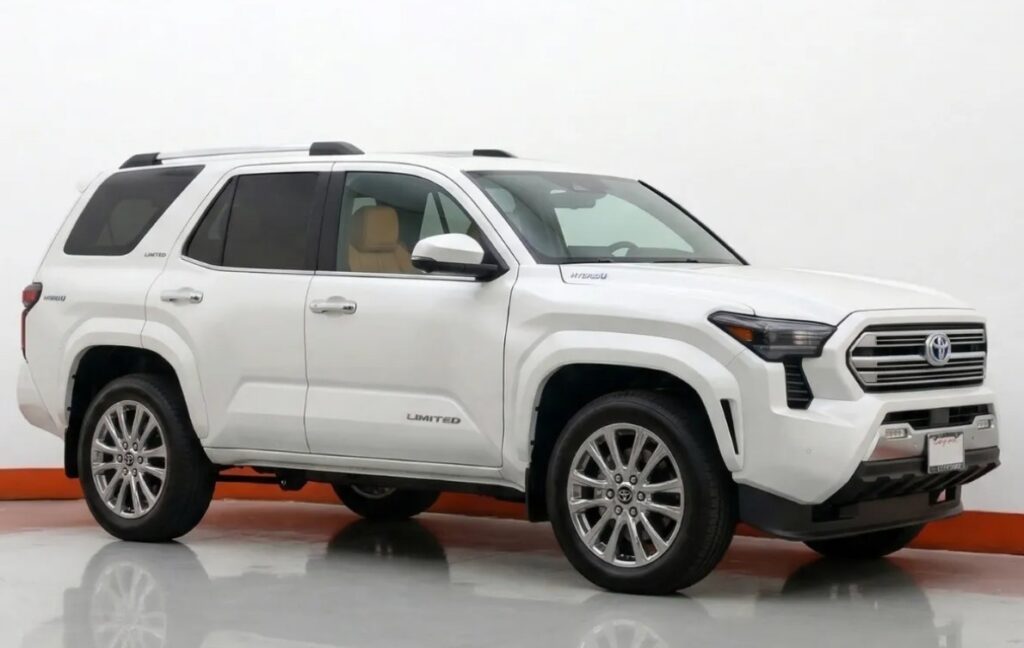
The Toyota 4Runner has built a reputation like a mountain climber with mud on its boots—rugged, dependable, and stubbornly capable. But when we start talking about fuel economy, things become a little more complicated. One question keeps echoing across forums, dealerships, and road trips alike: is Toyota 4Runner fuel efficient?
The short answer? Not really compared to modern crossovers.
The honest answer? It depends on what we expect from a body-on-frame SUV designed like an old-school adventurer.
The 4Runner is not trying to be a featherweight hybrid commuter. It’s more like a loyal hiking partner carrying a backpack full of camping gear while other SUVs stroll around in sneakers. Fuel efficiency was never its primary identity. Capability, durability, and off-road confidence were.
Still, many buyers wonder whether the fuel economy is bad enough to become a deal-breaker. That’s where we dig deeper.
Content in this publication
- Understanding What “Fuel Efficient” Really Means
- Toyota 4Runner MPG Ratings Explained
- The Body-On-Frame Factor
- Why Toyota Prioritized Capability Over MPG
- Is The Toyota 4Runner Bad On Gas?
- Real-World Fuel Economy vs EPA Estimates
- The Role Of Aerodynamics
- Does Four-Wheel Drive Hurt Fuel Economy?
- How The 4Runner Compares To Competitors
- Can The Toyota 4Runner Be Efficient Enough For Daily Driving?
- How Much Does Fuel Cost Annually?
- Fuel Efficiency By 4Runner Trim
- Do Older 4Runners Get Worse MPG?
- Why Reliability Changes The Fuel Economy Conversation
- Can You Improve Toyota 4Runner MPG?
- Does The 4Runner Need Premium Gas?
- Toyota 4Runner Hybrid Possibilities
- Is The Toyota 4Runner Worth The Fuel Costs?
- The Emotional Side Of 4Runner Ownership
- Who Should Buy A Toyota 4Runner?
- Who Might Want Something More Efficient?
- The 4Runner’s Fuel Economy In Perspective
- Should Fuel Economy Stop You From Buying One?
- Final Thoughts On Whether The Toyota 4Runner Is Fuel Efficient
- FAQs
Understanding What “Fuel Efficient” Really Means
Fuel efficiency is relative. A compact hybrid SUV achieving 40 MPG lives in a completely different universe from a rugged off-road SUV with a truck chassis.
When we ask if the 4Runner is fuel efficient, we need context:
- Efficient for a rugged off-roader?
- Efficient for daily commuting?
- Efficient compared to full-size SUVs?
- Efficient for long-distance road trips?
The answer changes depending on the comparison.
For example:
| Vehicle Type | Average MPG |
|---|---|
| Hybrid crossover | 35–45 MPG |
| Compact SUV | 25–32 MPG |
| Mid-size crossover | 22–28 MPG |
| Body-on-frame SUV | 16–22 MPG |
| Toyota 4Runner | Around 16–20 MPG |
Right away, we can see the 4Runner sits near the lower end of modern SUV fuel economy. Yet within its specific category, the numbers are not shocking.
Toyota 4Runner MPG Ratings Explained
The newer generations of the 4Runner generally achieve:
- 16 MPG city
- 19 MPG highway
- 17 MPG combined
Some trims vary slightly depending on drivetrain and tires.
Why Are The Numbers So Low?
Several design choices explain the MPG:
- Heavy body-on-frame construction
- Naturally aspirated V6 engine
- Older transmission design
- High ground clearance
- Off-road-focused tires
- Boxy aerodynamics
- Four-wheel-drive systems
In simple terms, the 4Runner cuts through air like a refrigerator wearing hiking boots.
That sounds harsh, but it’s also part of its charm.
The Body-On-Frame Factor
Most modern SUVs now use unibody construction. The 4Runner does not.
Instead, it rides on a truck-like body-on-frame platform. This gives it:
- Greater durability
- Better towing strength
- Improved off-road articulation
- Rugged long-term reliability
But there’s a trade-off.
Body-on-frame vehicles are heavier and less aerodynamic, which hurts fuel economy. Imagine trying to sprint while carrying a steel ladder. That’s essentially what the engine deals with every day.
Why Toyota Prioritized Capability Over MPG
Toyota understood the mission of the 4Runner from the beginning.
This SUV was built for:
- Trails
- Snow
- Mountains
- Towing
- Overlanding
- Harsh weather
- Remote adventures
Fuel economy simply wasn’t the star of the show.
Instead, Toyota focused on:
Long-Term Reliability
The 4Runner is famous for surviving hundreds of thousands of miles.
Mechanical Simplicity
Toyota avoided overly complicated turbo systems for years, helping maintain reliability.
Off-Road Durability
The SUV was designed to endure punishment where many crossovers surrender.
Is The Toyota 4Runner Bad On Gas?
If we compare it to modern fuel-efficient crossovers, yes.
If we compare it to older truck-based SUVs, not necessarily.
The perception often depends on expectations.
Someone moving from a hybrid sedan into a 4Runner may feel shocked at the gas station. Meanwhile, a driver upgrading from a large pickup truck may actually find the 4Runner acceptable.
Real-World Fuel Economy vs EPA Estimates
Real-world MPG varies dramatically.
Some owners report:
- 14–15 MPG in heavy city traffic
- 17–19 MPG mixed driving
- 20–22 MPG on careful highway trips
Several factors influence fuel economy.
Driving Habits Matter More Than People Think
Aggressive acceleration turns the fuel gauge into a countdown timer.
Smooth driving helps considerably.
Terrain Changes Everything
Mountain driving destroys MPG quickly. Flat highways improve it.
Tire Selection Impacts Fuel Use
Large all-terrain tires often reduce efficiency.
The Role Of Aerodynamics
The 4Runner has the aerodynamic profile of a brick wrapped in confidence.
Its tall shape helps with visibility and cargo space, but airflow resistance increases fuel consumption.
Modern crossovers are sleek for a reason. Engineers obsess over airflow because even tiny improvements can save fuel.
The 4Runner, however, prioritizes practicality and rugged styling over slippery aerodynamics.
And honestly? Many buyers love it precisely because it looks unapologetically rugged.
Does Four-Wheel Drive Hurt Fuel Economy?
Absolutely.
Many 4Runner trims come equipped with sophisticated 4WD systems, which add:
- Extra drivetrain weight
- More mechanical resistance
- Increased rolling friction
This reduces MPG but dramatically boosts capability.
The trade-off becomes worthwhile if we regularly encounter:
- Snowy roads
- Dirt trails
- Mud
- Sand
- Rocky terrain
If we never leave pavement, though, the fuel penalty may feel harder to justify.
How The 4Runner Compares To Competitors
The 4Runner competes against SUVs that also sacrifice some efficiency for toughness.
Toyota 4Runner vs Jeep Wrangler
The Jeep Wrangler often delivers similar or slightly worse MPG depending on configuration.
Toyota 4Runner vs Ford Bronco
The Ford Bronco can achieve comparable numbers, though turbocharged engines sometimes improve efficiency.
Toyota 4Runner vs Honda Passport
The Honda Passport generally offers better fuel economy because it uses a crossover platform.
Toyota 4Runner vs Toyota Highlander
The Toyota Highlander destroys the 4Runner in MPG thanks to its hybrid options and unibody construction.
But here’s the twist.
The Highlander is not designed for hardcore trails. Different mission entirely.
Can The Toyota 4Runner Be Efficient Enough For Daily Driving?
Surprisingly, yes—for the right person.
Many owners daily-drive their 4Runners without regret because the SUV delivers benefits beyond MPG:
- High seating position
- Exceptional visibility
- Reliability
- Cargo flexibility
- Rugged confidence
- Strong resale value
The emotional value matters too.
Some vehicles feel disposable. The 4Runner feels like a companion ready for adventure at any moment.
That emotional connection often outweighs fuel costs.
How Much Does Fuel Cost Annually?
Let’s estimate.
If we drive 15,000 miles annually at 17 MPG:
- Total gallons used: ~882
- At $4 per gallon:
- Annual fuel cost: ~$3,528
Compare that with a crossover achieving 30 MPG:
- Total gallons used: ~500
- Annual fuel cost: ~$2,000
That difference matters.
Over five years, the gap can become substantial.
Fuel Efficiency By 4Runner Trim
Not every trim behaves identically.
TRD Pro Models
The Toyota 4Runner TRD Pro often performs slightly worse due to:
- Aggressive tires
- Suspension setup
- Added off-road hardware
SR5 And Limited Trims
These may achieve marginally better MPG because of more road-focused setups.
Still, differences are usually small.
Do Older 4Runners Get Worse MPG?
Typically yes.
Older generations often feature:
- Less efficient engines
- Older transmissions
- Heavier designs
- Aging components
Some older 4Runners can dip into:
- 13–16 MPG combined
However, many owners accept this because durability remains legendary.
Why Reliability Changes The Fuel Economy Conversation
Here’s where things get interesting.
Fuel efficiency isn’t the only financial factor.
The 4Runner often compensates with:
- Exceptional longevity
- Strong resale value
- Lower depreciation
- Proven reliability
A vehicle with great MPG but expensive repairs can become more costly long-term.
The 4Runner frequently avoids that trap.
Many owners happily trade some fuel economy for peace of mind.
Can You Improve Toyota 4Runner MPG?
Yes, although improvements are usually modest.
Drive Smoothly
Avoid hard acceleration.
Maintain Tire Pressure
Underinflated tires increase rolling resistance.
Reduce Roof Rack Weight
Extra drag hurts highway efficiency.
Use Highway Cruise Control
Consistent speeds help fuel economy.
Avoid Oversized Tires
Huge off-road tires look aggressive but consume more fuel.
Stay Current On Maintenance
Dirty air filters and neglected spark plugs can reduce efficiency.
Most modern 4Runner models run perfectly on regular unleaded gasoline.
That helps offset some fuel expenses.
Premium fuel requirements can dramatically increase ownership costs, so this is one area where the 4Runner stays practical.
Toyota 4Runner Hybrid Possibilities
Many enthusiasts are eagerly waiting for electrified versions.
Toyota has already embraced hybrid technology across multiple models, including:
- Toyota Prius
- Toyota Tacoma Hybrid
- Toyota Land Cruiser
Future hybridized 4Runner models could significantly improve MPG while maintaining capability.
That combination could transform the vehicle’s appeal.
Is The Toyota 4Runner Worth The Fuel Costs?
This depends entirely on lifestyle.
The 4Runner makes sense if we value:
- Off-road capability
- Reliability
- Durability
- Resale value
- Adventure readiness
- Rugged styling
It may not make sense if we prioritize:
- Maximum MPG
- Urban commuting
- Cheap fuel bills
- Compact maneuverability
In many ways, buying a 4Runner is emotional as much as practical.
It’s choosing hiking boots instead of running shoes.
The Emotional Side Of 4Runner Ownership
Some vehicles simply transport us.
The 4Runner inspires us.
Owners often describe feelings like:
- Confidence during storms
- Freedom on road trips
- Excitement for outdoor adventures
- Trust in remote locations
That emotional value is difficult to quantify in MPG charts.
And that’s why the 4Runner continues attracting loyal fans despite mediocre fuel economy.
Who Should Buy A Toyota 4Runner?
The ideal buyer often includes:
Outdoor Enthusiasts
Campers, hikers, and explorers love the SUV’s capability.
Snow-Belt Drivers
Its rugged drivetrain handles harsh winters confidently.
Long-Term Owners
People keeping vehicles for 10+ years appreciate Toyota reliability.
Adventure Travelers
The 4Runner thrives on road trips and overlanding.
Who Might Want Something More Efficient?
Some buyers may prefer alternatives.
Urban Commuters
Frequent city driving amplifies fuel expenses.
Families Prioritizing MPG
Hybrid SUVs offer dramatically better efficiency.
Budget-Conscious Drivers
Fuel costs can become significant over time.
The 4Runner’s Fuel Economy In Perspective
We sometimes judge the 4Runner unfairly because the market changed around it.
Modern SUVs evolved into fuel-conscious crossovers. Meanwhile, the 4Runner stayed loyal to its rugged roots.
That’s why it feels refreshingly authentic to many enthusiasts.
It’s one of the last old-school SUVs still standing.
And like an aging rock band refusing to lip-sync, the 4Runner remains unapologetically itself.
Should Fuel Economy Stop You From Buying One?
Not necessarily.
If fuel economy is your top priority, there are clearly better options.
But if we crave:
- Durability
- Reliability
- Adventure capability
- Rugged personality
- Proven engineering
Then the fuel trade-off may feel completely reasonable.
The 4Runner isn’t pretending to be a fuel-sipping crossover. It’s a purpose-built SUV with a different philosophy.
And honestly, that authenticity is becoming rare.
Final Thoughts On Whether The Toyota 4Runner Is Fuel Efficient
So, is the Toyota 4Runner fuel efficient?
Compared to modern hybrid SUVs, absolutely not.
Compared to other rugged body-on-frame off-road SUVs, it’s fairly average.
The real story is this: the 4Runner sacrifices fuel economy to deliver toughness, reliability, and adventure-ready capability. It’s the kind of vehicle that values endurance over elegance, grit over glamour.
For some drivers, the gas bill becomes a deal-breaker.
For others, the ability to confidently tackle mountains, snowstorms, muddy trails, and decade-long ownership makes every gallon worthwhile.
The 4Runner may never win a fuel economy contest—but it continues winning hearts.
FAQs
Does the Toyota 4Runner get good gas mileage?
The Toyota 4Runner delivers average fuel economy for a rugged off-road SUV, usually around 16–19 MPG combined.
Why is the Toyota 4Runner not fuel efficient?
Its body-on-frame construction, heavy weight, boxy design, and off-road hardware reduce efficiency.
Which Toyota 4Runner trim gets the best MPG?
Road-focused trims like the SR5 or Limited may achieve slightly better fuel economy than TRD off-road models.
Can driving habits improve 4Runner fuel economy?
Yes. Smooth acceleration, proper tire pressure, and lighter cargo loads can modestly improve MPG.
Is the Toyota 4Runner expensive to fuel?
Compared to hybrid SUVs, yes. However, many owners feel the durability and reliability offset the higher fuel costs.
If you want to know other articles similar to Is Toyota 4Runner Fuel Efficient? The Real Truth Behind Its MPG you can visit the category Driving.
Toyota Hilux Long Range Fuel Tank: Complete Buyer’s Guide

How Fast Is a BMW M2? Acceleration, Top Speed and Real-World Performance
Toyota Hilux Fuel Consumption: Real-World MPG, Diesel Economy, and Running Costs

Subaru XV Fuel Consumption: MPG, Real-World Economy, and What to Expect
BMW M2 MPG: Real-World Fuel Economy, Range, and Running Costs

Leapmotor C10 Real World Range: What Can You Actually Expect?
Leave a Reply
More content of your interest