
GMC Sierra Fuel Economy: A Complete Canadian Buyer’s Guide

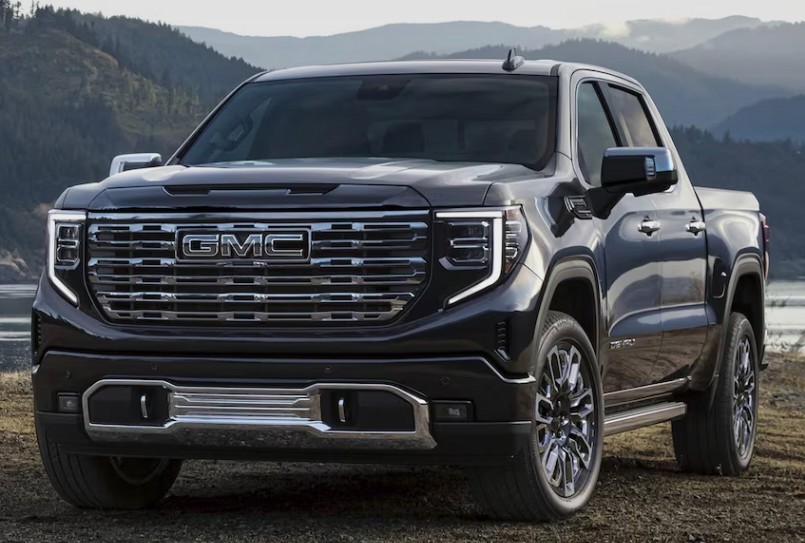
Fuel economy has rarely been the first reason anyone buys a GMC Sierra. We choose a Sierra because we need towing strength, cargo capacity, four-wheel-drive confidence, or simply the commanding feel of a full-size pickup. Still, fuel consumption matters—especially in Canada, where long distances, cold winters, changing fuel prices, and rugged terrain can turn a small efficiency difference into a sizeable annual expense.
The good news is that GMC Sierra fuel economy has improved considerably over the truck’s history. Early models relied almost entirely on large gasoline engines and relatively simple transmissions. Newer trucks combine turbocharging, cylinder deactivation, advanced automatic transmissions, lighter materials, aerodynamic improvements, and an efficient 3.0-litre Duramax diesel.
That does not mean every modern Sierra is economical. A lifted AT4X with aggressive tires will naturally consume more fuel than a two-wheel-drive diesel work truck. Configuration matters almost as much as model year.
In Canada, fuel consumption is normally expressed in litres per 100 kilometres, or L/100 km. A lower number is better. Natural Resources Canada also reminds shoppers that official figures are standardized comparison tools; actual consumption can change with weather, driving behaviour, vehicle condition, traffic, accessories, payload, and trailer use.
Let us explore how Sierra efficiency has evolved, which engines use the least fuel, and what Canadian buyers should realistically expect.
Content in this publication
- GMC Sierra Fuel Economy at a Glance
- Understanding Canadian Fuel-Economy Ratings
- Official Ratings Versus Real-World Consumption
- GMC Sierra Generations and Fuel-Economy Evolution
- First-Generation GMC Sierra: 1999–2006
- Second-Generation GMC Sierra: 2007–2013
- Third-Generation GMC Sierra: 2014–2018
- Fourth-Generation GMC Sierra: 2019 to Present
- 2.7-Litre TurboMax Fuel Economy
- 5.3-Litre V8 Fuel Economy
- 6.2-Litre V8 Fuel Economy
- 3.0-Litre Duramax Diesel Fuel Economy
- Sierra AT4 and AT4X Fuel Economy
- Sierra Denali Fuel Economy
- GMC Sierra 2500HD and 3500HD Fuel Economy
- Two-Wheel Drive Versus Four-Wheel Drive
- Cab and Bed Configuration Matter
- How Towing Changes Sierra Fuel Economy
- Canadian Winter Fuel Economy
- How to Improve GMC Sierra Fuel Economy
- Calculating Annual Sierra Fuel Cost
- Which GMC Sierra Engine Is Most Fuel-Efficient?
- Best Used Sierra Generations for Fuel Economy
- Is the GMC Sierra Good on Fuel?
- What Buyers Should Check Before Purchase
- Final Thoughts on GMC Sierra Fuel Economy
- Frequently Asked Questions
GMC Sierra Fuel Economy at a Glance
The Sierra lineup covers everything from relatively efficient light-duty pickups to enormous heavy-duty trucks built to pull equipment, campers, and commercial trailers.
For most buyers, the main patterns are simple:
- The 3.0-litre Duramax diesel is generally the most fuel-efficient modern Sierra 1500 engine.
- Two-wheel-drive trucks usually consume less than equivalent four-wheel-drive models.
- Highway driving produces the best results, particularly with diesel engines.
- Large V8 engines tend to use more fuel in urban driving.
- AT4, AT4X, and other off-road configurations usually sacrifice efficiency.
- Sierra 2500HD and 3500HD trucks consume considerably more fuel than Sierra 1500 models.
- Older trucks may have less technology, fewer transmission ratios, and greater mechanical wear.
Current Sierra diesel models are marketed around their combination of efficiency, torque, and towing ability. GMC identifies the available 3.0-litre Duramax as the fuel-economy leader within the Sierra 1500 powertrain family.
Understanding Canadian Fuel-Economy Ratings
Before comparing engines and generations, we need to understand the numbers.
What Does L/100 km Mean?
L/100 km tells us how many litres of fuel a vehicle consumes to travel 100 kilometres.
For example:
- 9.0 L/100 km means the truck uses 9 litres over 100 kilometres.
- 12.0 L/100 km means it uses 12 litres.
- 16.0 L/100 km means it uses 16 litres.
Unlike miles per gallon, the lower number wins.
A Sierra averaging 10 L/100 km is more efficient than one averaging 15 L/100 km. Think of it like a drinking contest in reverse: the truck taking smaller sips is the champion.
City, Highway, and Combined Ratings
Canadian fuel-consumption listings normally include three measurements:
City Rating
This reflects lower-speed operation, stops, acceleration, idling, and urban traffic. Full-size pickups generally perform worst here because moving a heavy truck from a standstill requires considerable energy.
Highway Rating
This estimates consumption during steadier, higher-speed travel. Diesel Sierras often shine on the highway because their engines produce abundant low-speed torque and operate efficiently under a stable load.
Combined Rating
The combined figure blends city and highway operation. It is the quickest number to use when comparing two trucks, although it may not represent your personal routine.
Someone travelling daily between Calgary and Airdrie may achieve results closer to the highway rating. A driver making short winter trips through downtown Toronto could use substantially more fuel.
Official Ratings Versus Real-World Consumption
Official ratings give us a common measuring stick, but a Sierra does not live inside a laboratory.
Cold starts, winter gasoline, dense traffic, snow, roof accessories, all-terrain tires, remote starting, and four-wheel-drive use can push consumption upward. In Canada, those factors are not rare exceptions; they are part of normal truck ownership.
A driver who sees 10 L/100 km during a mild summer highway trip could see 14 L/100 km or more during short winter journeys. Similarly, a Sierra that performs well while empty may consume dramatically more while towing.
Real-world reports for newer 3.0-litre diesel trucks sometimes show highway or back-road figures below 9 L/100 km under favourable conditions, but those results should be treated as individual experiences rather than guaranteed ratings.
GMC Sierra Generations and Fuel-Economy Evolution
The Sierra name has deep roots, but the modern standalone GMC Sierra line emerged around the end of the 1990s. Since then, several generations have steadily improved powertrain efficiency.
First-Generation GMC Sierra: 1999–2006
The 1999 redesign established the Sierra as we recognize it today. Canadian buyers could choose several V6 and V8 engines, depending on model, cab, drivetrain, and duty rating.
Common engines included:
- 4.3-litre V6
- 4.8-litre V8
- 5.3-litre V8
- 6.0-litre V8
- 8.1-litre V8 in certain heavy-duty models
- 6.6-litre Duramax diesel in HD trucks
Typical Fuel Economy
Many light-duty gasoline models from this era now return approximately 14 to 19 L/100 km in mixed driving, although condition and configuration create enormous differences.
A two-wheel-drive regular-cab truck with the smaller V8 may perform reasonably well on an open highway. A four-wheel-drive crew cab with large tires, a 6.0-litre engine, or worn mechanical components can drink fuel like a thirsty workhorse.
Why These Trucks Consume More Fuel
Most first-generation trucks used four-speed automatic transmissions. The engines were durable and relatively straightforward, but they lacked the broad collection of fuel-saving systems found in newer models.
Age also matters. Dirty injectors, weak oxygen sensors, dragging brakes, incorrect tire pressure, old spark plugs, and transmission wear can make a surviving truck noticeably less efficient than it was when new.
Buyer Verdict
These Sierras can be affordable and mechanically dependable, but fuel cost should be included in the purchase decision. A cheap truck that uses several extra litres every 100 kilometres may become expensive surprisingly quickly.
Second-Generation GMC Sierra: 2007–2013
The redesigned Sierra brought improved aerodynamics, updated engines, more sophisticated electronics, and wider use of six-speed automatic transmissions later in the generation.
Common choices included:
- 4.3-litre V6
- 4.8-litre V8
- 5.3-litre V8
- 6.0-litre V8
- 6.2-litre V8
- Hybrid powertrain in limited markets and configurations
- 6.6-litre Duramax diesel in HD models
Active Fuel Management Arrives
One of the major changes was broader use of Active Fuel Management. Under light loads, compatible V8 engines could temporarily deactivate cylinders.
On paper, this allowed a large engine to behave more like a smaller one while cruising. In practice, the benefit depended heavily on speed, terrain, load, gearing, and driver behaviour.
A truck climbing hills, travelling into strong wind, or carrying substantial weight might spend little time in its fuel-saving operating mode.
Typical Consumption
Gasoline Sierra 1500 models from this generation commonly fall somewhere around 13 to 18 L/100 km combined in everyday use. Larger engines, four-wheel drive, short gearing, oversized tires, and crew-cab bodies tend to sit near the upper end.
Buyer Verdict
The second generation can offer a good balance between price, comfort, and acceptable efficiency. Later examples with six-speed transmissions generally feel less strained on the highway than earlier four-speed trucks.
However, buyers should not assume that cylinder deactivation automatically makes a 5.3-litre V8 economical. Maintenance history and driving conditions remain crucial.
Third-Generation GMC Sierra: 2014–2018
For 2014, the Sierra received a cleaner design, more refined cabins, direct-injected EcoTec3 engines, and improved fuel-saving technology.
Main Sierra 1500 engines included:
- 4.3-litre EcoTec3 V6
- 5.3-litre EcoTec3 V8
- 6.2-litre EcoTec3 V8
Depending on the year and configuration, buyers encountered six-speed and eight-speed automatic transmissions.
Why Fuel Economy Improved
Direct fuel injection gave the engine computer more precise control over combustion. Revised cylinder-deactivation systems and improved aerodynamics also helped.
The result was not compact-car economy—let us keep our boots on the ground—but these trucks could travel farther on each litre than many comparable older Sierras.
Realistic Consumption Range
A properly maintained Sierra 1500 from this period may return approximately:
| Engine | Typical mixed-driving range |
|---|---|
| 4.3L V6 | 12.5–16.0 L/100 km |
| 5.3L V8 | 12.5–16.5 L/100 km |
| 6.2L V8 | 13.5–18.0 L/100 km |
These are broad real-world expectations, not universal ratings. A smaller engine does not always guarantee lower consumption because it may work harder in a heavy crew-cab truck.
Buyer Verdict
The 2014–2018 Sierra is often a sensible used choice. It provides more modern safety, refinement, and efficiency than earlier generations without the purchase price of a nearly new truck.
For most buyers, the 5.3-litre V8 offers the best all-round compromise. The 6.2-litre delivers stronger performance but rewards a gentle right foot.
You may be interested in reading What to Expect When Driving a Fiat 500: Owner's Perspective
Fourth-Generation GMC Sierra: 2019 to Present
The fourth-generation Sierra introduced one of the broadest powertrain selections in the model’s history.
Depending on the model year, options have included:
- 2.7-litre turbocharged four-cylinder
- 4.3-litre V6 in early examples
- 5.3-litre V8
- 6.2-litre V8
- 3.0-litre Duramax turbo-diesel inline-six
- Eight-speed and ten-speed automatic transmissions
This generation also expanded premium, luxury, and off-road models, including Denali Ultimate and AT4X.
2.7-Litre TurboMax Fuel Economy
The turbocharged 2.7-litre engine may appear tiny beside a traditional V8, but it produces strong low-speed torque. It is particularly attractive for buyers who want useful capability without paying for diesel.
A representative Canadian listing for a 2025 rear-wheel-drive Sierra with the turbocharged four-cylinder shows approximately 13.4 L/100 km city and 11.2 L/100 km highway. Actual figures vary by body, drivetrain, axle ratio, trim, and equipment.
Where the Turbo Engine Works Best
The TurboMax can make sense for:
- Urban and suburban driving
- Moderate annual mileage
- Light or occasional towing
- Buyers wanting a lower initial price
- Fleets needing practical performance
Where It May Disappoint
Under heavy towing or aggressive acceleration, the turbocharged engine must produce considerable boost. When that happens, fuel economy can approach—or sometimes exceed—the consumption of a relaxed V8.
It is efficient when its workload suits its size. Ask it to pull like a freight locomotive every day, and it will demand fuel accordingly.
5.3-Litre V8 Fuel Economy
The 5.3-litre V8 remains the familiar middle ground. It provides traditional V8 sound, broad availability, respectable towing capability, and usually better consumption than the 6.2-litre.
Depending on equipment, recent models often land in the neighbourhood of 12 to 15 L/100 km combined. Urban winter use can push the figure higher.
Why Buyers Still Choose It
The 5.3-litre suits owners who:
- Prefer a proven V8 layout
- Tow regularly but not at maximum limits
- Want broad parts and service availability
- Drive a mixture of city and highway routes
- Do not want diesel emissions equipment or diesel fuel costs
It may not win the efficiency contest, but it often wins the versatility contest.
6.2-Litre V8 Fuel Economy
The 6.2-litre V8 is the performance choice. It delivers strong acceleration and substantial power, especially useful in heavier premium trims.
The trade-off is predictable: more power generally means greater fuel consumption.
Real-world mixed driving can fall around 14 to 18 L/100 km, while short winter trips, heavy traffic, or enthusiastic acceleration can raise that number further.
Who Should Buy the 6.2-Litre?
The 6.2-litre makes sense when performance and capability matter more than achieving the lowest fuel bill.
It is best suited to buyers who:
- Value rapid acceleration
- Tow heavier loads
- Want premium Denali performance
- Accept higher fuel and ownership costs
- Cover relatively modest annual distances
Buying the 6.2-litre and then worrying about every tenth of a litre can feel like ordering a large steak and counting the peas beside it.
3.0-Litre Duramax Diesel Fuel Economy
The 3.0-litre Duramax inline-six is the efficiency star of the modern Sierra 1500 lineup.
Canadian dealer estimates have placed favourable configurations around 10.5 L/100 km city, 8.0 L/100 km highway, and 9.4 L/100 km combined, although exact official ratings depend on drivetrain, trim, tires, and equipment.
GMC also promotes the 3.0-litre Duramax as the Sierra 1500’s leading fuel-economy option while retaining substantial torque and towing ability.
Why the Diesel Uses Less Fuel
Diesel engines operate differently from gasoline engines. They use high compression, produce strong torque at low engine speeds, and are particularly efficient during sustained highway travel.
The ten-speed automatic helps keep the engine in its most useful operating range.
Best Uses for the Diesel
The 3.0-litre Duramax is especially appealing for:
- High annual mileage
- Long highway commutes
- Frequent towing
- Rural and interprovincial driving
- Owners keeping the truck for several years
Diesel Ownership Is Not Only About L/100 km
Better fuel economy does not automatically mean lower total ownership cost.
Buyers should also consider:
- Diesel fuel prices
- Higher purchase price
- Diesel exhaust fluid
- Emissions-system maintenance
- Oil and filter costs
- Potential out-of-warranty repair expenses
- Whether most trips are long enough for proper emissions-system operation
The diesel often makes the strongest financial case for drivers who travel long distances. A low-mileage urban owner may never recover the added purchase cost through fuel savings alone.
Sierra AT4 and AT4X Fuel Economy
The AT4 and AT4X are built for drivers who want off-road ability, stronger visual presence, or both.
That capability comes with a fuel-economy penalty.
Features that can increase consumption include:
- Higher ride height
- Four-wheel drive
- All-terrain or mud-terrain tires
- Additional skid plates
- Heavier wheels
- More aggressive aerodynamics
- Off-road axle ratios
A diesel AT4 can still be reasonably efficient on the highway, but it generally will not match the best-rated road-focused diesel configuration. The AT4X, especially with more aggressive equipment, prioritizes traction and durability over sipping fuel.
Sierra Denali Fuel Economy
Denali models are heavier and often equipped with larger wheels, additional comfort features, and powerful engines.
A 3.0-litre diesel Denali can provide an impressive balance of luxury and efficiency. A 6.2-litre Denali delivers stronger gasoline performance but consumes more fuel.
For a long-distance Canadian buyer, the diesel Denali may be the sweet spot: quiet, comfortable, torquey, and surprisingly restrained at the pump. For someone driving short urban routes, the advantage becomes less clear.
GMC Sierra 2500HD and 3500HD Fuel Economy
Heavy-duty trucks operate in a different universe.
Sierra HD models are designed around payload, towing stability, cooling, axle strength, and commercial durability—not fuel-economy ratings.
Engine choices have commonly included:
- 6.0-litre gasoline V8 in older models
- 6.6-litre gasoline V8 in newer models
- 6.6-litre Duramax turbo-diesel V8
Why Official Comparisons Are Difficult
Heavy-duty pickups may not always appear in consumer fuel-economy guides in the same way as light-duty vehicles. Configuration, axle ratio, gross vehicle weight, and use patterns also vary widely.
An unloaded diesel 2500HD travelling calmly on the highway may produce respectable results. The same truck towing a large fifth-wheel trailer into a prairie headwind will consume far more.
Typical Real-World Expectations
Depending on generation, engine, load, and conditions, owners may see:
- Roughly 14–18 L/100 km from an unloaded diesel HD truck in favourable travel
- Around 17–23 L/100 km from gasoline HD models or mixed heavy use
- 20–30 L/100 km or more while towing substantial loads
These are broad ownership expectations, not certified ratings.
Two-Wheel Drive Versus Four-Wheel Drive
Four-wheel drive adds hardware and weight. It may also change ride height, gearing, tires, and aerodynamics.
As a result, a 4WD Sierra will usually consume slightly more fuel than an otherwise similar 2WD truck.
The difference may appear small on an official chart, but it adds up over years of driving.
Still, Canadian buyers should consider usefulness rather than efficiency alone. In snow-heavy regions, on rural roads, at worksites, or while launching boats, four-wheel drive may be worth every extra drop.
Cab and Bed Configuration Matter
A regular-cab standard-box Sierra is not the same machine as a crew-cab long-box truck.
Larger configurations can add:
You may be interested in readingWhat to Expect When Driving a Fiat 500: Owner's PerspectiveYou may be interested in reading
 Comparing the Fiat 500e to the Traditional Fiat 500: Pros and Cons
- More body weight
- Longer wheelbase
- Greater aerodynamic drag
- Heavier frames or components
- Different axle and tire combinations
Crew cabs dominate the Canadian retail market because they are versatile, but the most spacious Sierra is rarely the most fuel-efficient Sierra.
Buy the cab and bed you need. Carrying unnecessary truck every day is like commuting with a loaded suitcase strapped to your back.
How Towing Changes Sierra Fuel Economy
Towing can transform fuel consumption more than almost any other factor.
A trailer adds weight, rolling resistance, and aerodynamic drag. Tall travel trailers behave like giant walls against the wind.
A Sierra that averages 11 L/100 km while empty could consume 18, 22, or even more than 25 L/100 km while towing, depending on:
- Trailer weight
- Trailer height and shape
- Road speed
- Elevation
- Wind direction
- Engine choice
- Axle ratio
- Tire pressure
- Terrain
Diesel engines often handle towing more efficiently because of their low-speed torque, but no engine can ignore physics.
Canadian Winter Fuel Economy
Winter is a particularly important part of any Canadian Sierra calculation.
Consumption rises because:
- Engines take longer to warm up
- Cold oil and fluids create more resistance
- Winter gasoline may contain less energy
- Snow tires increase rolling resistance
- Snow and slush create drag
- Drivers use remote start and cabin heat
- Short trips keep the drivetrain cold
- Four-wheel drive may be used more often
- Tire pressure drops with temperature
A winter increase of 10 to 25 percent is not unusual, and short severe-weather trips can produce an even larger difference.
The dashboard average may look alarming in January, but it does not necessarily indicate a mechanical problem.
How to Improve GMC Sierra Fuel Economy
We cannot turn a Sierra into a compact hybrid, but we can reduce unnecessary consumption.
Maintain Correct Tire Pressure
Underinflated tires create extra rolling resistance. Check them cold and follow the pressure listed on the driver’s door label rather than the maximum printed on the tire sidewall.
Remove Unnecessary Weight
Toolboxes, recovery gear, construction material, and forgotten cargo can become permanent passengers. Carry what you need, but do not haul hundreds of unnecessary kilograms every day.
Drive Smoothly
Hard acceleration sends instant fuel consumption soaring. Build speed progressively and anticipate traffic instead of racing toward every red light.
Control Highway Speed
Aerodynamic drag rises quickly as speed increases. A Sierra cruising at 100 km/h will generally use less fuel than the same truck travelling at 120 km/h.
Limit Excessive Idling
A stationary truck achieves exactly zero kilometres per litre. Remote start is convenient during a Canadian winter, but extended idling burns fuel without moving the vehicle.
Use the Correct Engine Oil
Use the viscosity and specification required by GMC. Incorrect oil can affect lubrication, cold-weather performance, and efficiency.
Keep the Truck Mechanically Healthy
Fuel consumption can rise because of:
- Dirty air filters
- Worn spark plugs
- Faulty oxygen sensors
- Sticking brakes
- Poor wheel alignment
- Weak thermostats
- Injector problems
- Emissions-system faults
A sudden unexplained increase deserves attention.
Calculating Annual Sierra Fuel Cost
To estimate annual fuel use, divide your yearly distance by 100 and multiply by the truck’s L/100 km figure.
For example, suppose we drive 20,000 km annually.
At 10 L/100 km:
20,000 ÷ 100 × 10 = 2,000 litres per year
At 15 L/100 km:
20,000 ÷ 100 × 15 = 3,000 litres per year
That five-litre difference means buying an additional 1,000 litres annually.
This is why buyers who drive long distances should pay close attention to fuel economy. A small difference on paper can become a large difference at the pump.
Which GMC Sierra Engine Is Most Fuel-Efficient?
For modern Sierra 1500 models, the 3.0-litre Duramax turbo-diesel is generally the efficiency leader, especially during highway driving.
However, the best engine for one buyer may not be the best for another.
Choose the 3.0-Litre Diesel If:
- You drive many kilometres annually
- Most journeys are long
- You tow regularly
- Highway efficiency is a priority
- You plan to keep the truck long-term
Choose the TurboMax If:
- You want a lower purchase price
- Your towing needs are moderate
- You drive mostly without a trailer
- You prefer gasoline
- You want useful torque without a V8
Choose the 5.3-Litre V8 If:
- You want balanced capability
- You prefer traditional V8 operation
- You mix work, towing, and daily driving
- You value widespread service familiarity
Choose the 6.2-Litre V8 If:
- Performance matters most
- You accept higher consumption
- You tow or carry demanding loads
- You want the strongest gasoline experience
Best Used Sierra Generations for Fuel Economy
Used buyers seeking a balance of efficiency and affordability should generally focus on:
2014–2018 Sierra 1500
These trucks offer direct-injected engines, improved transmissions, and more modern efficiency than earlier models.
2019 and Newer 5.3-Litre Models
They provide newer technology, refined interiors, and respectable economy for a V8 full-size pickup.
2020 and Newer 3.0-Litre Duramax Models
These are the strongest choice for highway efficiency, though buyers should investigate diesel maintenance history carefully.
A complete pre-purchase inspection matters more than chasing a theoretical difference of half a litre. A neglected “efficient” truck can cost far more than a well-maintained model with slightly higher consumption.
Is the GMC Sierra Good on Fuel?
Compared with a compact crossover, no. Compared with older full-size pickups or similarly capable trucks, certain Sierra configurations are impressively efficient.
The 3.0-litre diesel can deliver highway consumption that would have sounded almost impossible for a large pickup a generation ago. Even modern gasoline models benefit from advanced transmissions and engine-management systems.
The Sierra’s fuel economy makes the most sense when judged against its capability. It can carry passengers, haul supplies, tow trailers, cross winter roads, and serve as a mobile workspace. Expecting small-car consumption from that package would be like asking a work boot to weigh as little as a slipper.
What Buyers Should Check Before Purchase
Before choosing a particular Sierra, verify:
- The exact engine
- Two-wheel-drive or four-wheel-drive configuration
- Cab and bed length
- Axle ratio
- Tire size and type
- Factory suspension or aftermarket lift
- Official NRCan rating for that configuration
- Average fuel economy shown in the vehicle
- Maintenance records
- Your expected annual distance and towing use
Natural Resources Canada provides a searchable fuel-consumption database and annual guides, making it the best starting point for comparing specific Canadian configurations.
Final Thoughts on GMC Sierra Fuel Economy
GMC Sierra fuel economy has travelled a long road. Early generations relied on dependable but thirsty engines and basic transmissions. Later models introduced direct injection, cylinder deactivation, turbocharging, ten-speed automatics, and diesel technology that substantially reduced highway consumption.
For Canadian buyers, the 3.0-litre Duramax is usually the fuel-economy champion. The TurboMax can work well for lighter use, the 5.3-litre remains the dependable all-rounder, and the 6.2-litre serves buyers who value power above pump savings.
Yet the engine badge tells only part of the story. Cab size, four-wheel drive, tires, trim, temperature, towing, traffic, and driving style can move the final number dramatically.
The smartest approach is not simply to buy the Sierra with the lowest official rating. We should choose the truck that matches our workload, calculate its likely annual fuel expense, and inspect its condition carefully.
After all, the most economical truck is not always the one that burns the least fuel. It is the one that performs the required job without making us pay for capability we never use.
Frequently Asked Questions
1. What is the most fuel-efficient GMC Sierra in Canada?
Among recent Sierra 1500 models, a properly configured truck with the 3.0-litre Duramax turbo-diesel generally offers the lowest fuel consumption. It performs especially well during steady highway travel.
2. How many litres per 100 km does a GMC Sierra use?
A modern Sierra 1500 may use roughly 9 to 16 L/100 km, depending on engine, drivetrain, trim, weather, and driving conditions. Older models, off-road versions, and heavily loaded trucks may consume more.
3. Does the 5.3-litre V8 save fuel by shutting off cylinders?
Many 5.3-litre engines use cylinder-deactivation technology under suitable light-load conditions. The system can reduce consumption during relaxed cruising, but the benefit decreases in traffic, hills, cold weather, towing, or aggressive driving.
You may be interested in readingWhat to Expect When Driving a Fiat 500: Owner's PerspectiveYou may be interested in reading
Comparing the Fiat 500e to the Traditional Fiat 500: Pros and ConsYou may be interested in reading
 Understanding the Fiat 500's Infotainment System and Common Issues
4. Is the 3.0-litre Duramax worth buying for fuel savings?
It can be worthwhile for high-mileage drivers, highway commuters, and owners who tow regularly. Low-mileage urban drivers should compare the diesel’s higher purchase and maintenance costs against their expected fuel savings.
5. Why does my Sierra consume more fuel in winter?
Cold fluids, longer warm-up periods, winter fuel, remote starting, snow tires, reduced tire pressure, road resistance, and short trips can all increase winter consumption. A noticeable seasonal increase is normal in Canada.
If you want to know other articles similar to GMC Sierra Fuel Economy: A Complete Canadian Buyer’s Guide you can visit the category Driving.
Chevrolet Silverado Gas Mileage: Complete MPG Guide
Nissan Note Fuel Economy: New Zealand Petrol and e-POWER Guide
Ford Ranger Long Range Fuel Tank: Complete Australian Guide

Vauxhall Adam MPG: Fuel Economy, Real-World Figures and Running Tips
Ford F-150 MPG: Fuel Economy, Engines, and Real-World Costs

Jeep Wrangler MPG: Real Fuel Economy, Engine Differences, and Ways to Save Gas
Leave a Reply
More content of your interest